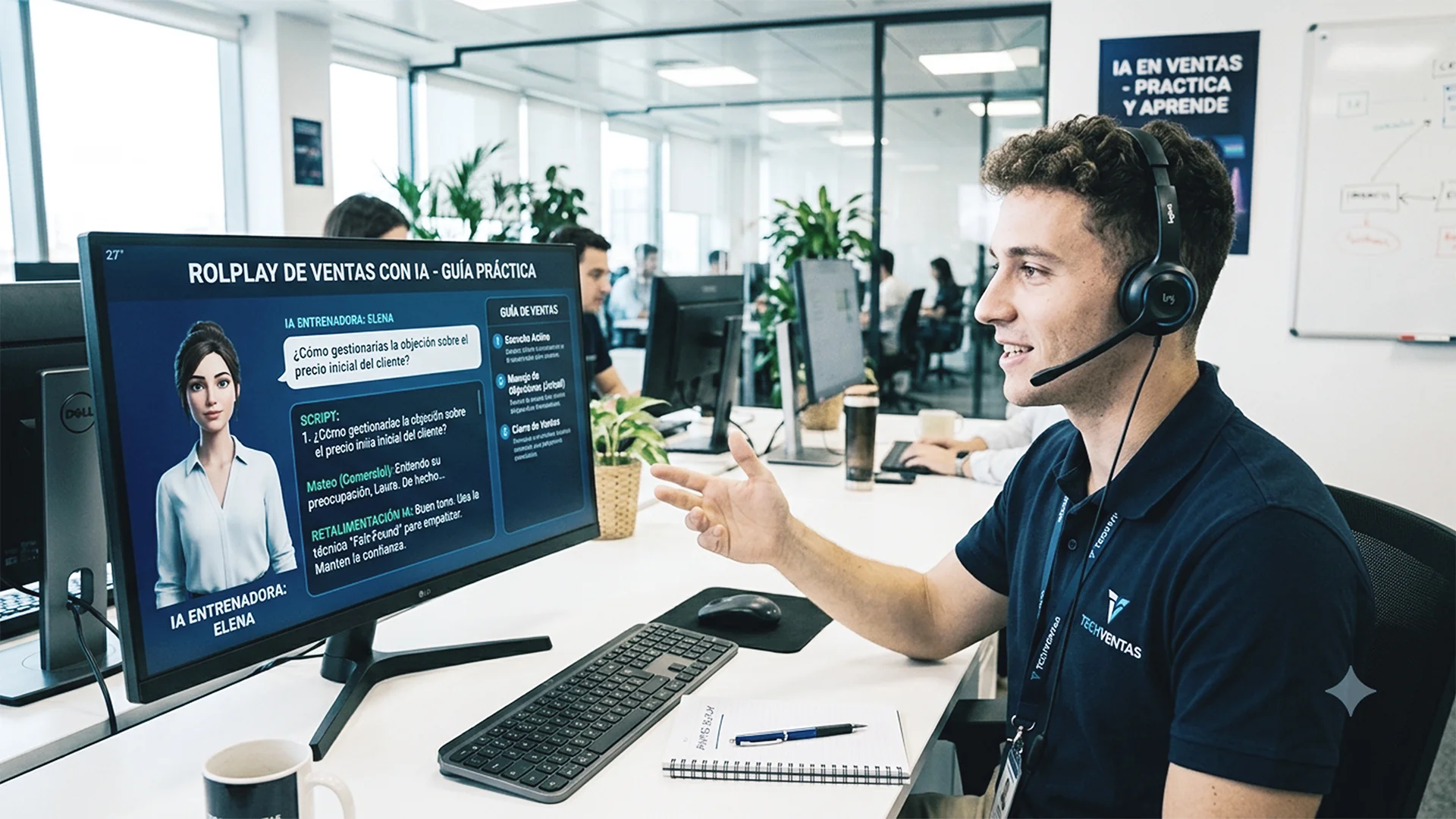
Your best salesperson wasn’t born knowing how to handle price objections from the first moment of a call; they learned by making mistakes, many times. The problem is that most sales teams don’t have the time to give each person in the team that amount of practice, because traditional roleplay fails by design—the buyer is too nice, the session is very punctual, and the feedback is quickly forgotten. That’s where the AI sales roleplay, Not as a substitute for the commercial manager's approach, but as the piece that was missing to ensure that approach reached the entire team every week, without relying on an agenda that was difficult to fit together. One Sales simulation based on the AI It puts each salesperson face-to-face with a simulated buyer who doesn’t tolerate sloppy answers, who objects as a real customer would and who is available at seven in the morning before an important call or on a Sunday night when Monday’s nerves make it impossible to sleep. In this guide, we tell you exactly what an AI-powered sales roleplay simulation is, how a session works from start to finish, the five steps to implement it on your team without leaving it behind another forgotten tool, and what criteria to use to choose the right platform. If your sales onboarding process takes months and your reps continue to encounter the same objections quarter after quarter, this is for you.
What is AI sales roleplay and how does it work?
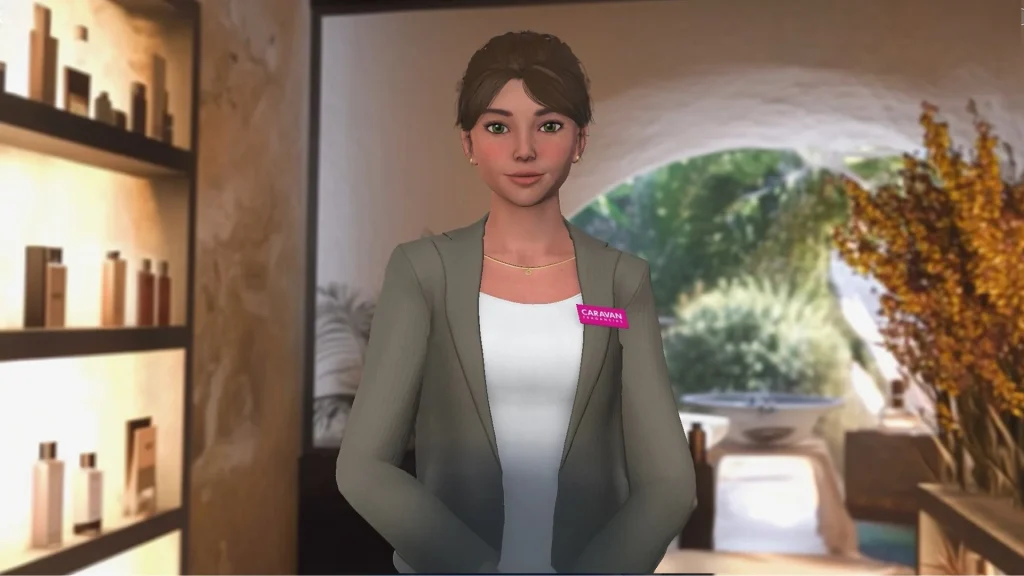
One AI roleplay for sales It is a commercial training system in which an artificial intelligence agent acts as a conversational partner. It does not repeat a fixed script; it adopts a specific buyer profile—a skeptical CFO, a price-sensitive customer, a cold lead who hangs up the call after ten seconds—and reacts according to what the salesperson says at each moment. The session follows a simple flow: the salesperson talks as if it were a real call; the agent responds in a contextual way, adapting tone and objections, and at the end of the session the system delivers actionable feedback linked to exact moments of the conversation, not generic comments like «improve active listening.». This differentiates it from roleplay tools based on text or linear scripts, where the salesperson chooses answers from a predefined list. Sales simulation based on AI with Smart avatar And voice adds a layer that the text cannot replicate: real pressure, tone, interruptions, silences. That friction is precisely what trains the commercial reflex and what keeps the practice recorded, rather than being forgotten upon leaving the session. A real case of commercial support through AI, is Fabiola, the new intelligent personal shopper to serve all its customers. With the idea that in every online and physical point of sale in Spain, Saphir can offer a one-to-one, personalized recommendation for each user. A revolutionary way of customer experience in the perfumery sector that shows the great potential of AI agents in industry Retail. If you want to know more about the impact of AI on the sales floor, go here: AI personal shopper: Trends that are transforming retailing
How to implement AI sales roleplay step by step
Here is the part that really makes the difference between a program that is used and one that ends up being abandoned. It’s not enough to hire an AI-powered sales simulation tool and wait for results. The design of the process determines whether the roleplay becomes real practice or another task that no one completes. These are the five steps that any business or training manager should follow before launching the program.
Step 1: Identify the highest-stakes moments in your sales process
Before designing anything, map out your sales process and identify the points where opportunities are most lost: the initial discovery call, handling price objections, talking with a hostile decision maker, closing. The roleplay has to be built around those real-life risk moments, not around the product catalog. If your salespeople always fail at the same point in the call, that’s the scenario you have to train first.
Step 2: Build realistic buyer personas for each scenario
Each profile that the AI agent interprets needs a sector, role, level of product knowledge, common objections, and a way to behave in the conversation. A generic «potential customer» profile is of little use. The more detailed the profile is, the more realistic the AI-based sales simulation becomes and the greater the transferability to real calls.
Step 3: Design scenarios by pipeline stage
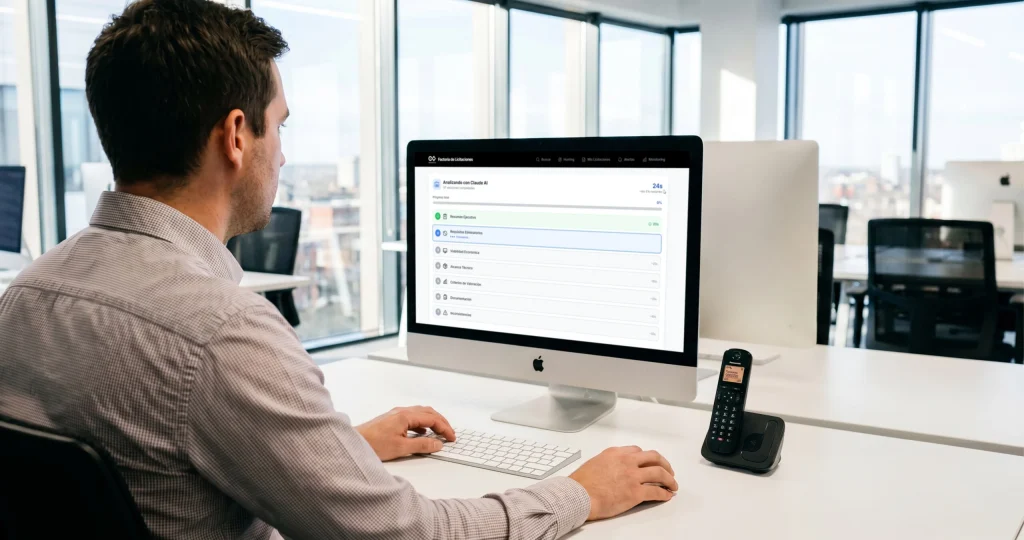
Scenarios should be linked to stages of the pipeline, not to product features. A salesperson in the prospecting phase needs to practice something completely different from one who is closing a renewal with an unhappy customer. Segmenting by stage ensures that each session is relevant and that what is practiced can be applied in the next call, not in a hypothetical future.
Step 4: Establish a practice cadence independent of manager availability
The practice schedule has to be able to be implemented without the salesperson needing to schedule time off with their manager. Ten or fifteen minutes, two or three times a week, before an important call or after one that went wrong, is more useful than a monthly session of an hour. The key is that the practice fits into the weekly routine without taking time away from the active sales process.
Step 5: Measure what changes
Define the indicators before starting: onboarding time for new sales representatives, conversion rate by stage, quality in handling objections, and consistency of the message across the team. This is where a good AI roleplay platform stands out from a simple practice exercise: it generates objective data per session (response times, accuracy in handling objections, adherence to the script) that the sales representative can review without having been present during the training.

What do you look for in AI sales roleplay tools? Examples of Ai and XR based simulations
Not all AI-powered sales simulation tools are built to the same level of rigor. Before choosing the best AI roleplay sales training, it’s worth evaluating it using specific criteria, not the list of features in the sales brochure. Caser, a leading company in insurance of Healthcare In Spain, together with Ibercaja, its banking commercial network, it has developed an immersive training experience in Virtual Reality to train face-to-face managers at the critical points of the sales process. The solution “Caser Training”It simulates and enhances a simulation that follows a real day at the office, with seven interactive scenarios that put the manager in front of a simulated client to practice sales techniques, active listening, and handling objections in an environment where making mistakes is part of the learning process. In Imascono We develop conversational agents with AI applied to commercial training, tailored to your sales process, your sector, and your real buyer profiles. As technology consultant Specializing in conversational AI, we don't start from a generic template; we build the sales simulation with AI based on the exact moments when your sales team needs to be trained. Contact us and let's try a custom prototype.