Every year, workplace incidents continue to have a huge economic and operational impact, from injuries and production stoppages to regulatory penalties. Despite prevention efforts, traditional training methods are failing to adapt to the complexity of today's industrial environments, leaving a critical gap between theoretical knowledge and the reality on the plant floor. Against this backdrop, AI for workplace safety is emerging as the turning point that makes it possible to move from a reactive approach to a truly proactive one. The convergence of AI in safety and industrial operations is already delivering measurable results: fewer incidents, more effective training and data-driven decisions. In this article, you will discover why traditional training needs to evolve, how AI in workplace safety is transforming both learning and operations, and what real benefits are being achieved by organizations that have already taken this step alongside partners such as Imascono.
Why does traditional safety training fall short in high-risk environments?
Occupational risk prevention training is an essential pillar of any industrial organization. However, in high-risk environments, where decisions must be made in seconds and under pressure, AI for safety is emerging as a strategic complement to traditional methods. The challenge is no longer just to convey knowledge, but to ensure that it translates into effective action in real situations.
Limits of passive classroom-based safety instruction
The training Training based on presentations, manuals, or periodic courses serves an informational purpose, but it fails to develop the critical skills required in high-risk environments. There is, therefore, a gap between what is learned and what is actually put into practice on the job—a gap that the AI in security, thanks to data, is beginning to close through more immersive, hands-on, results-oriented experiences.
Making training consistent across large workforces remains a challenge
Ensuring comprehensive training in organizations with multiple locations, shifts and professional profiles is one of today's major challenges. Variations in delivery, context or worker focus create inconsistencies that, in sectors such as industry, logistics, healthcare, energy or construction, can have critical consequences. That is why, the AI frontline offers new opportunities to standardize on-the-job training and tailor it to each employee's profile . If you want to learn more about the impact of AI on productivity, click here: Increasing business productivity with a virtual assistant
How does AI for workplace safety go beyond traditional training from simulation to real time intelligence?
The educational safety technologies powered by AI marks a paradigm shift by extending safety beyond one-time training and applying it throughout the entire operational cycle. Thanks to its ability to anticipate risks, adapt to each context, and support workers in real time, the AI frontline It transforms prevention into a dynamic and ongoing process. As a result, security shifts from being reactive to proactive, becoming strategically integrated into the day-to-day operations of organizations.
Immersive Simulation Powered by AI
The environments driven by AI for workplace safety are dynamic and respond to user behavior, generating changing scenarios and detecting risks in real time. This allows training decision making under pressure, evaluating the quality of responses and developing critical skills in contexts much closer to reality.
Personalized Learning Paths and Performance Analytics
The AI frontline and workplace safety allows the analysis of individual and collective performance to identify knowledge gaps and risk behaviors. Based on this data, personalized training itineraries are designed and possible non-compliances are anticipated before they occur, turning training into a predictive, adaptive and data-driven strategy.
Real-time AI assistance on the job site
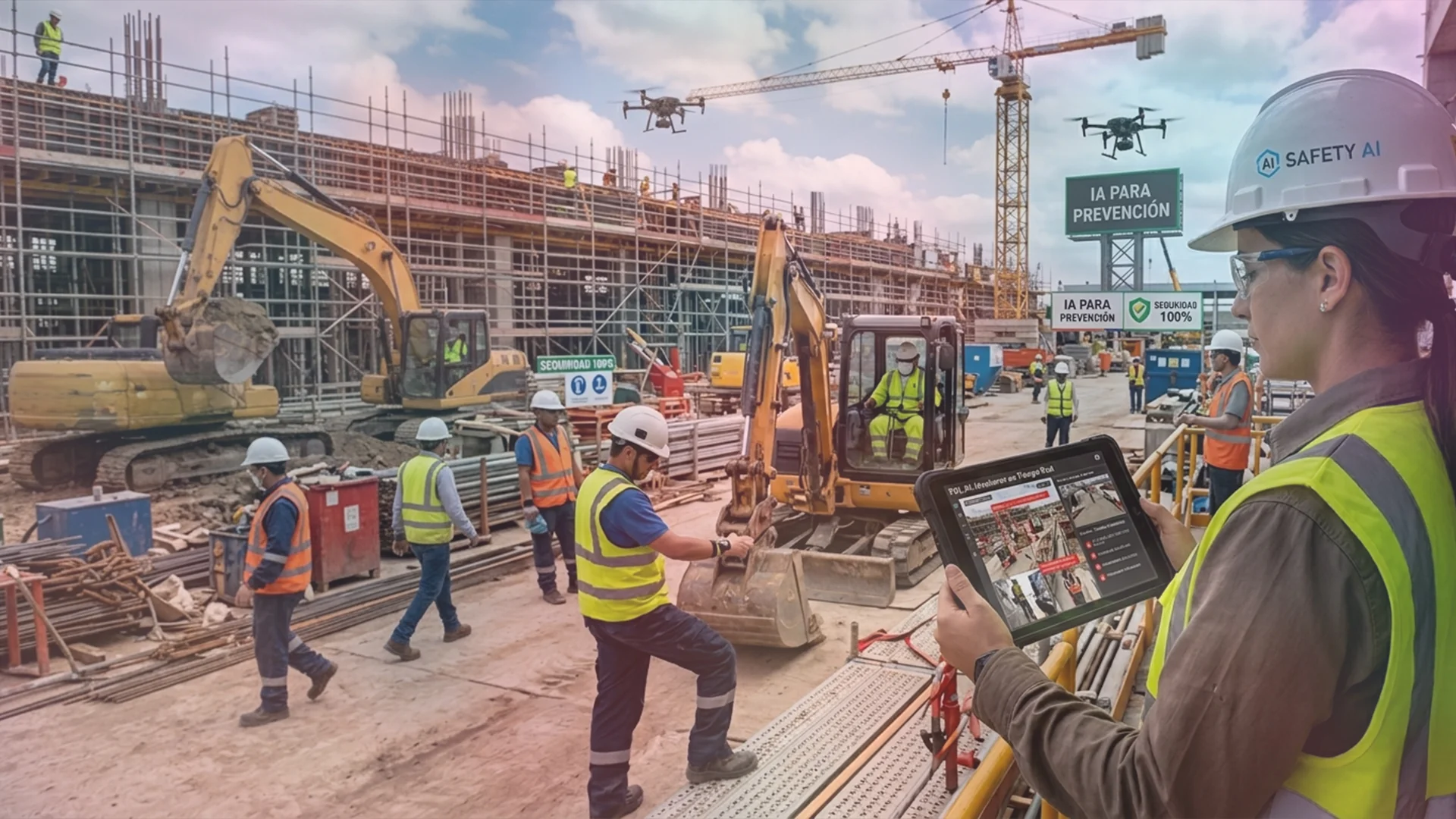
Beyond training, AI in workplace safety acts directly on the operational environment through technologies such as augmented reality, computer vision and voice assistants. These solutions provide continuous support, detect risks in real time and make critical information easy to access without interrupting work, positioning AI as a key ally in active prevention.
Return on investment in AI for workplace safety
Talking about educational safety technologies powered by AI is to talk about technological innovation, with direct impact on business results. Organizations that integrate AI into their prevention strategies are experiencing a significant reduction of incidents a acceleration of onboarding processes and a significant reduction in the administrative burden associated with regulatory compliance. Process automation, predictive analytics and data traceability optimize resources and minimize errors, transforming security into a driver of operational efficiency. In contrast to traditional models based on point formations, the AI frontline workplace safety provides cumulative and sustained value over time. Each interaction, each simulation and each piece of data collected contributes to building a continuous, coherent and evidence-based learning system. This improves the preparedness of teams, allowing them to make more informed decisions, anticipate risks and constantly evolve safety protocols. In this context, the AI for workplace safety is positioned as a key strategic asset. It not only drives people protection, but also contributes to talent development, operational cost reduction and reinforcement of corporate credibility in terms of ESG.
Imascono: real results in industrial and safety environments
At Imascono We have experience with numerous projects for the industrial sector and in the area of occupational risk prevention. That's why we're highlighting some of our key success stories and how they were actually implemented below.
Global shipping
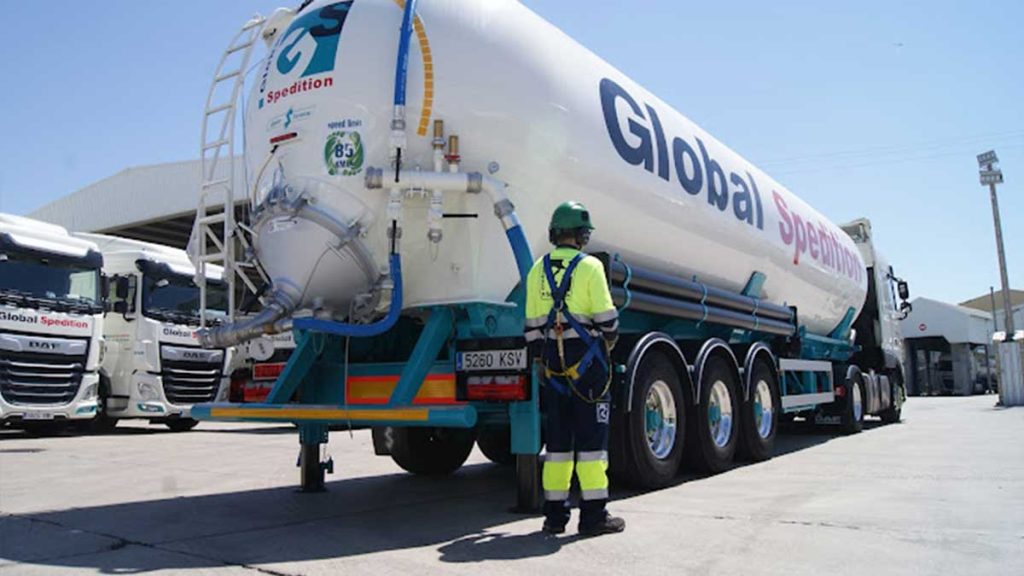
In such a critical environment as the transportation of hazardous materials, the project transformed traditional training into an immersive virtual reality training experience, allowing workers to train loading and unloading processes without real risk. The solution converted manuals and presentations into gamified simulations, improving retention and speed of learning.
Iria Iveco
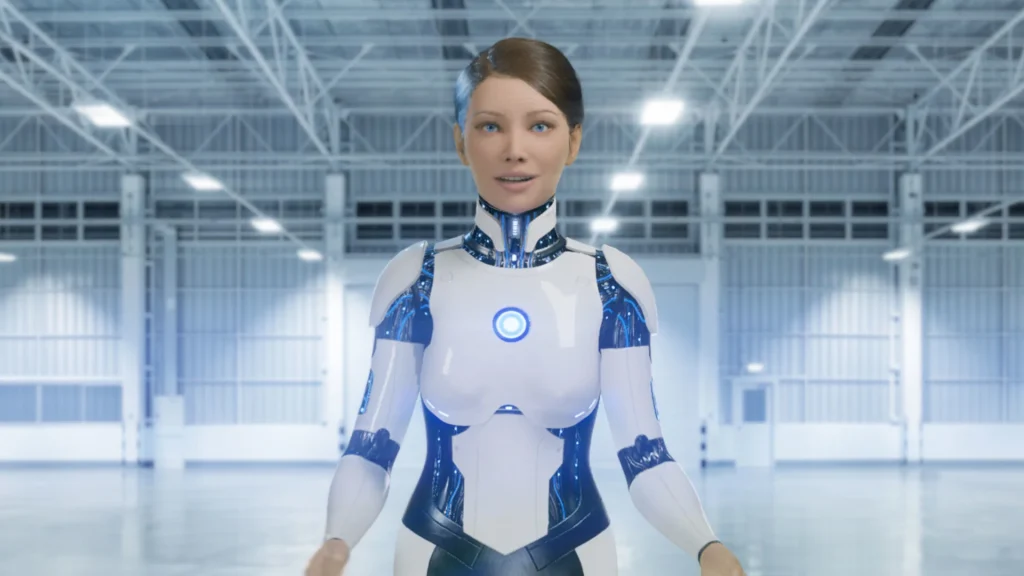
For a global organization like Iveco, the challenge was not only to train, but to democratize access to knowledge. Imascono developed IRIA, an artificially intelligent avatar that centralizes all corporate information and training in a single conversational interface. Thanks to its training with documentation from multiple departments, it allows thousands of employees to resolve doubts in real time and access relevant content autonomously.
This tractor
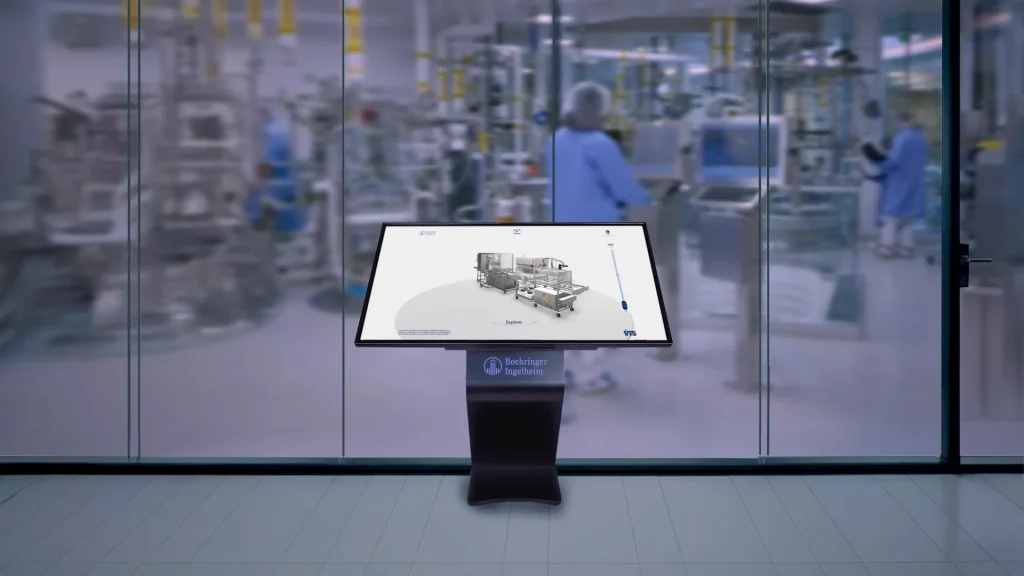
This project sought to create an immersive training experience for Boehringer Ingelheim that would allow for an interactive and realistic presentation of their machine, ensuring a full understanding of its benefits and operation. From the precision of in-ovo vaccination to its impeccable sanitization system. An advanced training that raises the brand's standards of quality and efficiency. If you want to discover how to apply the educational safety technologies powered by AI in your organization and transform your training processes into a real competitive advantage, in Imascono we can help you. Contact us at and we will design a customized solution that will take your equipment security to the next level.