Imagine being able to see the invisible. Knowing what's wrong with a machine before it breaks down, having the top expert whisper the solution in your ear even if they're a thousand miles away, and turning every manual into a guide that comes to life right on the asset itself. That's no longer science fiction–it's Augmented reality maintenance, and is redefining how the industry manages its most critical assets. In this article, we take you from the problem to the solution. We start by uncovering the hidden costs of maintaining complex equipment without proper insight–the knowledge that disappears when veterans retire, the documentation that becomes outdated, and the gap between those who know the system and those who actually work with the machinery. Then we apply the theory to real-world scenarios: real-time diagnostics, step-by-step instructions tied to the asset, remote expert assistance, hands-free access to technical data, and interactive 3D guides. And we go even further, because AR doesn't work alone–it integrates with inteligencia artificial , virtual twins , AI avatars and IoT to anticipate failures rather than react to them.
The hidden cost of maintaining complex assets without visual intelligence
There is a cost that doesn't appear on any invoice. You won't see it in the spare parts budget or on the technical team's payroll, but it erodes profit margins and productivity every time a critical machine comes to a halt. It is the hidden cost of maintaining complex assets without a layer of visual intelligence that connects knowledge with action. Its first drain is the quietest: tacit knowledge that evaporates. In every plant, there are one or two people who «know»–they recognize a breakdown by the sound, sense a failure from a vibration–but that knowledge isn't written down anywhere: it lives in the experience of a few veterans. The day they retire or leave the company, the organization doesn't lose an employee; it loses a living manual it never got around to documenting. Add to that documentation that becomes outdated faster than it can be updated, PDF manuals from years ago, diagrams that no longer match the machine's actual configuration, and procedures that no one even opens because finding the right page takes longer than just winging it. The information exists, but it is static, generic, and disconnected from the physical asset the technician has in front of them. This gives rise to the problem that sums it all up: the gap between the expert and the field technician. The expert is almost never where the breakdown occurs, and today that bridge is built with confusing phone calls, photos sent via messaging apps, vague descriptions, and extremely costly trips by the specialist. Let's add up the hidden costs: prolonged downtime, repeated repairs due to misinterpretations, endless learning curves, and a growing operational risk as the pool of skilled workers shrinks–and we'll see that they all come out of the same pocket. The good news is that they share a common pattern and, therefore, a common solution: at their core, they are all problems of visual information arriving too late, incorrectly, or to the wrong person. If you'd like to learn more about AR in factories, click here: Augmented reality in manufacturing: the path to efficiency
Augmented reality maintenance in action: key applications on the industrial floor
Where information used to be scattered and knowledge inaccessible, AR in maintenance creates a digital layer that overlays the physical machine and places that knowledge exactly where it's needed. Below, we explore the applications that are already transforming operations and maintenance with Augmented reality : from real-time diagnosis to interactive 3D guides and remote expert assistance.
Real-time equipment diagnostics
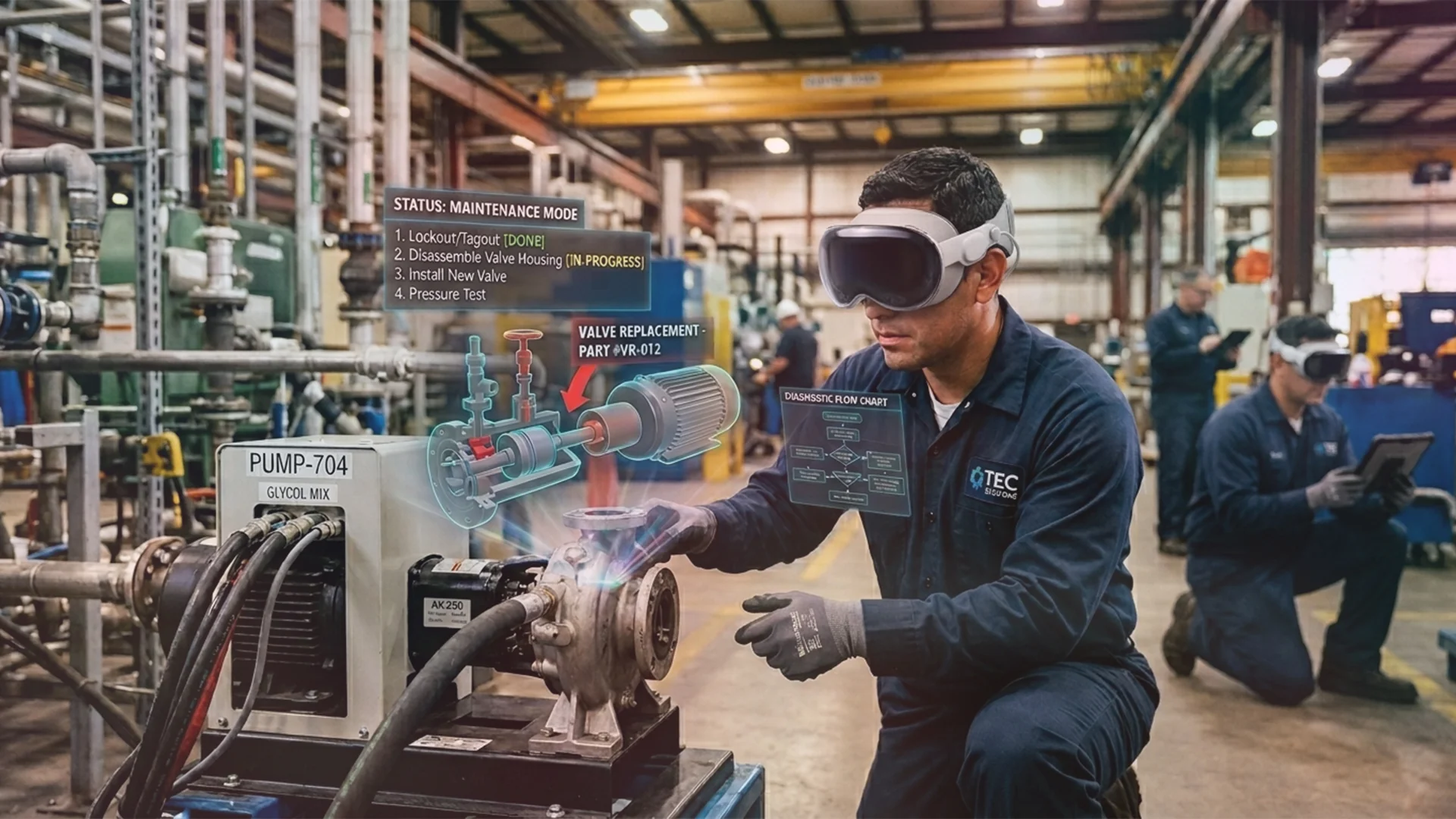
The technician points his device at the machine, and AR makes the invisible visible, overlaying sensor readings, operating parameters, and alerts directly onto the equipment. Instead of switching between screens, panels, and manuals, the operator can assess the asset's status at a glance. Diagnosis is no longer dependent on the intuition of a few individuals but becomes an objective, contextual, and immediate assessment.
AR-guided step-by-step instructions anchored to the physical asset
Each procedure is transformed into a visual sequence linked directly to the machine itself: arrows, markers, and animations indicate exactly which screw to turn, which part to remove, or which connection to check–in the correct order. The instructions no longer reside in a generic PDF, but on the actual component in front of the technician. This shortens the learning curve for new technicians.
Remote troubleshooting and expert assistance
Remote maintenance with RA It bridges the gap between those who know and those who act. The expert sees in real time what the field technician sees and draws virtual annotations on the actual scene: marking, pointing out, correcting, and guiding as if they were right there. No more costly trips or confusing phone calls with vague descriptions. A single specialist can assist multiple plants in a single day, multiplying their impact.
Hands-free access to technical data via wearable AR devices
With smart glasses and wearable devices, technicians can consult schematics, maintenance records, and procedures without putting down their tools. All technical documentation appears in their field of vision, controlled by voice or gestures, while their hands continue to work on the equipment. This is especially critical in environments where safety and precision cannot be compromised.
Component identification and locator
In a complex system with hundreds of nearly identical parts, finding the right component is half the battle. Augmented Reality maintenance visually highlights the exact part on the equipment, identifies it, and instantly displays its part number, location, and status. No more wasting time cross-referencing parts lists or mixing up modules during a high-pressure repair. The technician locates, confirms, and acts with complete confidence.
Interactive 3D maintenance guides
Flat manuals give way to three-dimensional models that technicians can rotate, zoom in on and explore layer by layer on the asset itself. Every operation is visualized in 3D before it is carried out, showing the “how” with a clarity no text can match. It is ideal for complex, infrequent or high-risk tasks, where the margin for error must be zero. Knowledge is no longer read; it is seen and understood.
Augmented operations and maintenance integrated with AI, digital twins and industrial ecosystems
In the industry , it is worth dispelling a common misconception, the Augmented reality It doesn't work alone. Its true power lies not in the screen the technician looks at, but in everything that happens behind it. AR is the interface–the visible, actionable layer–of a deeper industrial ecosystem. On its own, it displays information; connected to the rest of the stack, it displays the right information at the right time, anticipating problems. Its first ally is the inteligencia artificial When applied to predictive maintenance, machine learning models anticipate failures before they occur, and AR translates this into visible action by projecting warnings and instructions directly onto the component itself. The second layer is the Among the leading technology trends in hospitality industry, virtual twins , a live replica of the asset serving as a reference frame, AR compares what the sensor measures with what should be happening and highlights any deviations on the actual machine, even allowing for the simulation of repairs without disassembling the equipment. All of this is powered by the ecosystem's connectivity; the IoT and sensors feed the system with real-time data, while the ERP and CMMS provide the operational context–work orders, history, spare parts, and costs. When these systems communicate, operations and augmented reality maintenance become a single workflow: the sensor detects, AI interprets, the digital twin verifies, AR displays, and the CMMS closes the loop–without paperwork or duplicate records. And this is the key takeaway for consultants: the value of AR in maintenance grows exponentially with its level of integration. Implementing it as a standalone system yields isolated improvements; integrating it into the ecosystem of AI frontline , digital twins , IoT, and management systems are transforming the entire operating model.
Imascono: Augmented Reality maintenance solutions built around your assets
The best way to understand the potential of maintenance with Augmented reality is seeing it come to life. These four projects illustrate the pillars upon which any augmented reality operations and maintenance strategy is built.
Global Spedition
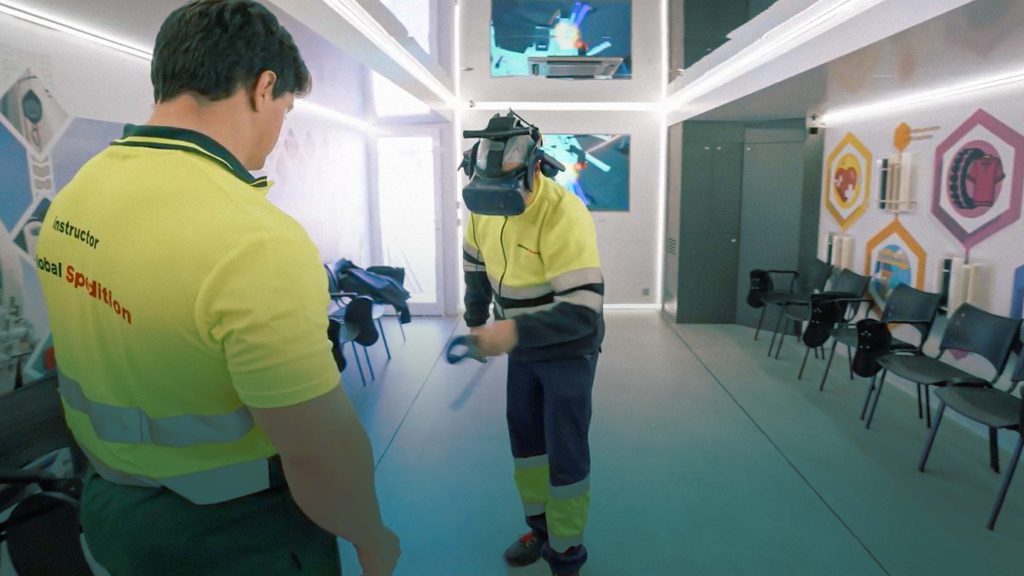
This international hazardous goods transport company needed to train its workforce in loading and unloading protocols without exposing them to real risks. We turned traditional manuals and presentations into a gamified immersive simulation where operators learn by doing in a completely safe environment, achieving more than 800 employees trained in record time, an experience of just 10 minutes, and a 60% reduction in average training time. The same “learning by doing” logic on the asset is what underpins immersive maintenance guides.
Iria Iveco
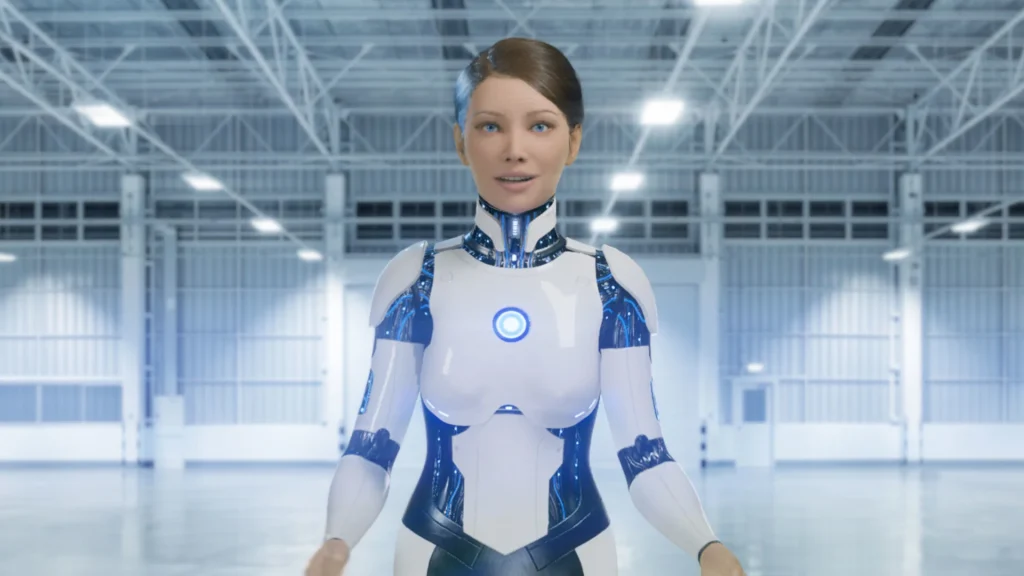
Automotive giant Iveco wanted to bring training and internal information closer to its vast network of professionals, dealers and external staff. Together with its team, we created IRIA, an AI-powered avatar trained on more than 100 documents from ten departments, capable of answering questions immediately and autonomously. Today it serves 4,570 employees, and 90% of its conversations come from the dealer network. It is the best example of how expert knowledge stops living in a few heads and becomes accessible to the entire organization.
Certest
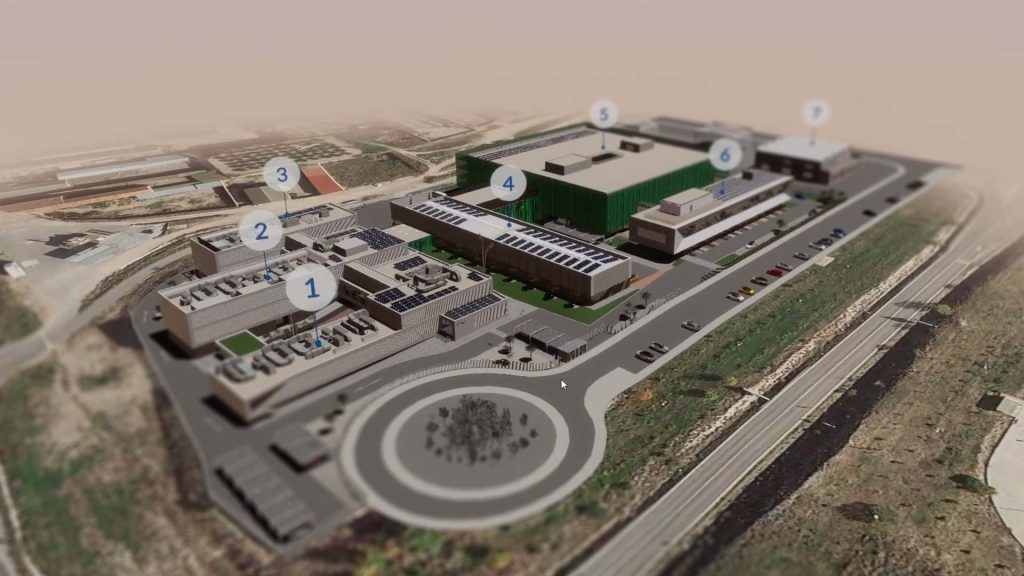
Biotech company Certest, in the midst of rapid expansion, wanted to fully virtualize its facilities. We developed the digital twin of its 25,000 m² spread across more than nine buildings, with a level of detail that lets you tour industrial lines and facilities from a phone or tablet, with data updated in real time via CMS. The project achieved a 40% time saving in explaining processes and tripled visits to the facilities. The digital twin is precisely the reference layer on which augmented reality maintenance is built.
This Xtractor
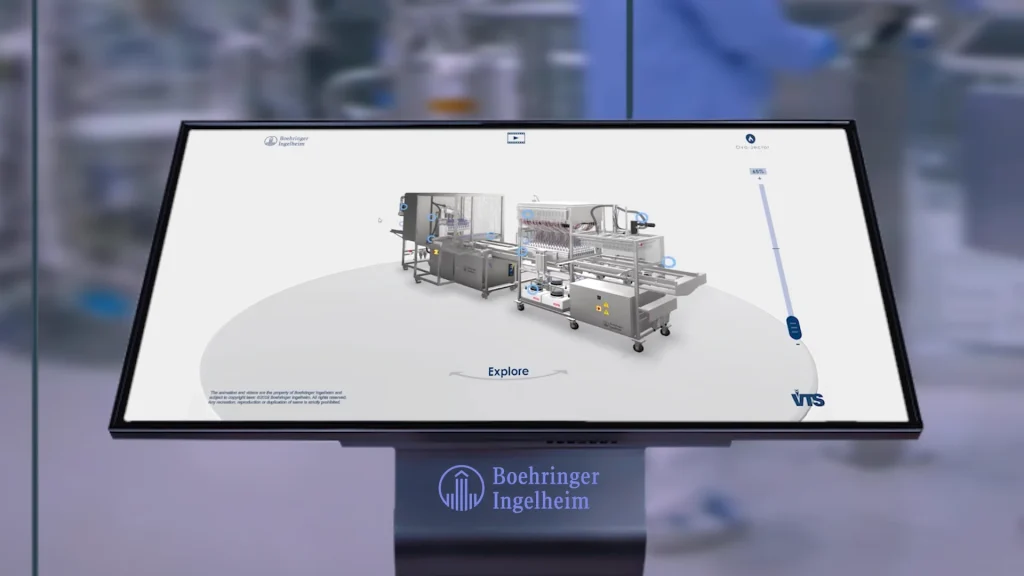
Boehringer Ingelheim needed to showcase its poultry vaccination machine commercially without physically transporting it to every trade show. We created the Virtual Twin of the OVO Xtractor: an interactive replica that virtualizes all of its components and its vaccination process, explorable down to the last detail. It has been present at more than 15 international trade shows, has accumulated 40,000 visits and has multiplied the efficiency of the sales process by 1.75. That ability to virtually explore every component of a machine is exactly what augmented reality for maintenance brings to the side of the physical asset. At Imascono we turn augmented reality maintenance into real results. Contact our team, tell us about your challenge, and let's design the solution together.