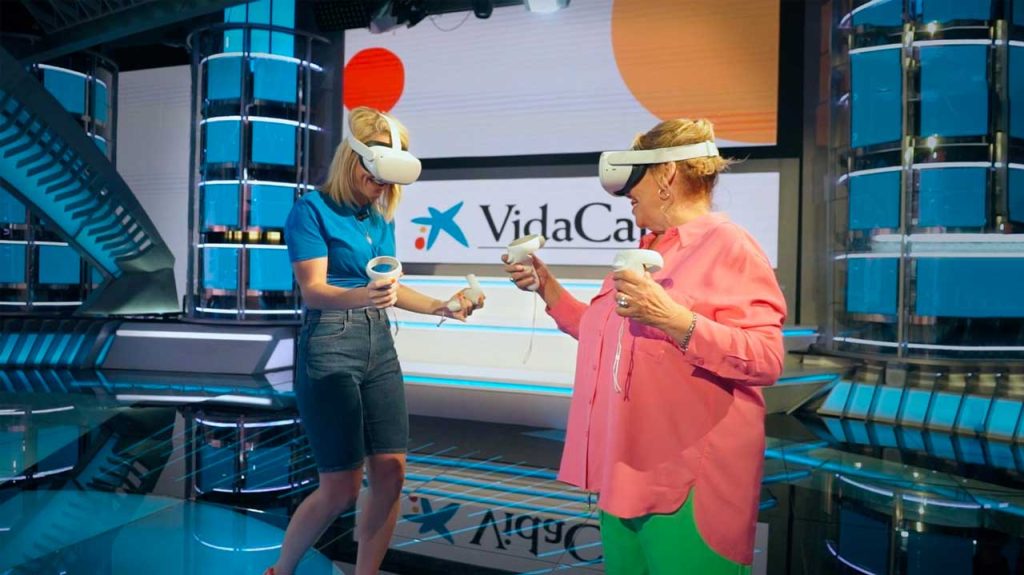
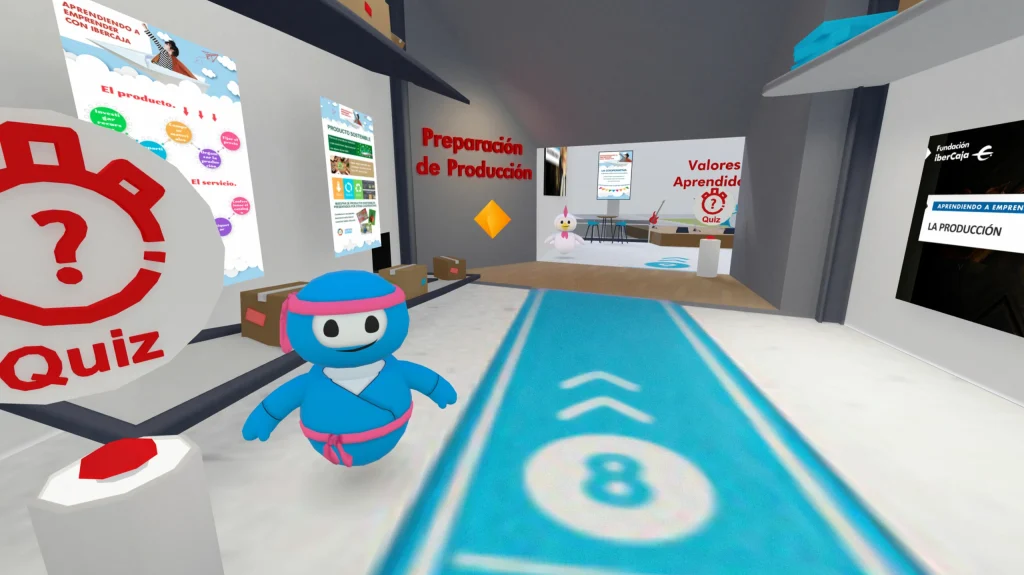
The mixed reality It has evolved from a laboratory promise into a real driver of business competitiveness. But amid confusing headlines, overlapping acronyms, and vendors promising miracles, it's not always easy to distinguish the hype from the opportunity. What can RM do that the Augmented reality y la Virtual Reality , on their own, aren't they enough? Where is the tangible return for a management team that demands results, not pie-in-the-sky ideas? In this article, we set the record straight. We'll explain exactly what mixed reality is and why that distinction matters, and we'll break down the five benefits of mixed reality that are already having the greatest impact in various environments industrial , sanitary facilities , architectural and commercial , and we tackle head-on the implementation challenges that every company must anticipate before taking the plunge. A guide designed for those who want to invest not in technology, but in results.
What Mixed Reality actually is (and why the distinction matters for business)
Before talking about benefits, it is worth setting things straight. Mixed reality is capable of merging the physical and digital worlds so that both interact in real time. Virtual objects no longer simply “appear” over your surroundings; they recognize them, respect them and respond to them. A holographic engine can rest on the real workshop table while an operator examines it from any angle and shares it with a colleague 3,000 kilometers away.That seemingly subtle difference is what makes MR a strategic tool for the corporate environment: a third space, half physical, half digital, where people work, train, design and collaborate without giving up either of the two worlds. And here is the decisive nuance. Confusing the three technologies is not a mere semantic slip; it means choosing the wrong tool for the right problem. And when we are talking about innovation budgets, that mistake comes at a price.
Distintion between MR, AR and VR
In short, the RA digital content is superimposed on the real world, the RV completely replaces reality with a virtual environment, and the RM merges both worlds, allowing them to dialogue with each other. If you want to go deeper into the technical and application nuances that separate each one, we explain it in detail in this article on the differences between augmented reality and virtual reality .
The core benefits of Mixed Reality in enterprise environments
Now that we've addressed the conceptual issues, it's time to talk about what really matters in any executive committee: the tangible impact on the business. The advantages of the mixed reality They go beyond mere futuristic promises and translate into concrete metrics for efficiency, quality, training, and customer experience. Below, we review the five benefits that generate a clearer and more measurable return.
Reduced error rates through real-time spatial guidance
MR overlays step-by-step instructions and checkpoints directly onto the physical workspace, eliminating that constant back-and-forth between the task and the manual that takes such a toll on concentration. By keeping eyes and hands always where they need to be, it drastically reduces cognitive load and context switching, which are responsible for most procedural errors in manufacturing, maintenance and the operating room. In these sectors, being able to train in safe environments makes the difference between getting a process right the first time and a costly repeat.
Accelerated training and knowledge transfer without stopping production
Training a new operator no longer requires stopping the machine or setting up a parallel environment; with MRI, all profiles learn directly on the real equipment, guided by overlays that accompany them in every gesture. In addition, the know-how of veteran technicians, that tacit knowledge that so often retires with them, can be captured and encoded in immersive workflows, making it a transferable and scalable asset for the entire organization. At Imascono we have seen firsthand how this virtual training approach accelerates the learning curve and boosts the ROI of any training plan.
Remote expert collaboration across any distance
Also, mixed reality allows an expert located anywhere in the world to see exactly the same as the technician in the field and make annotations, highlight a component, draw an arrow, mark a measurement, on its real physical environment, as if he were there in person. The operational savings are immediate, resulting in less travel by specialists, faster resolution of incidents and global access to the best talent from any plant. An especially strategic benefit for field service operations and healthcare environments, where every minute of downtime or every trip avoided translates directly to the bottom line.
Improved design validation and prototyping before physical production
In engineering, architecture and product design, MR makes it possible to place digital prototypes in real physical spaces and interact with them before manufacturing a single part. Teams can walk around the design, review it from any angle, subject it to ergonomic scrutiny and detect spatial conflicts in the digital phase, where fixing them costs practically nothing. This avoids the most feared, and most expensive, scenario of any project: discovering the flaw when the physical prototype is already on the table or in production.
Richer customer and stakeholder experiences
In the business world, the mixed reality It turns the intangible into the tangible, allowing products, spaces, and configurations that do not yet physically exist to be displayed directly in the customer's environment, both online and at the point of sale. For example, a real estate developer can guide a buyer through a completed building on an empty lot, and a machinery manufacturer can display its equipment at actual scale within the customer's facility and demonstrate how it will fit into the existing layout.
Overcoming enterprise Mixed Reality challenges with Imascono
No transformative technology is without friction, and MRI is no exception. Any serious analysis of mixed reality benefits and drawbacks must recognize that, along with the benefits, there are real hurdles, hardware investment, integration with existing systems, team adoption or the ever-thorny task of demonstrating ROI. The good news is that, properly addressed, these challenges are no longer barriers but simply milestones in an implementation plan. At Imascono We don't implement technology just for the sake of it; we design projects that mixed reality designed to fit each client's operational reality. We address hardware costs through phased pilot programs and a measurable ROI from the very first test, and we take on the complexity of the IT infrastructure from end to end so that the client doesn't have to distract their technical team. To overcome resistance to change and uneven learning curves, we design a customized plan with the end user in mind, featuring intuitive and gamified experiences accessible to users of all skill levels. The final stretch of any implementation is played on two fronts, internal adoption and validation for the user profile. We solve this by identifying allies within the organization that act as drivers of change, generating quick wins that build trust, and incorporating impact metrics from day one so that each phase of the project is a business case. Because the advantages of mixed reality only materialize when the implementation is properly orchestrated, and that is where a specialized technology consultant makes the difference between a pilot that stays in the drawer and a technology that begins to generate results from the first quarter. Are you considering making the leap to mixed reality but don't know where to start? At Imascono we accompany you from the definition of the use case to the implementation, with tailor-made projects and a clear ROI from the first phase. Let's talk and turn MR into a real advantage for your business.
The Role of MRI in the Healthcare and Medical Fields
The mixed reality in health is revolutionizing the healthcare industry by opening up a new dimension where the physical world and digital information merge to improve the way practitioners diagnose, learn and treat patients. From 3D anatomy visualization to advanced surgical planning to simulation of complex clinical scenarios, this technology is driving more accurate, visual and collaborative medicine. The mixed reality in medicine optimizes clinical processes and transforms the training of professionals and the patient experience. In this article, we explore how mixed medical reality is redefining clinical practice, promoting the medical training a blended program designed to prepare professionals to critical situations and becoming a strategic asset for hospitals and healthcare institutions. In addition, we analyze real cases that demonstrate how mixed reality in the medical field is already having an impact on healthcare innovation. A look at the present and the future of technology applied to healthcare.
How mixed reality is transforming clinical practice in health care
The mixed reality in healthcare is redefining the way healthcare professionals interact with clinical information and with their own patients. By superimposing digital data such as MRI, CT or 3D anatomical reconstructions , By using holographic content over the physical environment, clinicians can access a much more visual, contextual and intuitive understanding of each clinical case. This ability to integrate the real world with holographic content allows complex anatomical structures to be analyzed with greater clarity and clinical decisions to be made with a higher level of accuracy. In daily practice, mixed reality in medicine is becoming a key tool for improve surgical planning, optimize medical procedures, and facilitate collaboration between specialists . Professionals can explore patient-specific models, simulate interventions before they are performed, and share these visualizations with medical teams located anywhere in the world. In this way, the mixed reality in the medical field drives a more connected medicine aimed at providing more accurate diagnoses and safer treatments. If you'd like to learn more:
Preparing professionals for high-stakes scenarios with MR
Thanks to mixed reality in immersive environments and hyper-realistic simulations, it is possible to train critical skills in a safe space where practice, repetition and decision making become the center of learning.
Simulation-based learning with real time spatial interaction
The mixed reality medical allows recreating complex clinical scenarios where professionals interact with anatomical models and medical situations in real time. This spatial interaction facilitates a deeper understanding of procedures and improves the ability to react to critical situations. Thus, learning goes from being theoretical to becoming an immersive and practical experience.
Mixed reality medical training for procedural accuracy and teamwork
The medical training mixed reality allows surgical techniques and clinical protocols to be trained with a high level of precision and realism. Professionals can practice complex interventions while collaborating with other specialists in the same virtual environment.
Bridging theory and hands-on clinical experience
The mixed reality in the medical field connects academic knowledge with real clinical experience through immersive simulations based on real cases. Students and professionals can visualize anatomy in 3D, analyze pathologies and rehearse clinical decisions before facing real patients. This converts the mixed reality in medicine a key tool to accelerate learning and improve professional preparation.
Why medical mixed reality is becoming a strategic asset for healthcare institutions
The mixed reality in healthcare is becoming a strategic asset for hospitals and healthcare centers by improving the way professionals access, analyze and use clinical information. By integrating 3D visualizations, medical data, and interactive environments, the mixed reality optimizes the planning of procedures, improves coordination between teams and increases hospital efficiency, improving patient care and responding better to the complexity of today's healthcare environment. In addition, the mixed reality in the medical field contributes to reduce clinical errors and to strengthen patient safety thanks to the previous simulation of procedures and the detailed visualization of the anatomy. It facilitates greater knowledge retention and helps to standardize protocols and best practices among professionals. All this positions the mixed reality in medicine as a key technology for driving innovation, efficiency and healthcare quality.
How does Imascono develop mixed reality solutions for healthcare and medicine?
The mixed reality in healthcare and immersive technologies are already demonstrating their real impact in hospitals, research centers and health prevention programs. These projects demonstrate how the mixed reality in the medical field becomes a key tool to drive innovation and transform the healthcare experience.
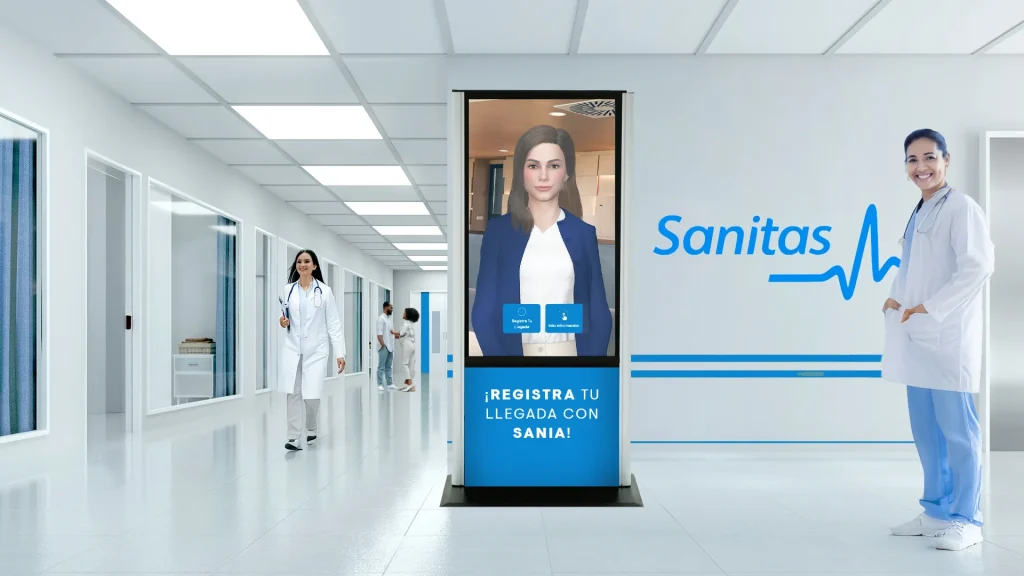
Sania Sanitas
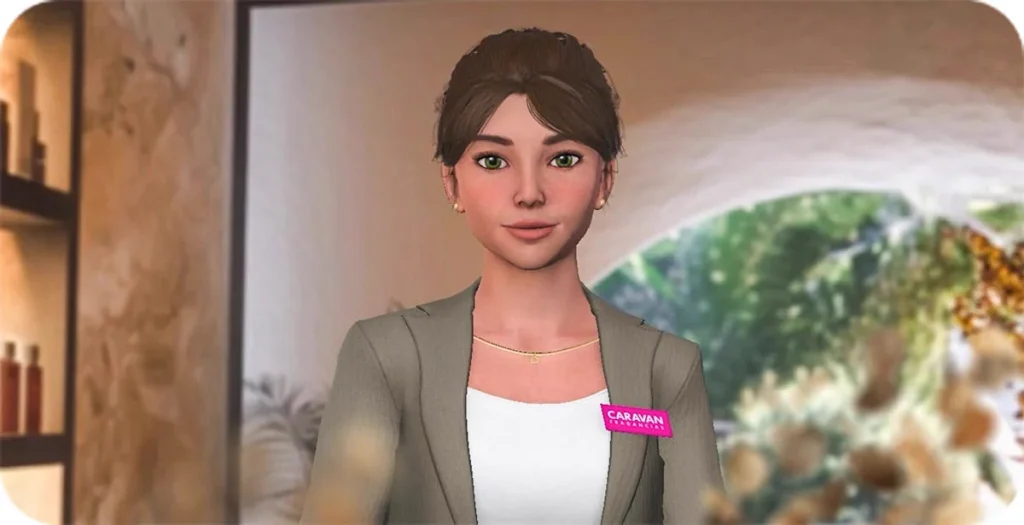
Next to Sanitas, Imascono development of a intelligent assistant , integrated into interactive devices within the hospital, guides patients through their care pathway , The solution helps them to manage appointments, resolve doubts and find their way around the medical center. Thanks to this solution, Sanitas has managed to reduce waiting times and optimize the management of internal processes.
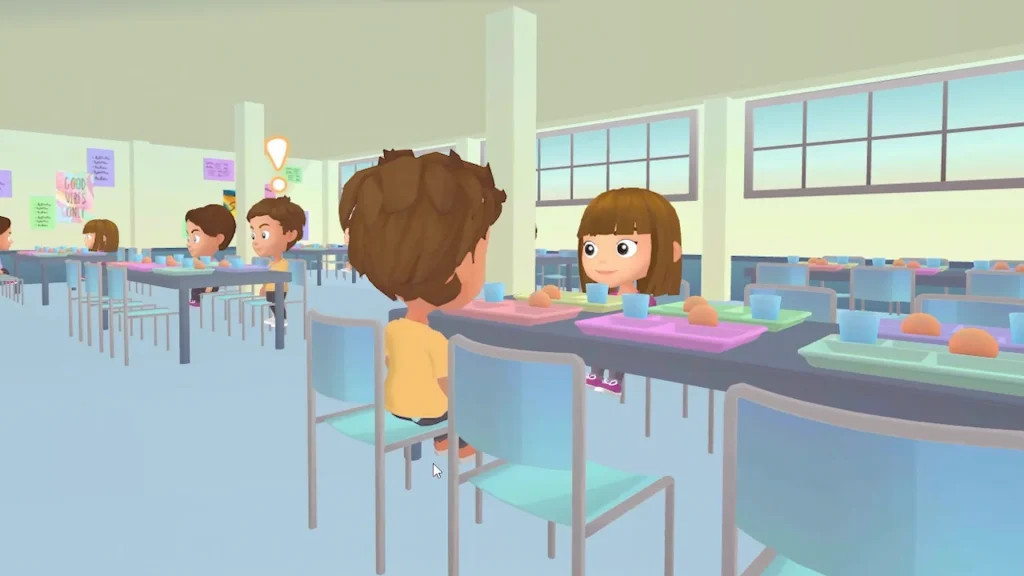
Apetest
Through an application with 3D avatars and virtual scenarios, young people can complete clinical questionnaires, such as the SCOFF test. in a close and accessible environment, making it possible to identify possible cases and trigger alerts for medical evaluation. This innovative approach demonstrates how immersive technologies can contribute to improving prevention and early diagnosis in the field of mental health.
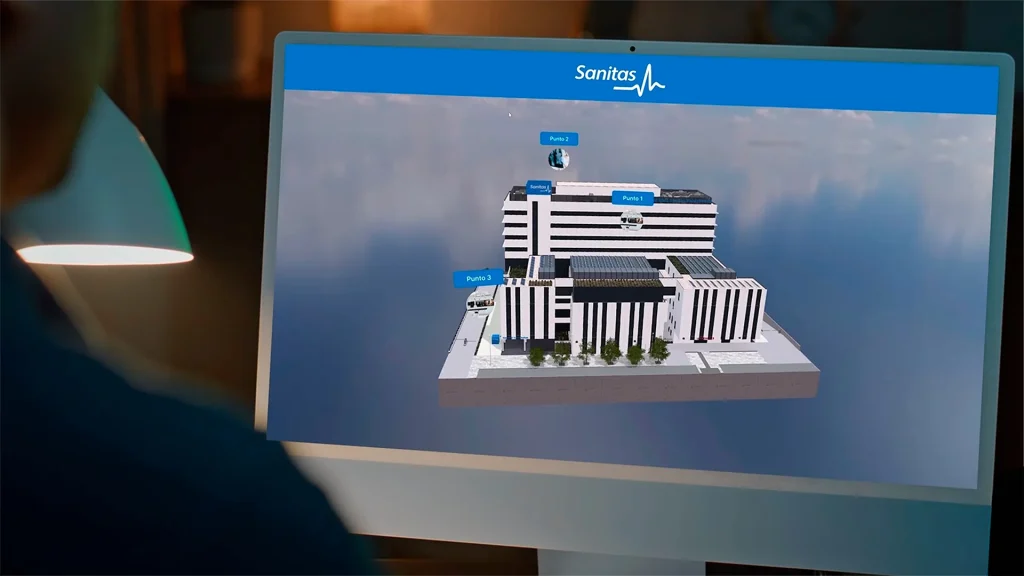
Valdebebas Hospital
The Blua Sanitas Valdebebas Hospital represents a digital hospital model where technological innovation is integrated into the entire healthcare ecosystem. Designed as a state-of-the-art healthcare center, it combines advanced infrastructures, high-precision diagnostics systems and digital tools to offer more personalized and efficient medical care. If you want to discover how the mixed reality in healthcare can transform medical education, optimize clinical processes, or improve the patient experience, in Imascono We'd be happy to help you. Contact our team of experts in immersive technologies and takes the next step towards innovation in healthcare.
The Power of Mixed Reality at Conferences and Events
Conferences and events are no longer just spaces for listening to presentations; today they are places to share ideas and experiences. scenarios where brands must surprise, excite and engage the audience. In this new context, the Mixed reality for conferences and events It is becoming one of the most powerful technologies for transforming corporate meetings, trade shows, and conferences with immersive and unforgettable experiences. By combining the physical world with interactive digital layers, it allows you to move from traditional presentations to moments where attendees participate, explore, and become the protagonists of the story.In this article we explore Why mixed reality is redefining the standard of gaming Events, What are their main advantages and how can they increase engagement, brand recall, and the impact of each presentation. Additionally, we share some real cases developed by Imascono which demonstrate how technology can turn a stand, a conference or a business event into an experience that is truly lived.
Why is mixed reality becoming the new standard for conferences, fairs, and live events?
Today's audiences don't want to just listen, they want to experience, interact and be part of the story. . In this context, the mixed reality is positioning itself as one of the most disruptive technologies for transforming the way we communicate in events , corporate conferences or international trade fairs.
Changing from passive attendance to active participation
Mixed reality in conferences completely changes the approach. Thanks to interactive environments, 3D visualizations or immersive demonstrations, attendees go from being spectators to becoming the protagonists of the experience. This active participation increases attention, enhances understanding of content and generates recall much more durable.
How is MR transforming fairs adn special events?
Trade fairs and special events are spaces where brands compete for attention in a matter of seconds, and mixed reality makes the difference, as it enables show products in 3D, recreate impossible scenarios or explain complex processes in a visual and immersive way. . This technology not only attracts visitors to the booth, but turns every interaction into a memorable experience. In addition, facilitates impactful presentations with more visual storytelling and demonstrations that were previously impossible in a physical environment.
Key benefits of mixed reality for conferences and business events
The mixed reality for business events and conferences are establishing itself as a key tool for transforming the way brands connect with their audiences at events. By combining the physical world with interactive digital layers, it can increase audience engagement and turn a traditional presentation into a participatory experience. Instead of just listening, attendees interact with visual content, 3D products or immersive simulations, which generates a more memorable brand experience and differential, especially in mixed reality for live events or in mixed reality in corporate events . In addition, the mixed reality for events offers strategic advantages such as the possibility of measuring audience interaction and scaling experiences to different fairs, congresses or corporate presentations. This makes it possible to optimize the results of each activation and replicate the experiences in different contexts without losing impact. Thanks to its versatility, the technology can be applied both in mixed reality for trade fairs as in mixed reality for experiential events , adapting to different formats and objectives to create more innovative, interactive and memorable events. If you'd like to learn more about event management in the healthcare sector, click here: How technology is redefining healthcare events
Our success stories with mixed reality for events
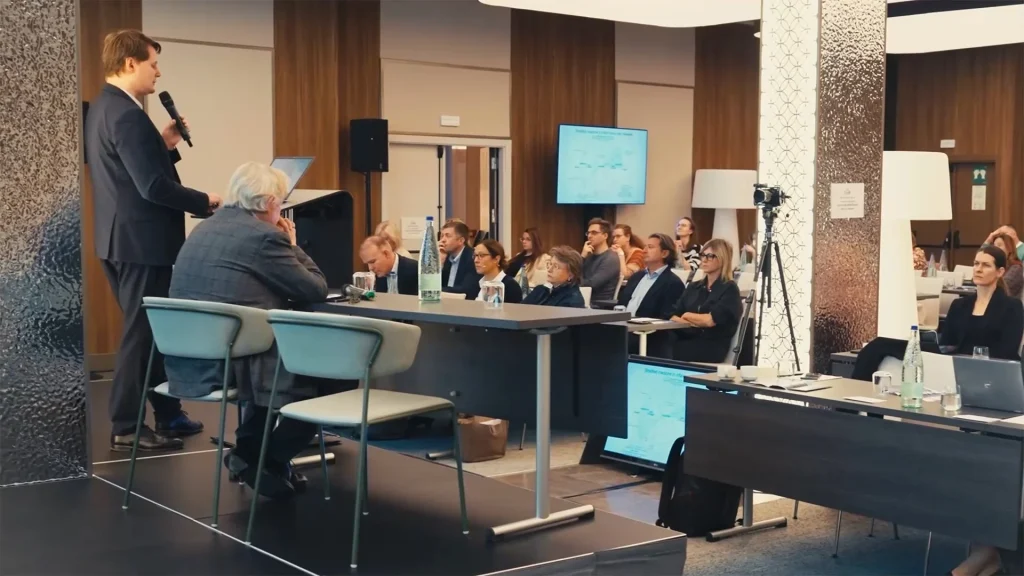
At Imascono we have been helping international brands transform their corporate meetings into memorable technology experiences for years. Through mixed reality solutions for conferences and events. These projects demonstrate how innovation applied to events can generate greater engagement, learning and brand recall.
Shin
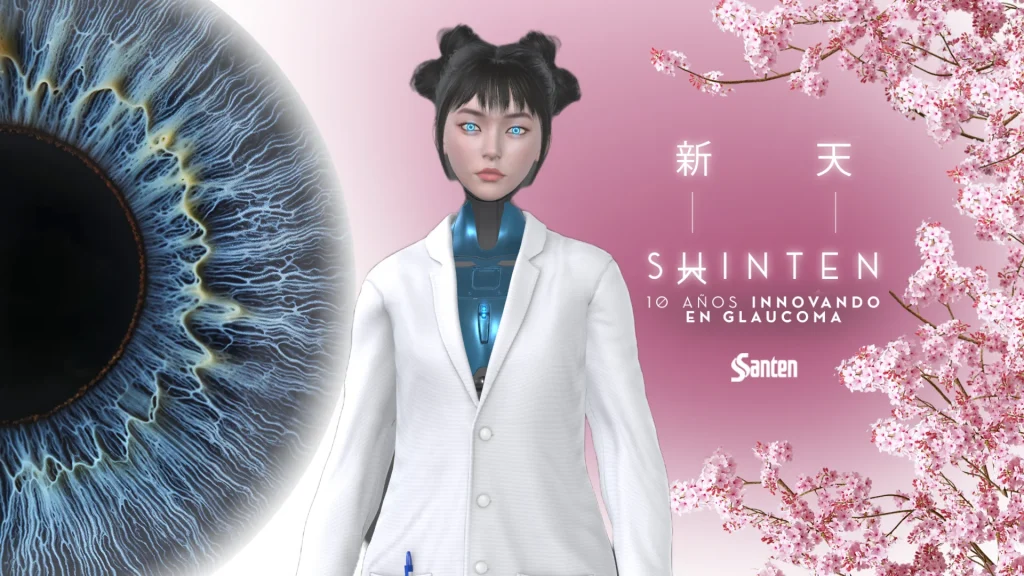
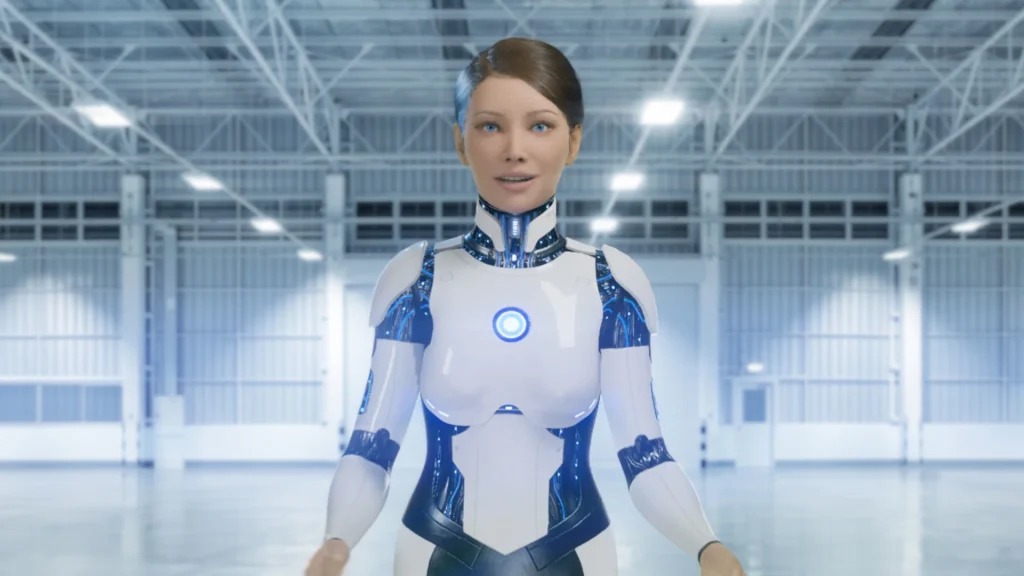
Santen, together with VML Health, transformed a scientific event into a groundbreaking experience thanks to a AI avatar able to moderate and facilitate a conference in real time . Shin acted as a virtual presenter, answering technical questions and guiding attendees throughout the day. Trained with specific medical literature, he provided rigorous answers while interacting with speakers and audience.
Bayer Kimchi
A phygital experience designed for a veterinary event with the aim of increasing engagement at the booth. Through an interactive game based on immersive technologies, attendees had to capture viruses to protect the animals, thereby reinforcing messages about prevention and vaccination. The concept combined gamification, educational content and mixed reality for events.
Event Idea
This project is an example of how the Technology and strategy can transform the management of events long-term. This project was developed over four editions, evolving each year to improve the experience of attendees and speakers. From planning to execution. The result was a model that consolidated a clear identity and optimized participation in each edition.
Why is Imascono the right partner for your Immersive tech needs?
At Imascono we believe that innovation only makes sense when connects with people . That is why our value proposition is based on humanizing technology , using solutions from mixed reality for conferences and live events that transform brand communications into memorable experiences. We do not develop technology for its own sake, but apply it strategically to create immersive experiences that capture attention, transmit knowledge and generate a real connection with the audience. In addition, we work with a integral accompaniment methodology , We participate in the entire process, from the strategy and design of the stand to the creation of content and technological implementation. Our goal is to create events to be experienced , where attendees go from being spectators to becoming active participants. Through technologies such as AI frontline , AR and mixed reality , We design experiences that encourage participation, learning and a deeper interaction between brands and their audiences. If you want to discover how the mixed reality for business events and conferences can transform your upcoming events into memorable experiences, our team will be happy to help you. Contact our team and let's design together an event where technology and emotion go hand in hand.
Medical training with virtual reality
For decades, medical training has relied on mannequins, physical simulations and limited scenarios to prepare healthcare professionals. Today, that model is starting to fall short in the face of an industry that is demanding more precision, more speed and more efficiency . The good news is that the virtual reality medical training is no longer a future promise: it is a solution. adopted by leading hospitals, universities and healthcare organizations , The aim is to train better before reaching the real clinical environment. Traditional methods have barriers that are difficult to ignore, such as high initial and maintenance costs , Inconsistent training experiences and a very limited capacity to recreate the real complexity of clinical practice. Faced with this scenario, virtual reality emerges as an alternative scalable, immersive and data-driven , VR can standardize learning, accelerate skill acquisition and reduce dependence on physical infrastructure. In this article, we explore how VR not only enhances the learning experience, but also generates a Clear and measurable ROI , redefining the way healthcare professionals are trained.
The limitations of traditional mannequin-based medical training
Traditional medical training based on mannequins has been useful for years, but today it faces very clear limits, in which the following stand out. high costs from minute one and a constant burden of maintenance, logistics and physical space. As hospitals need to train more professionals in less time, this model becomes difficult to sustain, the more you want to train, the more you rely on specific rooms, instructor availability and resources that are not always aligned. In addition, no matter how advanced they are, mannequins still have a difficult barrier to break down, as they do not reach full human realism and clinical adaptability that today's practice demands, where every patient and every emergency can evolve unpredictably. In clinical training, it is not enough to practice once, it is important to repeat, measure and standardize. However, with mannequins, the experience often varies according to the instructor, timing and resources of the day, which generates learning inequalities even within the same center. This is why more and more organizations are moving towards the virtual reality medical training , The new approach allows the creation of repeatable, scalable and much more realistic experiences, and responds directly to a question that is becoming a trend in the industry: Has virtual reality improved medical training?
Why virtual reality in medical training delivers measurable ROI
The virtual reality medical training offers a measurable ROI because it transforms training into a more efficient, repeatable and scalable system. The first major driver is economic: over time, costs go down because learning is multiplied without the need to duplicate physical resources, materials or logistics. In addition, VR accelerates the learning curve by allowing critical procedures to be repeated in a safe environment with immediate feedback, achieving skill acquisition. and reducing the number of face-to-face sessions required to achieve clinical competence. This is in addition to a strategic value of data and standardization. The VR training makes it possible for all teams, from the ER to the ICU, and with different roles, to train the same protocols under the same criteria, guaranteeing standardized learning outcomes and reducing variability between sites or departments. And, finally, there is the infrastructure factor, the virtual medical training , reduces reliance on dedicated rooms, bulky equipment and the simultaneous availability of instructors, freeing up resources and making it easier to scale training quickly. You may also be interested in: VR for pain management
Virtual reality medical training simulation: improving performance before real clinical exposure
Before facing a real patient, today there is a critical stage where excellence can already be trained. The virtual reality medical training simulation enables healthcare professionals to practice complex procedures in a safe and efficient environment. fully immersive, repeatable and without clinical risk , This is impossible to replicate with traditional methods. In VR, error ceases to be a threat and becomes a learning tool, since each incorrect decision is analyzed, corrected and repeated until the correct protocol is internalized. In addition, these simulations generate objective data, response times, accuracy, sequence of actions, which turn training into a measurable and optimizable process. Thus the virtual reality medical training begins to directly impact performance before even stepping foot in a real clinical environment.
Reducing training time and accelerating clinical readiness
One of the clearest benefits of medical virtual reality training is the acceleration of clinical preparation. By allowing training as many times as necessary, without relying on schedules, instructors or physical rooms, VR significantly reduces the time needed to reach proficiency. Practitioners reach the point of clinical readiness sooner because they have already experienced the procedure, made mistakes and corrected them in a safe environment. This optimizes individual learning, frees up senior team time and reduces pressure during the first real exposures, a key factor when analyzing whether you have virtual reality improved medical training.
Standardization, scalability, and consistency across medical education.
VR introduces something that medical training had been pursuing for years, large-scale consistency . Each user, in any center or country, can face exactly the same scenario, with the same challenges and evaluation criteria. This makes it possible to standardize protocols, compare results and scale training programs without losing quality. The vr for medical training thus becomes a common language between departments, universities and hospitals , The training experience does not depend on the context, but on the pedagogical design. In an industry where variability is costly, the virtual reality in medical training provides control, data and a solid foundation for better training.
Improve healthcare with Imascono personalized technology solutions
At Imascono Health we carry the virtual reality medical training and immersive technologies to the real world, transforming complex healthcare challenges into digital experiences with measurable impact. Our projects combine strategy, creativity and technology to improve training, awareness and the relationship between professionals, patients and organizations. Here are some examples:
Vaccines
In this project we developed a immersive experience to explain in a clear and visual way how vaccines work and the importance of vaccines . Through interactive technologies and virtual reality, we transform complex scientific information into an understandable and memorable story. The result: greater engagement, better understanding and more effective medical communication. Technology at the service of health education and scientific knowledge.
Apetest
Apetest is a digital solution designed for early detection of possible eating disorders. Through an interactive experience, the user is confronted with everyday situations that allow identifying risk patterns in an empathetic and non-invasive way. This project demonstrates how technology can become a key tool for prevention, awareness and mental health support , by putting the person at the center.
Sania Sanitas
With Sania, we developed a digital experience aimed at improving health education and self-care. The project combines narrative, interaction and user-centered design to promote healthy habits in an accessible and attractive way. A solution designed to scale and adapt to different profiles, strengthening the patient-patient relationship and optimizing patient performance. of the system sanitary . Do you want to discover how the medical training with virtual reality can transform training in your healthcare organization? At Imascono Health we help you design solutions for virtual reality medical training aligned with your objectives, processes and impact metrics. Contact us at and let's explore together how immersive technology can generate real ROI in your medical training strategy.
Secrets revealed: the power of mixed reality in design and construction
Architecture is experiencing a turning point. What used to be imagined in plans and renderings, today can be experienced, traveled through and validated before it exists . The Mixed Reality has arrived to blur the boundaries between design and reality, completely transforming the way architects, designers, clients and builders conceive and execute their projects. In an increasingly demanding sector, where precision, efficiency and innovation are key, the mixed reality in architecture design and construction is consolidating its position as one of the most disruptive technologies of the moment. In this article we reveal how Mixed Reality is revolutionizing architectural design and construction processes, enabling smarter, more collaborative and error-free decisions from the earliest stages. We explore its real impact on interactive design, on-site execution and project optimization, and show how Imascono is applying Mixed Reality to the design process. Architecture innovation technology through immersive solutions that generate tangible value. Welcome to the future of design and construction: a future you can already live in.
Blurring the line between design and reality with Mixed Reality
The mixed reality in architecture design and construction is transforming the way architects and designers conceive their projects, blurring the line between design and reality. Thanks to the mixed reality design , With this technology, it is possible to interact with full-scale 3D models, walk through spaces before they exist and analyze every detail in an immersive way. This technology does not replace traditional tools, but complements them, overcoming the limitations of 2D plans and static renderings to offer a much deeper understanding of the project. From Imascono , we address the Mixed Reality as a strategic lever for technological innovation , capable of generating real impact in the design and construction processes. By enabling early error detection, decision optimization and the alignment of all stakeholders in the same immersive environment, the Mixed Reality is consolidating as a key competitive advantage for companies that are betting on the Architecture innovation technology and leadership in the sector. If you are interested and want to know more: How AR can be used in interior design?
Mixed reality in architecture, design and construction: transforming how we experience projects
The mixed reality in architecture design and construction is revolutionizing the way architectural and construction projects are conceived, designed and executed. Thanks to this technology, all the actors involved - clients, architects, designers and contractors - can experience the 3D designs before starting the work and also during its execution. This not only speeds up the processes, but also drastically reduces errors, rework and deviations, making Mixed Reality a key ally of the Architecture innovation technology applied to the AECO sector
How Mixed Reality enhances the construction process?
Mixed Reality is not limited to visualizing preliminary sketches: it is directly integrated into the construction environment in order to check technical specifications in real time . The teams can superimpose digital models on the physical work and check alignments, installations or structures before they are executed. For example, validating the exact position of pipelines, columns or MEP systems avoids costly errors and delays. At Imascono , We understand the RM as a strategic tool that connects design and execution with millimetric precision, increasing the efficiency and final quality of the project.
How Mixed Reality in architecture design and construction is revolutionizing this field?
In the design phase, Mixed Reality allows adjustments to be made immediately, even from the most preliminary stages. Architects can evaluate proportions, materials or layouts. space in an immersive environment , optimizing every decision before building. This approach results in projects that are more efficient, sustainable and aligned with the client's objectives. The mixed reality design drives a smarter architecture, where each iteration adds real value to the end result.
The impact of Mixed Reality on design processes
RM transforms design processes into fully interactive experiences. Designers no longer imagine spaces, They are walked through, tested and adjusted before they physically exist. . This ability to experiment with volumes, flows and spatial sensations enhances creativity and reduces uncertainty. From a consultative perspective, Mixed Reality is consolidating itself as a key technology for decision making more informed, collaborative and aligned with a more efficient future.
Imascono's MR solutions to improve efficiency in the architecture and design sector
At Imascono we combine creativity, technology and strategy to deliver Mixed Reality tools that not only visually impress, but also improve operational efficiency and decision making in architecture, design and construction projects. Here are some examples:
Libelium | Iris 360
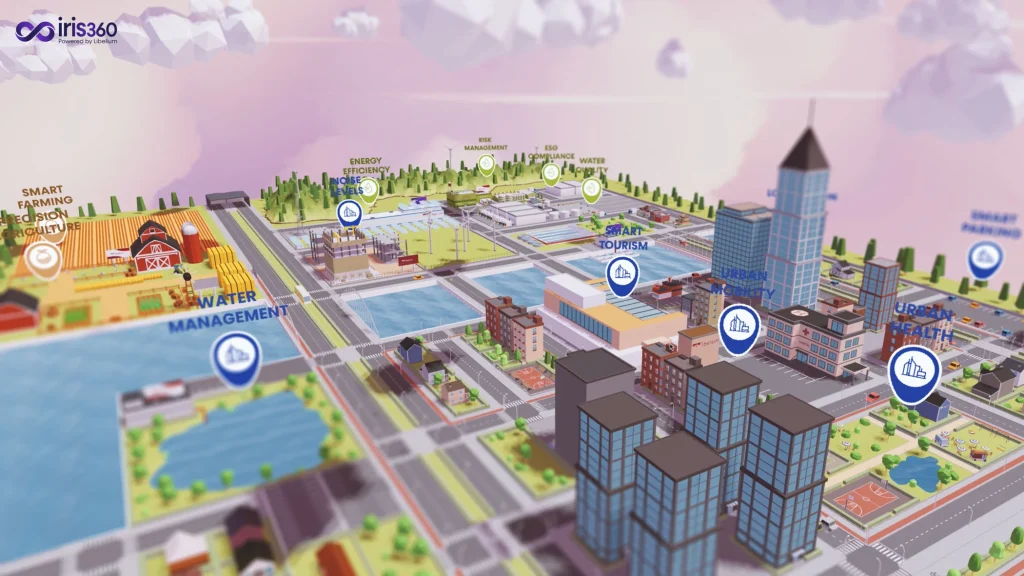
In the project Libelium Iris 360: virtual recreation of IoT impact on smart cities , an interactive 3D infographic that brings IoT technology to the palm of the hand. Through this immersive experience, users are able to visualize how Libelium's products influence a smart city , The result was a very simple, easy to understand, even for non-technical people. The result was a tool accessible from any device, ideal for corporate presentations and technology events. , The speed of understanding of the solutions offered tripled.
Setas Sevilla
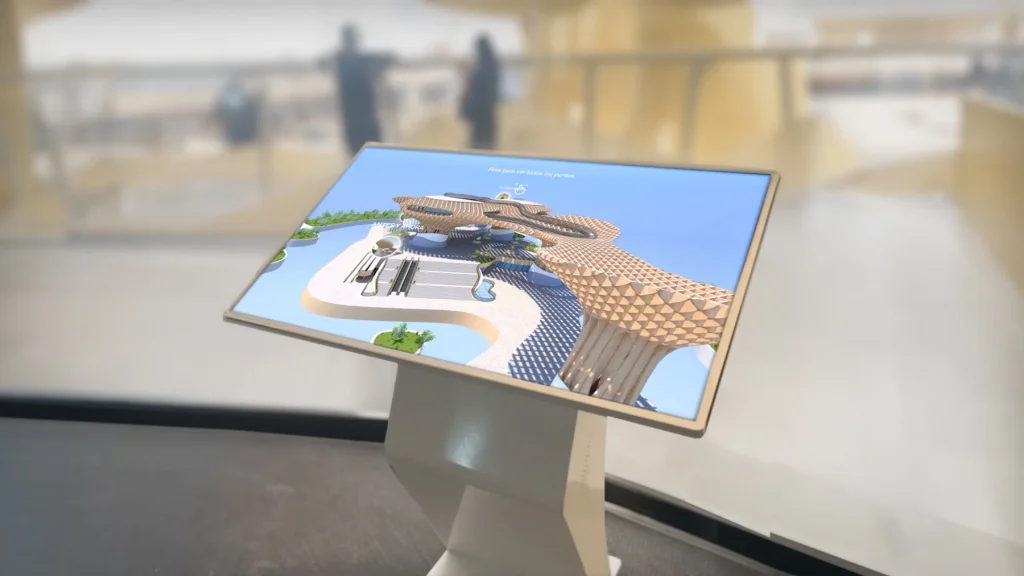
With Seville mushrooms: an interactive virtual map , reinvented the way in which one of the most important Andalusia's most emblematic architectural icons . This digital solution overlays historical content, 360º visualizations and virtual tours The virtual twin not only educates, but enriches the physical visit with a deeper understanding of its history and design. The virtual twin not only educates, it also drives the user's interaction with the architectural space , available on multiple devices and platforms.
Lékué Virtual
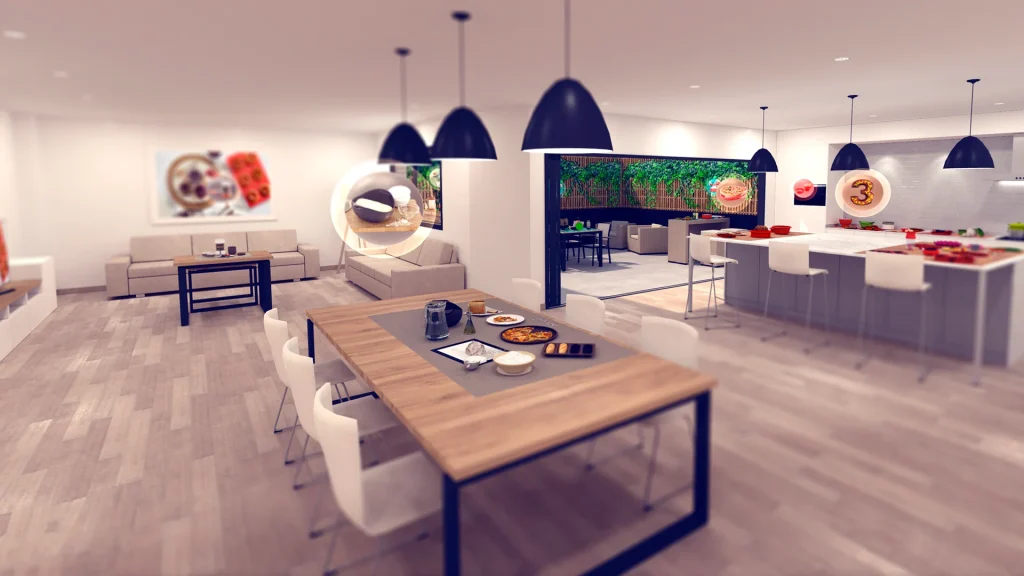
The virtual showroom for Lékué Virtual: immersive e-commerce experience demonstrates the scope of Imascono's mixed reality solutions that complement more traditional ways of doing things. Through a interactive 3D environment and thematic, users can explore products, view virtual demonstrations and enjoy rich content that transforms the experience. online shopping experience. This solution increased engagement, the brand's digital presence and opened up new possibilities in the commercial and product design process . If you want to discover how to transform your architecture and design projects? Visit Imascono we accompany you as technology and strategic partners , creating tailor-made solutions that generate real impact in each phase of the project. Contact us at and let's shape the future of architecture together with Imascono mixed reality solutions.
Industrial optimization with immersive technologies: real-life examples
Imagine an industry where efficiency is not only measured in time and cost, but also in experiences that transform the way we work and learn. . In this blog we show you how the immersive technologies are revolutionizing industrial optimization, making processes more agile, secure and accurate. You will discover how leading companies such as Iveco, Certest, Global Spedition or Tenías Group. are applying these solutions to building teams, improving operations and exploring new scenarios without physical limits, all while placing the human being at the center of innovation. Join us on this journey through the more creative and effective industrial innovation , where technology ceases to be cold and distant and becomes an exciting, entertaining, strategic and deeply human ally. From the initial strategy to the complete deployment, we will tell you how we combine technology consulting, applied imagination and immersive experience to transform the way we optimize industrial methods and take companies to the next level.
Why are immersive technologies revolutionizing industrial optimization?
Immersive technologies such as AI or extended reality are transforming industrial optimization by bringing design, training and continuous improvement processes into interactive digital environments. Thanks to the combination of AI, gamification and virtual twins , In this way, companies can simulate entire plants, optimize layouts, anticipate errors and train their teams in safe and realistic environments. This convergence of innovation, creativity and technology helps reduce costs, time and risks, driving a new way of optimization of methods in industry more agile, accurate and collaborative. From 3D simulation of production lines to gamified training or remote maintenance assistance, immersive technologies are already generating measurable impacts on productivity and safety. Their power lies in turning data into experiences, accelerating decision making and making each improvement come to life before it is implemented. Thus, industrial optimization is no longer an abstract process but an immersive, visual and connected experience.
How to implement immersive technologies for the optimization of industrial methods
Implementing immersive technologies in industrial processes is not only about incorporating new digital tools, but also about redesigning the way companies learn, experiment and improve. At Imascono we understand that each company has its own pace, and that it should not innovate for innovation's sake, but analyze how these technologies can offer real benefits to each company. For this reason, we act as technology partners, guiding from the brief to the deployment of technological solutions.
Initial Diagnosis
The first step towards immersive optimization is to identify areas of improvement and the benefits that technologies can implement in current industrial methods. Through technical audits, interviews with key teams and analysis of production data, we determine which processes can benefit most from a virtual simulation, immersive training or a digital twin. This diagnosis allows us to align the technology strategy with business objectives, ensuring that the investment has a real and measurable impact on productivity, quality and safety.
Selection of technology based on recognized needs
Once the weaknesses and opportunities have been detected, we select the most appropriate immersive technology, VR, AR, AI or XR , depending on the type of process, the existing infrastructure and the degree of interaction required. In design or layout projects, the Virtual Reality allows you to explore and validate environments before manufacturing; for maintenance or technical support, the Augmented Reality offers real-time overlay visualizations; and when looking for an interaction that solves recurring questions or improves internal communication, the AI avatars provide the perfect service. Our focus is on making every technology solve a specific challenge .
Systems integration
The key to success lies not only in the immersive experience, but in its seamless integration with existing industrial systems. At Imascono we connect XR solutions with management platforms (ERP, IoT or digital twins...), ensuring data interoperability and performance traceability. In this way, immersive experiences are not isolated projects, but part of a unified digital ecosystem that drives continuous improvement, data-driven decision making and innovation scalability.
Methodology: Applied Imagination
At Imascono we apply our proprietary methodology based on the Applied Imagination , with which we humanize technology and put it at the service of people. We believe that innovation should not be cold or distant, but accessible, natural and exciting. Therefore, in every industrial optimization project we place the user at the center, we analyze their emotions, needs and the way they interact with the environment to design immersive experiences that not only improve processes, but also the way people experience technology while learning. During the testing and deployment phase, we acted as a technology partners and consultants , We accompany companies throughout the entire process, from the initial pilot to the complete implementation. We validate the real and emotional impact of each solution, collect feedback and optimize the experience before scaling it. In this way, each project not only integrates cutting-edge technology, but also makes innovation a more human, creative and efficient process.
Real cases of industrial optimization with immersive technologies
At Imascono , We help companies make that leap by combining innovation, creativity and technology strategy. Through real projects with leading brands, we demonstrate how these technologies are revolutionizing training, management and continuous improvement in the industry. Here are some examples:
Iria Iveco
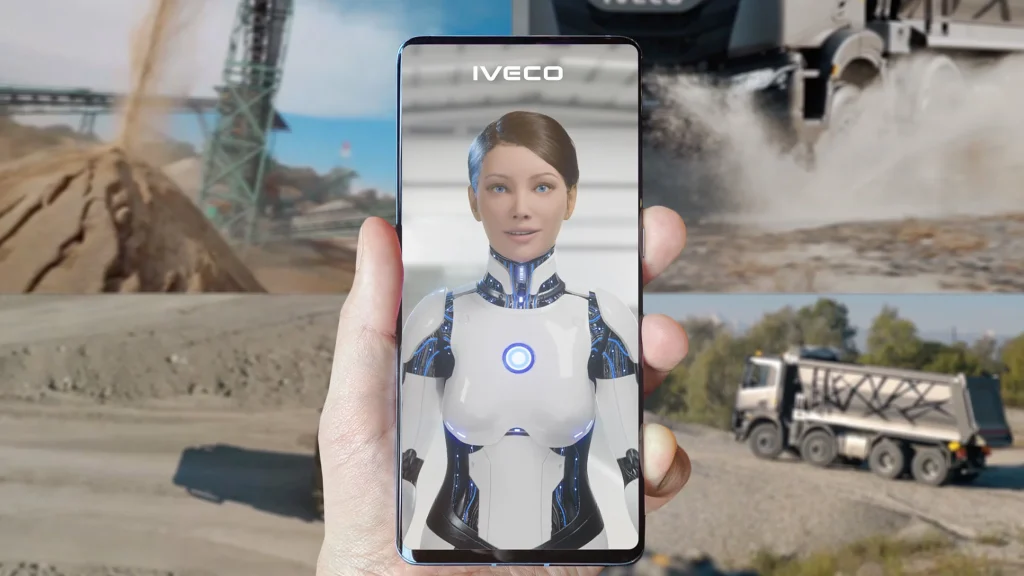
Iveco was looking for a unified, intelligent, and agile channel that would give its employees and dealers barrier-free access to training, internal communication, and technical support. In collaboration with Iveco, we brought IRIA to life, an intelligent avatar that centralizes access to documentation and answers questions from every internal department. The system processes more than 100 internal documents and is already used by thousands of employees, who enjoy immediate access to key information.
Certest
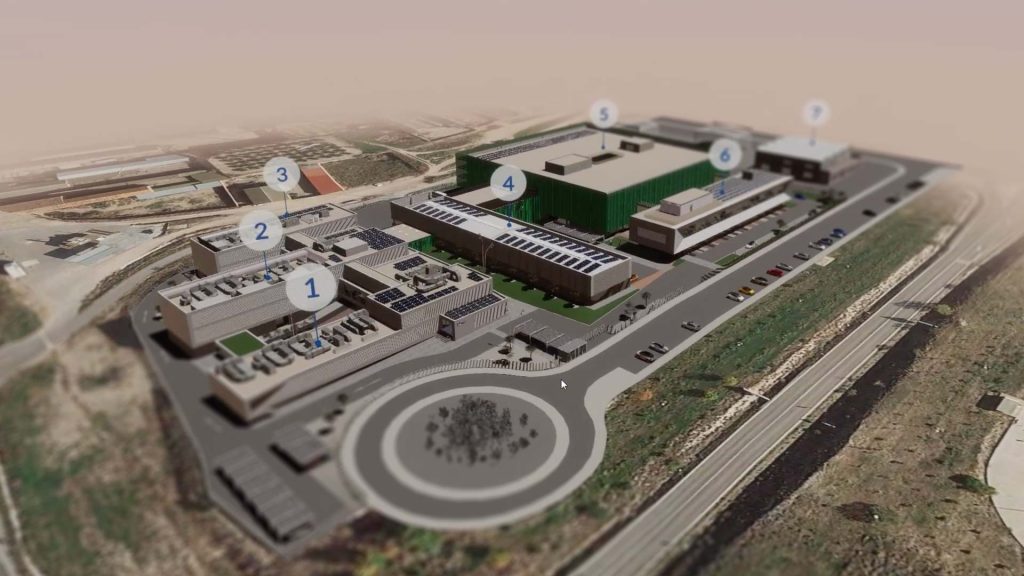
Certest, a growing biotech company, needed a modern way to showcase its facilities and processes without relying on constant in-person visits. Imascono developed an interactive virtual twin covering more than 25,000 m² spread across multiple buildings, accessible from phones or tablets. This digital twin includes a CMS for real-time updates and has cut the time spent explaining processes during sales visits by 40%.
Global Spedition
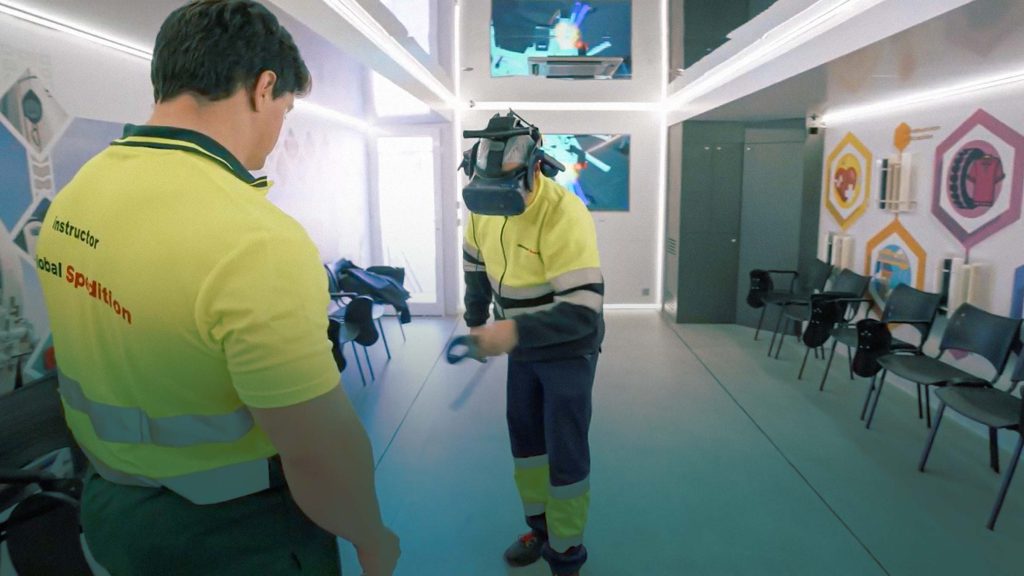
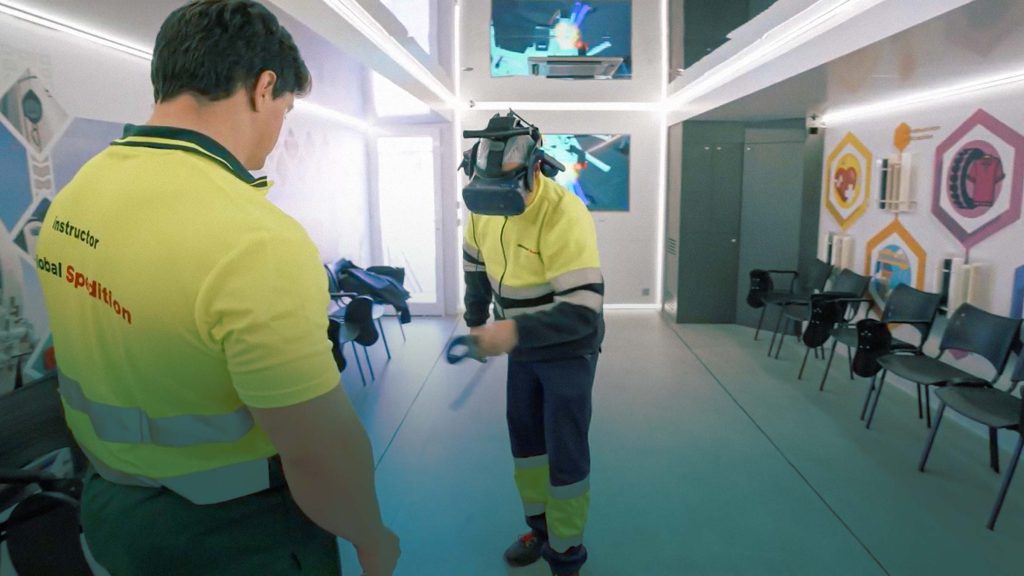
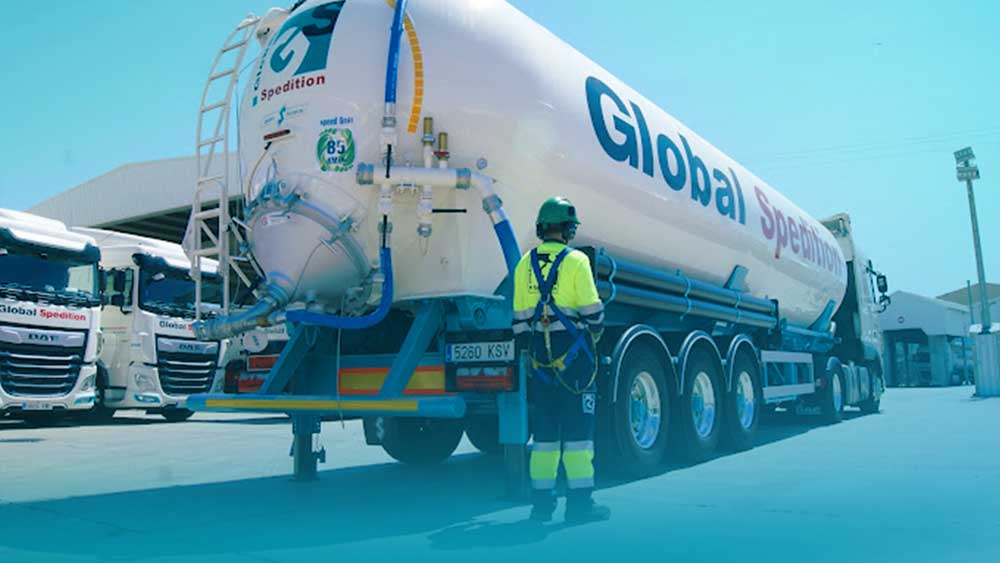
In the transportation field, Global Spedition needed to train its staff in loading and unloading protocols, including risk scenarios, without stopping the operation or taking on real hazards. The solution: a Virtual Reality training , transforming manuals and lectures into an immersive, hands-on experience. More than 800 employees have completed it, with a reduction of more than 60 % in average training time.
Grupo Tenías
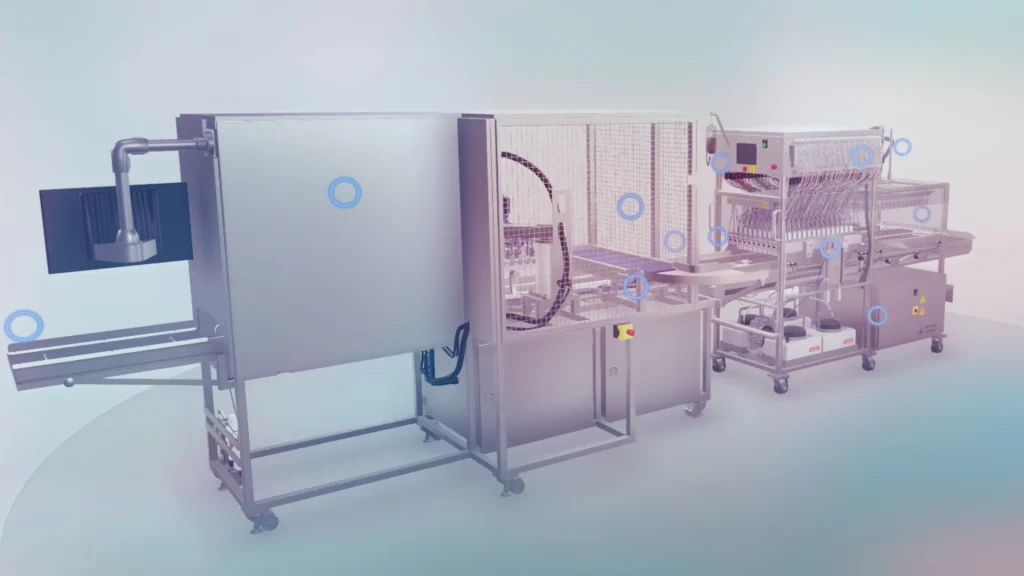
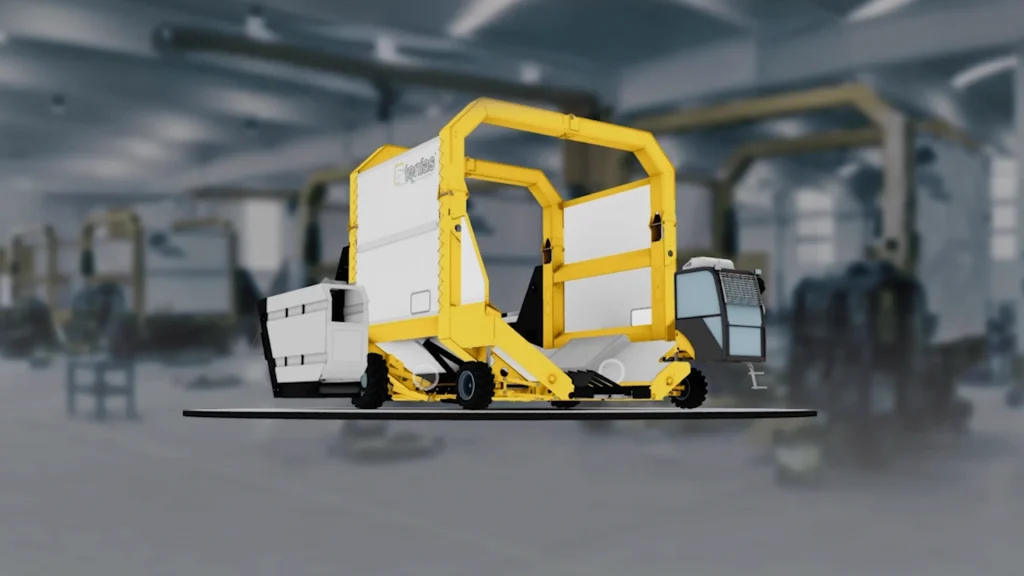
In the agricultural sector, Grupo Tenías faced logistical costs and limitations in the physical exhibition of machinery for fairs. Imascono developed for them a interactive 3D virtual catalog (Virtual Twin) where each machine can be explored in detail with interactive information points. The initiative saved costs in trade fairs, increased its virtual presence and multiplied its commercial reach. At Imascono , We accompany companies on their way to the digital transformation and industrial optimization through creativity, innovation and immersive technology. If you want to discover how to apply these solutions in your organization and take the next step towards a more efficient, human and connected industry, contact us today and let's make your project a reality.
How prototyping in VR is shaping the future of design
In a world where innovation is moving faster than ever, design processes could not be left behind. Prototyping in vr has arrived to revolutionize the way we conceive, test and refine products, moving from static sketches to immersive virtual experiences that can be explored, adjusted and validated in real time. This new way of prototyping not only reduces costs and speeds up times, but also opens the door to more collaborative, creative and effective experiences. From sectors such as education the health the logistics or the entertainment , companies around the world are already discovering how virtual reality transforms every stage of design. Discover with us in this blog how to implement immersive solutions to make the leap into the future.
The rise of virtual reality prototyping
The VR prototyping have revolutionized product design, allowing ideas to materialize quickly without the need for costly physical models. This technology accelerates iteration, reduces risks and allows experimentation with materials and functionalities in a totally safe and controlled environment, optimizing resources and making decisions based on tangible experiences. In addition, VR facilitates global collaboration: designers, engineers and stakeholders can interact simultaneously within the same virtual prototype, improving creativity, decision making and ensuring that the final product meets expectations from the first version. In short, prototypes in VR is not only transforming design processes, it is redefining the future of innovation.
Why virtual reality prototype models are changing design thinking
Contemporary design is no longer limited to paper sketches or physical models that consume time and resources. Virtual prototypes and are redefining how teams think about, create and validate products. Virtual reality allows experimentation with ideas from their earliest stages, promoting a more intuitive and user experience-centric approach. Thus, design thinking is enriched: it becomes more agile, visual and collaborative, aligning creativity and technological efficiency as never before.
How do virtual reality prototypes transform design processes?
VR prototyping revolutionizes every stage of design, offering advantages that seemed impossible before:
Faster iterations and lower costs: Design iterations happen in a matter of hours, eliminating the need to build multiple physical prototypes and significantly cutting expenses.
Immersive testing and real-time feedback: Designers can experience the product in a virtual environment, spotting issues and fine-tuning details on the fly, which leads to more accurate and effective decisions.
Collaboration across teams and locations: Professionals from different disciplines and places can meet inside the same virtual prototype, sharing ideas, reviews, and improvements in real time, with no geographic barriers.
Adopting VR Protoyping into your workflow
Bringing VR prototyping into the daily work of design teams is not just a trend; it is a strategic step toward innovation and efficiency. Integrating virtual prototypes into your processes helps optimize resources, speed up the validation of ideas, and raise the quality of projects from the very start. But, like any transformation, it requires following these guidelines:
Choosing the right VR platforms
Choosing the right platform is key to success. From immersive training software to multi-user collaborative environments, there are multiple options on the market. The challenge lies in selecting the ones that best suit your industry needs, existing design flows and the level of scalability you are looking for. With a strategic approach, VR prototyping becomes a catalyst that integrates creativity and technology.
Developing skills and partnering with experts
Adopting this methodology goes beyond technology: it requires skilled talent and a network of expert allies. The learning curve can be shortened by collaborating with specialized partners who bring experience in the implementation and customization of virtual environments. At Imascono , We not only develop customized solutions, but also accompany teams in their transformation, ensuring that each step is aligned with the company's strategic objectives.
Measuring ROI and continuous improvement
The true value of prototyping in vr is measured in results: reduced physical prototyping costs, accelerated time-to-market, increased customer-perceived quality, and improved collaboration and learning across teams. With clear metrics and continuous improvement processes, organizations can ensure that investment in virtual reality translates into tangible impact. With the creativity and expertise of Imascono, each virtual prototype is an investment in the future of each company.
Which businesses can benefit from the rise of VR in prototyping?
VR prototyping is not exclusive to one sector; its flexibility and ability to transform processes make it a cross-cutting tool that impacts industries as diverse as education, logistics, healthcare or entertainment. Any organization seeking to innovate, optimize resources and offer differential experiences can take advantage of its potential and accelerate its digital transformation. At Imascono We have already helped companies in different sectors to take this leap into the future:
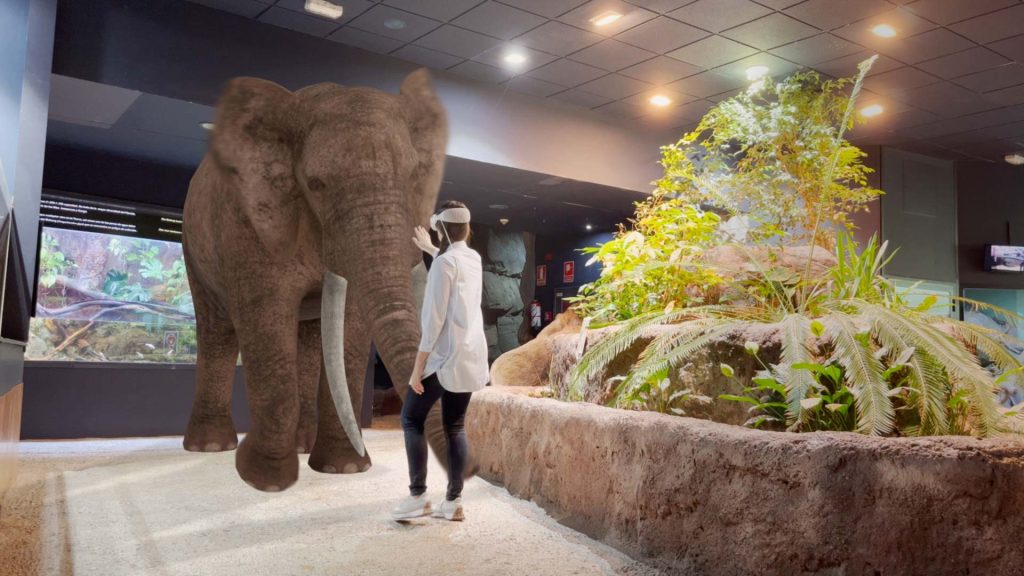
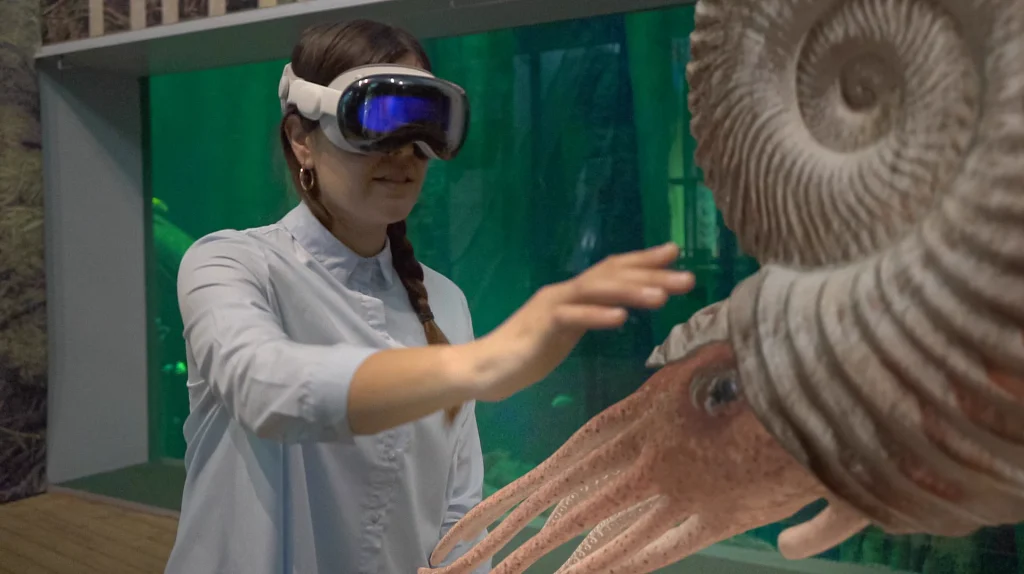
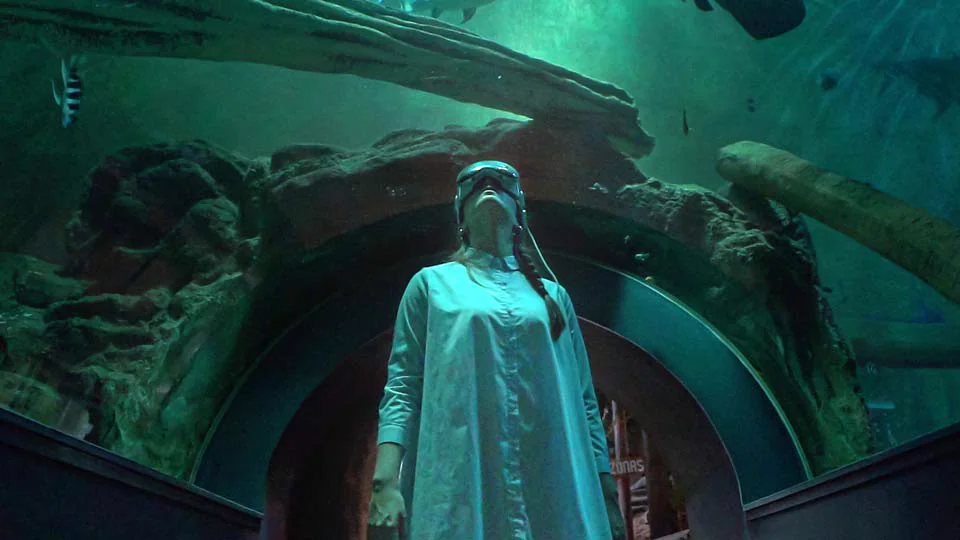
Spatial Computing Aquarium: A project that took the user experience to a whole new level, combining virtual reality and immersive interaction to create a fascinating educational environment. Together with the Zaragoza Aquarium, we developed this pilot project for a tour of the facilities, giving visitors the chance to do everything from talking live with their own personalized guide and seeing a 3D recreation of a coral reef with ammonites from more than 200 million years ago, to touching a life-size elephant or traveling to the center of an erupting volcano, enriching the entire visit.
Global Spedition: Through a virtual training platform, we turned traditional manuals and PowerPoint decks into immersive, gamified training. The best part of this project was the employees' reactions. Used to more conventional occupational health and safety training, they saw this experience as a useful, fun, and fast way to learn response and safety protocols. As a result, we optimized the team training processes, with an immediate impact on productivity.
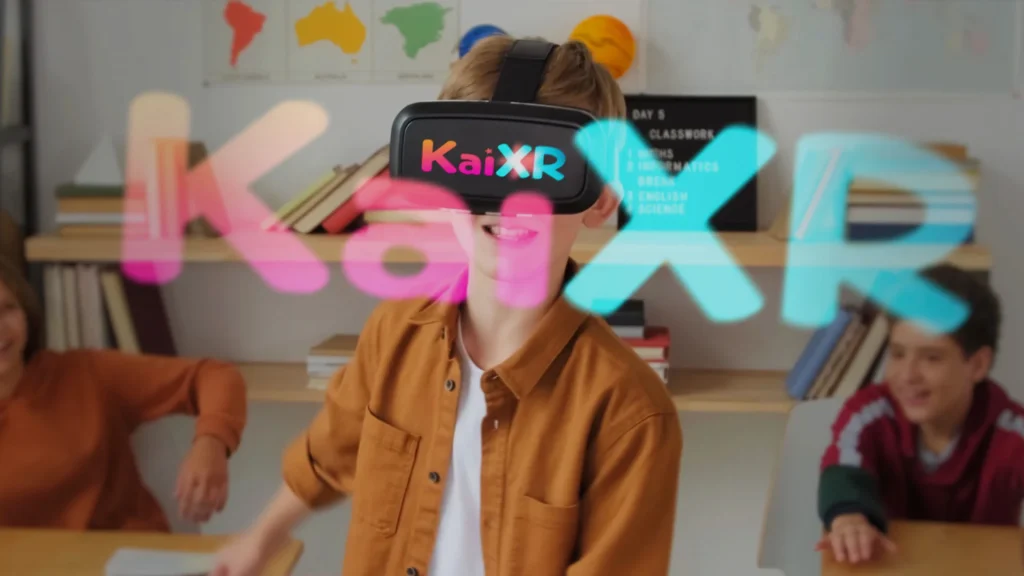
Kai XR Platform: In the educational field, we developed a solution that democratizes access to immersive content for students, turning learning into an active and memorable experience. The result is an accessible, sophisticated, and intuitive VR web application accessible from web browsers, both on computers and mobile devices, as well as from the actual virtual reality glasses. Already more than half a million children are enjoying the educational experiences!
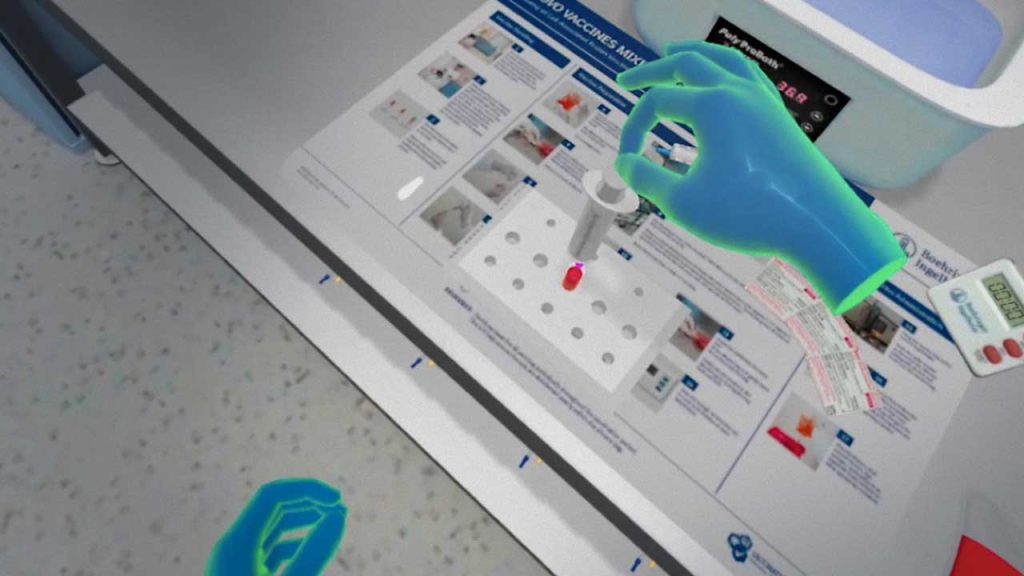
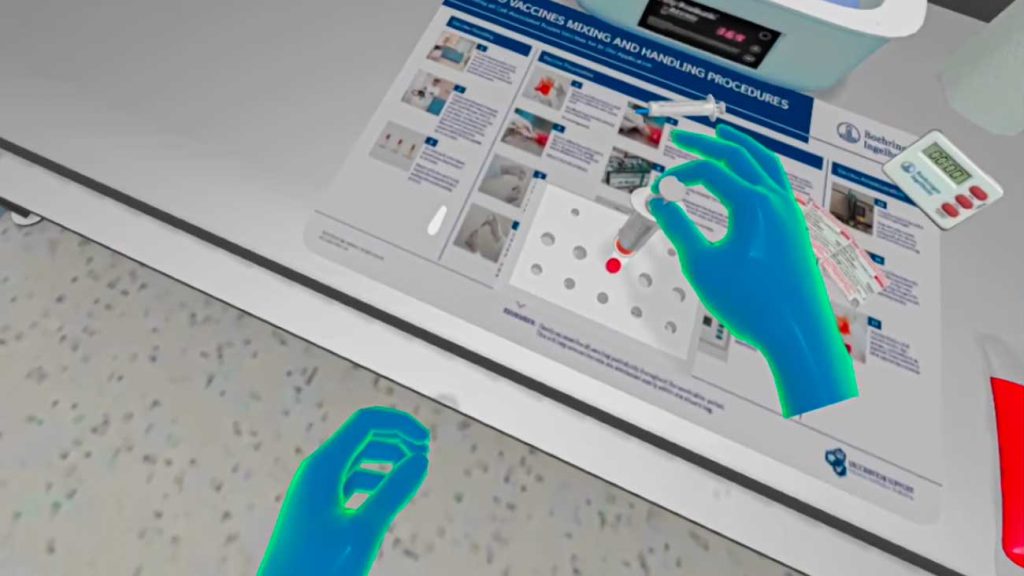
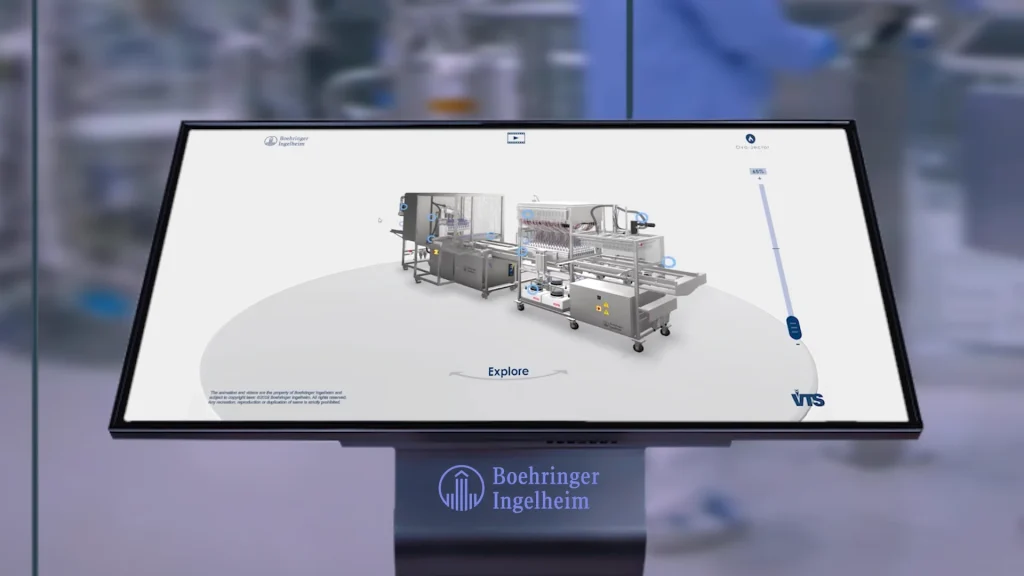
Vaccines: In the healthcare sector, we created an immersive training experience on vaccines for Boehringer Ingelheim, making complex processes easier to understand in a more visual, interactive, and effective way. A clear example of the value VR brings to highly specialized industries. This allows Boehringer to deliver training in different parts of the world at the same time, in the language the laboratory specifies, while saving on travel costs and on materials used exclusively for training.
Enhance your design prototypes with Imascono's virtual reality solutions for businesses.
In a world where innovation makes all the difference, the VR training has become one of the most powerful tools for transforming ideas into tangible realities. At Imascono we do not only develop virtual prototypes s We help companies to imagine their design processes, optimize resources and offer unique experiences to customers and training teams. Our experience positions us as the ideal partner to integrate virtual reality solutions that bring real value to your business. From conceptualization to implementation, we work with you to create virtual environments that enhance creativity, accelerate time-to-market and improve decision making. Because each prototype is much more than a model, it is the foundation on which the future of your company is built. If you want to learn more about virtual training, get in contact with us and discover how VR solutions from Imascono can take your design and prototyping to the next level. Find out more about how: step-by-step integration of virtual reality in your company
What does 6DoF mean in VR? Understanding the 6 degrees of motion
Imagine being able to move, interact and explore a virtual world in complete freedom as if it were real. This is the 6DoF ( six degrees of motion ), the most advanced technology in VR that transforms video games, simulators, professional training, medicine and tourism into experiences. fully immersive and realistic . Although its adoption still faces challenges due to cost and complexity, Imascono makes 6DoF accessible through customized solutions such as training sessions Virtual Trainings and the gamified experiences of Virtual Reality allowing companies and users to experience virtual reality in a simple, effective and surprising way. In this blog article, we will guide you step-by-step to discover what 6DoF is, how it enhances VR, its applications in different sectors and how you can experience it today . Get ready to enter virtual reality as you have never experienced it before.
What is 6DoF (Six Degrees of Freedom)?
The term 6DoF ( Six Degrees of Freedom ) defines the six degrees of freedom of movement that allow the user to move in a virtual environment just like in the real world. It includes both rotations (turning the head, looking up/down, leaning) as translations (moving forward, backward, moving laterally or approaching an object). Unlike 3DoF, with the six degrees of motion the user not only observes, actively participates in the experience, achieving a realistic and transformative immersion. At Imascono we define it as the immersive VR master key with applications ranging from entertainment to business training. This freedom of movement is what we seek to develop in each of the virtualized trainings that we generate for companies in the industrial and health fields through the Virtual Trainings . Simulations for the training and testing of processes, machinery and work procedures in which the user drives the direction of the experience. Perfect for high-risk training where tacit knowledge and learning-by-doing play a key role in learning.
How 6DoF enhances VR Experiences?
The real meaning of 6DoF is how it transforms the way we move and interact in virtual reality. Thanks to the six degrees of motion users are no longer limited to observing, but can also walking, approaching, dodging or manipulating objects as if they were in the real world, making interactions much more intuitive and natural. This freedom of movement translates into a unprecedented immersion and realism . The brain interprets virtual stimuli as responding coherently to each physical action, blurring the boundary between digital and real. The result: memorable experiences that generate authentic emotions and a level of presence impossible with more basic technologies such as 3DoF. In addition, the 6DoF is already a reality thanks to the compatibility with the main VR devices on the market . This evolution of hardware allows companies and creators to take advantage of the full potential of the Immersive VR designing innovative solutions that combine movement, realism and emotional connection. You may be interested in → Virtual Reality: Examples and applications As an example of a use case we can talk about the project of KAI XR Platform . KAI XR is a U.S. company that uses the virtual reality y la freedom of movement 6DoF (Six Degrees of Freedom) to transform education into an immersive, interactive and meaningful experience. Through its platform, children can move and explore virtual environments with total freedom, learning in a hands-on and participatory way. This approach empowers understanding and retention of knowledge it encourages curiosity and creative thinking, and turns learning into a stimulating and collaborative adventure.
Benefits and applications of 6DoF in VR
The 6DoF , o six degrees of motion is not just a technical term, it is the key that opens up a world of possibilities for richer, more interactive and memorable virtual experiences. Its benefits go far beyond entertainment, impacting multiple sectors where immersion and precision are essential.
Games and immersive experiences
In video games and entertainment experiences, the 6DoF takes immersion to the next level . Players can explore virtual worlds with total freedom, interact with objects, avoid obstacles and actively participate in the narrative. The difference with less advanced systems is abysmal: you no longer look, you live the story .
Simulators and design
At simulators and industrial design the six degrees of motion allow scenarios and prototypes to be recreated with millimetric accuracy. Engineers, architects or designers can move inside a 3D model, evaluate ergonomics, detect problems and optimize processes without having to physically build the product.
Professional training
The 6DoF is an invaluable resource for professional training from machine operations to training in complex environments. Freedom of movement ensures that users learn by doing developing skills with safety, efficiency and fidelity to reality.
Medical procedures
At medicine the 6DoF revolutionizes the way we train and practice surgical procedures . Professionals can simulate surgeries with total precision, practice complex movements and reduce risks, improving both preparation and confidence in real environments, allowing error in learning and saving costs and healthcare material. An example of this can be found in the Boehringer Ingelheim virtual laboratory where healthcare professionals could practice handling and preparing the pharma's latest liquid medicines. You can learn more about the use of VR technology in healthcare in the article: Virtual Reality and Medicine .
Tourism experiences
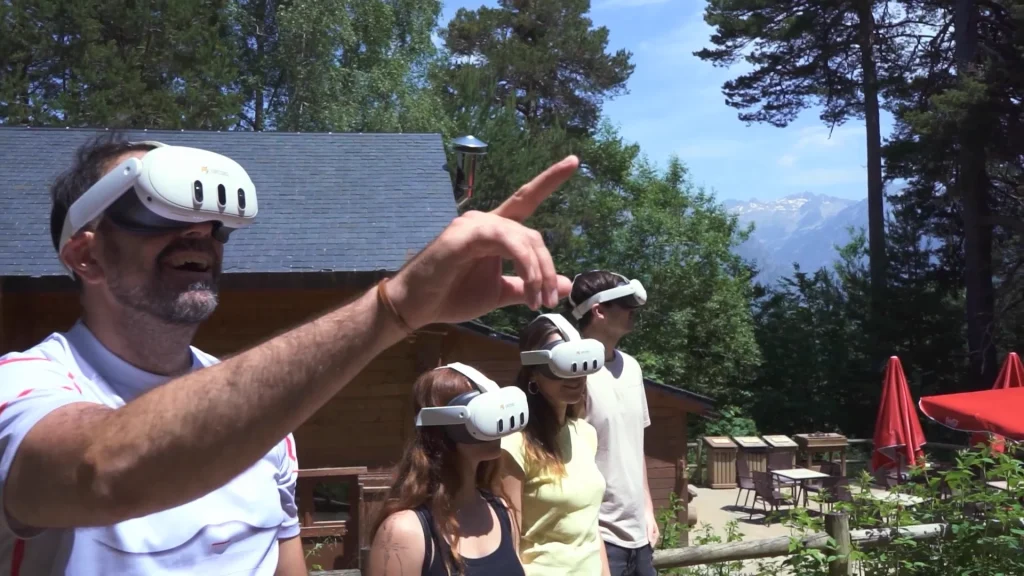
Even tourism benefits from the 6DoF. Travelers can explore destinations, museums or monuments in 3D. As if they were there, walking freely, observing details and enjoying personalized experiences that inspire wanderlust and emotional connection with the place. Can you imagine crossing a suspension bridge between two mountain peaks? Skiing without leaving the city? In the Frozen Emotion VR project was able to bring the snow and skiing of the Pyrenees to virtual reality. Using the full potential of the 6DoF by complementing it with a physical bridge, taking the adrenaline of the users to the maximum!
The current reality of 6DoF in VR
Today, the 6DoF represents the pinnacle of VR technology . With its six degrees of motion offers fully immersive experiences where the user can move, interact and explore virtual environments like never before. The sense of presence is total, and the creative and professional possibilities are virtually limitless. However, this cutting-edge technology is still has not been generalized . The main challenge is that the devices and software necessary for 6DoF involve higher costs and technical requirements than the most basic VR systems. This limits their adoption, especially for companies looking to implement immersive experiences without compromising their budget. At Imascono We understand these barriers and turn them into opportunities. We offer customized services tailored to each company and its specific needs from experience design to the complete integration of the necessary hardware and software. What we know Spaceship Projects customized projects. In this way, implementing 6DoF is no longer an unaffordable luxury, but a solution. realistic, scalable and strategic capable of generating real impact in any sector.
Experience 6DoF VR easily thanks to Virtual Training by Imascono
With Virtual Training, experiencing 6DoF in VR has never been easier or more accessible. . Our Virtual Reality product combines the latest software to deliver fully immersive experiences, tailored to each user and each company. From professional simulations to entertainment environments, Virtual Trainings allows you to move, interact and explore with total freedom, realizing the full potential of the six degrees of motion . At Imascono we know that each project is unique. That's why these virtualized simulations and training adapt to your needs, facilitating the implementation of 6DoF without technical complications or large investments. We want your team and your customers enjoy the highest quality VR experiences in a simple and effective way. . Want to find out more? Contact with us today and let us guide you in the creation of fully immersive and customized virtual experiences.
Education 4.0: learning the technological future
Welcome to the era of Education 4.0, professional education and training in Industry 4.0. technology and innovation transform learning into an immersive, interactive and personalized experience. We are living in an era of major changes in the industrial sector . The inclusion of robots and Artificial Intelligence, IoT systems, automation of certain processes, has led us to be in a continuous process of adaptation and learning. In this context, throughout this article we want to delve deeper into the training model proposed by the new technologies applied to industry . From simulations and virtual training to personalized assistants for each employee, leveraging the latest innovations in generative AI. Ready to explore how technology is redefining professional training?
4.0. concept in education
This educational model combines innovation, technology and personalization to prepare professionals for a hyper-connected and constantly changing industrial and business world. Industry 4.0 in education seeks to align teaching-learning processes. with market demands, the latest technologies and new security protocols. The objective of Education 4.0. in the industrial field is to that workers can develop their capabilities more effectively and efficiently . Reducing training times, achieving better learning results and, above all, improving the confidence and capabilities of each of them. Inciding in a personalized way in each training process. An example of this can be found in the Virtual Trainings , virtualized trainings adaptable to all types of industrial sectors, where all types of processes and situations are recreated in Virtual Reality. From the process of elaboration of a new drug in the pharmaceutical industry as in the case of Boehringer Ingelheim Vaccines or VR training in occupational risk prevention developed by Global Spedition
Outstanding characteristics of education 4.0.
Professional education and training 4.0 seeks to improving the development of workers' skills in the industrial environment through the use of emerging technologies and innovative methodologies . Below, we will discover the main features that make this approach an essential pillar for the growth and adaptation of professionals in the digital era.
Active, gamified learning
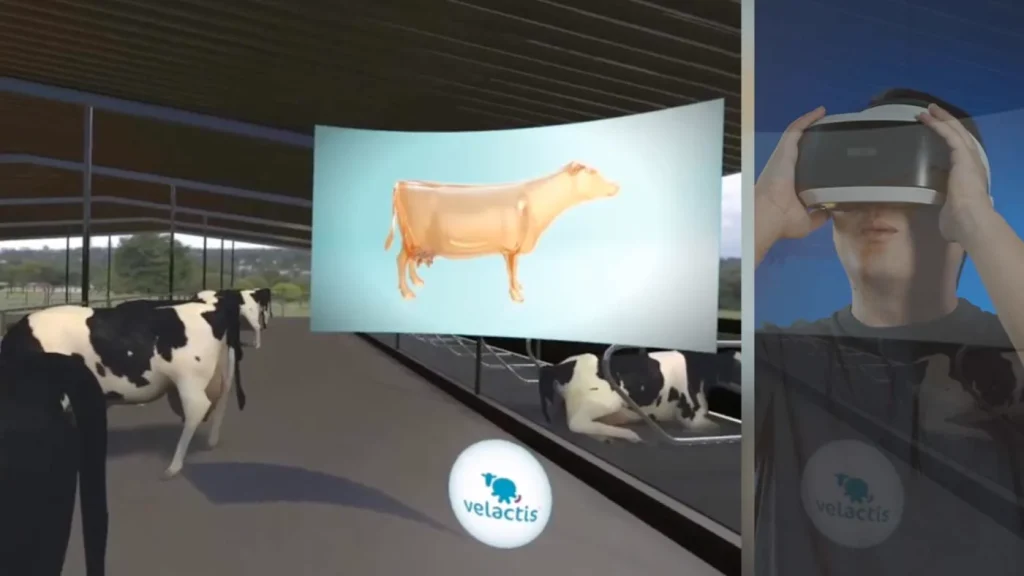
The active and gamified learning in industrial training 4.0 aims to involve workers directly in the training process, using digital tools and collaborative approaches. The Gamification plays a fundamental role, transforming the training into an interactive and motivating experience. At incorporating game elements, such as challenges, rewards and levels In this way, workers stay engaged and motivated, improving their ability to learn and retain information more effectively. An example of this can be found in the Virtual Training developed by CEVA in which a farm is recreated in Virtual Reality with different gamified challenges, explanatory videos and quizzes to advance in the retention of knowledge about the benefits of its latest Velactis product.
Increased creativity
Creativity is key in industrial 4.0 training, as workers must be able to adapt to a dynamic environment and find innovative solutions to complex problems. With the use of technologies such as Virtual Reality, Artificial Intelligence and the virtual twins In addition, employees can participate in 100% training activities adapted to the development of their skills, both technical and soft skills. This methodology not only improves comprehension, but also stimulates creativity by allowing them to interact with content related to their work area such as engineering, resource management or technical troubleshooting.
Continuous feedback
One of the cornerstones of professional training 4.0 is the continuous feedback . Artificial Intelligence and IoT sensors enable the collection and analysis of data on the performance of each worker during training. Thanks to this data collection, the mployees receive immediate feedback on their progress, which allows them to constantly improve . This instant feedback approach improves knowledge retention with the support of technology to advance your professional development, such as interactive infographics of machinery and processes, which allow you to to have a large-scale view of the different aspects and processes to be taken into account . An example of this can be found in the virtualization of agricultural machinery from Tenías Group, that helps to get to know each of its components more closely.
Personalized attention
One of the strengths of 4.0 training is personalized attention and adjusting to the learning pace of each worker. Thanks to access to information in the cloud and the use of intelligent agents, Each worker has his own assistant who accompanies him in all his tasks. Offering advice, information and statistical data that enrich the work of workers. A case of success can be found in Iveco . Through IRIA, your virtual avatar The automotive manufacturing company brings together in one place all training, catalogs and frequently asked questions. To support its employees internally as well as its dealers, customers and drivers externally. If you want to learn more about the use of AI in this sector, visit our article Applications of artificial intelligence in industry. .
Virtual Training as an application in education 4.0.
The Virtual Training has established itself as one of the most prominent applications in Education 4.0. transforming traditional learning into an immersive, hands-on experience. Thanks to virtual simulations and 3D environments, students and professionals can interact with processes and tools safely and without the risks associated with learning in real environments. This methodology not only improves the understanding of complex concepts, but it also allows practicing skills in controlled scenarios which reinforces users' confidence and competence. In addition, by incorporating gamification elements, such as challenges and missions, Virtual Training motivates students to actively participate, making learning more dynamic and engaging. Virtual Training applications extend to multiple sectors, from industry to health. For example, we find the case of virtual training for veterinarians developed by Boehringer Ingelheim and USDA Agricultural Research Service. A 3D simulation of the poultry industry's farms in which all the safety and sanitary protocols to be followed by veterinary professionals are recreated. .
Examples of the use of education 4.0. at Imascono
Imascono is positioned as a benchmark in the implementation of Education 4.0 by combining creativity, technology and interactive learning in industrial environments. These projects apply immersive technologies to transform professional training into unforgettable experiences for workers. Throughout this article, we have seen some of the most relevant examples, highlighting the training courses developed by Boehringer Ingelheim one of the world's leading pharmaceutical companies, or the innovative projects carried out by Iveco and Global Spedition . After more than thirteen years working for major national and international industrial companies, our team of engineers is capable of develop any type of Virtual Reality training, adapting to the specific learning needs of each company. . Contact with us and find out how we can help you bring your training VR simulations to life.
Simulation learning positions itself as a key model in high-risk environments
The simulation learning has become the key to form with efficiency in high-risk environments. We are no longer talking about endless manuals or monotonous presentations, but about immersive, gamified and secure experiences that allow learning by doing, without putting resources or people at risk. The training is transformed into something real , practical and memorable all thanks to Virtual Reality. In this blog you will discover how leading industrial companies and enterprises are revolutionizing the way they teach with simulations, digital twins and AI avatars . An essential guide to understand why this methodology is no longer the future but has already reached the business environment to improve learning and professional training.
What is simulation learning and how does it work?
The simulation learning is an innovative strategy that enables the acquisition of knowledge and skills through hands-on experience in virtual environments. and controlled replicating real-life situations without risk. This action-based approach offers total immersion, where the user faces challenges, makes decisions and receives immediate feedback, achieving effective and lasting learning . The effect of simulation on learning is undeniable: improves retention, boosts confidence and prepares professionals to act successfully in high-risk environments . For this reason, simulation is positioned as one of the most important key tool for training, error prevention and safety assurance making it the best option for sectors where every decision counts. An example of the great impact that simulations have on professional training can be found in the project conducted by Global Spedition . The transport company, which specializes in hazardous transports, has developed its occupational risk prevention training in Virtual Reality . A fact that had a favorable impact on the acquisition of knowledge and the speed at which its workers were trained. Gamifying the educational experience by incorporating times, rankings and bonus points into the simulation .
Simulation as a learning strategy in high-risk environments
In sectors where the margin of error is minimal, such as medicine, aviation or the energy industry, the simulation as a learning strategy has become an essential tool. Enables training of key skills in virtual, secure and controlled environments where professionals can experience critical situations with no real consequences . This action-based methodology improves decision making, reduces errors and strengthens preparedness for high-pressure scenarios. You may be interested in → What is Industry 4.0 and what are its main characteristics?
The relevance of creating controlled environments for high-impact practices
Controlled environments are key to high-impact learning: allow to fail, repeat and improve without risk . Whether in a virtual operating room or in a virtual laboratory such as Boehringer Ingelheim's. These immersive experiences faithfully replicate real-life situations, offering professionals a safe and effective practice. The examples of simulation learning demonstrate that this strategy improves performance, boosts confidence and prepares for action. r when it really matters. The data shows it: according to the latest PwC report, training in Virtual Reality is 4 times faster than in a classroom.
Benefits you should know about simulation learning
When it comes to training in high-risk environments, safety and deep learning are essential. Many of the situations that workers and professionals will experience in their work environments will be stressful, unexpected and outside the traditional theoretical manuals. This is why the simulations in Virtual Reality They allow learning by doing, learning by trial and error, through (virtual) experience. The following is a review of three key pillars on which the Virtual Trainings ( VR training ) that explain the transformative impact of simulation as a learning tool.
Confidence building
One of the most prominent benefits of simulation learning is the development of confidence. By facing complex situations in a controlled environment, employees have the opportunity to experiment without fear of making mistakes. This approach fosters active and experiential learning, resulting in more skilled, confident professionals who are able to address real-world challenges more effectively. This approach fosters active and experiential learning, resulting in professionals who are more skilled, self-confident and able to address real-world challenges more effectively.
Better preparation for unexpected situations
Simulation learning prepares employees for unpredictable scenarios, which turns out to be one of its greatest advantages. By recreating critical or infrequent situations, workers are able to Anticipate potential problems and respond calmly, making effective decisions in times of high pressure. This ability to adapt quickly to the unexpected reinforces knowledge retention, contributing to a deeper understanding of processes and strengthening the skills needed to face real challenges in the work environment.
Instant feedback
Immediate feedback is essential in simulation-based learning, and is enhanced by the integration of virtual avatars equipped with Artificial Intelligence . These agents interact in real time, providing customized responses and instant evaluations that are adjusted to the evolution of the user's performance. This continuous feedback process generates a dynamic environment of constant improvement, making learning much more effective and tailored to the needs of each individual. Want to dive deeper into the use of AI in industry? Visit our post Artificial intelligence applications in industry
Outstanding examples of simulation learning
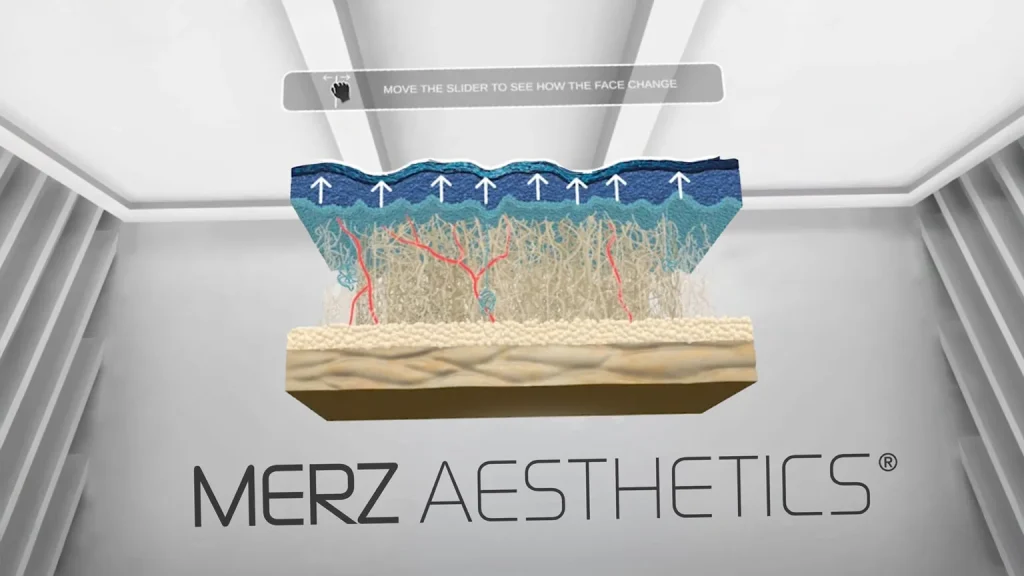
Simulation doesn't just sound good, it works, and these cases prove it. From hazardous materials logistics to pharmaceutical training, leading companies such as Global Spedition, Merz Aesthetics, CEVA and Boehringer Ingelheim have opted for immersive experiences. Here's how these companies have applied it.
CEVA Velactis → This Virtual Traininguses Virtual Reality to train veterinary professionals in the application of Velactis, a product designed for health management in dairy cows. Through a virtual farm simulation, users can interact with gamified scenarios, watch explanatory videos and take quizzes, all in a multilingual environment and with a training duration of under 10 minutes.
Kai XR Platform → One Educational platform of Virtual Reality Designed for primary and secondary school students. This tool allows students to explore immersive experiences on topics such as science, technology, history, and sports, all through an intuitive interface and accessible from web browsers and VR devices.
Virtual Experience Veterinary → A VR training experience developed for veterinary students, allowing them to carry out practical training on a poultry farm without needing to be physically present. This solution overcomes the legal restrictions that prevent undergraduate students from accessing industrial farms in the United States, offering a simulation of the safety and health protocols that veterinary professionals must follow. The experience has been rated positively by users, with 96% giving it between 4 and 5 stars and 85% interacting with all of the training content
What else can you do? Other key tools for training
The simulation learning is just the beginning. The technological revolution in training environments goes much further, and today there are tools that raise the experience to unprecedented levels. We are talking about virtual avatars with AI , digital twins and interactive environments realistic that monitor, analyze and optimize at each step. Let's take a look at its use with some of the most outstanding examples Iria Iveco Iria is a virtual avatar with AI designed to accompany the internal training of the Iveco team. Interacts in real time, resolving doubts and guiding users with proximity. . An innovative way of humanizing and personalizing digital learning, becoming a ongoing support within the training ecosystem . Ovo Xtractor The digital twin Boehringer Ingelheim accurately replicates a poultry machine to train personnel without using the actual equipment . Allows you to practice, explore and understand each component safely and remotely. Ideal for reducing errors and improving technical proficiency, obtaining training beyond a manual. Certest Certest, wanted to showcase its transformation by creating a interactive virtual twin of your facilities. We develop a 3D model detailed that allows to tour its factory and remote R&D centers from mobile or tablet. The experience not only enhances the value of its expansion, but is updated in real time thanks to a Custom CMS . A perfect tool for communicating innovation on a global scale. These solutions, ranging from intelligent avatars to virtual twins, not only enrich the simulation-based learning The new system will make it a more complete experience, accessible and adaptable to the challenges of the present. You can read more about virtual/digital twins in our latest post What is a virtual space and how to use it If you have made it this far, you already know that the simulation learning is not the future, it is the present. An effective, safe and motivating strategy for training in complex or high-risk environments. Would you like to implement it in your company? At Imascono we are ready to help you make the leap. Contact us at and let's discover together how to transform your training into immersive experiences that leave a lasting impression.
The future of entertainment through Virtual Reality
From video games to concerts, sporting events to amusement parks, the Virtual Reality is revolutionizing the way we experience entertainment, turning the everyday into the extraordinary. Virtual Reality is breaking down the barriers between the digital and the physical, and also, introducing the first person in entertainment, achieving that you are the real protagonist . The adrenaline, the story, the excitement, the entertainment is amplified, taking interaction and engagement to unprecedented levels. More than a technology, it is the key to customized, unforgettable and affordable experiences from anywhere in the world. Virtual Reality not only transforms how we enjoy entertainment, but also opens up new business opportunities, inviting us to dream bigger. In this blog article, we'll show you the most exciting applications of Virtual Reality in entertainment . How Virtual Reality is transforming the way we consume entertainment and the most innovative projects that are setting trends. Get ready to discover this transformation.
Main applications of Virtual Reality in the entertainment industry
Virtual Reality is revolutionizing the entertainment industry. offering immersive experiences that transform the way we enjoy content, experiences that challenge the limits of imagination. Going beyond visuals, beyond storytelling, to give way to storyliving, to be the real protagonists of the action. Next, we will discover the main applications of Virtual Reality in the entertainment and digital leisure sector:
Theater
The theater is undergoing a process of change thanks to Virtual Reality. This technology has broken the traditional barriers of the stage The theater allows the spectators not only to witness a play, but to become the protagonists of it. Imagine being part of a theatrical narrative where you can interact with the characters and decide the course of the story. Virtual Reality has also opened the doors to more social theatrical experiences, where live actors interact with virtual audiences in digitally created scenarios. In addition, the special effects and changes of scenery that were impossible in the past The theater, only possible in our imagination, is now redefining the very concept of what it means to go to the theater. Find out more about the impact of this technology on entertainment at Immersive experiences through the Apple Vision Pro .
Virtual museums
The Virtual Reality is taking museums to a whole new level transforming the way we explore art, history and culture. Now, it is possible to tour the halls of the most prestigious museums from the comfort of your home, admiring masterpieces with the highest level of detail. Thanks to VR, visitors can travel back in time and witness ancient civilizations or walk through archaeological sites as they were in their moment of glory. In addition, interactive exhibits allow for active participation, creating an emotional bond with the parts. Democratizing access to knowledge and making art and history more inclusive than ever. How to walk at your own pace through a Romanesque castle with ten centuries of history in the Loarre XR experience or to fill with life and interaction the visit to the aquarium thanks to the Apple Vision Pro . You may be interested in → Virtual Reality in museums: how is it being applied?
Virtual theme parks
Imagine entering a world where adrenaline has no boundaries and the experiences are so real that you could feel the wind in your face while flying over magical mountains or crossing distant galaxies. The virtual theme parks take fun to another level, allowing users to live unique and immersive experiences without physical restrictions. . With customized, sustainable and animated scenarios and characters, they offer adrenaline and tailored entertainment to the tastes of each individual, transforming the leisure industry. Virtual Reality thus becomes a technology that is transforming amusement parks forever, where roller coasters go beyond the loops The game can incorporate new actions and challenges or even change the scenarios depending on the season of the year or new innovations. Making each trip a totally different experience from the last one. . If you want to learn more about this specific use of VR, please visit our article Technology trends in amusement parks: Virtual Reality .
Immersive cinema
Immersive cinema makes the viewer an active part of the narrative. The new technology allows you to explore the world surrounding the story and participate in the action. This technology reinvents the cinematic experience, making every movie an unforgettable multi-sensory journey. Thanks to advances in Virtual Reality and haptic suits, viewers can become completely immersed in the story, interacting with characters . Every corner of the scene is at your disposal, and the story comes to life around you, offering a very personalized and memorable cinematic experience. Can you imagine being able to live the great final battle hand in hand, side by side with the protagonist? In this area, it is worth highlighting the TV series 'Las Vueltas que da la Vida'. produced by Vidacaixa , Movistar Plus and TBS where not only was the program recorded in a virtual neighborhood, but also this space was left open so that viewers could enjoy the virtual transmedia content.
Video games
The video game industry is changing and Virtual Reality is redefining what it means to play. You no longer just control a character; you become him. From epic battles in fantastic worlds to hyper-realistic simulations, Virtual Reality offers unprecedented immersion. Thanks to the VR glasses, haptic suits and gloves, and even platforming, the immersion in the game's story is ever increasing . The whole experience becomes first-person, you are the one who moves in the game world, who interacts with the other characters. This technology raises the level of realism and emotion in videogames, creating more dynamic and personalized experiences, such as the one developed by Foster Hollywood for its Halloween campaign. If you want to know more about VR in video games click here: Virtual Reality in video games: the future of entertainment .
Outstanding benefits of Virtual Reality in entertainment
In a world where entertainment is evolving by leaps and bounds, the Virtual Reality has established itself as the ultimate tool to revolutionize the way we enjoy our products and services. of our favorite experiences. More than a technological trend, it is a window to unforgettable experiences, where every detail is designed to captivate, thrill and surprise. From its ability to creating fully customized worlds to its ability to break down physical barriers and open new horizons VR is redefining the rules of the game. Discover below some of the benefits that seem like something out of a science fiction movie, but are already a reality!
Remote access
Eliminates physical barriers Do you want to visit a museum in Paris, attend a concert in Tokyo or play in a futuristic theme park without leaving home? Virtual Reality makes it possible. This remote access democratizes entertainment, making it accessible to more people. No matter where you are or that you are physically challenged, a simple device connects you to incredible experiences instantly. This not only broadens the scope of entertainment, but also promotes a more inclusive way of experiencing it, thanks to Virtual Reality glasses. With the aim of making tourist visits to museums and monuments accessible to people with reduced mobility, the project of LOARRE XR where thanks to its virtual twin and VR experience, anyone can visit the Loarre Castle at their own pace. .
Unique and personalized experiences
Virtual Reality transforms entertainment by place you at the heart of every experience. Imagine exploring a magical realm designed exclusively for you or facing challenges that adapt to your skills. This technology allows total customization, where every detail can be adjusted to your preferences, ensuring that every time you immerse yourself in a virtual world, it is an unrepeatable experience. With the ability to create unique stories and environments, Virtual Reality not only elevates the level of entertainment, it also ensures that every user feels special. It is the end of generic content and the beginning of tailor-made entertainment.
New business opportunities
Virtual Reality is not only transforming the way we enjoy entertainment, but it is also opening up a world of possibilities for companies and entrepreneurs. From platforms that deliver exclusive content to immersive solutions for events and shows VR has become a driver of innovation. Businesses can create immersive experiences for their audiences We can attract new markets and offer products and services that were previously unimaginable. The potential is unlimited From the creation of interactive applications to the development of educational content or corporate events, Virtual Reality is redefining the rules of the game. An example of this can be found in the VR proposal by KAI XR Platform where they have prepared different content for children in Virtual Reality with an educational and entertaining character. where you can travel to space, to the bottom of the sea, or tour the Pyramids of Egypt by yourself.
Virtual Reality projects in entertainment
Throughout this article we have seen trends and success stories that show the potential of Virtual Reality in entertainment. From immersive concerts that put you in the front row, up to hyperrealistic video games where you are the protagonist of your own adventure, VR experiences are taking fun to levels never seen before. In addition, the Virtual Reality also educates and enriches . With cultural and educational projects where you can visit museums or relive historical moments where every detail is within reach of your senses. Among the VR experiences we have seen in this post, we could highlight the virtual tour of the Loarre Castle crossing a suspension bridge at the top of the Pyrenees in Frozen Emotion discover the space together with KAI XR Platform and its educational content. Or visit the neighborhood of Carmina Barrios and Henar Álvarez at The Twists and Turns of Life or visit an erupting volcano in Aquarius Experience . Different proposals that have one thing in common: the union between the entertainment and technological creativity from Imascono . Where we always seek to develop interactive and immersive experiences that users fall in love with and that generate real emotional connection. During more than 12 years we have worked on the development of Augmented Reality services and Virtual Reality , helping brands stand out through innovative and memorable campaigns. Our team will accompany you in every stage of the project, from conceptualization to final implementation, making sure that the solution meets your specific needs and objectives. If you have any questions or want to know more, Contact us!
Immersive learning as an educational alternative
Immersive learning as an educational alternative
The digital transformation has reached all sectors, including the education sector. Technology and computer science have not only become key subjects for students, they are also an important part of the teaching methodology itself. The distance learning, customized Artificial Intelligence tutors, interactive experiences, educational video games ... are different uses of technology that are transforming classrooms. Among them, immersive learning stands out, both at the school level and in employee training. These innovations promise to create more personalized, interactive and accessible learning experiences revolutionizing the way we learn and teach. In this article, we will take a closer look at the advantages and opportunities offered by immersive learning . Not only as an educational alternative, but also as a complementary methodology to traditional teaching methods. Its combination, physical-digital, is synonymous with motivation, to put into practice the lessons learned and to deepen the subjects in a fun and entertaining way.
What is immersive learning?
Immersive learning is the educational approach that seeks to create interactive, immersive learning environments that encourage the active participation of students in the learning process . Immersing students in virtual scenarios where they can experience and discover concepts in a practical and tangible way. Students are immersed in situations that test their skills, knowledge and senses. This favors the implementation of the subject matter, the assimilation of concepts and the knowledge of new challenges. Students not only observe or listen, but also live the educational experience. Facilitating the learner to empathize more with the content.
Benefits of immersive learning that you should know
Incorporating this type of education is a major step forward for the schools, universities and companies that are committed to the internal training of their employees . A step that offers a series of educational benefits that can be summarized as follows:
1. Learning by doing
Immersive learning means that, more than ever before, we are putting into practice the learning by doing (learning by doing), turning the way we are used to learning upside down. The immersion offered by these technologies opens up a new range of educational experiences that facilitate knowledge retention and increase student interest. Thanks to the innovations of the Extended Reality teachers can enrich and deepen the learning programs, being able to teach with the support of holograms, in Artificial Intelligence tutors/avatars or in virtual simulations designed so that the student autonomously internalizes the knowledge while testing it. As in the Virtual Training developed by Boehringer Ingelheim .
2. Encouraging creativity
One of the key benefits of immersive learning is the ability to enhancing students' creativity, curiosity and motivation in the classroom . Through these experiences, they discover new ways of seeing and understanding the subject, encouraging them to continue discovering and wondering what lies behind. Demonstrating that play and technology are great ways to learn. The best example is found in Chromville a creative learning app based on coloring sheets whose characters come to life through screens and educational games.
3. Expansion of the educational experience
With the entry of the immersive learning in educational programs The new technology changes the way children and students learn about the world. With this technology they can visit any country or travel to the past, the future or other planets, all without leaving the classroom. Thus allowing them to expanding the educational experience , experiencing new situations firsthand and to understand in a simple way more complicated academic concepts. Among the educational projects of this type that are already underway is the Kai XR platform . Where, through Virtual Reality, every child can live different educational experiences. Visit the top of a windmill or watch a rocket being prepared for launch as a member of NASA.
4. Gamification of learning
Immersive learning is undoubtedly one of the main avenues for the gamification of educational systems . This trend unifies all the techniques and uses of the mechanics of video games in actions and sectors, until now, alien to this playful world. By transferring the more entertaining challenges and rewards to professional education and training. One of the educational programs that has already been launched and that explores the possibilities of gamification is the virtual space of Aprendiendo a Emprender by Fundación Ibercaja . A virtual campus designed for schoolchildren The program is aimed at 10 and 11 year olds and through challenges, quizzes and levels brings the world of business closer to schools. You may be interested in → Virtual Reality in education: features and benefits
Key Extended Reality technologies for immersive learning: examples
Immersive learning, as we have seen so far, is based on the union of the real world and the virtual world to enhance the involvement, motivation and deepening of the students' knowledge of the subject matter . Immersive learning has become one of the main future trends in the education sector. This is based on different Extended Reality technologies such as: Students are immersed in situations that test their skills, knowledge and senses. This favors the implementation of the subject matter, the assimilation of concepts and the knowledge of new challenges. Students not only observe or listen, but also live the educational experience. Facilitating the learner to empathize more with the content.
Virtual Reality
One of the main technologies of immersive learning is the Virtual Reality . Its potential at both the educational and professional levels lies in the possibility of developing simulations and immersive training . In the industrial sector, immersive VR learning offers the possibility of autonomously train in complex and/or dangerous tasks The company's own machinery is used for this purpose, without the need to allocate extra resources such as trainers or the machinery itself. Among the solutions and examples of immersive learning already developed in this area are all of the Virtual Training line . Customized Virtual Reality training companies in different industrial sectors, such as the automotive industry, the professional training of Global Spedition's employees .
Augmented Reality
The Augmented Reality offers the possibility of approaching the real world from new perspectives and with new eyes. combining the real world with the virtual world, creating environments full of information that add value to educational activities. Instead of viewing simple images on the projectors, you can show three-dimensional models of outer space, parts of the body, geometric figures or even historical moments, as if they were in the classroom itself through Augmented Reality devices, from Mixed Reality or of Spatial Computing . You can learn more about this technology at features and benefits of Augmented Reality in education .
Metaverse and virtual spaces
In the education of future generations, the Metaverse not only enables the development of more immersive and interactive experiences. It also allows recreate environments and even virtual campuses that, in an active and personalized way, feed the curiosity and involvement of the students. This is essential for immersive learning. This allows, in the same space, the student to have access to all content, attend online classes, always have the support of your AI avatar/assistant at your disposal and find a meeting place with the rest of your classmates. Virtual spaces such as KAI XR Create, an educational virtual world where it is the students themselves who build it while developing their intelligence and spatial vision, as well as their digital skills.
Artificial intelligence
If there is one technology that is revolutionizing the present and future of education, it is Artificial Intelligence. From customizing the educational experience or automating repetitive tasks Artificial Intelligence applied to education offers great advantages for our educational systems. Such as the possibility of developing a new form of personalized tutoring through AI avatars. They can answer their doubts, offer them advice and even ask them questions to help them internalize the subjects. All this, in addition, with the registration of their scores and evaluation, developing a database on the evolution of their learning that helps teachers to receive a personalized analysis of each student. Training-focused avatars such as IRIA, the newest member of the Iveco Academy team. Discover the AI potential in this area in our content → Advantages and disadvantages of Artificial Intelligence in education .
Challenges and future of immersive learning
Education is living a time of great changes and revolutions. Online classes, microlearning, autonomous training, gamification, Virtual Reality simulations... different uses of technology applied to training that present great challenges and opportunities for educational methodologies and programs. All players in the education sector, in one way or another, are going to evolving towards more immersive and personalized learning models for each learner . Therefore, it must be taken into account:
Emerging trends. Every day, new and interesting educational proposals emerge based on emerging trends in this field, among which, in this article, we highlight immersive learning.
Future technological innovations. Data analytics, future advances in Artificial Intelligence, Blockchain technology for security and the certification of diplomas and documents… there are many technological innovations that will shape the future of education.
Imascono immersive learning projects
Either through simulations and virtual training , customized training materials , gamified trainings or Artificial Intelligence tutors immersive learning projects are already a reality in the educational world. And they are going to be a revolution in the future of education. At Imascono we believe that immersive learning offers major advantages and opportunities for transforming teaching methods we all know. We seek to be more aware of the different rhythms of each student, and also through our artificial intelligence services for companies among others, you will be able to go a step further in the deepening of the students in the different subjects. Would you like to learn more about our educational projects based on immersive learning ? Contact with us and our engineering team will be happy to answer all your questions.