For years, automation meant replacing people with machines. Today, it means something much more ambitious: transforming a factory with machinery into an ecosystem that measures, learns, and makes decisions in real time. Industrial automation is no longer an optional advantage; it has become the dividing line between companies that grow and those that merely survive. But there's a pitfall that few admit: the problem is never the technology itself, but rather knowing what to automate, in what order, and for what purpose. In this article, we'll get right to the point. What industrial automation really is and why it can no longer be put off, what its goals and benefits are beyond the obvious cost savings, and what technologies—IIoT, inteligencia artificial , digital twins , edge computing, are redefining automation systems industrial in 2026. And, above all, we demonstrate this with a real-life example: how Iria IVECO He automated something that almost no one automates—access to knowledge across his entire organization—and that was one of his most profitable decisions. If you're interested in automating thoughtfully rather than just following a trend, keep reading.
What Is Industrial Automation?
Industrial automation is the use of technology, software, sensors, robotics and control systems to run production processes with the least possible human intervention. Put that way it sounds like a technical manual, but the underlying idea is simple: let the plant handle the predictable reliably and consistently, so that people can focus on what truly adds value. For years, this simply meant replacing manual tasks with machines. Today the concept is much broader: we are talking about automated systems that not only execute, but also collect data, communicate with each other and enable real-time operational decisions. In 2026, industrial automation is no longer an optional competitive advantage: it is a decisive factor for efficiency, scalability and, in many sectors, the very survival of the operation. Companies face higher operating costs, a shortage of skilled workers and increasing variability in demand, and automation is the lever that makes it possible to respond to all of this without losing control.
The Goals of Industrial Automation
If there's one thing the industry has learned in recent years, it's that automating without a clear goal is the fastest way to spend a lot and achieve little. Leading companies don't automate just for the sake of automation; they do so to gain control, flexibility, and predictability over their operations. The goals of industrial automation can be summarized in a few mutually reinforcing objectives: increasing productivity without increasing resources, reducing reliance on labor for repetitive or hazardous tasks, improving quality and traceability so that each batch is consistent and auditable, and giving the plant the ability to adapt quickly when the product or demand changes. It's worth highlighting a nuance that sets a solid project apart. The goal is no longer just to carry out tasks, but to create systems that work today and will remain valid tomorrow. In other words: industrial automation does not aim for a "perfect snapshot" of the plant on the day of commissioning, but rather an operation that can grow, integrate, and evolve without having to start from scratch each time. That is why the ultimate goal is not technical, but strategic: to turn efficiency into a sustainable competitive advantage over time. If you'd like to learn more, click here: AR in Manufacturing: The Path to Efficiency
Benefits of Industrial Automation
The advantages of industrial automation are felt first at the operational level: consistent processes free of the variations of manual work, fewer errors and less waste, greater safety by removing people from hazardous tasks, and a production capacity that no longer depends on covering shifts or finding increasingly scarce profiles. Add to that traceability: when every step generates data, the company stops operating blind and starts making decisions based on real information. Economically, all of this translates into lower unit costs, shorter cycles and a measurable, predictable return. But the most strategic advantage is the least obvious one: resilience. An automated plant adapts sooner to changes in demand, integrates new products without rebuilding the line and better withstands market tensions, tariffs or the shortage of skilled workers. That is why industrial automation is no longer seen merely as a productivity tool but as a hedge against uncertainty: those who invest in scalable systems gain room to maneuver, and those who put it off accumulate a disadvantage that is hard to close later.
Technologies That Are Redefining Industrial Automation Systems
Talking about industrial automation today means talking about much more than machines that perform tasks. Today's industrial automation systems are ecosystems where data rules: the plant senses, interprets and decides. These are the four technologies that are making the difference.
IIoT and Sensor Technology: The Connected Plant
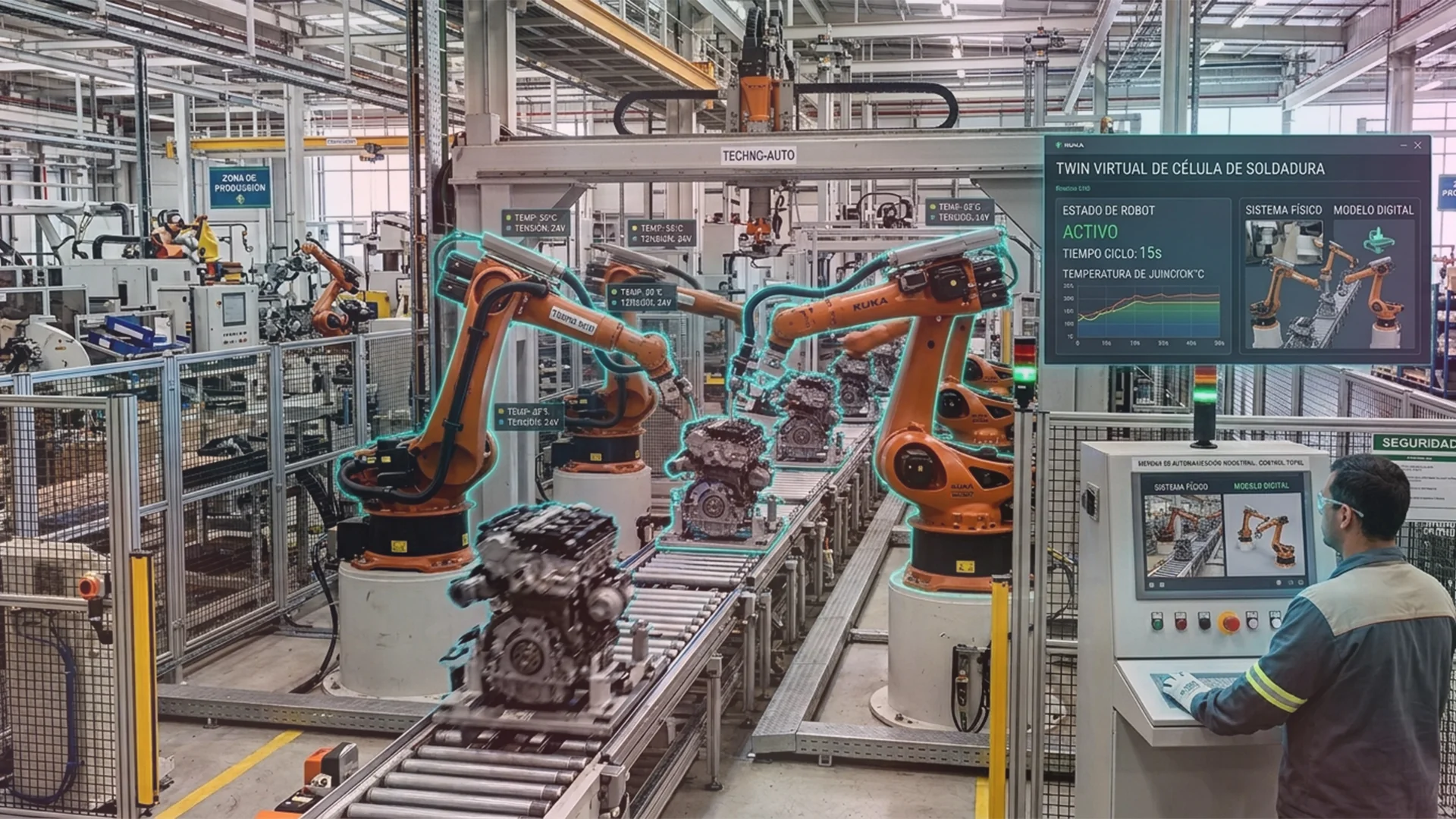
Everything starts with data, and data starts with sensors. The Internet of Things in industry turns machines, lines and assets into sources of real-time information: temperature, vibration, consumption, cycle times, stoppages. The interesting part is that replacing the machinery fleet is no longer necessary to achieve this. Today it is possible to collect data from legacy equipment through wireless sensors while barely touching the installation, preserving the mechanical structure and adding a digital layer that multiplies its value.
Artificial intelligence and data analytics
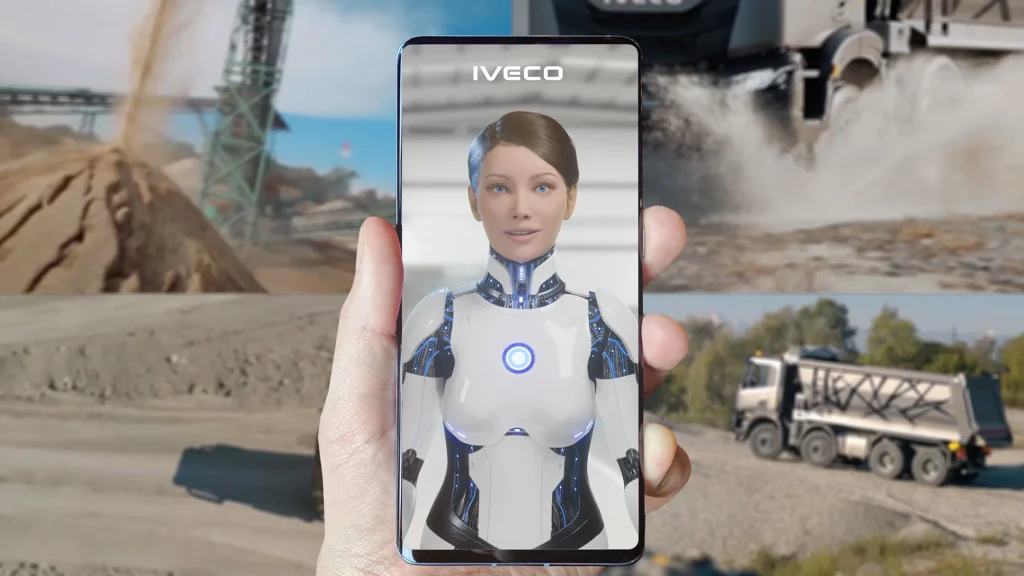
If the IIoT generates the data, the Artificial intelligence It is what makes it a criterion. Advanced analytics detects patterns, predicts failures before they occur and optimizes parameters that the human eye cannot monitor. AI also changes the way people interact with those systems: AI avatars They function as intelligent agents that humanize access to technical knowledge, capable of resolving queries, guiding procedures, and supporting operators in more than ten languages from any device.
Digital twins and immersive simulation
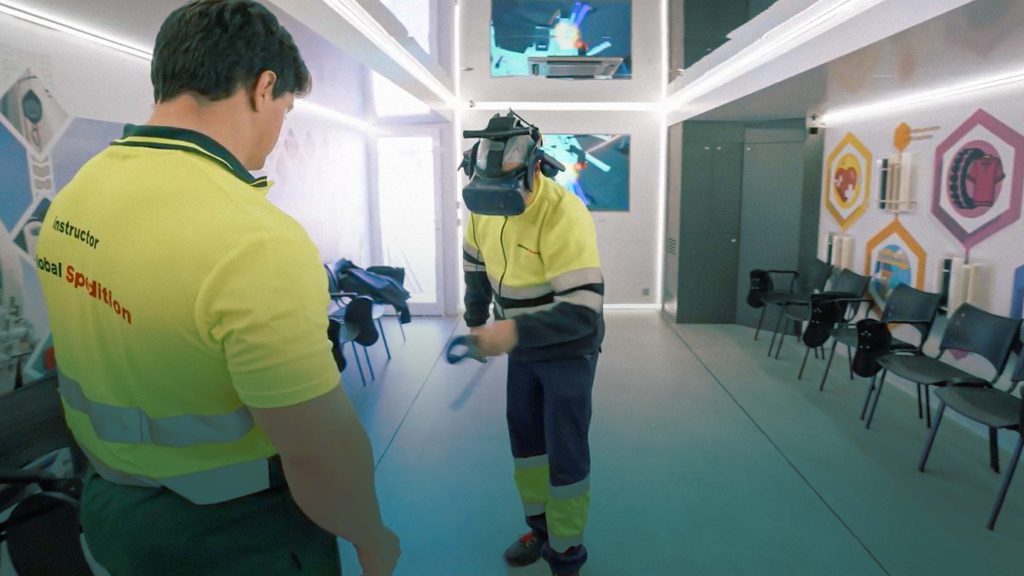
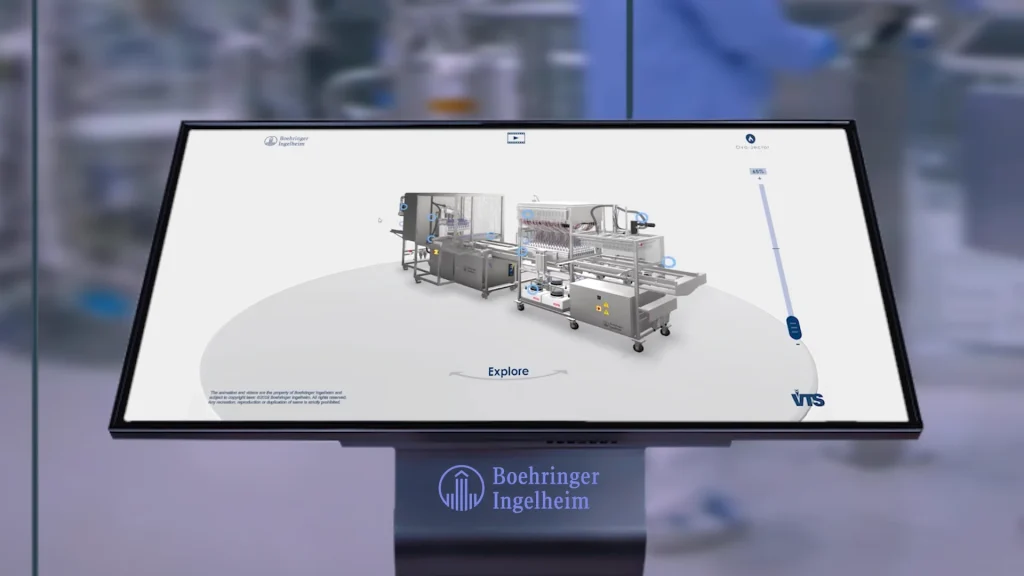
A digital twin is a virtual replica of a process or facility that makes it possible to test, anticipate and optimize without touching the real line. The Virtual Twins from Imascono recreate factories and processes at scale, connecting them to the physical world via IoT, so that anyone can understand at a glance what used to require blueprints and hours of explanation. And when the challenge is to train without risk, the Virtual Trainings take that replica a step further: simulations where operators learn by making mistakes, with no consequences on the shop floor and, according to industry data, up to four times faster than in a classroom.
Edge computing: intelligence comes down to the shop floor
The big trend of 2026 is bringing intelligence closer to the point where the action happens. Edge computing shifts processing from the distant cloud to the machine itself on the production floor, which reduces latency, strengthens data security and enables decisions in milliseconds. For critical processes, where waiting for the cloud is not an option, this ability to react locally is the difference between preventing a failure and regretting it. It is proof that automating well does not always mean centralizing more, but deciding closer to the action.

Industrial Automation Success Story
When we talk about industrial automation, the first things that come to mind are robots and assembly lines. But there is one process that influences all the others and is rarely automated: access to knowledge. In an industrial company, knowing how to do something is just as critical as the machine that performs it.
Iria Iveco
IVECO, an automotive industrial group with hundreds of thousands of workers and dealers spread around the world, needed to facilitate access to its training and internal communications quickly and autonomously. The answer was IRIA, one AI avatar which automates that access through a single voice, trained with more than one hundred documents from ten departments. Today 4,570 employees use it, and 90% of the conversations come from the dealership network. Therefore, automating training and access to knowledge is often the fastest and most cost-effective way to implement it, because it improves the productivity of the entire organization without touching a single machine. Are you thinking about taking the step towards industrial automation but don't know where to start? In Imascono We help you decide what to automate and with what technology: Let's talk about your project and let efficiency become your next competitive advantage.