Skip to content
Loarre XR
Success story · Itainnova · Turismo de Aragón

Loarre XR

90%
approval in the user study
Case summary

A virtual recreation of Loarre Castle that brings one of Spain's least accessible Romanesque monuments closer to people with reduced mobility and cognitive difficulties.

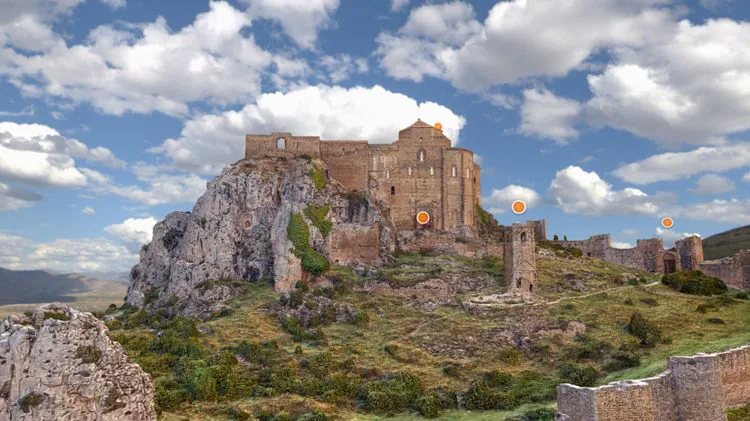
Loarre Castle is an 11th-century Romanesque fortress at the foot of the Aragonese Pyrenees: one of the most important medieval monuments in Spain and at the same time one of the least physically accessible. Within the European Digitourism programme, Itainnova and Turismo de Aragón drove a pioneering project to show that immersive technologies can make tourism accessible to people with reduced mobility or cognitive difficulties. The answer is LOARRE XR, a virtual recreation of the castle inside and out that accompanies visitors before, during and after the visit.

Client
Itainnova · Tourism of Aragon
Sector
Tourism
Service
XR immersive experiences
2,200 m2
Of the castle virtualised.
50 people
With reduced mobility validated it.
90%
Consider it the perfect complement.
Facing a similar tourism challenge?
Tell us about it. In under 24 hours we tell you what results you could expect in your company.
01 The challenge

Making one of Spain's least accessible monuments accessible

Many of Spain's great heritage monuments present accessibility barriers that are very hard to solve: narrow staircases, steep terrain, towers and battlements, underground rooms. Loarre Castle, perched on the rock at the foot of the Aragonese Pyrenees, is an extreme example: its historical value is enormous, but so are the access difficulties for people with reduced mobility or cognitive difficulties. Itainnova and Turismo de Aragón, within the European Digitourism programme, set out to show that immersive technologies can turn an inaccessible medieval fortress into an experience truly enjoyable by every audience.
Making one of Spain's least accessible monuments accessible
02 The solution

A virtual twin of the castle inside and out

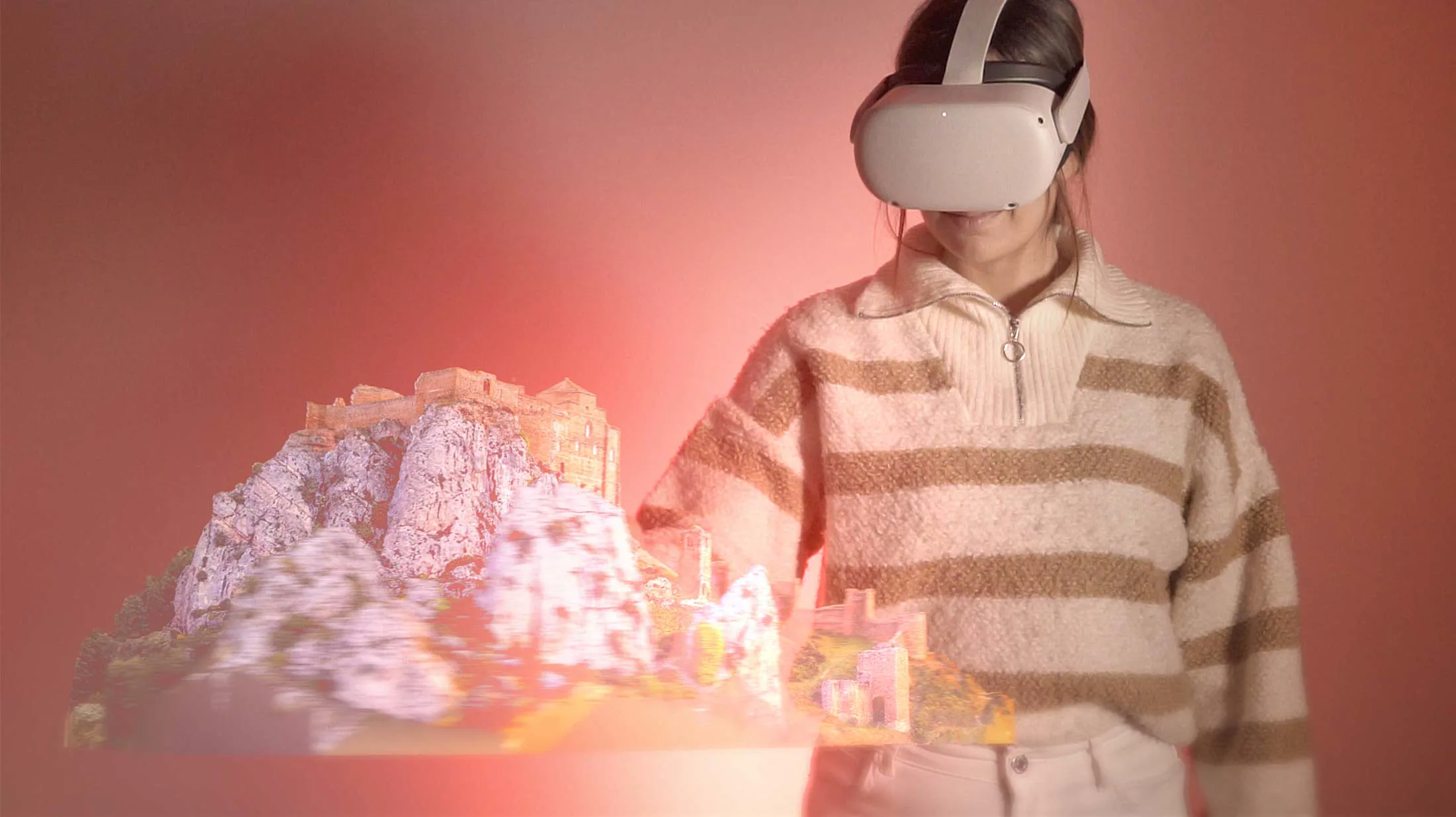
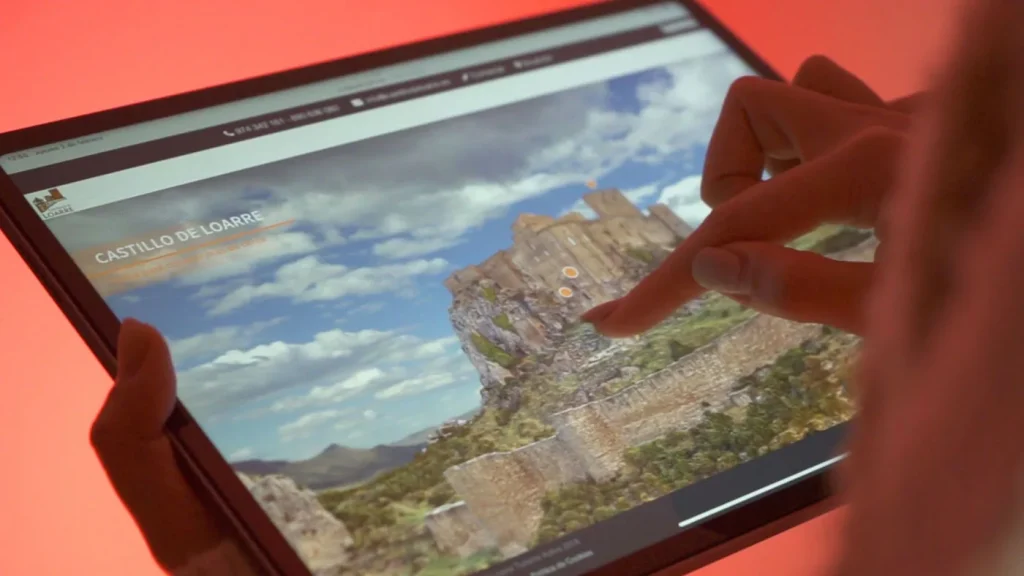
The solution is LOARRE XR, a virtual recreation of the Romanesque castle inside and out that serves as a guide before, during and after the visit. Visitors explore the castle's different areas —including hidden zones or those that are hard to reach physically— through 360º photographs, gamified challenges and Virtual Reality experiences, on a virtual twin covering the castle's 2,200 square metres and its surroundings. The experience was validated by 50 people with mobility and cognitive difficulties, in collaboration with Centro Somontano Social, with 90% of participants recognising the proposal as the perfect complement to the in-person visit.

A virtual twin of the castle inside and out
Next step
We managed to digitize a medieval castle that is more than ten centuries old. What could we achieve with your company?
Key learnings

What this case teaches the sector.

01

The visit extends into the before, during, and after periods.

The value of a virtual heritage gem is not only in the visit itself, but in its ability to accompany the visitor through three stages: preparing the trip before arrival, contextualizing the tour during the in-person visit, and prolonging the experience upon returning home.

02

Accessibility broadens the tourist offer.

Designing a digital product with universal accessibility does not reduce its quality or its appeal to other audiences. Quite the opposite: Gamification, Virtual Reality, and 360° photography that make the castle accessible to people with reduced mobility also enrich the visit for tourists with disabilities.

03

Validation with real users is the final test.

Having an experience work in the laboratory does not mean that it will work with the real audience. Validating the virtual twin with 50 people from the Somontano Social Center and obtaining a 90% approval rate is the difference between a well-intentioned product and a solution that fulfills its social promise.

04

Universal accessibility ceases to be an ideal when the technology exists to ensure it.

Many historical monuments are inaccessible due to structural reasons that are impossible to modify without compromising their heritage value. A virtual twin of the castle allows people with reduced mobility or cognitive difficulties to access the same heritage with the same level of detail as the visitor who physically climbs up to the towers.

Let's talk From challenge to product. Tell us yours.

You tell us the challenge; we tell you how we would make it real. We reply in under 24 hours with a first round of feedback. No strings attached.