For years, we thought of special education in terms of adaptation: adjusting, compensating, or overcoming barriers. Today, the technology in special education It takes on the challenge of adapting the world to the student, reinventing it so that every student can find their place in it. Imagine a classroom where the inteligencia artificial designs a unique class for each child, where the Augmented reality It turns an abstract concept into something tangible, where a student who has never had a voice can finally participate, and where a teenager practices public speaking dozens of times before actually doing it. In this article, we explore that transformation from start to finish: from the shift from basic assistive technologies to adaptive and immersive platforms, to tools that give a voice back to those who need it, and training for life and employment through virtual reality and the power of data to demonstrate that every student is making progress. All of this is built on three pillars: the user experience the operations department y la training staff . Because true innovation isn't about dazzling, but about transforming, and Imascono We believe that inclusion isn't something you simply promise—it's something you design, train for, and build. Join us on this journey through the technology for special education which is changing students' lives.
Technology in special education moving from accommodation to transformation
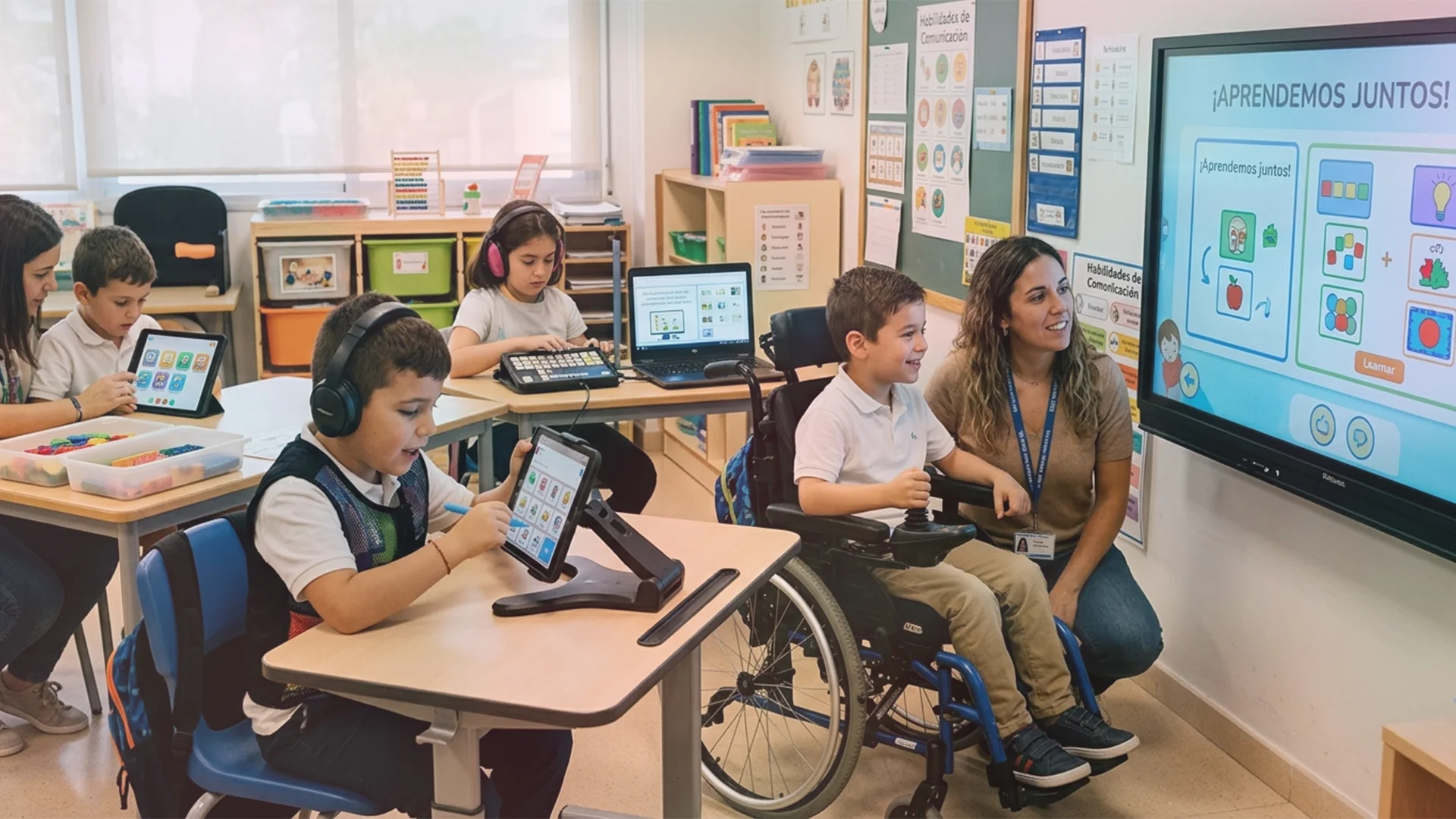
For years, the technology in special education It was limited to assistive devices, adapted keyboards, and pictogram-based communication aids—designed to compensate for a difficulty, not to transform learning. Today, adaptive platforms powered by artificial intelligence and immersive simulations assess each student in real time and tailor content, pace, and environment to their individual needs. We no longer adapt the student to the material; instead, we adapt the material to the student. In this scenario, the Individualized Education Programs ( IEP tools ) cease to be a static document and become a dynamic system that sets goals, continuously monitors progress, and adjusts strategies based on real data—resulting in less bureaucracy for teachers and greater transparency for families. Two key drivers are fueling this transformation. Adaptive learning platforms tailor instruction to each student, They act as a tireless tutor that analyzes each answer to create a personalized learning path, providing extra support where students struggle and moving more quickly where they are confident, so that the students make progress without frustration or boredom. In addition, gamification and immersive environments for students with cognitive and behavioral needs, They turn learning into an experience to be enjoyed, not endured, through game mechanics and safe virtual worlds. This is transformation, as it supports teachers and enhances the learning process.
Special ed technology: assistive and communication technology for students with sensory and physical disabilities
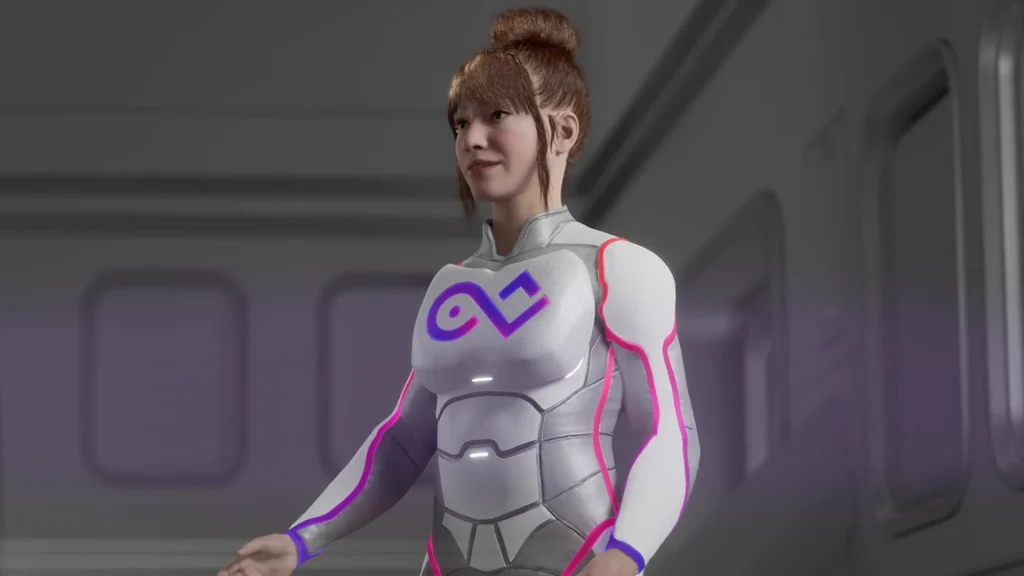
Not all barriers are visible, but they can all be felt. For many students with disabilities visual, auditory, physical, or speech-related, the traditional classroom can become a barrier. Here, the technology for students with special needs It demonstrates its most tangible power; it is no longer a passive tool for providing support, subtitles, summaries, or translations, but rather an active and intelligent one, capable of anticipating, interpreting, and building bridges in real time between the student and the world. The Augmented reality as a sensory bridge in inclusive classrooms, Augmented reality reorganizes information so that it is delivered through the channel each student needs, transforming an abstract concept into a 3D object or a sound into a visual cue, so that the content is received in the language that is best understood. AI Avatars and augmentative and alternative communication, giving a voice to all students, avatars with inteligencia artificial Augmentative and Alternative Communication systems turn a glance, a gesture, or a selection of pictograms into fluent language—and even into a personalized voice that the student recognizes as their own. For a student with a speech disability, it's not just about communicating, but about fully participating in the conversation. True inclusion does not consist of simply seating everyone in the same classroom, but rather ensuring that everyone participates on equal terms; that is the promise of technology in special education especial well-designed, and the site where, in Imascono , we put our experience to work for those who have the most to gain. If you want to learn about technology trends in education, click here: Meet the 4 new trends in education .
Equal opportunity: VR-based skill training: preparing students with disabilities for real-world independence
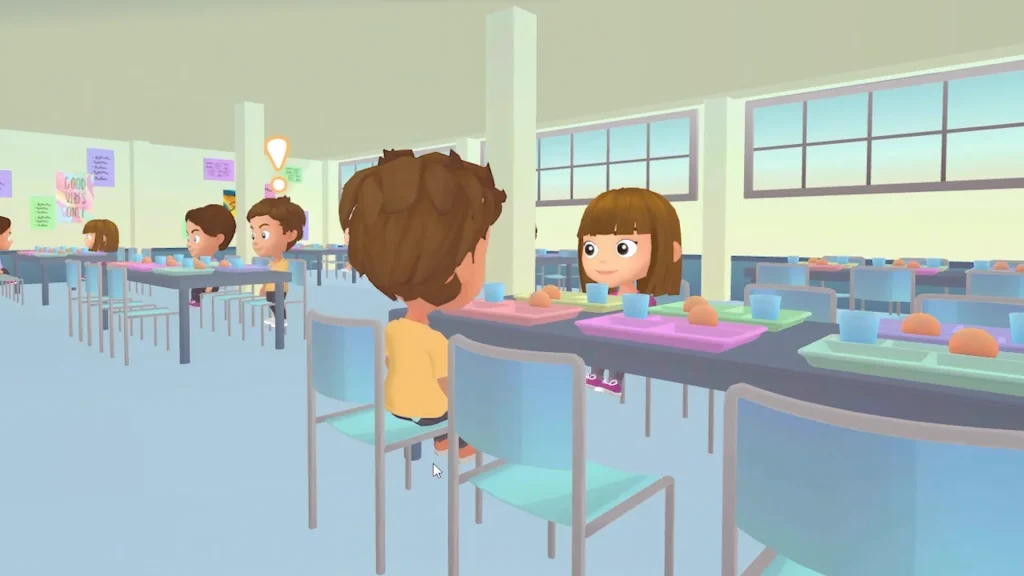
Learning to read or to add is only part of the journey. The other, often the most decisive part, consists of navigating the world, passing an interview, managing an unexpected transport situation, or having a conversation. For many Students with special needs, These everyday scenarios embody a requirement that the traditional classroom rarely reproduces, and what cannot be practiced is hardly mastered. Virtual Reality change that equation, as a tool of Technology for education Special, It recreates work environments, social interactions, and everyday life with great realism, but in an absolutely safe space where the student can make mistakes without incurring any cost and repeat them until uncertainty turns into confidence. Error is not penalized: it accelerates learning. The impact goes beyond the classroom, the technology and students with disabilities They are at a point where skills training really prepares the transition to the working environment. Simulation of work and social situations in virtual environments insurance, Practicing an interview with a virtual recruiter, managing a cash register, or initiating a conversation can be practiced over and over again, adjusting the difficulty level to suit each person; each repetition reduces anxiety and transforms the block into a routine mastered, so that when the real moment arrives there is no leap into the void.
With Imascono, special education technologyt for students with disabilities opens new possibilities
For a long time, assessing the progress of a student with special needs depended largely on the teacher's observations, handwritten notes, and impressions, which, however rigorous they might be, inevitably carried a degree of subjectivity. Here, the combination of technology and special education especial marks a turning point: immersive and adaptive platforms don't just teach—they track. Every interaction leaves an objective trace—response time, error patterns, level of engagement in each session—which turns learning into measurable data. What was once intuition becomes evidence, and the best educational decisions are made based on evidence. The key is that this data directly corresponds to the assessment of the objectives of the Individualized Education Program , if a goal is to improve performance, the level of participation reflects that; if it is to strengthen a skill, error patterns show where the student is struggling and where they have already mastered the material. The PEI ceases to be a static document and becomes a dynamic dashboard, and teams gain an unprecedented ability to respond: the data provides real-time alerts and allows them to adjust course in a timely manner. This is one of the most subtle yet transformative contributions of the technology in special education , and in Imascono The way we see it, technology not only creates memorable experiences, but also provides the evidence to back them up.
With Imascono, technology for students opens up new possibilities
Over the years, we have designed immersive, gamified platforms and accessible projects that bring these principles into the classroom, demonstrating that technology, when used effectively, expands the learning opportunities for every student. These three projects are a good example of how we do it.
Kai XR Platform
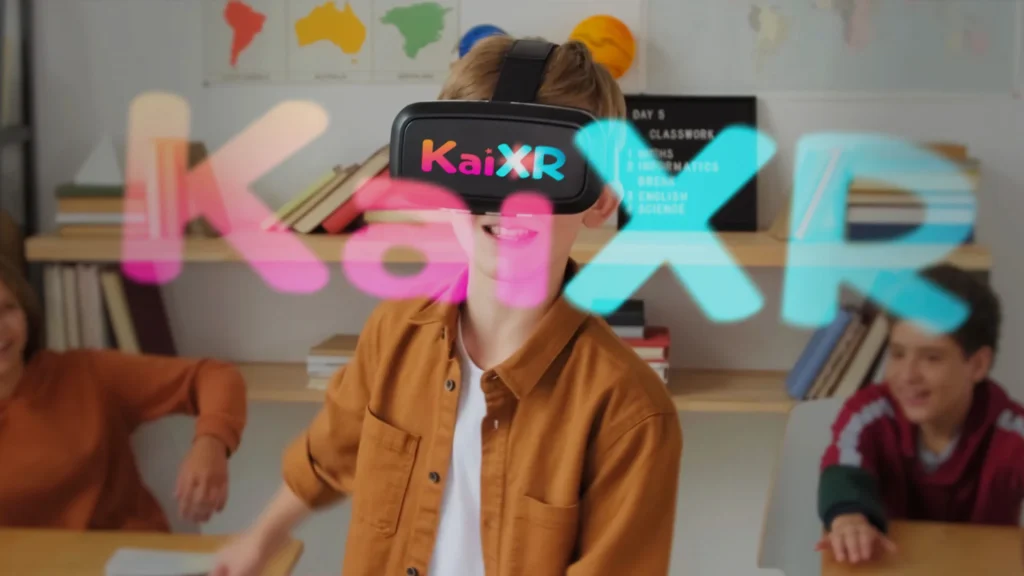
For KAI, a leading educational innovation platform in the United States, we developed the entire platform and content management system for Virtual Reality which organizes its experiences by theme—science, technology, travel, sports, and much more. The biggest challenge was in UX/UI: designing an accessible and intuitive VR web application tailored 100% to children and students, capable of running on browsers, mobile devices, and virtual reality headsets, reaching more than half a million users.
Learning to start a business
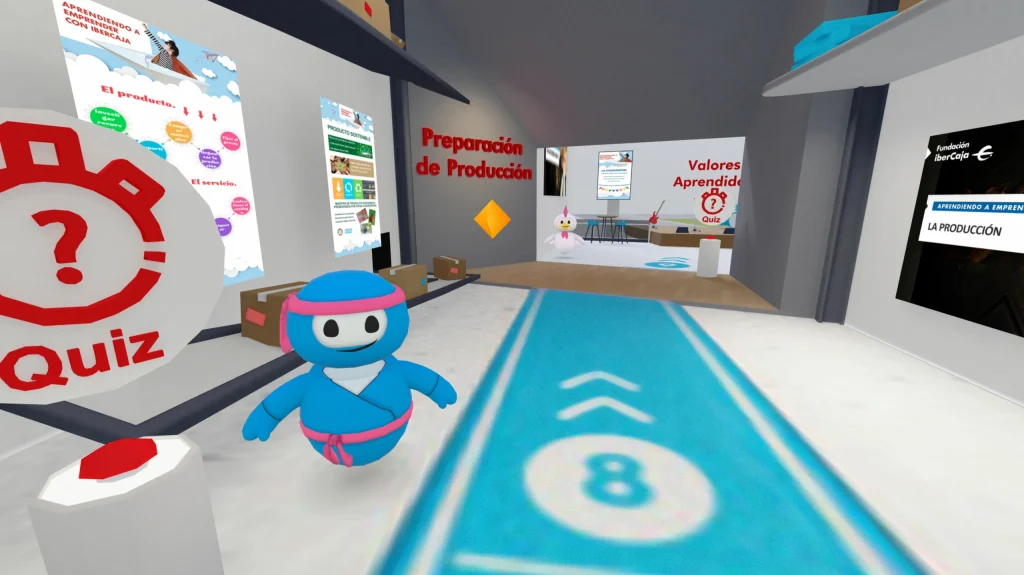
Together with the Ibercaja Foundation, we updated one of its longest-running educational initiatives, creating a platform and a gamified virtual space where 10- and 11-year-old students learn about entrepreneurship and management through learning materials, quizzes, challenges, and badges. Each section is dedicated to a specific subject, and the platform allows the foundation to closely monitor the progress of each school. At the end of each edition, the platform transforms into a large virtual fair.
Kai Create
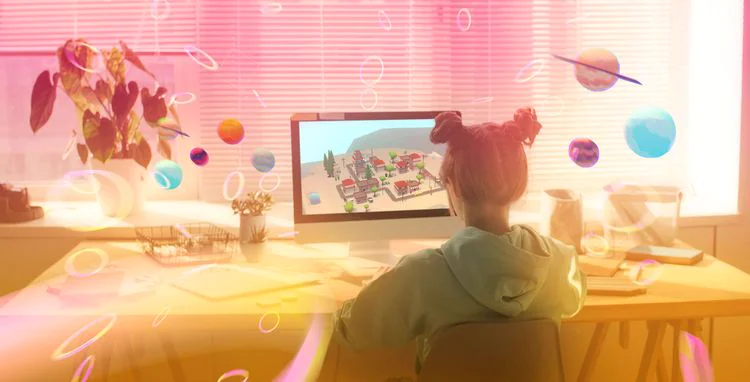
In this case, we developed an immersive educational experience where students not only learn, but also create: they build their own 3D worlds, from a savanna to a solar system, developing spatial intelligence and digital skills while having fun. Accessible from browsers and mobile devices, the platform already has 200,000 subscribers. Do you want to carry the Technology in education to your center or project? In Imascono We help you design with discretion, accessibility, and purpose. Let's talk.