Speaking languages is the key that unlocks markets, teams and opportunities. The demand for language training continues to grow, driven by professionals who want to project their careers beyond borders and by companies operating in a global market where communicating well literally means more turnover. The challenge is to optimize traditional methods, making them less rigid, more efficient and less standardized for a world that moves at a different speed. This is where the computer-assisted language learning ( Computer Assisted Language Learning ): an approach that combines technology, pedagogy and data to transform the way we learn languages, with more flexibility, personalization and measurable results. In this article we will go through what it consists of, what are the different types of computer-assisted language learning , which examples are already working in real sectors, and how in Imascono we design immersive experiences that take this revolution one step further.
What does computer-assisted language learning consist of? Definition and core concepts
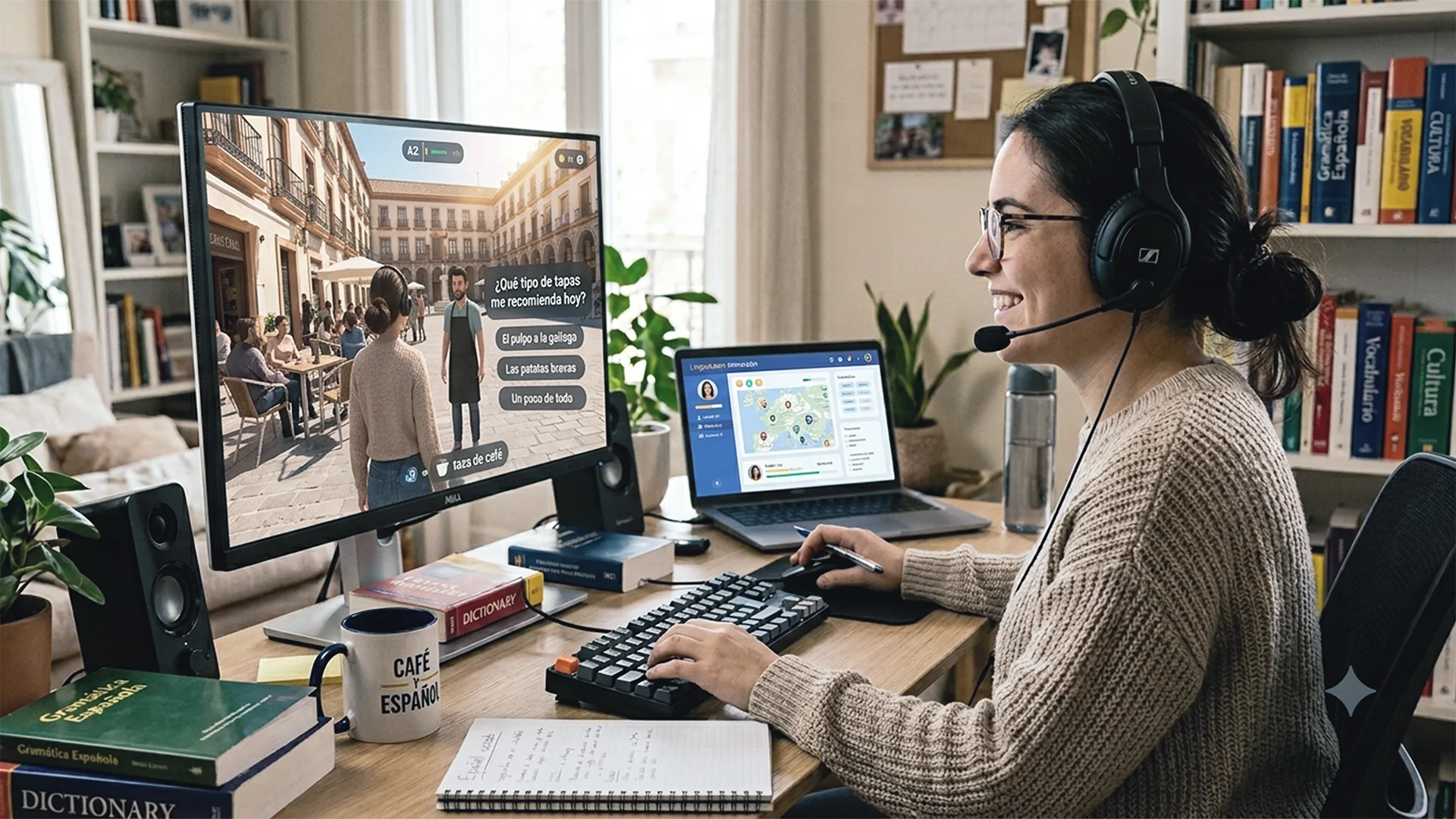
Learning a language is not just a grammar book and a list of irregular verbs. Today, technology is the best travel companion for mastering a language, and that change has its own name: computer-assisted language learning ( Computer Assisted Language Learning ). The definition of computer-assisted learning is clear, a pedagogical approach in which computers and digital products are used to present, practice and evaluate language content. And, in its most advanced version, to immerse the learner in authentic communicative contexts, where language ceases to be a subject and becomes an experience. The meaning of computer-assisted learning ranges from audiovisual resources and interactive platforms to conversational AI assistants and virtual reality environments. All share the same goal: to make learning more effective, motivating and personalized. Its great difference compared to other digital solutions is its pedagogical basis CALL is based on solid theories of language acquisition, comprehensible input, communicative competence, task-based learning, which provide it with a scientific rigor that CALL lacks. e-learning generic.

What makes computer assisted learning different from traditional digital learning?
The difference is not on the screen, but in what happens behind it. Four pillars mark the distance:
- Real-time adaptive feedback: systems adjust difficulty, correct mistakes and offer contextual examples on the fly.
- Communicative authenticity: the focus is on truly communicating, not on memorizing rules for an exam.
- Contextual immersion: at its most advanced level, the student does not study the language but lives it inside simulated environments where the target language is the operating system of the environment.
- Data-driven personalization: platforms analyze performance to generate learning paths tailored to each student.
These four elements are what give shape to the different types of computer-assisted language learning which we will see next. In Imascono, We understand the Education as the natural evolution of language teaching in the digital age.

Types of computer-assisted language learning
Not all language learning technology solutions work in the same way or pursue the same objectives. In fact, the types of computer-assisted language learning have evolved in parallel with the technology itself, from the first repetitive exercise programs to immersive environments with inteligencia artificial we have today.
Specialized CALL
This approach is based on repetition, structured exercises and immediate correction to consolidate basic knowledge. It uses tools such as digital flashcards, quizzes and self-correcting activities. Although it seems traditional, it is still very useful for learning vocabulary, grammar and conjugations. Its main value is in creating a solid foundation for developing more complex communication skills later on.
CALL Communicative
The objective here is to use the language in real and meaningful situations, rather than memorizing structures. Activities include writing emails, having conversations or solving problems in practical contexts. Technology facilitates interaction through chats, simulators and collaborative exercises. The student takes an active role and learns by communicating for a specific purpose.
CALL Integrator
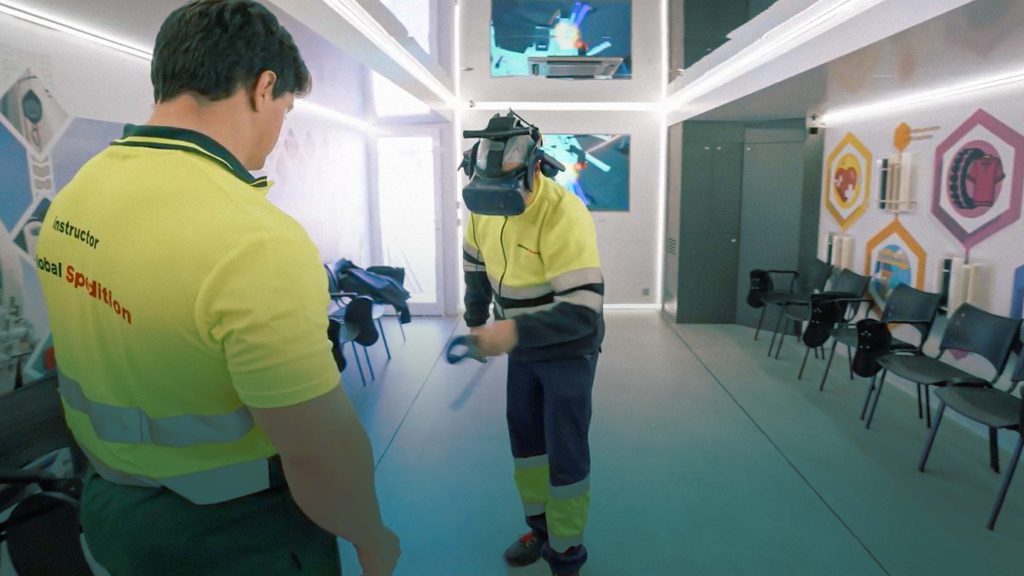
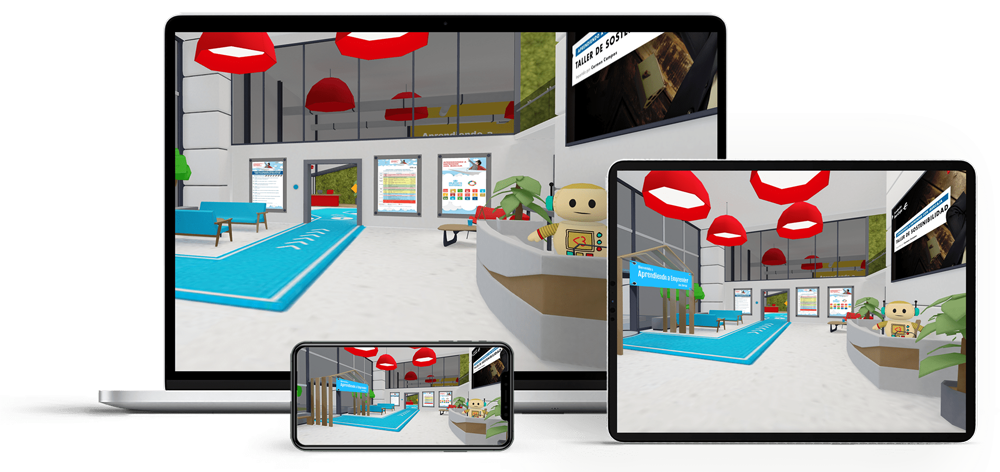
This model is based on immersive experiences supported on virtual reality , AI and interactive digital environments. The student practices the language within realistic scenarios, such as meetings, hospitals or international negotiations. The boundary between learning and living the language is reduced thanks to contextual simulation. In addition, these technologies allow for more memorable, measurable experiences tailored to professional needs.
Mobile-assisted language learning
Finally, the last type of computer assisted language learning, MALL, brings language learning to smartphones and tablets for anytime, anywhere study. It uses micro-lessons, notifications, voice recognition and gamification to adapt to the daily routine. Its main function is to maintain constancy and study habits. Rather than replacing other methods, it acts as a complement that reinforces the continuity of learning. If you want to go deeper: Features and benefits of augmented reality in education
Real-world computer assisted learning examples across industries
Computer-assisted language learning has long ceased to be a matter of classrooms and textbooks. Today, companies are turning to immersive technologies, artificial intelligence and simulation to build teams capable of communicating in real international contexts. At Imascono we design tailor-made experiences for different sectors, where language is not studied: it is trained within practical, measurable situations aligned with business objectives. These are some of the examples of computer-assisted learning that already make a difference.
Language training in corporate and international business environments
Negotiating a contract in English, presenting results in German, or leading a multicultural meeting via video call. This is where computer-assisted learning really builds skills: immersive simulations recreate meetings, negotiations, and presentations with a level of realism that's impossible in a traditional classroom. The combination of AI frontline and virtual environments It allows you to recreate any business scenario and repeat it until the employee has mastered the language and, above all, gained the confidence to use it. And, in the process, they develop cultural sensitivity for working in global teams.
Practical training in tourism, hospitality and customer service positions
In industries where every customer interaction counts, it's not enough to know languages, you have to know how to solve. Immersive learning allows professionals to train real conversations, manage incidents and offer personalized attention in virtual scenarios that reproduce hotels, airports or restaurants. The result is dynamic and contextualized training, applicable from day one. By the time the employee arrives at his or her workstation, he or she has already experienced the situation in front of him or her dozens of times.
Training in technical and sanitary language through simulation
In healthcare and technical settings, language is not just an added feature—it is a safety factor. A misinterpreted term can cost time, money, or something far more serious. The simulations Immersive simulations allow users to practice specialized terminology and critical protocols in hyper-realistic scenarios—risk-free and with unlimited repetition. Doctors, technicians, and engineers train in their second language using the same scenarios they will encounter in their daily work. The combination of AI and immersion accelerates the learning curve and reduces errors in contexts where there is little room for error.

Imascono's approach to computer-assisted language learning experiences
At Imascono We view language learning as an experience directly linked to the professional reality of each company. That's why we combine extended reality, artificial intelligence, and experiential design to create training programs, simulations, and virtual assistants that allow users to practice languages within real-world work contexts. Solutions such as Virtual Training or our IA assistants make learning active, practical and measurable, integrating the language into meetings, customer service or technical processes. Our approach adapts to sectors as diverse as tourism , health o industry , among others, creating customized experiences tailored to each organization and combining the types of computer-assisted language learning that best fit each challenge. The goal is clear: learning is no longer theoretical and becomes an experience with immediate feedback and controlled repetition. In short, we are committed to a hybrid model in which learning languages means living them, within digital environments that reproduce the complexity of the real world. Want to take language learning to the next level? Let's talk and let's design together the experience your team needs.