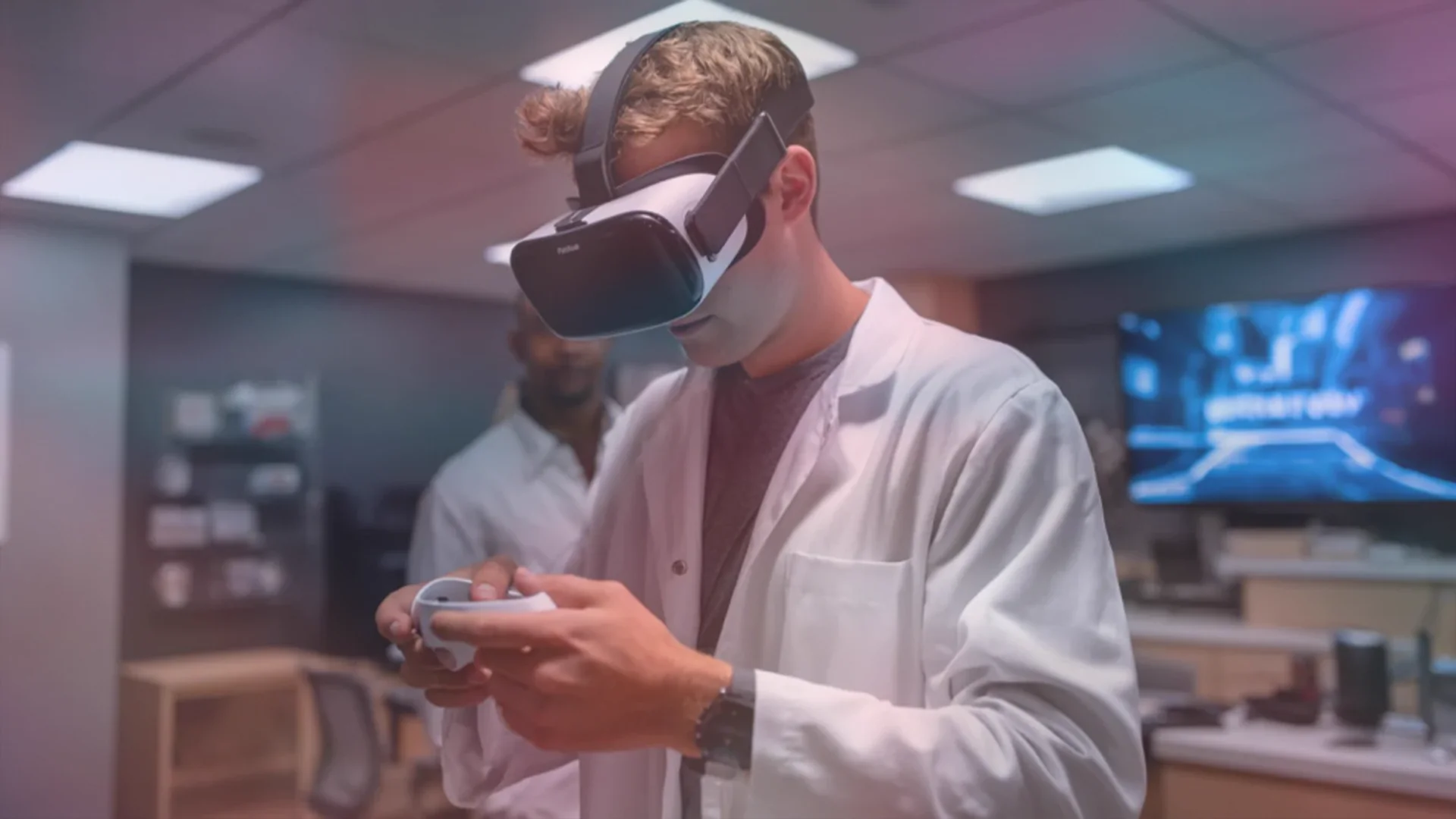
For decades, medical training has relied on mannequins, physical simulations and limited scenarios to prepare healthcare professionals. Today, that model is starting to fall short in the face of an industry that is demanding more precision, more speed and more efficiency . The good news is that the virtual reality medical training is no longer a future promise: it is a solution. adopted by leading hospitals, universities and healthcare organizations , The aim is to train better before reaching the real clinical environment. Traditional methods have barriers that are difficult to ignore, such as high initial and maintenance costs , Inconsistent training experiences and a very limited capacity to recreate the real complexity of clinical practice. Faced with this scenario, virtual reality emerges as an alternative scalable, immersive and data-driven , VR can standardize learning, accelerate skill acquisition and reduce dependence on physical infrastructure. In this article, we explore how VR not only enhances the learning experience, but also generates a Clear and measurable ROI , redefining the way healthcare professionals are trained.
The limitations of traditional mannequin-based medical training
Traditional medical training based on mannequins has been useful for years, but today it faces very clear limits, in which the following stand out. high costs from minute one and a constant burden of maintenance, logistics and physical space. As hospitals need to train more professionals in less time, this model becomes difficult to sustain, the more you want to train, the more you rely on specific rooms, instructor availability and resources that are not always aligned. In addition, no matter how advanced they are, mannequins still have a difficult barrier to break down, as they do not reach full human realism and clinical adaptability that today's practice demands, where every patient and every emergency can evolve unpredictably. In clinical training, it is not enough to practice once, it is important to repeat, measure and standardize. However, with mannequins, the experience often varies according to the instructor, timing and resources of the day, which generates learning inequalities even within the same center. This is why more and more organizations are moving towards the virtual reality medical training , The new approach allows the creation of repeatable, scalable and much more realistic experiences, and responds directly to a question that is becoming a trend in the industry: Has virtual reality improved medical training?
Why virtual reality in medical training delivers measurable ROI
The virtual reality medical training offers a measurable ROI because it transforms training into a more efficient, repeatable and scalable system. The first major driver is economic: over time, costs go down because learning is multiplied without the need to duplicate physical resources, materials or logistics. In addition, VR accelerates the learning curve by allowing critical procedures to be repeated in a safe environment with immediate feedback, achieving skill acquisition. and reducing the number of face-to-face sessions required to achieve clinical competence. This is in addition to a strategic value of data and standardization. The VR training makes it possible for all teams, from the ER to the ICU, and with different roles, to train the same protocols under the same criteria, guaranteeing standardized learning outcomes and reducing variability between sites or departments. And, finally, there is the infrastructure factor, the virtual medical training , reduces reliance on dedicated rooms, bulky equipment and the simultaneous availability of instructors, freeing up resources and making it easier to scale training quickly. You may also be interested in: VR for pain management

Virtual reality medical training simulation: improving performance before real clinical exposure
Before facing a real patient, today there is a critical stage where excellence can already be trained. The virtual reality medical training simulation enables healthcare professionals to practice complex procedures in a safe and efficient environment. fully immersive, repeatable and without clinical risk , This is impossible to replicate with traditional methods. In VR, error ceases to be a threat and becomes a learning tool, since each incorrect decision is analyzed, corrected and repeated until the correct protocol is internalized. In addition, these simulations generate objective data, response times, accuracy, sequence of actions, which turn training into a measurable and optimizable process. Thus the virtual reality medical training begins to directly impact performance before even stepping foot in a real clinical environment.
Reducing training time and accelerating clinical readiness
One of the clearest benefits of medical virtual reality training is the acceleration of clinical preparation. By allowing training as many times as necessary, without relying on schedules, instructors or physical rooms, VR significantly reduces the time needed to reach proficiency. Practitioners reach the point of clinical readiness sooner because they have already experienced the procedure, made mistakes and corrected them in a safe environment. This optimizes individual learning, frees up senior team time and reduces pressure during the first real exposures, a key factor when analyzing whether you have virtual reality improved medical training.
Standardization, scalability, and consistency across medical education.
VR introduces something that medical training had been pursuing for years, large-scale consistency . Each user, in any center or country, can face exactly the same scenario, with the same challenges and evaluation criteria. This makes it possible to standardize protocols, compare results and scale training programs without losing quality. The vr for medical training thus becomes a common language between departments, universities and hospitals , The training experience does not depend on the context, but on the pedagogical design. In an industry where variability is costly, the virtual reality in medical training provides control, data and a solid foundation for better training.
Improve healthcare with Imascono personalized technology solutions
At Imascono Health we carry the virtual reality medical training and immersive technologies to the real world, transforming complex healthcare challenges into digital experiences with measurable impact. Our projects combine strategy, creativity and technology to improve training, awareness and the relationship between professionals, patients and organizations. Here are some examples:
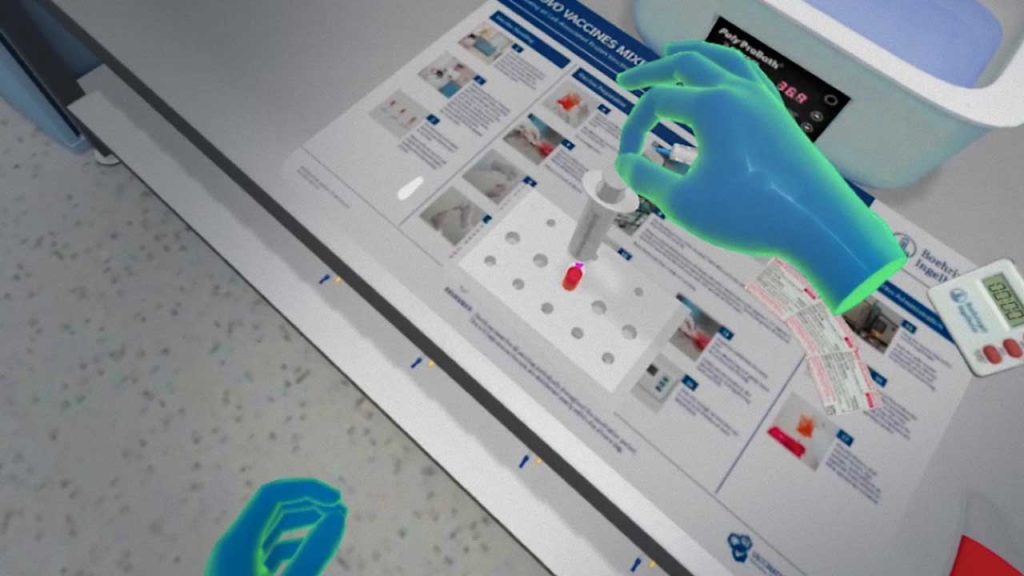
Vaccines
In this project we developed a immersive experience to explain in a clear and visual way how vaccines work and the importance of vaccines . Through interactive technologies and virtual reality, we transform complex scientific information into an understandable and memorable story. The result: greater engagement, better understanding and more effective medical communication. Technology at the service of health education and scientific knowledge.
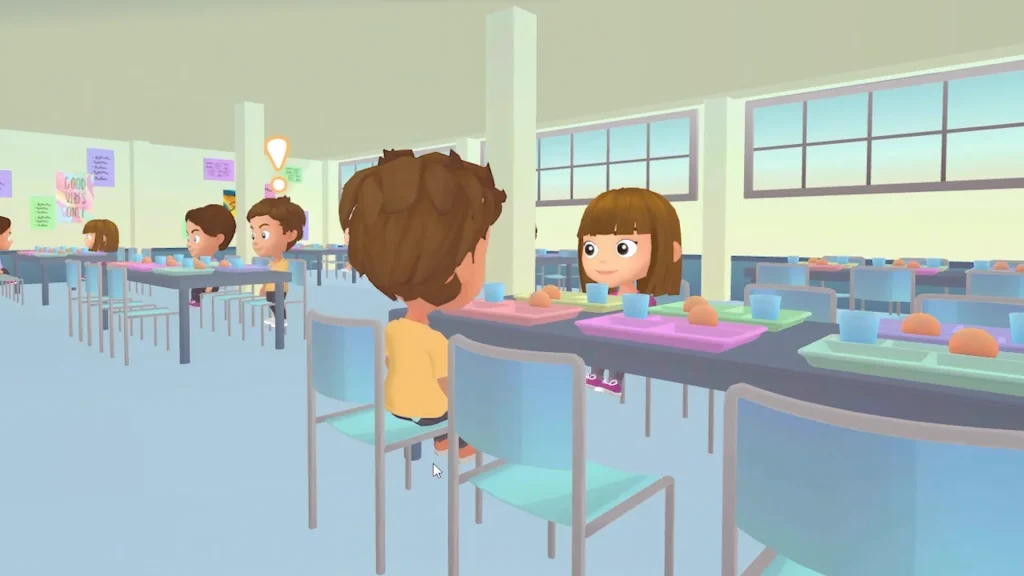
Apetest
Apetest is a digital solution designed for early detection of possible eating disorders. Through an interactive experience, the user is confronted with everyday situations that allow identifying risk patterns in an empathetic and non-invasive way. This project demonstrates how technology can become a key tool for prevention, awareness and mental health support , by putting the person at the center.
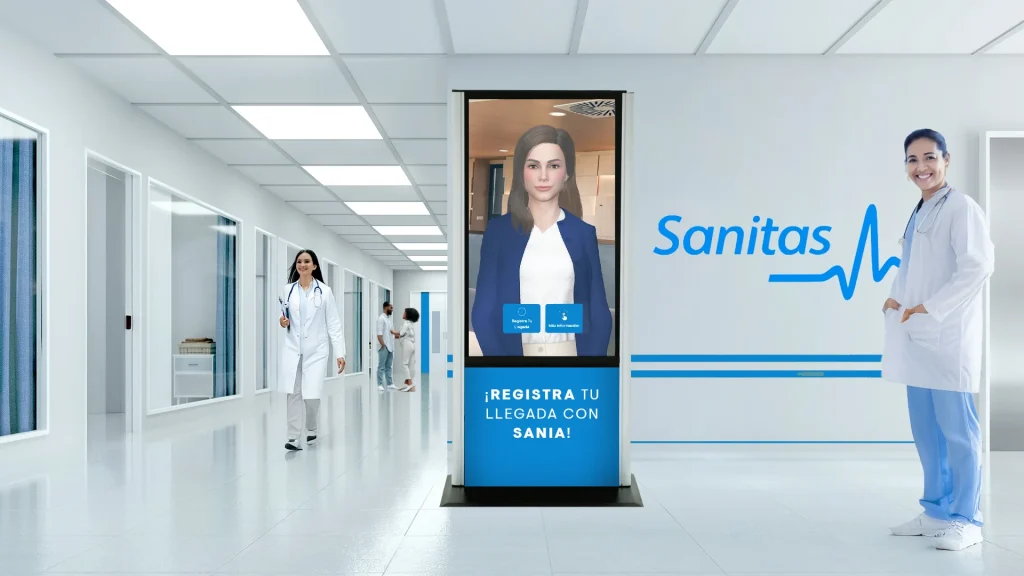
Sania Sanitas
With Sania, we developed a digital experience aimed at improving health education and self-care. The project combines narrative, interaction and user-centered design to promote healthy habits in an accessible and attractive way. A solution designed to scale and adapt to different profiles, strengthening the patient-patient relationship and optimizing patient performance. of the system sanitary . Do you want to discover how the medical training with virtual reality can transform training in your healthcare organization? At Imascono Health we help you design solutions for virtual reality medical training aligned with your objectives, processes and impact metrics. Contact us at and let's explore together how immersive technology can generate real ROI in your medical training strategy.