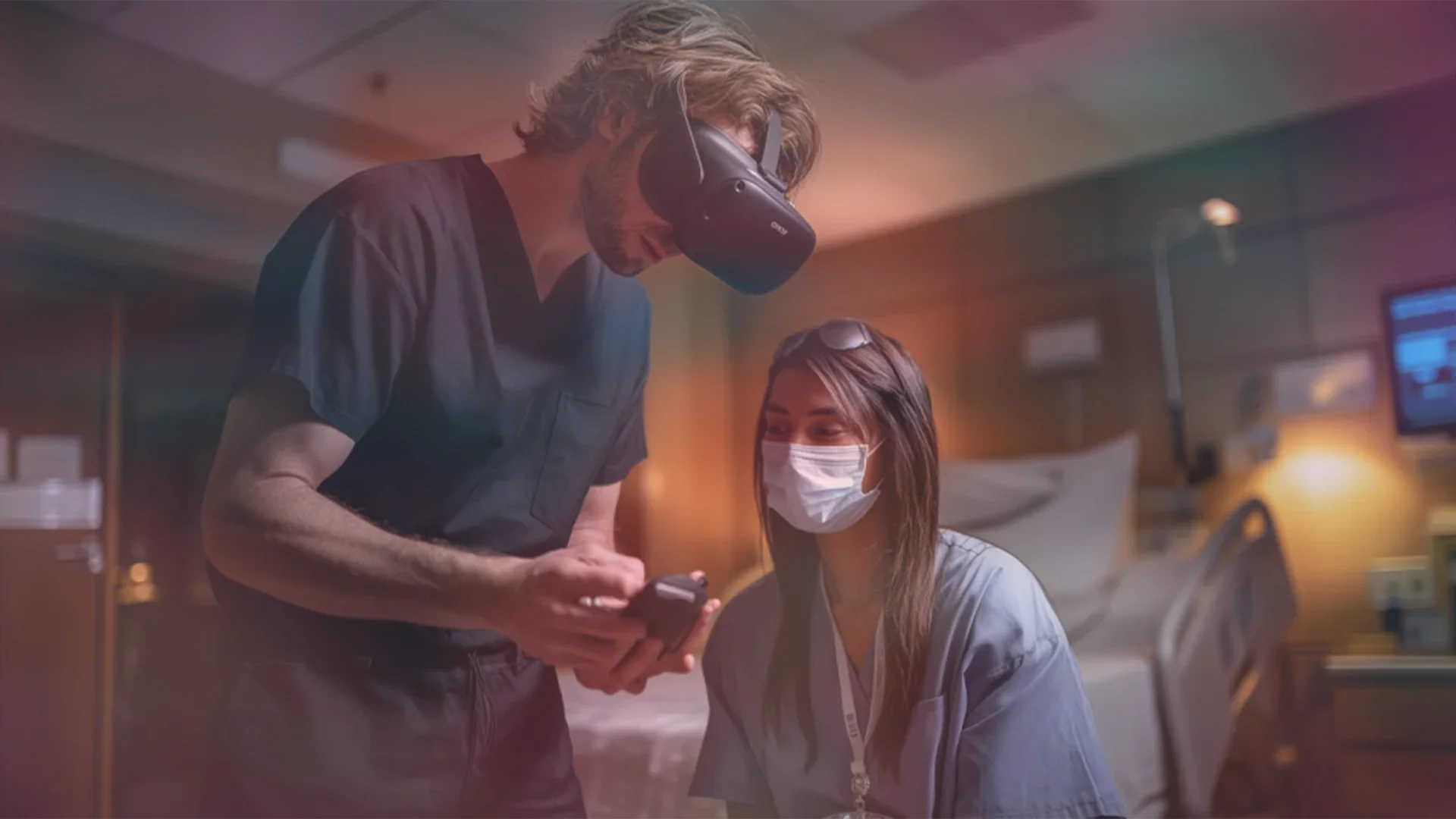
Pain management continues to be one of the greatest challenges in hospital settings. Traditionally, the response has been focused on pharmacological treatments that, although effective, involve dependence, potential side effects and risks associated with opioid use, as well as offering limited personalization. In a healthcare system that is moving towards more humane and patient-centered models, there is a need for complementary solutions that improve both clinical outcomes and the care experience. In this scenario, vr for pain management is positioned as an innovative, non-pharmacological alternative that is already being used in hospitals to modulate pain perception, reduce anxiety and optimize recovery. The convergence between virtual reality and pain management demonstrates that immersive technology not only transforms how we treat pain, but how we experience it. The virtual reality and pain management current trends and future directions are now a real possibility.
Why VR is becoming a valuable tool for pain management in hospitals
VR for pain management is consolidating as a tool to be taken into account in hospitals because it acts directly on how the brain processes pain. Through immersive environments, virtual reality works as a powerful cognitive distraction mechanism that redirects the patient's attention and reduces the perceived intensity of pain. But its impact goes beyond this; the technology also modulates the neurological and emotional response, decreasing activity in brain areas associated with pain and reducing the anxiety and stress that amplify the painful experience. This intersection between virtual reality and pain management is already being applied in real clinical settings. In acute pain during hospital procedures, in chronic pain treatment through structured immersive programs, and in pre- and post-operative care to improve recovery, reduce stress and pain care. Hospital adoption demonstrates that this is not a passing trend, but a non-pharmacological solution based on user care. If you want to know more about technology applications in the healthcare sector 🤪 Virtual Reality and Medicine

Improve pain management with Imascono personalized virtual reality solutions
The implementation of virtual reality for pain treatment in hospital settings not only generates clinical impact, but also measurable operational benefits. From reducing perceived pain care to optimizing resources, virtual reality is establishing itself as a solution to transform healthcare.
Reduction of perceived pain and anxiety
Several clinical studies have shown that the virtual reality and pain management can significantly decrease the perception of pain during medical procedures and prolonged treatments. Thanks to its immersive capability, VR acts as a cognitive and emotional modulator, also reducing anticipatory anxiety. This is especially relevant in pediatric, oncological or repetitive surgery patients.
Improved patient experience
In a context where patient experience is a strategic indicator of quality of care, the integration of virtual reality solutions and pain treatment is a competitive differential. The sense of control, reduction of stress and humanization of the hospital environment improve the overall perception of the healthcare service. The aim is to transform the hospital experience into a friendlier, more innovative and patient-centered.
Scalable use in different departments
One of the greatest operational values of this technology is its scalability , VR can be implemented in emergency rooms, burn units, oncology, pediatrics, rehabilitation or surgical areas without the need for complex infrastructures. With adaptable content and increasingly accessible devices, the model is replicable and sustainable at the hospital level.
Improve pain management with customized solutions from Imascono
At Imascono Health we believe that innovation is not a fad, but rather a essential strategy for transforming healthcare . That's why we design customized technological projects that elevate the patient experience, here are our best VR for pain management success stories that have made a difference:
Bayer Kimchi!
Bayer Kimchi! is an interactive experience developed for Bayer that combines gamification and immersive technologies in the healthcare environment. The project uses augmented reality to generate an engaging, participatory and emotionally positive experience. Its design demonstrates the potential of immersion to capture attention and disconnect the user from negative stimuli.
San Juan de Dios Hospital
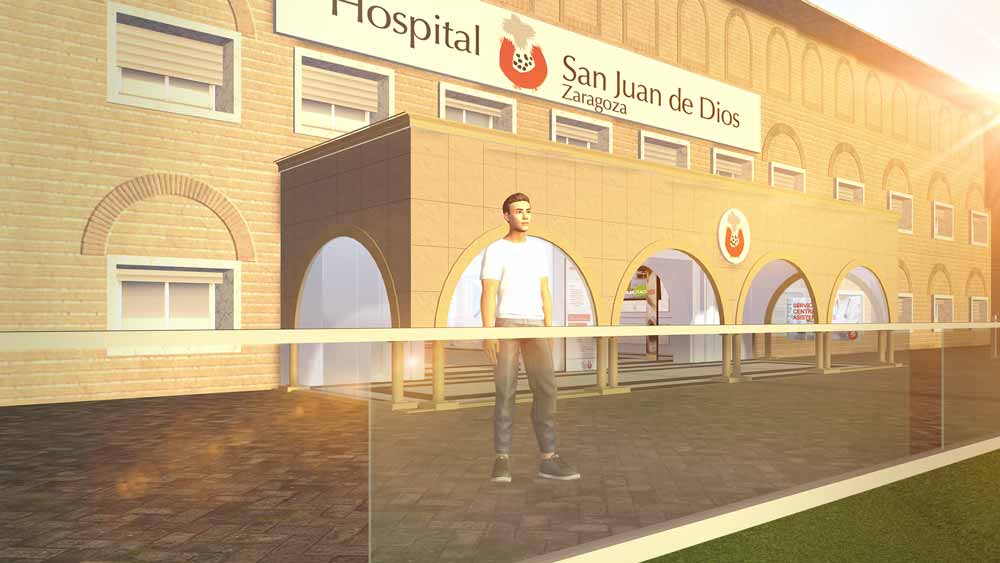
We transformed the hospital reception area with a 3D virtual hospital which allows you to tour the facilities, access service information and participate in consultations and streaming events from a gamified environment. This solution not only modernizes interaction with the center, but also strengthens the emotional connection with patients and their families, aligning technology and humanity in every step of the care process.
Apetest
Apetest is an interactive digital application oriented to the evaluation and prevention of eating disorders through the use of virtual environments and gamified dynamics . The project uses immersive experiences to facilitate user interaction and improve adherence to clinical processes, demonstrating how technology can influence the emotional and cognitive perception of the patient, generating distraction and less anxiety. At Imascono Health we help hospitals to implement solutions such as virtual reality for pain treatment strategically and securely. If you want to transform the patient experience and optimize your care model with virtual reality, Contact with us , we are ready to accompany you.