Main benefits and uses of artificial intelligence in healthcare
Faster diagnostics, personalized treatments, assisted surgeries or virtual assistants trained with veridical sources are some of the main uses of Artificial Intelligence in the healthcare field . From medical research to patient care, AI is optimizing every aspect of medicine, redefining the future of healthcare. In this article, we will discover the most impactful benefits of AI in healthcare, its most innovative applications and real-world examples of how companies such as Imascono are using this technology to revolutionize medical training and the patient experience. If you want to discover how AI is making a difference in medicine, read on and dive into the future of healthcare.
Relevance of Artificial Intelligence in the Healthcare Sector
Imagine being able to develop a tool or system that enhances all your knowledge and skills. That allows you to analyze a larger volume of data that allows you to be much faster diagnostics , to attend the consultations of a larger number of patients help you to retain information much more easily . That's where Artificial Intelligence is really adding value in the healthcare sector. Whether in the field of human medicine, dentistry, veterinary medicine or pharmaceuticals, Artificial Intelligence is impacting training, diagnosis and patient care, facilitating the work of healthcare professionals. Demonstrating its relevance as a key tool in the evolution of the health sector. You may be interested in → Virtual Reality and medicine: applications in the healthcare sector
Most outstanding benefits of Artificial Intelligence in healthcare
AI is ushering in a new era in the healthcare sector, offering benefits that not only improve medical care, but also transform the healthcare model as we know it. Below, we explore some of the main benefits.
Faster and more accurate diagnosis
AI is revolutionizing diagnostic methods by enabling faster and more accurate processing of results. Advanced algorithms can analyze medical images, such as X-rays and MRI scans, with impressive accuracy. This not only reduces the margin of error, but also enables detecting diseases in their early stages, when treatment is most effective . By improving the accuracy and speed of diagnoses, AI optimizes physicians' time and ensures that patients receive appropriate care.
Speeds up investigation times
Medical research is crucial to advancing treatments and cures, but it can be a long and costly process. AI is accelerating this process by analyzing large amounts of data in a fast and efficient manner identifying possible areas of investigation and patterns that may have gone unnoticed. Thanks to Artificial Intelligence in mental health, among other sectors, medical research is taking faster strides into the future, which could transform the way we approach diseases in the coming years.
Improved follow-up of chronic patients
Patients with chronic diseases require constant monitoring to manage their conditions effectively. AI enhances this monitoring through the use of connected devices that collect data in real time on each patient. Through this data, AI systems in the healthcare sector can identify patterns and alert clinicians to any changes that may require immediate attention. This facilitates a continuous care and helps prevent complications, improving the quality of life of patients. An example of a successful case of the use of technology in the field of patient diagnosis and follow-up can be found at ApeTest . A webapp for the detection of ADD cases in children and adolescents developed by APE Foundation. . The clinical questionnaire is gamified, changing the context, to adapt to the digital and video game ecosystem. Find out how Imascono can help you to develop your projects through our technology services in the health sector .
Applications of Artificial Intelligence in health care
Artificial Intelligence and the technologies known as "smart" and "smart" technologies are Extended Reality (VR/AR) are transforming clinical practice with innovative applications both at the level of patient experiences and actions for health professionals themselves. In this section, we would like to focus on some of the most important main applications of Artificial Intelligence in healthcare.
Disease detection and diagnosis
One of the most impactful uses of AI in healthcare is its ability to detect disease more quickly and accurately. Advanced algorithms can analyze large volumes of clinical data and recognize patterns that may go unnoticed by specialists. This allows the early detection of diseases such as cancer, diabetes or neurological disorders, facilitating more timely treatment.
Personalized treatment
Every patient is unique, and AI is helping medicine adapt to this reality. Thanks to its ability to analyze medical history, genetic data and other factors, systems can predict which treatments will be most effective for each person . This not only improves patient outcomes, but also reduces side effects and optimizes medication use.
Application in medical imaging
Artificial Intelligence has also brought a new way of analyzing medical images, improving the interpretation of X-rays, MRIs and CT scans. Computer vision algorithms can detect abnormalities with surprising accuracy, helping radiologists identify diseases in their early stages. This speeds up diagnostics, reduces the margin of error and improves process efficiency. .
AI-assisted robotic surgery
Assisted robotics is taking surgery to a whole new level. Surgical robots, controlled by physicians and powered by AI, allow procedures to be performed with millimetric precision, reducing risks and improving patient recovery. In addition, it can be obtained in real time during the operation, providing key information to make better decisions. This translates into less invasive surgeries, shorter hospitalization times and better postoperative outcomes. Find out more about technology in the healthcare sector in the article Potential of Augmented Reality in medicine.
Development of medicines
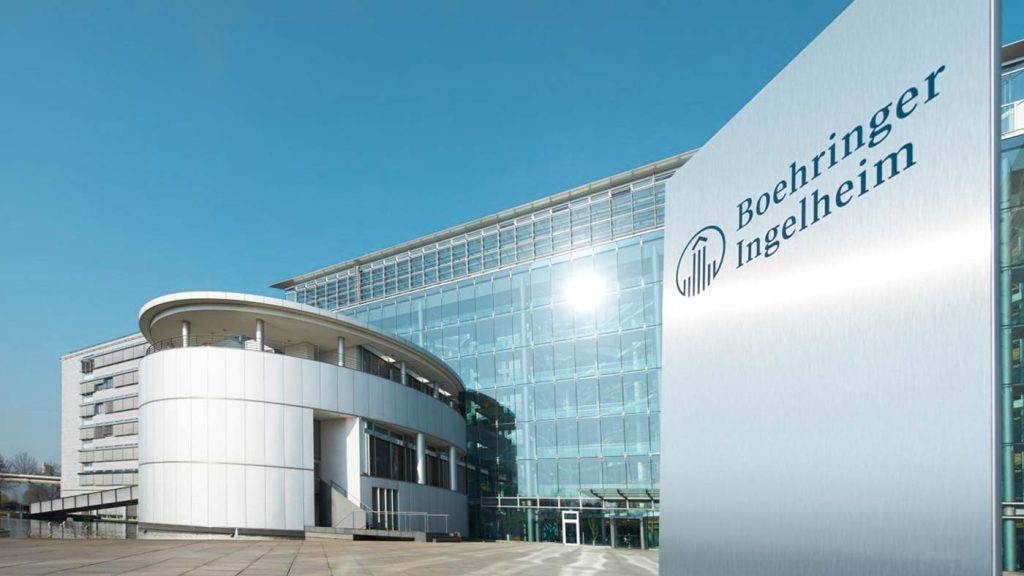
Creating new drugs is a process that can take years and require a large investment. AI is accelerating this stage by analyze and predict which chemical compounds have the greatest therapeutic potential . It also helps optimize clinical trials, identifying the right patients and reducing development times. This means that treatments can reach the market much faster, benefiting millions of people. An example of the use of technology in the creation of new drugs and their formation can be found in the Virtual Reality project developed by Boehringer Ingelheim . Through the VR experience, the pharmaceutical company trains healthcare professionals from around the world in the process of preparing their latest drug. Streamlining training times and optimizing the use of the product intended for this purpose.
Artificial Intelligence in healthcare: outstanding examples
The integration of Artificial Intelligence and other technological advances in the healthcare sector has given rise to innovative projects transforming the way we understand and practice medicine . Here are three outstanding initiatives developed by Imascono.
Virtual Experience Veterinary: university training
Hands-on training is essential in veterinary education; however, safety protocols and sanitary restrictions can limit access to real-world environments. To overcome this challenge, Boehringer Ingelheim and the USDA Scholars Application, have developed Virtual Experience Veterinary . This Virtual Reality experience allows students to tour a U.S. poultry farm, learning and applying safety and diagnostic protocols in a virtual environment. This innovative solution eliminates physical barriers, offering gamified training that enriches learning and prepares future veterinarians for real-life situations.
Certest: virtualization of biotechnology facilities
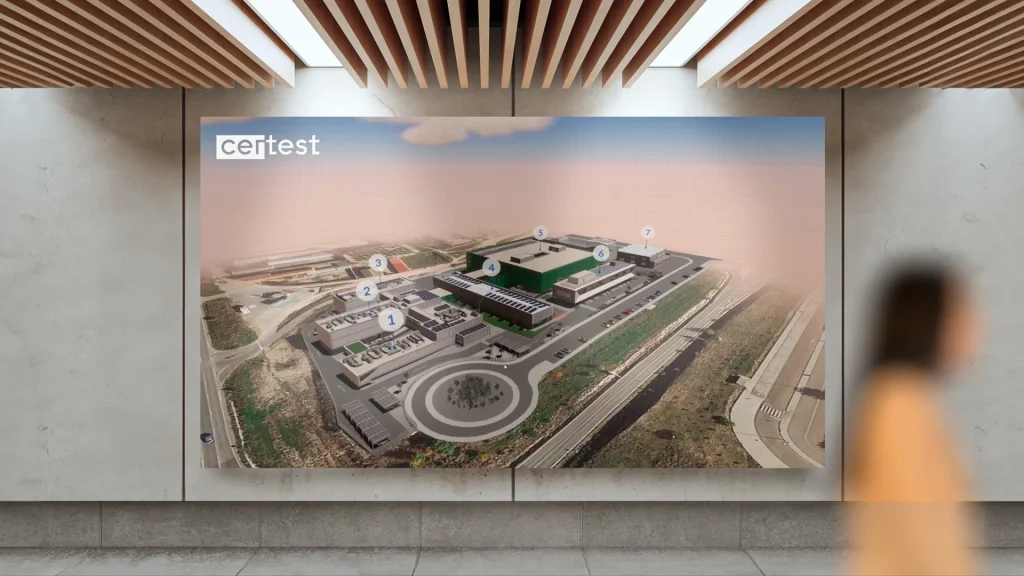
Certest is one of the fastest growing biotechnology companies in Europe. In recent years, it has been involved in a process of transformation. Inaugurating new buildings and research centers; an expansion that is made tangible through the virtual twin of Certest's facilities . A large-scale vision of the space that allows to put in value all these years of growth and transformation of the company. Whose information and data is updated in real time through its customized CMS.
OVO Xtractor: innovation in poultry machinery
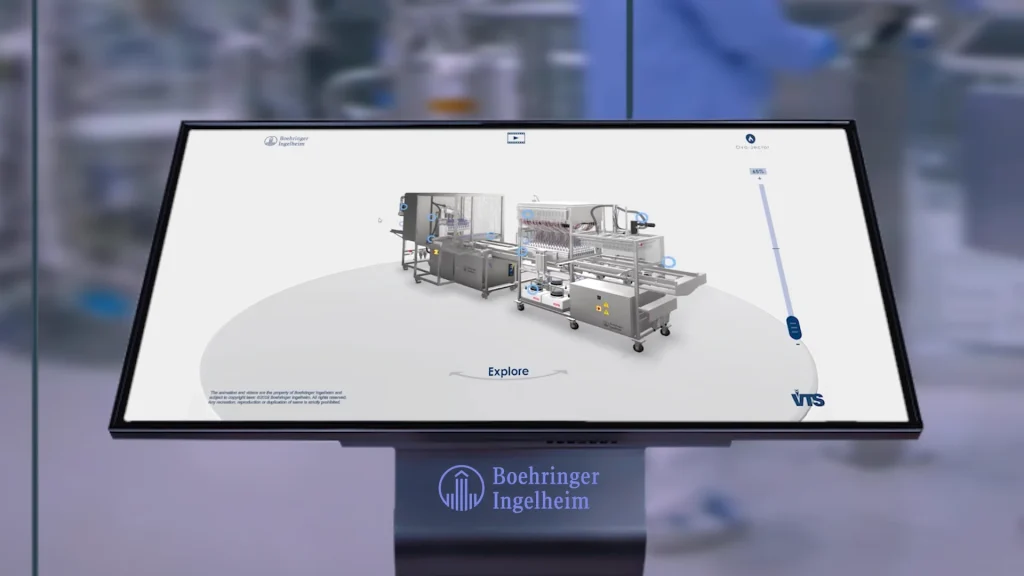
The poultry industry demands innovation, precision and safety. That is why, Boehringer Ingelheim presents Ovo Xtractor Touch Screen a revolutionary solution for understanding poultry machine operation and its in ovo vaccination process without the need to physically see it. If you found it interesting how the Artificial Intelligence is revolutionizing the healthcare sector If you would like to learn about some examples of technological innovation in this field, Imascono is ready to help you. We are specialists in digital innovation and immersive experiences. Contact us at and Let's work together to create disruptive solutions that make a difference in the future of healthcare.
5 benefits of implementing technology in your business
In a world where digitalization makes the difference between growing or falling behind, technology has become a company's best ally . From Artificial Intelligence to process automation, every advancement drives the productivity, optimizes resources and opens up new opportunities in the global marketplace. In this article, we will explore how business innovation powers the evolution of business models, improving operational efficiency and strengthening customer relationships . In addition, we will learn about different success stories, such as the technological integration developed by La Torre Outlet the virtualization of Certest's facilities or the introduction of Artificial Intelligence in the internal communication and training in Iveco IRIA . Examples of technology applied to business that show that now is the time for making the digital leap . Discover how technology can transform your business and get ready to innovate.
The importance of technology in business
In the digital era, technology is the engine of business growth. Its impact ranges from process automation to the improved decision making data-driven, optimizing efficiency and competitiveness. For example, tools such as the avatars endowed with Artificial Intelligence like V-E-G-A are revolutionizing the interaction with customers and employees, improving the experience and personalization in real time. In this context, other key technologies such as Big Data , Business Intelligence and Blockchain are also transforming business. These tools enable the analysis of large volumes of data to obtain valuable insights, facilitating more informed and faster decisions. In addition, the use of Blockchain ensures secure and transparent transactions, while Business Intelligence helps to optimize the management and competitiveness of companies. Together, these technologies enable companies to improve their operations, innovate their services and maintain a competitive advantage in a constantly evolving market. You may be interested in → How to implement automation in companies and maximize its impact .
Benefits of technology applied to business
Implementing technology in a company is not only an improvement, it is a strategic leap towards efficiency, competitiveness and innovation . From automation to the development of interactive infographics to raise awareness and optimize production lines. Each technological advance in the business model strengthens the market position. These are some of the main benefits:
Market differentiation
In an increasingly saturated and competitive market, the ability to offer unique experiences is key to stand out. At the level of experiential marketing the interactive corners and enlarged photocalls are an effective way to create an immersive experience that combines the digital with the physical, to connect emotionally with users. These spaces allow customers to interact with the brand in a fun and personalized way, generating greater engagement and loyalty. An example of this can be found in Kimchi! Love Natural a promotional action developed by Big House The objective? Encourage interaction and cross-selling in the shopping center. by turning the central area into a virtual jungle. These types of phygital experiences not only seek to be entertaining, but also integrate real-time promotions and metrics, improving brand visibility and differentiating from the competition.
Business expansion
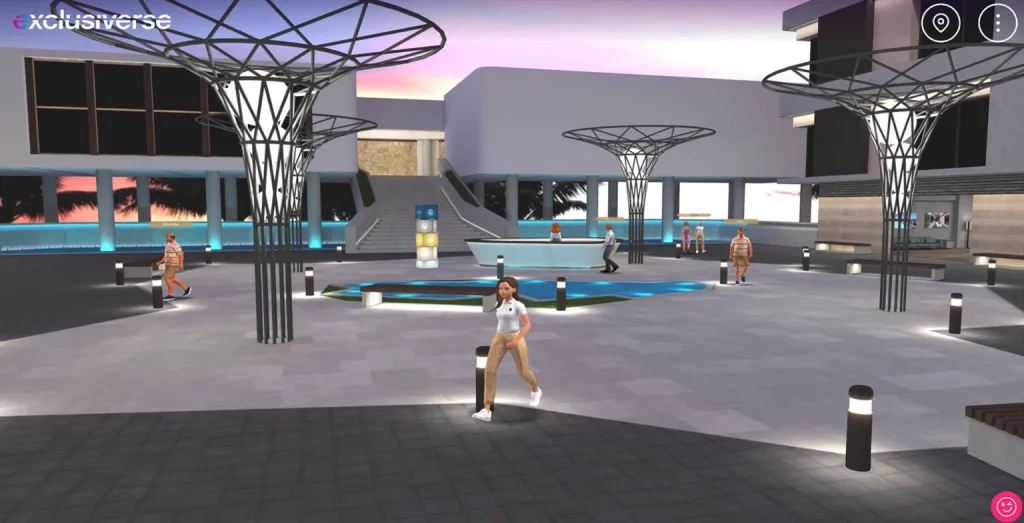
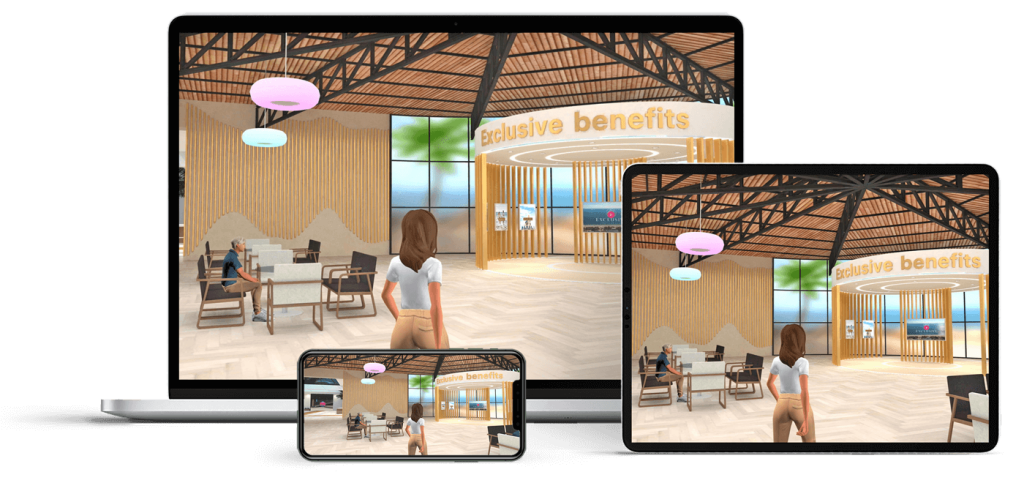
Technology opens new doors for companies to expand both in the physical and digital world. One of the main ways to achieve this is through gamified environments for social events, product presentations or in-house trainings that allow users to enter a unique, virtual space. As in the case of Exclusiverse the virtual home of the No. 1 travel club worldwide Exclusive Traveler Club where members from all over the world find a place to connect with both the brand and other partners.
Protection of information
In the digital age, protecting customer and transaction information is more crucial than ever. The integration of cybersecurity and blockchain into enterprise systems. guarantees secure and transparent transactions. The blockchain, being a decentralized and immutable technology, allows you to verify each transaction and ensure that the data is not altered The company's cybersecurity solutions protect platforms and applications against external threats. This comprehensive approach ensures user confidence and protects both sensitive data and long-term business relationships.
Resource optimization
Resource optimization is one of the greatest benefits that technology can bring to a company, especially when it comes to training and education. Virtual Training allows companies to reduce opportunity cost and save on products for training purposes The virtual simulation of the machines or processes can be performed before proceeding with the on-site part. Professionals can familiarize themselves with the components and operation of the tools in a controlled environment, no need to stop production or interrupt the workflow . This methodology not only saves time, but also ensures that employees are better prepared, optimizing both financial and operational resources. Companies such as Global Spedition, Boehringer Ingelheim or CEVA have already taken this step in virtualized training.
Increased productivity
The automation of processes and the implementation of digital solutions enable companies to increase your productivity by reducing the time spent on repetitive tasks. For example, the AI avatars can assume the tasks of 24-hour customer service The new system provides instant, personalized responses to users, freeing employees to focus on what's really important: create, innovate and grow the business strategically .
Implement technology in your business with Imascono
Digital transformation is not just a trend, it is the key to companies innovate, grow and connect better with your customers . At Imascono, we take technology a step further by developing combinations of Artificial Intelligence solutions , Extended Reality and gamification to drive both business and industry into the future.
Success stories
Throughout this article, we have learned about some of the most interesting projects at implementation of new technologies in business models of a multitude of companies. We would like to present some more success stories, differentiated by sector and by the great change they meant for their companies.
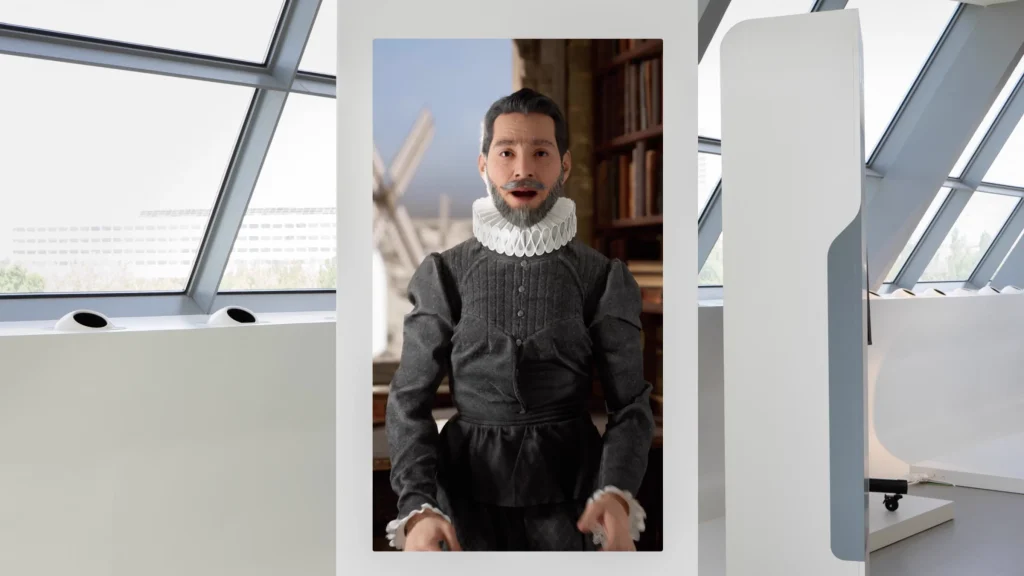
Cervantes IA → As an example of the implementation of technology in the business models of Tourism We highlight the project carried out by iurban, which combines Artificial Intelligence, tourism and literature. Miguel de Cervantes returns to Castilla-La Mancha through his AI avatar to become the best tourist guide for visitors to the Alcázar de San Juan.
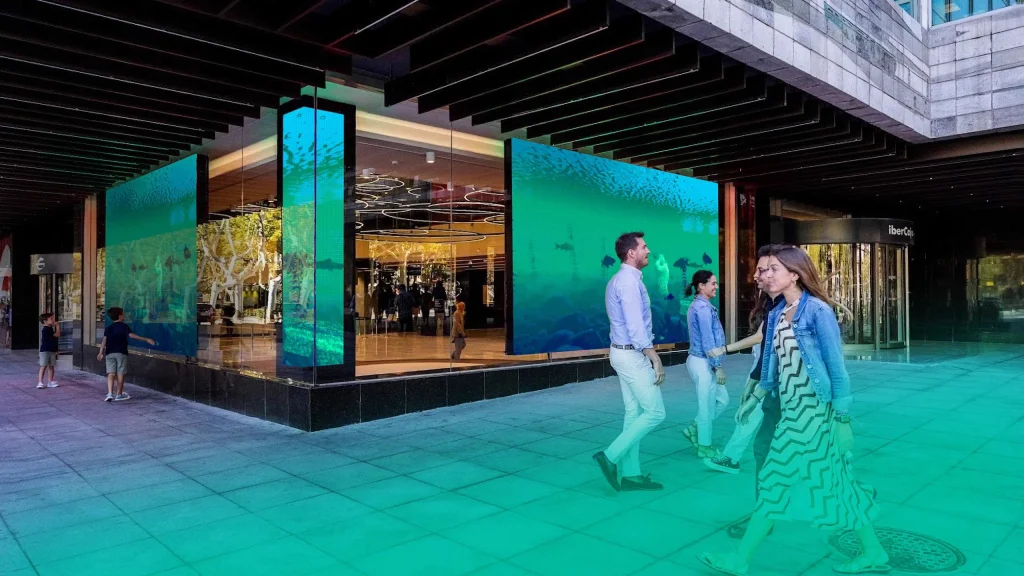
Ibercaja Xplora → Technology in banking is also starting to implement the latest advances in innovation to transform the customer experience, both digitally and in person, redesigning physical spaces with technology at their core, as in the case of Ibercaja's headquarters.
ApeTest → In the healthcare field, we want to highlight the pilot project launched by the Government of Aragon and Fundación APE to harness new technologies and gamification techniques to bring clinical questionnaires closer to young people. In the web app, children and teenagers complete a series of steps and answer a set of questions that help detect cases of eating disorders in settings designed entirely to make them feel more comfortable and safe.
Lacasitos App → If we focus on the sector of Retail, One of the most relevant success stories is the Augmented Reality project launched by Lacasitos. Hidden in their iconic tubes are a series of collectible characters. Scan the QR code, find them, and give them chocolate bars!
Hispanosuiza → Transforming the business model in the industrial sector, in this case in the automotive field, we highlight Hispanosuiza's digital project. For its latest electric supercar, the Carmen Sagreda, the company developed an entirely new infotainment system that includes a 3D model of the car, a web app and a new vehicle control system.
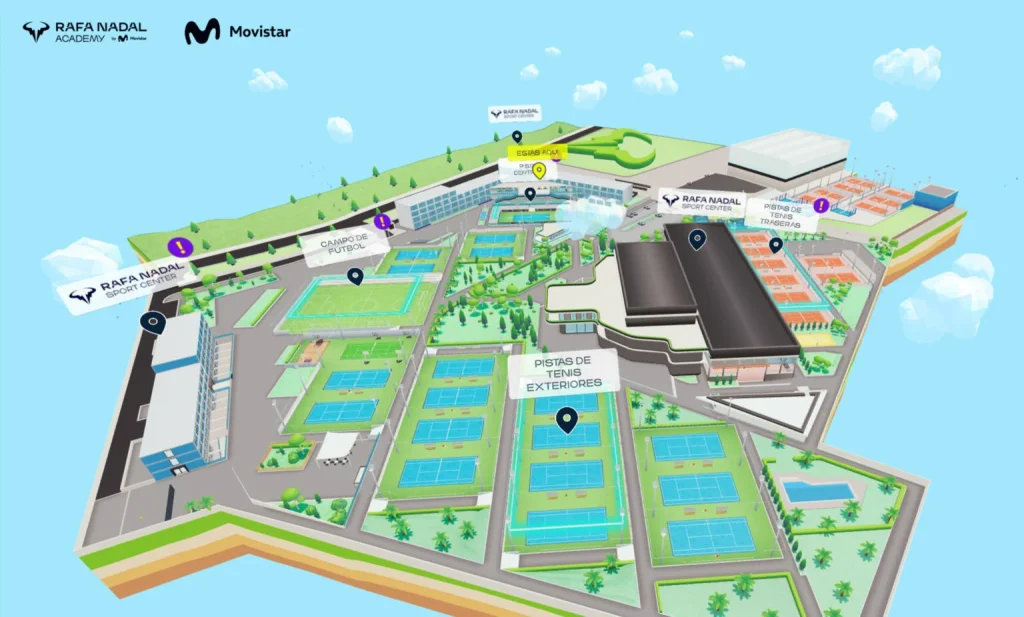
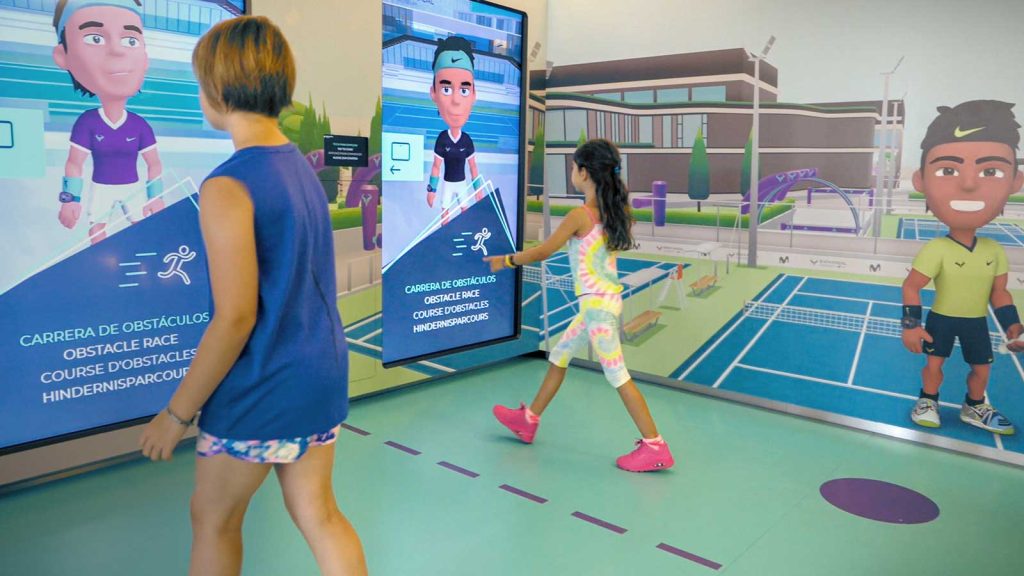
Rafa Nadal Academy → Finally, turning to the education and training sector, we find the virtual recreation of Rafa Nadal's tennis academy. A pioneering project that lets anyone travel virtually to Manacor (Mallorca) and discover firsthand all the facilities, the methodology and the values taught at the academy.
These use cases and the benefits discussed in this article demonstrate that lTechnology plays a key role not only in optimizing business operations, but also in creating more human, immersive, and emotional connections with users.In Imascono, In every project we seek to humanize our interaction with technology, making it more intuitive, more useful, and more focused on the true protagonists of all advancements and innovation: humans. Our more than fourteen years of active experience and working at the national and international level with large companies drive us every day to continue transforming and helping to implement technology in businesses from our partners.Do you want to take your business to the next level with innovative technology? Contact us and discover how technology and creativity can transform your brand.
How to implement automation in companies and maximize its impact
If there is one maxim that every company pursues, it is how to optimize your resources to reach the highest possible productivity, speed and organizational level . To this end, automation in companies has long been one of the main trends in the business world. A trend that has done nothing but grow exponentially with the advent of the Artificial Intelligence to companies . In this article we would like to delve into how companies are implementing process automation and how Generative AI is helping to maximize its impact . Highlighting how tools based on this technology can transform everything from administrative processes to customer service, through sales, marketing, logistics and production. In addition, we will analyze in detail how companies such as Progress , iUrban, La Torre Outlet o Iveco are taking advantage of advances in AI avatars not only to improve your efficiency, but also to better connect with your customers. An improvement in the optimization of every aspect of the business that from Imascono we work with innovative and customized solutions. Discover in this post all the potential of automation, we tell you about it!
The key role of automation in companies
Automation is a key pillar for companies seeking to optimize their operations and stay competitive in an increasingly dynamic business environment. By automating repetitive tasks, organizations are able to reduce errors, increase efficiency and free up human resources for activities of greater strategic and creative value. Automation in companies allows greater agility in adapting to market changes, as it facilitates the implementation of faster and more flexible processes. In terms of decision making, this strategy provides access to real-time data, allowing companies to react in a more informed and accurate way to new opportunities or challenges. Thus, a cycle of continuous improvement is created that optimizes not only productivity, but also the company's ability to adapt and grow in a highly competitive market. . In addition, automation impacts the customer experience, providing faster and more personalized interactions, as in the case of intelligent agents such as V-E-G-A, which resolve queries instantly and automate customer support. You may be interested in → Artificial Intelligence Avatar: definition and main uses .
What processes can be automated in a company?
Automation is a necessity for those companies seeking to maximize your efficiency and offer added value . From administrative tasks to customer relationship management. Being aware of which processes can benefit from business automation is key to optimize performance and improve results. Here are some of the most interesting processes to automate.
Administrative and financial processes
Automation of administrative and financial processes enables companies to simplify tasks such as invoice management, payment processing, and account reconciliation. . The automation of companies in the financial field allows real-time monitoring of flows and movements, simplifying the preparation of financial reports, promoting transparency and facilitating strategic decision making. Especially when coupled with other technologies such as Artificial Intelligence, Business Intelligence and Big Data.
Logistics and production
Increasing efficiency, improving accuracy, boosting speed in order management and inventory management... Automation in logistics and production allows industrial and manufacturing companies to experience a new era in their production processes. complete digital transformation and take the definitive step towards the factories of the future. With the use of technologies such as avatars, IoT sensors and intelligent management systems, companies can optimize material flow, monitor and reduce downtime, and improve the quality of the final product.
Sales and digital marketing
In marketing and sales, automation is transforming the way we do business. manage the relationship with customers and users . Allowing greater control of the customer journey, personalization and user satisfaction in each of the interactions with the brand. The different marketing automation tools allow, from the automatic segmentation of audiences to the programming of personalized emails. In addition, having a in-house IA sales agent, helps companies streamline processes We are able to collect requirements and write proposals, which allows us to be much faster and more concrete in preparing the best project for each client. If you want to learn more about the use of technology in companies, we invite you to visit our post Business innovation: spatial computing applications in Extended Reality
Customer service and support
The automation of customer service and support is one of the areas most benefited by emerging technologies, especially with the use of AI avatars . These virtual assistants, such as V.E.G.A., make it possible to personalize and humanize conversations between the brand and users, offering immediate, real-time support. Thanks to Artificial Intelligence, these avatars can not only answer frequently asked questions, but also adapt their answers to the specific needs and behaviors of each customer, creating a closer and more personalized experience . One example of the use of these intelligent agents in customer service can be found in the Alcázar de San Juan with Cervantes IA a virtual avatar that has been trained and designed with the appearance of the writer Miguel de Cervantes to learn with him about the tourism potential of Castilla-La Mancha.
Benefits of automation in companies
Automation offers a number of key benefits that can transform the operations of any company optimizing each process and ensuring exceptional results. In this article, we would like to explore the most significant benefits of automation in companies.
Error reduction→ Automation minimizes human error, improving the accuracy and reliability of processes, which increases internal and external trust and raises the quality of products and services.
Time and cost savings→ Automating repetitive tasks improves efficiency, saving time and reducing costs by lowering manual intervention, which lets staff focus on strategic tasks.
Data-driven decision-making→ Automation makes it easier to analyze large volumes of data in real time, providing key information to make informed decisions and act proactively.
Higher process quality→ Automation ensures uniformity and precision at every stage, optimizing processes and delivering high-quality results that meet the most demanding standards.
V-E-G-A Trainer: AI Avatar Training Platform
Within the enterprise automation ecosystem, VEGA Trainer is presented as a revolutionary tool to customize AI avatars according to the needs of each company. This system allows customers to tailor avatars in terms of physical appearance, personality and expertise, enabling a more authentic and brand-aligned experience. In just minutes, avatars can be trained to interact in a fluent, natural and multilingual way, becoming intelligent agents capable of providing personalized attention in a variety of sectors. Thanks to this tool, the automation of customer service becomes highly adaptable, allowing the implementation of avatars in different contexts as virtual butlers in hotels, personal shoppers in retail, receptionists in hospitals or consultants in financial products. This proprietary training engine not only facilitates the management and customization of avatars, but it also improves interaction with technology , humanizing the experience and offering a closer and more efficient service .
Examples of automated companies and their success
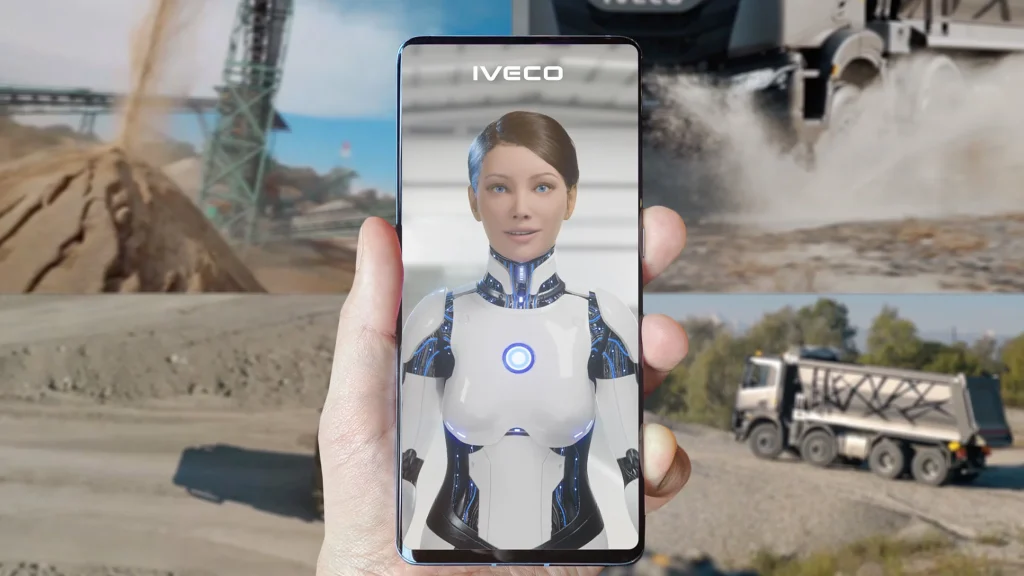
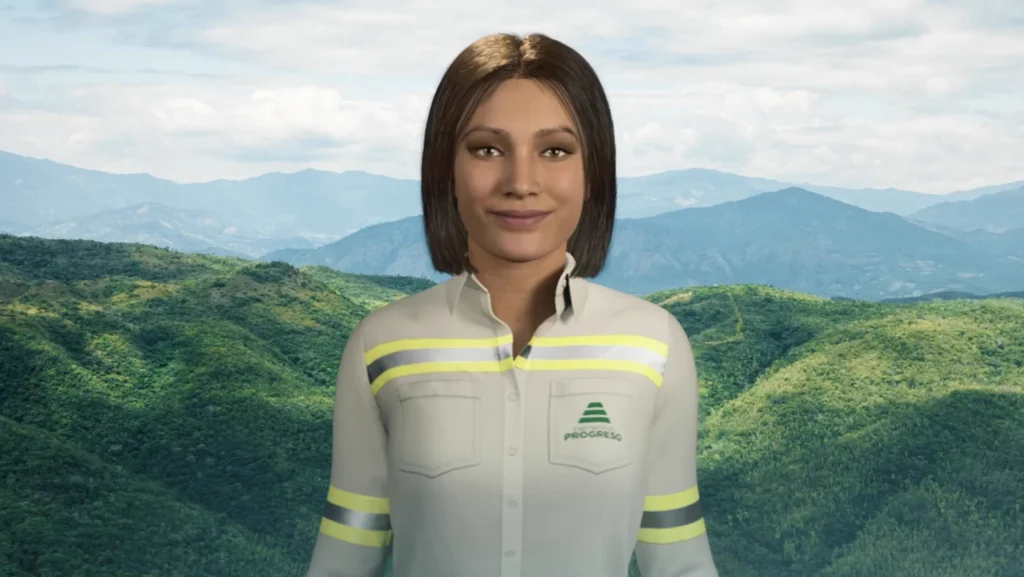
Companies have started to integrate automation into their processes. In this section we want to focus on the most relevant success stories of companies that have made the leap into the future of automation. customer experience with the integration of AI avatars for customer service automation and information transparency internally . Here are 5 examples of virtual avatars that have automated interaction with their brands. Smoky Nola Smoke → Smoky revolutionizes the customer experience in the gastronomy sector. This virtual chef not only welcomes customers, but also offers personalized recommendations based on individual preferences. This phygital approach has been key to differentiating Nola Smoke in the competitive restaurant world. Iria Iveco → Iria is the Iveco virtual avatar which becomes an access point to all the information, training and support of the industrial company's ecosystem. Iria is able to answer specific questions about each truck model, about all safety protocols and about all departments of the company. Cicerone iUrban → Cicerone is the iUrban's virtual robot, an AI avatar capable of interacting in 95 languages, as well as taking over an entire digital travel agency. . It offers personalized recommendations on routes, activities and gastronomy in destinations such as Madrid, Murcia and Ibiza. In addition to improving the tourist experience, it collects valuable data to adjust strategies, raising the quality of service. La Torre Outlet Nougat → In the world of retail, Turrón stands out, the virtual mascot of La Torre Outlet, which during the last Christmas campaign has transformed holiday greetings. The AI avatar became a storyteller, a record of wishes and also the best ambassador to publicize everything that can be done on the shopping mall . Clara Progreso → Clara is the Progreso's sustainability ambassador the construction and cement manufacturing company, which, through its AI avatar, publicizes all of the company's CSR work in Latin America.
How to implement automation in your company with Imascono
At Imascono We offer you customized automation solutions to optimize your company's processes and keep it competitive. Our experience and creative approach allow us to allow you to integrate advanced technology in an efficient way, adapted to the specific needs of your business.
Customized automation solutions for different industries
We design customized solutions for each sector: technology in industry We assist in communicating and managing social responsibility projects; in hospitality and retail we optimize the ordering process and the customer experience with interactive avatars; and technology applied to tourism We implement virtual assistants that improve the attention and personalization of the service. With Imascono, automate with creativity and technology achieving more efficient results and an exceptional experience for your customers. Ready to take your business to the next level with automation? At Imascono, we are here to help you transform your processes and maximize your impact. Contact us today and discover our solutions.
New technologies in the real estate sector
The real estate industry has entered an era of transformation, driven by technological innovations that are radically changing the way we interact with spaces and properties. . Digitalization, Artificial Intelligence, Virtual Reality and Big Data have become the drivers of this evolution, offering new possibilities for both buyers and industry professionals. Thanks to innovative technology solutions in the real estate sector, such as the intelligent agents, 3D interactive recreations and virtual simulations. The industry is moving away from traditional practices, moving more and more towards a fully digitized experience. This transformation not only improves efficiency and decision making, but also creates a more interactive environment, allowing customers to feel connected to the properties in a deeper and more meaningful way . Any time, anywhere in the world. In this article, we will discover how new technologies are reshaping the Real Estate sector highlighting the tools and solutions that are making a difference. It's the perfect time to adapt to the digital future. Read on to discover how technology is changing the rules of the game.
Impact of new technologies on the real estate market
New technologies in the real estate sector are having a major impact on the transformed impact, revolutionizing both the way real estate agents manage properties and the way consumers interact with them. The Virtual Reality and Augmented Reality have made it possible for buyers to take virtual tours of properties without having to physically travel, which not only saves time, but also improves decision making by allowing a clearer and more detailed visualization of spaces. The Artificial Intelligence is also playing a key role in the digital transformation of Real Estate. . Thanks to its predictive algorithms that analyze data and market trends, as well as the automation and personalization offered by these AI tools, transformed into virtual real estate agents that revolutionize the customer experience in the real estate sector. On the other hand, tools such as geolocation allow users to find nearby properties more quickly and easily, optimizing the search and decision-making process. At the same time, the digital communication has evolved not only allowing agents to be present on the platforms where customers search for properties, but also facilitating the creation of closer and more personalized relationships with users. Lastly, we would like to highlight the impact of the new platforms PropTech to simplify real estate transactions . Making them faster and more transparent. If you want to learn more about the use of technology in the real estate sector, visit our website → Trends in Real Estate .
New term Proptech in real estate
The term PropTech is gaining more and more traction as an advancement in real estate technology and not for nothing. It refers to the merging technology with the real estate sector resulting in innovative solutions that are changing the way we buy, sell and manage properties. PropTech encompasses a variety of digital tools and platforms that enhance this process. From platforms of smart property management to real estate fintechs that make it possible to invest in assets more quickly and affordably, PropTech is opening up a range of opportunities, helping industry professionals to offer more personalized services and, most importantly, to reduce operating costs. In addition, they are redefining the consumer experience, making transactions more transparent , streamlining processes and bringing the real estate sector closer to a wider audience .
Emerging technologies in the real estate sector
The Real Estate sector is booming, as is the integration of new technologies in its management and sales processes. Transforming the way properties and real estate are visited, bought and even built. From Artificial Intelligence to virtualized twins The program also includes simulations and interactive models. We will now take a closer look at the main technological tools that are revolutionizing the real estate sector :
Artificial intelligence
Data analysis, offer personalization, image and video enhancement, automating tasks... The The use of Artificial Intelligence in real estate is improving both operational management and customer experience. . This last point highlights the integration of AI avatars that function as automated commercial agents. These avatars are available 24 hours a day, providing assistance to potential buyers at any time and in any language, answering specific questions about the properties and providing personalized recommendations . Thanks to their ability to store and process detailed information about each interaction, AI avatars can be used to facilitate the follow-up of potential customers and collect key data that helps real estate agents further customize their approach. You can learn more about AI avatars in our → post. Artificial Intelligence Avatar: definition and main uses .
Virtual and Augmented Reality
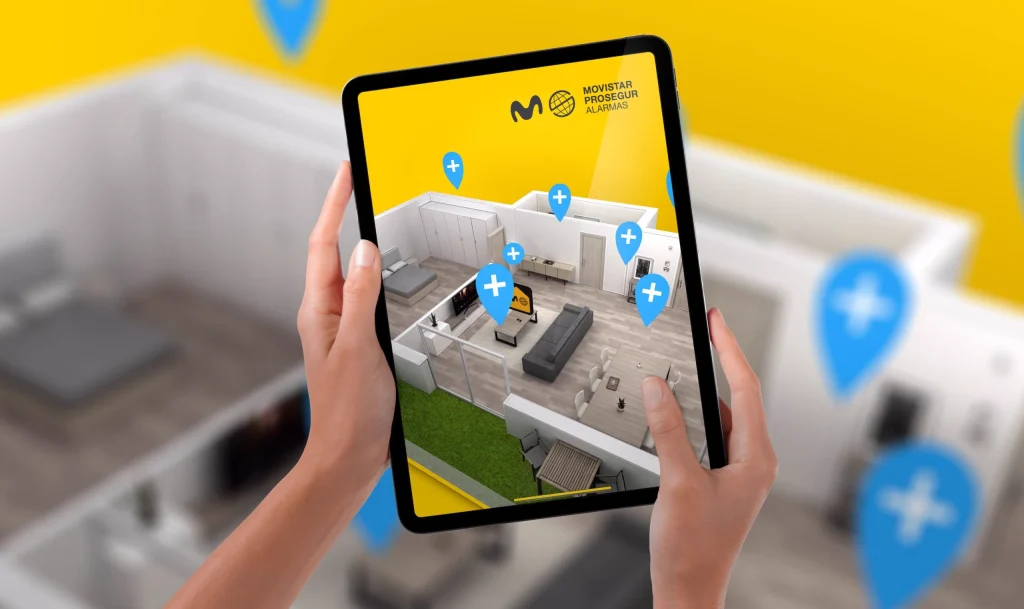
Virtual Reality is taking real estate and property tours to a new level, allowing customers to walk through spaces in first person. Through VR simulations, users are able to explore the property and also interact with all the elements of the space. The project is a great opportunity to make modifications and experience how they would feel living or working in such a place. By viewing the property in an immersive way, customers can emotionally connect with the property. The new home or office will be a real sense of belonging and anticipating what your future home or office will be like. Augmented Reality is revolutionizing Real Estate by making people's lives easier and plans and models come to life in 3D The new property is a very attractive property, allowing users to explore the details of the future property in a more tangible way. With Augmented Reality, it is possible to go beyond the spatial and abstract vision, showing clients how the different elements of the house or building will look like in real space, which facilitates a clearer and more detailed understanding of the property before its construction or renovation. Augmented Reality models such as the one made by Movistar Prosegur Alarms where users can learn all about its security products and services.
Internet of Things
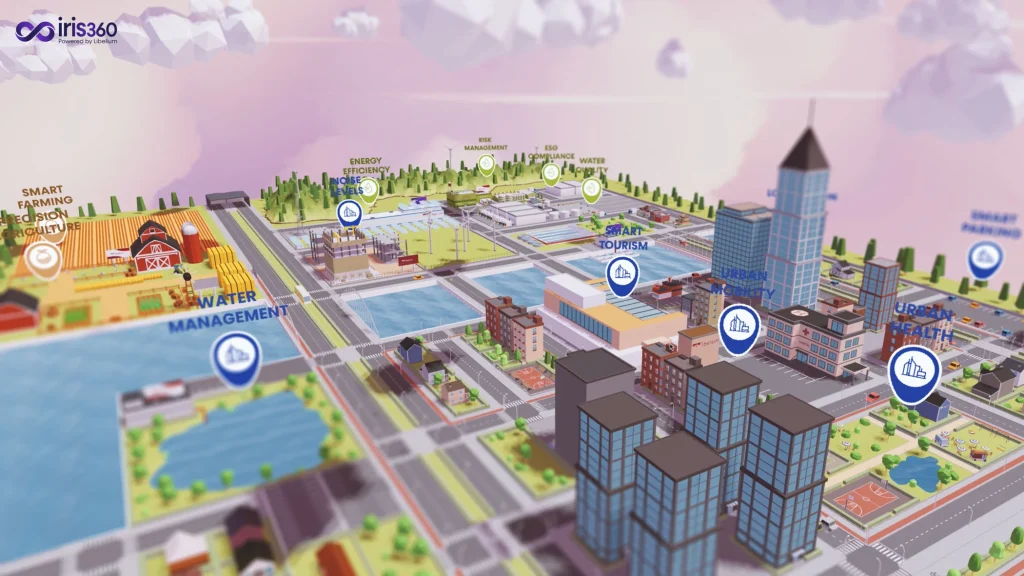
The Internet of Things (IoT) is making a big difference in the real estate industry by making properties smarter and more efficient. Through connected devices, such as temperature, lighting and security sensors, owners and potential buyers can monitor and control various aspects of a property remotely. This not only improves comfort and energy efficiency, but also offers a more personalized experience for those who live or work in these spaces. In addition, the IoT enables a proactive property management The data can be used to forecast maintenance, optimize resources and, ultimately, increase the value and attractiveness of the property. Proactive management that can also be brought to cities, as in the case of Libelium and its virtual recreation of a Smart City equipped with IoT technology.
Virtual Spaces
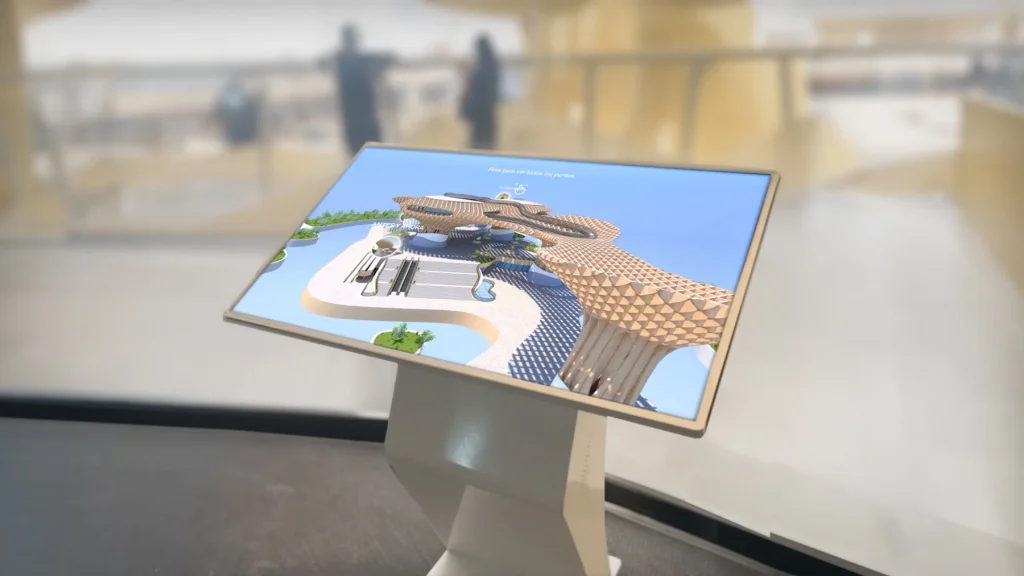
Virtual Spaces are revolutionizing the real estate industry by enabling a completely new interaction with real estate, both in the development phase and in property management. Through interactive digital environments, Virtual Spaces offer immersive experiences where customers can walk through real estate developments in 3D for themselves The new system allows you to get to know every detail of a building and explore its facilities from anywhere in the world. An example of this can be found in the virtual visit to the Rafa Nadal Academy by Movistar where users can travel virtually to Manacor and tour all the facilities of the tennis academy. On the other hand, Virtual Twins provide a large-scale view of a space. They are interactive maps and infographics to guide the user and visually explain the infrastructures of a site . Taking a step beyond static maps and plans, such as in the case of the virtual recreation of the Seville Mushrooms monument . If you want to know more about virtual spaces you can visit our article → What is a virtual space and how to use it
Future of technology in the real estate sector
So far we have been reviewing the innovations that are already a reality in the present of the real estate sector, but, what are the technologies that will shape the future of this industry? In Real Estate, one of the most promising innovations is the Blockchain which will offer secure and transparent solutions for real estate transactions. As smart contracts become more common, buying and selling property will become more streamlined and free of intermediaries, reducing costs and time. In addition, the blockchain can guarantee the authenticity of properties and related documents, improving confidence in the entire process. In parallel, future improvements and innovations in Artificial Intelligence and in the development of hyper-realistic virtual spaces will be crucial for further advancing the integration of technology into the real estate business model . Seeking to combine face-to-face attention with the benefits offered by virtual experiences to be able to see and tour the spaces that will be built in the future, as they will be seen in reality. These solutions will not only improve decision making, but will also allow customers to interacting with real estate in a completely new way creating a more agile, accessible and connected purchasing process to your needs. Want to learn more about the use of technology in real estate? Visit our article Digital Twin 4.0. in the real estate sector .
Imascono success stories in real estate technology
Throughout this article we have been able to know some of the projects and technologies that are already present in the daily life of companies, real estate developments and large facilities. At Imascono we have worked with large companies to virtualize their spaces, both inside and out. For this reason, we wanted to share in this last section some of the most relevant success stories in the Real Estate field :
Together with the Rafa Nadal Academy by Movistar team, we worked on the virtualization of all of its facilities, buildings and courts to develop an immersive web experience that let every user travel to Manacor. This makes it possible to get a complete overview of the entire complex: from the school to the gym, including the hotel and the spa.
In the industrial and healthcare fields, together with Certest we brought their facilities into the virtual world so they could be visited by customers and partners from all over the world. As a result, the Certest virtual twin offers a complete view of the scale of their infrastructure, along with interactive infographics about their new manufacturing lines and research centers.
At Imascono we know that the future of Real Estate depends on implementing new technologies that bring real estate developments to new audiences in a more personalized and engaging way. If you want to find out how we can incorporate Artificial Intelligence and virtualize your properties, don't hesitate to get in touch with us.
Top technology trends of 2025
2025 is shaping up to be a pivotal year for technology with innovations that will completely transform the way we live, work and connect. From Artificial Intelligence to Extended Reality, these trends are opening up new opportunities and challenging companies to evolve rapidly to stay competitive. In this blog post we explore the main technology trends that will shape the future and how, by adapting to them, your brand can stand out and lead in the digital marketplace. Discover how these immersive technologies and experiences are creating a more connected, interactive and efficient future. And don't miss how Imascono can be your strategic ally to revolutionize your brand's digital experiences, bringing your business to the forefront of innovation. The future is now, and technology is waiting for you!
Why will today's technology trends change the future?
We cannot understand today's world without understanding technology. . Its innovations, new proposals and trends revolutionize the way we live, work and socialize. New technological advances such as Artificial Intelligence, automation, Spatial Computing and the Blockchain are laying the foundations for a future where technology not only accompanies us, but also adapts to our needs. At the business level, this also implies a change both internally and externally. It has an impact on business models, on the generation of new products and on new ways of reaching and connecting with consumers. Thus, current technological trends invite us to think about what we want our company to look like in 2025. How we want it to evolve in the future.
Technology trends highlighted by business sector
The technology trends of 2025 are driving significant digital transformation in key sectors such as tourism, retail and healthcare. Each of these industries is adopting technological innovations that improve operational efficiency as well as the customer experience and the personalization of their products and services.
Trends in Tourism. The most notable technology in tourism trend is the use of Artificial Intelligence to further personalize the travel experience, even through virtual butlers. Augmented Reality and Virtual Reality are driving virtual tours and immersive experiences, revolutionizing the before, during and after of every trip.
Trends in Industry. Technology in the industrial sector in 2025 stands out for driving virtualized simulations and training that allow employees to receive continuous training without the opportunity cost of tying up machinery for that purpose. In addition, virtual twins and the use of AI give factories greater control over their processes, measuring efficiency and customizing production lines.
Trends in Retail. Thanks to the use of Artificial Intelligence, customer service becomes personalized. Through virtual assistants or avatars, brands can answer questions, offer recommendations and act as each user's personal shopper. In addition, Augmented Reality lets users try products virtually before making a purchase, both in physical stores and online.
Trends in Banking. One of the most prominent technology trends in banking is blockchain, a technology that will soon become established as a way to guarantee the security and transparency of transactions. Also notable is the push toward ever more agile payment systems and the use of AI both in process automation and in personalized customer service.
Trends in Healthcare. Among the new technology trends taking hold in healthcare, telemedicine services and interactive consultations stand out. So does the use of Virtual Reality in the training of healthcare professionals, where they can deepen their knowledge through trial and error and the other advantages of virtual training.
Trends in Real Estate. Digitalization in the real estate sector will be key in 2025, with the use of virtual twins to let customers explore properties virtually. Turning floor plans, scale models and renderings into interactive experiences.
Trends in Education. Thanks to the latest trends in technology in education, this sector will be profoundly transformed by more advanced digital learning platforms, where Artificial Intelligence will further personalize educational content, adapting it to each student's pace and needs and improving learning outcomes.
Major technology trends for the future
The future is being forged by technology trends that will dominate the global landscape in 2025. These advances are changing how we interact with technology and people. Below, we will discover the main trends.
Artificial Intelligence and advanced automation
Artificial Intelligence and advanced automation are not just the future: they are already the present. By 2025, these technologies will enable more efficient processes, smarter decisions and personalization at levels never seen before . From creating hyper-personalized user experiences to optimizing the supply chain and automating repetitive tasks. Companies that adopt these solutions will be better positioned to lead in an increasingly competitive marketplace. This automation can also occur at the customer service level. thanks to virtual agents and avatars equipped with Artificial Intelligence that interact with users autonomously and attend to their queries and specific needs.
Immersive experiences through Extended Reality
Extended Reality, which encompasses both Augmented Reality and Virtual Reality, allows digital interaction to be taken to a whole new level. Immersive experiences are becoming the norm transforming sectors such as education, entertainment, healthcare and retail. In 2025, XR experiences will be more accessible and realistic than ever before, allowing users to not only see, but feel, interact and explore virtual worlds as if they were real and in the first person generating high engagement. If you want to learn more about this technology, visit our article: What is Extended Reality?
Virtual Twins and Virtual Spaces
In 2025, what we knew a few years ago as Metaverse, evolves towards new virtual proposals more grounded in the day-to-day life of the companies, with virtual spaces that allow adjusting the level of interaction between the physical and digital world . On the one hand, the Virtual Twins or interactive infographics such as the Libelium virtual city or the recreation of the medieval castle of Loarre XR are virtual worlds that allow a large-scale view of a space or process, where the important thing is the accessibility to information. On the other hand, we find the gamified environments o Virtual Spaces . Virtual spaces where community is generated and above all help to virtualize business activities through the gamification of pre-sales. These technologies generate a new horizon of possibilities for collaboration, simulation and virtual innovation.
Spatial computing
Spatial Computing is one of the most important technological trends to be taken into account, thanks to the fact that it is taking interaction with devices beyond the screen. At incorporate the user's physical space and movements into the digital experience, this technology allows us to interact with data and applications in a more natural and organic way. In the near future, space computing will be key in creating interfaces that respond to our gestures, voice and locations. providing a much more immersive and fluid experience. Want to know more about this technology? Visit our article → What is spatial computing and its importance today? .
Fast learning robots and avatars
Human-machine interaction is going one step further thanks to the incorporation in our value chain of robots that support us on a physical level and virtual avatars that support us digitally. By 2025, these virtual assistants will be able to learn from their interaction with each user, understand their responses and even emotions to offer maximum assistance. Adapting autonomously, providing faster and more accurate responses to users' needs. A clear example of this trend is V.E.G.A a new generation of hyper-realistic avatars that have been designed for humanizing interaction with technology . Thanks to their content training, appearance and specific personality, these avatars can transform customer service, user experience, personalized attention and much more.
How to adapt to new technological trends
Adapting to new technology trends is key to staying competitive in the digital future . It's not just about incorporating the latest tools, it's about transforming the way companies operate and connect with their customers. Investing in emerging technologies such as Artificial Intelligence, Extended Reality and advanced automation, along with team training and the creation of an agile infrastructure, will enable enterprises to to take full advantage of these innovations and secure their growth and a place in the future of the market.
How Imascono can revolutionize your brand's digital experiences
At Imascono we look forward to helping you take your brand's digital experience to the next level. With advanced Virtual Reality solutions and Artificial Intelligence, we create interactive, personalized and immersive experiences that captivate users. Through V.E.G.A. virtual avatars and other technological products, we offer an agile service adapted to each client, enhancing the user experience. With our outstanding projects your brand not only adapts to the new trends, but also to the new leading the digital transformation standing out in an increasingly competitive market. We're ready to take your brand into the digital future. If you are interested in exploring how our innovative solutions can transform your business, don't hesitate to contact us. contact with us . Our team of experts is here to help you take the next step in technological evolution.
The revolution and impact of AI in retailing
Retail is undergoing an unprecedented digital transformation thanks to Artificial Intelligence. Today, brands are no longer just selling products, they are also creating personalized experiences that connect emotionally with your customers . From purchase prediction to task automation and extreme personalization, AI has gone from being a trend to becoming a strategic necessity for any business that wants to stand out. In this article, we will explore how Artificial Intelligence is redefining the retail sector The key benefits it brings and how to implement it successfully. In addition, we will learn about the most innovative projects in the use of AI in customer service, customer experience and consumer sales. Cervantes IA , Nougat - La Torre Outlet and Smoky Nola Gras are just a few of the success stories of the impact of AI in retailing Are you ready to discover the future of retailing?
The transformation of Artificial Intelligence in the retail sector
Artificial Intelligence has burst into the retail industry to completely revolutionize it. It's no longer just about selling products, but about creating highly personalized experiences, anticipating consumer needs and optimizing every process with unprecedented precision. From massive data analysis to intelligent automation, AI enables brands to offer a more efficient, intuitive and cost-effective service transforming the way they interact with their customers. Companies that integrate AI not only optimize their supply chain and increase their profitability, they also achieve a deeper connection with their consumers . Artificial intelligence is no longer an option, but the engine that drives the retail of the future: more innovative, more agile and totally customer-centric. You may be interested in → Customer experience: how to improve it through Extended Reality .
Outstanding benefits of AI in the retail sector
Artificial Intelligence is unlocking a world of possibilities for brands looking to lead in the digital age and connect with new consumer profiles. Below, we show you the key benefits of using AI that are making a difference in the industry.
Purchase prediction
Imagine knowing what your customers want before they know it themselves. Thanks to AI and predictive analytics, retailers can identify buying patterns, forecast trends and optimize their inventory with surgical precision. This not only reduces costs, but also enables them to offer products at the right time and place, driving sales and improving the customer experience.
Task automation
Time is money in retail, and AI makes it shine even brighter. With automated solutions, brands can manage dynamic pricing, update catalogs in real time, respond to customer queries via intelligent avatars and optimize logistics processes without manual intervention. Focusing on what really matters: innovating, strategizing and strengthening customer relationships. Through the virtual agents and generative Artificial Intelligence In the retail sector, customer service in the retail sector is automated, allowing users' doubts to be resolved in a much faster, closer and more personalized way.
Error reduction
In retail, a small mistake can translate into losses. AI minimizes failures in inventory management, pricing and logistics, ensuring more efficient and profitable operations. With algorithms that analyze data in real-time and detect weaknesses before they become problems, decision making becomes more agile, strategic and effective.
Personalization of the customer experience
The key to success in retail is that every customer feels like the protagonist of their own story, and Artificial Intelligence gives you the power to surprise. As in the project developed by Kinepolis Madrid, Disney and Marvel. At Kimchi! Thor , we went from storytelling to storyliving creating immersive and personalized experiences, turning viewers into Asgard protagonists before they even enter the movie theater, in a marketing action that combines Artificial Intelligence and Augmented Reality. But personalization of the experience can go further. From to offer precise recommendations to tailor-made promotions, by analyzing buying behavior in real time. Each interaction is also tailored to surprise and excite the consumer. The more personalized the experience, the greater the emotional connection, loyalty and conversion.
How to integrate AI into your retail strategy
To take advantage of the full potential of Artificial Intelligence, it is essential to implement it strategically. . You need to be clear about what you are going to use it for, what you want to achieve and how it can help consumers, the real protagonists in technological innovations in the retail sector. Here we show you how to take the first steps to transform your business with AI.
Steps for a correct implementation
Define clear objectives → Before incorporating AI, it is essential to identify which areas of your business you want to improve, whether that's customer experience, process automation or strategic decision-making. Having well-defined objectives ensures that the AI implementation is effective, aligns with the company's growth goals and maximizes results.
Choose the right technology → AI avatars trained on all of the company's commercial messaging, recommendation algorithms, immersive Extended Reality experiences… There are many ways to bring technology and Artificial Intelligence into business activities, so it is important to select the solutions that best fit your business and your current systems.
Leverage your data → Artificial Intelligence depends on quality information. Implementing solid Big Data strategies to collect and analyze data is key, from user interactions and stock variations to, of course, purchasing behavior.
Train your team → AI adoption depends not only on the technology, but also on training your people. This technology does not seek to replace employees but to enhance their capabilities, creating augmented professionals. The most important thing is to make sure employees understand how this technology works and how they can use it in their daily tasks.
Measure and optimize → Implementing Artificial Intelligence is an ongoing process. It is essential to measure performance and adjust processes based on the results obtained. Make adjustments where necessary to optimize its effectiveness, ensuring it continues to add value to your business as the technology evolves.
Collaboration with experts in technological innovation
While integrating Artificial Intelligence may seem challenging, the key is to surround yourself with the best allies. This is where companies that specialize in innovation, such as Imascono play a crucial role. Since not only We help implement AI, but we turn it into a creative, useful and differentiating tool for each brand. From interactive experiences to advanced personalization solutions, we at Imascono are redefining the way retail connects with customers, creating innovative experiences that generate impact and loyalty.
Imascono Artificial Intelligence projects highlighted in retailing
Artificial Intelligence is not only technology, it is a tool to put creativity into action. With each project developed from Imascono, we transform retail into an immersive and unforgettable experience. Here are some of our most innovative projects that have taken retail to another level:
Imagine entering a bookstore, a museum, a tourist office, etc. and talk with one of the greatest writers in history . With Cervantes IA, we created a unique experience where Artificial Intelligence gives voice and life to the famous author, allowing visitors to interact with him in real time. This project not only adds cultural value, but also generates a memorable experience that turns every visit into a story to be told.
Together with the La Torre Outlet team, we reinvented the way to interact in a shopping mall. Thanks to Turrón and through AI, during the Christmas campaign, visitors could ask the avatar for advice, tell him their wish list and ask him about all the services of the shopping center during these special dates. An interactive experience that combines storytelling, personalization and gamification creating an emotional bond with the brand. An innovative way to connect retail with tradition, adapting it to the digital era.
With Smoky Nola Gras With the new "Virtual Chef", users can interact with a virtual chef, which merges the power of Artificial Intelligence with customer service, in a fun way. Reducing boring waiting times and offering recommendations to customers. These are just a few examples of how in Imascono we make every project to achieve surprise, excite and transform the way brands connect with their customers. The Artificial Intelligence is transforming retail, and at Imascono we are ready to help you take the next step. If you want to differentiate yourself, surprise your customers and create unique interactive experiences, our team of experts in retail technology solutions can make it happen. Contact with us and find out how we can help you!
Characteristics of a luxury hotel: immersive design and unique experiences
Luxury hotels are no longer simple vacation spots, but exclusive destinations where design and experiences play a fundamental role. The hotel luxury modern combines exclusivity, immersive design and personalized services powered by advanced technology. From smart rooms and virtual butlers with AI, to unique experiences such as virtual simulations, interactive tours in Augmented Reality, these hotels redefine hospitality. Personalized attention, high-level gastronomy, integral wellness and connection with the local culture ensure memorable and unique experiences. With innovation and detail, luxury hotels not only meet, but exceed expectations, setting a new standard of excellence and sophistication in every aspect of the stay. In this article, we will analyze the main characteristics of a luxury hotel where design and technology transform the guest experience.
What defines luxury hotels today?
If you're wondering what a luxury hotel is, Nowadays, luxury hotels are characterized by their focus on offer customized experiences, unique design, exceptional services and high-end facilities. They stand out for creating personalized and memorable experiences, incorporating cutting-edge technology, sustainable materials and offering high quality gastronomy. Combining innovation and tradition. In general, luxury hotels focus on guests, creating a customer experience with exclusive, authentic and unique services. With a design that not only seeks to be functional, but also to be impactful and emotionally appealing . The today's luxury hotels combine innovation and tradition integrating advanced technologies such as home automation and virtual assistants while maintaining the human touch and warmth in every interaction. Another defining feature of luxury hotels is their focus on sustainability and authenticity. Today's travelers increasingly value accommodations that respect the environment and reflect local culture. From using sustainable materials in design to offering experiences that connect with the destination's identity, these hotels strike a perfect balance between exclusivity, responsibility and sense of place, making a difference in a highly competitive market. If you are interested, find out in detail which are the most important technology trends in hotels
Key characteristics of a luxury hotel
A luxury hotel is distinguished by a series of characteristics that position it as a unique and exclusive experience . From immersive architectural design to personalized services and state-of-the-art technology, every detail is designed to exceed guests' expectations. Below, we will discover in detail the qualities that make these accommodations a reference in comfort, style and excellence.
Advanced technology integrated in every detail
In luxury hotels, advanced technology is not just an add-on, but a core element that enhances the guest experience in every aspect. When we talk about technology integrated into every detail, we are referring to the The combination of different tools and innovations combined together make the hotel experience unique, intuitive and personalized. From home automation systems that allow you to control lighting, temperature and curtains with a single touch, to stewards and/or virtual avatars that provide personalized recommendations and handle requests in real time. In addition, the integration of technology such as the contactless check-in and check-out The hotel's mobile device access to rooms and high-speed connectivity ensure a smooth and comfortable stay. Every technological detail is designed to combining innovation and functionality offering a sophisticated experience that meets the most demanding expectations. You may be interested in → 5 applications of Artificial Intelligence in hotels
Personalized services as the essence of luxury
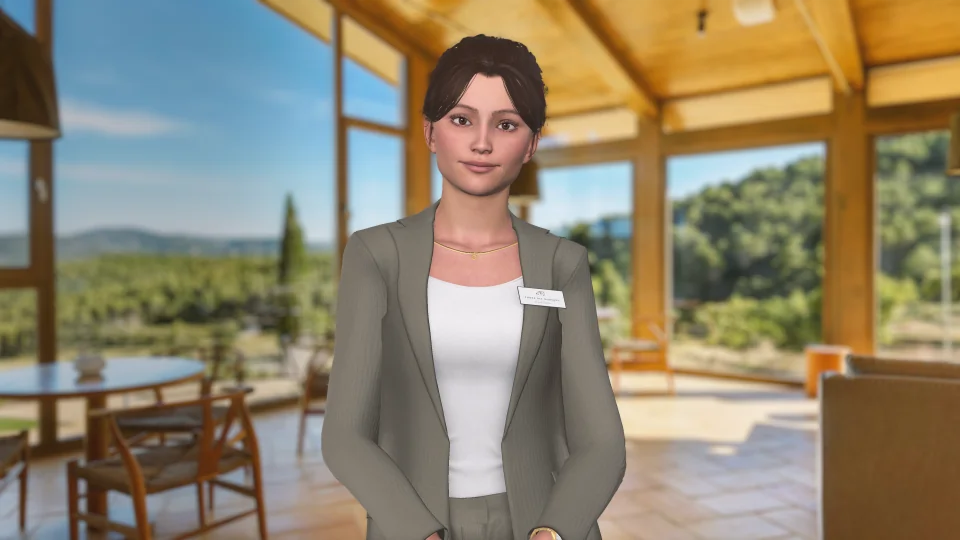
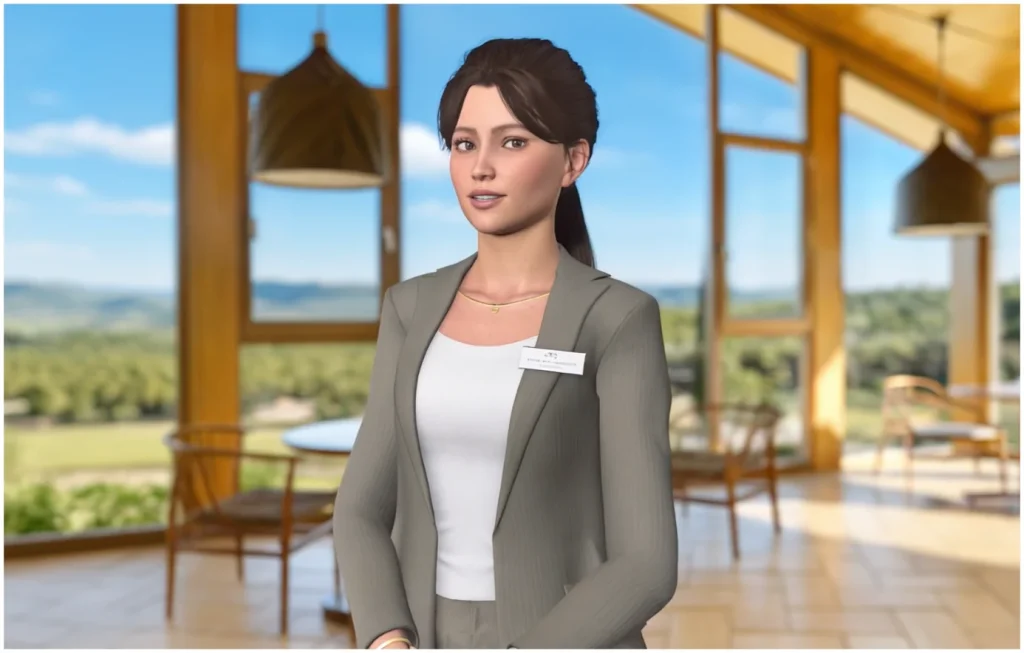
One of the main characteristics of a luxury hotel lies in its capacity for offer services that are uniquely tailored to each guest , and the incorporation of virtual butlers takes this personalization to the next level. These virtual assistants, available 24 hours a day, can automate processes, answer frequently asked questions, and hold conversations in any language. An example of a digital concierge can be found in Marta, the virtual assistant at the Hotel Torre del Marqués . In addition, they offer recommendations that are fully tailored to the customer's preferences. And they can even anticipate guest needs in real time, ensuring a smooth and memorable experience. Want to know more about AI avatars? See our page on Generative Avatars with Artificial Intelligence .
Exclusive experiences
Undoubtedly, one of the defining characteristics of a luxury hotel is its ability to offer unique experiences that transcend the hotel stay. These experiences are designed to surprise and emotionally connect with guests, from personalized activities to private events and exclusive services. Projects such as Exclusiverse, the virtual headquarters of the Exclusive Traveler Club The company's products and services exemplify how innovation can take this exclusivity to the next level. Through digital memberships hotels can maintain a constant connection with their customers before, during and after their stay. By offering access to unique benefits, differentiated experiences and services tailored to each guest. These memberships not only reinforce the sense of belonging by being part of an exclusive community, but also enhance loyalty and position luxury hotels as leaders in innovation and customer service.
Artificial Intelligence: cutting-edge technology in luxury hotels
If there is one technology that is redefining the hotel world, it is Artificial Intelligence. In the field of luxury hotels, as we have been seeing throughout the article, AI allows for tailor and personalize the hotel experience for each guest The reservation and the stay itself are also included in the price. The Artificial Intelligence is redefining luxury in the hospitality industry by offering advanced solutions that transform the guest experience and optimize internal operations . From AI avatars that handle requests in real time to systems that automatically adjust rooms based on individual preferences. In addition to enhancing the guest experience, the AI boosts operational efficiency in key areas such as reservations management, staff training, scheduling, and the operation of activities and services. By automating routine tasks, hotel teams can focus on providing a closer and more personalized service. With its ability to combine comfort and customization AI has become a must-have element in luxury hotels, ensuring exceptional stays where every interaction and detail is carefully designed to exceed expectations. Find out how the Hotels of the Future in our next article → Hotels of the future: hotel technology trends
A leading success story of Artificial Intelligence in hotels
In an environment where personalization and round-the-clock availability have become essential for luxury hotels, Hotel Torre del Marqués decided to take its commitment to innovation one step further. That is how its project was born: integrating a virtual assistant with a local soul, able to accompany guests at all times.
Marta | Torre del Marqués
Hotel Torre del Marqués, in the heart of the “Aragonese Tuscany,” has added Marta, a multilingual intelligent avatar that acts as a digital concierge available 24/7. This virtual assistant offers personalized information about services, gastronomy, wellness, and activities in the Matarraña region, accompanying guests throughout their stay without losing the hotel's essence of exclusivity. Thanks to its implementation, the five-star resort has improved operational efficiency, strengthened its customer service, and raised visitor satisfaction, positioning itself as a benchmark in rural tourism innovation. The project was made possible with the support of Spain's Secretary of State for Tourism through the SEGITUR grant.
Why are technological features key in luxury hotels?
Technology is essential in luxury hotels because it raises the standards of comfort, personalization, and efficiency that modern guests demand. Tools such as virtual check-ins, in-room smart home systems, and immersive augmented reality experiences allow guests to enjoy intuitive services tailored to their needs. By integrating innovation into every detail, hotels meet the expectations of a demanding traveler who values exclusivity and convenience. Technology also allows them to stand out in a highly competitive market, strengthening their brand image and establishing themselves as benchmarks in high-end hospitality.AtImascono, we specialize in developing technology experiences for all kinds of sectors, where luxury stands out in key industries such as fashion, restaurants, and, of course, the hotel sector.Through V·E·G·A, our virtual avatars, and our Artificial Intelligence services for businesses, at Imascono we can provide a solution for the automation and simultaneous personalization of guest service. They can adapt their messages in real time, converse with users in any language, and gather information on every conversation held.Interested in learning more about how to implement new technologies and AI in your hotel? Discover our technology services for tourism and get in touch with us; our team of engineers and designers will be happy to answer all your questions.
5 applications of Artificial Intelligence in hotels
The The hotel industry is undergoing an unprecedented transformation thanks to the integration of Artificial Intelligence. . From automating tasks to personalizing services, AI has become an indispensable tool for hotels looking to stay competitive and meet the expectations of modern travelers. In an industry where convenience, efficiency, and innovation are essential, AI offers solutions that optimize processes and transform guest interaction . In this article, we will discover 5 key applications of Artificial Intelligence in hotels that are making a difference. These tools not only improve service quality, but also add value for both guests and operational teams. In addition, we will learn in detail about the success story of Torre del Marqués Hotel , an exclusive hotel in Matarraña that already has its own digital concierge. Discover how AI is shaping the hotels of the future facilitating more personalized stays and unique experiences.
Functioning of Artificial Intelligence in hotels
Artificial Intelligence works as an integral tool in the hotel industry by analyze data, automate processes, and personalize services all in real time. Thanks to its ability to process large volumes of information, AI allows hotels to anticipate guests' needs, offering recommendations tailored to their preferences. From chatbots that manage reservations and inquiries to virtual assistants that control rooms, this technology transforms customer interaction into a more fluid, efficient and personalized experience. By gathering information about their wishes and requests, facilitating a more efficient and personalized experience. fast and efficient service without waiting, directly from your mobile devices. You can learn more about the use of Artificial Intelligence in hotels in our content, on the technology trends in hotels .
5 outstanding applications of AI for hotels
Artificial Intelligence is not just a tool, but a strategic advantage for hotels looking to exceed their guests' expectations. In an increasingly competitive hospitality environment, AI has become an essential resource for innovating and standing out. Its ability to transform processes and improve the hotel customer experience is redefining the industry's standards. Below, we present 5 key applications of artificial intelligence in hotels that are revolutionizing the hospitality world.
Chatbots and virtual assistants
Chatbots and virtual assistants are one of the most prominent applications of Artificial Intelligence in hotels, offering efficient and personalized customer service 24/7. No doubt about it, have completely changed the way the hospitality industry communicates. . However, thanks to the Generative AI and the personalization of virtual avatars, these assistants become real representatives of the hotel companies, taking on personality, appearance and specific training, like real virtual hotel workers. These virtual agents are capable of manage reservations , answer frequently asked questions , provide specific information about hotel services and provide recommendations tailored to each guest's needs. In addition, its ability to communicate in multiple languages eliminates language barriers and enhances the experience for international travelers. Thanks to the automation chatbots and virtual assistants not only streamline processes, but they also free hotel staff to focus on more complex and closer interactions. This ensures a smoother customer experience while improving operational efficiency, positioning the hotels that adopt them as leaders in innovation and modern hospitality. You may be interested in → Avatar with Artificial Intelligence: definition and main uses
Automated check-in and check-out
One of the most practical applications of Artificial Intelligence in hotels is automated check-in and check-out management. Not only does it speed up the registration and departure process, it also allows all the necessary questions and questionnaires to be completed quickly and easily, focusing above all on improving the guest experience and strengthening the hotel's brand image.With mobile apps or smart kiosks/totems, guests can check in without having to stop at the front desk, access their rooms with digital keys and complete check-out quickly and efficiently. This approach not only reduces lines, but also makes it possible to personalize the experience from the very first moment, such as selecting rooms based on preferences or adding extra services.
Price management and reservations
Artificial Intelligence helps companies in the hotel industry to optimize pricing and room availability by analyzing large volumes of data in real time. It enables dynamic and accurate pricing management by taking into account not only external factors such as the season, local events such as regional festivals or large-scale events, etc. and market competition. Also the factors of the consumers themselves, such as their tastes and preferences when it comes to travel. This allows hotels to strategically adjust their pricing to maximize occupancy and bookings. In addition, AI optimizes the management of reservations by identifying guest behavior patterns The company's approach to booking, anticipating cancellations and avoiding overbooking of rooms. This approach not only ensures greater operational efficiency, but also enhances the customer experience by offering competitive rates and smoother planning.
Online feedback tracking
Artificial Intelligence allows hotels to monitor user satisfaction on platforms such as TripAdvisor, Google Reviews or on their own social networks, efficiently managing their digital reputation. AI systems automatically collect and analyze user comments and reviews The new system provides key insights into guests' perceptions. This allows you to identify trends, strengths and areas for improvement quickly and accurately. In addition, these tools can categorizing feedback according to aspects such as service, cleanliness or location, facilitating the prioritization of actions to improve the customer experience. By responding proactively and personally to feedback, hotels not only strengthen their reputation, but also demonstrate a commitment to guest satisfaction.
Personalized recommendation systems
By analyzing data on consumer preferences and guest behaviors, hotels can provide personalized recommendations such as local activities, additional services such as spa, restaurants, excursions and other activities . By incorporating these recommendations, hotels create a more personalized and memorable experience that strengthens the relationship with their customers. This is not only improves guest satisfaction, but it also encourages cross-selling and up-selling of additional services, obtaining greater satisfaction and a notorious increase in the contracting of services and activities thanks to its speed and accessibility. An example of this can be found in Marta , the avatar, and digital concierge of Torre del Marqués and in Cicerone the AI robot running a travel agency in 95 languages
How can a hotel start using Artificial Intelligence?
To integrate Artificial Intelligence effectively, hotels must first identify the areas where this technology can have the greatest impact. such as customer care, price optimization and hotel service management. It is important to select specialized AI solutions that are tailored to the specific needs and operations of the hotel, ensuring efficient and seamless implementation. Training staff is another key step in making the most of these tools, enabling them to work together with technology to improve processes and the guest experience. Start with specific applications, such as virtual assistants for quick queries or personalized recommendation systems. allows a gradual and controlled integration. In addition, measuring its impact through key performance indicators helps to adjust strategies and maximize benefits. With a strategic and progressive approach, Artificial Intelligence can transform hotel operations. The company's facilities are designed to provide efficiency, innovation and an exceptional experience for guests.
Keys to the future of Artificial Intelligence in hotels
The future of artificial intelligence in the hospitality industry is full of innovative possibilities that promise to transform both the guest experience and internal operations. Among the most important trends are:
Personalized experiences. AI will make it possible to anticipate guests' needs even before they arrive, designing stays fully tailored to their tastes and preferences.
Smart rooms. Advanced technologies will control elements such as temperature, lighting and entertainment in real time, offering fully personalized comfort.
Advanced predictive analytics. Hotels will be able to predict demand patterns, guest behavior and market trends with greater accuracy, optimizing resources and strategies.
Adopting AI is not only a tool for improving the customer experience, but also a key factor in optimizing operations and increasing profitability. Hotels that embrace these technologies will be better positioned to compete in a constantly evolving market, adapting to the expectations of increasingly demanding travelers. In short, AI not only redefines hospitality, but secures a future in which hotels can offer unforgettable, cutting-edge experiences.
A leading success story of Artificial Intelligence in hotels
In an environment where personalization and round-the-clock availability have become essential for luxury hotels, Hotel Torre del Marqués decided to take its commitment to innovation one step further. That is how its project was born: integrating a virtual assistant with a local soul, able to accompany guests at all times.
Marta Torre del Marqués
Hotel Torre del Marqués, in the heart of the “Aragonese Tuscany,” has added Marta, a multilingual intelligent avatar that acts as a digital concierge available 24/7. This virtual assistant offers personalized information about services, gastronomy, wellness, and activities in the Matarraña region, accompanying guests throughout their stay without losing the hotel's essence of exclusivity. Thanks to its implementation, the five-star resort has improved operational efficiency, strengthened its customer service, and raised visitor satisfaction, positioning itself as a benchmark in rural tourism innovation. The project was made possible with the support of Spain's Secretary of State for Tourism through the SEGITUR grant.
At Imascono we are specialized in the implementation of the Artificial Intelligence in companies in particular, by means of technology in the tourism industry through virtual avatars specialized in customer service. Seeking to provide a solution to the user We provide a fast, efficient and personalized service, improving satisfaction and customer experience. Interested in learning more about our Artificial Intelligence services for hotels? Get in touch with us and our team of engineers and designers will be happy to answer all your questions.
The future of Artificial Intelligence: main key issues
It is no longer science fiction, it is the present and it is our reality. Welcome to the Age of Artificial Intelligence ! This has become possible and tangible thanks to the countless advances that have been made in this sector in the last decade. With these innovations, AI is poised to revolutionize multiple sectors in the coming years . Among the most significant trends are the rise of automation, deep learning, ethics in AI and the integration of AI with other emerging technologies such as the Internet of Things (IoT). As these trends develop, new opportunities and challenges will open up that will redefine how we interact with technology and how it impacts our lives. . Throughout this article, we will discuss the future of AI use in sectors such as education, industry, marketing, and marketing and sales. advertising The company will analyze how these transformations are shaping a future where Artificial Intelligence will not only be a tool, but an essential ally in the optimization of processes.
What will Artificial Intelligence look like in the future?
In the long-term future, Artificial Intelligence, along with other technological advances will have radically transformed many aspects of our lives and our jobs. . In this area of work, AI will have made it possible for technology to take care of all those tasks that need to be performed in the workplace. repetitive tasks and that do not require any human skills, so that workers can focus on tasks that do require humanity, strategy and/or creativity. In terms of the way we currently learn, the AI will personalize teaching to make it simpler, more accessible and more efficient for each of the students. In more artistic areas, the future of AI will facilitate creative processes, allowing creators to cooperate with technology to innovate. Human-machine interaction will become more natural, thanks to intuitive interfaces that will optimize everyday tasks and improve quality of life. In short, the future of artificial intelligence promises to be a era of collaboration, where technology enhances our human potential in an ethical and responsible manner.
Key technological innovations for AI
The future of Artificial Intelligence will be marked by different innovations and technological developments that will drive its progress and evolution. One of the most remarkable elements is the analysis and processing capacity . As this capability becomes more and more efficient, the AI will be able to perform more complex calculations in less time, enabling to develop more advanced and accurate models. The integration of AI with other emerging technologies The Internet of Things (IoT) and Blockchain will also play a key role. Similarly, its increasing ability to handle large volumes of data and to deliver audio, video and text content with better quality are also aspects that are being and will continue to be included in different areas, such as marketing and industry. Next, we will review the four main technological innovations that are making a difference and will shape the future of Artificial Intelligence.
Advanced machine learning (Deep Learning)
Deep Learning, one of the most advanced branches of machine learning, is based on neural networks which emulate the functioning of the human brain . To model and understand patterns in large volumes of data. This approach has led to significant advances in areas such as the speech recognition, computer vision and text generation, thanks to its ability to analyze information in a hierarchical manner. As Deep Learning models become more sophisticated, they are capable of performing tasks previously considered the exclusive domain of humans, such as interpret emotions, generate hyper-realistic images or even write creative content. In the future, Deep Learning will continue to drive the evolution of Artificial Intelligence, with more efficient models such as transformers improving accuracy and scalability. Its integration with technologies such as quantum computing will open up new possibilities in medicine, automation and sustainability The company is consolidating its position as a key tool for solving complex problems in a data-driven world. You may be interested in → Generative Artificial Intelligence: definition and main applications
Explainable and ethical AI
As Artificial Intelligence advances and becomes integrated into critical decisions in areas such as healthcare, finance and justice, explainable AI becomes a priority. Many people feel a great mistrust in the future of Artificial Intelligence because it does not understand its processes and operation to perform the tasks it is asked to do. This is why it is really important that AI systems are developed with transparency. On the other hand, there is no future in Artificial Intelligence without a strong commitment to and implementation of ethics. From the elimination of biases in algorithms to respect for data privacy, businesses and organizations ethical challenges must be addressed to avoid discrimination, inequality or negative impacts on society. In the future, global regulations and standards, combined with ethical design from the early stages of development, will be essential for ensure that AI operates safely, fairly and in line with human values. Continue to delve deeper into the challenges of Artificial Intelligence in our post → Challenges of Artificial Intelligence applied to the enterprise .
More advanced natural language models
Natural language models are at the heart of many recent advances in Artificial Intelligence. Tools such as generative models, including GPT, have demonstrated an unprecedented ability to understand and generate text coherently and creatively, allowing machines to interact with humans in a more natural way. Thanks to these improvements, communication barriers have been reduced, making interactions with AI-based technologies smoother and easier to understand. They are even taking on a humanized form through virtual assistants and avatars, where these natural language models are combined with non-verbal communication, personality and tone of voice.Virtual avatars such as the Miguel de Cervantes avatar, whose Artificial Intelligence natural language model was trained to be a person from the 16th century, a training process as interesting as it was demanding.
Automation and intelligent robotics
Automation and intelligent robotics are revolutionizing the technology in the industry The new technology, enabling unprecedented levels of efficiency, accuracy and productivity, is now available in the market. Thanks to advances in Artificial Intelligence, the robots can learn autonomously , adapt to new environments and perform complex tasks that previously required human intervention. The cobots (cooperative robotics) are designed to work together with humans, enhancing its capabilities and enabling a more agile and simpler workflow . This collaboration of humans and machines not only leads to increased efficiency, but also promotes a working environment where employees can engage in more creative and strategic tasks. In the future, intelligent robotics will go beyond industrial applications to become integrated into everyday life.
The future of Artificial Intelligence by sector
As we have seen, several key trends and technologies stand out in the future of Artificial Intelligence. But, how will the AI of the future affect the business world? From the automation of processes up to the customization of services AI is redefining the way businesses operate and connect with their audiences. Below, we explore how different industries are embracing these technologies to lead the future.
Education 4.0.
The future of Artificial Intelligence in the education sector is focused on the customization and accessibility of learning . With AI-based tools, such as virtual tutors and adaptive learning systems, students will be able to receive content tailored to their level, pace and specific needs. In addition, the AI will allow analyze progress in real time It will identify areas for improvement and offer personalized recommendations to maximize the potential of each student. It will also be key to eliminating geographic and linguistic barriers, facilitating access to quality educational resources anywhere in the world. This approach will transform education into a more inclusive, interactive and effective experience for all ages.
Augmented industry and logistics
Artificial intelligence of the future, as far as the industrial and logistics sector is concerned, will be defined by the advanced automation and optimization of resources, processes and supply chains. Companies will be able to predict demand more accurately, manage inventories efficiently and optimize transportation routes in real time. In addition, the robots, cobots and predictive maintenance will transform industrial production and human involvement in manufacturing. Starting the path towards Industry 5.0. more focused on employee wellbeing, sustainability and human-machine combination in factories. These innovations will transform the industry, making it more agile, sustainable and competitive. If you are interested, visit our post What is Industry 4.0 and what are its main characteristics?
Artificial Intelligence in medicine
With respect to the technology in the health sector The Artificial Intelligence of the future promises revolutionary advances in diagnosis, treatment and prevention. Thanks to deep-learning algorithms, AI will be able to analyze large volumes of medical data The new technology, identifying patterns that humans might miss, will allow for faster and more accurate diagnoses. In addition, technologies such as the virtual assistants and personalized recommendation systems will optimize treatments, adapting them to the specific needs of each patient. This approach will transform healthcare, making it more proactive, efficient and accessible, with a positive impact on the quality of life of millions of people. For example, the healthcare professional could have a support in the diagnosis and recording of symptoms. While interacting personally with the patient, Artificial Intelligence does the work of taking data, making consultations much more up close and personal.
AI-driven marketing and advertising
The Artificial Intelligence of the future, in the field of marketing and advertising will be marked by the hyperpersonalization and advanced data analysis. With AI-based tools, brands will be able to create highly segmented campaigns that adapt to individual consumer interests, behaviors and needs in real time. In addition, technologies such as natural language processing and machine learning will enable generate creative content , identify emerging trends and optimize advertising strategies with greater precision . Not to mention the creation of new channels of interaction with customers such as avatars and virtual influencers . Humanized representations of the brands that personalize messages and recommendations, in addition to offering assistance and customer service at any time and moment of the day.
Artificial Intelligence and tourism
On the other hand, with respect to the technology in tourism The future of Artificial Intelligence offers amazing new opportunities for companies and professionals. Offering more personalized and efficient experiences. As for example a virtual assistant or personalized butler in a hotel stay. Where each guest has at their disposal a multilingual avatar that recommends activities, answers their questions and attends to all their requests by connecting to the general management of the hotel. A breakthrough that can also occur in travel agencies, with iurban Cicerone's chatbot and virtual assistant that manages reservations and answers queries in real time. In addition, AI will also play a key role in the operational optimization of airports, cruise ships and museums. By improving resource management and raising customer satisfaction . This approach will make travel not only more comfortable, but also more tailored to the high expectations and customization demanded by travelers. You can dig deeper into the use of AI in this key industry through our → post. Artificial intelligence in tourism: characteristics and examples .
AI and human interaction
The Artificial Intelligence is redefining human-machine interaction enabling more fluid and personalized connections. One of the most outstanding advances in this area is the development of virtual avatars, which literally put a face to Artificial Intelligence, creating a more humanized experience for users. These avatars, like the V-E-G-G-A virtual assistants, can interpret emotions, respond accurately and adapt to the context of the conversation generating a closer and more empathetic interaction. This not only improves the user experience, but also speeds up and personalizes queries, reinforcing the brands' commitment to offer innovative and high quality services. The balance between human intervention and automation is essential. AI enhances this collaboration by acting as a complement, providing analysis and recommendations that help employees make informed decisions. In addition, intuitive interfaces and virtual assistants facilitate human-machine interaction, making people feel more comfortable with technology. In short, AI fosters synergistic collaboration, maximizing efficiency and effectiveness in various tasks.
How you can be part of the future of Artificial Intelligence
The future of Artificial Intelligence is already here, and you can be part of it too. From Imascono we invite you to explore the many possibilities of AI in the business world. Those we have seen here and those that will gradually become a reality. Our innovation team has been working and researching this field since 2018. In these years we have witnessed all of the advances in AI . Advances that we have reflected in our different products and services. Artificial Intelligence services for companies . Do you want to learn about the opportunities that Artificial Intelligence offers your company? Get in touch with us !
Hotels of the future: hotel technology trends
The hotel industry is in the midst of a digital transformation. From large hotel chains to rural and family-run hotels, they are all in the midst of a digital transformation. incorporating technology in optimizing internal operations and guest experience . Adapting to the needs and expectations of increasingly digitalized travelers. But, how do we plan the hotels of the future? In this article we want to explore this concept and the technological trends that accompany it. Artificial Intelligence, automation, immersive experiences... All these technologies are part of today's hotel industry, and are the key pieces to build the future of the industry. We will now take a closer look at these technologies and how companies in the tourism and hospitality sector are by integrating them into their activities.
New technology applications for smart hotels
The smart hotels are establishments that integrate advanced technologies to optimize the guest experience. One of the main applications is automation, with systems such as check-in and check-out, domotic room management or virtual assistants that personalize the guest experience by attending to all their needs, requests and queries. These tools not only streamline processes, but also increase the convenience, reduce waiting times and offer a seamless and personalized experience. . Where the user is the one who takes control of his stay in the hotel. If you want to know more about the development of virtual assistants in hotel services you can visit our website Artificial Intelligence in hotels
5 technology trends in the hotel industry
From tools that automate processes to innovations in customer experience that enrich and open up new opportunities for customers to enjoy their hotel stay, these technological trends are shaping the way forward. innovation in the hotel industry.1. Virtual stewardsThe room service innovates with the arrival of the Virtual stewards equipped with Artificial Intelligence. With them, each guest has their own assistant who helps them manage bookings, place orders for rooms, and even make recommendations on what places to visit, what activities to hire, and answer all questions about the functioning of the hotel.Everything is customized for each user and in their own language. Virtual assistants focused on the hotel and tourism sector such as Cervantes IA, the, the virtual avatar of Miguel de Cervantes who acts as a tour guide for his beloved Castile-La Mancha. Or Marta, The case of Digital concierge presented by the Hotel Torre del Marqués.2. Immersive experiences of Virtual and Augmented RealityAugmented Reality and Virtual Reality also have their impact on hotel management. With these technologies, the trend can be developed. Try it before buying. In tourism, this trend is represented by living immersive experiences that recreate what will be experienced during the trip before booking it.Connecting on an emotional and experiential level, Beyond simply displaying photographs and videos, this feature benefits hotels by allowing them to showcase their catalog of activities for customers to choose from in a more individualized and personalized way, giving each customer time to explore at their own pace.You might be interested in → The influence of Augmented Reality in hotels3. Virtual recreations of the facilitiesRecreations or virtual twins of hotel facilities allow guests to have a greater control and knowledge about the operation and activities of the hotel. Improving access to information and making the most of new technologies to personalize and improve the complete customer experience. Being able to organize virtual tours accessible from any device, helping the guest to visualize their stay, make better informed decisions and improve confidence in the booking process. In addition, as is the case in Exclusive, the virtual headquarters of the travel club Exclusive Traveler Club, In these 3D recreations, meetings can be organized, exclusive benefits can be offered… by encouraging participation. sunderstanding of belonging and loyalty to the brand.4. Virtual assistants and voice technologyVoice technology and virtual assistants are revolutionizing the hotel experience by offering automatic translation and support in multiple languages. These solutions allow hotels to communicate effectively with guests of different nationalities, eliminating language barriers.In addition, its ability to provide real-time assistance it contributes to more accessible and inclusive tourism, adapting to the needs of each traveler and improving the quality of service. As the iurban robot Cicerone, a virtual assistant capable of managing a travel agency in 95 languages.5. Interactive technological facilitiesThe use of technology in the hospitality industry not only has an impact on the online world of the sector; it can also have a positive impact on the offline world of the sector. transforming the physical hotel itself thanks to interactive facilities and the emphasis on phygital experiences. Touch screens, holograms, interactive displays, and gamified experiences in the lobby and common areas… all kinds of innovations that encourage engagement, connection, and entertainment for guests. Interactive technological facilities such as those designed for the renovated headquarters Ibercaja in the Espacio Xplora, With its immersive showcase.Or, at a tourist level, the marketing action Frozen Emotion, where users could travel to a suspension bridge high up in the Pyrenees and ski down with their new virtual ski pass. A whole new experience Immersive experience in Virtual Reality that will leave you cold.
Benefits of technology in the hotels of the future
The technology of the hotels of the future impacts both internally and externally. Both internally and externally. employee support such as guest experience, marketing and sales. In this section, we will analyze the main advantages and benefits offered by technology in the hotel sector: Maximum customization and personalization Through advanced tools such as the Artificial Intelligence and Big Data hotels can customize every aspect of their guests' stay, anticipating their guests' needs. The systems can record the guest preferences, analyze possible needs based on their profile and use this information to offer an experience perfectly adapted to them. The AI can also provide recommendations to users and predict what they might need, based on their previous behavior patterns. In addition, the accessibility for guests is very simple: they can access the hotel implementations of the future from their mobile devices in web browsers, thanks to, for example, WebApps developed by these hotels. Reduction of waiting times Thanks to technology, the hotels of the future will be able to automate different processes both within the internal management of the hotel and in the attention and interaction with guests. For example, the implementation of generative Artificial Intelligence and other innovations in automation automatic registration systems , digital check-in and check-out , y virtual assistants In addition, processes that traditionally took unnecessary time are automated, improving operational efficiency and the guest experience.
Impact of technology on the guest experience
Undoubtedly, the key point of any technological hotel is the guest experience. From the moment they discover the hotel and book it, to the actual stay and the final satisfaction they have. Technology allows transforming each of these parts of the customer journey The experience is personalized in a way never seen before in the hotel industry.
Personalized experiences and stays with maximum comfort. Using this cutting-edge technology makes it possible to offer guests a fully personalized experience. From choosing the ideal pillow to creating travel itineraries tailored to their tastes. In this way, the hotels of the future can offer exclusive services that improve guest comfort and satisfaction.
Enhanced interaction with virtual assistants. Virtual assistants will be an integral part of the experience in smart hotels. These assistants will be available 24 hours a day to answer questions, handle requests or provide recommendations, guaranteeing a more pleasant, hassle-free stay.
Easy access to services through mobile devices. Mobile apps and WebApps are making it easier to access all of the hotel's services. From opening the room door with your phone to booking activities or ordering room service with a single click, these technologies offer not only convenience, but also total control over the experience. This allows guests to enjoy their stay in a more autonomous, faster and more personalized way.
How to implement technology in hotels
Throughout this post, we have explored various innovative technologies, tools and solutions for hotels . The key challenge is to define a strategic and action plan to implement them effectively in each hotel business. It is essential to identify the technologies that are best aligned with the value proposition of the hotel, the profile of its guests and specific operational needs . Whether to strengthen the brand, improve internal efficiency or offer more personalized customer service, solutions must respond to clear objectives. Next, we would like to discuss a success story from use of Artificial Intelligence in the hotel sector . In an environment where personalization and constant availability have become key factors for luxury hotels, the Hotel Torre del Marqués decided to take its commitment to innovation one step further. This led to the creation of a project to integrate a virtual assistant with a local soul capable of accompanying guests at all times.
Marta Torre del Marqués
The Torre del Marqués Hotel , in the heart of "Aragonese Tuscany," has incorporated Marta, a Intelligent multilingual avatar that acts as a digital concierge available 24/7. This virtual assistant provides personalized information about services, gastronomy, wellness, and activities in Matarraña, accompanying guests throughout their stay without compromising the hotel's essence of exclusivity. Thanks to its implementation, the five-star complex has improved operational efficiency, strengthened customer service, and increased visitor satisfaction, positioning itself as a benchmark in rural tourism innovation. The project was made possible with the support of the Secretary of State for Tourism through the Segittur grant.
The hotels of the future are already a reality. From Imascono we are supporting tourism and hotel companies in digital transformation of your facilities and services. Through our solutions for technology in tourism to revolutionize the guest experience. Would you like to learn more about our work? Contact with us and discover how we can transform your ideas into unique experiences. With a solid track record in the tourism sector and a wide portfolio of innovative projects, we are ready to take your brand to the next level, let us show you our full potential!
Customer experience: how to improve it through Extended Reality
The customer experience has become a decisive factor for the success of any business in the digital age . Today's consumers are not only looking for quality products or services, but also for emotional connections and memorable experiences that reinforce their relationship with brands. In this context, Extended Reality (XR), which encompasses the Augmented Reality (AR), the Virtual Reality (VR) and the Mixed Reality (MR), together with the Artificial Intelligence are presented as powerful tools to transform the way brands interact with their audiences, offering immersive and personalized experiences. In this post we will analyze in depth the term customer experience and the changing trends among consumers . In addition, we will see how the retail industry is evolving and the role that Extended Reality, among other technologies, plays in changing customer interaction. Ready?
What is customer experience
The customer experience, or customer experience, is the set of perceptions, emotions and sensations that a customer has throughout their interaction with a brand, product or service. This includes every point of contact, from the first encounter with the brand through to after-sales, and covers both rational and emotional aspects . It includes aspects such as customer service, product or service quality, ease of use and the emotional bond that is created. Its main objective is to offer a memorable, personalized and consistent experience that fosters customer loyalty, satisfaction and commitment to the brand. The customer experience is one of the most important relevant in a company because it makes increase the value of companies and, consequently, sales and the number of consumers also increase.
5 keys to Extended Reality to stimulate the customer experience
Before learning how Extended Reality is impacting the enterprise customer experience, it is important to review what this technology is all about. The Extended Reality is a general term that encompasses all technologies that combine the physical and the virtual to offer immersive experiences . It is composed of the Virtual Reality (fully immersive digital environments), the Augmented Reality (digital elements on the reality itself) and the Mixed Reality (combines the real and the virtual in an interactive way). In relation to the customer experience of brands, the Extended Reality (XR) becomes an essential tool to create a better customer experience. memorable, immersive and personalized interactions with users. Here you have FIVE KEYS to use Extended Reality in customer experience :
Customization
The Extended Reality drives personalization in the customer experience by enabling experiences tailored to customers' individual preferences, personalities and needs. Providing them with unique experiences. With technologies such as Augmented Reality or the Spatial Computing customers can test products virtually or receive personalized recommendations based on real-time data. This not only improves customer satisfaction, but also strengthens the emotional bond and loyalty, highlighting the brand in an increasingly competitive market.
Improved customer support
The combination of Extended Reality and Artificial Intelligence is revolutionizing customer support by offering more immersive, personalized and efficient solutions. On the one hand, the Extended Reality enables visual and hands-on experiences such as guides and interactive infographics to resolve doubts or detailed instructions for complex products. On the other hand, the Artificial Intelligence improves immediacy and accuracy of assistance through intelligent chatbots The new technologies, hyper-realistic avatars and natural language processing, are capable of answering questions and solving problems in a way that is tailored to each customer. Together, these technologies not only optimize support, they create more human, memorable and satisfying interactions. If you are interested in this topic, you can continue to learn more about the use of Artificial Intelligence in customer service at Avatars with Artificial Intelligence: definition and main uses .
Interactivity
The incorporation of Extended Reality in the customer experience of the brands allows for go from the storytelling at storyliving significantly increasing the interaction of users with products and services. Thus, customers move from a passive to an active role. With tools such as Augmented Reality and Virtual Reality, users can interact directly with products, explore virtual environments or participate in gamified experiences, creating a deeper bond with the brand. These activities not only enrich engagement, but also improve brand perception and strengthen the relationship with the audience. Thus, it facilitates a bidirectional communication between the brand and the customer, allowing immediate feedback.
Increased confidence
Extended Reality enhances confidence in the customer experience by providing customers with a more transparent and tangible shopping experience with products or services . These immersive technologies allow you to visualize how an item will fit into your environment before you buy it through AR experiences, or offer simulations that allow you to explore features in detail. This reduces uncertainties and improves informed decision making . If an AI-based virtual shopping assistant is added to these actions, it is possible to solve their doubts about the product and service in real time and in a personalized way. This type of interaction reinforces authenticity and perceived quality, so brands can build a stronger relationship of trust with their customers.
Automation and efficiency
Today's consumer is looking for speed and personalization of the shopping experience, two points in which Artificial Intelligence applied to commerce and retail plays a key role. Its combination with Extended Reality makes the automation and customer experience efficiency, streamline processes and optimize resources. AI automates routine tasks such as initial customer service through chatbots and virtual assistants, providing fast and accurate responses. By integrating with Augmented Reality services or Virtual Reality, these technologies allow automated visual guides , interactive simulations and real-time solutions that resolve questions or problems autonomously. This approach reduces waiting times, improves operational efficiency and ensures a smoother and more satisfying customer experience. Learn about the latest in the digital world in our article Virtual Influencers as a trend in Social Networks .
Future of customer experience with Extended Reality
As the Extended Reality evolves, the The future of the customer experience promises to be more immersive, personalized and fluid than ever before. The immersive technologies we have seen throughout the post will provide customers with more tangible and dynamic ways to interact with products and services, completely transforming their relationship with brands. From the possibility of exploring hyper-realistic virtual brand environments and test products before you buy them, until you receive virtual assistance in real time, these technological experiences will enable companies to connect emotionally with consumers and tailor purchasing actions to their individual needs. In this scenario, the Artificial Intelligence (AI) will play a crucial role in leveraging the XR's capabilities to deliver smarter and more efficient experiences . Artificial Intelligence will analyze the behavior, preferences and needs of each user, personalizing each interaction. Integrated with Extended Reality, it will allow consumers to adjust and configure products interactively, ensuring more informed purchasing decisions. In addition, the AI will optimize customer support through advanced virtual assistants and avatars automatic analysis and personalized attention in real time. Reducing friction in the purchasing process and improving operational efficiency . This future, where technology and personalization combine, redefines the relationship between brands and customers, delivering more seamless, memorable and satisfying experiences than ever before.
Examples of customer experience improvement through Extended Reality
Throughout this article, we have explored in depth the different ways in which the Extended Reality impact and improve customer experience for brands . Below, we will see the most relevant success stories that have been implemented by different companies in different sectors. Here are 5 examples of customer experience improvement through Extended Reality:
Cervantes AI is a clear example of how Artificial Intelligence improves the customer experience as a step forward in tourism technology. This hyper-realistic avatar of Miguel de Cervantes transforms the visit to Alcázar de San Juan, replacing traditional guides with direct interaction with the celebrated writer. Tourists thus enjoy a unique, emotionally enriching experience in Castilla-La Mancha.
In the retail technology industry we find the example of La Torre Outlet, where the customer experience is digitally transformed by integrating a range of cutting-edge technologies. The app, the website, the virtual recreation, the Augmented Reality photo booths and the interactive screens spread across the entire mall are all managed from a single platform. A prime example of a customer experience revolution in a shopping mall. During the holiday season, the mall also has a very special mascot and AI assistant: Turrón, the friendly little fox who tells you stories, shares your wishes with Santa Claus and the Three Kings, and helps you find the perfect gift.
Also in retail, another standout is the Movistar Plus project in the Tiendas Emblemáticas flagship stores, where, through gamified experiences, customers could get up close to interactive content from their favorite series and shows such as “La Resistencia,” “Paraíso,” “BSO” and “Reyes de la Noche.”
This customer experience revolution is also reaching technology in the industrial sector. One example is Iris 360, Libelium's new virtual platform for showcasing its entire range of IoT products and services interactively. Through a 3D infographic, users explore a virtual city that illustrates how its IoT products work and the impact they have in a virtual smart city.
Finally, it is worth highlighting the Exclusiverse project by the Exclusive Traveler Club. Its new virtual headquarters transforms the customer experience for members. By bringing together digital memberships and the virtual space, users can explore travel offers, check exclusive benefits and take part in community activities and events.
As we have seen, the Extended Reality, Artificial Intelligence and technology in general, have a key role to play in the transformation of the customer experience of companies. Through these interactive experiences, it is possible to improve the interaction with customers, being much more creative, closer and personalized. At Imascono we are specialized in the development of Extended Reality products for companies. After more than thirteen years in business and a team of 30 engineers, we are capable of developing any kind of experience based on this set of immersive technologies through our virtual reality services and increased. Do you need to transform your customer experience? Contact with us and we will help you find the customer experience that best suits your brand and, above all, your users.
Immersive experiences through the Apple Vision Pro
Digital entertainment and leisure have moved from the storytelling to storyliving . From being mere spectators to being part of the action. Over the last few months we have seen how the Apple Vision Pro are impacting the business world. But what about at the entertainment level? In today's article, we will take a closer look at the latest news from the Apple Mixed Reality glasses the latest developments of the Spatial Computing and, above all, we will look at the most cutting-edge success stories from the world of entertainment. Cinema, television, sports and music are being transformed. All thanks to the new immersive proposals.
What are Apple Vision Pro?
The Apple Vision Pro are the glasses of Mixed Reality that go beyond Augmented Reality and Virtual Reality to interact with digital content in the real world. They work with the operating system visionOS and use cameras, sensors and high-resolution micro-OLED displays for superimposing virtual elements on the real world or immersing the user in fully digital environments . Interaction is done without remotes, through gestures, eye movements and voice commands, and its light and comfortable design includes an external battery with two hours of autonomy. They are designed for professional level use, focusing on the productivity in the training and in the communication . However, its graphic quality and immersion for the user positions it as one of the most interesting VR goggles for the entertainment industry. You may be interested in → What is Spatial Computing and its importance today?
What is Mixed Reality?
We can't talk about the Apple Vision Pro without mentioning one of the most important technologies behind its performance: the Mixed Reality . This is an immersive technology that seeks to combine in the same system the interaction of the Virtual Reality with the visual power of the Augmented Reality . That is to say, to unite the best of both technologies in one, to merge the real world with the virtual one. Where the user interaction is with both worlds at the same time. This technology uses advanced devices Apple Vision Pro, such as Apple Vision Pro, motion sensors and spatial mapping systems, for accurate, real-time interaction. Your applications cover different sectors such as education, entertainment, medicine and marketing, allowing for simulations, hands-on learning and immersive experiences that increase knowledge retention and creativity. Visit our post Mixed Reality: Definition, characteristics and examples to learn more about this technologyOn the other hand, we find the Spatial Computing or spatial computing. A concept of spatial informatics that refers to the advanced data processing that fuses the physical with the digital allowing a more natural interaction with them. All through gestures, eye movements and voice commands.
How Mixed Reality and Spatial Computing Revolutionize Digital Entertainment
The digital leisure has transformed the way in which people enjoy our free time We access culture and, above all, we interact socially. This type of leisure takes advantage of the capabilities of the internet and the new technologies to connect with the audience , customize the contents and offer new and surprising multimedia content . This has opened up new opportunities for entertainment companies and the corporate arena in general to connect more effectively with their users and customers. The Apple Vision Pro are driving this transformation by offering a new form of entertainment centered on the digital world and based on electronic devices. The video games Thanks to this hardware, they are increasingly immersive and realistic. The movies and series 100% audiovisual experience focuses on the user, his point of view and his immersion in the story. Assuming a increased emotional connection in the positive impact on the user and in the commitment to a new communication, sales and connection channel in the omnichannel strategy .
Different applications of the Apple Vision Pro
As we have been discussing throughout the post, Apple Vision Pro allows infinite immersive solutions that open new possibilities in the entertainment industry. Below, we would like to present some of the most relevant examples and success stories.
Sports
The sports entertainment can be transformed with Apple Vision Pro by delivering immersive and personalized experiences. For example, spectators could virtually attend a game from any angle, feeling like they are in the front row thanks to Mixed Reality. They could overlay real-time statistics, interactive replays and unique camera perspectives while watching the game. The NBA in collaboration with Apple, has created an experience that makes these last points possible, allowing users to experience the games live as if they were present at the stadium. On the other hand, Sense Arena NHL has developed 3D simulations designed to train ice hockey players, offering them the chance to practice key skills such as skating, passing and shooting.
Music
The Apple Vision Pro revolutionizes music with the immersive video clips and exclusive concerts in Mixed Reality. Users can feel inside the stages, interact with 3D effects and experience concerts from unique perspectives, either in the front row or face-to-face with the artists. Creating musical experiences never seen before. Experiences such as the video clip Open Hearts by The Weeknd . It was recorded with Apple Immersive Video, a 180-degree ultra-resolution multimedia format with Spatial Audio, which is part of the iPhone 16. In this immersive experience, users are immersed with the artist in a fascinating musical journey accompanied by a landscape inspired by the downtown Los Angeles skyline.
Cinema
With Apple Vision Pro, the fourth wall is broken and the viewer becomes a living part of the content. The cinema becomes immersive. It also offers interactive content, such as alternative endings or personalized perspectives. Taking storytelling to a new level. An example of this can be found in the collaboration between Red Bull and Apple with the new exclusive sports series for its Vision Pro device. In the "Boundless" In the Arctic, the user will be able to experience surfing in the cold waters of the Arctic, and the "Red Bull: Big Wave Surfing". the giant waves at Teahupo'o. On the other hand, we find the short film Submerged in which the protagonist finds himself inside a submarine during World War II. Or the documentary Wild Life where users are immersed to experience nature in a more intimate way. Allowing them to meet some of the most amazing and unique animals on the planet, along with the experts who know them best.
Immersive Imascono experiences in Apple Vision Pro
At Imascono we are experts in the development of immersive experiences through Mixed Reality. Since the arrival of the Apple Vision Pro and the rest of VR/MR glasses, we have seen how the real and virtual worlds are becoming more and more interconnected. This is a whole new era for entertainment. Among the proposals that we have already developed for the Apple Vision Pro we find the Aquarius Experience: Spatial Computing . A visit to the facilities that combines Mixed Reality with Artificial Intelligence. An innovative project in which, thanks to technologies such as the Apple Vision Pro visitors can immerse themselves in a unique immersive experience. This proposal allows visitors to explore a coral reef with ammonites from more than 200 million years ago, interact with a life-size elephant or go into the heart of an erupting volcano. If you would like to find out more about these or other of our experiences on the Apple Vision Pro our engineers and designers will be happy to answer all your questions and find out how we can adapt our products to your needs. Mixed Reality solutions to your company's specific needs. ¡ Contact with us and we will take your company into the new virtual universe!