Benefits and characteristics of the metaverse in education
Benefits and characteristics of the metaverse in education
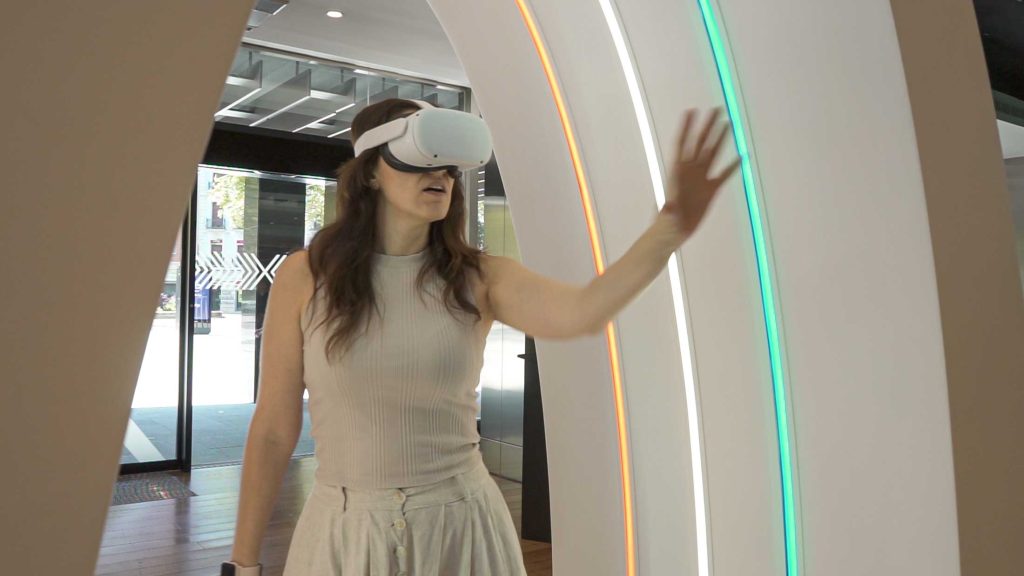
Technological innovation is part of 21st-century education. Among the different technologies that have emerged in recent years, the Metaverse and virtual spaces offer a wide range of benefits and features that can enrich the educational process, making it more accessible, interactive and personalized. As the technology evolves, its integration into education could have a profound and lasting impact. In recent months, Metaverse adoption has accelerated in many schools and universities, especially through virtual platforms that aim to keep learning going in situations where in-person attendance is not feasible. Becoming familiar with emerging technologies such as Virtual and Augmented Reality prepares students for a working future in an increasingly digitized world. They are also a new way to put what has been learned into practice and motivate students in a more engaging way. In today's article, we take a detailed look at the benefits and features of the Metaverse in education.
Impact of the Metaverse on education
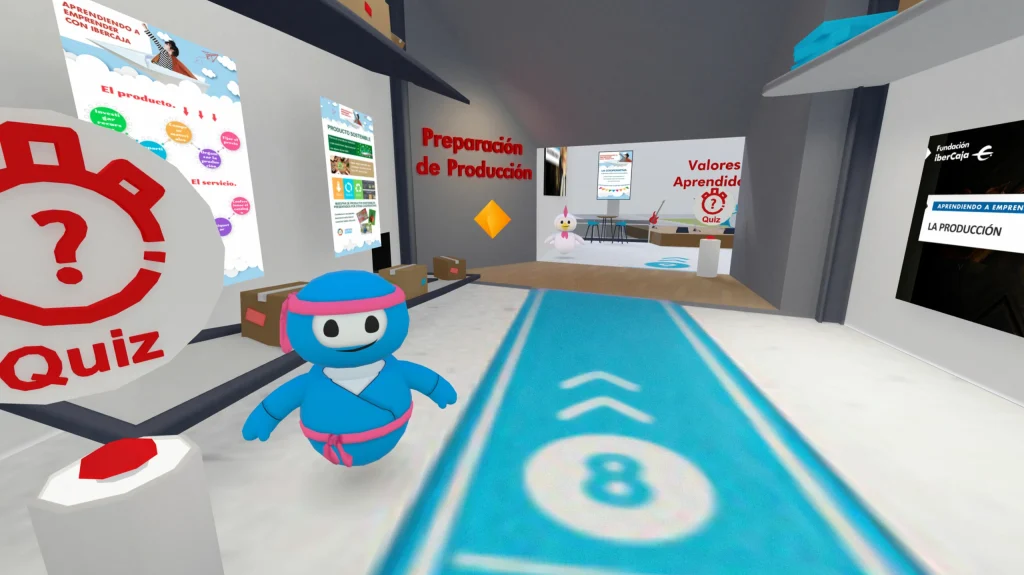
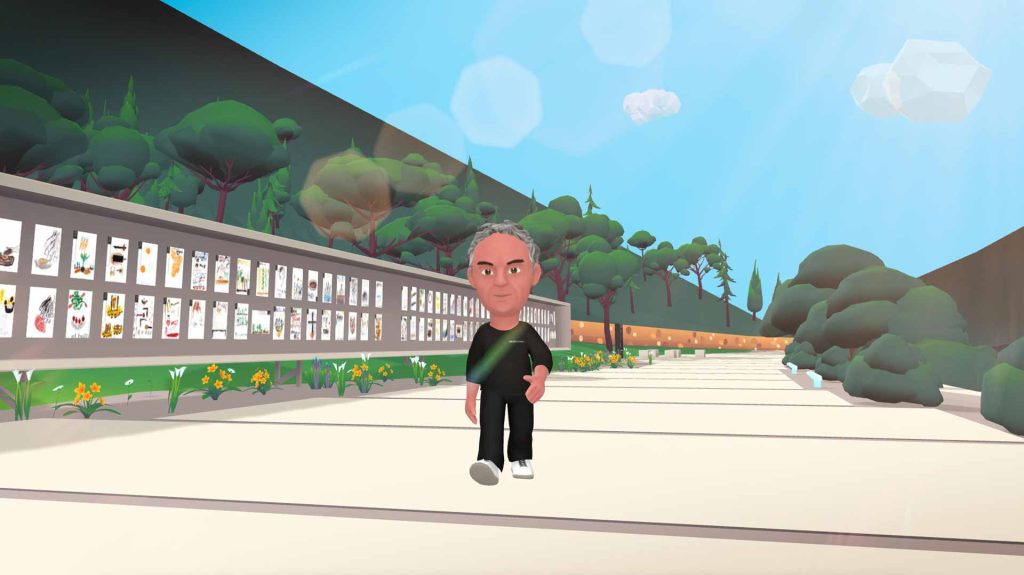
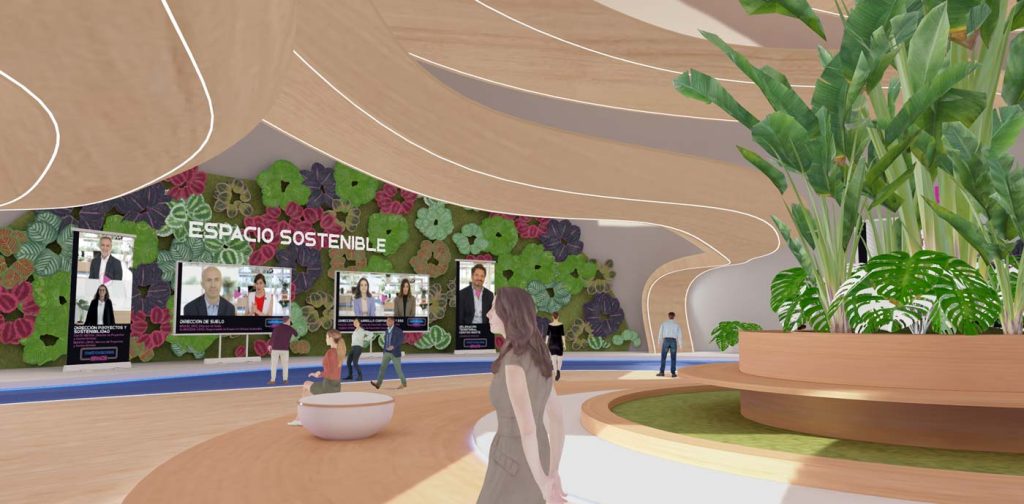
Before learning about the impact of the Metaverse on education, it is important to review what this technology consists of. The Metaverse could be defined as a series of interconnected virtual worlds where users can interact with each other and with the digital environment in real time. The Metaverse and virtual spaces combine technologies such as web3, Augmented Reality and Artificial Intelligence to create immersive experiences that revolutionize the way users interact with technology and the new digital ecosystem. You may be interested in → Features and benefits of Augmented Reality in education You may ask yourself, what is the metaverse in education, well, in this sector it offers multiple advantages to make learning much more practical and immersive . Encouraging students to put their knowledge into practice through simulations and virtual training. In addition to encouraging Gamification of the lessons, applying the mechanics of video games to the evaluation systems. Offering, thanks to the union between the Metaverse and Artificial Intelligence the possibility of offer adaptive and personalized educational experiences . These are adjusted to the needs and rhythms of each student. One of the great examples of the application of the Metaverse to education is the virtual space of Aprendiendo a Emprender developed together with Ibercaja Foundation to bring the business world closer to schoolchildren in a gamified environment close to video games.
Benefits of the Metaverse in the educational sector
As we have seen in the previous section, the Metaverse in education offers great benefits to the different educational centers. From its use in The company has been involved in the development of the program at early ages, as well as in high schools, universities, training centers and internal training in companies. The Metaverse, broadly speaking, allows you to eliminating geographical barriers to education The aim is to offer a personalized experience, adapted to the needs of each student and to reduce costs, both in terms of physical training material and in the use of facilities such as laboratories, travel and/or operating rooms in healthcare training courses. The following are the main ones benefits of using the Metaverse in education:
1. Gamifying teaching
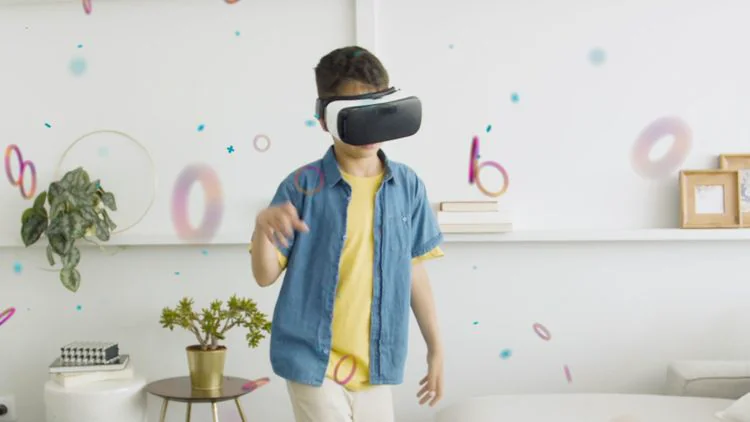
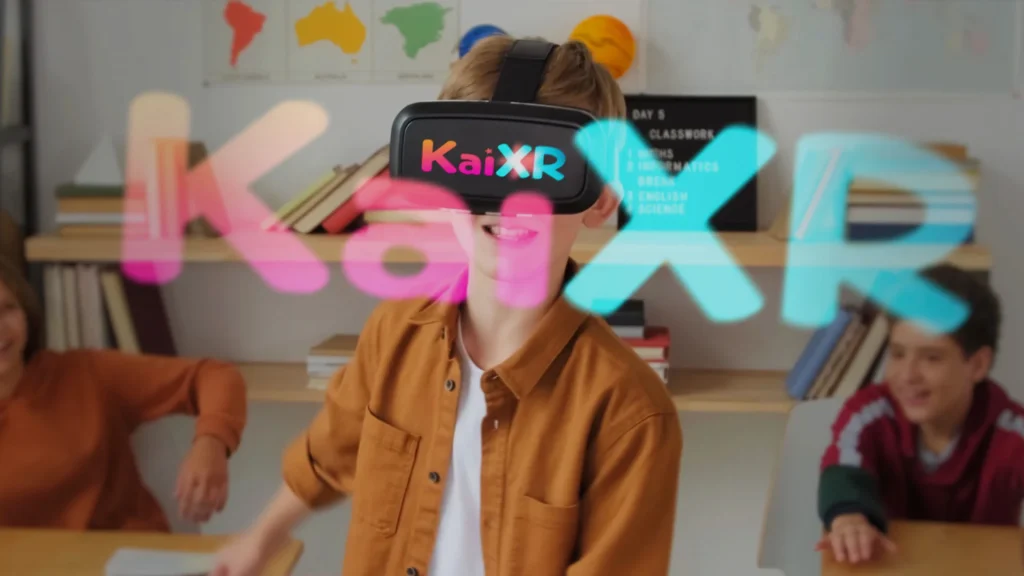
Gamification is the process of applying game design elements and techniques in non-game contexts. . It aims to increase people's motivation and participation in various activities by creating more engaging and dynamic experiences. This process is associated with a increased commitment , attention e interest by the students, regardless of their level of training. Thanks to its challenge/reward system, students are encouraged to give their best. With gamification, students internalize new knowledge in a more effective and entertaining way. As in the KAI XR Platform a Educational VR App where students can travel to the seabed, the pyramids of Egypt or NASA facilities, all in first person and through Virtual Reality glasses. If you want to learn more about this topic, we recommend you to visit→ Virtual Reality in education: features and benefits .
2. Simulations and training
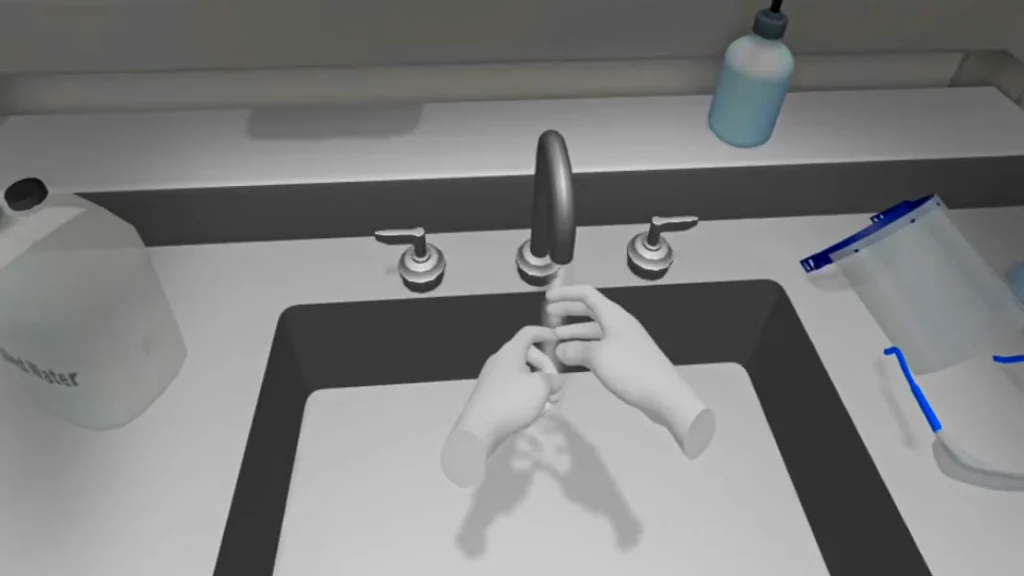
Simulations in the Metaverse are revolutionizing the educational sector by offering immersive and highly interactive environments that enhance learning by doing . The trainings carried out on this type of virtual platforms allow us to go a step further in online training. By making the leap to virtual campuses and schools that allow students not only to attend virtual classes, but also to walk around the facilities and connect with other students. Students can be anywhere in the world, as physical barriers are eliminated. Through the Virtual Reality This immersion in the educational experience is multiplied. As in the health training developed by Boehringer Ingelheim where health care professionals could learn about the preparation of their new medicines thanks to the Virtual Laboratory Virtual Training . If you are interested visit our article about Virtual Reality and medicine: applications in the healthcare sector
3. Onboarding and interactive training
Internally, the Metaverse's virtual spaces allow all processes and activities related to employees to be grouped together in a single digital environment. Thus, the onboarding and internal training are automated and, at the same time, are tailored to the specific needs of the employees. Becoming platforms for consultation, training, development and connection with other employees. All through virtual events and other types of business activities developed in the Metaverse. One success story is the project L'Oreal University a training space developed by L'Oreal to bring together influencers, makeup artists and experts in the beauty industry at its virtual university to learn first-hand about their latest products and usage tips.
4. Adaptive and active learning
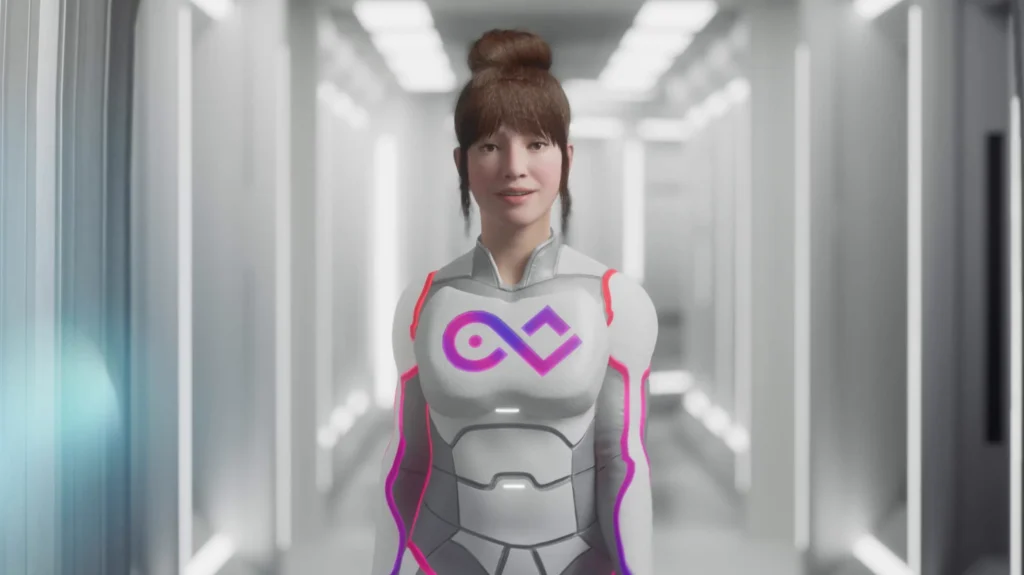
Thanks to the Metaverse and virtual spaces, students can be offered new platforms for interaction, both with the subject matter and with their peers. In conjunction with Artificial Intelligence applied to education, educational platforms can adjust in real time to the needs and preferences of each learner, creating interactive environments that encourage active participation . The Metaverse, combined with Artificial Intelligence. is not only transforming the way we teach and learn The company is also preparing students and professionals for an increasingly digital and collaborative world. An example of this can be found in IRIA, Iveco's AI-equipped avatar. A companion in the training and day-to-day life of the automotive company's employees. If you would like to learn more about the relationship between the Artificial Intelligence and the virtual avatars we recommend you to visit Artificial Intelligence Avatar: definition and main uses
Metaverse, the future of education
The Metaverse is marking the future of the education and training sector . These virtual spaces will continue to transform the way we learn and interact with learning resources. Combined with the latest innovations in Artificial Intelligence, these educational platforms will allow to develop more personalized, automated and updated experiences in real time . Following at all times the individual progress of students and proposing new gamified challenges. This synergy will not only enrich education, but will also revolutionize the way we interact with various technologies, creating a new way for us to interact with our students. unique opportunities for training and professional development.
Examples of the use of Metaverse in education
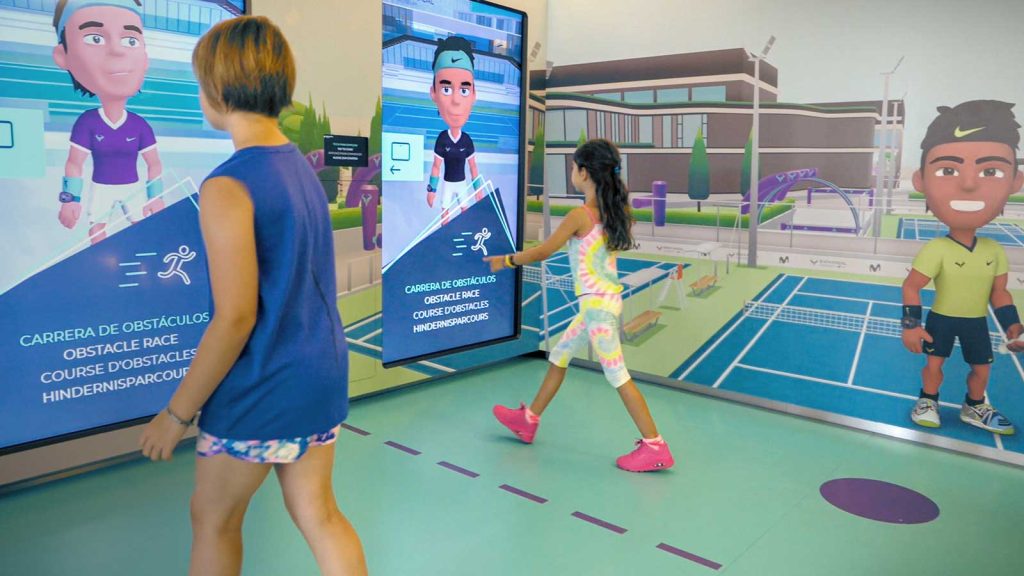
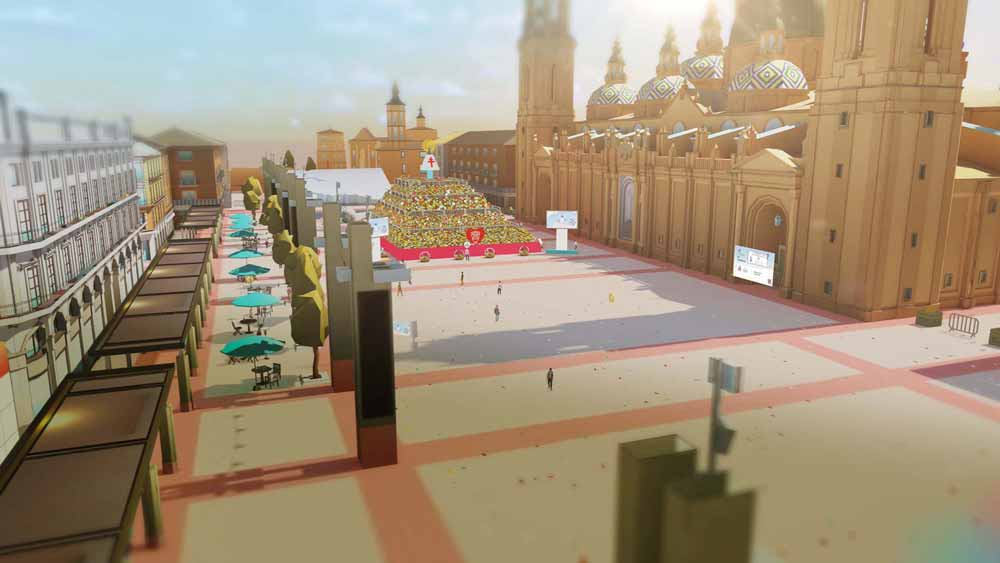
Throughout this article we have learned about some of the most disruptive and innovative projects that have already been launched in the educational field. We will now take a closer look at some of them examples of the use of the Metaverse in education. - Rafa Nadal Academy by Movistar . Get to know the facilities of the Rafa Nadal's Academy through his virtual twin . You can discover the values, history and different buildings of the complex while completing different challenges and mini-games. A project with a marketing and viralization objective that achieved a reach in Social Networks and media of 48 million people. - KAI XR Platform . Virtual Reality Application that invites children and not so children to discover the world of science, history, technology or the environment in a fun and immersive way. - Research Night virtual event . At the university level, the virtual event developed by the University of Zaragoza stands out. Through the virtual recreation of one of its most representative classrooms, the university brought together researchers from all over Europe in the same digital space. Overcoming physical barriers to unite the scientific and research community. - LOARRE XR . At the historical and cultural level, the Metaverse allows the recreation of monuments to increase their diffusion, access and knowledge. This is the case of the Loarre Castle a Romanesque castle with more than ten centuries of history that can now be visited from anywhere in the world thanks to its transfer to the virtual world. At Imascono through our metaverse services for companies , we believe that the Metaverse in education can help us to be much more agile in our way of learning and to naturalize our interaction with the digital world. To do this, we can make use of technology that goes through AI avatars, virtual spaces and Augmented Reality . Since the company's inception, more than fourteen years ago, at Imascono we have been an active part of technological innovations in the education sector. Both for the launch of the Chromville educational app that has reached more than 120 countries with a million downloads as in the incorporation of Artificial Intelligence in the training in new technologies in the project. V-E-G-A tutor . Need a Metaverse to take the next educational leap? Get in touch with us! Our team of engineers and designers will be happy to help you incorporate this state-of-the-art technology into your training and educational projects.
What is augmented reality? Key points
What is Augmented Reality? Main keys
In a world where connection and instantaneous information are key, the Augmented Reality provides a bridge between physical space and digital data The new technology, providing both companies and users with a more intuitive and effective way of interacting with technology. Augmented Reality (AR) is transforming the digital landscape with its ability to overlay information on top of the physical world in real time. This technology combines virtual elements with the real environment. Offering immersive and interactive experiences that go beyond the conventional . From enhancing the retail shopping experience to revolutionizing learning and training methods, AR is redefining everyday interactions and opening doors to endless possibilities across multiple industries. In this article, we will analyze in detail the key points of Augmented Reality Ready to learn more about its main applications in different sectors and the advantages it offers companies?
What is Augmented Reality
Augmented Reality is the technology that combines the real world with the digital world by superimposing virtual elements on the reality itself . Thanks to this immersive technology, the real and virtual environments intermingle, creating interactive experiences accessible from several devices at the same time: from cell phones and tablets to Augmented Reality glasses. Augmented Reality is just one of the immersive solutions within the framework of the Extended Reality . A series of technologies to which also belong the Virtual Reality y la Mixed Reality . Their origins and software are different, but their goal is similar: to eliminate the barriers between the real and the virtual. While Augmented Reality superimposes digital elements showing the real world at the same time, the Virtual Reality immerses users in fully artificial immersive environments . On the other hand, the Mixed Reality and specific technologies such as the Spatial Computing seek to go a step further in this interaction between the physical and the virtual. Introducing in a much more natural way, virtual elements in the real world and/or real elements in the virtual world. You may be interested in → Mixed Reality: Definition, characteristics and examples
How Augmented Reality works
This technology is undoubtedly one of the most widespread among companies today. But how does it work? Augmented Reality is based on the superimposing digital elements such as images, videos or data on the real world all through devices such as smartphones, tablets or specialized glasses. It uses cameras and sensors to capture the environment, processes the information and allows virtual objects to be located in real space. Either through visual markers such as QRs, through geolocation or holographic projections. In this way, Augmented Reality enriches the user's perception of the environment, allowing for interact with layers of digital information that appear integrated in their field of vision.
Applications and types of Augmented Reality for businesses
Augmented Reality provides companies with innovative tools for their digital transformation improving both the internal operations as well as interaction with customers . From marketing and sales to industrial production and professional trainings, AR experiences provide great benefits for companies. These are the main ones Augmented Reality applications in different sectors:
1. Applications in the education sector
The Augmented Reality in education offers the possibility of approach the real world from new perspectives The new system provides an environment full of information that adds value to the training activities. Instead of viewing simple images on the projectors, you can show three-dimensional models of outer space, geometric figures, parts of the body, historical moments or even the seabed, as if they were in the same classroom through Augmented Reality devices. Empowering the creativity, motivation and curiosity of children and not so young children. Encouraging these digital natives to continuous discovery and to wonder what's behind, demonstrating that play and technology are a great means for learning.
2. Applications in the business sector and Industry 4.0.
Now that you know what Augmented Reality is, it is very relevant to know that within the processes of industrial companies it represents a revolution in the control, training and efficiency of the increasingly complex production processes. . Thanks to this immersive technology and its marriage with the latest Internet of Things (IoT) innovations, machines and operators are interconnected, moving from simply operating the machine to being able to communicate with it. A fact that helps in routine inspection tasks, in remote assistance and in the possibility of showing operators interactive instructions and warnings on the machinery itself (notifications, hazards, etc). In addition, Augmented Reality also has a great potential for the presentation of three-dimensional models of parts and prototypes from all angles and in the exact place where your final version will be, reducing to the maximum the margin of error when assembling and using them. Read more about the impact of technology on the industrial sector, at What is Industry 4.0 and what are its main characteristics? .
3. Applications in the retail sector
With Augmented Reality, the retail shopping experience reaches new heights. levels of digitization through hybridization for the phygital experiences. Offering in the same physical space additional information on the products (availability, price, colors, reviews from other users, tutorials on their use and assembly and even the possibility of placing orders instantly) with the superimposition of digital elements visible through cell phones or Augmented Reality glasses. A series of innovations that optimize resources, reduce time and strengthen brand-customer relationships . A major breakthrough also for e-commerce, offering the possibility of virtually try on garments or integrate into our homes the products we are going to buy thanks to their 3D models visible through this immersive technology.
4. Applications of augmented reality in marketing and advertising
With the development of Augmented Reality-based campaigns, marketing, communication and advertising enter a new dimension. Making it possible not only to boost the value of digital marketing strategies, but also to link them with experiential marketing. Turning the most in-person, static actions into groundbreaking, fun experiences that grab attention and draw the target audience to the brand. Offering, for example, a second digital layer for outdoor advertising fully tailored to the user's interests. The use of this immersive technology also improves the most essential marketing campaign metrics, such as retention, dwell time and engagement, while increasing interaction and personalization through a more immersive development of the brand's storytelling. One of the latest marketing campaigns to base its advertising strategy on Augmented Reality comes from the well-known brand Lacasitos. Hidden inside its famous tubes were fun characters that came to life in the real world through its AR App for kids.
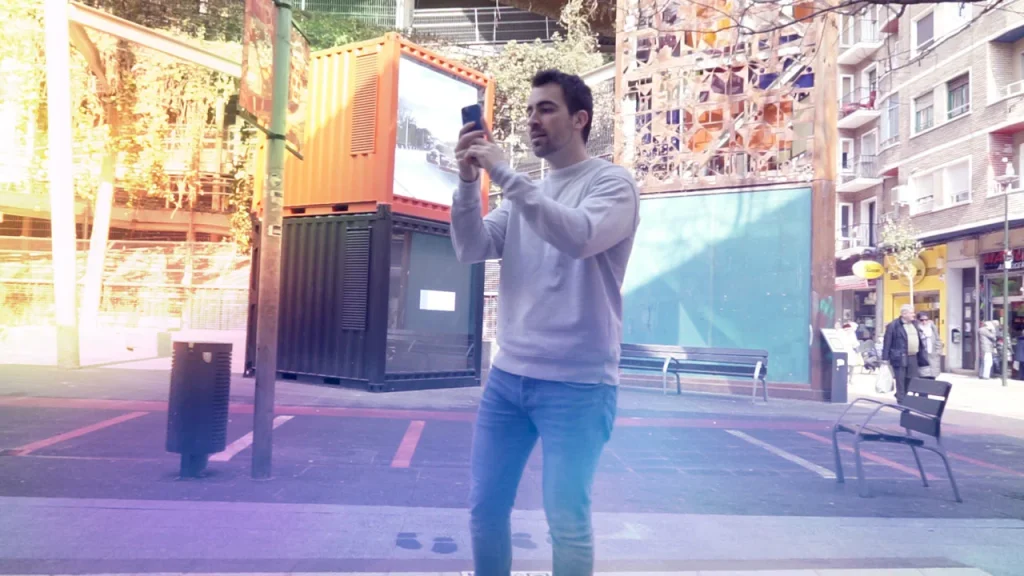
Augmented Reality Experience developed for Movistar by Imascono
5. Applications in the tourism sector
Undoubtedly one of the sectors that can benefit the most from the Augmented Reality specifically for the tourism, hospitality and cultural sector where the combination of this technology with geolocation systems and the increasingly efficient 5G connections offers the opportunity to to expand on-site information for tourists while touring any tourist area, whether indoors or outdoors. Thus, Augmented Reality has become an important virtual guide always accessible and up to date . Not only of the places that the tourist should know of the area, but also of the basic services such as pharmacies, ATMs or restaurants that are available. A more pleasant and didactic way of making the visits to museums or natural sites The user is shown details that would otherwise go unnoticed.
6. Applications in the entertainment sector
The new era of entertainment and digital leisure is not only about substituting virtual for face-to-face. It is also about completely revolutionize the actual experience . Thus, thanks to Augmented Reality, the user has more control and information about the show he is watching live. They can choose new angles from which to enjoy the event, see all kinds of additional information superimposed as notifications and even enjoy a much more immersive show by being able to add special effects and animated characters as if they were really there. A new range of entertainment possibilities for example, transforming the pedestrians of Plaza Callao into the protagonists of the Star Wars saga or to the moviegoers at Kinepolis Cinemas in new characters of Thor Ragnarok completely changing the on-site promotion of series and movies.
7. Applications in the healthcare sector
The new tools offered by Augmented Reality technologies represent a new challenge for the revolution in the healthcare sector . Thanks to AR experiences, healthcare professionals can access valuable information instantly, keeping their hands free to perform any technique. Not only that, the operating professional can be in contact with other professionals during the intervention, sending images and videos in real time while they can give indications, superimposing them on the real image. A training level, Augmented Reality allows to see in three dimensions models of the different parts of the body, facilitating its study and learning, providing additional information. A technology that also represents a new impetus for telecare and medical consultations based on Artificial Intelligence . Additional information is also available on antibiotic treatments and other medications, with interactive instructions that facilitate their correct use. Find out more about technology in the healthcare sector at Virtual Reality and medicine: applications in the healthcare sector .
Key advantages of Augmented Reality
Image from Arte Conectado, an Augmented Reality project with Avatars for Zaragoza City Council
Knowing the applications of Augmented Reality we see how it is revolutionizing the way we access and interact with the digital world, by superimposing information on the real world, increasing - never better said - our capabilities. Next, let's review the 4 most important advantages of incorporating Augmented Reality technology.
Accessible and multi-device:
To take advantage of the benefits of Augmented Reality in our daily lives, you simply need a smart device with a camera and network connection, such as a tablet, cell phone or AR glasses. In addition, this technology has an easy and simple implementation today thanks to its great accessibility from these different devices, many of them widely used by users.
Low cost and great potential for adaptation:
Among the Extended Reality technologies, Augmented Reality is by far the lowest cost, as it does not require devices with a high immersive capacity for its proper functioning. Moreover, by keeping users in the real world, they recognize the space, appreciate its familiarity and intuitively take advantage of all the digital elements that enrich reality.
Gamification and personalization:
The development of technological solutions based on Augmented Reality not only allows us to introduce elements of video games to the business, industrial and educational environment. In addition, thanks to Augmented Reality we can enrich our audiovisual experience, as well as communication, both between the machine-operator and between the company-customer, with the development of unique and customized experiences that encourage interaction and interest of users.
New communication channel:
Just as the Internet and the expansion of Social Networks did in their day, Augmented Reality is revolutionizing communication, marketing and the digital presence of both companies and users. Thus becoming a new way of interaction between both. With the difference that this superimposition of digital elements on the real world makes the company/user dialogue much more attractive, immersive and dynamic.
Augmented Reality examples you should know about
Augmented reality filter
In addition to the success stories of Lacasitos, Marvel and Star Wars that we have seen throughout the article, it is interesting to learn about others. examples of Augmented Reality usage that can help to see the transformative potential of this technology in different sectors.
A success story in bringing Augmented Reality into the classroom is Chromville, a creative learning app based on coloring pages whose characters come to life through screens and educational games.
Augmented Reality helps us go beyond history books to see the past, and even the future, with our own eyes. As in the Ibercaja Xplora AR experience. An interactive webApp that lets visitors travel to three different eras to discover the city's past and future.
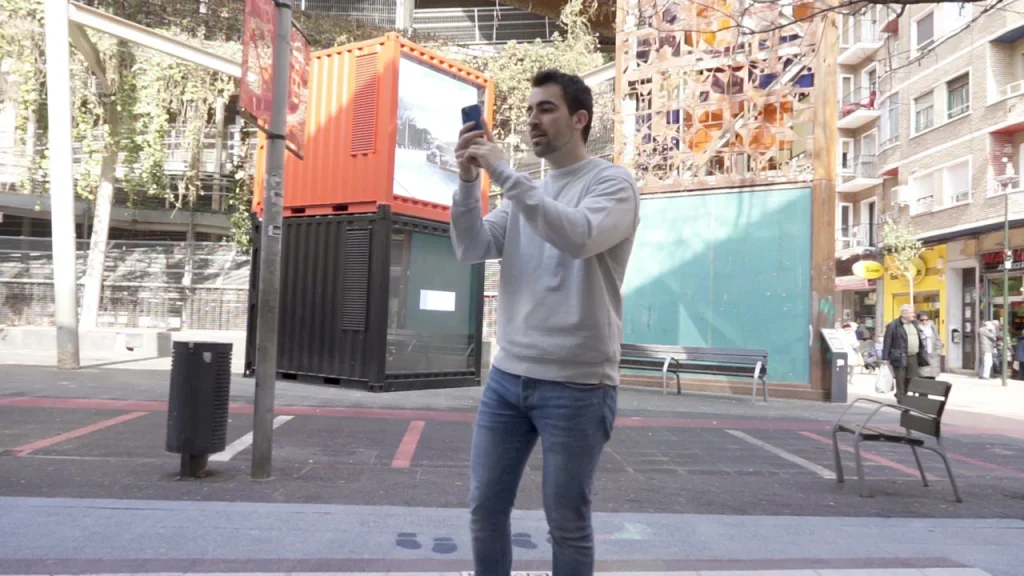
When it comes to smart cities, one of the most recent examples of the use of Augmented Reality in cities is found in the Arte Conectado project by Paseos Comerciales de Zaragoza. Here, through urban art and AR experiences, residents and tourists can enjoy a stroll through the city's different neighborhoods with amazing graffiti that comes to life around them.
Discover our Augmented Reality service for businesses
As we have seen, the Augmented Reality is one of the key technologies at the present time, both at the customer experience In terms of professional training and in-house training, this technology transforms the interaction between users and machines. Facilitating access to information and content, creating new interactive experiences and opening the doors between the real world and the virtual world. At Imascono we are Augmented Reality experts since the company's inception in 2011. Since then, we have been leading the evolution of this technology, leveraging our know-how and experience in a multitude of sectors to digitally transform the business model and training of our clients. That is why we invite you to learn more about our Augmented Reality service for businesses . Our team of engineers and designers will be pleased to meet your objectives and needs. Would you like to develop an Augmented Reality project? ¡ Contact with us !
Immersive learning as an educational alternative
Immersive learning as an educational alternative
The digital transformation has reached all sectors, including the education sector. Technology and computer science have not only become key subjects for students, they are also an important part of the teaching methodology itself. The distance learning, customized Artificial Intelligence tutors, interactive experiences, educational video games ... are different uses of technology that are transforming classrooms. Among them, immersive learning stands out, both at the school level and in employee training. These innovations promise to create more personalized, interactive and accessible learning experiences revolutionizing the way we learn and teach. In this article, we will take a closer look at the advantages and opportunities offered by immersive learning . Not only as an educational alternative, but also as a complementary methodology to traditional teaching methods. Its combination, physical-digital, is synonymous with motivation, to put into practice the lessons learned and to deepen the subjects in a fun and entertaining way.
What is immersive learning?
Immersive learning is the educational approach that seeks to create interactive, immersive learning environments that encourage the active participation of students in the learning process . Immersing students in virtual scenarios where they can experience and discover concepts in a practical and tangible way. Students are immersed in situations that test their skills, knowledge and senses. This favors the implementation of the subject matter, the assimilation of concepts and the knowledge of new challenges. Students not only observe or listen, but also live the educational experience. Facilitating the learner to empathize more with the content.
Benefits of immersive learning that you should know
Incorporating this type of education is a major step forward for the schools, universities and companies that are committed to the internal training of their employees . A step that offers a series of educational benefits that can be summarized as follows:
1. Learning by doing
Immersive learning means that, more than ever before, we are putting into practice the learning by doing (learning by doing), turning the way we are used to learning upside down. The immersion offered by these technologies opens up a new range of educational experiences that facilitate knowledge retention and increase student interest. Thanks to the innovations of the Extended Reality teachers can enrich and deepen the learning programs, being able to teach with the support of holograms, in Artificial Intelligence tutors/avatars or in virtual simulations designed so that the student autonomously internalizes the knowledge while testing it. As in the Virtual Training developed by Boehringer Ingelheim .
2. Encouraging creativity
One of the key benefits of immersive learning is the ability to enhancing students' creativity, curiosity and motivation in the classroom . Through these experiences, they discover new ways of seeing and understanding the subject, encouraging them to continue discovering and wondering what lies behind. Demonstrating that play and technology are great ways to learn. The best example is found in Chromville a creative learning app based on coloring sheets whose characters come to life through screens and educational games.
3. Expansion of the educational experience
With the entry of the immersive learning in educational programs The new technology changes the way children and students learn about the world. With this technology they can visit any country or travel to the past, the future or other planets, all without leaving the classroom. Thus allowing them to expanding the educational experience , experiencing new situations firsthand and to understand in a simple way more complicated academic concepts. Among the educational projects of this type that are already underway is the Kai XR platform . Where, through Virtual Reality, every child can live different educational experiences. Visit the top of a windmill or watch a rocket being prepared for launch as a member of NASA.
4. Gamification of learning
Immersive learning is undoubtedly one of the main avenues for the gamification of educational systems . This trend unifies all the techniques and uses of the mechanics of video games in actions and sectors, until now, alien to this playful world. By transferring the more entertaining challenges and rewards to professional education and training. One of the educational programs that has already been launched and that explores the possibilities of gamification is the virtual space of Aprendiendo a Emprender by Fundación Ibercaja . A virtual campus designed for schoolchildren The program is aimed at 10 and 11 year olds and through challenges, quizzes and levels brings the world of business closer to schools. You may be interested in → Virtual Reality in education: features and benefits
Key Extended Reality technologies for immersive learning: examples
Immersive learning, as we have seen so far, is based on the union of the real world and the virtual world to enhance the involvement, motivation and deepening of the students' knowledge of the subject matter . Immersive learning has become one of the main future trends in the education sector. This is based on different Extended Reality technologies such as: Students are immersed in situations that test their skills, knowledge and senses. This favors the implementation of the subject matter, the assimilation of concepts and the knowledge of new challenges. Students not only observe or listen, but also live the educational experience. Facilitating the learner to empathize more with the content.
Virtual Reality
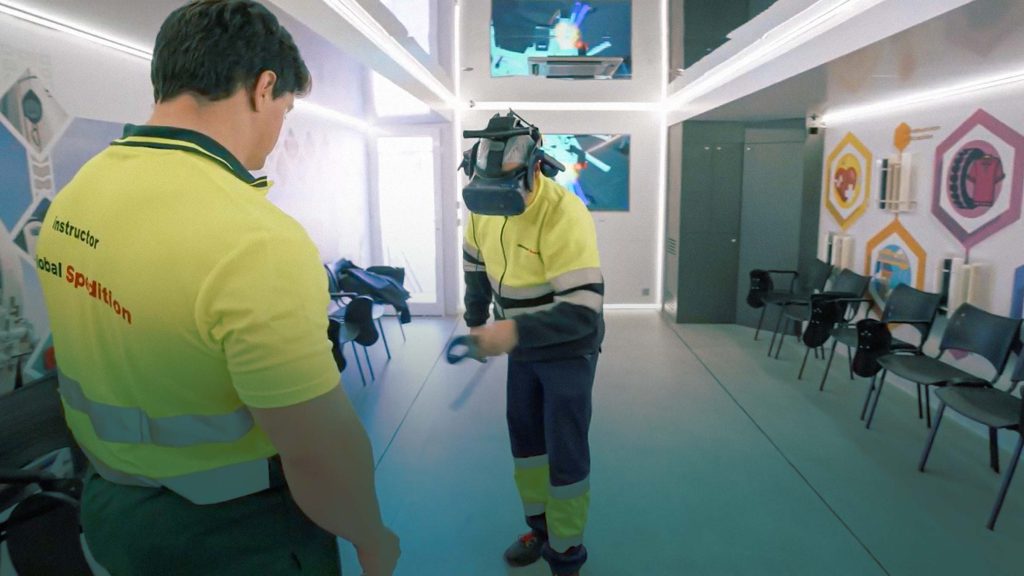
One of the main technologies of immersive learning is the Virtual Reality . Its potential at both the educational and professional levels lies in the possibility of developing simulations and immersive training . In the industrial sector, immersive VR learning offers the possibility of autonomously train in complex and/or dangerous tasks The company's own machinery is used for this purpose, without the need to allocate extra resources such as trainers or the machinery itself. Among the solutions and examples of immersive learning already developed in this area are all of the Virtual Training line . Customized Virtual Reality training companies in different industrial sectors, such as the automotive industry, the professional training of Global Spedition's employees .
Augmented Reality
The Augmented Reality offers the possibility of approaching the real world from new perspectives and with new eyes. combining the real world with the virtual world, creating environments full of information that add value to educational activities. Instead of viewing simple images on the projectors, you can show three-dimensional models of outer space, parts of the body, geometric figures or even historical moments, as if they were in the classroom itself through Augmented Reality devices, from Mixed Reality or of Spatial Computing . You can learn more about this technology at features and benefits of Augmented Reality in education .
Metaverse and virtual spaces
In the education of future generations, the Metaverse not only enables the development of more immersive and interactive experiences. It also allows recreate environments and even virtual campuses that, in an active and personalized way, feed the curiosity and involvement of the students. This is essential for immersive learning. This allows, in the same space, the student to have access to all content, attend online classes, always have the support of your AI avatar/assistant at your disposal and find a meeting place with the rest of your classmates. Virtual spaces such as KAI XR Create, an educational virtual world where it is the students themselves who build it while developing their intelligence and spatial vision, as well as their digital skills.
Artificial intelligence
If there is one technology that is revolutionizing the present and future of education, it is Artificial Intelligence. From customizing the educational experience or automating repetitive tasks Artificial Intelligence applied to education offers great advantages for our educational systems. Such as the possibility of developing a new form of personalized tutoring through AI avatars. They can answer their doubts, offer them advice and even ask them questions to help them internalize the subjects. All this, in addition, with the registration of their scores and evaluation, developing a database on the evolution of their learning that helps teachers to receive a personalized analysis of each student. Training-focused avatars such as IRIA, the newest member of the Iveco Academy team. Discover the AI potential in this area in our content → Advantages and disadvantages of Artificial Intelligence in education .
Challenges and future of immersive learning
Education is living a time of great changes and revolutions. Online classes, microlearning, autonomous training, gamification, Virtual Reality simulations... different uses of technology applied to training that present great challenges and opportunities for educational methodologies and programs. All players in the education sector, in one way or another, are going to evolving towards more immersive and personalized learning models for each learner . Therefore, it must be taken into account:
Emerging trends. Every day, new and interesting educational proposals emerge based on emerging trends in this field, among which, in this article, we highlight immersive learning.
Future technological innovations. Data analytics, future advances in Artificial Intelligence, Blockchain technology for security and the certification of diplomas and documents… there are many technological innovations that will shape the future of education.
Imascono immersive learning projects
Either through simulations and virtual training , customized training materials , gamified trainings or Artificial Intelligence tutors immersive learning projects are already a reality in the educational world. And they are going to be a revolution in the future of education. At Imascono we believe that immersive learning offers major advantages and opportunities for transforming teaching methods we all know. We seek to be more aware of the different rhythms of each student, and also through our artificial intelligence services for companies among others, you will be able to go a step further in the deepening of the students in the different subjects. Would you like to learn more about our educational projects based on immersive learning ? Contact with us and our engineering team will be happy to answer all your questions.
What is Industry 4.0. and what are its main characteristics?
What is Industry 4.0. and what are its main characteristics?
From the steam engine to the invention of electricity or the advent of mass production and later electronics... Throughout history, the industrial sector has undergone various technological transformations. that have come to mark the great advances of mankind. We are currently in the midst of Fourth Industrial Revolution - Industry 4.0. where digital, intelligent and automated technology is revolutionizing our companies, factories and production lines. Cloud connectivity, Industrial Internet of Things (IIoT), and advanced AI and AI-enabled solutions are machine learning are radically transforming industrial operations. In this article we would like to analyze in detail the main characteristics of this Industry 4.0. and, above all, learn about its most important technologies. Ready?
Virtual Training developed by Imascono for Global Spedition
Definition of Industry 4.0
You may be wondering what Industry 4.0, or the Fourth Industrial Revolution, is. integration of advanced digital technologies in manufacturing processes. It includes the use of Internet of Things (IoT), Artificial Intelligence (IA), the immersive technologies the robotics and the analysis of Big Data to create interconnected and automated production systems and optimized industrial/business management. This approach allows for a greater efficiency, customization and real-time analysis transforming factories into intelligent and adaptive environments. Before Industry 4.0. there were three other major Industrial Revolutions:
The late 18th century saw the First Industrial Revolution, marked by the invention of the steam engine, which transformed production methods from manual labor to mechanization.
In the Second Industrial Revolution, in the late 19th century, the driving force came from electricity and oil, introducing mass production and assembly lines, which significantly improved efficiency and production volume.
The Third Industrial Revolution began in the mid-20th century with the arrival of electronics, computers, and the first robots, setting production on the path to automation.
You may be interested in → Business Innovation: Spatial Computing Applications in Extended Reality . Industry 4.0 is characterized by integrating digital technologies such as IoT, AI, and robotics in manufacturing systems. Creating intelligent and automated production networks that radically transform industrial production and management. Some are also already talking about the start of the Industry 5.0 a development marked by the active human participation to improve both the well-being of workers and the sustainability of production. This includes the development of collaborative robots (cobots) that work hand-in-hand with humans in manufacturing tasks and systems that not only optimize production, but also promote environmentally responsible practices. Industry 5.0 prioritizes collaboration between humans and machines, emphasizing the importance of the human touch in the creativity, customization and sustainability.
Applications and technologies in the industry
The incorporation of new technologies in the industrial sector represents a complete revolution in the control, training, error correction and decision making with 3D simulations and prototypes developed to the highest level of detail . Improving the efficiency of increasingly complex production processes. Thanks to this immersive technology and its marriage with the latest innovations in the Internet of Things (IoT) and Artificial Intelligence, the machines and operators are interconnected from simply operating the machine to being able to communicate with it. Let's take a look at some of the main Industry 4.0 technologies :
Virtual and Augmented Reality
Both the Augmented Reality as Virtual Reality are two immersive technologies that are transforming the Industry 4.0 . By changing the way in which combines the physical and digital world in factories and production lines. On the one hand, the AR experiences The application of this technology to the industrial sector has great potential for the presentation of the three-dimensional models of parts and prototypes from all angles and in the exact place where their final version will be, reducing to the maximum the margin of error when assembling and using them. However, if there is an application of the Virtual reality that revolutionizes the industrial sector is the possibility of autonomous training. in complex and/or hazardous tasks through controlled 3D simulations The company's own machinery is used for this purpose, without the need to allocate extra resources such as trainers or the machinery itself. You can learn more about this technology in our post Virtual Reality: examples and applications .
Digital Twins
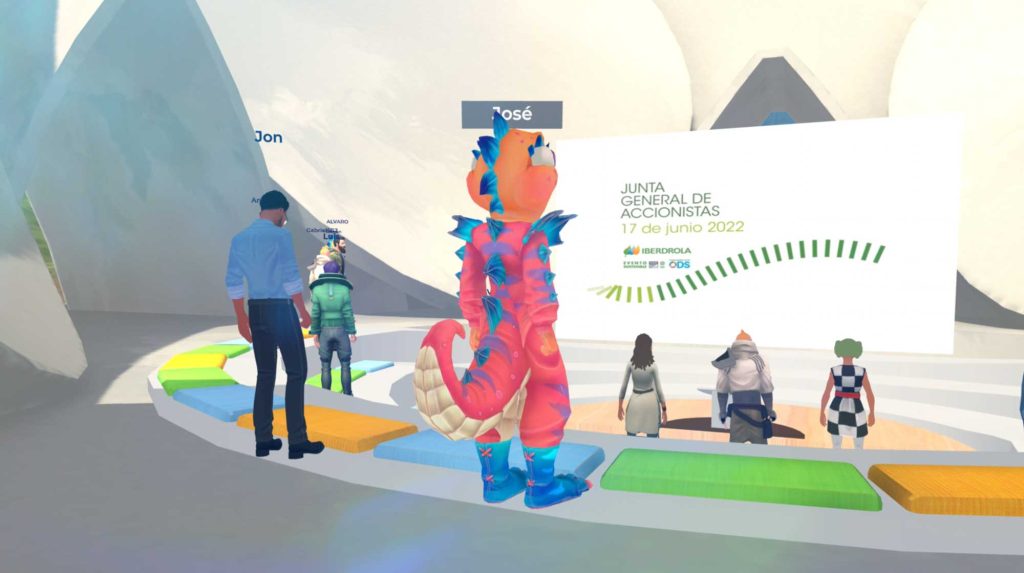
Digital twins in Industry 4.0 are interactive virtual representations of processes, products, or even entire production plants that simulate reality in a digital environment. This technology gives companies a global view of their entire production, letting them analyze data and monitor systems to prevent problems before they occur, optimize operations, and experiment with changes in a risk-free virtual environment. By using IoT sensors to collect real-time data, digital twins offer a detailed view of the performance, maintenance, and effectiveness of the machines on the factory floor, improving decision-making and operational efficiency. These Digital Twins can also become the information hub and meeting point for stakeholders, as in the case of the Shareholders' Meeting and virtual event held by Iberdrola in its own 3D virtual space.
Virtual Event in the Metaverse developed by Imascono for Iberdrola
Cloud computing
The cloud computing It is an essential pillar of Industry 4.0, providing the Infrastructure necessary to support the integration and analysis of large-scale data. It facilitates the centralization of information, allowing remote and real-time access to the critical data stored on its servers, which optimizes collaboration and decision-making agility.
With the ability to store and process huge amounts of data securely and efficiently, The cloud enables the implementation of advanced solutions of Generative Artificial Intelligence, Automation and IoT, thus enabling companies to increase their operational efficiency, reduce costs and improve innovation in their manufacturing processes.
Robotics
Electronics, computers, and the first mechanized robots entered the industrial sector during the Third Industrial Revolution. In Industry 4.0, robotics has grown even stronger, playing a crucial role in automating and optimizing production processes, along with their efficiency and precision. Advanced robots can perform complex, delicate tasks, adapting to changing environments and collaborating with humans in real time. The integration of autonomous and collaborative robots improves speed and production quality while reducing workplace risks. It also frees workers from repetitive tasks, allowing them to focus on more strategic and creative activities.
Big Data and Artificial Intelligence
In Industry 4.0, Big Data and Artificial Intelligence are fundamental to transforming industrial production through the collection and analysis of the massive volumes of data generated by the devices and sensors connected to the manufacturing ecosystem. These technologies enable advanced automation and real-time decision-making, optimizing operations from predictive maintenance to production customization. The potential of Artificial Intelligence in Industry 4.0 can go beyond production to focus on workers, becoming one more companion in their day-to-day work: enhancing their capabilities, answering their questions, and/or becoming the company's gateway to information and training, as in the case of IRIA, the AI avatar of the Iveco industrial group. If you want to learn more about AI we recommend → Challenges of artificial intelligence applied to business.
Phygital project developed for Rafa Nadal Museum by Imascono
Highlights of Industry 4.0
Industry 4.0. is characterized, mainly, by the creation of smart factories where physical and digital systems cooperate in an interconnected and autonomous manner. Interconnectivity, the digital transformation automation are some of the main characteristics of the implementation of these technologies in the industrial sector . Features which can be summarized as follows:
Real-time response. Real-time responsiveness allows companies to monitor and manage operations instantly and effectively. Thanks to Big Data, IoT sensors and 3D simulations deliver a continuous flow of data that supports fast, accurate decisions, optimizing the performance of the production process.
Decentralization. This refers to the ability of machines and computer systems to operate autonomously and make operational decisions without direct human intervention, working independently and flexibly while adapting in real time to the changes and needs of industrial processes.
Increased productivity. By integrating different technologies, process automation and optimization drive a significant increase in productivity. These technologies enable faster manufacturing with fewer errors, maximizing asset performance and minimizing downtime. In addition, real-time data collection and analysis make it easier to drive continuous improvements and fine-tune production operations.
Industry 4.0. applications you should know about
Throughout the article we have been getting to know some of the examples and use cases of new technologies in Industry 4.0. Next, we would like to delve into the most relevant applications of this Fourth Revolution in the industrial sector.
3D Simulations
3D simulations in the industrial field cover a wide range of applications. From Training of workers in the use and prevention of occupational risks in safe environments, focusing on tacit knowledge, up to the possibility of understanding the operation of an entire company's plant, logistics, and machinery through 3D models and virtual simulations on a real scale. Among the solutions already developed in this field we find the entire line of Virtual Training. Customized virtual reality training programs launched by companies from different industrial sectors such as Professional training for Global Spedition workers or the presentation of the new industrial machinery of Boehringer Ingelheim.
Industrial Internet of Things: Industrial IoT
The Industrial Internet of Things (IIoT) goes a step beyond the IoT we know today, focusing specifically on the interaction between machines, devices and industrial systems. In Industry 4.0, this connectivity and machine-to-machine and human-to-machine communication The real-time, accurate and precise monitoring, predictive maintenance and optimization of processes is vital for industrial companies to scale and adapt in real time to market trends and needs.
Task management
Industry 4.0 transforms task management by automating processes and optimizing resource allocation through intelligent systems. Enabling the efficient coordination of tasks between machines and humans The system is designed to improve accuracy and reduce execution time. In addition to task management, we could also speak of the information management where large volumes of data from multiple sources can be collected, processed and analyzed in real time. Where not only do we obtain strategic insights The system also facilitates better coordination and communication between departments and levels of the organization through interfaces such as WebApps or even hyperrealistic AI avatars that humanize the interaction between users and data .
Industry 4.0. use cases at Imascono
From pharmaceuticals to logistics, automotive, agricultural machinery and the industrialization of livestock, there are many industrial sectors in which the Imascono use cases have been part of the leap to Industry 4.0. of large and medium-sized companies.
Such as the virtualization and interactive 3D modeling of the various machines made by the Tenias group. Three-dimensional versions used to present and provide training on how their latest products work.
Another Industry 4.0 success story is the Virtual Reality training designed for Ceva Velactis, the leading pharmaceutical company in the veterinary field, which provides training on and promotes the uses and benefits of its new products.
At Imascono we know firsthand how important it is for industrial companies to have the right latest technological advances to optimize and scale up production At the same time, having enough flexibility and customization capacity to adapt to market changes. Therefore, training, data collection and a correct interaction between machines and workers are key to advance in Industry 4.0. Our team of more than 30 engineers and designers has more than 12 years of experience in the development of projects of Artificial Intelligence , Virtual Reality and Virtual Spaces focused on business and industry. Do you need making the technological leap to Industry 4.0 ? ¡ Contact with us !
Advantages and disadvantages of Artificial Intelligence in education
If there is one technology that is revolutionizing the present and future of education, this is Artificial Intelligence (AI). . Radically changing our learning schemes, developing new proposals and methodologies. Both at school, university and professional training levels. From personalizing the educational experience to automating repetitive tasks or fostering new immersive proposals, Artificial Intelligence applied to education proposes a series of advantages and opportunities for our educational systems The learning experience of the students will be as effective and inspiring as possible. In this post we are going to analyze in detail the implications of introducing the Artificial Intelligence in training and educational programs, as well as how it is complemented by the other technologies that are digitally transforming the way we learn .
Kai XR Platform Virtual Reality project developed by Imascono for the education sector
Artificial Intelligence Revolution in Education
When we talk about Artificial Intelligence we refer to the set of technologies, processes and algorithms that allow machines to think/act like human beings. By adapting to different situations and performing tasks that normally require human intelligence. These algorithms are feedback and self-learning through data training . A combination of machine learning models, Big Data and strategies that perform tasks such as pattern recognition or even decision making. Artificial Intelligence in education represents a revolution, since it fundamentally transforms how education is delivered and received. . By automating administrative tasks and personalizing learning, AI frees educators from repetitive and bureaucratic burdens. Tools such as intelligent tutors or AI-enabled training simulations enrich the learning experience. Making it more accessible, personalized, attractive and effective. The content is adapted to the individual needs of each student. If you are interested, you can learn more about AI in →I Generative Artificial Intelligence: definition and main applications .
Advantages of AI in education
The way students learn is changing, as is the way we communicate, interact with the world around us, and interact with technology. The Augmented Reality the Virtual Reality or the phygital experiences focused on the educational field propose new ways of deepening knowledge and training itineraries. By integrating technologies such as Artificial Intelligence into education, we create highly adaptive and personalized learning environments that respond to the individual needs of each student, preparing them for the challenges of tomorrow. These are the three main advantages of applying AI in the classroom :
Immediate feedback
AI systems and algorithms can quickly evaluate students' responses, which is an advantage for both students and teachers to have a immediate feedback on their learning progress. This allows students to understand and correct their mistakes in real time, facilitating more efficient and effective learning. And for teachers, to be able to have a more detailed control of their students' progress. A learning method that is reinforced if implemented with the most gamified learning techniques. Game mechanics , challenges that take student motivation to the next level. You may be interested in → What is gamification: benefits and examples
Virtual Space developed by Imascono for Ibercaja's Aprendiendo a Emprender project
Personalized learning
Linked to the above, another of the advantages that Artificial Intelligence offers in the educational field is the customization . The respond to the individual needs of each student . Not only when posing questions and challenges adapted to their level of knowledge, but also so that teachers can analyze the progress of students with a personalized approach.
By relying on AI, teachers can see each student's strengths and areas for improvement and come up with new, adapted learning strategies. Each student is different and the Artificial Intelligence in the classroom allows everyone to understand and advance in their training at their own pace and with the teaching method that works best for them.
Phygital project developed for Rafa Nadal Museum by Imascono
Increasing digital competencies
The integration of Artificial Intelligence in education not only enriches subject specific learning, but also prepares students for the digital future by enhancing their digital competencies . By regularly interacting with AI-based platforms, students become familiar with advanced technologies that are critical to the present and future of business.
This constant contact helps to develop essential skills, such as the ability to technological problem solving, critical thinking in digital environments and the ability to work effectively with data and automated tools. A success story of the AI applied to education that meets these three characteristics can be found in V-E-G-A, the hyper-realistic virtual avatar which tutors new technologies thanks to its Artificial Intelligence engine and its training in this specific area. V-E-G-A adapts to the user's level of technological knowledge and answers all their questions about the latest innovations and technological advances.
Disadvantages of Artificial Intelligence in the educational environment
The integration of Artificial Intelligence in the educational field has only been around for a short time, so at present it has some disadvantages that need to be taken into account and improved for the prosperous future that lies ahead for AI in education.
1. Reduction of human interaction
This is undoubtedly one of the main concerns presented by AI and, in general, the digital transformation that education is undergoing. Direct contact between students and teachers is crucial for emotional and social development, so we must foster an empathetic and responsive learning environment, where the most humanized technology helps us connect, not distance us.
2. Great investment
Today, implementing AI systems in teaching methods requires a significant investment in technology and training. It is important not only to acquire the hardware, but also the technological know-how to effectively use these new educational tools and get the most out of them.
3. Data privacy and security
Undoubtedly, data cybersecurity is one of the key issues when talking about Artificial Intelligence. AI-based systems collect and process large amounts of personal information, which makes it essential to implement robust measures to protect this data against unauthorized access and security breaches.
Applications of Artificial Intelligence in Education
After learning about the advantages and disadvantages of implementing the different types of Artificial Intelligence in educational projects, it is time to take a more in-depth look at the applications that this technology offers us in the field of training. The AI is revolutionizing the education sector Personalizing learning methods, providing more interactive and adaptive environments and offering new key tools for today's world. These are the three main applications of AI in education :
1. Exploratory learning environments
Immersive learning environments are not a novelty, but their enrichment with AI systems to make them more autonomous and open, achieving that they are adapt in real time to all student actions. In these exploratory learning environments students take control of the simulation and it adapts as the situation progresses. Enabling students to learn from your mistakes in a 3D environment that does not affect the real world, helping them to train in complicated tasks, in trying different paths and above all, allowing them to be creative, autonomous and looking for new routes to reach the final result. Simulated environments such as the Virtual Trainings in the industrial and healthcare fields, such as Boehringer Ingelheim's Virtual Reality training or the Global Spedition . Learn more about this technology applied to the health sector at Virtual Reality and medicine: applications in the healthcare sector .
2. Language learning
AI is radically changing the way students learn languages. Using the speech recognition and natural language processing AI systems can help students improve their pronunciation, grammar and vocabulary more efficiently. These systems offer instant and personalized feedback, allowing students to see their mistakes and progress in real time. In addition, AI can simulate conversations with native speakers of any language providing immersive language practice without leaving the classroom.
3. Intelligent tutoring
Undoubtedly, one of the main advantages offered by the application of AI in education is that it is an accessible tool for users, regardless of the time, date, place or difficulty of the question, Artificial Intelligence is always available to continue learning. Thus, the figure of intelligent tutors grows in the educational field . These AI systems attend to all student queries They launch new challenges, offer additional explanations and resources, and evaluate learner performance. Identifying strengths and areas for improvement, adjusting learning materials for each learner. Tutors that can be customized through virtual avatars equipped with Artificial Intelligence as in the case of the avatar IA of Miguel de Cervantes Who better than the Spanish writer himself to explain the impact that Don Quixote has had on world literature?
Artificial Intelligence projects in education: AI avatars by Imascono
either through 3D simulations, customized didactic materials or even hyper-realistic avatars of our great figures of world history, Artificial Intelligence projects for students are already a reality. And they are going to be key players in the future of education. At Imascono we believe that the introduction of Artificial Intelligence in education has to help us to be much more agile in our way of learning, to be more aware of the different rhythms of each student and to naturalize our interaction with the digital world. A humanization of technology that goes through AI avatars hyperrealistic tutors that through voice, chat and text facilitate interaction with students. Would you like to learn more about our Artificial Intelligence projects in the educational field ? Contact with us and our engineering team will be happy to answer all your questions.
Features and benefits of Augmented Reality in education
Features and benefits of Augmented Reality in education
The possibility of approaching the real world from new perspectives, of combining the physical and virtual worlds, of creating an environment full of information that adds value to educational activities. This is what the incorporation of Augmented Reality experiences in education . Instead of viewing simple images on the projectors, you can show three-dimensional models of outer space, geometric figures, parts of the body, historical moments or even the seabed, as if they were in the same classroom through Augmented Reality devices. Enhancing creativity, motivation and curiosity of children and not-so-children. Encouraging these digital natives to continuous discovery and to wonder what lies behind. Demonstrating that play and technology are great tools for learning. In this article we will know in detail the benefits, characteristics and the most important examples of Augmented Reality in education.
Importance of Augmented Reality in the educational context
Before delving into the digital transformation that the introduction of the Augmented Reality in education In order to understand what this technology is all about, it is essential to know what it is all about. Augmented Reality is one of the three technologies that form part of the Extended Reality This idea of uniting the physical world with the virtual world. The Augmented Reality combines the real world with the digital world by superimposing virtual elements on the reality itself . Thanks to this immersive technology, the real and virtual environments intermingle, creating interactive experiences accessible from various devices at the same time: from cell phones and tablets to Augmented Reality glasses. While AR experiences superimpose digital elements showing the real world at the same time, Virtual Reality, on the other hand, immerses users in totally artificial immersive and interactive environments. You can learn more about this other revolutionary technology in our publication: Virtual Reality in education: features and benefits . In the field of education, Augmented Reality makes the learning process a highly dynamic and interactive experience. By overlaying digital information on the real world, AR transforms classrooms into spaces where theoretical concepts become visual and tactile experiences. In addition, AR technology offers personalization of learning The content is adapted to the needs and rhythms of each student, resulting in a more inclusive and effective educational environment.
Key features of Augmented Reality in learning
We are currently witnessing how technological advances have been transforming curriculums and teaching methodologies to all ages. From toddlers to job trainings, the different modules, courses and learning models have been changing with the introduction of the Virtual Reality of Artificial Intelligence or the Spatial Computing . The Augmented Reality in training is distinguished by a series of fundamental characteristics that make it the basis for creating richer, gamified and immersive educational experiences.
Immersive experiences
Augmented Reality and other immersive technologies allow the strategy to be followed learning by doing that is, to work on the tacit knowledge and interactive learning with students. Everything to go beyond textbooks, pictures and videos, to go beyond textbooks, pictures and videos to complement them with immersive experiences where the student is part of the action. and proactively advances in their learning. A more practical experience that allows, from the classroom itself, to travel to the past, to space, to understand the most abstract concepts of mathematics and physics... everything through three-dimensional models superimposed on reality. Or even through educational experiences in Virtual Reality such as in the case of KAI XR, a VR platform where students can learn about history, the animal world and even NASA through Virtual Reality goggles.
Kai XR Virtual Reality project developed by Imascono in the field of education
Real-time interaction
Real-time interaction is one of the most valuable features of Augmented Reality in education, as it transforms the way students relate to learning material. This functionality allows learners to interact with virtual objects and environments overlaid on the real world, offering a instant response to your actions . Coupled with Artificial Intelligence, this real-time interaction can even be carried over to languages, with the simultaneous translation of conversations. Or to physics tests, where the superimposed 3D model changes in real time at the same time that we change the parameters. All with the idea of creating spaces for trial and error, to generate simulations and to make learning more dynamic and experimental. Take a look at our Artificial Intelligence services for companies .
Personalized learning
New technologies such as Augmented Reality allow us to adapting the educational experience to the particular needs of each student . Personalizing the subjects and the pace of learning. Converting abstract concepts into interactive visual representations, facilitating student understanding. In addition, Augmented Reality allows learners to explore different topics and information at their own pace, fostering a autonomous and personal learning . This personalization not only enhances motivation and engagement It also ensures that each student is able to reach his or her full potential. You may be interested in → Augmented Reality and Artificial Intelligence Interactions .
Benefits of Augmented Reality in education
Augmented Reality is redefining the frontiers of learning in education, offering multiple benefits that transform both teaching and learning. student experience . By overlaying digital elements on top of the real world, this immersive technology facilitates more interactive and immersive educational experiences than the real world. attract the attention and stimulate the curiosity of the students. The following is a more detailed analysis of the three main benefits of Augmented Reality in education:
1. Academic motivation
Immersive technologies such as Augmented Reality enrich the educational experience by adding another layer of interaction and gamification to learning . By integrating visual and tactile elements into the classroom, Augmented Reality not only engages students' interest, but also invites them to explore and learn. Turning lessons into educational adventures The program is based on an active and participatory approach, traveling back in time to historical moments or transforming the classroom into the seabed.
2. Improves accessibility
Augmented Reality offers significant improvements in accessibility within education, especially beneficial for students with disabilities or special learning needs. By providing alternative and interactive methods for visualizing and manipulating information With this technology, this technology can be adapted to a variety of learning styles and physical abilities, allowing all students to participate more fully in the educational process. An example of this improvement in accessibility can be found in the project LOARRE XR, an Extended Reality platform in which the virtualized the visit to the Loarre Castle, a Romanesque castle of difficult access and with more than ten centuries of history.
3. Facilitates the understanding of abstract concepts
Undoubtedly, one of the most important benefits of the implementation of Augmented Reality in the educational system is its ability to improve understanding of the students. Allowing visualization of abstract or complex concepts in three dimensions, making it easier for students to understand and retain the information. All through memorable and interactive AR experiences where you can see a visual representation of parables, the human body, a historical event or mathematical concepts.
Augmented Reality projects in education by Imascono
Undoubtedly, technology plays a key role in the present and future of education . Throughout the article we have seen some examples, but here we want to show you three of the most relevant projects of Augmented Reality in educational experiences:
An unprecedented success story in bringing Augmented Reality into the classroom is Chromville, a creative learning app based on coloring pages whose characters come to life through screens and educational games.
Augmented Reality makes it possible to change the way children currently interact with technology. Instead of being mere passive spectators, AR educational experiences turn them into the true protagonists of the action. As in the Lacasitos App project, where children create their own world of fun alongside the different characters.
Augmented Reality helps us go beyond history books to see the past, and even the future, with our own eyes. As in the Ibercaja Xplora AR experience. An interactive webApp that lets visitors travel to three different eras to discover the past and future of the city of Zaragoza.
Without a doubt, if there is one thing these projects have in common, it is that the technology, fun and immersive learning play a very important role in education. At Imascono We are aware of this and therefore we accompany our clients throughout the entire process of creating this type of educational experience. From conceptualization to implementation, through our Augmented Reality services for companies our team of engineers and designers work to adapt Augmented Reality technology to the needs of our customers. specific needs of each educational program and learning method . Do you need to develop a Augmented Reality focused on education ? ¡ Get in touch with us !
4 Benefits of using Extended Reality and Big Data in tourism
4 Benefits of using Extended Reality and Big Data in tourism
The era of data has also reached the tourism sector. Thanks to the Big Data and to the advanced analytics Tourism companies are currently undergoing a profound and strategic transformation in the way they offer and optimize their tourism services. We are at an exciting time for the tourism industry . Now, more than ever, companies can learn more about travelers' tastes, needs and behaviors. Detecting trends, drawing conclusions in an agile way and defining much more personalized action plans. Everything for maximizing traveler experience and optimizing operational efficiency sector. For this digital transformation of tourism companies, it is necessary that the Big Data tool be accompanied by complementary technologies, such as artificial intelligence services , Extended Reality and Spatial Computing to make your integration as optimal as possible. In today's article we will analyze the main benefits of using Big Data in tourism. In addition, we will see how it is not only important to analyze the data, but also to know how to get it, where interactive experiences and Extended Reality Gamification play a key role in connecting with users.
Augmented Reality gamification project carried out for the Zaragoza City Council by Imascono.
Transformation of the tourism sector through Big Data
Big Data in tourism is a major revolution. It is transforming radically change how companies understand and interact with their customers. Advanced data and dashboards present an opportunity for tourism companies to analyze huge data sets. From online bookings and user reviews to social media interactions and travel and flight trends. Everything to get a complete and real-time view of travelers' behavior and preferences. This valuable information enables unprecedented personalization of services, optimization of supply and better demand management. Big Data also facilitates the trend forecasting and rapid adaptation to market changes, resulting in more informed decisions and more effective tourism marketing strategies. This interaction with the user is greatly benefited by the incorporation of new interactive and immersive travel experiences . Experiences that invite users to actively participate and connect with the tourism company. Turning Extended Reality into a key technology to interact with users in an effective, original and non-intrusive way. Surprising technological experiences such as diving among the fish, petting elephants or teleporting to an erupting volcano, as in the latest experience from Spatial Computing developed by Imascono in the tourism field.
4 surprising benefits: Big Data and Extended Reality in tourism.
The union of Big Data and interactive Extended Reality experiences allows for the creation of a new interaction between brands and users where new and interesting volumes of data are generated that help to optimize and personalize the strategies of engagement in the tourism field. New ways of interacting with travelers, which can be summarized as follows 4 main benefits of Big Data in tourism, powered by XR experiences:
Increasing new business opportunities in tourism
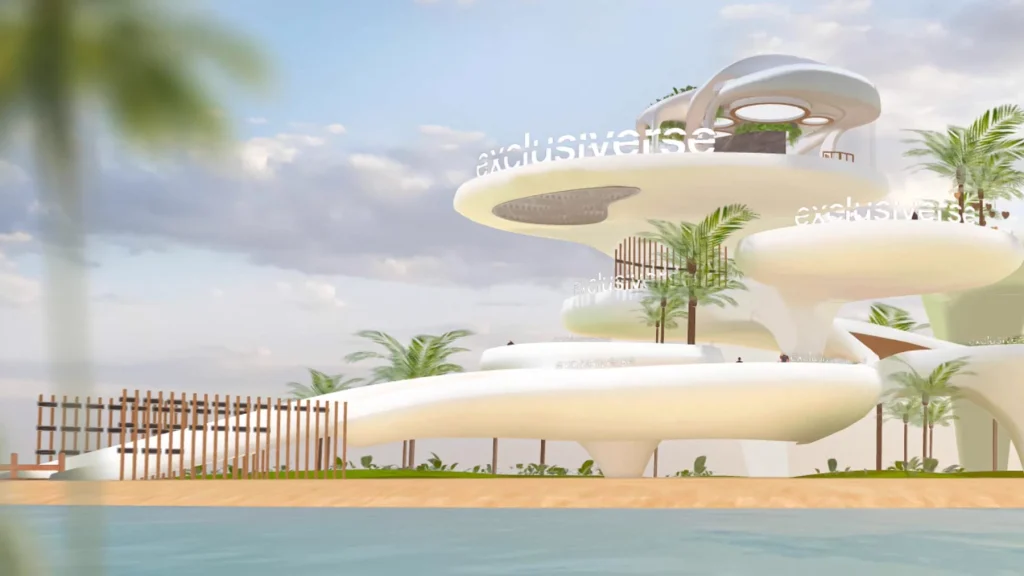
Both the development of interactive XR experiences for users and the collection of a large volume of high-value data. Both actions enable tourism companies to open up new business opportunities by focusing on the customer experience. Seeking new ways to connect with travelers, understand users and personalize travel offers and experiences. An example of these new business opportunities can be found in the following areas Exclusiverse the virtual space of the Exclusive Traveler Club which opens its memberships to the digital world. Through its virtual headquarters, the traveler's club offers a much more direct communication; it creates a community space between partners from all over the world and also collects all the behavioral information of users. Thus, it knows which areas are most visited, which memberships are the most consulted and the countries of origin of all virtual visitors, among other data.
Metaverse with digital memberships with Blockchain and NFT technology developed for Exclusive Traveller Club by Imascono
Improved decision-making
When working with data, it is not only important to know how to identify and filter the best sources. It is also vital to know how to turn that data into relevant information, that information into high-value knowledge, and that knowledge into decisions that help the company advance its business. . Thus, the Big Data enables tourism companies to analyze large volumes in depth of consumer and market data, identifying key trends and preferences that inform your strategic decisions. A improved decision making also for the tourists themselves as is the case, for example, with the interactive project of Cervantes IA . A hyperrealistic virtual avatar of Miguel de Cervantes trained with different sources and data, which serves as a tour guide to accompany visitors to Alcazar de San Juan (Castilla La Mancha). With this example of big data in tourism, through the avatar equipped with Artificial Intelligence tourists receive Cervantes' own recommendations and advice . Forever changing its interaction with the culture and tourist spot of the area. You may be interested in → Artificial Intelligence in tourism: characteristics and examples .
Virtual Avatar with Generative Artificial Intelligence developed by Imascono
Increased customer satisfaction
Now more than ever, the customer satisfaction plays a key role in tourism . Recommendations, opinions and travel trends determine whether a destination is attractive or not, in addition to the activities and tourist experiences it offers. In pursuit of this objective, Big Data applied to tourism allows us to keep track of the more personalized and deeper control of travelers' needs and behaviors, analyzing at both the macro and micro levels. All based on data that can come from the web, from social networks or from the interactive Extended Reality experiences . Where, through gamified challenges, interactive games or AR Apps In this way, users share their tastes and preferences with attractive, unobtrusive actions where the real protagonists are the travelers. As in the Rafa Nadal Museum in Manacor, where the different phygital experiences They represent a new and attractive point of contact with visitors, who interact with the brand and share their data and opinions while having fun and participating in different rankings and sweepstakes.
Phygital project developed for Rafa Nadal Museum by Imascono
Personalization of the user experience
As we are seeing in this article, Big Data and Extended Reality are two powerful tools for collecting user information and managing all that data. If, in addition, we incorporate the latest in Artificial Intelligence, we can take advantage of all that knowledge to personalize the tourist experience in real time . By adjusting offers, communications and interfaces precisely and taking into account the individual needs and wishes of each customer. Among the projects already underway that unite Big Data , Artificial Intelligence and creative XR experiences like Cicerone . The AI robot of iUrban which is also a travel agent and can customize tourist offers and proposals in more than 95 languages. You can to learn more about this topic at Smart destinations, what are they and what are their characteristics? .
Challenges and opportunities of Big Data for tourism
The introduction of Big Data in the tourism industry poses a number of challenges and opportunities for companies in the industry. Focusing the business on customer\/traveler data is a challenge at a global level. methodology and business organization, since requires a great ability to collect and analyze large volumes of data, preferences and behaviors in real time. Being, in addition, able to provide optimal responses, with the design of customized offers, anticipating market trends and optimizing resources. In addition, Big Data facilitates the identification of new market niches and expansion opportunities This can translate into strategic growth for tourism companies that know how to take advantage of this information. On the other hand, the management and analysis of large datasets requires significant investments in technology and specialized talent This can be a barrier for small and medium-sized companies in the sector. The privacy and data security The data and customer data also represent a major challenge for tourism companies in terms of data governance, storage and access to the personal information that is stored. It is therefore important to always count on technological partners that help tourism companies to work with and store these user data.
Discover our value proposition of analytics and dashboards in the XR experiences.
and, above all, to obtain this information from the most reliable sources. The most complete and with the greatest impact for the company. In this regard, the Extended Reality experiences applied to the tourism sector offer an attractive and fun way to interact with the brand. Sharing information about the tastes, interests and particularities of each consumer that would otherwise not be possible. At Imascono In this regard, we are committed to incorporating Smart Data to our XR experience developments. Transforming user interactions into advanced analytics dashboards, with heat maps, phygital interaction points, detailed provenance analysis... All for convert large volumes of data into organized, processed and refined information that is directly applicable and valuable to business decision-making processes. Do you want to go one step further in the introducing Big Data into your business ? Contact our team and we will help you incorporate dashboards and analytics into all your customer interactions.
Metaverse and NFTs: present and future relevance
Metaverse and NFTs: present and future relevance
In a world increasingly influenced by technological advances and major innovations in the digital world, two technologies have attracted global attention: Metaverse and NFTs (non-fungible tokens). Both technology trends are transforming all types of industries, from fashion and luxury to banking and finance. Knowing in detail its technological relevance is very important in order to continue betting on the digital transformation of our companies . Both the Metaverse and the NFTs are redefining value and ownership in the digital economy, are revolutionizing our interaction in virtual worlds and are generating new business opportunities that were unthinkable until now. In this article we will delve deeper into their definitions and complementary technologies, we will see in detail some of their We will discuss the most important use cases and analyze their benefits and future prospects.
Virtual Reality phygital project made for Ibercaja Explora by Imascono
General concepts of the Metaverse and NFTs
Before discussing the use cases, advantages and business opportunities of both technologies, it is important to have an in-depth knowledge of their definitions and Metaverse-related technologies and NFTs, including Blockchain and Web3, among others.
1. Definition of the Metaverse
The Metaverse It is defined as a A virtual universe composed of multiple linked three-dimensional digital worlds. A universe where humans interact socially and economically through virtual avatars, NFTs, cryptocurrencies and blockchain technology.
The Metaverse is the The next generation of the Internet, In which we can enjoy an immersive, three-dimensional and multisensory experience thanks to the combination of different devices and technologies. Such as Virtual Reality, Augmented Reality and the latest in Web3 technology and Digital Twins.
At Imascono we have Specialized Augmented Reality services, Virtual Reality and Mixed Reality.
2. Definition of NFT
An NFT, or non-fungible token, is a type of digital asset that represents ownership or proof of authenticity of a unique item . Certified through Blockchain technology. Unlike cryptocurrencies such as Bitcoin or Ethereum, which are fungible (i.e., they are divisible and exchangeable for another of equal value), each NFT is unique, like a work of art. NFTs can be linked to specific digital objects such as works of art, music, videos, video game items, and more, providing a unalterable record of ownership and provenance. This traceability and authenticity capability makes NFTs a powerful tool for the digitization and marketing of digital and physical goods in various industries, including art and entertainment.
3. Definition of Web3
Web3 is defined as the next iteration of the Internet that seeks to decentralize the data structure. and allow users to have greater control over their own information. It is based on the idea of using the Blockchain to create an internet where applications and services do not depend on centralized intermediaries. Instead of having large companies controlling the information and data, Web3 puts ownership and control of data in the hands of users through decentralized networks. This vision of the web incorporates cryptocurrencies, smart contracts, and decentralized applications (dApps) operating on blockchain networks. Not to be confused with the term Web 3.0, which refers to the evolution of the Internet in general. . Moving from Web 1.0. of hyperlinks and Web 2.0. of two-way interaction and Social Networks, to a new era of Internet that is more intelligent, autonomous and based on natural language processing.
4. Blockchain definition
Blockchain, or blockchain, is a revolutionary coding technology that allows for decentralized tracking of all digital movements and transactions . This makes it a particularly useful technology for systems that require high security and transparency . Like cryptocurrencies, the smart contracts or identity management in the digital world. Due to its decentralized nature, the Blockchain technology eliminates the need for intermediaries in many processes potentially reducing costs and increasing efficiency. It is undoubtedly one of the technologies that is revolutionizing banking and the digital economy. You can continue to learn more about this new digital economic ecosystem at Banking and Metaverse: Use cases and the future .
The importance of NFTs for accessing the Metaverse
The future of the Metaverse monetization, to become the definitive space for the socioeconomic exchange in the digital world . For this purpose, cryptocurrencies, Blockchain technology and especially NFTs have a key role in the structure and functioning of the Metaverse . Offering a unique and secure way to represent the ownership and authenticity of digital and physical assets within these virtual worlds. In the Metaverse, NFTs can represent a variety of elements, ranging from virtual real estate, concert tickets and digital artwork to avatar identities and exclusive fashion items. This ability to directly link the ownership of assets with their digital representation offers users total control over your acquisitions facilitating a transparent and secure digital marketplace. You may be interested in → The Influence of Artificial Intelligence in the Metaverse . For example, in the fashion and retail sector, NFTs allow the creation of new business models with collections phygital (proposals for the real and virtual world) or garments/products created exclusively for the Metaverse as NFTs (digital objects) for our avatars. Or in the digital entertainment industry where the association of NFTs to concert tickets and other experiences allows both the audience and the promoter to be assured that the tickets are verified and are authentic . A successful case of the union between the NFTs and the Metaverse can be found in the virtual museum of the great Spanish chef Ferran Adrià . Web3, virtual avatars, NFTs... creativity and innovation from el bulli foundation makes the leap to the virtual world . After exhibiting in New York, Cleveland, Madrid and Buenos Aires, Ferran Adrià turns his works of art on culinary evolution in 114 NFTs that can be viewed and acquired directly through its own virtual museum.
Benefits of NFTs in the Metaverse
In the new virtual universe of the Metaverse and the digital twins NFTs are much more than just digital assets, they are becoming key elements in transforming the way we interact, trade and express ourselves on the Internet. virtual spaces offering authenticity, exclusivity and security to users. By exploring the benefits of NFTs in the Metaverse We discover how they not only power the digital economy, but also elevate user experiences, creating extraordinary opportunities for innovation and engagement. In the following, we will analyze the 3 main benefits of the union between NFTs and Metaverso :
Marketing tool
The integration of the NFTs and the digital assets in the Metaverse also has an impact on the marketing strategies for brands and companies . Not only to position the company at the forefront of technology and business innovation also for the promotion and sale of your products in virtual showrooms . In this way, companies can create and distribute unique digital products that capture attention and foster a unique sense of ownership and belonging among consumers. This is not only increases engagement by allowing users to interact with the brand in innovative and memorable ways, but also transforms products and experiences into marketing opportunities. As in the case of Metrovacesa Space, a unique space in the real estate Metaverse to access information about the brand, the company's activities and the online pre-reservation of homes through the new digital economy.
Metaverse developed for Metrovacesa by Imascono
Improved functionality in the Metaverse
The incorporation of NFTs into the Metaverse plays a key role in the improved functionality and overall experience of the user in these digital spaces. NFTs allow for deeper and more functional integration of digital assets, such as interactive tools, accessories for avatars with artificial intelligence The Metaverse's environment is enriched by art and real estate.
This integration facilitates not only the ownership, but also the personalization and digital exchange of these assets in a transparent and secure market. A new way of interacting in the virtual world that has gradually been introduced and brought closer to citizens. As in the Zaragoza City Council's virtual Flower Offering project, where the public institution promoted knowledge about NFTs by introducing them into the mechanics of the game within the virtual space. In addition, the NFTs were associated with different prizes such as concert tickets, exclusive experiences and gift baskets. This was a real pioneering action by a public administration to bring citizens closer to the importance and value of NFTs and digital assets.
Metaverse with NFTs of the city of Zaragoza developed for Zaragoza City Hall by Imascono
Identity and security in the virtual world
As we have seen throughout the post, the great advantage offered by the introduction of NFTs in the Metaverse has to do with the security and transparency they offer in interactions within the virtual world . A fact that, in addition, is a benefit to redefine and deepen the digital identity of users in the Metaverse.
NFTs allow users to have complete and exclusive control over their digital identities and assets, ensuring that only they can access and transfer their property. One example is Exclusiverse, the great pioneering virtual space in the tourism sector, where its more than 85,000 members can extend their digital memberships into the Metaverse thanks to the connection of each of their memberships with blockchain technology and NFTs. This allows them to purchase exclusive travel products and experiences and new benefits for their memberships, and to secure the payment and recording of all their interactions with the Traveler club. If you would like to learn more about this success story in bringing NFTs and the Metaverse together, you can visit our post Digital Membership: definition and main benefits.
The future of Web3: Blockchain, NFTs and the Metaverse
The Metaverse, as a space for socioeconomic interaction, is in full construction and evolution. Little by little, we are seeing how the most pioneering companies and brands are evolving towards this new concept of digital economy. Just as e-commerce revolutionized the business world, so are spaces in the Metaverse. The future of Web3 is shaping up to be a digital revolution based on the three technologies discussed throughout this article - Blockchain, NFTs and Metaverse - promising an era of more decentralized, secure and personalized online interaction, through avatars as a new key piece in our digital identity and the wallets virtual wallets that will protect all our assets. At Imascono we are aware that the future of companies depends on the Metaverse and the adoption of the technologies that shape it. For this reason, we have a whole area specialized in the development of experiences for the corporate Metaverse called Business To Metaverse . Thanks to our team of 30 engineers and designers With our own work methodology and the experience of more than 12 years of activity in the area of Metaverse and immersive technologies, we have accompanied companies such as Telefónica, Iberdrola, Rafa Nadal Academy, elbullifoundation or Metrovacesa in their leap to this new virtual ecosystem. Do you need a project in the Metaverse? Contact with us and together we will explore all the opportunities that the Blockchain technology of NFTs offers us in the business world.