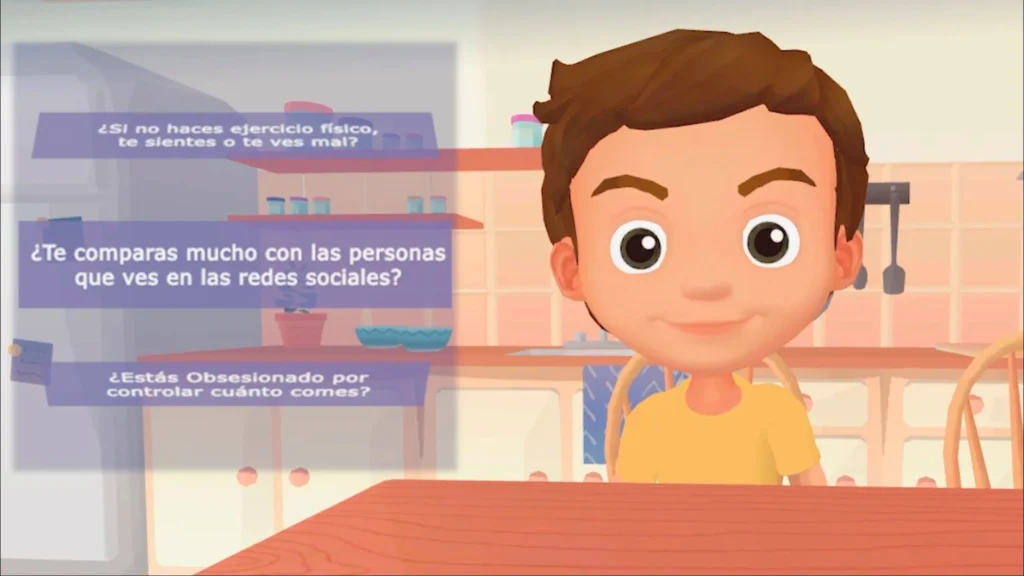
In Aragon, it is estimated that about 8,000 adolescents between the ages of 12 and 18 may have a problem related to eating behavior, and only a portion of them are evaluated by specialized health services. With the aim of reducing that gap and bringing early detection closer to where adolescents are—the educational centers—the A.P.E. Foundation, the Institute of Health Research of Aragon (IIS Aragón), and the Government of Aragon have launched ApeTest, an interactive and gamified application that integrates an internationally validated clinical questionnaire (the SCOFF test) in a format designed for the classroom.
01
The challenge
Getting to teenagers with a clinical tool that they feel like their own
The main obstacle in the early detection of mental health problems in adolescents is not a lack of scientific tools—validated clinical questionnaires have been available for years—but the difficulty in reaching that audience with a format that does not generate rejection or a sense of intrusion. Traditional clinical questionnaires designed for the adult healthcare sector are unattractive and poorly understood by young people. The A.P.E. Foundation and the IIS Aragón sought a digital solution that is accessible, intuitive, and non-invasive, capable of integrating validated scientific tools into a virtual space that is close to young people, familiar and free of stigma.