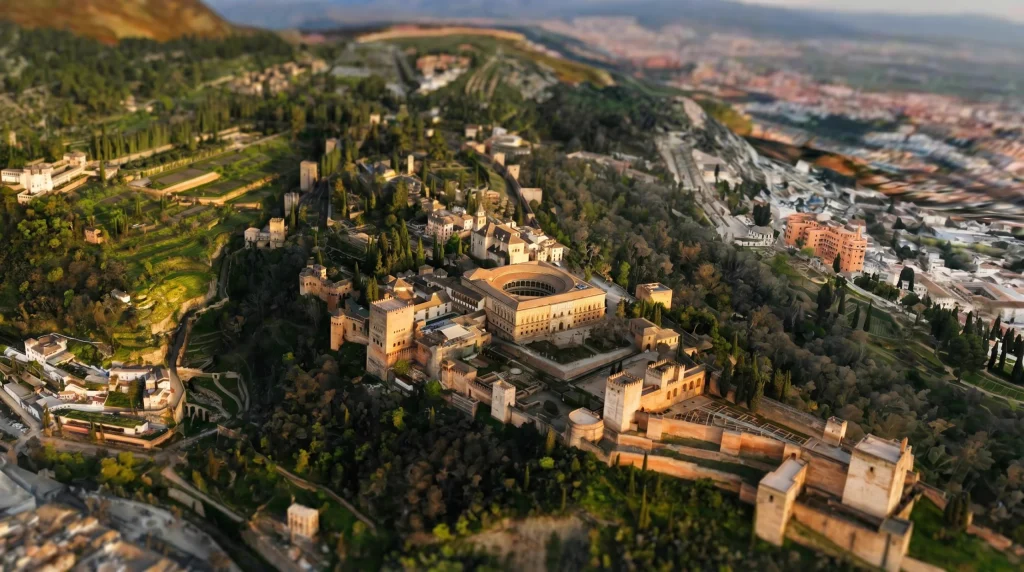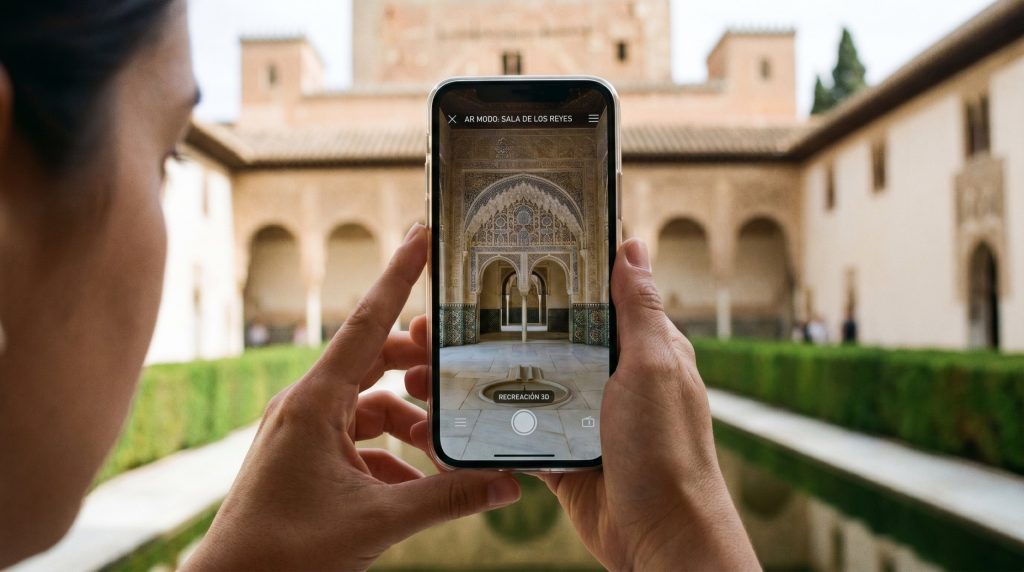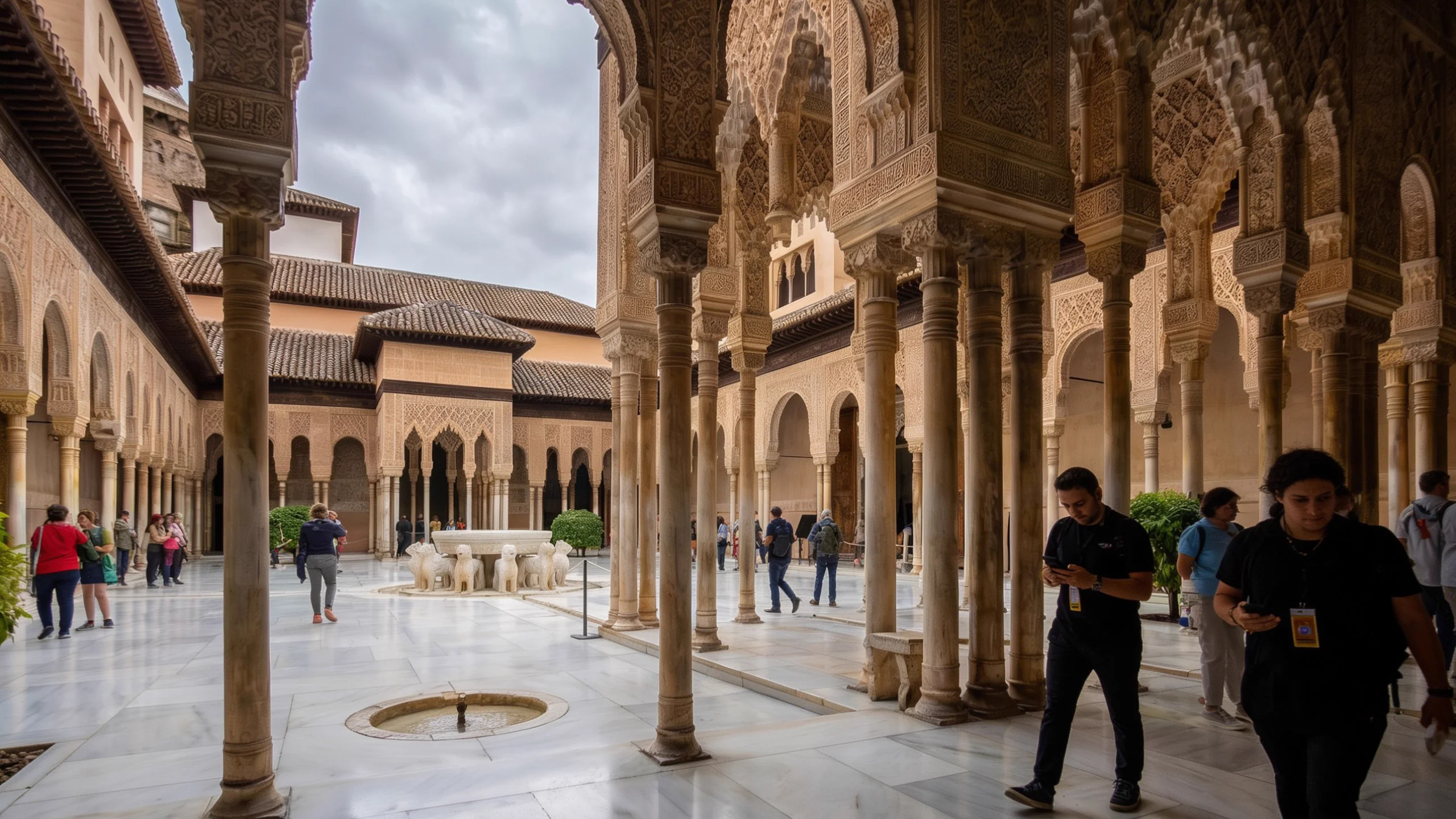
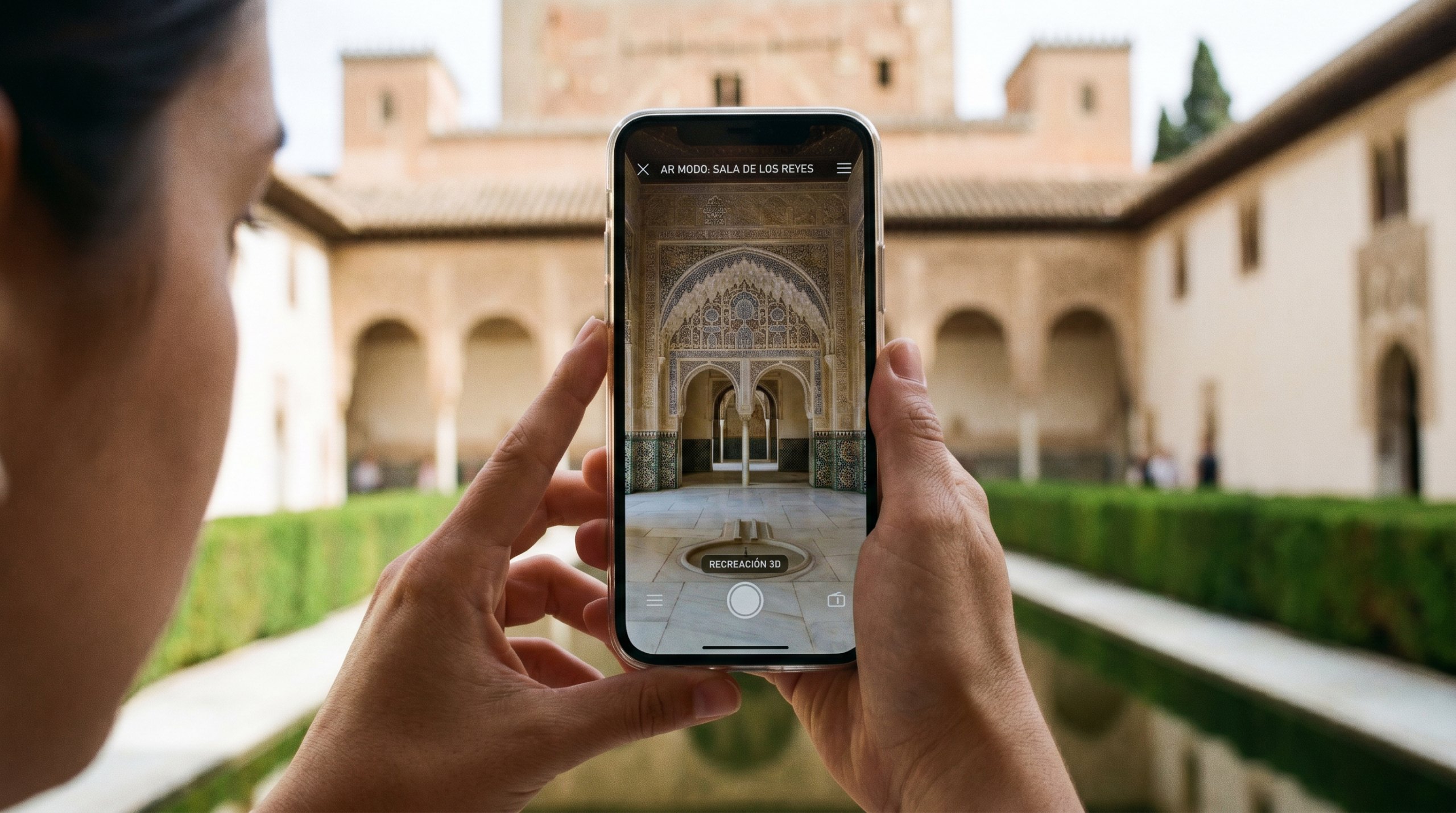
The Alhambra is one of the most visited monumental complexes in the world: 345 hectares of Nasrid heritage declared a World Heritage Site by UNESCO. Together with the Regional Government of Andalusia and the Andalusian Digital Agency, the monumental complex has driven an end-to-end digital transformation built on three coordinated technology layers: a Virtual Twin that precisely digitalises the site, a Virtual Space that extends the visit to the online environment and an Augmented Reality App that enriches the in-person experience. The combination also opens usually inaccessible areas —under restoration or closed to the public— to tourists, history enthusiasts and art experts from all over the world.
01
The challenge
Scaling a thousand-year legacy into digital
The Alhambra receives more than 2.7 million visitors every year across its 345 hectares and faces a challenge common to large cultural institutions: how to manage the operational complexity of a space of this magnitude, capture the data from every interaction and extend the visitor experience beyond the physical site. The challenge required going beyond the one-off visit to build a continuous, measurable, scalable model, capable of engaging the public before, during and after the visit, and open to profiles the in-person visit doesn't always reach —history enthusiasts, researchers and art experts from all over the world—. With one non-negotiable premise: that technology be at the service of the cultural narrative, never the other way round.