Skip to content
TransIAlting STEAM
Case of success · CECE · Erasmus+

TransIAlting STEAM

5
European partners developing the educational platform
Case summary

Educational platform with AI that helps migrant students learn STEM by overcoming the language barrier.

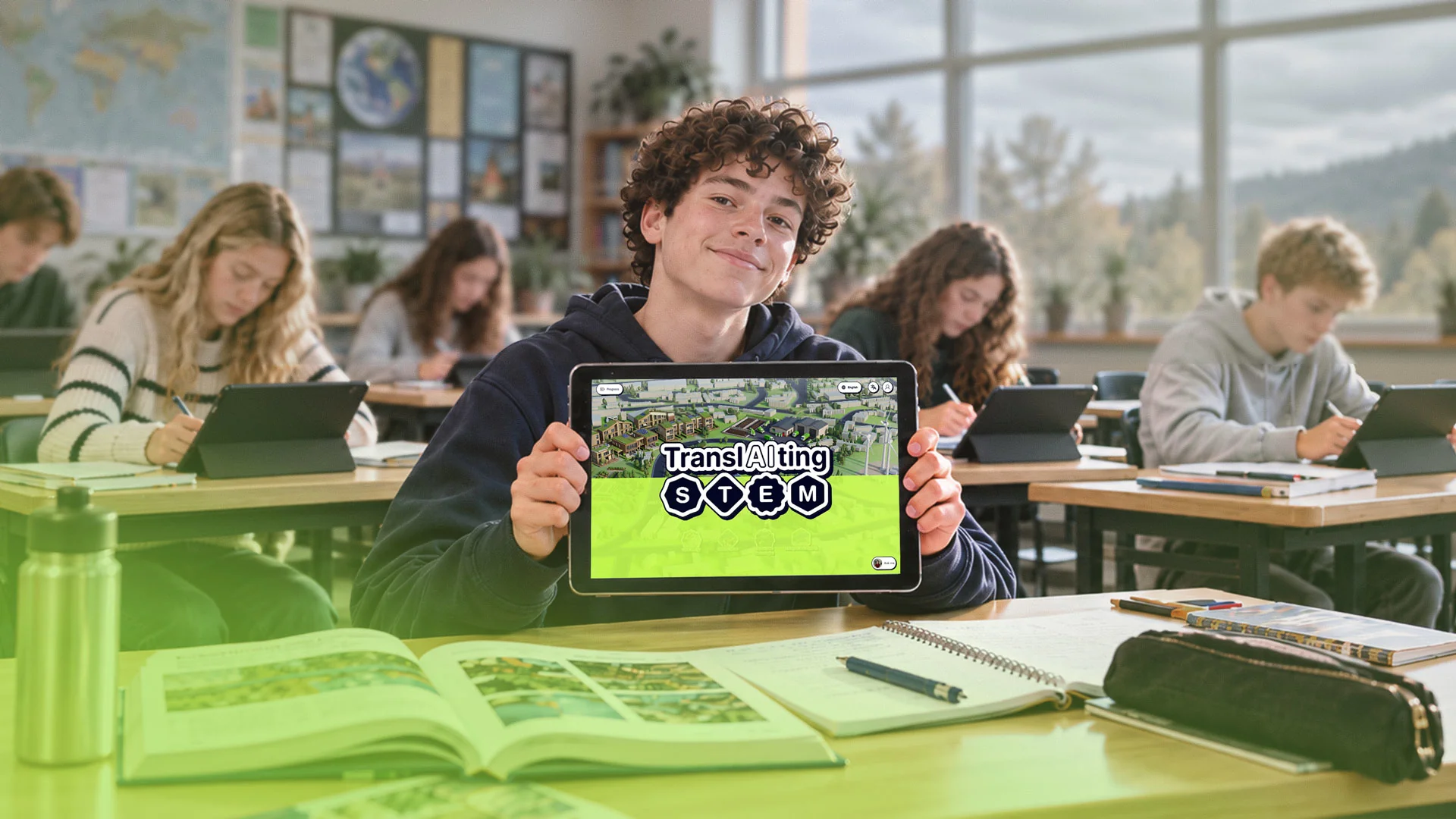
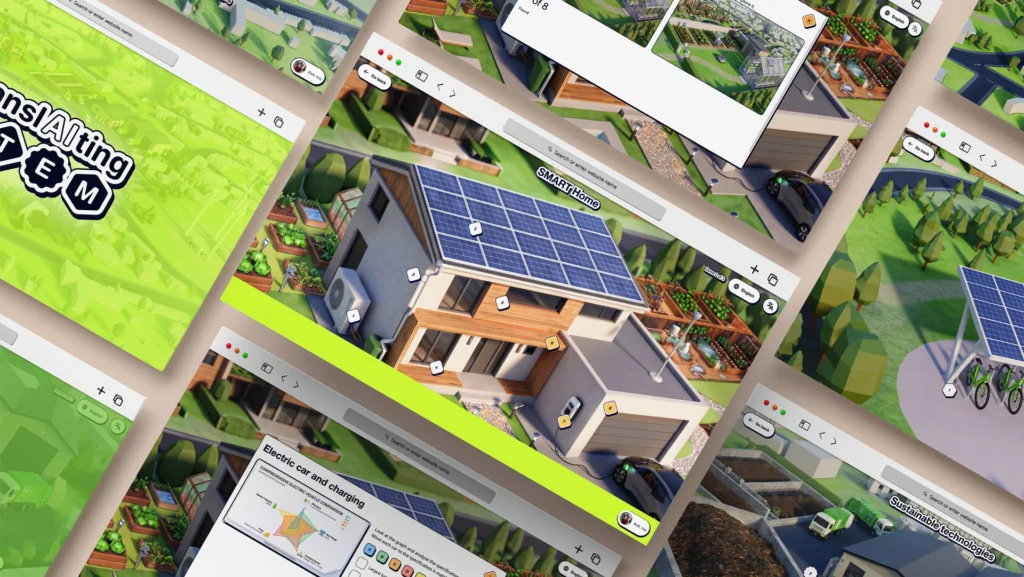
TranslAIting STEM is a European Erasmus+ KA220-SCH project that develops an educational platform with Artificial Intelligence for students aged 10 to 18, with a special focus on migrant students and indigenous communities with difficulties in the local language. Imascono leads the technological development of the project: a virtual gamified space organized as a house with different thematic rooms, and an AI-powered avatar that provides real-time linguistic support. The consortium, coordinated by CECE, integrates research, STEM education, and educational deployment in five European countries.

Client
CECE · Erasmus+
Sector
Education
Service
AI Tutor · AI Agents
5
European partners: Spain, Czech Republic, Italy and Belgium.
10-18 years
from the European students to whom it is addressed
4
Thematic stays in the virtual house
Do you have a similar educational challenge?
Tell us about it. In under 24 hours we tell you what results you could expect in your company.
01 The challenge

Teaching STEM without language being a barrier

Migrant and indigenous student communities face a systemic disadvantage in STEM education: without sufficient command of the language of instruction, performance in science and mathematics falls, and the risk of school dropout increases. Existing language support tools are often static and disconnected from the actual technical content. The challenge for the consortium—and in particular for Imascono as a technology partner—was to design a gamified digital environment capable of combining STEM learning, instant translation, and personalized support, scalable to different countries, languages, and educational systems, and validated through a phase of research and real implementation in the classroom.
Teaching STEM without language being a barrier
02 The solution

A virtual space gamified with a linguistic support avatar

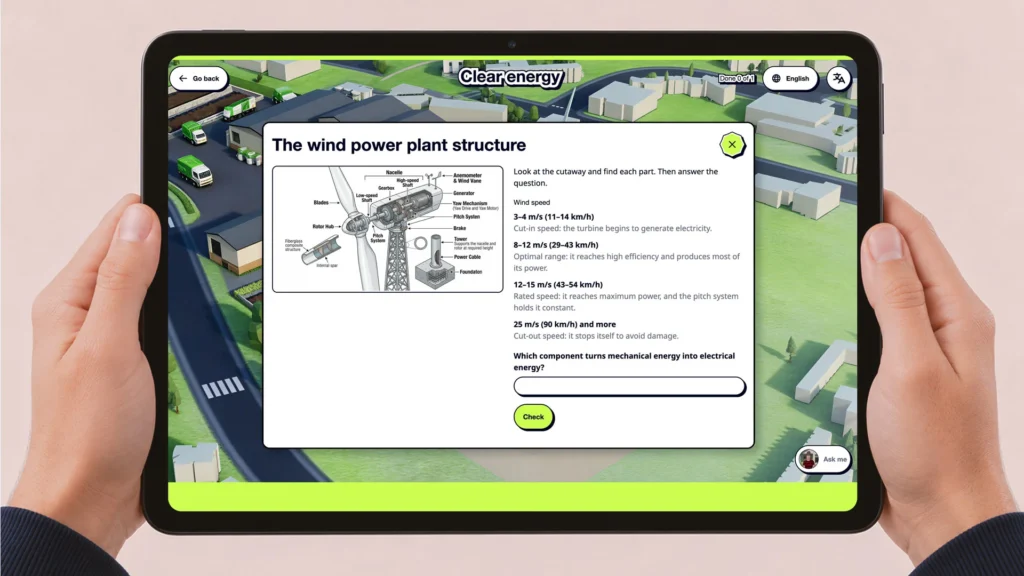
Imascono develops the technological core of the platform: a virtual space organized into four themed rooms of a house, from which the student accesses interactive activities, their profile, a multilingual STEM dictionary and an AI-powered avatar. The avatar allows the student to resolve doubts via voice or keyboard in real time, acting as a personalized educational assistant. The development is complemented by the interactive STEM terms dictionary (led by UPOL) and the scientific validation of the impact on learning (led by AP). The project is currently in the design phase, with conceptual screens undergoing validation before functional development.

A virtual space gamified with a linguistic support avatar
Next step
Do you want a customized solution in training? He requests a diagnosis.
Key learnings

What this case teaches the sector.

01

The barrier is not the language; it is the technical language.

A student can have fluent conversation and still not understand a concept in the language of instruction. Generic linguistic support is not enough in STEM: specific translation of technical vocabulary is needed, integrated into the content itself, not as an external resource.

02

Educational AI works better as an assistant than as a teacher.

An avatar available at the exact moment of doubt — not during a scheduled tutoring session — reduces the friction of learning. The value lies not in replacing the teacher, but in covering the time gap between when the doubt arises and when human assistance arrives.

03

A European consortium multiplies the criteria, not just the budget.

Research, STEM teaching, technological development, and educational deployment require profiles that rarely coexist in a single organization. The strength of these projects lies not in joint funding, but in the ability to validate the same solution in different languages, educational systems, and cultural contexts before scaling it up.

04

Designing for the extreme case improves the experience for everyone.

Designing with a student who does not master the language of instruction requires simplifying navigation, enhancing the visual experience, and anticipating confusion. These same design decisions ultimately benefit any user of the platform, not just the migrant community.

Let's talk From challenge to solution. Tell us yours.

You tell us the challenge; we tell you how we would make it real. We reply in under 24 hours with a first round of feedback. No strings attached.