How virtual healthcare assistants are transforming patient care
The digital transformation in healthcare is advancing at an unprecedented pace, and one of the key drivers of this change is the virtual assistant in healthcare. The combination of artificial intelligence, conversational assistants, and interactive avatars is redefining healthcare towards a more personalized, accessible, and efficient. These intelligent systems are already capable of automate administrative tasks, guiding patients within the hospital, providing health education, answering basic clinical questions, and even offering ongoing emotional support. The result: hospitals and clinics that operate more efficiently and patients who feel better informed, supported, and cared for.
In this article we will explore how the AI technology assisting with patients is opening a new chapter in the medicine, promoting more human and accurate experiences. We will analyze the real benefits of integrating a virtual health assistant in hospitals, medical centers, and telemedicine services, drawing on success stories such as Sania Sanitas, an intelligent avatar that is already humanizing digitization in the healthcare sector. You will also learn about the role of Imascono Health, the specialized division that applies more than a decade of experience in technological innovation to develop advanced solutions focused on patient well-being and professional efficiency.
If you want to understand where the future of healthcare is headed—and what role virtual healthcare assistant in this transition—stay. What follows is a clear, professional, and inspiring vision of the present and future of digital health.
What are virtual assistants in healthcare?
The virtual assistant in healthcare represent a new era in patient experience and communication within the healthcare sector. They are much more than traditional chatbots: they are intelligent virtual assistants, powered by AI and designed to transform the relationship between professionals, patients, and healthcare systems. These assistants are capable of understand natural language, hold fluid conversations, and accompany the user throughout their care journey, from the initial informational consultation to post-treatment follow-up.
Driven by the AI technology assisting with patients, function as a virtual companion available 24/7, capable of answering common medical questions, managing and modifying appointments, sending medication reminders, explaining medical procedures clearly, and guiding patients to the appropriate service within the hospital or medical center. Their value increases when they are integrated with electronic health records, telemedicine platforms, and hospital systems, acting as a true virtual health assistant which optimizes processes and significantly reduces the administrative burden on healthcare personnel.
In short, a virtual assistant in the healthcare sector is the natural evolution of medical care in the digital age: an intelligent conversational solution that personalize customer service, improve operational efficiency, accelerate decision-making, and offer continuous support with a perfect balance between technical precision and human empathy.
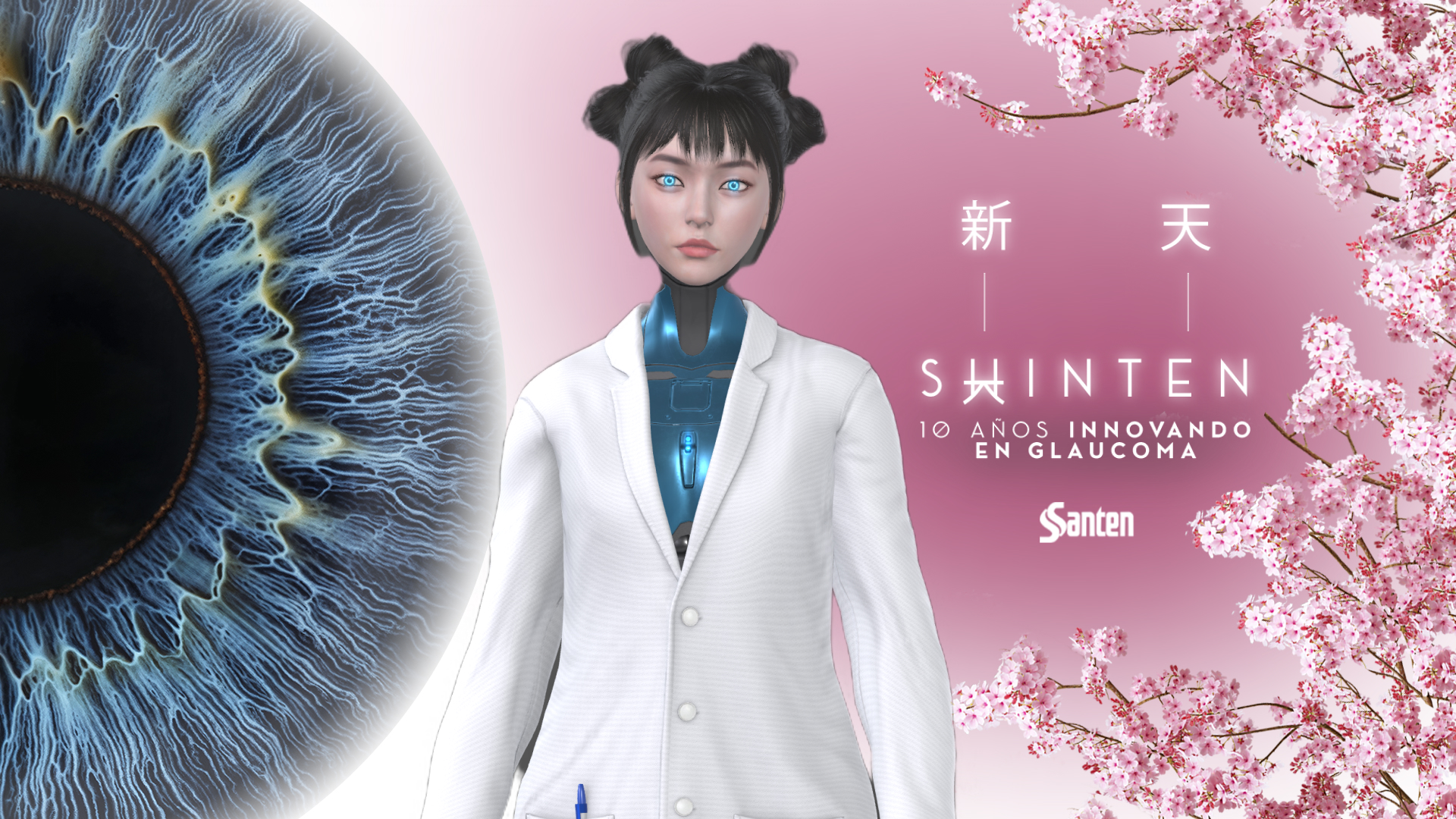
An example of a use case can be found in the proposal for Santen during its last medical conference, where Shin was the virtual assistant. which accompanied speakers and attendees throughout the day. The AI avatar was trained with all the medical literature from the event and was able to provide accurate and informed information when responding to questions from the audience.
You may be interested in → Main uses and benefits of Artificial Intelligence in healthcare
The role of AI technology in patient care
The artificial intelligence has become the driving force behind more healthcare human, proactive, and personalized. When we talk about AI technology assisting with patients, we refer to systems capable of analyze clinical information, understand the patient's context, and act in real time. Allowing the virtual medical assistant to tailor its responses, anticipate needs, and continuously accompany each user throughout their care journey. From initial triage to education on healthy habits, AI can interpret symptoms, detect patterns, prioritize risks, and offer data-driven recommendations. Always under the supervision of healthcare specialists.
In addition, the IA plays a key role in the reduction in administrative burden. By automating repetitive tasks (such as managing appointments, sending reminders, sorting inquiries, or resolving frequently asked questions) these systems allow professionals to focus on what adds the most value: the humane treatment, clinical decision-making, and personalized care. With a virtual health assistant As a strategic ally, medical teams can monitor more patients, respond more quickly, and ensure care. immediate, accessible, and consistent
You can learn more about this solution at Impact of Artificial Intelligence on Hospitals

Benefits of virtual assistants in healthcare
The incorporation of a virtual assistant in healthcare is redefining the standards of quality, accessibility, and efficiency in hospitals, clinics, insurance companies, and telemedicine services. These AI-powered solutions not only improve the patient experience but also strengthen the operational excellence of healthcare organizations, becoming an essential ally in the digital transformation of the sector.
Next, we explore the most relevant advantages offered by a virtual assistant in the healthcare environment:
Benefits of Virtual Assistants for businesses
- Operational optimization and reduction of administrative burdenVirtual assistants automate repetitive tasks such as appointment management, sending reminders, delivering results, initial classification of queries, or resolving frequently asked questions.
- 24/7 support with fast and reliable responses: A virtual health assistant guarantees immediate and continuous assistance, even during peak demand periods. It provides fast, consistent, and reliable responses, ensuring that patients receive guidance and support at any time, without long waiting times or exclusive dependence on on-site staff.
- Improved efficiency in triage and medical referralThanks to the AI technology assisting with patients, These assistants can analyze symptoms, detect potential emergencies, and refer the patient to the appropriate service, specialty, or professional. This reduces pressure on emergency rooms, relieves congestion in call centers, and optimizes the flow of care.
- Increased patient satisfaction and loyaltyA seamless, personalized, and digital-first experience significantly improves patients' perception of the service they receive. Virtual assistants provide clarity, closeness, and accessibility, reinforcing the trust in the healthcare organization and increasing the likelihood of customer loyalty.
- Smart data for strategic decisionsVirtual assistants record every interaction, generating valuable insights about needs, concerns, behavior patterns, and friction points in the patient journey. This information allows healthcare centers to Optimize services, anticipate needs, and design more accurate health strategies, based on real data.
Benefits of VA for patients
- A more human and personalized experience.An avatar with a natural face, gestures, and expressions reduces the usual coldness of digital interaction. It conveys trust from the first contact, facilitates communication, and creates an emotional bond that improves the patient's willingness to interact and share information.
- Immediate access to medical guidance and emotional well-being.Avatars provide clear information, ongoing guidance, and emotional support, helping patients resolve doubts at critical moments. This immediate availability reduces anxiety, prevents misinformation, and offers reliable guidance without waiting times.
- Increased accessibility.Being adapted to different languages, cognitive abilities, or levels of digital literacy, Avatars remove barriers to access and democratize digital health. Their multi-platform design allows any patient—regardless of device or context—to obtain support in a simple and intuitive way.
- Enhanced learning and treatment adherence.Avatars can explain procedures, send reminders, offer interactive tutorials, monitor treatment, and motivate patients. This translates into greater therapeutic adherence, a better understanding of the disease, and more active participation in one's own healthcare.
- Privacy, security, and confidentiality guaranteed.All interactions take place in secure environments that comply with data protection standards and health regulations. The avatar acts as a trusted mediator between technology and the patient's medical information, preserving their privacy at every step of the care journey.

Examples of virtual assistant use in healthcare
Next, we analyze Sania from Sanitas, one of the division's most representative projects Imascono Health, the result of collaboration and joint innovation within the healthcare sector. This case demonstrates how a virtual assistant in healthcare can truly and measurably transform the patient experience and the efficiency of a healthcare organization.
Sania Sanitas
Sania has enabled Sanitas to evolve its patient care model by combining artificial intelligence, accessibility, and human closeness. Thanks to this state-of-the-art virtual avatar, the company has achieved streamline healthcare guidance within the medical center, guiding users through formalities, inquiries, and procedures without having to wait or rely exclusively on reception staff.
The assistant offers a immediate, multilingual, and 24/7 available first response, reducing waiting times, relieving staff congestion, and ensuring an inclusive experience for all types of patients. From the moment the user walks through the door of the center, Sania acts as a digital companion which facilitates their care journey and improves understanding of each step of the process.
In addition, Sania contributes a key strategic value, optimizing internal processes, reducing operating costs, and generating real-time data that enables analyze needs, anticipate improvements, and continuously refine the care model. By humanizing digital health through a hyper-realistic avatar, Sanitas reinforces its position as one of the most innovative companies in the sector, demonstrating how technology can improve the patient experience, transform care, and consolidate a more efficient, intelligent, and humane healthcare model.
How Imascono can improve healthcare with its virtual assistants
At Imascono We are driving the evolution of the healthcare sector towards a more digital, human, and efficient. With the creation of Imascono Health, our division specializing in healthcare, we have consolidated more than a decade of experience developing technological solutions for hospitals, insurance companies, medical centers, and companies in the clinical and wellness fields. A space where we bring together scientific knowledge, experience design, and advanced technologies to transform healthcare through innovation.
From this division, we focus our work on virtual healthcare assistant and immersive experiences designed to improve the relationship between patients and medical centers. Thanks to our expertise in Conversational AI, intelligent avatars, and care pathway design, We develop solutions that optimize processes, facilitate patient guidance, reduce the operational burden on staff, and enhance the quality of the healthcare experience.
Our proposals are designed to humanizing digital health, offering virtual assistants capable of accompanying, informing, and guiding patients with empathy, precision, and constant availability. Solutions designed to respond to the current challenges of the sector and evolve as technology and healthcare needs advance.
If you want to improve your patients' experience, optimize your internal processes, and make the leap toward a more innovative healthcare model, the team at Imascono Health is ready to accompany you. Contact us at and let's discover together how a virtual health assistant can transform your healthcare center starting today.