Major technology trends in the automotive industry
In a sector as competitive and constantly evolving as the automotive industry, technological innovation is no longer an option, it is the way forward. Digital twins, virtual spaces, artificial intelligence o Augmented Reality applications are revolutionizing the way we conceive, design, sell and enjoy cars. This transformation affects not only the performance of the vehicle, but the entire experience surrounding it. from technical training to the point of sale, including customer loyalty. In this article we explore the main technological trends in the automotive sector What role do AI-based avatars play? How does an operator train in a virtual environment? What are the benefits of Augmented Reality for drivers? By means of concrete examples, such as the success story of Hispanosuiza We discover how the future of the automotive industry is already underway. Get ready for a journey to the heart of innovation, where creativity and technology come together to completely transform the automotive industry.
The impact of technology on today's automotive industry
The automotive industry is undergoing a true technological revolution, with advances that not only improve the user experience, but also completely transform the design, production and management processes. The incorporation of disruptive technologies such as Augmented Reality the Virtua Reality l and the intelligent assistants are redefining what it means to own a vehicle and how we interact with it . One of the most innovative uses of the Augmented Reality is the integration of real-time information directly on the vehicle's dashboard. Imagine a driver with access to details such as engine status, fuel levels or optimized routing directly on the windshield, without having to take his or her eyes off the road. This not only increases safety, but also enhances the driving experience, integrating useful and relevant information at a glance without distraction. On the other hand, Virtual and Mixed Reality are taking vehicle customization to the next level. Consumers can visualize and customize their cars in a virtual environment, choosing features such as interior design, trim or even entertainment systems, before the car is manufactured. This not only streamlines the design process, but also allows brands to offer a fully customized experience, increasing customer satisfaction.
The AI-based virtual assistants are also transforming the driving experience. These intelligent "co-pilots" can not only provide real-time information about the car's performance, but also about road conditions. They can alert to potential hazards, suggest alternative routes in real time, or even adjust the vehicle's behavior according to the driver's preferences. This technology enhances user safety and comfort, taking autonomous driving to a whole new level. For manufacturers, technology is optimizing production processes. The digitization of information enables more efficient factory management, from inventory control to internal logistics, all accessible in real time. In addition, the Virtual Reality training is being used to train operators in assembly processes, maintenance and occupational risk prevention, increasing safety and efficiency in production plants. These advances not only benefit the internal value chain, but also offer a tangible return in terms of time and costs by reducing human error and optimizing operational processes. An example of this is the case of Global Spedition a transportation company that developed its entire Occupational Risk Prevention course in a virtual format to enhance the immersion and learning experience.
Technological innovations already present in the sector
The automotive industry is already preparing for the future. New technologies are transforming the industry's present with tangible solutions that improve processes, experiences and results. From advanced simulation tools to customized virtual experiences, these innovations respond to the needs of the automotive industry. new trends in the automotive sector .
Virtual Spaces
The virtual spaces interactive are changing the way the product is presented and experienced. Digital showrooms, virtual factory tours and immersive environments allow users to explore models, interact with configurations and live brand experiences without leaving home. This trend responds to a change in consumer behavior, which is becoming more digital and less face-to-face. For brands, it represents a new way to connect with its hearings in a gamified, emotional and measurable way. Generating community in the digital world. The technology at the point of sale in the automotive sector is no longer limited to the physical dealership. Do you want to know more in detail how to generate online community? We invite you to read our post Digital membership: definition and main types
Gamification in automotive marketing
The Gamification has become an effective strategy to attract, retain and involve the customer in the brand's universe. Applied to automotive marketing, it allows the creation of different interactive experiences that turn the launch of a vehicle or a motor show into a memorable game. Increasing engagement and generating valuable data on user behavior. . A competitive advantage in an environment where the differentiation is to offer more than just a good product.
Digital twins for simulation and maintenance
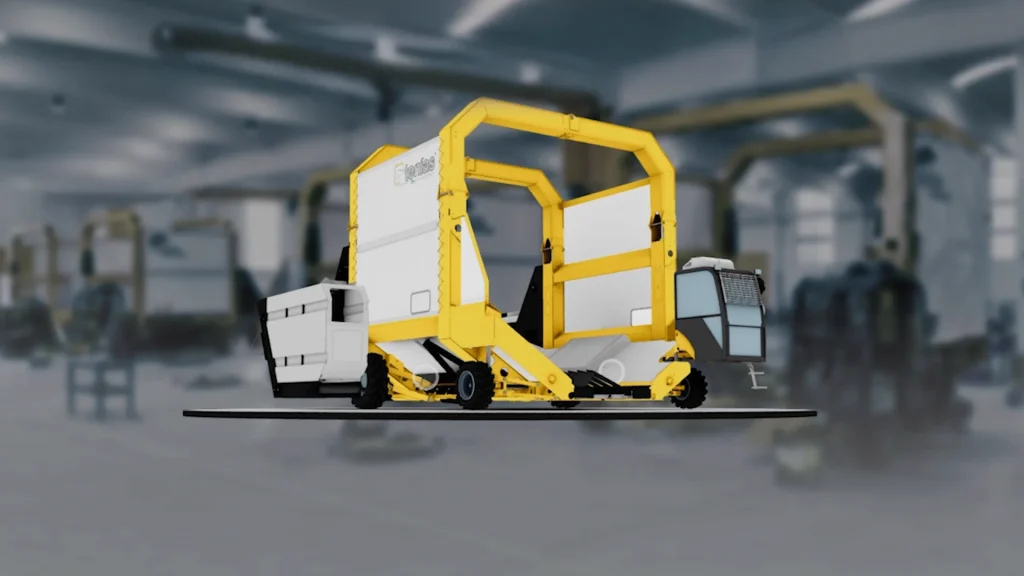
The digital twins virtual replicas of vehicles, processes or facilities are redefining automotive development. Allow components to be simulated, tested and optimized in controlled, dynamic environments before moving on to the physical world. This reduces costs, shortens lead times and improves decision making. In addition, these virtual models make it possible to anticipate potential failures through real-time data, resulting in predictive maintenance strategies. Another use of these virtual recreations of vehicles is more focused on the sale and demonstration of the vehicle at fairs and commercial environments. As in the case of Grupo Tenías has transferred its agricultural vehicles to a 3D and virtual catalog. for a better understanding of its benefits and performance.
Virtual and immersive training
Technical training in the automotive sector has also entered a new era thanks to interactive virtual environments. The immersive training and professionals to work together in the train in realistic simulations without the need for access to vehicles reducing risks and facilitating learning. A clear example of this innovation is the Global Spedition that we have discussed above. Where workers learn to managing dangerous goods in a virtual environment The training is safe, secure and highly realistic. This type of training strengthens knowledge retention and improves operational efficiency.
Avatares basados en Inteligencia Artificial
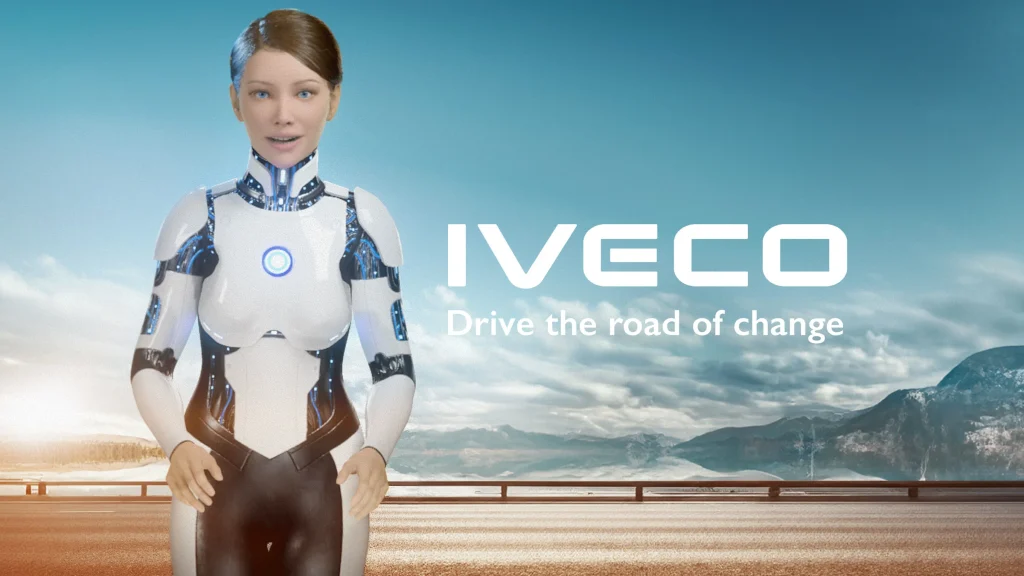
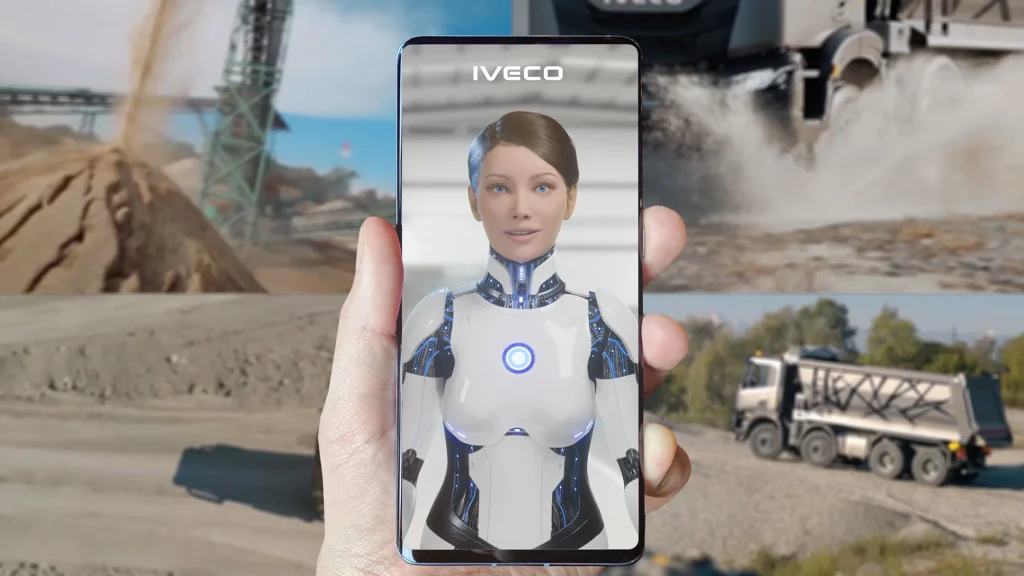
The intelligent avatars are establishing themselves as the new face of customer and employee care in the automotive sector. These conversational assistants, powered by AI, to resolve doubts, guide processes, provide technical assistance in real time or accompany the user in his or her experience. with the brand, both online and at the point of sale. The project Iria IVECO is a clear example. This virtual assistant accompanies you in the IVECO service center, offering real-time information, in a personalized way and providing access to training, technical support on Iveco's truck models and internal communication through a single voice, a revolution in corporate communication.
Leading automotive technology success story: Hispanosuiza
One of the most inspiring examples of how technological innovation is redefining the automotive sector is the project by HispanoSuiza . Through the digital experience, the brand has successfully translated its legacy of over 120 years of luxury and engineering into a digital environment. where the user not only knows the vehicle, but lives it. On this occasion from Imascono we focused on both the development of the enhanced infotainment system and the development of the mobile app, incorporating new customization options that would allow the driver to always be connected and enjoy a tailored 100% experience. Interested in further exploring how technology is transforming the automotive industry? If you want to learn more about innovation cases or discover new digital applications, contact our team We will be happy to share ideas, inspiration and knowledge.
How Technology for Children Boosts Child Development: Practical Solutions for Parents
In the digital era, technology has become a fundamental tool for children's learning and development. . Technology offers great opportunities to enhance creativity, critical thinking and problem-solving skills, all while keeping children connected to the world around them. However, it is crucial that these tools are not overused or become a barrier to social relationships. For their impact to be positive, they must be monitored. In this blog post, we explore how technology can be a great ally for children's development when used in a conscious and balanced way We provide practical solutions for parents who are uncertain about whether technology is the best tool for their children's key skill development. The important thing is to find technology projects and tools that are truly designed to support children's learning and growth. These technologies must be created with the needs and well-being of young people in mind. and should be used in a balanced manner to foster an enriching educational experience. With the right guidance, technology can be an ally in developing new skills and preparing children for the challenges of the future. Whether in health, entertainment or education. In this article We will learn first-hand about the main technological projects for children.
How technology affects children: positive and negative impact
The debate on children's use of technology is currently raging. Today everything is inherently digital and young people, also known as digital natives, are growing up in a world where technology is the key piece of the puzzle. . However, parents, pediatricians, psychologists and teachers are increasingly aware of the impact technology is having on children's development. Both positive and negative. In addition, after a few years of implementing new digital tools in classrooms and educational systems, it is becoming clear that the use of these tools is becoming more and more important. impact has not been entirely positive Is this due to the technology as such or perhaps to its indiscriminate use, without clear guidance and supervision? In this section we want to delve into the positive and negative aspects of the use of technology by children. Where the conclusion is clear: technology has not come to replace traditional educational systems, but to enhance and enrich them with new activities. Success lies in the correct and supervised use of the technological experiences that children have, both in the classroom and at home. If you are interested, learn more here about the Technology trends for children
Abuse of technology in children: negative impact
The abuse of technology in children can have several negative effects, especially when it is not managed properly. In the educational environment, digital learning, while useful, can depersonalizing the interaction between students and teachers, reducing the emotional and social component of teaching . In addition, unequal access to educational devices and platforms can widening the digital divide leaving some children without the tools they need to take advantage of educational opportunities. Outside the school environment, constant exposure to screens can lead to social isolation Children may prefer to interact through devices rather than participate in group activities or outdoor play. Also, excessive use of technology can affect children's physical and mental health, contributing to problems such as sedentary lifestyles, sleep disturbance and digital anxiety. Especially if they are not taught to balance screen time with other activities.
Positive impact of technology on children
When used in a responsible and balanced way, technology has the potential to be a powerful tool in children's development. Regarding the technology in education allows the access to resources and interactive platforms that facilitate more personalized and engaging learning, stimulating creativity and critical thinking. Tools such as the Virtual Reality In addition, programming and educational games allow children to learn in a more immersive and fun way, enhancing their curiosity and understanding of complex concepts. In addition, technology facilitates global connectivity, allowing children to interact with other children from different cultures, learn languages and access information that expands their view of the world. . Outside of education, apps and platforms designed for entertainment can also offer educational experiences, helping children develop cognitive, social and emotional skills while playing. Bottom line, when technology is used with purpose and oversight, it can enrich children's lives, preparing them for a more connected and opportunity-filled future. . The challenge lies in finding the right balance . By integrating technology in a positive and controlled way, we can ensure that children enjoy its benefits while developing key skills for a digital future. At Imascono we are betting on a conscious and constructive technology a humanization of technology creating a healthy digital environment for the new generations.
How to introduce children to technology?
As we have seen in the previous section, children's use of technology is not the problem. The problem is the o bjective being pursued, whether these digital tools are adapted for them and if they have been developed with young people, their health and integrity in mind. With this in mind, how do we introduce children to the correct use of technology? This is one of the big questions of the digital era. At Imascono, we believe that this challenge is crucial to its development and must be addressed with a balanced approach that combine learning, play and active parental supervision.
Una estrategia clave es empezar de manera gradual, proporcionando acceso a aplicaciones y juegos educativos adecuados para su edad. Esto no solo despierta su curiosidad, sino que también fomenta habilidades esenciales como la resolución de problemas y la creatividad.
La participación activa de los padres también es fundamental: seleccionar contenido apropiado y acompañar a los niños en sus actividades digitales para guiar su experiencia y garantizar su seguridad en línea.
Otro punto importante es promover un equilibrio entre el mundo digital y el mundo real, donde se busque combinar ambos espacios y que los niños sean consciente de sus diferencias y qué le aporta cada uno de ellos.
Encourage experimentation
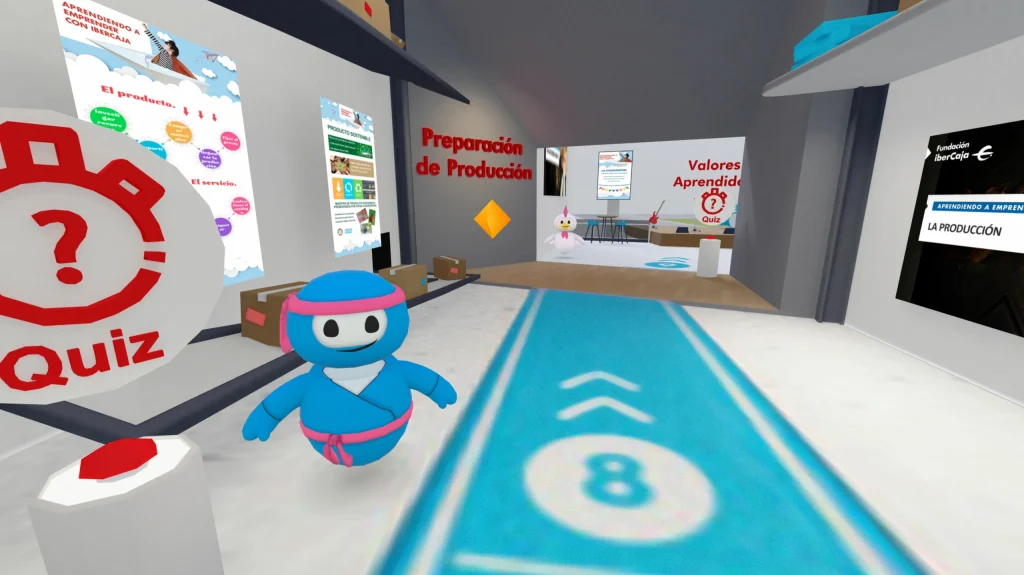
The technology for children allows them to experience and learn through hands-on experience. . Encouraging the exploration of technological tools such as programming or the creation of digital content is essential to enable their learning and creative development in an effective and controlled manner. This experimentation thanks to technology can also reach other areas, such as the business and entrepreneurship as in the case of the Ibercaja Foundation Learning to undertake which has both a virtual campus and a fair of cooperatives from different schools that can be accessed online.
Supervise the use of technology
It is essential that parents supervise their children's use of technology, monitoring the applications and platforms they use. With tools such as virtual tutors for children, it is possible that The youngest children can interact with, for example, Artificial Intelligence, in a controlled environment designed for them. Where inappropriate content has been filtered out and where the digital experience is intended to be educational and close to them. An example of AI developed for children can be found at Nougat the avatar IA storyteller of La Torre Outlet .
Providing various options
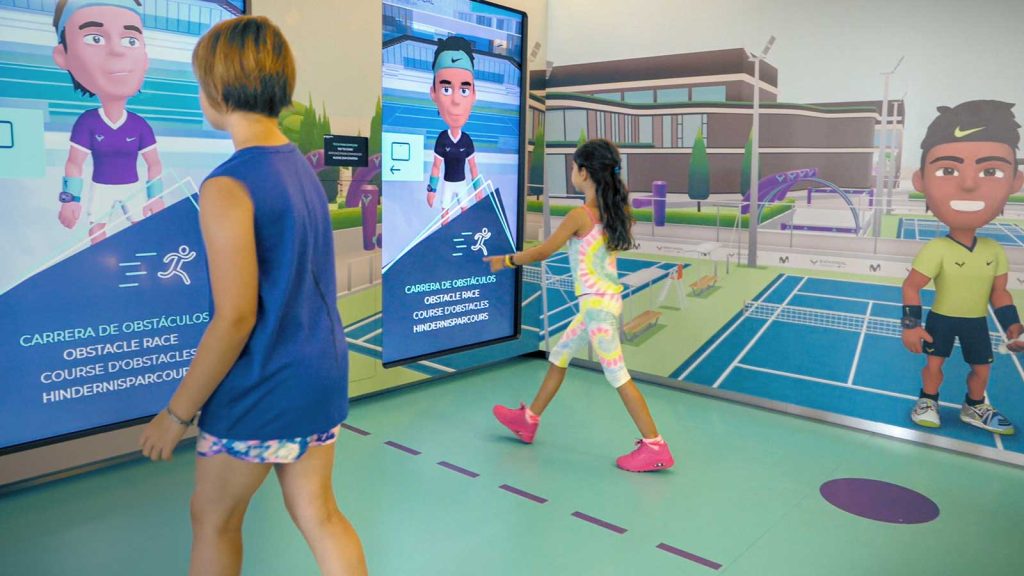
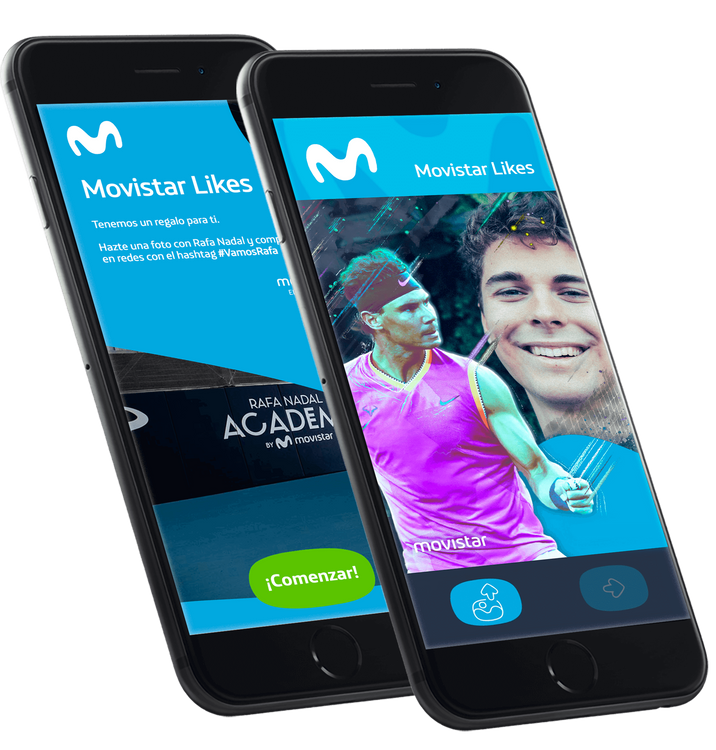
To offer a variety of experiences is key to children's development. With technology, we can encourage interaction with different tools, seeking to promote fast and effective learning in an immersive and educational way. From interactive avatars to virtual environments, to more physical experiences in the real world. One example of this is the technological development for the Rafa Nadal Museum . Where the museum experience is transformed to to turn it into a sporting event for the whole family. Playing tennis, soccer, basketball... with Rafa Nadal himself. .
The benefits of technologically accompanied children
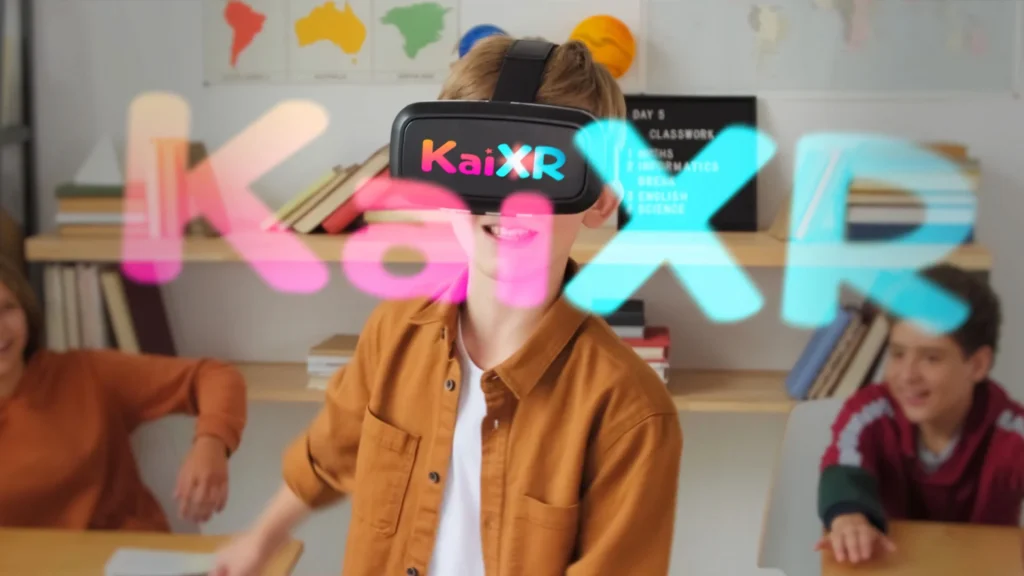
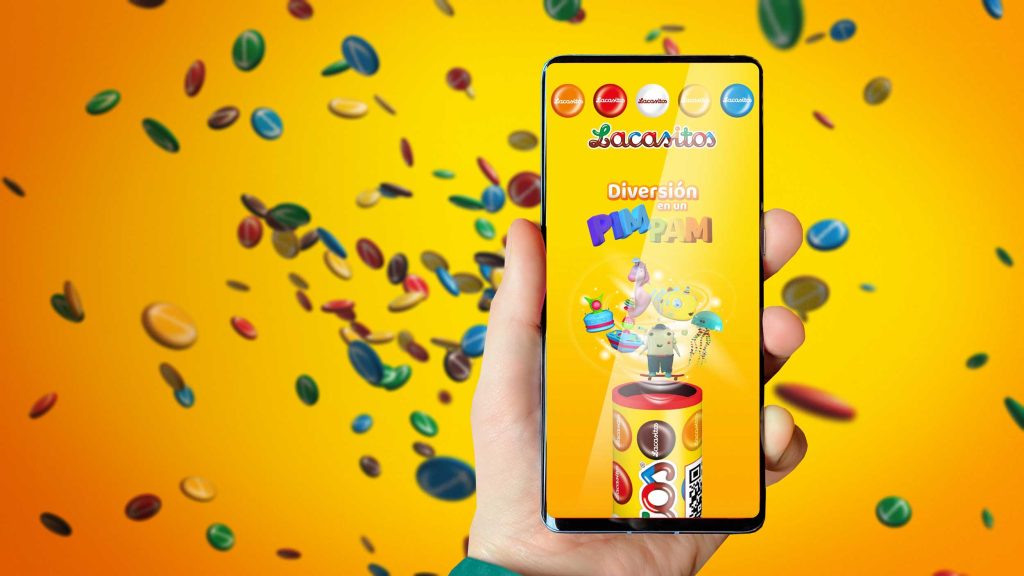
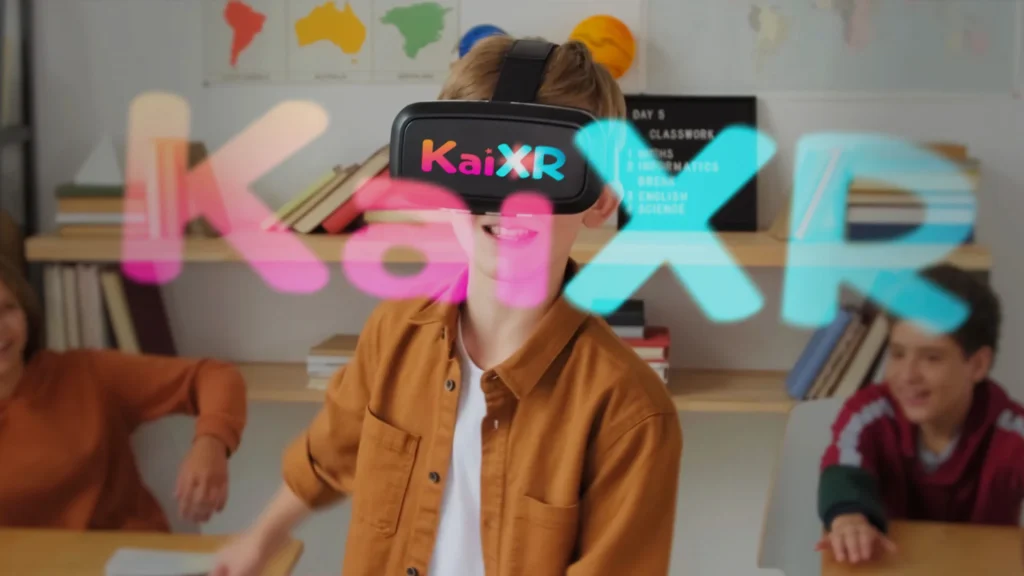
Technology for children, when used properly, offers numerous benefits that go beyond the educational realm, aiding in their cognitive, emotional and social development. Tools such as the Virtual Reality y la Augmented Reality provide immersive experiences that allow children to interact with their environment in new and stimulating ways. A clear example of how Virtual Reality can enhance learning and development is the project developed by KAI XR, an educational VR platform for children that allows them to to know first hand the Pyramids of Egypt the seabed and even space. On the other hand, the Augmented Reality integrates the digital with the physical environment, allowing children to interact with virtual objects and characters in the real world. As in the case of Lacasitos App where children can interact with different cartoons through its iconic tubes of chocolate dagrees. This combination of technology makes the learning to be more attractive It also fosters curiosity, problem solving and the development of essential technological skills for the future. With the right accompaniment, technology becomes a powerful tool for the integral growth of children.
Adapting Technology for Children: Practical Examples from Imascono
At Imascono, we understand that technology must be a tool that not only entertains, but that also educate, inspire and support development children's integral development. Since we launched the Chromville educational app in 2013, which at the time had more than 1 million downloads and a presence in more than 120 countries, children have always been part of the spirit and philosophy of Imascono's technology. . Together with Disney, Fundación Ibercaja and different public administrations, we have worked on the creation of innovative solutions that address diverse needs and contribute to meaningful learning . Here we would like to introduce you to some of them examples of how we adapt technology for the benefit of young people:
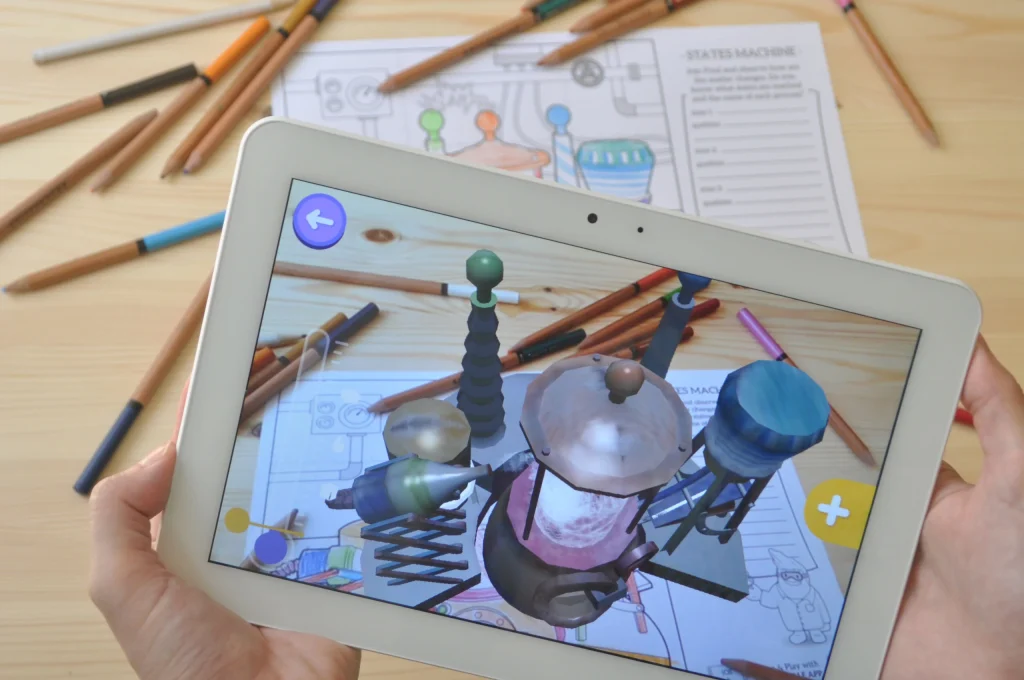
Chromville→ Aplicación educativa de Realidad Aumentada en la que los dibujos coloreados por los niños cobran vida en 3D. A través de sus diversas temáticas (naturaleza, tecnología, cuerpo humano o el espacio) los niños aprenden a desarrollar su creatividad e imaginación.
Tu cuento en la cocina → ¿Te imaginas cocinar tu plato favorito junto a Mickey Mouse, Tony Stark o Elsa? Puedes hacerlo con la app Tu Cuento en la Cocina desarrollada para Disney, Ferran Adriá y Telefónica. Todo a través de una cocina virtual en la que podrás jugar en familia y hacer tu propio libro de recetas en formato cómic.
ApeTest → En el ámbito de la salud mental, destacamos el proyecto llevado a cabo por la Fundación APE y el Instituto de Investigación Sanitaria de Aragón, ApeTest. Una webapp interactiva preparada para la detección de casos de TDA entre niños y adolescentes. Adaptando los tradicionales cuestionarios clínicos al mundo virtual.
These projects are just a few examples of how Imascono adapts the technology for the benefit of children, creating solutions that are not only innovative, but that also foster their integral development in an environment that is environment safe and controlled . Are you interested in learning more about how to implement new technologies in children's development ? Discover our digital product lines and get in touch with us. contact with us . Our team of engineers and designers will be happy to answer all your questions.
5 key e-commerce trends for online success
The e-commerce is in the midst of a revolution. Digitization, AI and hyper-personalization are redefining the way consumers buy and brands sell. We are coming from a time of peak e-commerce growth. Now the marketplace is more mature and competitive, so adapting to the new ecommerce trends is not an option, it is the key to stand out and turn every click into a business opportunity. In this article we explore the 5 ecommerce trends and how to apply them strategically to attract, retain and sell more. From Artificial Intelligence and automated personal shoppers to blockchain, Augmented Reality and personalized conversational commerce. These innovations represent the cutting edge of ecommerce innovation The new technology, allowing brands to offer unique and differentiated experiences. Here are some real success stories and the technologies that are shaping the future of the ecommerce innovation .
Why is it important to adapt to new ecommerce trends?
E-commerce is evolving at a dizzying pace. What worked a couple of years ago may be obsolete today. Digitization has empowered consumers The company's customers, who are looking for seamless, personalized and convenient shopping experiences. Failure to adapt to new trends means losing competitiveness and, in the worst case scenario, to lag behind in an increasingly demanding market. Brands that innovate and embrace change not only sales increase but also strengthen your relationship with your customers and build a community of loyal consumers. We must anticipate the user's needs and offer him what he is looking for before he asks for it. You may be interested in → Customer experience: how to improve it through extended reality .
How ecommerce technology boosts sales
The ecommerce technology is transforming the way brands connect with their customers, improving the shopping experience and increasing conversions. Tools such as Augmented Reality, Experiential Marketing and AI avatars enable the creation of personalized, immersive, real-time experiences. These solutions represent a clear example of ecommerce innovation The new technology, enabling retailers to offer interactive environments where users can view products, try them virtually, and receive recommendations tailored to their tastes. The automation of customer service through intelligent avatars is revolutionizing the sector by providing 24/7 support and accompany the user throughout the entire purchasing process. Cases of AI avatars as that of Turrón, the virtual mascot of La Torre Outlet The new digital marketing strategy, which is based on AI and augmented reality, demonstrates how the combination of AI and augmented reality can generate unique experiences, improve loyalty and boost sales results in the digital environment. Access to our augmented reality services and find out how you can achieve success in your e-commerce through this technology.
5 ecommerce trends and how to apply them to your business
Ecommerce is constantly evolving, and brands that are ahead of the curve are dominating the market. The key? Adopt the technologies and strategies that are revolutionizing the online shopping experience. Here's what you need to know 5 must-have trends and how to implement them.
Artificial intelligence and hyperpersonalization
AI is redefining ecommerce, enabling shopping experiences hyper-customized by analyzing user behavior in order to recommend products, personalize emails and optimize prices in real time. Thanks to intelligent agents and virtual personal shoppers, personalized recommendations and machine learning to predict trends.
Blockchain in payments
The blockchain technology is revolutionizing payments in e-commerce, offering safer, faster and more transparent transactions . By integrating blockchain, e-commerce can guarantee the authenticity and security of transactions, eliminating intermediaries and reducing the risk of fraud. By accepting cryptocurrencies and using blockchain to automate payment and logistics processes In addition to improving efficiency, brands not only improve efficiency, but also increase consumer confidence by offering a more agile and secure shopping experience.
Omnichannel experience and sales
Today's customer does not differentiate between physical store, app or web: expects a seamless and personalized experience across all channels. . The omnichannel improves user satisfaction and increases conversions and loyalty by synchronizing stock and prices across all sales channels and personalizing the experience with CRM. To learn more about this trend visit our → article. Immersive technology applied to trade marketing: activate your brand at the point of sale
Realidad Aumentada en ecommerce
Augmented Reality allows customers to "try" products before they buy them eliminating uncertainty and improving the shopping experience. From trying on clothes to viewing furniture at home, AR experiences are transforming online conversion. If you want to go deeper in this line, we invite you to read our post Virtual fitting rooms as a trend in the retail sector
Virtual sales assistants
AI has turned virtual avatars in real purchasing advisors available 24/7 . Automate responses, guide the customer in their decision and streamline the buying process on the web and social networks. An fast and efficient service translates into more sales and satisfied customers. In addition, these intelligent agents have the entire information base about the brand and products as a training source, so they are able to serve users in detail. Both end customers and internal staff looking for support or guidance on what to recommend to a specific person. Don't miss our article about How to implement automation in companies and maximize its impact
Conversational commerce
Brands no longer sell only on their website, but also in chats, DMs, voice assistants such as Alexa or Google Assistant and even through virtual avatars that act as true brand ambassadors. Seeking to achieve fluid conversations, instant support and automated direct sales. Making the whole process more interactive, immediate and memorable. An example of these conversational assistants can be found at Smoky, the virtual chef of Nola Smoke that helps you to decide which is the best burger for you, based on your tastes and preferences.
What does the future hold for ecommerce?
Now that you know the main trends in e-commerce, you've noticed that its future is shaping up with advances that drive the technology and innovation in ecommerce completely transforming the shopping experience. Automation, Artificial Intelligence and personalization will take center stage, enabling online stores to anticipate customers' needs by means of predictive algorithms. In addition, the integration of physical and digital will offer unprecedented immersive experiences, eliminating traditional retail barriers. A prime example of this evolution is the Lékué Virtual project where a new immersive 3D virtual showroom which allows users to explore and discover products interactively, enriching the online experience. Likewise, the adoption of technologies such as the blockchain is redefining trust and security in transactions, creating a more transparent environment for consumers. Brands that embrace the technology and innovation in ecommerce will lead the digital transformation of the industry in the coming years.
How to implement these trends with innovative technologies
To stay at the forefront of ecommerce, it is essential to integrate emerging technologies that enrich the user experience and optimize business processes. Throughout this article, we have learned about some of the success stories of Imascono that exemplify these trends . However, here are some other retail and e-commerce projects that are representative of this technological trend.
Ecommerce Transformation Success Stories
These are some of the main examples of Imascono a leading company in the design and development of interactive products and experiences for companies in the field of Retail and Leisure.
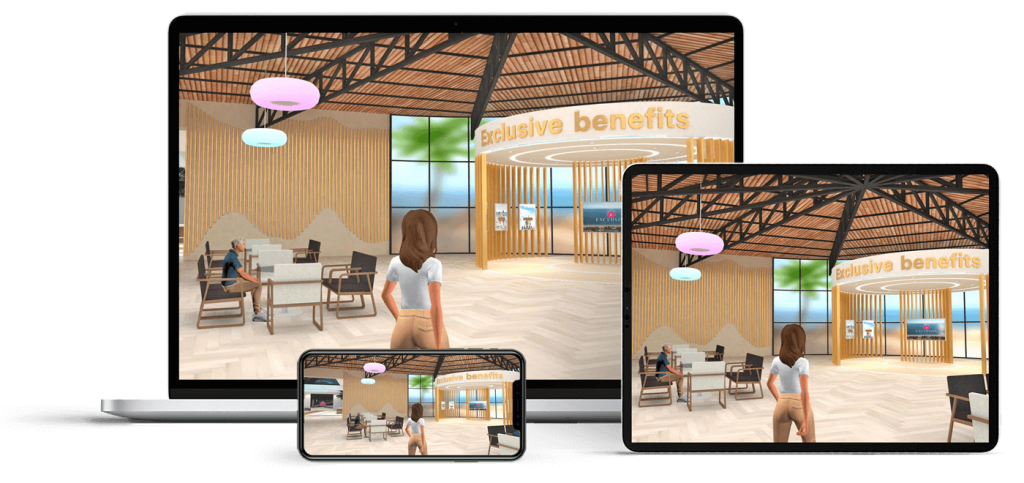
Exclusiverse → Este entorno digital permite a los miembros del Exclusive Traveler Club acceder a experiencias exclusivas, gestionar sus membresías digitales mediante tecnología blockchain y participar en actividades y eventos interactivos. Diseñado para ofrecer una conexión continua con la comunidad de viajeros, Exclusiverse extiende la experiencia de viaje más allá del destino físico, creando un punto de encuentro y conexión con la marca accesible desde cualquier dispositivo.
ElBulliFoundation → Imascono colaboró con elBullifoundation and Telefónica para digitalizar y preservar el legado culinario Ferran Adrià en el elBulli. Mediante una plataforma interactiva, y a través de un museo virtual, un avatar 3D y una colección de NFT´s, dando acceso a una plataforma para adquirir artículos digitales que fusionan gastronomía y arte digital, redefiniendo el valor y la propiedad de la economía digital.
Lacasitos App → Lacasitos App es una aplicación móvil de Realidad Aumentada diseñada para transformar la experiencia de los más pequeños con la marca Lacasitos. Al escanear el código QR de los tubos, los niños pueden interactuar con cinco personajes animados que cobran vida a su alrededor. Esta iniciativa no sólo revitaliza el packaging del producto, sino que también fomenta la creatividad y el juego interactivo.
Do you want to take your e-commerce to the next level with innovative technologies? At Imascono We create virtual experiences that transform the relationship between brand and client. Contact with us and find out how we can boost your business. The future of e-commerce starts today!
Customer experience: how to improve it through Extended Reality
The customer experience has become a decisive factor for the success of any business in the digital age . Today's consumers are not only looking for quality products or services, but also for emotional connections and memorable experiences that reinforce their relationship with brands. In this context, Extended Reality (XR), which encompasses the Augmented Reality (AR), the Virtual Reality (VR) and the Mixed Reality (MR), together with the Artificial Intelligence are presented as powerful tools to transform the way brands interact with their audiences, offering immersive and personalized experiences. In this post we will analyze in depth the term customer experience and the changing trends among consumers . In addition, we will see how the retail industry is evolving and the role that Extended Reality, among other technologies, plays in changing customer interaction. Ready?
What is customer experience
The customer experience, or customer experience, is the set of perceptions, emotions and sensations that a customer has throughout their interaction with a brand, product or service. This includes every point of contact, from the first encounter with the brand through to after-sales, and covers both rational and emotional aspects . It includes aspects such as customer service, product or service quality, ease of use and the emotional bond that is created. Its main objective is to offer a memorable, personalized and consistent experience that fosters customer loyalty, satisfaction and commitment to the brand. The customer experience is one of the most important relevant in a company because it makes increase the value of companies and, consequently, sales and the number of consumers also increase.
5 keys to Extended Reality to stimulate the customer experience
Before learning how Extended Reality is impacting the enterprise customer experience, it is important to review what this technology is all about. The Extended Reality is a general term that encompasses all technologies that combine the physical and the virtual to offer immersive experiences . It is composed of the Virtual Reality (fully immersive digital environments), the Augmented Reality (digital elements on the reality itself) and the Mixed Reality (combines the real and the virtual in an interactive way). In relation to the customer experience of brands, the Extended Reality (XR) becomes an essential tool to create a better customer experience. memorable, immersive and personalized interactions with users. Here you have FIVE KEYS to use Extended Reality in customer experience :
Personalización
The Extended Reality drives personalization in the customer experience by enabling experiences tailored to customers' individual preferences, personalities and needs. Providing them with unique experiences. With technologies such as Augmented Reality or the Spatial Computing customers can test products virtually or receive personalized recommendations based on real-time data. This not only improves customer satisfaction, but also strengthens the emotional bond and loyalty, highlighting the brand in an increasingly competitive market.
Improved customer support
The combination of Extended Reality and Artificial Intelligence is revolutionizing customer support by offering more immersive, personalized and efficient solutions. On the one hand, the Extended Reality enables visual and hands-on experiences such as guides and interactive infographics to resolve doubts or detailed instructions for complex products. On the other hand, the Artificial Intelligence improves immediacy and accuracy of assistance through intelligent chatbots The new technologies, hyper-realistic avatars and natural language processing, are capable of answering questions and solving problems in a way that is tailored to each customer. Together, these technologies not only optimize support, they create more human, memorable and satisfying interactions. If you are interested in this topic, you can continue to learn more about the use of Artificial Intelligence in customer service at Avatars with Artificial Intelligence: definition and main uses .
Interactividad
The incorporation of Extended Reality in the customer experience of the brands allows for go from the storytelling at storyliving significantly increasing the interaction of users with products and services. Thus, customers move from a passive to an active role. With tools such as Augmented Reality and Virtual Reality, users can interact directly with products, explore virtual environments or participate in gamified experiences, creating a deeper bond with the brand. These activities not only enrich engagement, but also improve brand perception and strengthen the relationship with the audience. Thus, it facilitates a bidirectional communication between the brand and the customer, allowing immediate feedback.
Increased confidence
Extended Reality enhances confidence in the customer experience by providing customers with a more transparent and tangible shopping experience with products or services . These immersive technologies allow you to visualize how an item will fit into your environment before you buy it through AR experiences, or offer simulations that allow you to explore features in detail. This reduces uncertainties and improves informed decision making . If an AI-based virtual shopping assistant is added to these actions, it is possible to solve their doubts about the product and service in real time and in a personalized way. This type of interaction reinforces authenticity and perceived quality, so brands can build a stronger relationship of trust with their customers.
Automation and efficiency
Today's consumer is looking for speed and personalization of the shopping experience, two points in which Artificial Intelligence applied to commerce and retail plays a key role. Its combination with Extended Reality makes the automation and customer experience efficiency, streamline processes and optimize resources. AI automates routine tasks such as initial customer service through chatbots and virtual assistants, providing fast and accurate responses. By integrating with Augmented Reality services or Virtual Reality, these technologies allow automated visual guides , interactive simulations and real-time solutions that resolve questions or problems autonomously. This approach reduces waiting times, improves operational efficiency and ensures a smoother and more satisfying customer experience. Learn about the latest in the digital world in our article Virtual Influencers as a trend in Social Networks .
Future of customer experience with Extended Reality
As the Extended Reality evolves, the The future of the customer experience promises to be more immersive, personalized and fluid than ever before. The immersive technologies we have seen throughout the post will provide customers with more tangible and dynamic ways to interact with products and services, completely transforming their relationship with brands. From the possibility of exploring hyper-realistic virtual brand environments and test products before you buy them, until you receive virtual assistance in real time, these technological experiences will enable companies to connect emotionally with consumers and tailor purchasing actions to their individual needs. In this scenario, the Artificial Intelligence (AI) will play a crucial role in leveraging the XR's capabilities to deliver smarter and more efficient experiences . Artificial Intelligence will analyze the behavior, preferences and needs of each user, personalizing each interaction. Integrated with Extended Reality, it will allow consumers to adjust and configure products interactively, ensuring more informed purchasing decisions. In addition, the AI will optimize customer support through advanced virtual assistants and avatars automatic analysis and personalized attention in real time. Reducing friction in the purchasing process and improving operational efficiency . This future, where technology and personalization combine, redefines the relationship between brands and customers, delivering more seamless, memorable and satisfying experiences than ever before.
Examples of customer experience improvement through Extended Reality
Throughout this article, we have explored in depth the different ways in which the Extended Reality impact and improve customer experience for brands . Below, we will see the most relevant success stories that have been implemented by different companies in different sectors. Here are 5 examples of customer experience improvement through Extended Reality:
Cervantes IA, es un claro ejemplo de cómo la Inteligencia Artificial mejora la experiencia del cliente como avance en la tecnología del turismo. Este avatar hiperrealista de Miguel de Cervantes transforma la visita al Alcázar de San Juan, reemplazando las guías tradicionales con la interacción directa con el célebre escritor. Así, los turistas disfrutan de una experiencia única y emocionalmente enriquecedora en Castilla-La Mancha.
En la industria de la tecnología para retail encontramos el ejemplo de La Torre Outlet, en el que la experiencia del cliente se transforma digitalmente integrando diferentes tecnologías de vanguardia. La app, la web, la recreación virtual, los photocalls de Realidad Aumentada y las pantallas interactivas repartidas por todas las instalaciones se gestionan desde una misma plataforma. Todo un ejemplo de revolución en el customer experience en un centro comercial. Además, el centro comercial cuenta durante la campaña navideña con una mascota y asistente IA muy especial: Turrón, el zorrito simpático que te cuenta cuentos, comparte tus deseos con Papá Noel y los Reyes Magos y te ayuda a encontrar tu regalo perfecto.
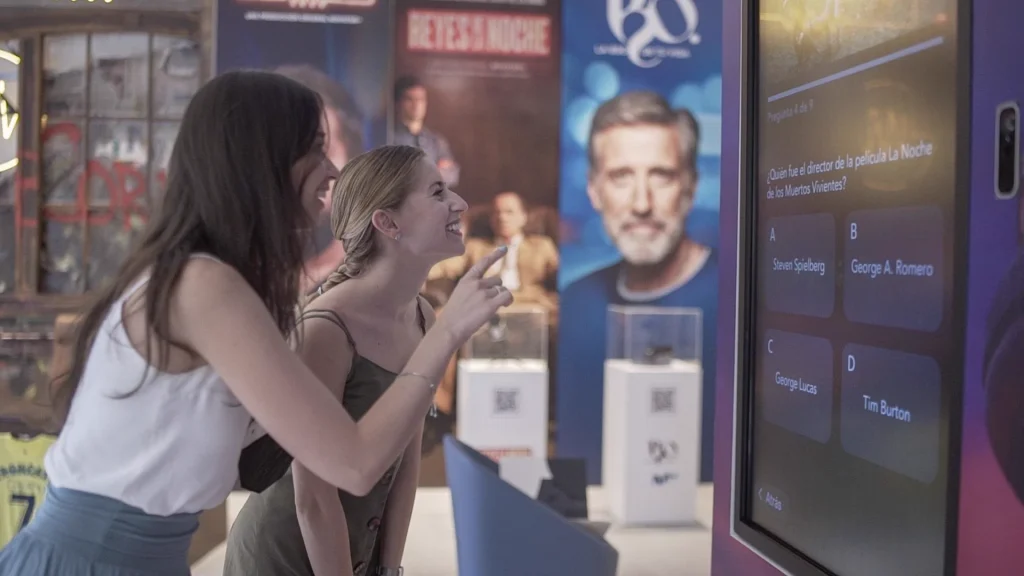
También en el retail destaca el proyecto de Movistar Plus en las Tiendas Emblemáticas, donde a través de experiencias gamificadas, los clientes podían vivir de cerca los contenidos interactivos de sus series y programas favoritos como “La Resistencia”, “Paraíso”, “BSO” y “Reyes de la Noche”.
Esta revolución en el customer experience también llega a la tecnología en el sector industrial. Un ejemplo de ello lo encontramos en Iris 360, la nueva plataforma virtual de Libelium para dar a conocer toda su gama de productos y servicios IoT de forma interactiva. A través de una infografía 3D, los usuarios exploran una ciudad virtual que ilustra el funcionamiento e impacto de sus productos IoT en una smart city virtual.
Por último, cabe destacar el proyecto Exclusiverse del club de viajeros Exclusive Traveler Club. Su nueva sede virtual que transforma el customer experience de los miembros. Al incorporar las membresías digitales y el espacio virtual, los usuarios pueden explorar ofertas de viaje, consultar beneficios exclusivos y participar en actividades y eventos comunitarios.
As we have seen, the Extended Reality, Artificial Intelligence and technology in general, have a key role to play in the transformation of the customer experience of companies. Through these interactive experiences, it is possible to improve the interaction with customers, being much more creative, closer and personalized. At Imascono we are specialized in the development of Extended Reality products for companies. After more than thirteen years in business and a team of 30 engineers, we are capable of developing any kind of experience based on this set of immersive technologies through our virtual reality services and increased. Do you need to transform your customer experience? Contact with us and we will help you find the customer experience that best suits your brand and, above all, your users.
Immersive experiences through the Apple Vision Pro
Digital entertainment and leisure have moved from the storytelling to storyliving . From being mere spectators to being part of the action. Over the last few months we have seen how the Apple Vision Pro are impacting the business world. But what about at the entertainment level? In today's article, we will take a closer look at the latest news from the Apple Mixed Reality glasses the latest developments of the Spatial Computing and, above all, we will look at the most cutting-edge success stories from the world of entertainment. Cinema, television, sports and music are being transformed. All thanks to the new immersive proposals.
What are Apple Vision Pro?
The Apple Vision Pro are the glasses of Mixed Reality that go beyond Augmented Reality and Virtual Reality to interact with digital content in the real world. They work with the operating system visionOS and use cameras, sensors and high-resolution micro-OLED displays for superimposing virtual elements on the real world or immersing the user in fully digital environments . Interaction is done without remotes, through gestures, eye movements and voice commands, and its light and comfortable design includes an external battery with two hours of autonomy. They are designed for professional level use, focusing on the productivity in the training and in the communication . However, its graphic quality and immersion for the user positions it as one of the most interesting VR goggles for the entertainment industry. You may be interested in → What is Spatial Computing and its importance today?
¿Qué es la Realidad Mixta?
We can't talk about the Apple Vision Pro without mentioning one of the most important technologies behind its performance: the Mixed Reality . This is an immersive technology that seeks to combine in the same system the interaction of the Virtual Reality with the visual power of the Augmented Reality . That is to say, to unite the best of both technologies in one, to merge the real world with the virtual one. Where the user interaction is with both worlds at the same time. This technology uses advanced devices Apple Vision Pro, such as Apple Vision Pro, motion sensors and spatial mapping systems, for accurate, real-time interaction. Your applications cover different sectors such as education, entertainment, medicine and marketing, allowing for simulations, hands-on learning and immersive experiences that increase knowledge retention and creativity. Visit our post Mixed Reality: Definition, characteristics and examples to learn more about this technologyOn the other hand, we find the Spatial Computing or spatial computing. A concept of spatial informatics that refers to the advanced data processing that fuses the physical with the digital allowing a more natural interaction with them. All through gestures, eye movements and voice commands.
How Mixed Reality and Spatial Computing Revolutionize Digital Entertainment
The digital leisure has transformed the way in which people enjoy our free time We access culture and, above all, we interact socially. This type of leisure takes advantage of the capabilities of the internet and the new technologies to connect with the audience , customize the contents and offer new and surprising multimedia content . This has opened up new opportunities for entertainment companies and the corporate arena in general to connect more effectively with their users and customers. The Apple Vision Pro are driving this transformation by offering a new form of entertainment centered on the digital world and based on electronic devices. The video games Thanks to this hardware, they are increasingly immersive and realistic. The movies and series 100% audiovisual experience focuses on the user, his point of view and his immersion in the story. Assuming a increased emotional connection in the positive impact on the user and in the commitment to a new communication, sales and connection channel in the omnichannel strategy .
Different applications of the Apple Vision Pro
As we have been discussing throughout the post, Apple Vision Pro allows infinite immersive solutions that open new possibilities in the entertainment industry. Below, we would like to present some of the most relevant examples and success stories.
Deportes
The sports entertainment can be transformed with Apple Vision Pro by delivering immersive and personalized experiences. For example, spectators could virtually attend a game from any angle, feeling like they are in the front row thanks to Mixed Reality. They could overlay real-time statistics, interactive replays and unique camera perspectives while watching the game. The NBA in collaboration with Apple, has created an experience that makes these last points possible, allowing users to experience the games live as if they were present at the stadium. On the other hand, Sense Arena NHL has developed 3D simulations designed to train ice hockey players, offering them the chance to practice key skills such as skating, passing and shooting.
Música
The Apple Vision Pro revolutionizes music with the immersive video clips and exclusive concerts in Mixed Reality. Users can feel inside the stages, interact with 3D effects and experience concerts from unique perspectives, either in the front row or face-to-face with the artists. Creating musical experiences never seen before. Experiences such as the video clip Open Hearts by The Weeknd . It was recorded with Apple Immersive Video, a 180-degree ultra-resolution multimedia format with Spatial Audio, which is part of the iPhone 16. In this immersive experience, users are immersed with the artist in a fascinating musical journey accompanied by a landscape inspired by the downtown Los Angeles skyline.
Cine
With Apple Vision Pro, the fourth wall is broken and the viewer becomes a living part of the content. The cinema becomes immersive. It also offers interactive content, such as alternative endings or personalized perspectives. Taking storytelling to a new level. An example of this can be found in the collaboration between Red Bull and Apple with the new exclusive sports series for its Vision Pro device. In the "Boundless" In the Arctic, the user will be able to experience surfing in the cold waters of the Arctic, and the "Red Bull: Big Wave Surfing". the giant waves at Teahupo'o. On the other hand, we find the short film Submerged in which the protagonist finds himself inside a submarine during World War II. Or the documentary Wild Life where users are immersed to experience nature in a more intimate way. Allowing them to meet some of the most amazing and unique animals on the planet, along with the experts who know them best.
Immersive Imascono experiences in Apple Vision Pro
At Imascono we are experts in the development of immersive experiences through Mixed Reality. Since the arrival of the Apple Vision Pro and the rest of VR/MR glasses, we have seen how the real and virtual worlds are becoming more and more interconnected. This is a whole new era for entertainment. Among the proposals that we have already developed for the Apple Vision Pro we find the Aquarius Experience: Spatial Computing . A visit to the facilities that combines Mixed Reality with Artificial Intelligence. An innovative project in which, thanks to technologies such as the Apple Vision Pro visitors can immerse themselves in a unique immersive experience. This proposal allows visitors to explore a coral reef with ammonites from more than 200 million years ago, interact with a life-size elephant or go into the heart of an erupting volcano. If you would like to find out more about these or other of our experiences on the Apple Vision Pro our engineers and designers will be happy to answer all your questions and find out how we can adapt our products to your needs. Mixed Reality solutions to your company's specific needs. ¡ Contact with us and we will take your company into the new virtual universe!
Immersive learning as an educational alternative
Immersive learning as an educational alternative
The digital transformation has reached all sectors, including the education sector. Technology and computer science have not only become key subjects for students, they are also an important part of the teaching methodology itself. The distance learning, customized Artificial Intelligence tutors, interactive experiences, educational video games ... are different uses of technology that are transforming classrooms. Among them, immersive learning stands out, both at the school level and in employee training. These innovations promise to create more personalized, interactive and accessible learning experiences revolutionizing the way we learn and teach. In this article, we will take a closer look at the advantages and opportunities offered by immersive learning . Not only as an educational alternative, but also as a complementary methodology to traditional teaching methods. Its combination, physical-digital, is synonymous with motivation, to put into practice the lessons learned and to deepen the subjects in a fun and entertaining way.
What is immersive learning?
Immersive learning is the educational approach that seeks to create interactive, immersive learning environments that encourage the active participation of students in the learning process . Immersing students in virtual scenarios where they can experience and discover concepts in a practical and tangible way. Students are immersed in situations that test their skills, knowledge and senses. This favors the implementation of the subject matter, the assimilation of concepts and the knowledge of new challenges. Students not only observe or listen, but also live the educational experience. Facilitating the learner to empathize more with the content.
Benefits of immersive learning that you should know
Incorporating this type of education is a major step forward for the schools, universities and companies that are committed to the internal training of their employees . A step that offers a series of educational benefits that can be summarized as follows:
1. Learning by doing
Immersive learning means that, more than ever before, we are putting into practice the learning by doing (learning by doing), turning the way we are used to learning upside down. The immersion offered by these technologies opens up a new range of educational experiences that facilitate knowledge retention and increase student interest. Thanks to the innovations of the Extended Reality teachers can enrich and deepen the learning programs, being able to teach with the support of holograms, in Artificial Intelligence tutors/avatars or in virtual simulations designed so that the student autonomously internalizes the knowledge while testing it. As in the Virtual Training developed by Boehringer Ingelheim .
2. Encouraging creativity
One of the key benefits of immersive learning is the ability to enhancing students' creativity, curiosity and motivation in the classroom . Through these experiences, they discover new ways of seeing and understanding the subject, encouraging them to continue discovering and wondering what lies behind. Demonstrating that play and technology are great ways to learn. The best example is found in Chromville a creative learning app based on coloring sheets whose characters come to life through screens and educational games.
3. Expansion of the educational experience
With the entry of the immersive learning in educational programs The new technology changes the way children and students learn about the world. With this technology they can visit any country or travel to the past, the future or other planets, all without leaving the classroom. Thus allowing them to expanding the educational experience , experiencing new situations firsthand and to understand in a simple way more complicated academic concepts. Among the educational projects of this type that are already underway is the Kai XR platform . Where, through Virtual Reality, every child can live different educational experiences. Visit the top of a windmill or watch a rocket being prepared for launch as a member of NASA.
4. Gamificación del aprendizaje
Immersive learning is undoubtedly one of the main avenues for the gamification of educational systems . This trend unifies all the techniques and uses of the mechanics of video games in actions and sectors, until now, alien to this playful world. By transferring the more entertaining challenges and rewards to professional education and training. One of the educational programs that has already been launched and that explores the possibilities of gamification is the virtual space of Aprendiendo a Emprender by Fundación Ibercaja . A virtual campus designed for schoolchildren The program is aimed at 10 and 11 year olds and through challenges, quizzes and levels brings the world of business closer to schools. You may be interested in → Virtual Reality in education: features and benefits
Key Extended Reality technologies for immersive learning: examples
Immersive learning, as we have seen so far, is based on the union of the real world and the virtual world to enhance the involvement, motivation and deepening of the students' knowledge of the subject matter . Immersive learning has become one of the main future trends in the education sector. This is based on different Extended Reality technologies such as: Students are immersed in situations that test their skills, knowledge and senses. This favors the implementation of the subject matter, the assimilation of concepts and the knowledge of new challenges. Students not only observe or listen, but also live the educational experience. Facilitating the learner to empathize more with the content.
Virtual Reality
One of the main technologies of immersive learning is the Virtual Reality . Its potential at both the educational and professional levels lies in the possibility of developing simulations and immersive training . In the industrial sector, immersive VR learning offers the possibility of autonomously train in complex and/or dangerous tasks The company's own machinery is used for this purpose, without the need to allocate extra resources such as trainers or the machinery itself. Among the solutions and examples of immersive learning already developed in this area are all of the Virtual Training line . Customized Virtual Reality training companies in different industrial sectors, such as the automotive industry, the professional training of Global Spedition's employees .
Realidad Aumentada
The Augmented Reality offers the possibility of approaching the real world from new perspectives and with new eyes. combining the real world with the virtual world, creating environments full of information that add value to educational activities. Instead of viewing simple images on the projectors, you can show three-dimensional models of outer space, parts of the body, geometric figures or even historical moments, as if they were in the classroom itself through Augmented Reality devices, from Mixed Reality or of Spatial Computing . You can learn more about this technology at features and benefits of Augmented Reality in education .
Metaverse and virtual spaces
In the education of future generations, the Metaverse not only enables the development of more immersive and interactive experiences. It also allows recreate environments and even virtual campuses that, in an active and personalized way, feed the curiosity and involvement of the students. This is essential for immersive learning. This allows, in the same space, the student to have access to all content, attend online classes, always have the support of your AI avatar/assistant at your disposal and find a meeting place with the rest of your classmates. Virtual spaces such as KAI XR Create, an educational virtual world where it is the students themselves who build it while developing their intelligence and spatial vision, as well as their digital skills.
Artificial intelligence
If there is one technology that is revolutionizing the present and future of education, it is Artificial Intelligence. From customizing the educational experience or automating repetitive tasks Artificial Intelligence applied to education offers great advantages for our educational systems. Such as the possibility of developing a new form of personalized tutoring through AI avatars. They can answer their doubts, offer them advice and even ask them questions to help them internalize the subjects. All this, in addition, with the registration of their scores and evaluation, developing a database on the evolution of their learning that helps teachers to receive a personalized analysis of each student. Training-focused avatars such as IRIA, the newest member of the Iveco Academy team. Discover the AI potential in this area in our content → Advantages and disadvantages of Artificial Intelligence in education .
Challenges and future of immersive learning
Education is living a time of great changes and revolutions. Online classes, microlearning, autonomous training, gamification, Virtual Reality simulations... different uses of technology applied to training that present great challenges and opportunities for educational methodologies and programs. All players in the education sector, in one way or another, are going to evolving towards more immersive and personalized learning models for each learner . Therefore, it must be taken into account:
Tendencias emergentes. Cada día surgen nuevas e interesantes propuestas educativas basadas en tendencias emergentes en este ámbito, entre las que en este artículo destacamos el aprendizaje inmersivo.
Innovaciones tecnológicas futuras. El análisis de datos, los futuros avances en Inteligencia Artificial, la tecnología Blockchain en temas de seguridad y certificación de diplomas y documentos… son muchas las innovaciones tecnológicas que marcarán el futuro de la educación.
Imascono immersive learning projects
Either through simulations and virtual training , customized training materials , gamified trainings or Artificial Intelligence tutors immersive learning projects are already a reality in the educational world. And they are going to be a revolution in the future of education. At Imascono we believe that immersive learning offers major advantages and opportunities for transforming teaching methods we all know. We seek to be more aware of the different rhythms of each student, and also through our artificial intelligence services for companies among others, you will be able to go a step further in the deepening of the students in the different subjects. Would you like to learn more about our educational projects based on immersive learning ? Contact with us and our engineering team will be happy to answer all your questions.
Generative Artificial Intelligence: definition and main applications
Generative Artificial Intelligence: definition and main applications
If there is one trend and one area of development that has revolutionized the entire technology sector, it is Generative Artificial Intelligence . Until not so long ago, it was a term unknown to the general public. Now, it is the basis of many companies, business models, creative departments and marketing campaigns. Generative AI has transformed the way we understand and interact with technology. This is undoubtedly one of the most promising branches of Artificial Intelligence today. In essence, Generative Artificial Intelligence (GAI) is capable of generating texts, images, videos, music, code... All starting from a few previous contents, a basic training and prompts or specific instructions that help to generate a customized and adapted response to the needs. In today's article we will take an in-depth look at what Generative AI is all about and we will see in detail its main applications and examples in different business areas , from the marketing and customer service departments to product innovation and development.
What is Generative AI?
To the question about what is Generative Artificial Intelligence, we could say that it is the technology that is transforming the world of creativity and innovation . Two points that, until now, were reserved for human intelligence. Using models of advanced machine learning , Generative AI can create new and original content, from text to music to images, from existing prompts and data. This type of AI not only replicates learned patterns, but can also innovate and produce unique results, making it especially valuable for businesses. Not only to optimize processes and reduce costs; also to broaden horizons, make more data-driven decisions , to unleash creative potential and push ideas beyond traditional boundaries. You can learn more about Artificial Intelligence at Types of AI: What are the most relevant today? Artificial Intelligence in companies is radically changing the way we approach our methodologies and strategies. However, it is important to note that AI tools are still in the process of adaptation to the specific needs of companies , beyond general solutions. Businesses need Artificial Intelligence to meet their customers' needs for data protection and security , communication, image and commercial discourse, and that offer high value and high quality results.
Benefits of Generative Artificial Intelligence
Generative Artificial Intelligence is transforming the way we work by increasing our analytical, information seeking, effectiveness and creative innovation capabilities. Welcoming the new era of the augmented worker.
This makes it an essential tool to enhance growth and competitiveness in the digital transformation of companies. The main benefits of Generative AI include:
Content creation
Generative Artificial Intelligence (GAI) is revolutionizing the way companies, and users themselves, create and manage content. By leveraging the most advanced machine learning models, Generative AI enables the creation of high quality text, images, music, video and even code with unprecedented accuracy.
All this content creation is based on pre-existing data and content that the AI has been trained with. Linguistic rules, grammar, visual pattern recognition... Using models such as GPT (Generative Pre-trained Transformer) or GAN (Generative Adversarial Networks), the AI predicts the next word or the next pixel based on the above.
This is achieved by calculating the probabilities of each possible next content and choosing the most probable one.
Increased innovation
Undoubtedly, one of the great advantages that Generative Artificial Intelligence offers us is the ability to start innovating, to create, beyond the "blank sheet of paper".
Now we can ask Generative AI to propose all kinds of ideas, to do prototyping tests in seconds, to give us a second opinion, to propose possible scenarios, to simulate future scenarios or to generate supporting images. Everything to optimize the creative process and broaden our horizons.
On the other hand, Generative AI allows us to automate repetitive tasks, freeing the time of our human team to concentrate on more strategic, creative and experimental activities.
Data management and generation
Currently, Big Data has become one of the main technologies for companies. The management of all the data and information generated at corporate level and its subsequent analysis is one of the critical points for decision making and business evolution. Here, Generative Artificial Intelligence is a breakthrough in speed and efficiency.
Generative AI allows a large volume of information sources to be collected at a single point, from which summaries, reports, infographics and simulations can be produced in a matter of seconds.
A data management that can even be performed from agents and/or virtual avatars that facilitate access to this information in a natural and humanized way. As in the case of V-E-G-A, a virtual avatar that acts as a tutor to solve doubts about the new technologies of Extended Reality , Metaverse, Artificial Intelligence and Spatial Computing .
If you want to learn more about our Metaverse service for companies , it's time.
Personalización
Applying Generative Artificial Intelligence in the daily life of companies allows reaching new levels of personalization in customer service and the generation of marketing and advertising campaigns.
It enables the analysis of large volumes of user data and the generation of content tailored to their preferences: real-time dynamic pricing strategy, product recommendations, personalized messages and virtual assistants in customer service.
As a result, companies have the option to deliver highly relevant interactions and offers, increasing customer satisfaction and improving loyalty. In addition, Generative AI adjusts content in real time, ensuring that each user receives information and products that really interest them.
Main applications of Generative AI
Generative AI is here to stay in the business world. It is time to analyze its possibilities and rethink our strategies in order to focus on how to integrate the great benefits of AI in our day-to-day business. Next, we will look at the key applications of Generative Artificial Intelligence in companies:
Customer Experience and Marketing
Thanks to Artificial Intelligence, we are entering a new phase in the new era of customer experience. Customers are looking for greater immediacy and personalization, they are increasingly informed and their expectations of the service/product are growing. Generative AI allows us to hyper-personalize the experience, drive self-service and generate specific content based on each individual user. In addition, chatbots and virtual assistants with AI give more natural and contextually appropriate responses, significantly improving customer service . As in the case of Cervantes IA , the virtual avatar of Miguel de Cervantes who acts as a tour guide of Castilla la Mancha, in addition to resolving all doubts about his works and his own life. A unique experience in the tourism sector.
Productivity and business management
The use of Generative AI in companies represents a great potential for productivity improvement . This new technology enables the automation of manual and repetitive tasks that are not key to the business. In this way, workers can focus their efforts on strategic, creative and value-adding tasks. In addition, Generative AI equips personnel with new tools and supports, the increased worker . Trainings, simulations, Virtual Training , assistance in decision making and quick access to company and customer information. All to improve customer service and productivity. These are advantages that not only benefit human resources, but also the company's machinery management and automation , going a step further in scaling, precision and even industrial maintenance.
Innovation and creativity. New products
Today's market, regardless of the sector and type of company, requires us to have a vision of constant and open innovation . Both by the introduction of new technologies and the evolution of the public and market itself. Therefore, Generative Artificial Intelligence has become a tool to be taken into account to boost innovation and creativity in companies. Generative AI serves as a source of inspiration , providing new ideas and concepts by generating multiple design variations and innovative solutions. In the trial and error process , Generative Artificial Intelligence allows for rapid experimentation with different prototypes and adjusting designs in real time, improving efficiency and reducing development times. It also presents itself as a value proposition, as it can be integrated into final products, offering advanced and customized functionalities that appeal to users. In addition, Generative AI opens the door to new businesses and services by creating opportunities for products and solutions that did not previously exist, transforming markets such as tourism. An example of this can be found in Cicerone , the Generative Artificial Intelligence robot from iUrban who is able to manage a travel agency in 95 languages on his own. If you are interested, learn more about the applications of Artificial Intelligence in tourism: characteristics and examples .
La Inteligencia Artificial ya no es solo el futuro, sino también el presente del sector tecnológico. Se ha convertido en una de las tecnologías más disruptivas del siglo XXI y eso que aún no tenemos una visión completa de todo su potencial.Lo que sí sabemos desde Imascono es que la Inteligencia Artificial Generativa está transformando el mundo de los negocios. Abriendo nuevas posibilidades en términos de productividad, eficiencia, comunicación y experiencia de cliente.Es en este último punto donde V·E·G·A, nuestro avatar virtual potenciado con IA Generativa, está cambiando el paradigma empresarial.La Inteligencia Artificial se humaniza, haciendo más accesible y natural la interacción entre humanos-máquinas, entre usuarios y marcas. Los avatares IA son los nuevos miembros virtuales de las empresas, revolucionando la atención al cliente en el mundo digital.¿Necesitas implantar la Inteligencia Artificial Generativa en tu empresa? Conoce nuestro servicio de Inteligencia Artificial y descubre cómo V·E·G·A, los avatares dotados con Inteligencia Artificial, pueden ayudarte a transformar la comunicación y experiencia de usuario de tu compañía. ¡Contact us!
Banking and Metaverse: Use cases and the future
Banking and Metaverse: Use cases and the future
The arrival of the Metaverse and the new digital ecosystem is transforming a multitude of sectors, among which banking is positioned as one of the key industries in this technological change. Not only because of the irruption of the cryptocurrencies (digital currencies) that will change transactions at the international level. But also for the entry of the users themselves to this virtual world and the new socioeconomic interactions that are generated in it. In this new economic ecosystem, the banks and financial institutions must lead the change with new spaces, training and customized services so that the human and relational component is not lost in the Metaverse economy. Next, we will take a closer look at the union between banking and the Metaverse We will analyze the main use cases and future challenges for the financial system.
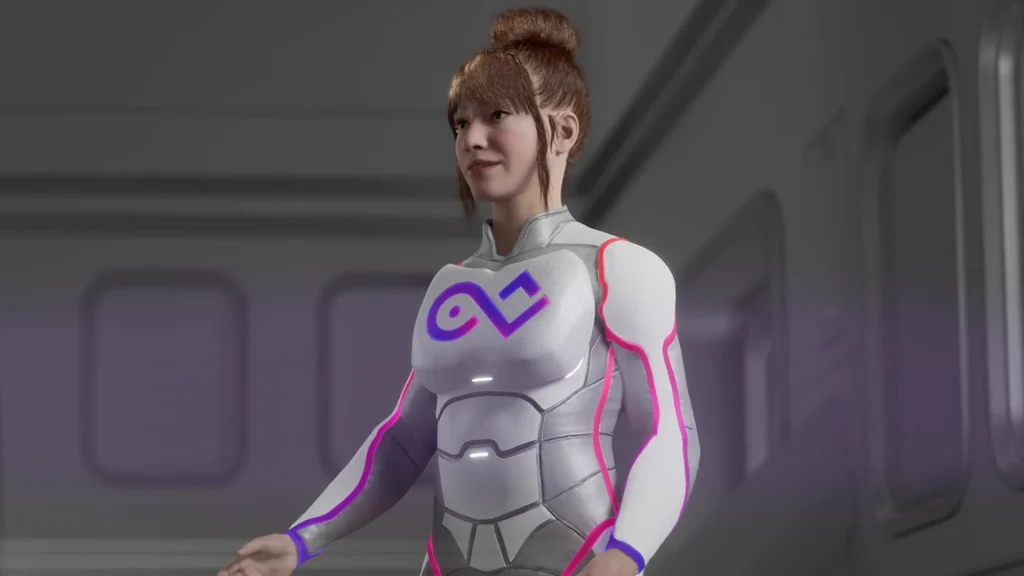
Virtual Avatar with Generative Artificial Intelligence created by Imascono
Metaverse as a new opportunity for the banking industry
Before learning about how this new digital ecosystem is laying the foundations of the present and future of banks it is important to keep in mind what we refer to as Metaverse . This is defined as a large virtual world composed of multiple interconnected digital worlds. Where humans interact socially and economically through avatars, NFTs and cryptocurrencies in digital experiences that go beyond the static websites we all know, to truly immerse ourselves in interactive and gamified 3D spaces. The central idea of this new ecosystem is humanizing the virtual world and our digital presence thanks to the incorporation of the latest innovations in Virtual Reality, Augmented Reality web3, multiplayer system and Blockchain technologies. Discover in this article the 5 most relevant Metaverse technologies . If we focus on the financial sphere, the Metaverse presents itself as a new and promising immersive space to connect with users/customers. In which the digital money The management and associated services will be led by the banks and financial institutions that make the leap into this virtual universe. From virtual branch offices offering real-time advice and intelligent avatars that facilitate personalized customer service up to the development of the entire banking system within the Metaverse that allows to generate new digital economies The virtual world, business models and connection between the virtual world and the physical world. The Metaverse offers the opportunity for banks to enhance your financial services in the new digital ecosystem, to transform their banking experience and attract new generations of digital natives who are looking for new services beyond traditional banking.
Benefits of banking in the Metaverse
The arrival of the bank in the Metaverse brings with it a series of benefits for financial companies . Designing a new generation of financial services and ways of interacting with customers, where innovation and personalization are at the forefront of the user experience.
Immersive customer experiences
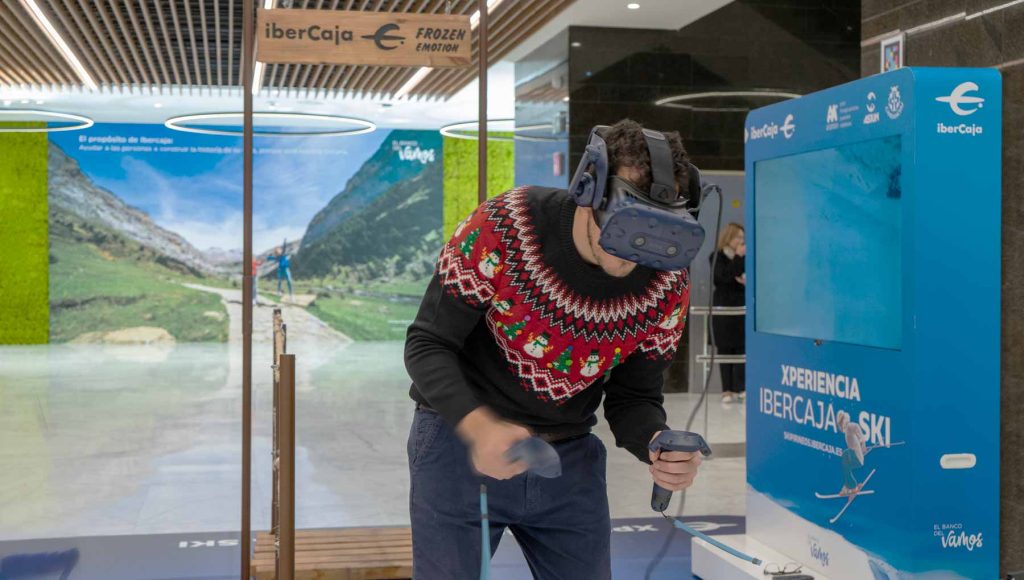
The Metaverse and the other immersive technologies allow for radically change the way in which users/customers interact with the banks . Thanks to new technological proposals, the customer experience is enriched with new proposals, new services and products. Transforming even the bank's own headquarters, such as in the case of Ibercaja Xplora . The remodeling of the headquarters of the Ibercaja Bank where new technologies such as the Metaverse, Virtual Reality, and the phygital experiences play a key role in the development of connect with customers and share the history, vision and values of the entity.
Customization of products and services
The use of new Metaverse technologies, Artificial Intelligence and different immersive experiences allows us to radically transform the way in which we think and act. customization of financial products and services . In these virtual environments With AI, banks can use AI to analyze user interactions and preferences in real time, enabling the creation of personalized financial offers and advice that are presented in an interactive and engaging way. A personalized interaction with customers that can go beyond the virtual world, reaching also the physical offices. As in the case of SAM a virtual avatar that welcomes you to the offices of Seico Consultants and offers personalized information on its advisory services, blockchain, NFTs and cryptocurrencies.
Virtual Reality Experience developed for Ibercaja by Imascono
Financial training
One of the most important issues in today's banking industry is the financial training offered to customers, employees and society in general. Online banking and virtual economy services are changing and it is essential that banks lead the way in training on these new financial products. Through immersive virtual environments In addition, users can participate in realistic simulations and interactive games that make learning about finance more enjoyable and understandable. A great example of this boost to financial literacy can be found in the project Learning to undertake from Ibercaja Foundation . A 3D web space prepared for primary school teachers and students to learn about the world of business and economics in a fun and entertaining way. gamified .
Improved brand image
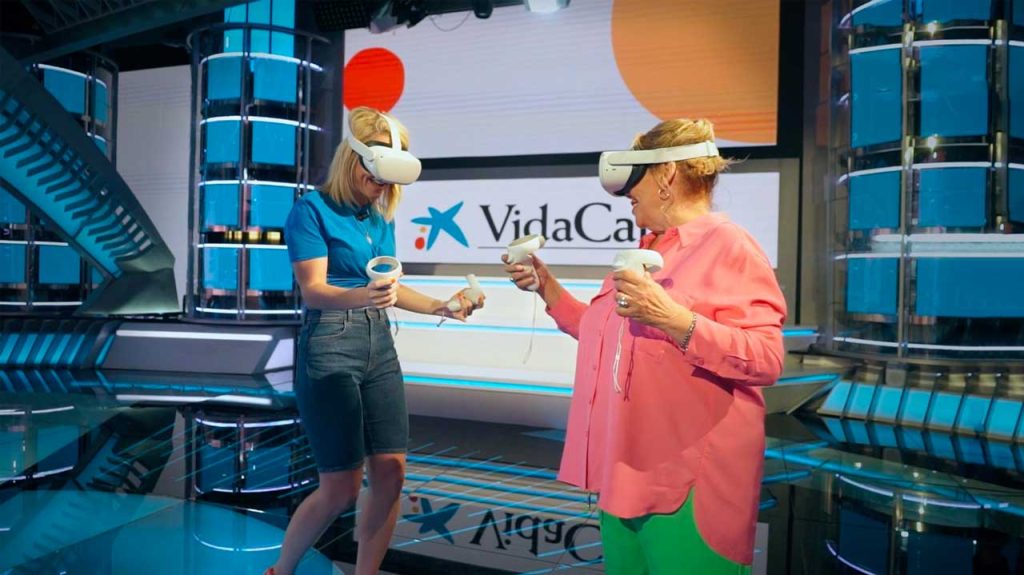
The Metaverse offers a unique opportunity for banks to improve their brand image by positioning themselves as innovative entities, at the forefront of products and experiences in the new virtual economy . This presence in the Metaverse enables the banks to stand out in a competitive market showing its commitment to innovation and continuous improvement of the customer experience. As in the social project of VidaCaixa and Movistar + , The Twists and Turns of Life where, thanks to the filming of a television series and the development of a virtual neighborhood in the Metaverse, viewers/users can reflect on sustainability, the environment and health.
Main challenges for banks in the Metaverse
The great revolution digital and the jump to Metavers o present a series of challenges that financial institutions must take into account in this new technological horizon. Here are the main challenges for banks in its transfer to the Metaverse:
1. Blockchain, criptomonedas y modelos play-to-earn
Technology is constantly evolving and, in relation to finance and banking, we are currently witnessing the great revolution of the digital economy. The technology Blockchain, cryptocurrencies and play-to-earn models are transforming the way in which economic systems develop in the virtual universe. Integrating these technologies by banks involves not only adapting to new forms of financial transactions and business models, but also to new ways of doing business. regulatory and security complexities. In addition, banks should develop strategies to educate your customers on the safe and efficient use of these new tools, while ensuring the protection of their data and digital assets.
2. Decentralized Finance (DeFi)
All of these trends and technologies fall under the umbrella of the Decentralized Finance (DeFi) a new financial system based on Blockchain technology that makes it possible to create and manage financial services without intermediaries. This change is prompting banks to reconsider their business models and customer service strategies in an increasingly digital and autonomous environment. Adapting to DeFi requires banks to invest in technology, acquire new skills in cybersecurity and regulation, and redefine the customer relationship in a market where users are looking to more control and transparency in their financial transactions.
3. Cybersecurity and digital identity
One of the major advantages of this new virtual universe is the personalization and at the same time protection of our digital identity . Thanks to blockchain technology, our identity in the Metaverse will be protected by a series of unique and unalterable encrypted codes. For banks, the cybersecurity and the protection of this digital identity pose a challenge in financial operations and personal data exchange. This requires spaces in the Metaverse, equipped with the latest in security control and advanced technologies for authentication and encryption of information.
4. New generations
Reaching new generations is one of the main challenges facing banks today, and will be increasingly so in the future. These digital natives are looking for fast, intuitive and digitized experiences. Metaverse spaces offer an innovative solution to this challenge, allowing banks to create immersive virtual environments. Where to showcase all financial products/services, host interactive events and even offer personalized financial advice through avatars endowed with Artificial Intelligence and trained in customer service. Thus, banks can establish deeper and more meaningful relationships with generation Z and millennials The company's digital marketing strategy is based on a digital and dynamic environment, adapting to their digital preferences and strengthening their loyalty.
Future of the banking sector in the Metaverse
The future of the Metaverse is its monetization, where the banking sector is the key point to make it effective. As was the case with e-commerce, when online payments were made easier, it is expected that the payment models in the virtual universe and standardized thanks to the work of the banks. The future of banking in the Metaverse is also marked by the radical transformation of financial services. This new environment allows banks not only to expand their services in innovative ways, but also to engage a younger and more technologically savvy customer base that expects more dynamic and personalized interactions. In addition, the technologies Blockchain and of Smart Contracts new avenues for the banking sector to make its products and services available to the safer and transparent . With these developments, the banking industry will not only be able to improve operational efficiency and customer experience, but also to establish an new standard in the provision of financial services that could redefine the industry's competitive landscape.
Relevant projects of Imascono de la banca in the Metaverse
Undoubtedly, technology plays a key role in the future of the banking sector. At Imascono we are aware of this and we accompany our clients throughout the entire process of creating this type of surprising experiences. from conceptualization to implementation. Our team has been more than 12 years developing Extended Reality experiences in the Metaverse both nationally and internationally through our Business To Metaverse . With our methodology, we focus on understanding your specific objectives and requirements in order to offer you the best possible solution. efficient and high quality solution. Need a high-impact Metaverse experience? Contact with us and discover our Metaverso services for companies We help you to transform your customer experience with immersive, inspiring and interactive proposals!
The influence of Augmented Reality in hotels
The influence of Augmented Reality in hotels
The tourism sector is going through an exciting time. The latest technological advances are introducing new ways of interacting with users, creating new travel experiences and generating new business models within the travel sector. In all this digital transformation of tourism, the hotel sector is playing a key role. Offering guests new ways to experience their stay in hotels and in the surrounding tourist destination. From virtual tours to instant translations , hotel services include butlers equipped with Artificial Intelligence and personalized webapps where customers can customize all hotel products and services. In today's article we will analyze in detail the technological advances that we are experiencing in the tourism sector and specifically in hotels, delving into the influence of Augmented Reality and the rest of the immersive technologies that accompany it.
Virtual tourism: digitization of hotels through new technologies
We are currently witnessing the digital transformation of tourism. From hotels to museums, travel agencies to theme parks, the industry is undergoing a major technological revolution . Different experiences and technologies applied to the tourism sector that fall under the Virtual Tourism trend. From boosting sales through the try before you buy with experiences of Extended Reality , visiting places from the past or inaccessible tourist destinations thanks to Virtual Reality. To be able to count on AI avatars or personalized guides to accompany you throughout your stay, or fostering the online community of a travelers' club . As in Exclusiverse , the virtual space of the world's No. 1 traveler club Exclusive Traveler Club. You can learn more about this key concept of the tourism sector in our publication → Virtual tourism as a new trend . Focusing on the hospitality industry, virtual tourism and the digitization of hotels allows you to create more accessible and personalized experiences for guests. Transforming the journey in the three key moments: before, during and after the hotel stay.
Los hoteles pueden hacer uso de estas nuevas tecnologías para llegar a mucho más usuarios a través de una experiencia de compra innovadora y diferenciada. Pudiendo recorrer las instalaciones previamente a la estancia a través de gemelos virtuales digitales e incluso probando las diferentes actividades disponibles. Generando hype and cross-selling, conexión emocional y Engagement con los usuarios.
Durante la estancia, las nuevas tecnologías permiten automatizar y personalizar todos los servicios hoteleros.Pudiendo crear apps para cada usuario donde gestionan todos los detalles de sus habitaciones y actividades: desde las peticiones especiales a la distribución de la habitación, hasta los horarios de las actividades y reservas de restaurantes. Donde incluso pueden tener su propio guía / mayordomo de Inteligencia Artificial que atiende a sus consultas y realiza recomendaciones. Un ejemplo de estos nuevos guías turísticos lo encontramos en el avatar IA de Miguel de Cervantes.
Pero la interacción con el huésped no tiene por qué terminar tras la estancia en el hotel. Gracias a las nuevas tecnologías, las membresías digitales y los club loyalty, las compañías hoteleras pueden seguir manteniendo la interacción con su comunidad de huéspedes a través de sus propios Virtual Spaces. Espacios 3D donde realizar eventos, charlas, lanzamientos de novedades y crear un espacio de networking y comunidad entre sus usuarios.
Importance and impact of Virtual Reality and Augmented Reality in the hotel industry
Virtual Reality (VR) and Augmented Reality (AR) are two of the technologies with the highest impact they are having on the hotel industry . Allowing to transform the way guests get to know the hotel and its facilities, enjoy their stay and visit the tourist destination. The importance of these immersive technologies lies in the ability it offers hotels to interact with users. Through Virtual Reality for companies , for example, allows potential customers to perform virtual tours of the hotel facilities . The hotel's immersive tour can be key to booking, highlighting its services and improving the overall perception of the hotel with more attractive and interactive marketing actions. Marketing actions such as the one carried out by Ibercaja SKI Pyrenees with the Frozen Emotion VR experience where users could test their skiing skills. Augmented Reality, on the other hand, enriches the guest's stay by providing layers of interactive information about hotel services directly through their mobile devices. This technology not only improves the customer experience by making it more informative and entertaining, but also offers hotels a new way to communicate and build customer loyalty. You may be interested in → Augmented Reality applications in tourism .
How to use Augmented Reality in hotels
Augmented Reality is the technology capable of combining the real world with the digital world, superimposing virtual elements on reality itself . Thanks to this immersive technology, the real and virtual environments intermingle, creating interactive experiences accessible from several devices at the same time: from cell phones and tablets to Augmented Reality glasses. Let us now take a closer look at how to apply Augmented Reality to the hotel experience .
Gamification
Gamification is, undoubtedly, one of the major points when incorporating Augmented Reality into our customer experience. This trend allows us to add a playful and interactive element that enriches the guests' stay. Through challenges and pointing with the cell phone, we invite users to participate and get involved with the hotel , touring the facilities, completing challenges and collecting rewards that can be redeemed for prizes, discounts or exclusive experiences. Thus, the hotel can create Augmented Reality gymkhanas that appeal to smaller (and not so small) guests.
Augmented hotel environments
The combination of digital elements with the actual hotel space allows enriching the guest experience with fully integrated hotels. Combining new technologies such as IoT and Augmented Reality , users can access a variety of information in real time. AR technology allows hotels to offer a more personalized and engaging experience that can be adapted to the needs and preferences of each guest. From displaying Augmented Reality directions to guide you through the facilities, simultaneous translations or even enjoying more entertaining interactive experiences, such as discovering animated characters or art that comes to life in 3D.
Interactive hotel rooms
By utilizing Augmented Reality, hotels can superimpose digital elements directly into the physical environment of the room, such as detailed information about the artwork, interactive instructions for using technological devices such as smart TVs or climate control systems, and even options for personalizing the environment.
Traducción automática
In hotels, Augmented Reality (AR) is beginning to be used to facilitate automatic translations and overcome language barriers, significantly improving accessibility for international guests. Through the use of AR applications combined with the capabilities of Artificial Intelligence , guests can point their cameras at menus, signage, information brochures or any printed text inside the hotel to instantly see the translation in their native language on the screen of their device. You can learn more about the use of AI in tourism in our article → Artificial Intelligence in tourism: characteristics and examples .
Everything you need to know about Native Mobile Apps
In the digital era, mobile applications have marked a before and an after These have become an extension of our daily lives. From managing our finances, to shopping online, to entertaining ourselves and connecting with the rest of the world, apps are our basic tools to move in today's world. What many people may not be aware of is that there are different types of mobile applications with different functionalities, developments and even programming languages. In this post, we will focus on analyzing the most widespread type of app, the Native mobile applications . We will see their advantages and disadvantages, as well as their comparison with the other two types of applications: the Webapps and the PWApps.
Native Mobile Application developed for Lacasitos by Imascono
What are native applications?
Since 2007, when the cell phone industry welcomed smartphones, mobile applications have been part of the way we understand and use our mobile devices. interacting with technology. From that moment on, our interaction with technological devices became much more intuitive, natural and accessible. If we look at the definition of native applications, they are programs developed specifically to operate on an operating system in particular, such as Android or iOS, using programming languages and development tools specific to each platform. These apps are installed directly on our mobile devices through the application store. The most widespread are Google Play and Apple App Store. Because they are designed for a specific operating system, native applications can optimize their performance, taking full advantage of the device's hardware functionality (camera, GPS, sensors...) offering a seamless and highly integrated user experience. In terms of development, the fact that the mobile application is native means that the programming team has to develop as many apps as operating systems are used. It is usual to create two applications, one for Android and one for iOS But increasingly, we are witnessing the birth of new markets and devices. For Virtual Reality glasses such as the Meta Quest or the Apple Vision Pro, it is also necessary to develop the VR app ad-hoc (customized) for these new hardwares. You may be interested in → Business Innovation: Spatial Computing Applications in Extended Reality . An example of a native mobile application that includes the latest innovations in this type of development can be found in the Augmented Reality app released by Disney , Telefónica and Ferran Adrià . Your Story in the Kitchen combines entertainment, gamification and recipes in an educational app designed for the whole family.
Main advantages of native mobile applications
Once we have seen its definition, it is time to delve into the advantages for both companies and users of the development of native mobile applications . Superior performance and optimized user experience are some of them. Let's look at the main advantages of native apps:
Increased security
Native mobile apps offer a wide range of additional layer of security in our developments, since a rigorous review process is carried out by the official application stores such as Google Play or App Store. Users know that the apps downloaded from these official stores have passed checks for possible vulnerabilities and malicious code, reducing the risk of malware . In addition, these applications can take advantage of the frequent security updates provided by the devices and operating systems themselves.
Improved customization
OS-specific development also means improvements in app customization by allowing developers to optimize the user experience according to the specific characteristics and functionalities of each platform. Native applications can tailor their user interface to match the aesthetics and conventions of each operating system, which not only improves visual consistency, but also makes the application more intuitive for users .
Increased performance
If there is one feature of native applications that sets them apart from other types of apps, it is the higher performance to users. Thanks to its hardware optimization, lower latency and improved response times. As they are developed specifically for the operating system of the device, they can making the most of the resources of the mobile device . Delivering a smoother and faster experience. A particularly noticeable advantage in applications that require high performance such as video games with high graphics, video editing or 3D modeling applications. You may be interested in our publication→ Virtual Reality in video games: the future of entertainment.
Use without Internet connection
Another of the main advantages of native mobile applications is their ability to work in the following ways without Internet connection This feature is especially valuable in situations where connectivity is limited. This is a high efficiency in the use of phone data and faster response time - by not interacting with a remote server. It also gives users the advantage of always having access to the content and files stored in the app and being able to use it at any time.
Disadvantages of native Apps
Although native mobile applications offer a number of advantages, they also have some significant disadvantages that can be covered by the other types of apps . These disadvantages can be summarized as follows:
Aumento del coste y tiempo de desarrollo. El desarrollo de estas apps nativas suele ser más costoso y requiere más tiempo, ya que es necesario realizar tantos códigos como sistemas operativos haya. Este enfoque requiere que los desarrolladores posean habilidades especializadas en múltiples lenguajes de programación y frameworks, lo que eleva tanto los costos de desarrollo inicial como los de contratación.
No son multiplataforma. Su naturaleza de app nativa supone una desventaja a la hora de plantear la estrategia multiplataforma. Para alcanzar a usuarios en diferentes sistemas operativos, como Android e iOS, es necesario desarrollar y mantener versiones separadas de la misma aplicación, duplicando el trabajo y los recursos necesarios. Esta falta de interoperabilidad puede limitar la accesibilidad de la aplicación a una audiencia más amplia.
Las actualizaciones dependen de los usuarios. Pese a que las apps nativas pueden aprovecharse de las actualizaciones automáticas de los sistemas operativos, en muchas ocasiones, estas actualizaciones dependen de que el usuario termine de aceptarlas. No solo eso, cada actualización de una aplicación nativa debe ser diseñada, probada, optimizada y aprobada por cada sistema operativo por separado. Lo que no solo incrementa el trabajo y los costes, sino que también alarga el tiempo de lanzamiento al mercado. Esta complejidad puede dificultar la capacidad de las empresas para responder rápidamente a los cambios en el mercado o corregir errores críticos de manera eficiente.
Learn more about the advantages of web applications o WebApps at What is a WebApp? .
Type of mobile applications
To counteract the disadvantages that can arise when developing native mobile applications, over the last few years, the following have been appearing new types of mobile applications in the app market. In addition to native applications, we can nowadays also find web applications and hybrid or progressive applications . In the following, we will analyze in detail their differences through examples of applications developed in different sectors.
Differences between native Apps, WebApps and PWApps
Las aplicaciones nativas, como hemos visto a lo largo de este artículo, son apps desarrolladas específicamente para un sistema operativo como iOS o Android, ofreciendo alto rendimiento y una excelente integración con el hardware del dispositivo.
Por otro lado, encontramos las WebApps or aplicaciones web, apps accesibles a través de un navegador web que no necesitan ser descargadas por los usuarios y se actualizan automáticamente, lo que garantiza que siempre se está utilizando la versión más reciente.
Representan la evolución de las páginas webs más estáticas, al reunir en un solo espacio, la interfaz e interacción de las aplicaciones de escritorio con la agilidad, la colaboración activa entre usuarios y el almacenamiento en la nube que ofrecen los servicios por Internet. Una solución intuitiva y fácil de compartir como la WebApp de Rafa Nadal. Desarrollada en una de las últimas ediciones de Roland Garros. Una acción rápida, sencilla y efectiva que en su momento fue trending topic en Twitter (X) consiguiendo más de 18.000 fotografías.
Por último, encontramos las PWApps o aplicaciones híbridas, desarrollos que combinan elementos de ambas funcionando como apps nativas, pero construidas con tecnologías web, lo que permite una fácil actualización y mantenimiento cruzado de plataformas.
En la actualidad encontramos grandes ejemplos como Spotify, Instagram, Drive… Todas ellas son apps que pueden descargarse en las tiendas de aplicaciones, pero que no requieren hacer uso de los recursos del móvil para que funcionen correctamente. Todo se realiza a través de un servidor externo y almacenamiento en la nube.
Examples of mobile applications developed by Imascono
Now that we have seen the main types of mobile applications, it is time to get to know some of the most important ones. examples and use cases that have been carried out in different sectors.
El desarrollo de aplicaciones móviles más ágiles, intuitivas y personalizadas ofrece la oportunidad de desarrollar toda la interfaz de un e-commerce o tienda virtual desde cero, poniendo en el centro al usuario. Como en el caso de la WebApp desarrollada junto a Movistar y Prosegur Alarmas, donde los usuarios pueden ver en acción los distintos dispositivos de seguridad a través de una casa interactiva en web. Todo sin necesidad de descargar ninguna aplicación móvil.
Otra aplicación en el mundo del retail que ejemplifica la estrategia de integración de varias tecnologías en un mismo espacio comercial es la App y Gestor de Contenidos del Centro Comercial de La Torre Outlet. Una aplicación móvil perfecta para la fidelización y gamificación de usuarios.
Una aplicación que une diversión y Realidad Aumentada es el caso de éxito de Lacasitos App. Una app AR en la que los niños pueden crear su propio mundo lleno de diversión e imaginación, gracias a los sorprendentes personajes que cobran vida gracias a la tecnología.
Como ejemplo de aplicación desarrollada para los nuevos dispositivos de Virtual Reality encontramos el caso de éxito de Kai XR Platform. Una app VR para niños y estudiantes a través de la cual se pueden acceder a diferentes experiencias inmersivas que potencian la imaginación y el aprendizaje sobre diferentes temas: desde las ciencias naturales a la tecnología.
From Imascono We have helped a multitude of companies in different sectors to develop the mobile applications more suited to your needs and users . Native Apps, WebApps and PWApps all offer a multitude of benefits to facilitate the interaction between users and brands. Becoming one of the main communication channels for companies. Our engineers and designers will be happy to answer all of your questions and find out how we can help you to develop your mobile application Do you need a mobile application, native or web, adapting its functionalities to the specific needs of your company? Do you need a mobile application? Get to know our mobile application development service . ¡ Contact us at !
Qué es la Gamificación: beneficios y ejemplos
The Gamification is the great technological trend that takes entertainment and fun beyond video games, even reaching the business world. Creating a new way to interact and motivate users/customers, changing the rules (of the game) in all sectors. In this article we will review the great examples and benefits of gamification for the business world and other important sectors such as health and education.
Gamification Concept
Before knowing what are the applications and advantages of incorporating Gamification to our day to day in the company, let's see what it consists of. Gamification is the term that unifies all the techniques and uses of the mechanics of video games in actions and sectors, until now, alien to this playful world. By transferring the challenges and rewards more entertaining to business management, education, promotional campaigns and professional training, among others. Everything to turn the most routine tasks and the most conventional marketing actions into interactive challenges.
Gamification in companies
Gamification in the business world is more than the generalized idea of turning work into a game. Gamification is to develop the entire management, training e interaction with users/customers in the most attractive and effective way possible. Turning routine tasks into challenges to be completed, motivating both employees and customers or students with different types of rewards. Next, let's take a look at how Gamification is applied and its most characteristic examples in sectors such as education, marketing or industry 4.0.
Gamification in education
Gamification is effective at any age, but children and teenagers are undoubtedly the greatest beneficiaries of gamification. game application in the educational system . Gamification is associated with a greater commitment, motivation, attention e interest by students, regardless of their level of education. Thanks to its challenge/reward system, it provides incentives to give the best of oneself. In addition, student autonomy is encouraged and, when concepts are more complicated, learning through trial and error, logic and deduction games helps to internalize new knowledge in a much more effective and entertaining way. For example, Fundación Ibercaja's training program stands out, where schoolchildren aged 10 and 11 learn everything they need to set up their own school cooperative. Thanks to this gamification, the students develop their learning about business and entrepreneurship through the interactive challenges in the virtual campus from Learning to undertake. You may also be interested in→ Kai XR Platform our project, together with Kai, of virtual reality for students and children.
Gamification in marketing and advertising
Currently, digital environments, and in particular, video games, are experiencing exponential growth. Therefore, brands must take a step forward and move our products, services, companies and marketing and advertising campaigns to this new digital environment. new ecosystem from entertainment . Brands, by creating their own video games and digital gymkhanas, achieve capture the attention create a new loyalty channel and increase participation of the users. Through these challenges and rewards, campaigns become much more interactive, improving in turn the two-way communication with the public, obtaining high quality information thanks to the interactive points and the internal analysis of the responses. One of the latest major marketing campaigns based on the Gamification found in the virtual facilities of the Rafa Nadal Academy by Movistar. Where users from all over the world discover the academy through Rafa Nadal's own avatar and thanks to the different challenges spread throughout the virtual space. With which they can get great rewards in discounts and sweepstakes. You may be interested in→ Webapp Rafa Nadal
WebApp realizada para animar a Rafa Nadal en Roland Garros
Gamification in Industry 4.0.
Gamification is not only designed for children and teenagers. In companies, especially in industrial companies, Gamification techniques are revolutionizing the way of working with children and teenagers. new, more dynamic and effective methodologies.
Gamification of the workplace improves productivity, favors the implementation of new strategies and The new system reduces training times and optimizes tasks in which there are normally no incentives for improvement. An example of Gamification in the industrial world can be found in the program of Virtual Training developed together with the transportation company Global Expedition . A Virtual Reality video game for the training of your employees through your own immersive 3D space.
Gamification in tourism
Tradition, folklore and culture are not at odds with new technologies. With the gamification of museums, monuments, places of tourist interest and even entire cities, the following can be achieved create new experiences that put the visitor at the center of the action. It is enhanced from the promotion of tourist sites with video games and immersive presentations of the destination, to cultural activities in the same trip thanks to the gymkhanas and interactive escape rooms with challenges throughout the city. It is about immersive tours in which to catch prizes and collect discounts from local businesses through the latest technological advances such as Augmented Reality and geolocation. Everything to turn the tourist experience into a great adventure. Undoubtedly, one of the biggest bets for the cultural gamification is headed by the virtual recreation of the Plaza del Pilar in Zaragoza on the big day of the festivities. Where the traditional Offering of Flowers to the Virgin of Pilar is gamified, transferring its great cultural value to the virtual world, thanks to a web space accessible from any place and device.
Metaverse of the city of Zaragoza recreating in 3D the experience of the traditional Offering of Flowers
Gamification in retail
An increasing number of companies in the retail sector are using gamification to create entertaining experiences that attract your physical and virtual stores to both current and potential customers.
All this with a clear objective in mind: to build loyalty, excite and generate engagement . Digital Gymkhanas to find hidden offers, create an online game in which virtual coins are accumulated, or even fill the city's commercial areas with Augmented Reality art, as in the Paseos Comerciales project. Where the union of urban art with new technologies generates new and fun experiences on the streets, attracting new customers and energizing the face-to-face shopping experience. For example, our project connected art where the streets of Zaragoza came to life through augmented reality.
5 Advantages of gamification in companies
Gamification has the following objectives target inspire deeper and more committed relationships The company's marketing strategy is based on the use of the company's own branding, both in the classroom with students and with employees, in training programs and in marketing actions between users and brands. Successful and sustainable gamification can turn customers into fans, turn work into fun or make learning much more enjoyable and entertaining. The potential is enormous and so are the advantages. Here are the 5 main benefits of incorporating Gamification to our companies.
1. Mejora la productividad y la optimización de tareas
Within the companies themselves, gamification manages to transform the methodology of all processes. By optimizing the most routine tasks through incentives . These not only motivate to overcome the different phases of development, but also provide a greater autonomy and self-evaluation employees themselves can measure the achievement of their objectives.
2. Motivates loyalty and engagement
In today's world, it is not only important to attract attention amidst so much audiovisual stimuli. It is also crucial to offer the audience a experience that really makes them value contribution them emocione and that it is the trigger to create much stronger relationships of trust and loyalty. Public-brand relations in which the play, entertainment and fun play a decisive role.
3. Feedback and analytics
With this type of initiative radically changes the way we measure promotional actions of the brands. Gamification game systems attract attention, encourage participation and provide brands with instant feedback that is personalized to the measurement objectives of each experience. Facilitating the bidirectional communication with the public, in a way that entertained and unobtrusive .
4. Viralization of brand actions
Undoubtedly, video games are one of the most attractive and participative forms of entertainment that immerse users in the world of entertainment. new digital world . If these games are also adapted to the storytelling and the essence of a company, the brand action not only manages to reach the target audience in a more entertaining way, but also to make it more attractive. viralization is achieved more organically . The users themselves are the ones who challenge their friends and followers to overcome the game's challenges.
5. Promotes creativity and communication
Gamification can be an effective tool to promote the development of creativity and communication in educational and business environments by increasing motivation, promoting collaboration, providing immediate feedback and creating a fun and participatory environment that encourages the exchange of ideas among the entire team. This can stimulate their creativity by getting them to more involved in the tasks to look for new ways to solve challenges and get carried away in an environment of play, trial-and-error and exploration.
Gamification projects with Imascono
In the midst of the digital transformation era, companies must rethink our strategies and methodologies to bring new techniques such as Gamification closer to our day to day in the company. To do so, it is necessary to stop, understand this new mechanics and analyze in which phases of our business model we can include Gamification to exploit all its advantages to the maximum. At Imascono we have a team specialized in technology consulting that can help you shape your ideas. In addition, we have been working for more than 12 years with companies, schools and institutions from all fields and sectors as part of its digital metamorphosis strategy with the implementation of their Gamification models and projects. Our engineers and designers will be happy to answer all of your questions and discuss how we can adapt our Gamification solutions Do you need a Gamification project to meet your company's specific needs? Contact us at !
WebApps: What are they, advantages and examples?
What is a WebApp or Web Application?
Do you know what a webapp is and how it differs from a native app and a static web? A WebApp is an interactive application that runs on web The software is available for all types of browsers and devices, regardless of the operating system they use. The Web Applications represent the evolution of the more static web pages, bringing together in a single space, the interface and interaction of desktop applications with the agility, the active involvement between users and the cloud storage offered by Internet services. Users have online access to all kinds of interactive content that they themselves choose, change and customize. WebApps allow us, for example, write documents directly online, edit photos without having to install any software or save our entire database in the cloud. .
What is the difference between a WebApp, an App, and a static page?
Understanding the differences between these three will allow us to have a much clearer concept of a WebApp, in order to assertively evaluate the need to implement this technology.
Differences between WebApps and native Apps
The Web Apps do not require any application to be downloaded and installed. to access them. They are accessed through the web browser. Native Apps, on the other hand, require downloading and installation from the respective app stores in order to be used (Google Play Store or App Store). On the other hand, native Apps have full access to the features (such as camera, GPS, etc.) allowing a richer and more personalized experience while Web Apps have limited access to the device's functionalities. The Web Apps are automatically updated every time the user accesses them over the Internet, ensuring that they are always using the latest version. Native Apps require manual updates through the app store. In addition, some native Apps may offer functionalities or be available offline after their initial download, while those that are not may be available offline. Web Apps always require internet connection . Finally, native Apps use the device's internal memory to store data, consuming space. The Web Apps use cloud storage services Therefore, they do not consume space on the devices.
Differences between Web Apps and static pages
However, how does a WebApp differ from a static website? A Web App is interactive and allows users to interact with it, it is dynamics The system can change its content and behavior according to user interaction or in real time. more complex functionalities and uses most advanced technologies . On the contrary, a static web page is simply a fixed representation of information that does not allow direct interaction with users, with static content that does not change without manual intervention, they are simpler and faster to develop, since they do not have complex functionalities and use simpler technologies.
Known examples of Web Apps
Some of the best examples of well-known Web Apps are the following:
WhatsApp: WhatsApp es uno de los mejores y más populares ejemplos de webapps. Aunque el uso más frecuente de WhatsApp es como una aplicación móvil nativa, la versión web de WhatsApp permite a los usuarios acceder a sus conversaciones y enviar mensajes a través de su navegador web. La Web App de WhatsApp proporciona una experiencia similar a la de la aplicación móvil, permitiendo a los usuarios acceder y utilizar los servicios de WhatsApp con flexibilidad desde múltiples dispositivos o cuando no tienen acceso a su teléfono móvil.
Spotify: Spotify es otro ejemplo destacado de una Web App que ofrece servicios de streaming de música. La plataforma permite a los usuarios acceder a una amplia biblioteca de canciones, álbumes y listas de reproducción a través de su navegador web. Si bien Spotify también está disponible como una aplicación nativa para dispositivos móviles, la versión web de Spotify es popular.
The Spotify Web App is also synchronized with the native applications of the same accounts. Users can access their playlists, saved songs and preferences from any device, offering a seamless and complete experience.
Advantages of Web Applications
We can summarize the advantages of web applications in the following points:
1. Mejora la interacción y personalización
The WebApps allow to build from scratch the digital world of companies by putting in the user experience center . A fact that allows the customization of both the interface, aesthetics and contents of the web application and the interaction of each user adapted to their tastes and needs. An interaction that is also benefited thanks to the fact that in the Web Applications there are several people who can work simultaneously in them.
2. Multidispositivo
A WebApp reaches all users, regardless of your operating system and device because it adapts to the dimensions and requirements of all platforms. So access does not depend on a single device and the contents are available simply through the URL.
3. Facilitates dissemination and viralization
One of the advantages of these types of applications is that they base their access and dissemination through the Internet and web browsers most used by the users themselves. A fact that greatly increases the positioning, metrics and brand visibility among the more traditional search engines. In addition, the development of such applications is not subject to the policies, authorizations and limitations of any application download service.
4. Bajo coste
By requiring a unique development for any device regardless of its software/hardware, costs are reduced . It is not necessary to allocate time and resources of the development team for programming the same application for each operating system. In addition, page updates are more feasible for team members less familiar with web programming.
5. No prior download is required
Web applications work at full performance without the need for the user to personally update the application and without the need for take up memory space of the devices. All files and updates are processed within the website and stored in the cloud . The user, for his part, has access to all these contents simply through his Internet connection. A practical and agile system, which also allows for the continuous updating and greater control of the application by the company.
Uses of Web Applications
1. Aplicación en el sector empresarial
Web Applications focused on the most business-oriented sectors adapt to all the needs of management and communication both internal and external to the companies. These applications provide access to a proprietary interface from any device and web browser. A fact that facilitates collaboration and information exchange between departments, by being able to work together in the different projects directly online and instantly displaying all updates. Externally, WebApps give all users access to a wide range of content that, regardless of their devices, is instantly adapted to their needs as they interact with the elements .
2. Application in the commerce sector
The development of more agile, intuitive and customized web applications offers the opportunity to develop the entire interface of a web application. e-commerce or virtual store from scratch, putting the user at the center. Thus, WebApps radically change the first impression in the great global showcase: the Internet. With the possibility of creating more secure and personalized payment methods in accordance with the principles of the brand and the development of a proprietary content manager that allows continuous updating in an agile and simple way. Web Applications also adapt to the needs of interaction and dynamism of face-to-face sales. Offering additional information about the products (availability, price, colors, ratings from other users) with direct access and overlapping information instantly through a web page. As in the case of WebApp developed together with Movistar and Prosegur Alarma s where users can see the different security devices in action through an interactive web-based home. All without the need to download any mobile application.
Aplicación Web con Realidad Mixta desarrollada para Movistar Prosegur Alarmas
3. Marketing and advertising applications
Nowadays, it is difficult for the average user to download a mobile application to their devices unless these apps offer long-term content and benefits. That is why, in order to campaigns and specific viralization actions the WebApps are more attractive to both brands and users. Thanks to its easy access The high diffusion capacity and personalized interaction of users in marketing campaigns makes user participation in marketing campaigns more effective. fast and direct . Accessing from the same WebApp to more detailed information, having direct access to purchase, participate in forums or even enter exclusive access areas.
4. Applications in the educational sector
Sin duda una de las grandes aplicaciones que ofrece la incorporación de las WebApps al sistema educativo es la accesibilidad rápida a los contenidos desde cualquier dispositivo. Una ventaja que se complementa además con la facilidad que tienen estas plataformas para que varios usuarios trabajen simultáneamente en ellas. Un hecho que permite agilizar la colaboración entre estudiantes y profesores, independientemente del dispositivo y zona geográfica desde la que accedan a la aplicación web.
Además, las WebApps se adaptan a las necesidades de los centros educativos desde la propia interfaz hasta las diferentes acciones dentro de la aplicación (acceso a cursos, subida de archivos, contenidos complementarios).
5. Application in the entertainment sector
Entre las aplicaciones dentro de los sectores del entretenimiento encontramos el desarrollo de aplicaciones web personalizadas para la promoción y comunicación de eventos culturales, deportivos y mediáticos que permiten a los usuarios formar parte de la acción viral sin necesidad de realizar ningún paso intermedio ni de descargarse ningún programa. Una solución intuitiva y fácil de compartir como la WebApp realizada junto a Telefónica para animar a Rafa Nadal en una de las últimas ediciones de Roland Garros. Una acción rápida, sencilla y efectiva que en su momento fue trending topic en Twitter consiguiendo más de 18.000 fotografías.
WebApp realizada para animar a Rafa Nadal en Roland Garros
6. Application in the banking sector
WebApps offer the banking industry the possibility of creating interactive and customized web platforms for each user and specific needs. The banking company controls all the upgrades, permissions and cybersecurity systems from the general server. A great advantage over downloadable applications whose updates and upgrades depend on each individual user.
How do you know if your company needs a WebApp?
Determining whether your company needs a WebApp depends on several factors specific to your business and the goals you want to achieve. Here are a few considerations that can help you evaluate whether a WebApp is right for your business :
Una WebApp puede ser adecuada si te dedicas a las ventas ya que accederás a un mercado más amplio, ofrecerás a tus clientes una experiencia más fluida y personalizada y podrás llevar un seguimiento de tu rendimiento.
Una aplicación web también es una excelente solución si necesitas mejorar los procesos de tu empresa ya que te permitirá automatizar tareas repetitivas, facilitará la comunicación y colaboración en tu negocio y te ayudará en la gestión de información.
Web applications are a valuable tool when you need to launch a new service or product because it allows you to anticipate and promote it to your customers and provides you with feedback before its official launch so you can make improvements or adjustments, offering data on the interest generated.
We develop the WebApp that you need
At Imascono our team of experts in internet application development is ready to help you create a web application that perfectly suits your needs. We accompany you throughout the entire process, from conceptualization to final implementation. We focus on understanding your specific objectives and requirements to offer you an efficient and high quality solution. No matter the size of your company or the complexity of your project, we are ready to meet the challenge. Our technical team has extensive experience in modern web technologies and the latest market trends. Don't waste any more time looking for a generic solution that doesn't fit your needs. Contact us at today and find out how we can develop the Webapp perfect to drive the growth and success of your business.