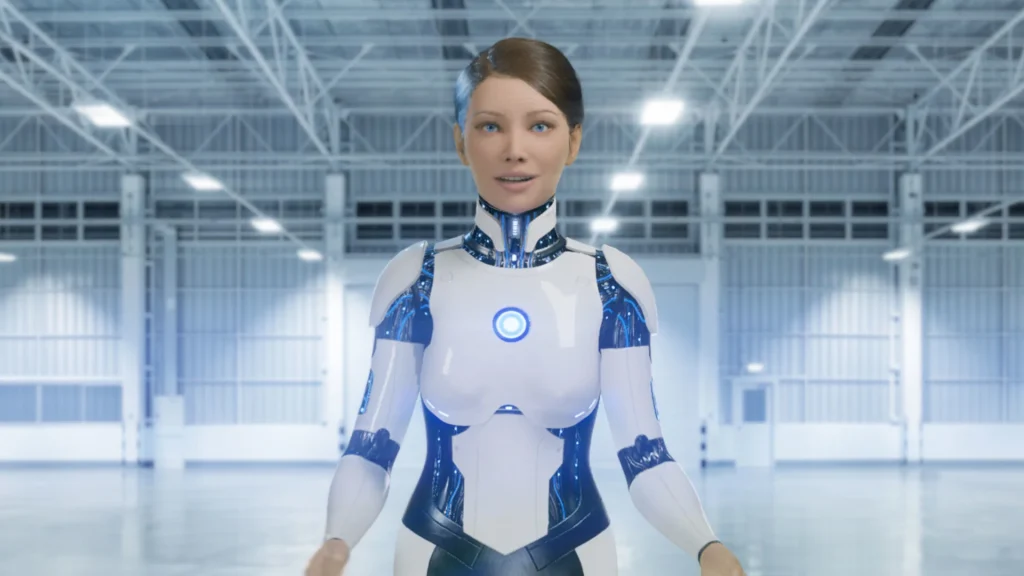
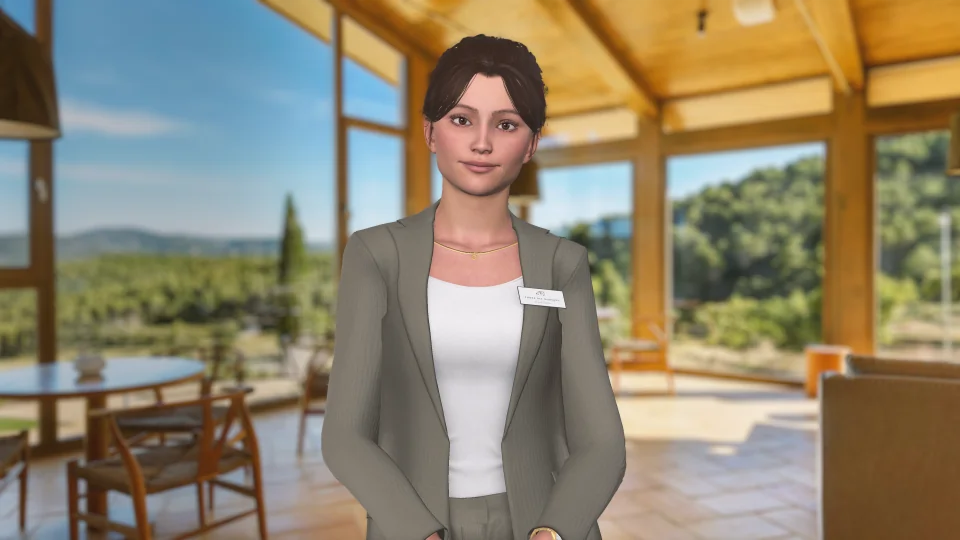
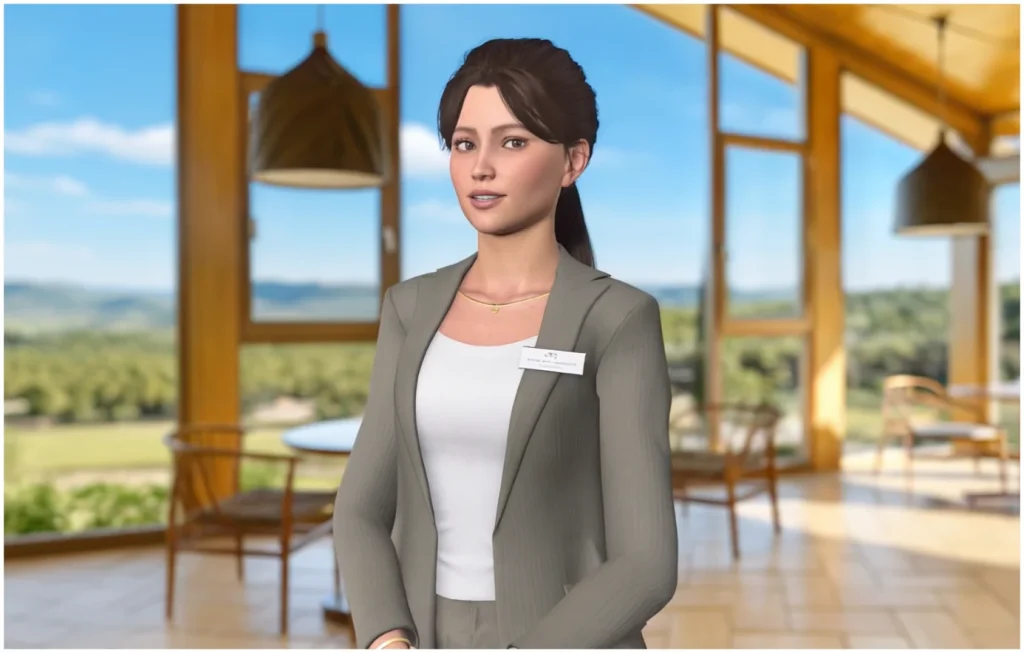
There was a time when avatars were little more than digital dolls; they represented an identity but did not depict a nearly lifelike person. Those days are over. Today, the convergence of artificial intelligence, 3D modeling, and state-of-the-art rendering has made hyperrealistic avatars possible—digital presences so believable that it's hard to tell them apart from a real video recording. But what lies behind this perfect illusion, and how is it transforming the way brands communicate with, engage, sell to, and win over their audience? In this article, we explore the evolution of avatars up to photorealism, their key technologies, and use cases. Welcome to the future of interaction with technology. And, believe us, applying this technology is more human than you might imagine.
The Evolution of Avatars Toward Photorealism
Few terms have had such a fascinating journey as "avatar." The word has its roots in Sanskrit, where it referred to a deity's descent to Earth, but it was the writer Neal Stephenson who reinvented it for the digital age in his novel *Snow Crash* (1992), imagining a gamified environment populated by virtual representations of its users. What was once science fiction soon became a reality: for decades, avatars were confined to crude bodies and rudimentary geometries. Think of those early polygonal video game characters, the flat icons on message boards, or the angular 3D figures that populated the virtual worlds of the 2000s. They were functional, yes, but no one would ever mistake them for a human being. They represented an identity, not a presence. The big breakthrough came when graphics power, real-time rendering, and, above all, the inteligencia artificial They came together to cross the final frontier: realism. Today we're talking about avatars hyperrealistic avatars capable of reproducing nearly human physical and emotional traits. It is no longer a matter of looking like a person, but of being indistinguishable from a real video recording—hence the term "videorealistic"—with the avatar achieving a level of fidelity worthy of video, not animation. This is precisely the dividing line that marks the state of the art and where Imascono It draws on its expertise, because creating convincing, hyper-realistic avatars requires the expert orchestration of technology, data, and visual storytelling. If you want to learn how to implement AI in your business: How to Apply Artificial Intelligence in Business.
Characteristics That Define a Photorealistic Avatar
Si la evolución nos ha traído hasta aquí, conviene preguntarse qué valor añadido tiene un avatar videorealista. A continuación desgranamos las tres características que marcan la diferencia en los avatares inteligentes.
Visual Realism, Personalization, and Digital Identity
Everything starts with the eyes. Visual realism is the gateway to credibility: skin textures, rendered hair, lighting that responds to the environment, and high-density 3D modeling. But photorealism alone isn't enough; what makes an avatar a strategic asset is its customizability: the ability to sculpt every feature to build a coherent, unique digital identity that aligns with the values of the person it represents.
Facial Expressions and Natural Body Language
A perfect face must be accompanied by appropriate facial expressiveness. That is why true mastery lies in movement: microexpressions, irregular blinking, a raised eyebrow, gestures, and posture. Added to this is an element that changes everything: the lip-syncing : When the voice and lip movements are perfectly synchronized, the brain stops looking for inconsistencies and accepts the avatar as a real conversation partner. Achieving that synchronization between facial expressions, eye contact, and speech is precisely what makes these avatars so valuable.
Integration with Artificial Intelligence
Like any other intelligent avatar, photorealistic avatars are also powered by AI. The inteligencia artificial It is the engine that enables a hyper-realistic avatar to listen, understand, respond, and express itself in real time. And generative AI paves the way for avatars that hold conversations, serve customers, or present content autonomously and at scale to become fully autonomous. Furthermore, our management platform allows you to create their appearance, knowledge, and personality from start to finish. This makes hyper-realistic avatars a reliable, secure, and scalable solution.
Key Technologies Behind Photorealistic Avatars
Behind every interaction with a hyperrealistic avatar lies a highly precise technological system that makes it possible. Getting a digital face to respond both with its own intelligence and in accordance with the user's attitude requires combining an increasingly diverse range of disciplines. These are the main technologies behind a photorealistic avatar:
Escaneo 3D
All realism begins with capturing reality. 3D scanning—using photogrammetry, depth sensors, or capture platforms with dozens of synchronized cameras—transforms a human face or body into a high-fidelity digital model, recording every contour, texture, and nuance of the skin with millimeter-level precision.
Real-time translation
Si un avatar va a representar a una marca global, no puede quedarse mudo al cruzar una frontera idiomática. La traducción en tiempo real, impulsada por modelos de procesamiento del lenguaje natural, permite que un avatar hiperrealista hable, escuche y converse en múltiples idiomas de forma fluida e instantánea, adaptando además la sincronización labial al nuevo idioma para que el realismo nunca se rompa.
Generative AI and Machine Learning Models
Generative AI and deep learning models are what give the avatar its own behavior: they learn from enormous volumes of data to generate natural speech, coherent facial expressions, spontaneous gestures, and real-time conversational responses. Thanks to artificial intelligence, an avatar no longer simply follows a fixed script but can improvise meaningfully, adjust its tone according to context, and behave in an increasingly human manner the more it interacts. It is the technology that transforms a static 3D model into a dynamic, autonomous, and scalable conversational partner.
Video Rendering
El renderizado es el proceso que convierte toda esa información, geometría, texturas, iluminación, movimiento, en la imagen final, y cuando hablamos de avatares videorealistas el listón está en alcanzar una calidad indistinguible de una grabación de vídeo real. Gracias a las técnicas de renderizado conseguimos el mayor realismo para los avatares.
Use Cases for Photorealistic Avatars in Various Industries
The true value of a hyperrealistic avatar is measured when it is applied to the real world of business. That is where the technology truly demonstrates its versatility. Below, we explore the scenarios in which photorealistic avatars are already transforming real-world industries.
Marketing and Brand Communication
In marketing, attention is the scarcest commodity, and a hyper-realistic avatar is a magnet for capturing it. It drives interactive and personalized campaigns that adapt the message in real time based on language, channel, or profile, creating immersive and disruptive experiences that cut through the noise. And every interaction collects key data to refine the strategy and improve ROI. The brand stops just talking at the user and starts having a conversation with them.
Corporate Training and Onboarding
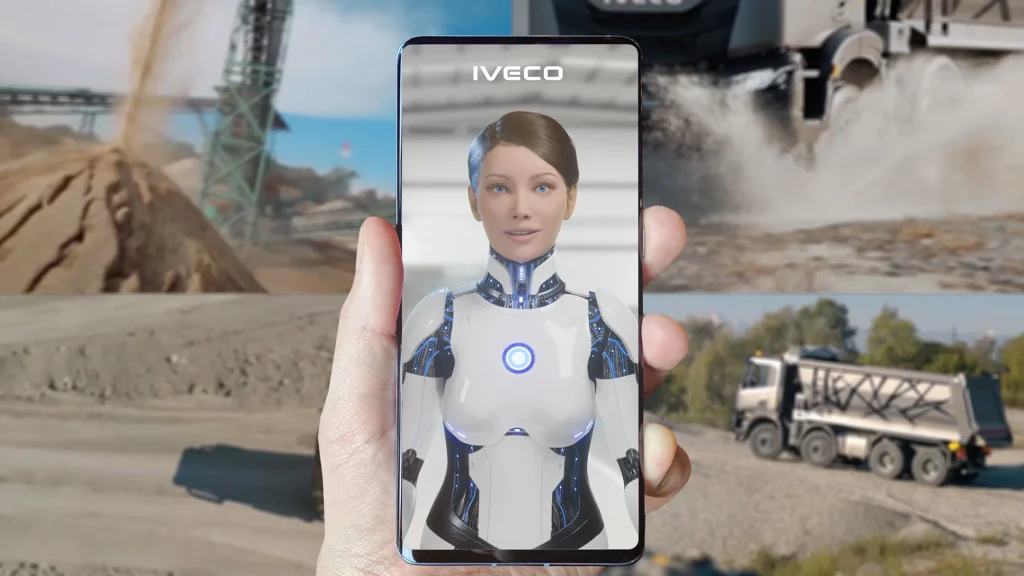
Aquí un avatar hiperrealista democratiza el conocimiento: convierte manuales interminables en una conversación cercana y siempre disponible. El ejemplo perfecto esIRIA, el avatar inteligente que Imascono desarrolló para Iveco, entrenado con más de 100 documentos de diez departamentos y al servicio de más de 4.500 empleados. El dato revelador: el 90 % de sus conversaciones son consultas de la red de concesionarios. El equipo interno gestiona su entrenamiento mediante una plataforma de gestión propia, garantizando la mejora continua.
Atención al cliente y gestión comercial
A hyper-realistic avatar provides instant and empathetic responses, detects emotions, and adapts its tone; it's available 24/7 in multiple languages and across multiple channels without compromising brand consistency. But it goes even further: it acts as a sales agent that guides customers through the entire customer journey—from the initial welcome to purchase and payment—in an automated and personalized way. In this way, it revolutionizes the shopping experience both online and at physical retail locations.
In-person and virtual events
The future of events lies in the experience, and that's where photorealistic avatars shine. Personalized welcomes for each attendee, presenters or moderators who guide the event, and brand ambassadors who interact in real time. Thanks to artificial intelligence, they make it possible to create smoother, more efficient, and unforgettable events, scaling personalized attention to hundreds of attendees at once, in both physical and virtual settings. At Imascono We've been transforming the inteligencia artificial Through engaging experiences: avatars that represent brands, build teams, and interact with real people. If you can envision an avatar that lives up to your project's vision, our team is ready to help bring it to life. Contact us at and let's build a success story together.
How virtual healthcare assistants are transforming patient care
The digital transformation in healthcare is advancing at an unprecedented pace, and one of the key drivers of this change is the virtual assistant in healthcare . The combination of artificial intelligence, conversational assistants, and interactive avatars is redefining healthcare towards a more personalized, accessible, and efficient . These intelligent systems are already capable of automate administrative tasks , guiding patients within the hospital, providing health education, answering basic clinical questions, and even offering ongoing emotional support. The result: hospitals and clinics that operate more efficiently and patients who feel better informed, supported, and cared for. In this article we will explore how the AI technology assisting with patients is opening a new chapter in the medicine , promoting more human and accurate experiences. We will analyze the real benefits of integrating a virtual assistant in hospitals, medical centers, and telemedicine services, drawing on success stories such as Sania Sanitas , an intelligent avatar that is already humanizing digitization in the healthcare sector. You will also learn about the role of Imascono Health , the specialized division that applies more than a decade of experience in technological innovation to develop advanced solutions focused on patient well-being and professional efficiency. If you want to understand where the future of healthcare is headed, and what role healthcare providers are playing, you need to understand where the future of healthcare is headed. intelligent assistants for health in this transition, stay. What follows is a clear, professional and inspiring look at the present and future of digital health.
¿Qué son los asistentes virtuales en la salud?
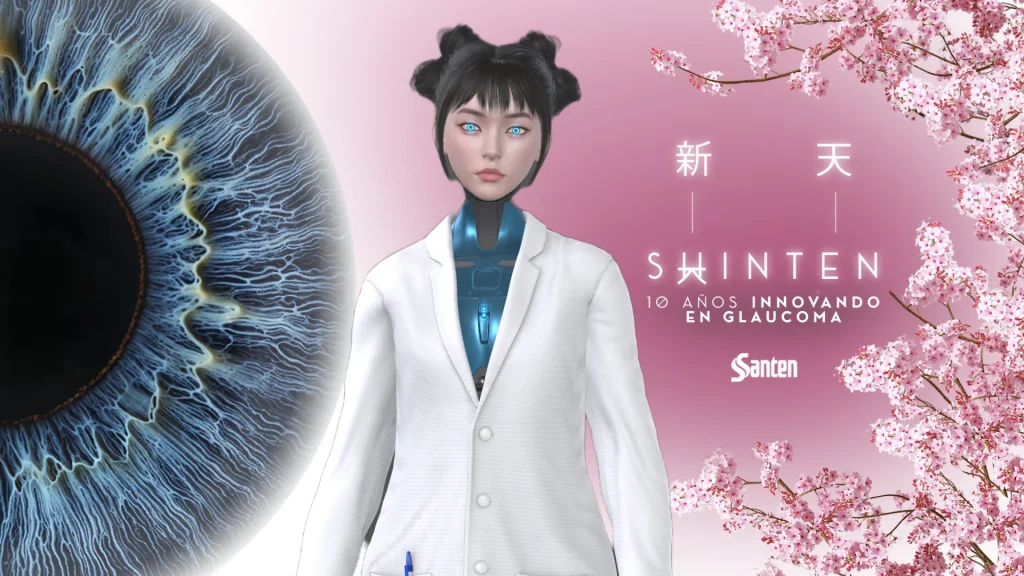
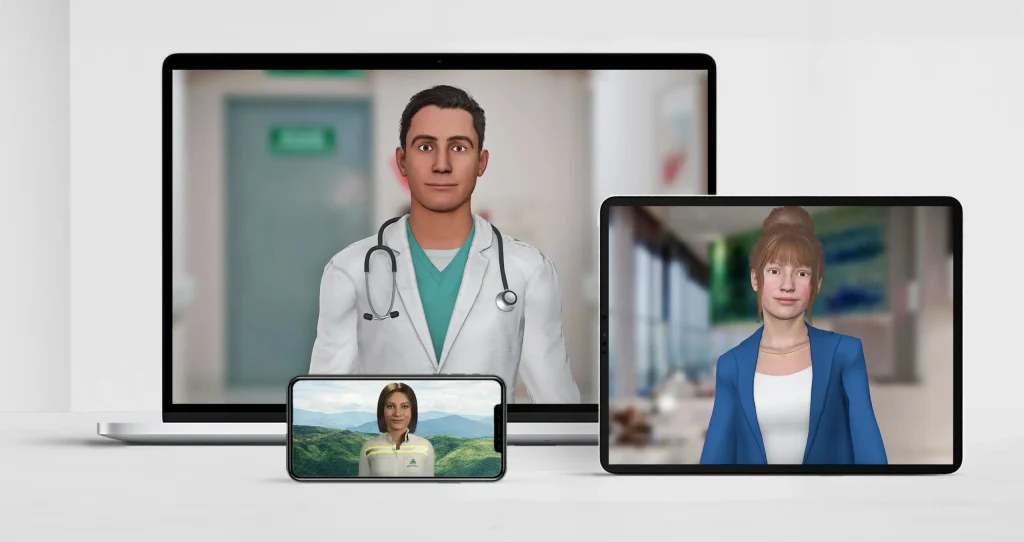
Los virtual assistant in healthcare representan una nueva era en la experiencia del paciente y en la comunicación dentro del sector sanitario. Son mucho más que chatbots tradicionales: se trata de asistentes virtuales inteligentes, impulsados por IA y diseñados para transformar la relación entre profesionales, pacientes y sistemas de salud. Estos asistentes son capaces de comprender el lenguaje natural, mantener conversaciones fluidas y acompañar al usuario durante todo su recorrido asistencial, desde la primera consulta informativa hasta el seguimiento posterior al tratamiento.Impulsados por la AI technology assisting with patients, funcionan como un compañero virtual disponible 24/7, capaz de resolver dudas médicas frecuentes, gestionar y modificar citas, enviar recordatorios de medicación, explicar procedimientos médicos de forma clara y guiar al paciente hacia el servicio adecuado dentro del hospital o centro médico. Su valor aumenta cuando se integran con historiales clínicos electrónicos, plataformas de telemedicina y sistemas hospitalarios, actuando como un auténtico virtual health assistant que optimiza procesos y reduce significativamente la carga administrativa del personal sanitario.En definitiva, un asistente virtual en el ámbito de la salud es la evolución natural del cuidado médico en la era digital: una solución conversacional inteligente que personaliza la atención, mejora la eficiencia operativa, acelera la toma de decisiones y ofrece un acompañamiento continuo con un equilibrio perfecto entre precisión técnica y empatía humana.Un ejemplo de caso de uso lo encontramos en la propuesta de Santen durante su último congreso médico, donde Shin fue el asistente virtual que acompañó a ponentes y asistentes durante toda la jornada. El avatar IA estaba entrenado con toda la bibliografía médica del evento y era capaz de ofrecer información verídica e informada al responder a las consultas del público. Te puede interesar → Principales usos y beneficios de la Inteligencia Artificial en la salud
El rol de la tecnología IA en la asistencia de los pacientes
The inteligencia artificial has become the driving force behind more healthcare human, proactive, and personalized . When we talk about AI technology assisting with patients , we refer to systems capable of analyze clinical information, understand the patient's context, and act in real time . Allowing the virtual medical assistant to tailor its responses, anticipate needs, and continuously accompany each user throughout their care journey. From initial triage to education on healthy habits, AI can interpret symptoms, detect patterns, prioritize risks, and offer data-driven recommendations. Always under the supervision of healthcare specialists. In addition, the AI frontline plays a key role in the reduction in administrative burden . By automating repetitive tasks, such as managing appointments, sending reminders, sorting queries or resolving frequently asked questions, these systems allow professionals to focus on what provides the most value: the humane treatment, clinical decision-making, and personalized care . With a virtual health assistant As a strategic ally, medical teams can monitor more patients, respond more quickly, and ensure care. immediate, accessible and consistent. You can learn more about this solution at Impact of Artificial Intelligence on Hospitals
Beneficios de los virtual assistants en salud
La incorporación de un virtual assistant in healthcare está redefiniendo los estándares de calidad, accesibilidad y eficiencia en hospitales, clínicas, aseguradoras y servicios de telemedicina. Estas soluciones impulsadas por IA no solo mejoran la experiencia del paciente, sino que fortalecen la excelencia operativa de las organizaciones sanitarias, convirtiéndose en un aliado esencial en la transformación digital del sector.A continuación, exploramos las ventajas más relevantes que ofrece un asistente virtual en el entorno sanitario:
Ventajas de los asistentes virtuales para los centros sanitarios
Optimización operativa y reducción de carga administrativa: Los asistentes virtuales automatizan tareas repetitivas como la gestión de citas, el envío de recordatorios, la entrega de resultados, la clasificación inicial de consultas o la resolución de dudas frecuentes.
Atención 24/7 con respuestas rápidas y fiables: Un virtual health assistant garantiza asistencia inmediata y continua, incluso en picos de demanda. Proporciona respuestas rápidas, consistentes y fiables, asegurando que el paciente reciba orientación y acompañamiento en cualquier momento, sin tiempos de espera prolongados ni dependencia exclusiva del personal presencial.
Mejora en la eficiencia del triaje y derivación médica: Gracias a la AI technology assisting with patients, estos asistentes pueden analizar síntomas, detectar urgencias potenciales y derivar al paciente al servicio, especialidad o profesional adecuado. Esto reduce la presión sobre urgencias, descongestiona call centers y optimiza el flujo asistencial.
Incremento en la satisfacción y fidelización del paciente: Una experiencia fluida, personalizada y digital-first mejora notablemente la percepción del paciente sobre el servicio recibido. Los asistentes virtuales aportan claridad, cercanía y accesibilidad, reforzando la confianza en la organización sanitaria y aumentando la probabilidad de fidelización.
Datos inteligentes para decisiones estratégicas: Los asistentes virtuales registran cada interacción, generando insights valiosos sobre necesidades, dudas, patrones de comportamiento y puntos de fricción del recorrido del paciente. Esta información permite a los centros sanitarios optimizar servicios, anticipar necesidades y diseñar estrategias de salud más precisas, basadas en datos reales.
Beneficios de los avatares IA para los pacientes
Experiencia más humana y personalizada: Un avatar con rostro, gestos y expresiones naturales reduce la frialdad habitual de la interacción digital. Transmite confianza desde el primer contacto, facilita la comunicación y genera un vínculo emocional que mejora la disposición del paciente a interactuar y compartir información.
Acceso inmediato a orientación médica y bienestar emocional: Los avatares proporcionan información clara, acompañamiento continuo y apoyo emocional, ayudando al paciente a resolver dudas en momentos críticos. Esta disponibilidad inmediata disminuye la ansiedad, evita la desinformación y ofrece una guía fiable sin tiempos de espera.
Increased accessibility.: Al estar adaptados a diferentes idiomas, capacidades cognitivas o niveles de alfabetización digital, los avatares eliminan barreras de acceso y democratizan la salud digital. Su diseño multiplataforma permite que cualquier paciente —independientemente del dispositivo o contexto— pueda obtener apoyo de manera sencilla e intuitiva.
Aprendizaje y adherencia a tratamientos reforzada: Los avatares pueden explicar procedimientos, enviar recordatorios, ofrecer tutoriales interactivos, realizar seguimiento del tratamiento y motivar al paciente. Esto se traduce en una mayor adherencia terapéutica, un mejor entendimiento de la enfermedad y una participación más activa en el propio cuidado de la salud.
Privacidad, seguridad y confidencialidad garantizadas: Todas las interacciones se realizan en entornos seguros que cumplen estándares de protección de datos y normativa sanitaria. El avatar actúa como un mediador confiable entre la tecnología y la información médica del paciente, preservando su privacidad en cada paso del recorrido asistencial.
Principales ejemplos del uso de asistentes virtuales en el sector sanitario
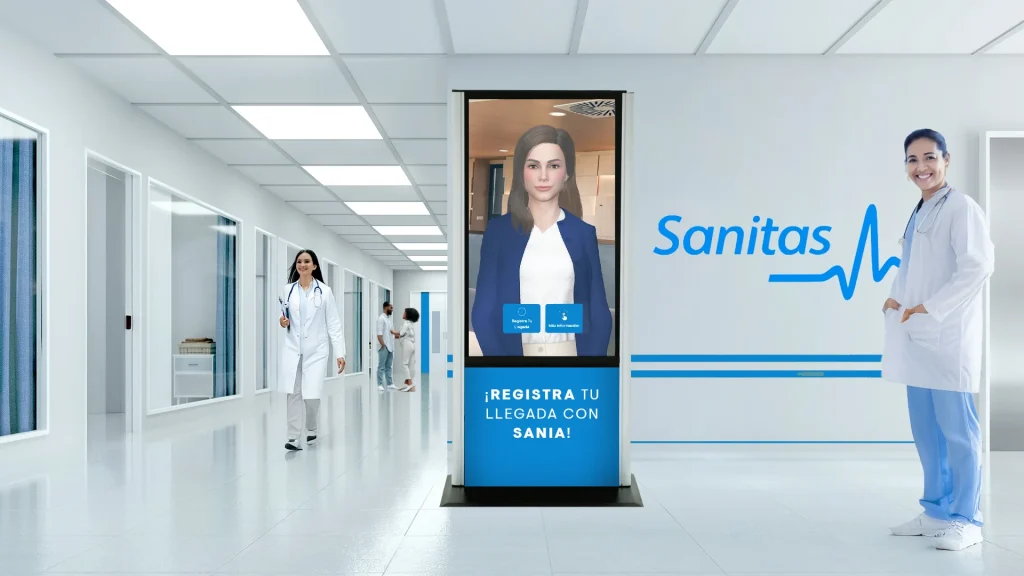
Next, we analyze Sania from Sanitas , one of the division's most representative projects Imascono Health , the result of collaboration and joint innovation within the healthcare sector. This case demonstrates how a virtual assistant l in health can truly and measurably transform the patient experience and the efficiency of a healthcare organization.
Sania Sanitas
Sania ha permitido a Sanitas evolucionar su modelo de atención al paciente combinando inteligencia artificial, accesibilidad y cercanía humana. Gracias a este avatar virtual de última generación, la compañía ha logrado agilizar la orientación sanitaria dentro del centro médico, guiando a los usuarios en trámites, consultas y procedimientos sin necesidad de esperar o depender exclusivamente del personal en recepción.El asistente ofrece una primera atención inmediata, multilingüe y disponible 24/7, reduciendo tiempos de espera, descongestionando al personal y garantizando una experiencia inclusiva para todo tipo de pacientes. Desde que el usuario cruza la puerta del centro, Sania actúa como un compañero digital que facilita su recorrido asistencial y mejora la comprensión de cada paso del proceso.Además, Sania aporta un valor estratégico clave, optimizando procesos internos, reduciendo costes operativos y generando datos en tiempo real que permiten analizar necesidades, anticipar mejoras y perfeccionar continuamente el modelo de atención. Al humanizar la salud digital a través de un avatar hiperrealista, Sanitas refuerza su posicionamiento como una de las compañías más innovadoras del sector, demostrando cómo la tecnología puede mejorar la experiencia del paciente, transformar la atención y consolidar un modelo sanitario más eficiente, inteligente y humano.
How Imascono can enhance healthcare with its virtual assistants
En Imascono impulsamos la evolución del sector sanitario hacia un modelo más digital, humano y eficiente. Con la creación de Imascono Health, nuestra división especializada en salud, consolidamos más de una década de experiencia desarrollando soluciones tecnológicas para hospitales, aseguradoras, centros médicos y compañías del ámbito clínico y del bienestar. Un espacio donde reunimos conocimiento científico, diseño de experiencias y tecnologías avanzadas para transformar la atención sanitaria desde la innovación.Desde esta división, centramos nuestro trabajo en virtual assistant healthcare y en experiencias inmersivas diseñadas para mejorar la relación entre paciente y centro médico. Gracias a nuestro expertise en IA conversacional, avatares inteligentes y diseño de recorridos asistenciales, desarrollamos soluciones que optimizan procesos, facilitan la orientación del paciente, reducen la carga operativa del personal y elevan la calidad de la experiencia sanitaria.Nuestras propuestas están diseñadas para humanizar la salud digital, ofreciendo asistentes virtuales capaces de acompañar, informar y guiar al paciente con empatía, precisión y disponibilidad constante. Soluciones preparadas para responder a los desafíos actuales del sector y evolucionar a medida que la tecnología y las necesidades sanitarias avanzan.Si deseas mejorar la experiencia de tus pacientes, optimizar tus procesos internos y dar el salto hacia un modelo sanitario más innovador, el equipo de Imascono Health está listo para acompañarte. Contáctanos y descubramos juntos cómo un virtual health assistant puede transformar tu centro de salud desde hoy.
AI personal shopper: Trends that are transforming retailing
Imagine a world where your personal shopper never sleeps, knows your tastes in detail and accompanies you on every device, from your mobile to the physical store, offering recommendations that seem tailor-made. That world is already a reality thanks to the inteligencia artificial , The company is revolutionizing retail and transforming the way we shop, discover products and live memorable experiences. In this blog we invite you to explore how AI is redefining the future of personal shopper: from personalized styling and virtual fitting to intelligent avatars that guide your shopping and optimize logistics. Plus, you'll learn about real-life success stories, such as Fabiola de Saphir Parfums , La Torre Outlet Nougat and the interactive campaign of The Body Shop , The results show that technology not only enhances the experience, but also drives sales, engagement and loyalty. Are you ready to find out?
What role does AI play in personal shoppers?
Artificial intelligence has completely redefined the role of the personal shopper, transforming him or her from a human in-store advisor to a digital assistant capable of delivering personalized experiences. Thanks to data analytics, machine learning and customer adaptability , AI understands the tastes, habits and context of each user, recommending products with a precision impossible for a human. This not only improves the shopping experience, but also boosts loyalty, increases average cart value and turns every interaction into an opportunity to surprise the customer. Moreover, AI does not replace the traditional advisor, but enhances it by automating tasks, anticipating needs and optimizing retail operational management. However, this advance brings with it great responsibilities: ensuring ethics, transparency and privacy in the use of data will be key to consolidating consumer trust. In short, AI is positioned as the engine driving the future of the personal shopper , combining technological innovation, efficiency and a more human customer experience than ever before.
Key roles redefining the future of the personal shopper
The evolution of the AI-driven personal shopper is not only redefining the customer experience, but also the key functions that make it possible. Here are the five functions that are shaping the future of retail.
Personalized styling
AI is taking the concept of styling to a new level. It seeks to understand each consumer in depth: their morphology, preferences, lifestyle and even their mood. AI algorithms analyze millions of pieces of data to build a dynamic "style profile" that evolves with every interaction. Thus, the The digital personal shopper becomes a unique advisor, able to offer a precise and unique recommendation for each user.
Visual search and product discovery
Visual search is one of the most powerful trends in retail today. Driven by computer vision and machine learning, it removes language barriers and transforms inspiration into action. For the user, it means effortless product discovery, and for brands, a golden opportunity to increase conversion and drive inspiration at the digital point of sale.
Virtual fitting rooms
Thanks to the augmented reality and AI, the physical testers are no longer essential. Virtual fittings allow customers to "see themselves" in different garments or accessories in real time, adapted to their silhouette and environment. This technology improves the shopping experience, reduces returns and strengthens online consumer confidence . The future of the fitting room is on mobile, where technical precision is combined with an immersive and fun experience.
Conversational trading through AI avatars
El comercio conversacional ha dado un salto cualitativo con la llegada de los avatares impulsados por IA. Estos asistentes virtuales no solo responden preguntas, sino que guían, recomiendan y acompañan al cliente en su proceso de compra de forma natural y empática. En Imascono, vemos estos avatares como la unión perfecta entre storytelling y tecnología. Un nuevo canal para humanizar el e-commerce, generar engagement y crear experiencias que los clientes recuerden a través de esta nueva atención al cliente.
Logistics forecasting and optimization
The new personal shopper doesn't stop at recommending a product; AI does too. ensures that the item is in stock, delivered on time and in the perfect size . Through predictive analytics and demand modeling, intelligent solutions anticipate trends, optimize inventories and reduce logistics waste. By providing the supply chain with a more agile, sustainable and aligned service with the expectations of the modern consumer. AI thus becomes the silent engine that connects personalization with efficiency.
Benefits of implementing AI in retail through personal shoppers
Artificial intelligence applied to retailing through personal shoppers is transforming the shopping experience into a much more personalized, efficient and emotional interaction . Thanks to data analytics and machine learning, brands can now offer accurate recommendations, anticipate customer needs, and anticipate customer needs and optimize internal processes, from inventory to after-sales service. The result: more satisfied customers, greater customer loyalty and an increase in the average value of each purchase. In addition, AI avatar-driven personal shoppers are multidevice , This allows for a seamless and consistent experience between mobile, desktop, physical stores or even augmented reality environments. These virtual advisors accompany the user at any time and any place , creating an omnichannel connection that combines human proximity with technological innovation. Thus, retail is evolving towards a smarter, more sustainable and consumer-centric model.
Success stories of Artificial Intelligence in retailing
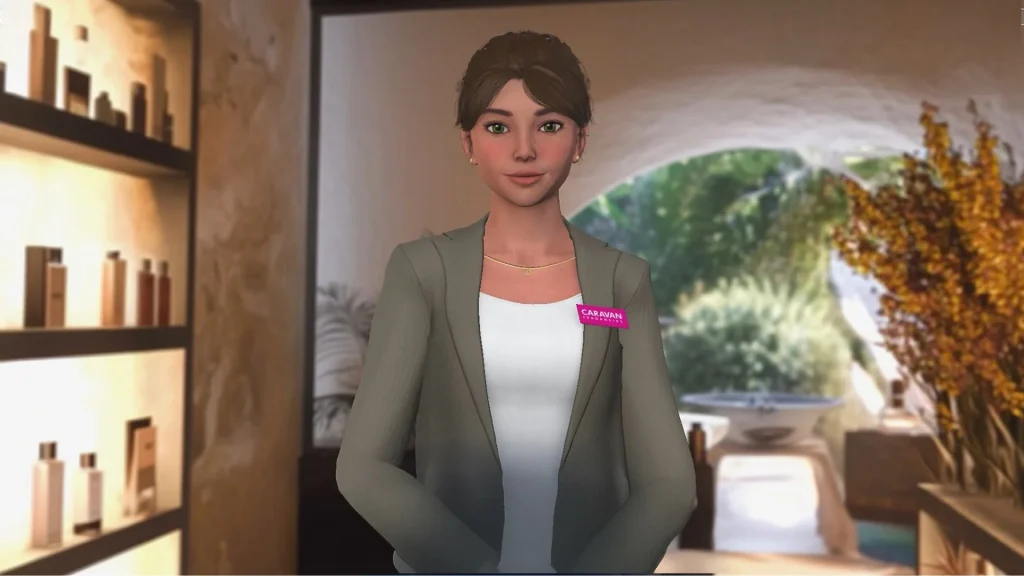
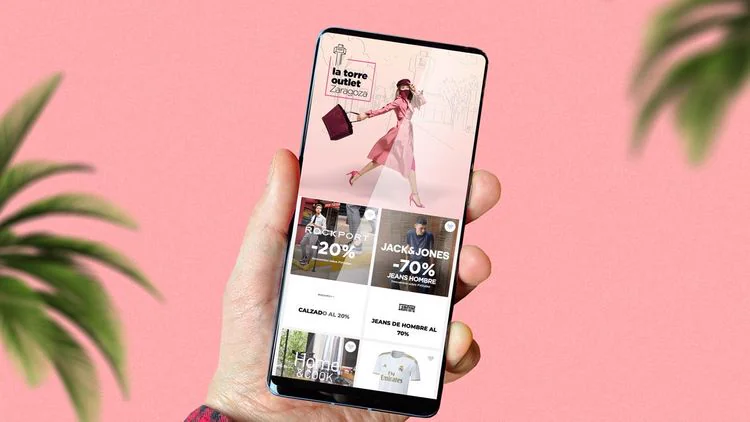
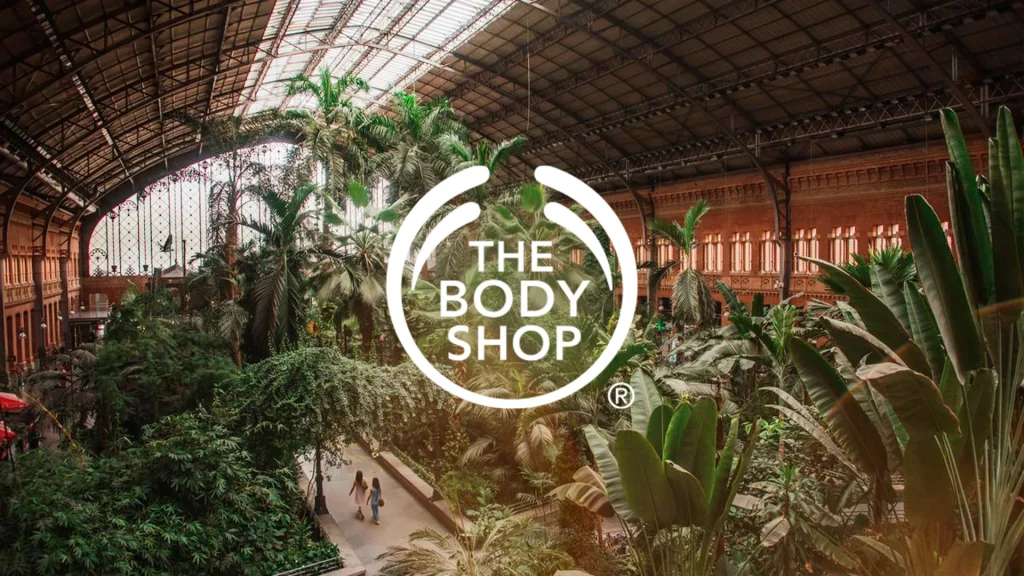
Los siguientes casos de éxito muestran cómo la IA aplicada al retail está transformando la experiencia de compra. Desde avatares que asesoran al cliente hasta experiencias inmersivas en tienda. A continuación, repasamos tres proyectos que ejemplifican esta transformación.Fabiola SaphirEn este proyecto desarrollado junto a Caravan Fragancias, se dio un salto cualitativo en su experiencia de cliente al implantar un avatar inteligente llamado Fabiola. Esta solución se integró en los puntos de venta físicos mediante códigos QR, además de su presencia online, con el objetivo de ofrecer recomendaciones personalizadas en tiempo real entre más de 125 referencias de fragancias. Este avatar ha permitido que cada usuario reciba asesoramiento personalizado tanto en tienda como en móvil. TurrónLa Torre Outlet de Zaragoza confió en Imascono para transformar su experiencia de compra navideña mediante Turrón, un simpático avatar virtual con IA que actúa como asistente de compra: propone regalos personalizados, cuenta historias navideñas, y permite al usuario generar y compartir su carta con Papá Noel y los Reyes Magos.En su primer fin de semana registró 500 usuarios, con una duración media de conversación de 4 minutos y hasta 90 conversaciones estimuladas al día. The body shopEn esta iniciativa, The Body Shop junto a Imascono desplegaron un photocall interactivo con realidad aumentada en la estación de Atocha (Madrid) durante la campaña navideña. Los viajeros se fotografiaban frente a la pantalla, aparecían elementos 3D de la marca y luego podían canjear regalos sorpresa en tienda.La campaña obtuvo resultados significativos: 5.000 personas accedieron gracias al sorteo del photocall y se registró un aumento del ticket medio de compra del 20%. Esta acción muestra cómo la IA y la tecnología inmersiva pueden transformar el punto de venta.¿Quieres llevar tu negocio al siguiente nivel con un personal shopper impulsado por inteligencia artificial? En Imascono te ayudamos a diseñar e implementar soluciones innovadoras que combinan tecnología, creatividad y experiencia de cliente. Contáctanos y descubre cómo hacerlo.
Aplicaciones de la Inteligencia Artificial en la industria
The Artificial Intelligence is transforming the industrial landscape, revolutionizing the way companies operate and address current and future challenges. It redefines processes, optimizes resources, automates tasks and opens new frontiers of innovation. AI has become an essential tool for industry. In Industry 4.0, Big Data and Artificial Intelligence are essential for transforming productivity, for automation The system can be used for predictive maintenance and even for product customization on the production line itself. One of the most promising and versatile applications also involves the development of avatars and virtual agents to go beyond production and focus on the workers. Thus, AI can become a companion in your day-to-day life The virtual agents are also being integrated into physical environments, such as factories through robots, further expanding their impact. As technology advances, these virtual agents are also being integrated into physical environments, such as factories through robots, further expanding their impact. In this article, we will discover how AI is being applied in the industrial sector highlighting different use cases that are redefining the future of the industry.
The role of Artificial Intelligence in Industry 4.0.
The Artificial Intelligence is the key driver of Industry 4.0 transforming businesses with solutions that optimize processes, analyze data in real time and anticipate problems. Their ability to learn and adapt enables the creation of smart factories and agile supply chains, offering a competitive advantage in an increasingly dynamic world. In addition, AI is leading the way to Industry 5.0, where the human-machine synergy improves quality of life and fosters more productive collaboration . A clear example is cobots, collaborative robots that reduce the physical and mental workload of workers, promoting a safer and more efficient work environment. If you want to learn more about Industry 4.0. visit our article → What is Industry 4.0. and what are its main characteristics? .
Applications of Artificial Intelligence applied to the industry
The industry is experiencing a significant transformation through the adoption of AI which offers innovative solutions to improve efficiency and optimize processes. From automating tasks to making decisions based on predictive analytics, Artificial Intelligence is changing the way businesses operate in key sectors such as manufacturing, logistics and customer service. The applications of AI in the industrial sector are countless, with direct benefits in efficiency, productivity and process optimization. Some examples are:
Predictive maintenance
The Artificial Intelligence-based maintenance in industry revolutionizes the way companies manage their equipment and machinery. . Thanks to real-time data analysis, AI can predict failures, enabling proactive intervention. This reduces downtime and optimizes asset lifecycles, generating significant savings in repair costs and avoiding unplanned shutdowns. The result is a more efficient, cost-effective and reliable operation The plant is equipped with a high capacity equipment, where each piece of equipment works at its maximum capacity, guaranteeing operational efficiency in the production lines.
Quality control
AI is redefining quality control in industry, ensuring defect-free products with accuracy impossible for the human eye to achieve. Using advanced machine learning and machine vision algorithms AI systems inspect and analyze each unit produced, detecting even the smallest defects with speed and accuracy. This allows companies to to improve consistency, reduce waste and raise quality standards The company's products and services have been designed to meet the needs of customers in increasingly demanding markets.
Worker assistance
Artificial Intelligence does not replace the worker, it empowers them. From systems that offer data-driven recommendations to virtual assistants that guide through complex tasks, Artificial Intelligence becomes a essential ally in the day-to-day work of employees. In addition, technologies such as the AI-driven Augmented Reality improve training and safety, creating a more productive and enriching work environment. In addition, the AI eliminates language barriers, facilitates accessibility for people with disabilities and offers hands-on training through advanced simulations. These innovations transform the work environment, making it more inclusive, safe and collaborative. .
Main benefits of Artificial Intelligence for the industry
The Artificial Intelligence for industry not only offers numerous advantages, but has become indispensable in the optimization of the production process of companies, contributing to their growth and success. Automate tasks, optimize resources, predict patterns or even perform predictive maintenance. are some of the benefits of using AI in the industrial world. Ultimately, seeking to increase efficiency at every stage of production. Let's take a closer look:
Mejora de la productividad
Artificial Intelligence takes industrial maintenance to the next level, transforming a reactive approach into a predictive one . Thanks to advanced algorithms that analyze machine status in real time, AI anticipates failures before they occur, enabling proactive interventions. This reduces downtime, optimizes the use of resources and ensures that each piece of equipment operates at its maximum efficiency . The result: more profitable, reliable and efficient operations.
Increased process quality
The quality of industrial processes has reached new standards of excellence . AI systems identify errors and optimize variables in real time, ensuring consistent and accurate results. For example, machine vision and deep learning algorithms enable immediate defect detection, reducing waste and increasing customer satisfaction. Each process is refined, which ensures that companies can to meet the highest standards and remain competitive in a demanding and fast-paced market.
Gestión y monitorización de la fábrica
If we now focus on the internal management of factories, Artificial Intelligence provides advanced tools to monitor and control production in real time. Thanks to AI, companies can anticipate problems before they affect production, optimizing operational efficiency. This supervision facilitates faster decisions, reduces downtime and improves the quality of the final product. Driving factories towards continuous innovation and staying competitive in a demanding market.
Integration of technologies
Artificial Intelligence acts as the brain that integrates other key technologies in the industry The Internet of Things (IoT), Big Data systems and advanced monitoring tools. This interconnection enables rapid access to critical data, facilitating a response to market demands. AI connects IoT systems, control panels and Big Data, offering a comprehensive view of industrial processes. This technological synergy not only improves operational efficiency, but also empowers organizations to make strategic decisions based on accurate information.
Example of Artificial Intelligence in Industry: Meet IRIA
IRIA is a clear example of how Artificial Intelligence is transforming the industrial sector. In this case, the area of communication and training in industrial companies. Developed for Iveco, this intelligent avatar facilitates access to information and training for the company's employees, allowing quick and autonomous consultations on various topics related to the company's products and services. Through an interactive platform, IRIA offers a customized experience for each user managing more than 4,500 employees and dealers. Providing real-time support and improving operational efficiency. Promoting greater transparency and access to information within the company. This AI avatar also helps in the continuous training by analyzing the use of content and detecting new areas of learning. The implementation of IRIA demonstrates how Artificial Intelligence, when applied strategically, can transform the way large companies manage their internal processes and improve interaction with their employees and stakeholders.
Discover our Artificial Intelligence service for businesses
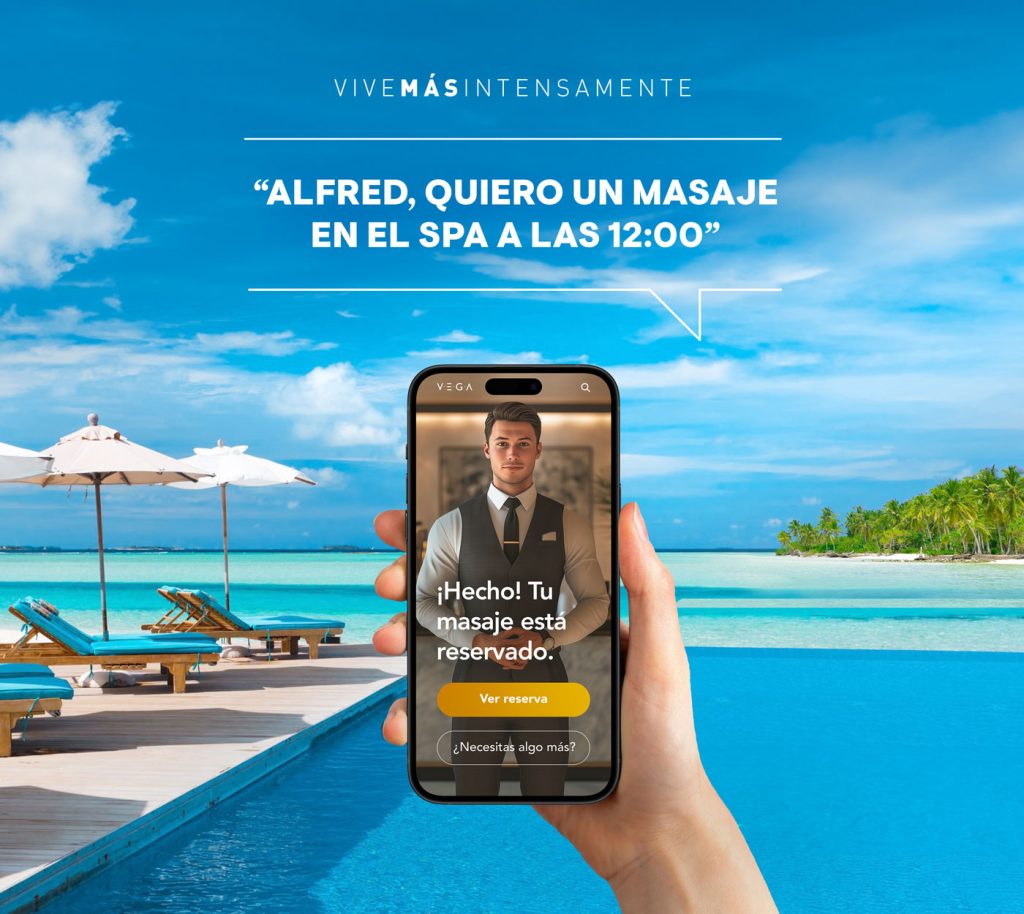
Artificial intelligence has become a key pillar for companies, and with technologies such as V.E.G.A We are transforming essential areas such as customer service and employee assistance. Our solution optimizes processes, improving efficiency and delivering personalized experiences. to customers. In addition, with this Artificial Intelligence service we help automate repetitive tasks, reducing human workload and improving real-time support, leading to a more productive work environment focused on employee well-being. Are you interested in learning more about virtual avatars ( V.E.G.A) and how to implement them in the industrial world? Get in touch with us and our team of engineers and designers will be happy to answer all your questions.
Technology and cosmetics, the most relevant trends
Beauty is reinventing itself at an unstoppable speed thanks to technology. Today, technology in cosmetics is no longer just a question of formulas and textures: it is an essential part of the beauty industry. smart, personalized, innovation-packed experience that connects science, data and creativity to take care of you like never before . When talking about technology applied to makeup and cosmetics, we can focus on new formulas and advances in biotechnology. However, on this occasion we would like to focus this post on the area of retail technology in the customer experience in the form in which fashion and cosmetics brands are making use of technology when interacting with customers . From AI avatars who become your personal shoppers, to window displays and virtual testers that allow changes to be made in Augmented Reality. The future of beauty and cosmetics is already here. In this blog you will discover how technology is transforming the market with innovations that are already revolutionizing the point of sale, personalizing skin care and creating immersive experiences that captivate consumers. In addition, you will learn about real case studies of brands that, with the support of Imascono are applying these trends to conquer hearts and markets. Ready to explore the future of cosmetics? Read on and get ready to fall in love with technological beauty.
The impact of technology on today's cosmetic industry
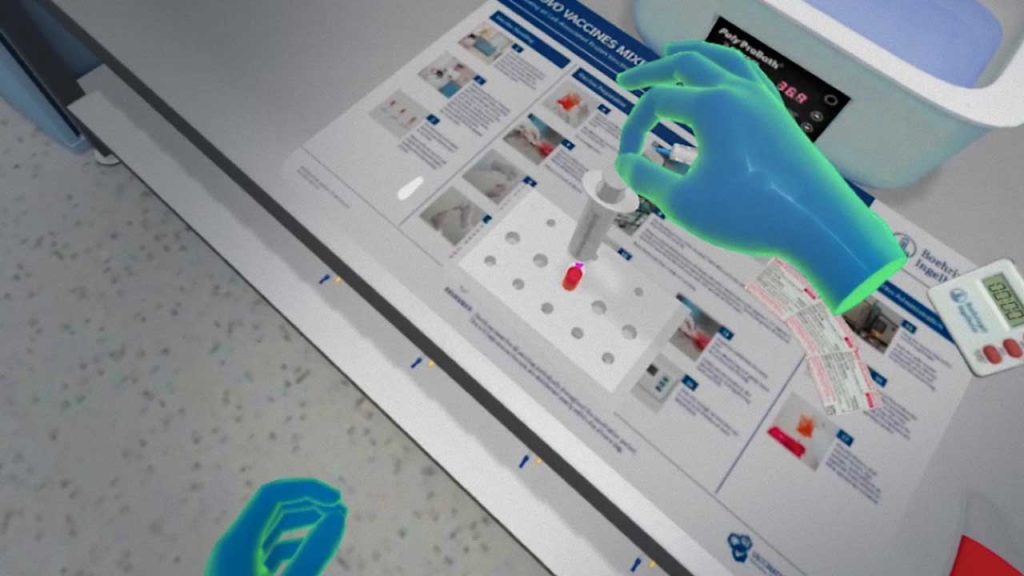
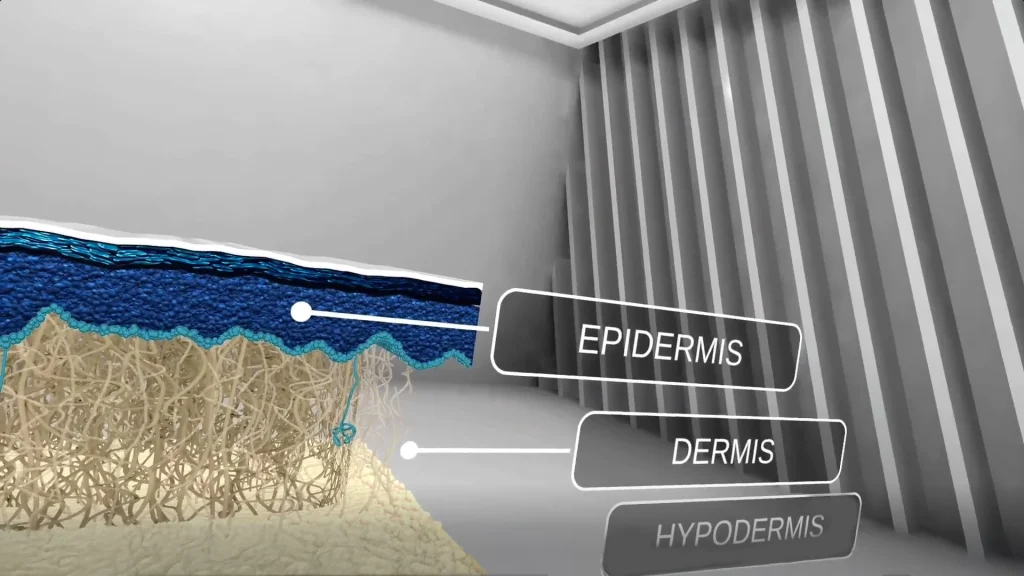
New cosmetic technologies are revolutionizing today's beauty industry, transforming personal care into an intelligent and personalized experience. Today, thanks to technology and its applications, it is possible to analyze and understand the unique needs of our skin and hair to offer tailor-made treatments and products, as if we had a beauty expert in the palm of our hand. But innovation not only improves results, it also drives sustainability, with formulas and processes that respect the planet and use natural ingredients responsibly. Technological cosmetics is the perfect fusion of science, creativity and environmental commitment. The new line of products, leading the way to a more effective, conscious and exciting future of beauty. But the use of technology goes much further. At the customer experience level, the use of tools such as Artificial Intelligence and Augmented Reality allows customers to personalize the shopping experience . Trying different products and styles of makeup, hairstyles and dyes, enhancing creativity by going beyond the physical limits. At a training level, the use of Virtual Reality allows both users and professionals in the sector to know in detail each of the steps of the treatment and its impact on our body, as in the case of Merz Aesthetics Virtual Trainings the leading company in aesthetic medicine. You may be interested in → Virtual Reality and medicine: applications in the healthcare sector .
Cosmetic innovations already on the market
Technology is transforming the present of the cosmetics industry. Visionary brands are incorporating tools that enhance the shopping experience, boost personalization and create emotional connections with consumers. Below, we explore some of the most impactful innovations.
Interactive testers
Shop windows are no longer static. Today, thanks to motion sensors, Augmented Reality and facial recognition, the virtual storefronts become truly immersive experiences. When interacting with a customer, show personalized recommendations and even invite you to try a look in real time! A perfect fusion between physical retail and digital experience, which is immortalized in the phygital trend. You can learn more about this trend at Phygital as a new dimension in user experience
Personal Shopper
Imagine having a 24/7 beauty advisor who, based on your preferences or tastes, gives you personalized recommendations. That's the promise of AI agents acting as digital personal shoppers. These virtual assistants also offer customer service, personalized tutorials, and even daily routines. Integrated into web, e-commerce and QR codes, these avatars create a close, efficient and memorable shopping experience. Enhancing brand image from the shelf. In addition, these intelligent personal shoppers perform personalized recommendations of all the products in the brands' catalog. From the user who is looking for a specific cosmetic product to the user who needs basic advice, IA avatars as Fabiola adapts to all types of situations.
Augmented Reality at the point of sale
Trying a product online before you buy it is as easy as opening an AR app. . You can see how a lipstick, foundation or even a new hairstyle looks without physical contact. In addition to the use of Augmented Reality in the webapps In the case of brands, physical stores are also beginning to integrate smart mirrors to suggest the products that best suit their visitors. An immersive experience that redefines the concept of \"trying on\".
Skin diagnosis using Artificial Intelligence
Las apps de skincare ya no solo te muestran productos, ahora escanean tu rostro, detectan imperfecciones, analizan el nivel de hidratación, poros y manchas, y te recomiendan rutinas personalizadas.Este diagnóstico potenciado por IA utiliza machine learning y grandes bases de datos dermatológicas para ofrecer análisis precisos y actualizados.
Boosting the online community
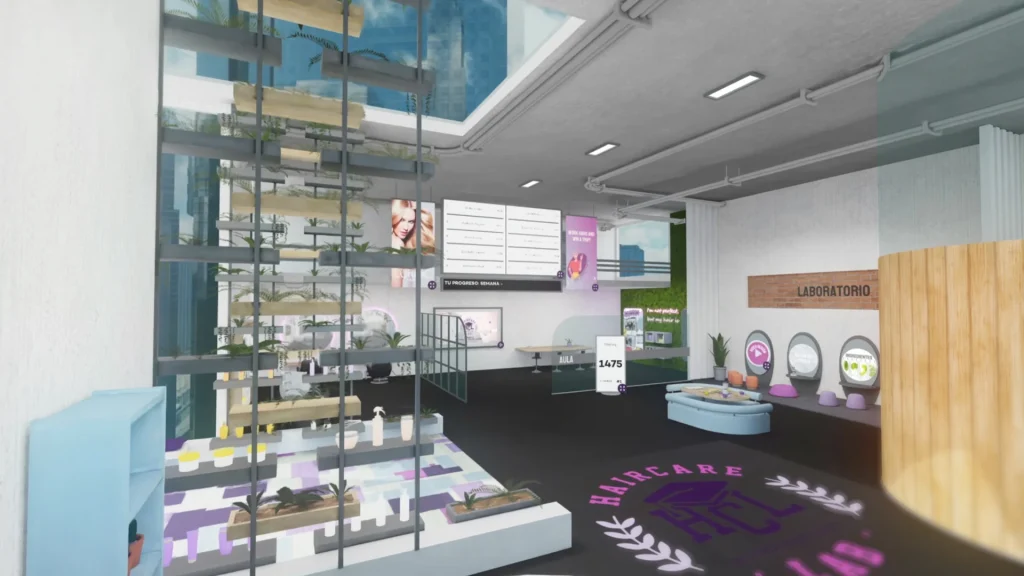
From storytelling to storyliving. From being mere spectators to being part of the action. The virtual spaces have revolutionized the way cosmetic brands connect with their users. creating gamified environments without physical or geographic boundaries. These spaces allow consumers to interact with products, participate in personalized experiences and become part of active online communities. By incorporating immersive technologies In this way, brands can generate deeper emotional connections, foster loyalty and offer unique experiences that are accessible to a global audience. An example of this can be found in L'Oreal Academy a virtual school where the brand teaches the correct use and all the benefits of its Skincare, Haircare and Makeup line.
The effect of technology on the cosmetics of the future
Technology is already transforming the way we discover, test and use beauty products, but what's to come promises to be even more revolutionary. The cosmetics of the future will be highly personalized, predictive and fully connected. Imagine an ecosystem where bioengineering and Artificial Intelligence work together to anticipate your skin's needs before they manifest themselves. From adaptive cosmetics that respond in real time to the weather, to AI-guided treatments that monitor your skin while you sleep. In retail, Artificial Intelligence is becoming key to personalizing the shopping experience. Virtual storefronts and smart mirrors allow customers to interact immersively with products by trying them out virtually and receiving personalized recommendations. In addition, physical stores are digitally transformed, changing and enriching the shopping experience. Creating immersive environments where technology enhances interaction, purchase decision making and customer loyalty. The future of beauty will not only improve our appearance, it will will transform the way we live and experience personal care.
Do you want to apply these technologies in your cosmetic brand? At Imascono we help you
At Imascono for more than thirteen years, we have been helping leading beauty brands to transforming your relationship with customers through technology . From immersive experiences to virtual assistants with AI. Throughout the article we have been discussing some of the most important use cases of technology in the cosmetics sector, let's see them now in more detail:
Saphir Fabiola: Junto a Caravan Fragancias creamos a Fabiola, un avatar IA que asesora en perfumería desde el punto de venta a través de un simple código QR. Ofrece recomendaciones personalizadas, resuelve dudas y comunica novedades con una voz experta y cercana, mejorando la experiencia del cliente en su lineal de tiendas físicas.
L’Oréal Academy: Desarrollamos una plataforma educativa innovadora para formar a influencers internacionales sobre el cuidado de la piel, combinando masterclasses virtuales y gamificación. El programa empodera a creadores de contenido para difundir información científica y sostenible a millones de seguidores.
The Body Shop Kimchi!: Transformamos la estación de Atocha en Madrid con un photocall aumentado para la campaña navideña de The Body Shop. Los viajeros disfrutaron de una experiencia interactiva con fotos 3D y regalos sorpresa, incentivando la visita a la tienda y generando un gran impacto en público y ventas.
From Imascono we help cosmetic brands innovate with purpose and a lot of creativity. If you dream of transforming your brand through memorable technology experiences, we are ready to make it happen with you. Contact us at and find out how we can take your vision to the next level.
How AI in real estate can help you increase sales
Artificial Intelligence has burst onto the real estate scene, revolutionizing the way properties are bought and sold. Thanks to advanced tools such as data analytics, virtual assistants, interactive tours and process automation In this way, real estate companies can optimize their work, improve the customer experience and make more strategic decisions. In this article, we will discover how AI is transforming the real estate market, its main applications and the key benefits it offers. From save time and resources and even anticipate market trends . In addition, we will show you how innovative solutions, such as avatars and AI agents V.E.G.A can make a difference in customer service. If you are looking for increase your sales and differentiate yourself in an increasingly digitized marketplace It's time to take the leap towards the use of AI. Find out how to take advantage of its full potential in this post!
The Artificial Intelligence revolution in the real estate industry
The real estate sector is undergoing a true digital transformation, and at the heart of this revolution is Artificial Intelligence. It is no longer just about posting ads on portals or waiting for clients to visit an agency; today, AI is redefining the way properties are sold and bought. From personalizing the shopper experience to automating processes that previously consumed hours of work, Artificial Intelligence is optimizing every link in the real estate chain. . Companies that have been able to incorporate this technology are seeing how their sales times are reduced, your customer conversion increases and the efficiency of your operations reaches unprecedented levels. But, what has made this revolution possible? The combination of Big Data analysis, macro data on real estate trends, together with a deeper understanding of potential buyers, homes and search platforms. In this way, the AI, through intelligent agents The system is capable of offering personalized attention to each interested party and at the same time registering in real time all the doubts and information that is shared in order to offer them the home that best suits their needs.
Main applications of AI for real estate
As we are seeing throughout this article, AI has arrived in the real estate sector and is revolutionizing it with innovative tools that allow you to sell more and better. From predictive analytics to automation. Below, we explore the top ways to use AI in real estate that can boost your business.
Análisis de datos
Los datos son el oro del siglo XXI, y la Inteligencia Artificial los convierte en una brújula para tomar decisiones estratégicas. En el sector Real Estate, la IA está transformando el análisis de datos, proporcionando a las inmobiliarias herramientas avanzadas para tomar decisiones más informadas y estratégicas. Así, es posible procesar grandes volúmenes de información en tiempo real, desde tendencias del mercado y precios hasta las preferencias de los compradores, lo que permite identificar patrones y realizar predicciones más precisas. Este análisis profundo facilita la optimización de la inversión, la valoración de propiedades y la personalización de ofertas, mejorando tanto la eficiencia operativa como la experiencia del cliente.
Asistentes virtuales
Among the main applications of AI in Real Estate are virtual assistants and intelligent agents who are able to provide personalized recommendations based on a deep understanding of clients' needs and property characteristics . Thanks to its ability to answer questions in real time and provide personalized recommendations, it becomes an extension of the sales team. This is where AI-based virtual assistants come into play, and we can't fail to mention V.E.G.A, the AI avatars developed by Imascono . They are not simple avatars or chatbots, but real digital agents with personality, appearance, knowledge and human expressiveness that improve interaction with customers. If you want to learn more about the advances in innovation in this sector, we recommend you to visit Technology trends in Real Estate .
Adapt space in real time
Artificial Intelligence is revolutionizing the way buyers interact with properties by allowing them to customize and personalize spaces in real time. Thanks to advanced image and video generation tools, clients can visualize their future home with specific details, such as layout changes, remodeling, decoration or even the choice of materials. This level of customization, powered by AI, gives buyers the ability to see what their ideal home will look like before making a purchase decision . The technology not only enhances the visualization of the property, but also facilitates the emotional connection, allowing users to see themselves living in that space, which can speed up the decision process and increase customer satisfaction.
Virtual tours
Gone are the days when buyers had to go through dozens of properties before making a decision. Today, it is possible to interactive visits from anywhere in the world . Virtual tours allow clients to explore every nook and cranny of a property without having to travel, thus filtering out truly interested buyers. In addition, AI can personalize the experience The system can also generate guided tours and even adapt these spaces to the proposals made by virtual visitors in real time. An example of this type of project can be found in the Lekue virtual showroom a gamified environment that recreates different spaces of a house where you can see all the brand's products.
Benefits of Artificial Intelligence in Real Estate
Artificial Intelligence is revolutionizing the real estate sector, improving customer experience, optimizing time and allowing for more strategic decision making . Here we explain its main benefits.
Mejora de la experiencia del cliente
En el entorno actual, los compradores demandan experiencias de compra más personalizadas y fluidas. La IA permite satisfacer estas expectativas al ofrecer recomendaciones inteligentes basadas en los datos y preferencias de cada usuario.Los algoritmos de aprendizaje automático analizan la información del cliente, ofreciendo opciones personalizadas que mejor se adaptan a sus necesidades. Además, los asistentes virtuales disponibles las 24 horas del día permiten resolver dudas y guiar al cliente a lo largo del proceso de compra.
Saving time and optimizing resources
Time is one of the most valuable assets in real estate. In this sense, Artificial Intelligence optimizes this resource by automating repetitive tasks such as lead management, ad creation and visit scheduling. Real estate agents can screen potential buyers more efficiently This allows them to focus on the customers they are really interested in. In addition, the digitization of administrative processes speeds up procedures and the signing of contracts, eliminating delays and improving operational efficiency.
Data prediction
The Artificial Intelligence applied to Real Estate not only optimizes internal processes, but also transforms the way real estate companies make strategic decisions. By analyzing large volumes of data and detecting patterns, it can anticipate market fluctuations, adjust property prices and more effectively segment buyers. This predictive capability is also key to designing more successful marketing campaigns and identifying new investment opportunities. In the case of Business Intelligence and Big Data In this way, real estate companies can obtain more accurate information about demand, user behavior and market behavior, allowing them to make more accurate and timely decisions.
Are you ready to transform your real estate with Artificial Intelligence?
The real estate revolution is already underway and Artificial Intelligence is the key to sell more, faster and more efficiently. From automating tasks to personalizing customer experience AI not only optimizes daily work, but also offers a decisive competitive advantage. If you want your real estate to stand out, now is the time to take the leap. Tools such as the virtual assistants, interactive tours and predictive analysis are redefining the way properties are bought and sold. Companies that have already integrated AI into their strategy have seen their productivity increase and their customers become more satisfied. The future of Real Estate is technological. Are you going to stay behind or lead the change? If you want to find out how AI can take your business to the next level, at Imascono we are here to help you. Our team of experts can advise you on the implementation of advanced solutions. Contact us today and take the first step towards transforming your business.
What are intelligent agents and how can they represent your company?
Undoubtedly, Artificial Intelligence is marking the technological evolution of many companies and industries. In data analysis and trend prediction, and even when it comes to generating creative content, it is revolutionizing the way we work. Now, the next big leap in AI is being made by intelligent agents. . Virtual entities that not only simulate human behavior, but also respond in real time and assist users as the AI avatars intelligent agents go one step further. They take the initiative themselves, perform actions and take automation a step further. This article explores how intelligent agents, from their technological foundations to their applications in different sectors, are shaping the future of digital interactions. Through real cases such as Iveco IRIA , Cervantes IA o Nougat We will learn how these agents are impacting t Whether in the field of marketing, customer service, training or technical support. Ready?
What is an intelligent agent and how does it work in virtual environments?
The intelligent agents are AI-powered autonomous systems that interact with users in a natural way, solving tasks, answering questions, providing solutions and performing actions on their own. Unlike traditional chatbots, intelligent agents are more complex, utilizing technologies such as the natural language processing (NLP) , machine learning (ML) and neural networks to understand, learn from interactions and connect with the rest of the company's systems autonomously. They are designed to adapt to different contexts and improve their performance through continuous learning. AI agents are not only a technology, they are a living representation of your brand that can converse, adapt to the user and evolve with each interaction. With a custom-designed look and feel, they don't just solve tasks: connect emotionally with the public, leaving a memorable and authentic footprint of your brand in the digital universe. An example of this can be found in Nougat the virtual mascot of La Torre Outlet Shopping Center that accompanies you in your shopping during the holiday season. You may be interested in→ How virtual assistants drive customer service in immersive experiences .
Asistentes conversacionales vs. agentes inteligentes
The application of Artificial Intelligence is advancing by leaps and bounds, a fact that is especially reflected in the development of AI avatars, where we can now differentiate between two different proposals. The conversational assistants and the intelligent agents are related technologies, but with key differences in terms of their interaction capabilities and functionality. On the one hand, the conversational assistants are systems designed to handle simple interactions via text or voice. They can answer frequently asked questions and guide the user through specific tasks. Their functionality is limited to predefined rules and they cannot adapt to complex situations, which can make conversations more rigid. On the other hand, as we have been discussing throughout the article, intelligent agents go a step further by not only assisting, but also executing actions autonomously. Use Artificial Intelligence and machine learning to provide personalized responses and adapt to the user's context and preferences . Unlike conversational assistants, they can perform more complex tasks, learn from each interaction and offer advanced data-driven solutions, enhancing the customer experience with a more dynamic and efficient service. A success story of the use of intelligent agents for development technology in the retail sector we find it in the avatar and personal shopper of Saphir Parfums Group who helps you discover the perfect perfume fragrance for you. With just a short test or directly by chatting with the AI avatar, she is able to recommend the perfume that best defines you among the 125 in the catalog. You can learn more about the use of Artificial Intelligence in this industry in our post The revolution and impact of AI in retailing .
Use cases and types of intelligent agents
Intelligent agents are not just a trend: they are a transformational tool capable of revolutionize the way brands communicate, solve, and connect . They are impacting a wide variety of industries by transforming the way companies interact with their customers, manage internal processes and deliver personalized services. From customer service to training, marketing and technical support. Below, we will explore some of the most relevant cases and how they are positively impacting the organizations that implement them.
Intelligent agents in marketing
Imagine a campaign that adapts in real time to the language, channel and profile of each user. In marketing, intelligent agents are changing the rules of the game by offering a hyper-personalized user experience. Acting as digital personal shoppers agents enable more personalized attention, improving customer loyalty. In addition, integrated with e-commerce platforms, they can interact in real time with users, drive sales and increase conversion by suggesting specific products at the right time.
Customer service by intelligent agents
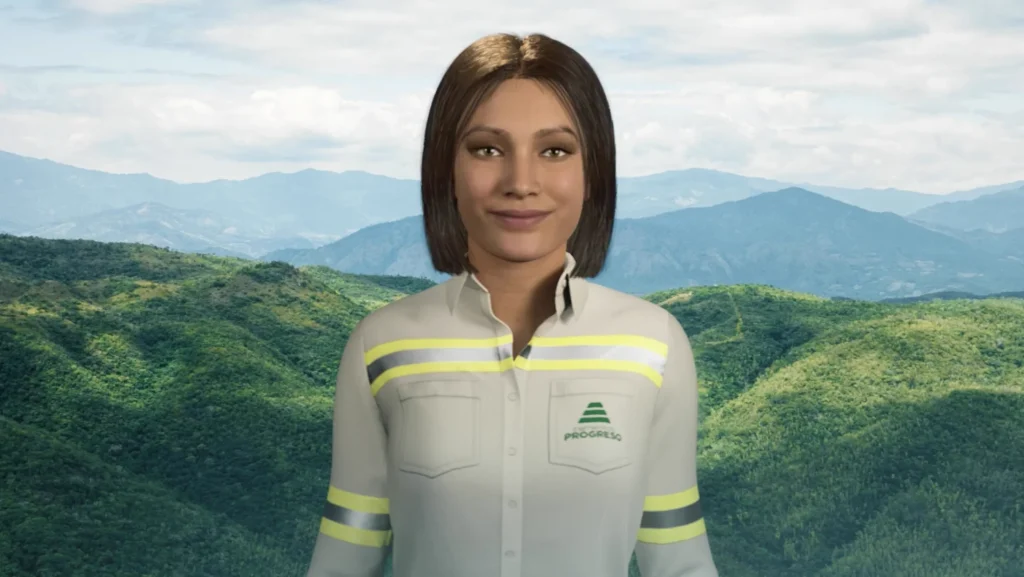
Customer service is evolving with agents available 24/7, able to detect needs and adapt their communication tone. These avatars ensure brand consistency across multiple languages and channels, while automatically answering questions, handling requests, providing recommendations and connecting with the rest of the company's systems. One example already in operation is found in Clara Progreso The company's sustainability representative for the construction company handles all user inquiries regarding CSR, the environment and transparency.
Training provided by intelligent agents
In the field of training, intelligent agents are playing a key role in the personalization and automation of learning. These agents can adapt to the pace and learning style of each individual, providing educational content, conducting assessments and providing instant feedback. In corporate environments, agents can train employees on new tools, procedures or regulations, ensuring that the process is efficient and continuous. Intelligent agents can also be employed as virtual tutors, guides or even facilitators of online training sessions, offering a more interactive and personalized learning experience that is tailored to the specific needs of individuals or teams. In this case, V-E-G-A Tutor is trained in the latest technological developments, seeking to bring these advances and innovations closer to the real protagonists of change: human beings.
Intelligent agents and technical assistance
Technical support has benefited greatly from intelligent agents, which provide fast and accurate solutions to user problems. These agents, such as IRIA Iveco are designed to provide detailed instructions The system provides real-time troubleshooting guides and diagnostics, optimizing technical support processes. Whether in the troubleshooting product failures, configuring devices or handling complex problems With the new intelligent agents, intelligent agents can handle multiple queries simultaneously, reducing wait time and improving the customer experience. In addition, by collecting data on past interactions, these agents can continuously improve their responses, making technical support more efficient and accessible.
Examples of smart agents connecting brands and users
Intelligent agents not only represent a technological evolution, but also a revolution in the way brands interact with their audience . From marketing campaigns to customized training, throughout the article we have seen different proposals and examples of use cases. From technical assistants like Iveco's IRIA, the case of Clara as Progreso's sustainability ambassador or Turrón, as the brand image of La Torre Outlet, IA agents can enter a multitude of fields. Here are two other outstanding examples:
En restauración destaca el caso de Smoky, el Chef virtual del restaurante Nola Smoke. Un avatar virtual que no solo da la bienvenida al local, también ofrece recomendaciones sobre sus productos y hamburguesas gracias a su sistema IA.
Un ejemplo interesante en el turismo, es Cicerone, el agente de viajes virtual de iUrban que es capaz de ofrecer rutas y recomendaciones personalizadas en 95 idiomas. Su objetivo es generar la experiencia de viaje perfecta para cada tipo de viajero y plan, ya sea familiar, en pareja o con amigos.
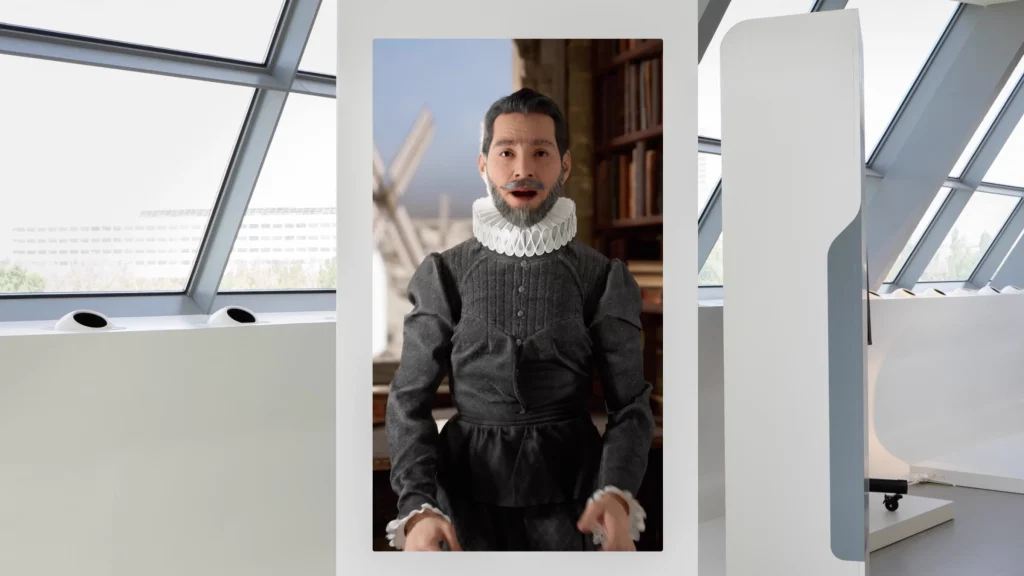
También en turismo, destacamos el ejemplo de agente inteligente de Cervantes IA. Un avatar hiperrealista que actúa como guía turístico en Alcázar de San Juan. Gracias a las últimas tecnologías en Inteligencia Artificial y arte 3D, este proyecto permite a los visitantes interactuar con una representación virtual de Miguel de Cervantes, quien responde preguntas sobre la historia, curiosidades locales y ofrece recomendaciones sobre lugares para comer y hospedarse en la ciudad.
How can a smart agent represent your company?
An agent with artificial intelligence not only represents your company, makes it a living and close presence and, above all, autonomous. Thanks to proposals such as V-E-G-A Imascono's AI agents can give your brand a face, voice and personality, aligned with your visual identity and values. And at the same time, connect all your systems, platforms and digital tools for a complete omnichannel management. In short, an intelligent agent humanize and automate your digital interaction by personalizing communication, serving in different languages and on different platforms. In addition, these agents offer great versatility by being able to save on logistics, training and commercial campaign costs in terms of messages, information sources and appearance. Interested in implementing an intelligent agent in your company? At Imascono we help you to integrate this new customer service system and connection with your digital tools in the best possible way. Contact us at and let's take the next step towards Artificial Intelligence together.
How virtual assistants are boosting customer service
In today's digital age, the virtual assistants have become a key tool to improve customer service especially when integrated into immersive experiences. Immediacy and personalization are two key points that users are looking for in their customer journey, where their union with Artificial Intelligence allows to offer faster, more accurate and tailored interactions with users. Thanks to AI, these assistants not only answer frequently asked questions, but learn from past interactions and continuously improve their answers, adapting to users' changing needs. They have even become true intelligent agents at the service of brands and customers. Also, if you are looking for a way to transform your customer service, in this article we present the success story of Astún, how it is applying AI to optimize processes and improve communication with its customers. Get ready to discover in this article how virtual assistants are rewriting the rules of digital engagement.
Virtual assistant: what it is and how it is changing the relationship with customers
Virtual assistants have evolved from being simple bots to becoming true digital brand ambassadors . Thanks to technologies such as artificial intelligence and natural language processing, it is possible to interact with users in a close, personalized and available 24/7 way. It is no longer just about answering questions, but about generating conversational experiences that provide real value, anticipate needs and strengthen the bond with the customer. This evolution is radically transforming customer service , making it more agile, emotional and memorable. . From augmented reality environments to immersive spaces such as the metaverse, virtual assistants guide, resolve and personalize every interaction. In a world where immediacy is key, these technological allies make possible what every brand desires: less waiting and more connection . An example of a virtual assistant can be found in Turrón, the virtual mascot of La Torre Outlet shopping mall that accompanies users in the process of learning more about the center's stores and services; and at the same time, manage their wish list and letter to Santa Claus as part of the Christmas campaign.
Asistentes conversacionales vs. agentes inteligentes
Conversational assistants and intelligent agents are related technologies, but with key differences in terms of their interaction capabilities and functionality.
Los asistentes conversacionales son sistemas diseñados para gestionar interacciones simples mediante texto o voz, respondiendo a preguntas frecuentes y guiando al usuario en tareas específicas. Su funcionalidad está limitada a reglas predefinidas y no pueden adaptarse a situaciones complejas, lo que puede hacer que las conversaciones sean más rígidas.
Los agentes inteligentes van un paso más allá, al no solo asistir, sino ejecutar acciones de forma autónoma. Utilizan Inteligencia Artificial (IA) y aprendizaje automático para ofrecer respuestas personalizadas y adaptarse al contexto y las preferencias del usuario. A diferencia de los asistentes conversacionales, pueden manejar tareas más complejas, aprender de cada interacción y ofrecer soluciones avanzadas basadas en datos, mejorando la experiencia del cliente con un servicio más dinámico y eficiente.
You may be interested in → How automation impacts companies and maximize its impact .
Applications of virtual assistants in business environments
Virtual assistants are revolutionizing the way companies interact with both customers and employees. By integrating Artificial Intelligence and automation, these assistants are offering customized and efficient solutions that improve the user experience and optimize internal processes. In this section, we will discover how virtual assistants are becoming more and more popular. applying in a variety of business environments from customer service to training and onboarding, transforming the way companies operate and communicate.
Personalized virtual assistants to guide the user experience
Virtual assistants have become an essential tool for guiding the user experience in business environments. Thanks to their customization capabilities, these assistants can adapt to the individual needs and preferences of each user, providing a unique and seamless experience. Whether interacting with customers, offering support or assisting with complex processes, customized virtual assistants can be used to optimize the user's path ensuring that every interaction is relevant, efficient and consistent with brand values. Among the virtual assistants that are already available we find Cervantes IA the g virtual tourist guide of Alcazar de San Juan . The Spanish writer himself comes to life thanks to Artificial Intelligence to talk about his beloved Castilla, his life and his work. A unique experience that revolutionizes customer service and the use of AI in tourism. You can continue to learn more about this subject in our post→ Artificial Intelligence in tourism: characteristics and examples .
Automation and troubleshooting
Virtual assistants also stand out because of their ability to automate processes and resolve questions instantly. This not only speeds up the response time, but also guarantees 24-hour customer service. By being able to handle multiple requests at the same time and provide fast and accurate answers Virtual assistants enable companies to improve productivity, reduce human error and free employees for more strategic tasks. In addition, thanks to its integration with the Artificial Intelligence These agents evolve over time, improving their ability to provide customized and contextual solutions. Among the most interesting use cases are IRIA the Iveco virtual assistant which brings together in one place all the information about the company's different models, its different departments and technical assistance for its employees, dealers and truck drivers. Although virtual assistants are not only for resolving doubts, they also function as virtual personal assistants to perform specific tasks, such as managing calendars, assisting with order processing, or providing customized recommendations
Integration of assistants in business activities
The integration of virtual assistants in key business activities, such as training, onboarding and technical assistance is transforming how companies manage training and support. These assistants guide new employees, offer personalized content in the training process and provide immediate solutions in technical assistance. In addition, its application extends to events , showrooms and gamified spaces They interact with participants, providing information and enhancing the experience. Virtual assistants not only optimize interaction with customers and employees, but also create immersive experiences that increase business efficiency and productivity. In this area, the avatar and assistant in Corporate Social Responsibility stand out, Clara of the Latin American company Progress .
Why are more and more companies using virtual assistants as employees?
More and more companies are opting to incorporate virtual assistants with Artificial Intelligence because they not only automate repetitive tasks, but also enhance the capabilities of employees . Instead of replacing them, virtual assistants function as a support, freeing workers from operational tasks and allowing them to concentrate on the activities that really bring value to the company. From handling routine inquiries to automating administrative processes, these assistants take the operational burden off the table, optimizing employee time so they can focus on more strategic, creative or personalized customer service tasks. These digital allies can manage multiple conversations at the same time, provide immediate and personalized responses, and adapt to different channels This will significantly improve the customer experience. This synergy between intelligent agents and human employees improves productivity and efficiency throughout the organization. By taking over repetitive and routine tasks, virtual assistants allow employees to focus on what they do best: making strategic decisions, fostering customer relationships and developing innovative projects. In addition, AI assistants are designed to learn and adapt, continually improving their performance and allowing employees to benefit from an increasingly efficient system. Rather than replacing, technology strengthens human talent, creating a more effective workforce focused on areas of greatest impact.
Real success stories: The Astún avatar
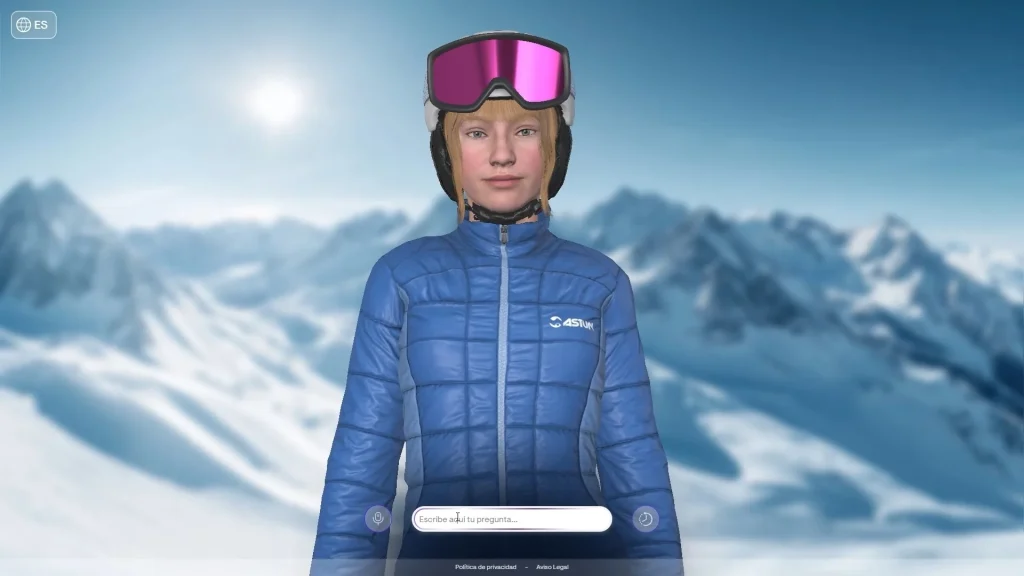
At Imascono technology becomes emotion, and virtual assistants become unforgettable experiences. Through the combination of AI, 3D design and creativity We have developed projects such as Turrón, Cervantes IA or IRIA Iveco that transform the interaction between brands and users. Seeking optimize processes and improve the customer experience, ensuring more natural and fluid interactions, tailored to the needs of each user, the Astún avatar is born. Astún has become the first intelligent station in the Pyrenees thanks to its virtual assistant. The project was created with the aim of renewing the visitor experience and positioning the station as a technological benchmark, offering continuous attention in several languages, updated information in real time and a scalable solution that reduces the pressure on traditional channels. This avatar accompanies the skier at all times, from trip planning to après-ski. It informs about the snow report, lifts, slopes and services; it guides inside the resort and recommends subsequent activities, with a natural and conversational interaction. In this way, Astún not only improves the user experience, but also obtains valuable data to optimize its services and consolidate its position as a leader in the digitization of mountain tourism. Can you imagine how a virtual assistant could transform your brand? At Imascono we are ready to make it happen. Contact our team and discover how to take customer service and the immersive experience of your business to the next level.
Immersive technology applied to trade marketing: activate your brand at the point of sale
In a world where attention lasts seconds and competition is just a click away, standing out at the point of sale is no longer an option: it's a necessity. The key? Betting on the immersive technology as a driver of experiences that not only catch the eye, but also generate emotions and purchase decisions. In this article you will discover how tools such as Augmented Reality photocalls, Artificial Intelligence avatars or AI virtual avatars are revolutionizing the trade marketing traditional and transforming any commercial space into a sensorial and personalized show. Real cases, courageous brands and groundbreaking strategies that show how to connect with the consumer in an authentic and memorable way. Get ready to immerse yourself in the future of retail, where every action becomes an experience and every experience becomes a sales opportunity.
Why is technology applied in trade marketing essential?
In a market saturated with stimuli, technology applied to trade marketing has become a key differentiating factor. It is no longer just a matter of having a presence at the point of sale, but of activate the brand through immersive experiences that connect with the consumer in an emotional and memorable way. Tools such as enlarged photocalls virtual storefronts or AI-enabled personal shoppers allow for the following transforming a simple linear into a a true sensory and immersive spectacle.
Trade Marketing: definition
Before talking about the impact of technology on trade marketing actions, it is necessary to review its definition. Trade marketing is a strategy that focuses on improving the relationship between brands and buyers to increase visibility and sales at the point of sale. Unlike traditional marketing, which is aimed directly at the end consumer, trade marketing focuses on influencing buyers, i.e. those who make purchasing decisions in different spaces, shopping malls and department stores. Its objective is to optimizing product presence, managing promotions and ensuring a seamless shopping experience to drive sales, maximizing results for all parties involved in the process. If you are interested, you can find out more about the Technology trends in shopping centers Thanks to technological solutions such as the Thor Ragnarok photocall in Kinépolis Cinemas or the The Body Shop interactive promotional action at Atocha Station, brands can capture attention, generate engagement and increase conversion right at the moment of truth: the purchase decision. The integration of technologies such as Augmented Reality, Artificial Intelligence, and data capture platforms, the trade marketing reaches new levels of interaction, connection and impact on shopper experience . In such a competitive environment, applying innovation at the point of sale is no longer just a trend, but an essential strategy to stand out from the competition, build customer loyalty and, most importantly, increase sales. Technology offers brands key tools to improve the quality of their products and services. marketing and the shopper experience The company's goal is to ensure greater visibility and facilitate faster and more efficient decision making in the purchasing process. From Imascono, we can help you through our artificial intelligence services and Augmented reality .
Main immersive technologies applied to your trade marketing actions
The evolution of the point of sale has given way to a new scenario and these tools not only improve the consumer experience, but also enable activate the brand in an innovative and emotionally impactful way . Here are some examples of how technological trade marketing is transforming physical spaces.
Augmented Reality Photocall
Las acciones promocionales cobran vida a través de la Realidad Aumentada. En su versión photocall interactivo, esta tecnología convierte cualquier punto de venta en una experiencia única: el usuario se ve rodeado de elementos 3D en tiempo real y se convierte en el protagonista de la acción. Donde no sólo se atraen todas las miradas sino que se crean recuerdos memorables de la marca y contenidos listos para compartir. Un ejemplo de ello lo encontramos en el proyecto Love Natural Kimchi! una acción de marketing realizada en el Centro Comercial GranCasa en el que para sumergirte en la selva virtual y llevarte una fotografía de recuerdo con tus animales favoritos tenías que realizar una compra en cualquiera de las tiendas de su interior.Si quieres saber más visita nuestro artículo Augmented reality in advertising with interactive content
AI Avatars as brand ambassadors
AI avatars are emerging as new brand ambassadors, transforming the way companies connect with consumers. Thanks to Artificial Intelligence, these intelligent agents go beyond being simple virtual assistants: become active allies of the brand. Its use ranges from hosts at events, to virtual influencers or personal shoppers at points of sale . Standing out as one of the most disruptive trends in trade marketing. Humanizing the customer experience in a close, accessible and coherent way with the brand values. These avatars, like Nougat, the virtual mascot developed by La Torre Outlet for the last Christmas campaign, allow maintaining a constant and personalized relationship with consumers by adapting to their behavior and offering answers and recommendations in real time. This reinforces the emotional connection and improves brand loyalty. Discover our intelligent avatar .
Immersive Virtual Reality experiences
Immersive Virtual Reality experiences are revolutionizing the interaction between brands and customers at the point of sale, offering unique experiences that strengthen emotional bonding and loyalty . A prime example is the Frozen Emotion project developed in collaboration with Ibercaja and Aramon. In this experience, which combined adrenaline and technology, participants had to cross a virtual suspension bridge between two Pyrenean peaks to obtain a ski pass. The integration of physical elements, such as the bridge and the simulated skiing environment, with Virtual Reality, multiplied the emotions and delivered a memorable brand experience . This experiential marketing approach not only captured consumers' attention, but also strengthened their connection to the brand by associating it with positive emotions and unique adventures.
Outstanding benefits of applying immersive technologies in trade marketing
When a brand bets on immersive technologies such as intelligent avatars, actions DOOH The company is not only innovating, but it is also innovating: is reinventing the way we tell stories, connect emotionally and turn physical spaces into authentic experiential platforms. These tools not only activate the brand: they make it live in the consumer's mind. Do you want to find out how?
Increased customer customization
Imagine walking into a store and an AI avatar greets you by name, guides you according to your tastes and recommends just what you were looking for (even though you didn't know it yet!). The intelligent avatars personalize your experience, adapt to the behavior of each customer and create a unique, intimate and deeply connected experience with the brand. It's no longer about selling: it's about understanding and emotion. These avatars act as personal shoppers adapted to the needs of each client. They are the direct connection between the brand and the user, where the company can control the final messages that reach the customer, regardless of the language, geographic location and point of sale where this conversation is taking place.
Differentiation from the competition
In an ocean of brands competing for attention, an augmented photocall or a Virtual Reality experience in the middle of the mall does not go unnoticed. While other brands place static displays or outdated signage, you can immerse the consumer in a 3D scene where he is the protagonist. These interactive experiences generate awareness, position your brand and make a visit a memorable experience. In addition, they make each experience unique, unrepeatable.
Increased conversions
When planning trade marketing actions, it is known that the moment of truth happens in seconds. And when the consumer experiences an immersive experience, whether it's climbing a mountain in VR, visiting a virtual jungle to earn a reward or interacting with an AI avatar that triggers tailored promotions, the purchase decision becomes faster, safer and more emotional. These technologies build trust, remove barriers and turn engagement into action, thereby increasing sales. In addition, all of these actions can include an extra of Gamification where the user wants to be part of the experience, where the user generates better lead generation and conversion rates.
Improved user experience
Shopping is no longer just a necessity, it's an adventure. The enlarged photocalls turn the visit into a memory The result: a multi-sensory experience that transforms every step through the point of sale into something memorable. The result: a multi-sensory experience that transforms every step through the point of sale into something memorable. A journey that the consumer will want to repeat, as in the case of the Movistar Flagship Stores in Valencia . A unique space where visitors can connect with all their favorite series and programs of the channel.
How to integrate immersive technology into your trade marketing strategy?
Integrating immersive technologies into your trade marketing strategy is the most effective way to adapt to an increasingly demanding and digital buyer. . In a market where the user wants it everything and now These solutions offer just what you are looking for: personalization, entertainment and real connection. At Imascono We create this type of experiences for brands that want to go beyond in their trade marketing actions. We merge technological creativity and strategy to activate your brand at the point of sale with experiences that captivate, surprise and convert . Because today, the better marketing is not seen, it is lived. Ready to transform your point of sale into an unforgettable experience? Contact us at and take the next step towards the future through our technology solutions for retail .
The revolution and impact of AI in retailing
Retail is undergoing an unprecedented digital transformation thanks to Artificial Intelligence. Today, brands are no longer just selling products, they are also creating personalized experiences that connect emotionally with your customers . From purchase prediction to task automation and extreme personalization, AI has gone from being a trend to becoming a strategic necessity for any business that wants to stand out. In this article, we will explore how Artificial Intelligence is redefining the retail sector The key benefits it brings and how to implement it successfully. In addition, we will learn about the most innovative projects in the use of AI in customer service, customer experience and consumer sales. Cervantes IA , Nougat - La Torre Outlet and Smoky Nola Gras are just a few of the success stories of the impact of AI in retailing Are you ready to discover the future of retailing?
The transformation of Artificial Intelligence in the retail sector
Artificial Intelligence has burst into the retail industry to completely revolutionize it. It's no longer just about selling products, but about creating highly personalized experiences, anticipating consumer needs and optimizing every process with unprecedented precision. From massive data analysis to intelligent automation, AI enables brands to offer a more efficient, intuitive and cost-effective service transforming the way they interact with their customers. Companies that integrate AI not only optimize their supply chain and increase their profitability, they also achieve a deeper connection with their consumers . Artificial intelligence is no longer an option, but the engine that drives the retail of the future: more innovative, more agile and totally customer-centric. You may be interested in → Customer experience: how to improve it through Extended Reality .
Outstanding benefits of AI in the retail sector
Artificial Intelligence is unlocking a world of possibilities for brands looking to lead in the digital age and connect with new consumer profiles. Below, we show you the key benefits of using AI that are making a difference in the industry.
Purchase prediction
Imagine knowing what your customers want before they know it themselves. Thanks to AI and predictive analytics, retailers can identify buying patterns, forecast trends and optimize their inventory with surgical precision. This not only reduces costs, but also enables them to offer products at the right time and place, driving sales and improving the customer experience.
Task automation
Time is money in retail, and AI makes it shine even brighter. With automated solutions, brands can manage dynamic pricing, update catalogs in real time, respond to customer queries via intelligent avatars and optimize logistics processes without manual intervention. Focusing on what really matters: innovating, strategizing and strengthening customer relationships. Through the virtual agents and generative Artificial Intelligence In the retail sector, customer service in the retail sector is automated, allowing users' doubts to be resolved in a much faster, closer and more personalized way.
Error reduction
In retail, a small mistake can translate into losses. AI minimizes failures in inventory management, pricing and logistics, ensuring more efficient and profitable operations. With algorithms that analyze data in real-time and detect weaknesses before they become problems, decision making becomes more agile, strategic and effective.
Personalization of the customer experience
The key to success in retail is that every customer feels like the protagonist of their own story, and Artificial Intelligence gives you the power to surprise. As in the project developed by Kinepolis Madrid, Disney and Marvel. At Kimchi! Thor , we went from storytelling to storyliving creating immersive and personalized experiences, turning viewers into Asgard protagonists before they even enter the movie theater, in a marketing action that combines Artificial Intelligence and Augmented Reality. But personalization of the experience can go further. From to offer precise recommendations to tailor-made promotions, by analyzing buying behavior in real time. Each interaction is also tailored to surprise and excite the consumer. The more personalized the experience, the greater the emotional connection, loyalty and conversion.
How to integrate AI into your retail strategy
To take advantage of the full potential of Artificial Intelligence, it is essential to implement it strategically. . You need to be clear about what you are going to use it for, what you want to achieve and how it can help consumers, the real protagonists in technological innovations in the retail sector. Here we show you how to take the first steps to transform your business with AI.
Steps for a correct implementation
Define objetivos claros → Antes de incorporar la IA, es fundamental identificar qué áreas de tu negocio deseas mejorar. Ya sea la experiencia del cliente, la automatización de procesos o la toma de decisiones estratégicas. Tener objetivos bien definidos asegura que la implementación de la IA sea efectiva y se alinee con las metas de crecimiento de la empresa y maximizando los resultados.
Elige la tecnología adecuada → Avatares IA entrenados con todos los mensajes comerciales de la compañía, algoritmos de recomendación, experiencias inmersivas de Realidad Extendida… Existen muchas formas de introducir la tecnología y la Inteligencia Artificial en las actividades empresariales. Por ello es importante seleccionar las soluciones que mejor se adapten a tu negocio y sistemas actuales.
Aprovecha los datos → La Inteligencia Artificial depende de información de calidad. Implementar estrategias sólidas de Big Data para recopilar y analizar datos es clave. Desde la interacción de los usuarios, las variaciones en el stock y por supuesto, el comportamiento de compra.
Capacita a tu equipo → La adopción de la IA no solo depende de la tecnología, sino también de la formación del equipo humano. Esta tecnología no busca sustituir, sino potenciar las capacidades de los empleados, buscando profesionales aumentados. Lo más importante es asegurarse de que los empleados comprendan cómo funciona esta tecnología y cómo pueden utilizarla en sus tareas diarias.
Mide y optimiza → La implementación de Inteligencia Artificial es un proceso continuo. Es esencial medir el desempeño y ajustar los procesos en función de los resultados obtenidos. Realiza ajustes si es necesario, todo para optimizar su efectividad, asegurando que siga aportando valor a tu negocio a medida que evoluciona la tecnología.
Collaboration with experts in technological innovation
While integrating Artificial Intelligence may seem challenging, the key is to surround yourself with the best allies. This is where companies that specialize in innovation, such as Imascono play a crucial role. Since not only We help implement AI, but we turn it into a creative, useful and differentiating tool for each brand. From interactive experiences to advanced personalization solutions, we at Imascono are redefining the way retail connects with customers, creating innovative experiences that generate impact and loyalty.
Imascono Artificial Intelligence projects highlighted in retailing
Artificial Intelligence is not only technology, it is a tool to put creativity into action. With each project developed from Imascono, we transform retail into an immersive and unforgettable experience. Here are some of our most innovative projects that have taken retail to another level:
Imagine entering a bookstore, a museum, a tourist office, etc. and talk with one of the greatest writers in history . With Cervantes IA, we created a unique experience where Artificial Intelligence gives voice and life to the famous author, allowing visitors to interact with him in real time. This project not only adds cultural value, but also generates a memorable experience that turns every visit into a story to be told.
Together with the La Torre Outlet team, we reinvented the way to interact in a shopping mall. Thanks to Turrón and through AI, during the Christmas campaign, visitors could ask the avatar for advice, tell him their wish list and ask him about all the services of the shopping center during these special dates. An interactive experience that combines storytelling, personalization and gamification creating an emotional bond with the brand. An innovative way to connect retail with tradition, adapting it to the digital era.
With Smoky Nola Gras With the new "Virtual Chef", users can interact with a virtual chef, which merges the power of Artificial Intelligence with customer service, in a fun way. Reducing boring waiting times and offering recommendations to customers. These are just a few examples of how in Imascono we make every project to achieve surprise, excite and transform the way brands connect with their customers. The Artificial Intelligence is transforming retail, and at Imascono we are ready to help you take the next step. If you want to differentiate yourself, surprise your customers and create unique interactive experiences, our team of experts in retail technology solutions can make it happen. Contact with us and find out how we can help you!
Characteristics of a luxury hotel: immersive design and unique experiences
Luxury hotels are no longer simple vacation spots, but exclusive destinations where design and experiences play a fundamental role. The hotel luxury modern combines exclusivity, immersive design and personalized services powered by advanced technology. From smart rooms and virtual butlers with AI, to unique experiences such as virtual simulations, interactive tours in Augmented Reality, these hotels redefine hospitality. Personalized attention, high-level gastronomy, integral wellness and connection with the local culture ensure memorable and unique experiences. With innovation and detail, luxury hotels not only meet, but exceed expectations, setting a new standard of excellence and sophistication in every aspect of the stay. In this article, we will analyze the main characteristics of a luxury hotel where design and technology transform the guest experience.
What defines luxury hotels today?
If you're wondering what a luxury hotel is, Nowadays, luxury hotels are characterized by their focus on offer customized experiences, unique design, exceptional services and high-end facilities. They stand out for creating personalized and memorable experiences, incorporating cutting-edge technology, sustainable materials and offering high quality gastronomy. Combining innovation and tradition. In general, luxury hotels focus on guests, creating a customer experience with exclusive, authentic and unique services. With a design that not only seeks to be functional, but also to be impactful and emotionally appealing . The today's luxury hotels combine innovation and tradition integrating advanced technologies such as home automation and virtual assistants while maintaining the human touch and warmth in every interaction. Another defining feature of luxury hotels is their focus on sustainability and authenticity. Today's travelers increasingly value accommodations that respect the environment and reflect local culture. From using sustainable materials in design to offering experiences that connect with the destination's identity, these hotels strike a perfect balance between exclusivity, responsibility and sense of place, making a difference in a highly competitive market. If you are interested, find out in detail which are the most important technology trends in hotels
Principales características de un hotel de lujo
A luxury hotel is distinguished by a series of characteristics that position it as a unique and exclusive experience . From immersive architectural design to personalized services and state-of-the-art technology, every detail is designed to exceed guests' expectations. Below, we will discover in detail the qualities that make these accommodations a reference in comfort, style and excellence.
Advanced technology integrated in every detail
In luxury hotels, advanced technology is not just an add-on, but a core element that enhances the guest experience in every aspect. When we talk about technology integrated into every detail, we are referring to the The combination of different tools and innovations combined together make the hotel experience unique, intuitive and personalized. From home automation systems that allow you to control lighting, temperature and curtains with a single touch, to stewards and/or virtual avatars that provide personalized recommendations and handle requests in real time. In addition, the integration of technology such as the contactless check-in and check-out The hotel's mobile device access to rooms and high-speed connectivity ensure a smooth and comfortable stay. Every technological detail is designed to combining innovation and functionality offering a sophisticated experience that meets the most demanding expectations. You may be interested in → 5 applications of Artificial Intelligence in hotels
Personalized services as the essence of luxury
One of the main characteristics of a luxury hotel lies in its capacity for offer services that are uniquely tailored to each guest , and the incorporation of virtual butlers takes this personalization to the next level. These virtual assistants, available 24 hours a day, can automate processes, answer frequently asked questions, and hold conversations in any language. An example of a digital concierge can be found in Marta, the virtual assistant at the Hotel Torre del Marqués . In addition, they offer recommendations that are fully tailored to the customer's preferences. And they can even anticipate guest needs in real time, ensuring a smooth and memorable experience. Want to know more about AI avatars? See our page on Generative Avatars with Artificial Intelligence .
Experiencias exclusivas
Undoubtedly, one of the defining characteristics of a luxury hotel is its ability to offer unique experiences that transcend the hotel stay. These experiences are designed to surprise and emotionally connect with guests, from personalized activities to private events and exclusive services. Projects such as Exclusiverse, the virtual headquarters of the Exclusive Traveler Club The company's products and services exemplify how innovation can take this exclusivity to the next level. Through digital memberships hotels can maintain a constant connection with their customers before, during and after their stay. By offering access to unique benefits, differentiated experiences and services tailored to each guest. These memberships not only reinforce the sense of belonging by being part of an exclusive community, but also enhance loyalty and position luxury hotels as leaders in innovation and customer service.
Artificial Intelligence: cutting-edge technology in luxury hotels
If there is one technology that is redefining the hotel world, it is Artificial Intelligence. In the field of luxury hotels, as we have been seeing throughout the article, AI allows for tailor and personalize the hotel experience for each guest The reservation and the stay itself are also included in the price. The Artificial Intelligence is redefining luxury in the hospitality industry by offering advanced solutions that transform the guest experience and optimize internal operations . From AI avatars that handle requests in real time to systems that automatically adjust rooms based on individual preferences. In addition to enhancing the guest experience, the AI boosts operational efficiency in key areas such as reservations management, staff training, scheduling, and the operation of activities and services. By automating routine tasks, hotel teams can focus on providing a closer and more personalized service. With its ability to combine comfort and customization AI has become a must-have element in luxury hotels, ensuring exceptional stays where every interaction and detail is carefully designed to exceed expectations. Find out how the Hotels of the Future in our next article → Hotels of the future: hotel technology trends
Principal caso de éxito de la Inteligencia Artificial en hoteles
En un entorno donde la personalización y la disponibilidad constante se han convertido en claves para la hoteles de lujo, el Hotel Torre del Marqués decidió dar un paso más en su apuesta por la innovación. Así nació su proyecto, integrar una asistente virtual con alma local capaz de acompañar al huésped en todo momento.
Marta | Torre del Marqués
El Hotel Torre del Marqués, en plena “Toscana aragonesa”, ha incorporado a Marta, un avatar inteligente multi idioma que actúa como concierge digital disponible 24/7. Esta asistente virtual ofrece información personalizada sobre servicios, gastronomía, wellness y planes en el Matarraña, acompañando al huésped durante toda su estancia sin perder la esencia de exclusividad del hotel. Gracias a su implementación, el complejo cinco estrellas ha mejorado la eficiencia operativa, reforzado su atención al cliente y elevado la satisfacción de los visitantes, posicionándose como referente en innovación turística rural. El proyecto ha sido posible con el apoyo de la Secretaría de Estado de Turismo a través de la subvención SEGITUR.
Why are technological features key in luxury hotels?
La tecnología es esencial en los hoteles de lujo porque eleva los estándares de comodidad, personalización y eficiencia que los huéspedes modernos demandan. Herramientas como check-ins virtuales, sistemas domóticos en habitaciones y experiencias inmersivas con realidad aumentada permiten a los clientes disfrutar de servicios intuitivos y adaptados a sus necesidades. Al integrar innovación en cada detalle, los hoteles responden a las expectativas de un viajero exigente que valora la exclusividad y la practicidad. Además, la tecnología les permite diferenciarse en un mercado altamente competitivo, fortaleciendo su imagen de marca y consolidándose como referentes en hospitalidad de alto nivel.EnImascono estamos especializados en el desarrollo de experiencias tecnológicas para todo tipo de sectores, donde el lujo destaca en industrias clave como la moda, la restauración y, por supuesto, el ámbito hotelero.A través de V·E·G·A, nuestros avatares virtuales, y nuestros servicios de Inteligencia Artificial para empresas, desde Imascono somos capaces de dar solución a la automatización y a la vez personalización de la atención de los huéspedes. Pudiendo adaptar sus mensajes en tiempo real, conversar con los usuarios en cualquier idioma y recopilando información sobre todas las conversaciones mantenidas.¿Te interesa conocer más sobre cómo implementar las nuevas tecnologías y la IA en tu hotel? Descubre nuestro servicio de tecnología para el turismo y ponte en contacto con nosotros, nuestro equipo de ingenieros y diseñadores estará encantado de responder todas tus dudas.
5 applications of Artificial Intelligence in hotels
The The hotel industry is undergoing an unprecedented transformation thanks to the integration of Artificial Intelligence. . From automating tasks to personalizing services, AI has become an indispensable tool for hotels looking to stay competitive and meet the expectations of modern travelers. In an industry where convenience, efficiency, and innovation are essential, AI offers solutions that optimize processes and transform guest interaction . In this article, we will discover 5 key applications of Artificial Intelligence in hotels that are making a difference. These tools not only improve service quality, but also add value for both guests and operational teams. In addition, we will learn in detail about the success story of Torre del Marqués Hotel , an exclusive hotel in Matarraña that already has its own digital concierge. Discover how AI is shaping the hotels of the future facilitating more personalized stays and unique experiences.
Functioning of Artificial Intelligence in hotels
Artificial Intelligence works as an integral tool in the hotel industry by analyze data, automate processes, and personalize services all in real time. Thanks to its ability to process large volumes of information, AI allows hotels to anticipate guests' needs, offering recommendations tailored to their preferences. From chatbots that manage reservations and inquiries to virtual assistants that control rooms, this technology transforms customer interaction into a more fluid, efficient and personalized experience. By gathering information about their wishes and requests, facilitating a more efficient and personalized experience. fast and efficient service without waiting, directly from your mobile devices. You can learn more about the use of Artificial Intelligence in hotels in our content, on the technology trends in hotels .
5 outstanding applications of AI for hotels
La Inteligencia Artificial no es solo una herramienta, sino una ventaja estratégica para los hoteles que buscan superar las expectativas de sus huéspedes. En un entorno hotelero cada vez más competitivo, la IA se ha convertido en un recurso esencial para innovar y destacar. Su capacidad para transformar procesos y mejorar el customer experience hotelero está redefiniendo los estándares del sector. A continuación, presentamos 5 aplicaciones clave de los hoteles en los que se implementan la inteligencia artificial que están revolucionando el mundo hotelero.
Chatbots and virtual assistants
Chatbots and virtual assistants are one of the most prominent applications of Artificial Intelligence in hotels, offering efficient and personalized customer service 24/7. No doubt about it, have completely changed the way the hospitality industry communicates. . However, thanks to the Generative AI and the personalization of virtual avatars, these assistants become real representatives of the hotel companies, taking on personality, appearance and specific training, like real virtual hotel workers. These virtual agents are capable of manage reservations , answer frequently asked questions , provide specific information about hotel services and provide recommendations tailored to each guest's needs. In addition, its ability to communicate in multiple languages eliminates language barriers and enhances the experience for international travelers. Thanks to the automation chatbots and virtual assistants not only streamline processes, but they also free hotel staff to focus on more complex and closer interactions. This ensures a smoother customer experience while improving operational efficiency, positioning the hotels that adopt them as leaders in innovation and modern hospitality. You may be interested in → Avatar with Artificial Intelligence: definition and main uses
Automated check-in and check-out
Una de las aplicaciones más prácticas de la Inteligencia Artificial en hoteles es la gestión automatizada de check-in y check-out. Donde no solo se agiliza el proceso de registro y salida, sino que además se pueden realizar todas las preguntas y cuestionarios necesarios, de manera rápida y sencilla. Enfocándose sobre todo en mejorar la experiencia del huésped y fortalecer la imagen de marca del hotel.Con aplicaciones móviles o kioscos/tótems inteligentes, los huéspedes pueden realizar el check-in sin necesidad de pasar por la recepción, acceder a sus habitaciones mediante llaves digitales y completar el check-out de manera rápida y eficiente. Este enfoque no solo reduce las filas, sino que también permite personalizar la experiencia desde el primer momento, como seleccionar habitaciones según preferencias o añadir servicios adicionales.
Price management and reservations
Artificial Intelligence helps companies in the hotel industry to optimize pricing and room availability by analyzing large volumes of data in real time. It enables dynamic and accurate pricing management by taking into account not only external factors such as the season, local events such as regional festivals or large-scale events, etc. and market competition. Also the factors of the consumers themselves, such as their tastes and preferences when it comes to travel. This allows hotels to strategically adjust their pricing to maximize occupancy and bookings. In addition, AI optimizes the management of reservations by identifying guest behavior patterns The company's approach to booking, anticipating cancellations and avoiding overbooking of rooms. This approach not only ensures greater operational efficiency, but also enhances the customer experience by offering competitive rates and smoother planning.
Online feedback tracking
Artificial Intelligence allows hotels to monitor user satisfaction on platforms such as TripAdvisor, Google Reviews or on their own social networks, efficiently managing their digital reputation. AI systems automatically collect and analyze user comments and reviews The new system provides key insights into guests' perceptions. This allows you to identify trends, strengths and areas for improvement quickly and accurately. In addition, these tools can categorizing feedback according to aspects such as service, cleanliness or location, facilitating the prioritization of actions to improve the customer experience. By responding proactively and personally to feedback, hotels not only strengthen their reputation, but also demonstrate a commitment to guest satisfaction.
Personalized recommendation systems
By analyzing data on consumer preferences and guest behaviors, hotels can provide personalized recommendations such as local activities, additional services such as spa, restaurants, excursions and other activities . By incorporating these recommendations, hotels create a more personalized and memorable experience that strengthens the relationship with their customers. This is not only improves guest satisfaction, but it also encourages cross-selling and up-selling of additional services, obtaining greater satisfaction and a notorious increase in the contracting of services and activities thanks to its speed and accessibility. An example of this can be found in Marta , the avatar, and digital concierge of Torre del Marqués and in Cicerone the AI robot running a travel agency in 95 languages
How can a hotel start using Artificial Intelligence?
To integrate Artificial Intelligence effectively, hotels must first identify the areas where this technology can have the greatest impact. such as customer care, price optimization and hotel service management. It is important to select specialized AI solutions that are tailored to the specific needs and operations of the hotel, ensuring efficient and seamless implementation. Training staff is another key step in making the most of these tools, enabling them to work together with technology to improve processes and the guest experience. Start with specific applications, such as virtual assistants for quick queries or personalized recommendation systems. allows a gradual and controlled integration. In addition, measuring its impact through key performance indicators helps to adjust strategies and maximize benefits. With a strategic and progressive approach, Artificial Intelligence can transform hotel operations. The company's facilities are designed to provide efficiency, innovation and an exceptional experience for guests.
Keys to the future of Artificial Intelligence in hotels
The future of artificial intelligence in the hospitality industry is full of innovative possibilities that promise to transform both the guest experience and internal operations. Among the most important trends are:
Experiencias personalizadas. La IA permitirá anticipar las necesidades de los huéspedes incluso antes de su llegada, diseñando estancias completamente adaptadas a sus gustos y preferencias.
Habitaciones inteligentes. Tecnologías avanzadas controlarán elementos como temperatura, iluminación y entretenimiento en tiempo real, ofreciendo un confort totalmente personalizado.
Análisis predictivo avanzado. Los hoteles podrán predecir patrones de demanda, comportamiento de los huéspedes y tendencias del mercado con mayor precisión, optimizando recursos y estrategias.
La adopción de la IA no solo es una herramienta para mejorar la experiencia del cliente, sino también un factor clave para optimizar operaciones y aumentar la rentabilidad. Los hoteles que apuesten por estas tecnologías estarán mejor posicionados para competir en un mercado en constante evolución, adaptándose a las expectativas de un viajero cada vez más exigente. En definitiva, la IA no sólo redefine la hospitalidad, sino que asegura un futuro en el que los hoteles puedan ofrecer experiencias inolvidables y de vanguardia.
Principal caso de éxito de la Inteligencia Artificial en hoteles
En un entorno donde la personalización y la disponibilidad constante se han convertido en claves para la hoteles de lujo, el Hotel Torre del Marqués decidió dar un paso más en su apuesta por la innovación. Así nació su proyecto, integrar una asistente virtual con alma local capaz de acompañar al huésped en todo momento.
Marta Torre del Marqués
El Hotel Torre del Marqués, en plena “Toscana aragonesa”, ha incorporado a Marta, un avatar inteligente multi idioma que actúa como concierge digital disponible 24/7. Esta asistente virtual ofrece información personalizada sobre servicios, gastronomía, wellness y planes en el Matarraña, acompañando al huésped durante toda su estancia sin perder la esencia de exclusividad del hotel. Gracias a su implementación, el complejo cinco estrellas ha mejorado la eficiencia operativa, reforzado su atención al cliente y elevado la satisfacción de los visitantes, posicionándose como referente en innovación turística rural. El proyecto ha sido posible con el apoyo de la Secretaría de Estado de Turismo a través de la subvención SEGITUR.
At Imascono we are specialized in the implementation of the Artificial Intelligence in companies in particular, by means of technology in the tourism industry through virtual avatars specialized in customer service. Seeking to provide a solution to the user We provide a fast, efficient and personalized service, improving satisfaction and customer experience. Interested in learning more about our Artificial Intelligence services for hotels? Get in touch with us and our team of engineers and designers will be happy to answer all your questions.