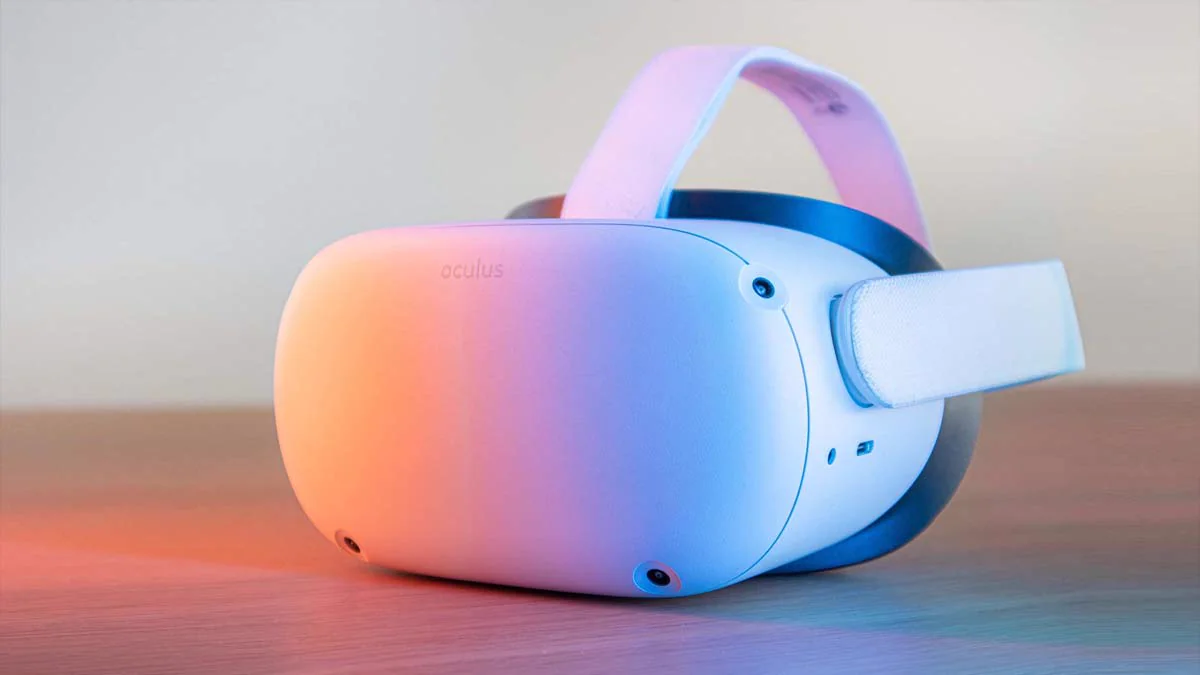
El futuro de la Realidad Virtual
¿Cómo te imaginas la unión entre el mundo real y el mundo digital en el futuro? El sector tecnológico lo tiene claro. Existe toda una tendencia y línea de investigación, desarrollo, usos y aplicaciones en la que se trabaja en torno a una única tecnología: la Virtual Reality. La historia de la Realidad Virtual – y también de la Realidad Aumentada – se remonta a 1838 con las primeras creaciones y juegos visuales. Por ejemplo, el estereoscopio de Charles Wheatstone, un dispositivo del siglo XIX donde se conseguía superponer una imagen sobre cada uno de los ojos del usuario, creando así una ilusión óptica en tres dimensiones. Desde entonces, el simulador de vuelo de Edwin Link de los años 30 o el casco de Realidad Virtual de Ivan Sutherland conocido como la “Espada de Damocles” de los 60, han contribuido a que ahora, la Virtual Reality, sea una tecnología de vanguardia tal y como la conocemos. Al igual que ocurrió en su momento con los ordenadores personales, Internet y los teléfonos móviles, la Realidad Virtual (VR) cambiará el mundo. Ya está transformando el entretenimiento, la formación, la sanidad, la productividad y el comercio y sólo es cuestión de tiempo para que sus experiencias sean cada vez más realistas, inmersivas y alucinantes.
Present: current uses and applications of Virtual Reality
Virtual Reality could be defined as the technology capable of immersing us in alternative worlds. fully digital where we, the users, decide where to focus our attention. 3D environments in which our senses cease to perceive the real world thanks to the total immersion through Virtual Reality glasses (HMD or Head-Mounted Display) and their accessories. The various controllers, gloves, headsets, and haptic suits not only allow us to see, hear and feel these new experiences. The virtual universe is a virtual world that offers us great freedom of movement to enjoy. Thanks to its ability to immerse us in virtual environments, Virtual Reality allows us to explore remote places, travel to the past and the future, interact with three-dimensional objects and live experiences that until now we could only imagine in science fiction. Among the main applications of Virtual Reality that we are currently seeing are:
1. Educación
With Virtual Reality education is transforming We can teleport to any country, discover marine fauna, travel to the past or to other planets, all without leaving the classroom. Motivation, attention, concentration, and the ability to living the experiences in first person enhance the acquisition of new knowledge. Take a look at our project to create a virtual learning platform for students and children. KAI XR Platform .
2. Industria 4.0.
The incorporation of Virtual Reality experiences in the industrial sector is currently centered on the creation of immersive 3D simulators where professionals can train autonomously in complex tasks without the need to allocate extra resources such as trainers or their own machinery for this purpose.
3 . Entertainment
Virtual Reality represents a before and after in the way in which we consume multimedia content, where the immersion in the action makes the fourth wall disappear to immerse us inside the entertainment universe. A change that is made possible by the involvement of our whole body, movements and senses beyond the audiovisual that make the experience of both movies and videogames much more real, allowing create new and surprising adventures. A clear example would be the project Frozen Emotion that we developed at Imascono for Ibercaja.
4. Salud
In a sector where the training y la actual experience are two key factors for a good job performance, Virtual Reality offers the healthcare world a unique space to perform simulations . Recreations that do not affect the real world and in which it is not necessary to use real patients.
5. Turismo
Virtual Reality opens up a new way to live immersive experiences This technology is a unique tool for the tourism sector as well. This technology is a unique tool for the destination promotion by being able to transport future interested tourists to the destination itself, surprising them and convincing them to visit the destination. Creating, in addition, complementary activities for both people who want to know different parts of the world without leaving home as well as for those who want to immersed in its historical past, as would be the case with the Loarre XR .
Despite all the applications we are seeing today, it is important to remember that a large part of the world's population does not know what Virtual Reality is or has never tried VR glasses. That is why one of the most important points for the future of this technology is its democratization. .
The growth forecast for Virtual Reality
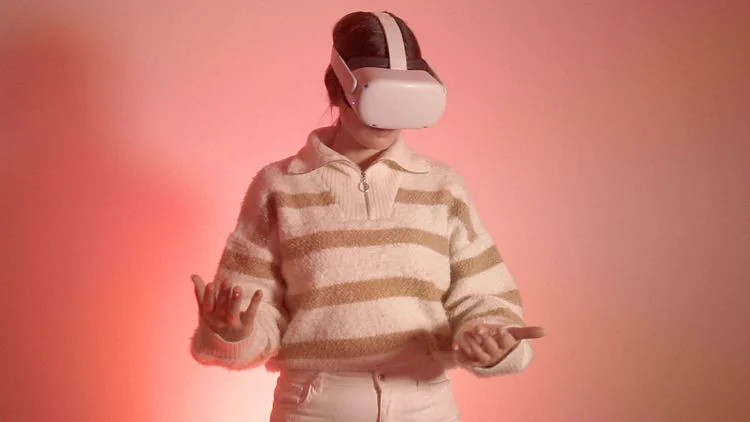
The upward growth trend of Virtual Reality devices has only just begun. It is expected that the global revenue from hardware and software sales of Virtual Reality will surpass this year's 5 billion USD . All indications are that for 2028 Virtual Reality hardware revenues will reach nearly 12 billion USD (Statista). In terms of use, for 2026 is expected to 1 in 4 people globally spend one hour a day in Virtual Reality to perform different activities such as working, shopping, training or socializing. That is why one of the aspects in which Virtual Reality will grow the most is in the development and creation of high-value content in this new digital ecosystem.
How will Virtual Reality be used in the future?
Today, the market is already demanding applications that go beyond leisure, tourism and marketing, and, above all, applications that are more affordable for users . Therefore, in the not too distant future we will see a breakthrough in Virtual Reality experiences and devices. Thanks to these new advances, we will be able to enjoy Virtual Reality with VR devices much more quickly. faster, lighter and more affordable . With improvements also in connectivity with 5G networks and in the performance of VR glasses, thus being able to enjoy content with better graphics and much more realistic. In the industrial sector it is expected that the human-machine interaction be much more realistic and humanized, with the ability to not only recreate industrial plants for training, but also for remote control of all robots and drones through VR glasses. At marketing and retail Virtual Reality would turn the purchase process and interaction with the brand into a whole new experience. video game The company's customers can not only see the products, but also try them out in gamified experiences. Activities that revalue positioning increase the engagement y la loyalty of the users. And in the healthcare sector ? Virtual Reality would allow us to go further in training actions in order to be able to perform simulations of operations and other critical situations in safe and controlled environments, where it is not necessary to use real patients. A unique opportunity not only to train future healthcare professionals, but also to planning and perfecting surgical processes testing different courses of action.
The challenges of Virtual Reality in the future: how to meet them
As Virtual Reality evolves, companies must be alert to potential issues that may arise to ensure that the downsides do not outweigh the societal benefits of this immersive technology. Issues such as legal aspects the privacy of the data, the digital divide and even the possible health problems such as dizziness or eye health should be present in the advances that we will see in relation to Virtual Reality and its devices. In spite of the challenges and obstacles that this technology will have to overcome, the potential training benefits , productivity, communication and interaction far outweigh these more negative aspects. Only companies that know how to see their potential will make a difference.
At Imascono Every day, we work to address the challenges of Virtual Reality in the enterprise ecosystem by providing technical expertise, affordable solutions, support and training. All with a creative approach to designing immersive experiences. Our goal is to help companies overcome barriers and take full advantage of the benefits of Virtual Reality in its operations, processes and customer service. Our engineers and designers will be happy to answer all your questions and discuss how we can adapt our Virtual Reality solutions to the specific needs of your project. Contact with us and we will take your project to the new virtual universe!