I spend a good part of the week trying out artificial intelligence tools. Many of them are useless, and every now and then one of them changes the way I work. Today, many of my daily tasks are handled by agents that I set up myself. When something works, the first thing I do is report it within Imascono, and then to our clients. With so many tests under my belt, I have one thing clear: the tool is the last thing you choose. The first thing is to understand how the company you have in front of you works.
At our 15th anniversary event, we said that Imascono helps companies move into the future. Here I want to take that idea a step further and explain what we do in practice when a company calls us.
The question we hear most often
«I know I have to do something with AI, but I don't know where to start.".»
They make them almost every week, and behind them are very different situations. There are companies where people are already using ChatGPT on their own, without anyone having suggested it. Others have some trials underway and don't know how to take it to the rest. And others know that they need to move forward and are waiting for someone to tell them where to go.
My answer is always the same: we start by looking at how your company operates today.
The measure means starting from what you already have.
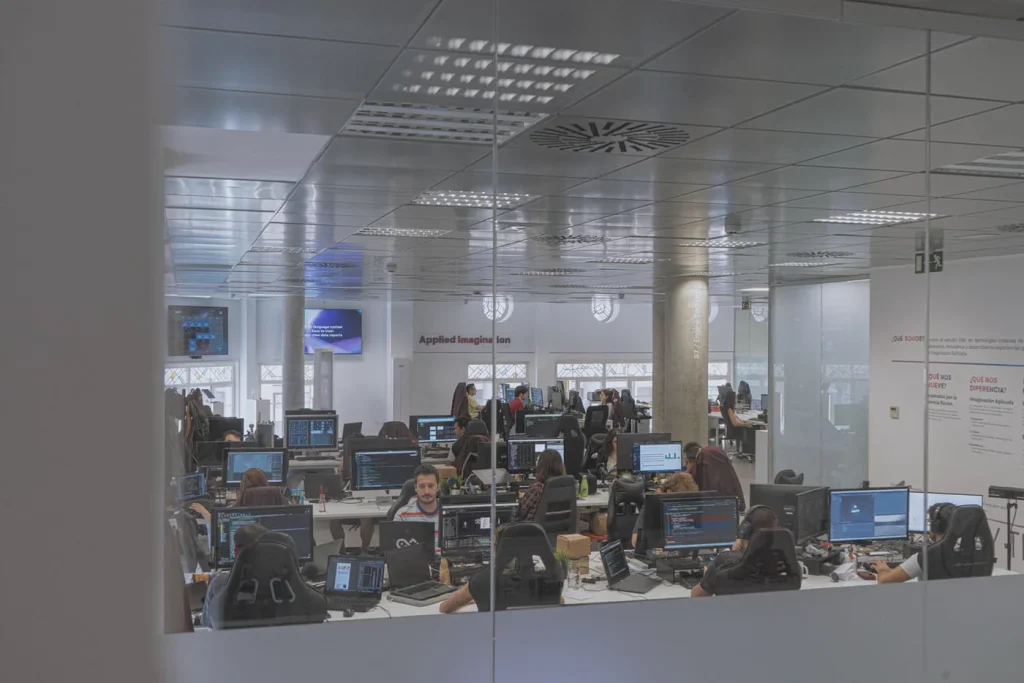
In fifteen years we have done more than 700 projects, and almost none of them were like the previous ones. What does remain the same is this: a solution the measure It builds on what the company already has. Its ERP, its CRM, the Excel files that are actually used, the shared folder where everything ends up. And above all, what its people know.
In almost every company, there is someone who has been doing a task for ten years and solves it by memory. That knowledge is very valuable, and it is almost never written down anywhere. A large part of our work is to bring that knowledge to life, take it out of that person’s head and turn it into rules that a system can follow. That way, that person stops repeating the same thing every day and devotes their time to what really adds value, which is solving what goes beyond the normal.
Four levels to know where you are
Each company starts from a different point in its digital maturity, and within each company, so does every department. To avoid getting lost, we work with four levels of maturity, The route From manual to autonomous:
- Manual. Everyday life revolves around spreadsheets and email, and everyone has their own copy of the data. The first step is the Digital transformation: Putting a system at the center and having the information stop living in a person's computer.
- Digital. There are already systems in place and they are connected. What one notices is seen by the others immediately, without having to re-type it. With the data in order, the entry is accepted. Data intelligence, It allows you to make decisions with confidence and start automating what is repetitive.
- Smart. AI is already working within the business, and not just when someone opens a chat. There AI agents that they perform tasks and a person supervises them, and the decisions are based on data.
- Autonomous. There are processes that run from start to finish on their own, without anyone having to take the steps one by one. We get here where it makes sense for your business, not by accident.
To place a company in context, four questions are enough. What do you do on a day-to-day basis, a management program or spreadsheets and email? What does one person point out, does the rest see it at once? Are you working with AI on a day-to-day basis? Is there any process that works on its own from start to finish? If you ask yourself these questions right now, you’ll know more or less where you stand.
It is normal for a single company to have both manual administration and digital logistics. This happens in almost all companies, and it doesn't matter: each department advances at its own pace and each step already yields results. The level doesn't serve to give a grade. It serves to know which technology to use and what the next step is. If you want to see what that first step looks like in a real company, we've described it in From Excel to connected processes.

How we work with you
Technology changes from one client to another. Our way of working remains the same, and it has three stages:
- 1. Study. Here begins our story consulting. We sit down with you and go through the company from start to finish: how an order comes in, how the service is manufactured or provided, how it leaves and how it is billed. At every step we ask three things: who is doing it, with what tool and where is it stored. That’s where the real challenge comes in, which is often not what you had in mind.
- 2. Design. We design the solution and test it with your real cases before building anything big. We bring a demo to the table from the beginning, so you can see what it would be like without having to imagine it.
- 3. To accompany. We put it into motion with you, measure what you save and see what comes next.
To choose where to start, we look for processes that fulfill four things: that they are repeatable, follow certain rules, consume time, and have a clear outcome. That is the first candidate. We start with a small first phase, with something working in a few weeks, and from there we add more phases. The platform grows with the company, and what starts as a specific tool ends, phase by phase, connected with everything else.
We have tested all this first at home. Our Commercial Factory is an AI platform that we built for the Imascono business cycle: today we are preparing a technical report with 80 % fewer hours and we have four times more capacity to present ourselves in tenders. Before proposing something like this to a client, we have experienced it ourselves.
An example: Global Spedition
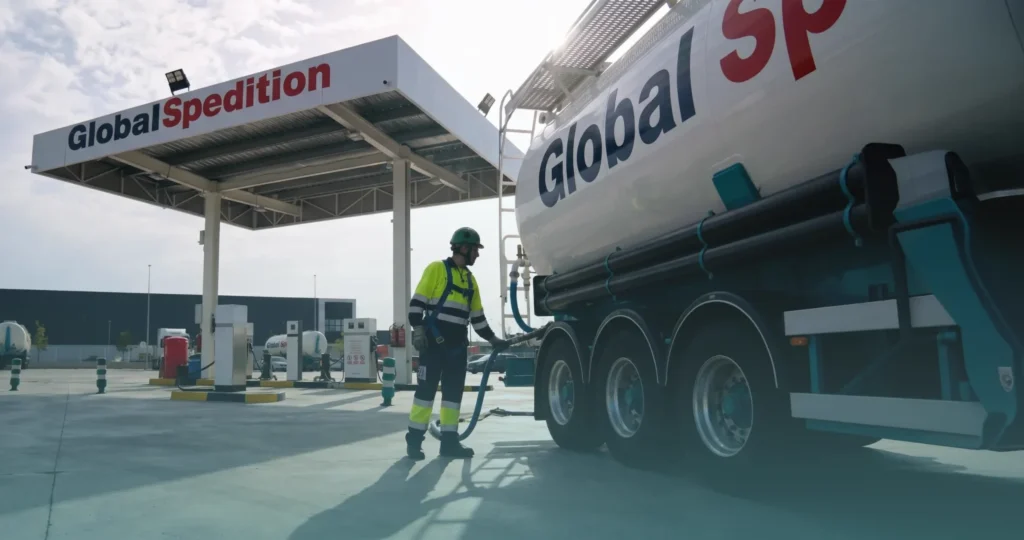
Global Spedition It is an Aragonese company with over 50 years of history in international transport. Its tanker trucks move bulk, solid and liquid products, many of which are dangerous or flammable. For them, risk prevention is at the heart of their operations.
The manuals and presentations explained the procedure well. What the team needed was to practice it before having the load in front of them, and with dangerous goods that cannot be tested in reality.
We started by studying their protocols, chose the most critical scenarios with them, and designed each mechanism by testing it with people from our own team. The result is training in Virtual Reality The measure. The manuals become simulations of your real position, in ten-minute sessions where each person practices the protocol, makes decisions, and sees the consequences without any risk.
More than 800 employees have already done so, and the time spent on prevention training has decreased by 60 %%. But what I like most about the project is something else: people who had been taking the same old training courses for years discovered that learning this way is useful, dynamic, and stays with them.
Technology at the service of people
This case summarizes well what we stand for. The challenge determines the technology, and technology is there to help people work better, never to replace them. When we automate something, our goal is to free people from repetitive tasks so they can spend their time on what adds value.
That is why we attach such importance to the first conversation. It is there that almost everything is decided along the way.
So, where do I start?
Because of your challenge. With three questions you can get started: what is the challenge, what level is each area of your company at, and what is the next step.
If you want to answer them with us, Tell us about your challenge. We sit down with you, see how you work, and suggest where to start. We have over 700 projects, with 115 million users in 120 countries, and every company continues to teach us something new.
We accompany you into the future.