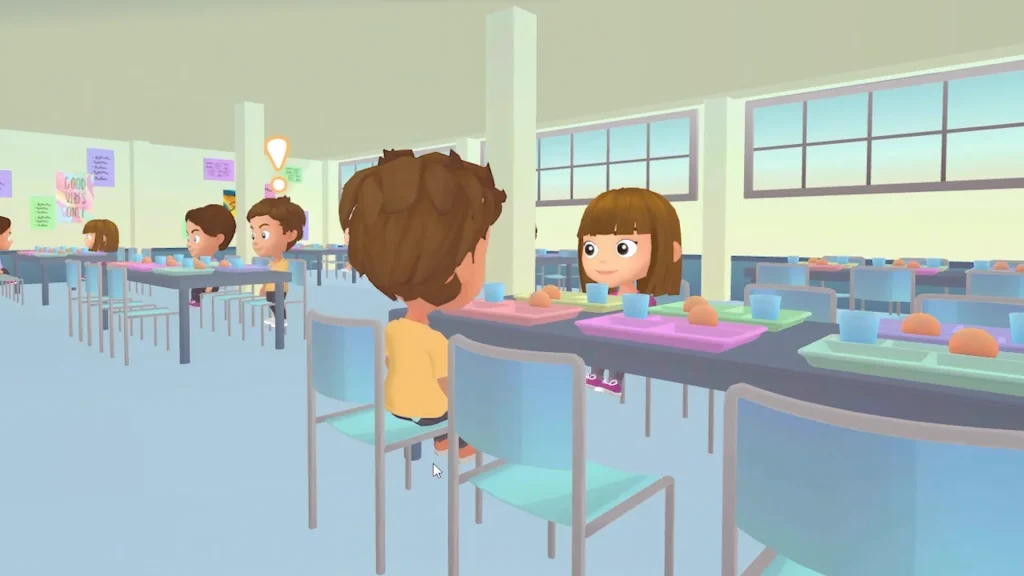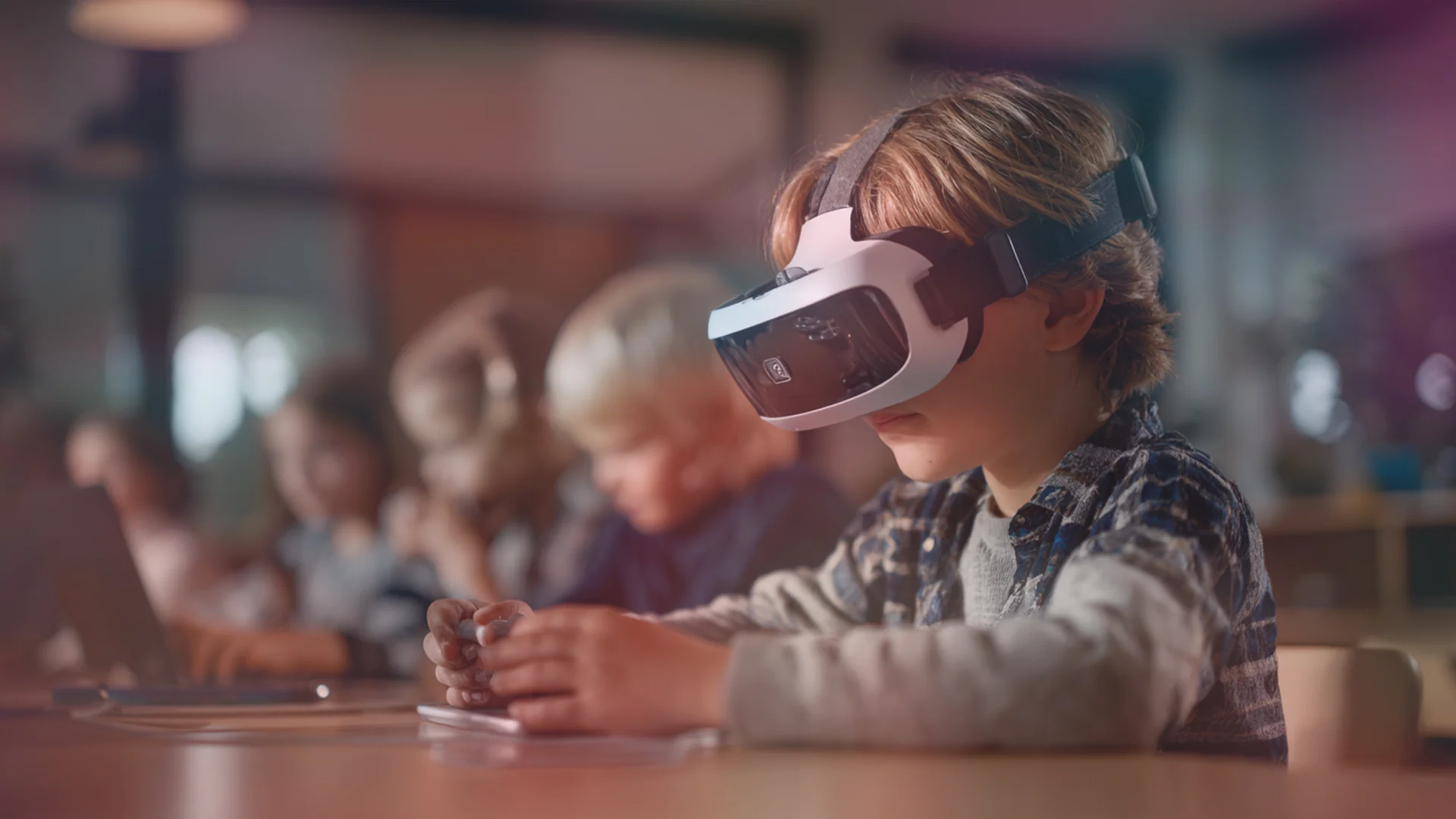
Education is one of the most important pillars of our society. And in this technological and digital world in which we live even more so. Knowing how to combine the basics of traditional learning with the new skills and abilities needed to develop in the digital era is essential. . So, in this article we are going to talk about how technology is enriching learning. From the integration of Artificial Intelligence and the experiences of Augmented Reality to the Gamification and the hybrid learning , These innovations offer more personalized, interactive and immersive educational experiences. Through examples such as Learning to undertake , KAI XR Platform and Chromville , we analyze how new technology tools are enhancing students' creativity, independence and skills , preparing them for the social and labor future.
Educational innovation: Technology for children
In the digital age, children are technological natives who learn best with interactive, adaptive and dynamic tools . Without neglecting the educational bases that allow the development of all the intelligences, thinking and creativity of children, we can develop educational experiences with new dynamics, strategies and technologies. A complete learning experience that makes it much more effective. You may be interested in → How Technology Boosts Child Development: Practical Solutions for Parents As discussed in more detail in this article - which we invite you to read carefully - The current educational scene is marked by the debate on the use of technology by children. Today everything is digital and children, the digital natives, are growing up in a world from which we cannot separate technology from educational content. However, parents, pediatricians, psychologists and teachers are increasingly aware of the impact that technology is having on children's development. Both positive and negative. The challenge is to find the perfect balance. Because when technology is used with purpose and supervision, integrated in a coherent, positive and controlled way into the learning content, it can enrich children's education. . Preparing them for a more connected, digital and opportunity-filled future. Take a look at our post: Advantages and disadvantages of Artificial Intelligence in education
Advantages of technology in children
The incorporation of technology in school classrooms brings multiple benefits that go beyond education as we know it. But also responsibilities on its controlled use, promoting the welfare and development of children. In a responsible way, the use of these tools not only improves learning, but also promotes autonomy and creativity . Among the main advantages are:
- Aprendizaje personalizado: Por ejemplo, la incorporación de la inteligencia artificial, potenciada a través del uso de AI avatars, adapta contenidos a las necesidades y ritmos de cada niño, asegurando un proceso de continuo progreso individualizado. Además de hacer de la experiencia algo inolvidable, como es preguntarle directamente a Miguel de Cervantes sobre sus novelas, como en el proyecto Cervantes IA.
- Motivación y compromiso: Herramientas como la Gamification convierten el aprendizaje en una experiencia divertida e interactiva lo que hace que el aprendizaje sea mucho más rápido y con mayor retención de contenidos. A través de retos, insignias y rankings, los más pequeños se sienten más motivados en el aprendizaje, con las mismas mecánicas que en los videojuegos, pasando pantallas y niveles al completar correctamente los ejercicios.
- Preparación digital: Desarrolla habilidades tecnológicas esenciales para su futuro académico y profesional, en el que cada usuario se irá familiarizado desde niño con la tecnología y con su uso y funcionamiento. Fomentando habilidades como la creatividad y el desarrollo y la resolución de problemas actuales. Como en el caso de KAI XR Create, donde no sólo aprenden sobre los diferentes ecosistemas sino también aprenden a diseñar en 3D sus propios universos digitales.
- Acceso global: Recursos online eliminan barreras geográficas, permitiendo aprender de cualquier lugar. Para brindar oportunidades para acceder a contenidos educativos de alta calidad, sin importar la ubicación o el contexto socioeconómico. Democratizando el aprendizaje y ofreciendo nuevas posibilidades para estudiantes de todas las edades y niveles. Por ejemplo, en la plataforma educativa de KAI XR, los niños pueden viajar a Egipto, al espacio o al fondo marino todo a través de unas únicas gafas de Virtual Reality.
Do you want to go a little deeper? We invite you to read the Technology trends and children
Keys to incorporating technology in children's education
Boosting creativity
The technology in education is a powerful tool to awaken creativity in children. From classrooms that transport to the past or to other ecosystems, the possibility of asking someone from the past about what it was like to live in their time or seeing in 3D what you could only imagine before with abstract thinking. All of these experiences allow students to explore their ideas and express themselves in an innovative way. The use of simulations and virtual environments fosters the use of experimentation without fear of error , while artificial intelligence offers customized challenges that stimulate the critical thinking y la creative problem solving . Thus, technology not only teaches, but inspires to create, imagine and transform the world.
Promoting independence
Educational technology allows children to take control of their own learning by providing them with interactive and customizable platforms that adapt to their pace. This fosters key skills such as self-management and accountability . In addition, tools such as guided tutorials and immediate feedback, via virtual avatars help children identify their strengths and areas for improvement, promoting a growth mindset. This autonomy not only improves their academic performance, but also prepares them to face future challenges with confidence and proactivity.
Improvement of learning skills
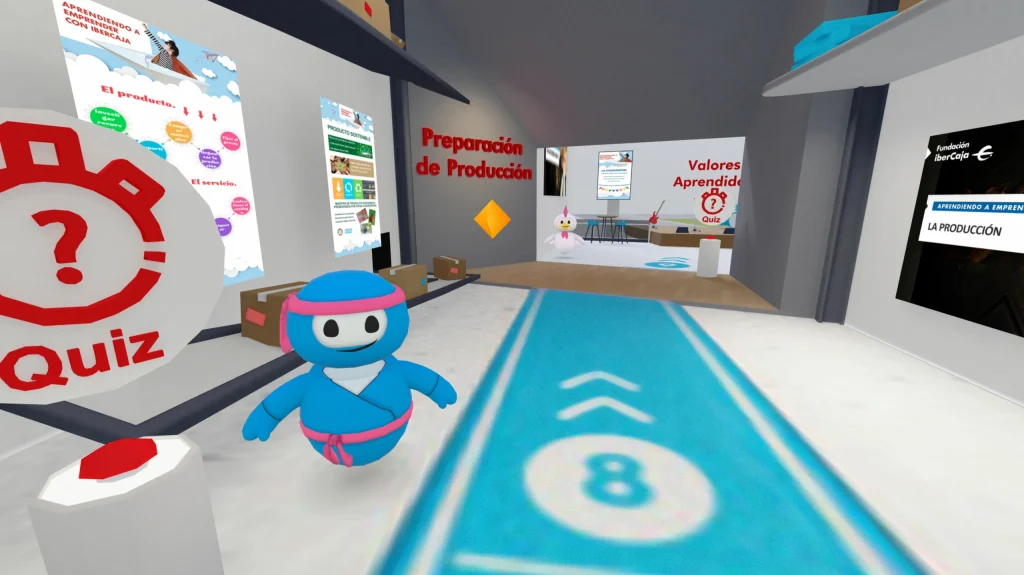
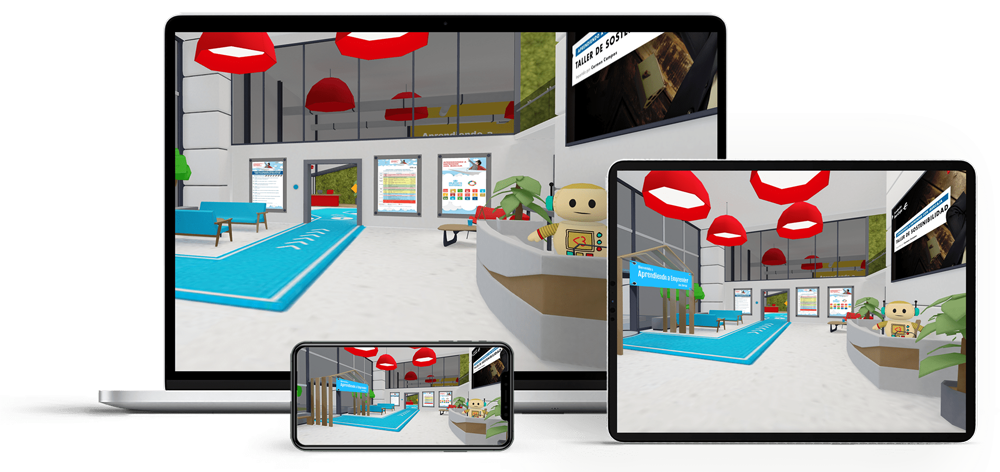
Technology enhances learning skills by providing innovative methods for assimilating knowledge. For example, tools such as the microlearning offer short and specific contents, ideal for keep the attention of students and improve retention of content. In addition, the interactive platforms adapt the lessons to the pace of each child, fostering their autonomy . Skills such as critical thinking, problem solving and collaboration are also developed through online activities, preparing students for the academic and professional challenges of the future. An example of this can be found in the training program Aprendiendo a Emprender, developed by Fundación Ibercaja. which has a virtual campus where each classroom can go at their own pace completing the steps to create their own children's cooperative.
4 technology trends in education
As we have seen throughout this article, technology is transforming the education system. The projects and success stories presented, although they may seem very different, have in common that they follow one of the four technological trends presented below.
The use of Artificial Intelligence: Chatbots and Virtual Avatars
The educational chatbots and the virtual avatars are transforming teaching with dynamic and personalized interactions. Tools such as V-E-G-A , The new AI training platform, an innovative platform for AI training and virtual assistant development, is designed to answer questions and guide students in real time. In this context V-E-G-A Tutor is a clear example, which seeks to democratize access to training in new technologies thanks to artificial intelligence. Also noteworthy is the Turrón project , with its focus on a virtual avatar for children. It has a Christmas storytelling feature that seeks to actively entertain the little ones during the vacations.
Gamification of learning
The Gamification is associated with greater commitment, motivation, attention and interest on the part of students, regardless of their level of education. Thanks to its challenge/reward system, there is an incentive to give the best of oneself. In addition, student autonomy is encouraged and, when concepts are more complicated, learning through trial/error, logic and deduction games helps to internalize new knowledge in a much more effective and entertaining way.
Virtual Reality and Augmented Reality Experiences
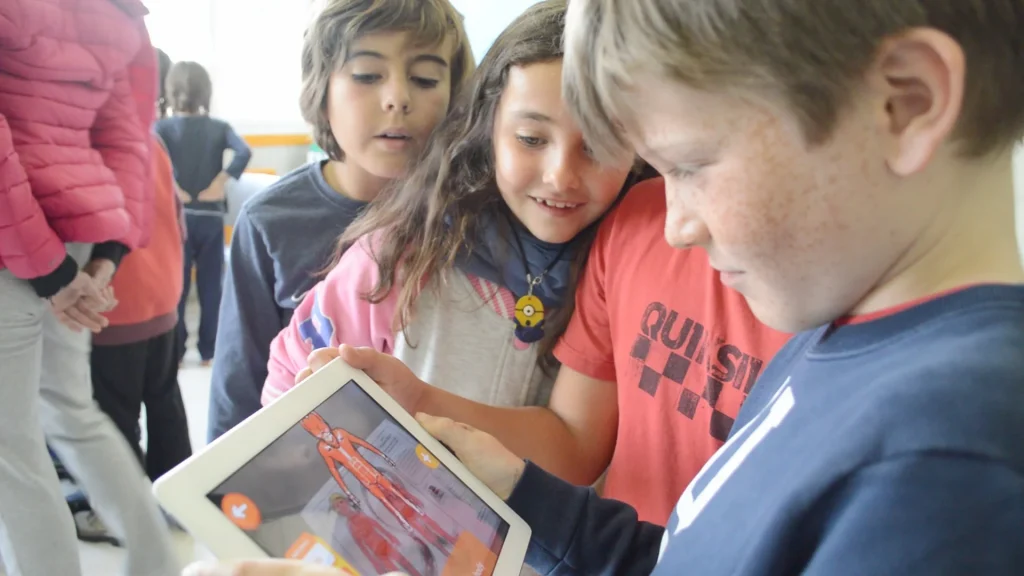
The Virtual Reality y la Augmented Reality are taking education to a whole new level, enabling immersive experiences that bring students into worlds, eras and concepts that are difficult to explore in a traditional classroom. An example of this innovation is the Chromville educational app , which uses Augmented Reality to bring to life the drawings painted by the children. Thus creating a highly interactive, visual learning environment. Not only does this approach make learning more engaging, but it also facilitates the understanding of complex concepts in a fun and accessible way. Do you want to know more about AR educational experiences? We invite you to read Features and benefits of Augmented Reality in education
Hybrid learning: linking virtual and physical
The hybrid learning merges face-to-face teaching with virtual environments, providing a more flexible and dynamic educational experience. An outstanding example is the Learning to undertake which we have discussed above. This program combines classroom training with training in the virtual space, allowing students to acquire practical knowledge while interacting on online platforms. This modality promotes collaboration, creativity and skill development. in an accessible environment, ready to face the challenges of the future.
Cases and practical projects on trends in education
Aparte de los innovadores proyectos ya mencionados como Kai XR Platform and Chromville, existen otros ejemplos fascinantes desarrollados por Imascono de cómo las nuevas tecnologías están siendo aplicadas en la educación. En el ámbito de la salud mental, especialmente en los niños y adolescentes, hay tecnologías que se están utilizando para abordar test clínicos en un entorno pensado para los nativos digitales, un entorno de videojuego. Es el caso de ApeTest, impulsado por la Fundación A.P.E. y el Instituto de Investigación Sanitaria de Aragón (IIS Aragón). Otro proyecto a destacar es la virtualización completa de toda la Rafa Nadal Academy, donde a través de su entorno virtual, los estudiantes, padres e interesados pueden viajar virtualmente hasta Manacor (Mallorca, España) para recorrer sus instalaciones y descubrir junto a Rafa Nadal, Toni Nadal y el resto del profesorado toda la metodología y valores de la Academia de Tenis. En definitiva, cada uno de estos proyectos demuestra cómo las nuevas tecnologías están mejorando un futuro educativo más interactivo, inclusivo y personalizado. Siempre poniendo el foco en que la tecnología está para enriquecer los programas educativos, no para sustituir el aprendizaje más tradicional. ¿Tienes alguna duda o te gustaría saber más sobre cómo las nuevas tecnologías están transformando la educación? No dudes en ponerte en contacto con nosotros. Estaremos encantados de ayudarte a explorar las mejores soluciones educativas para tu institución.