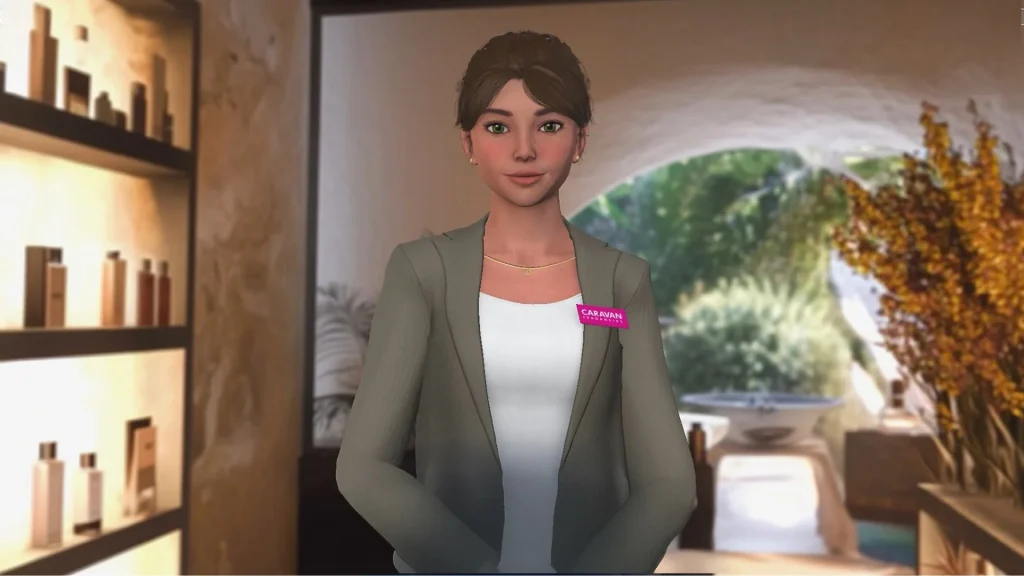
There was a time when avatars were little more than digital dolls; they represented an identity but did not depict a nearly lifelike person. Those days are over. Today, the convergence of artificial intelligence, 3D modeling, and state-of-the-art rendering has made hyperrealistic avatars possible—digital presences so believable that it's hard to tell them apart from a real video recording. But what lies behind this perfect illusion, and how is it transforming the way brands communicate with, engage, sell to, and win over their audience? In this article, we explore the evolution of avatars up to photorealism, their key technologies, and use cases. Welcome to the future of interaction with technology. And, believe us, applying this technology is more human than you might imagine.
The Evolution of Avatars Toward Photorealism
Few terms have had such a fascinating journey as "avatar." The word has its roots in Sanskrit, where it referred to a deity's descent to Earth, but it was the writer Neal Stephenson who reinvented it for the digital age in his novel *Snow Crash* (1992), imagining a gamified environment populated by virtual representations of its users. What was once science fiction soon became a reality: for decades, avatars were confined to crude bodies and rudimentary geometries. Think of those early polygonal video game characters, the flat icons on message boards, or the angular 3D figures that populated the virtual worlds of the 2000s. They were functional, yes, but no one would ever mistake them for a human being. They represented an identity, not a presence. The big breakthrough came when graphics power, real-time rendering, and, above all, the inteligencia artificial They came together to cross the final frontier: realism. Today we're talking about avatars hyperrealistic avatars capable of reproducing nearly human physical and emotional traits. It is no longer a matter of looking like a person, but of being indistinguishable from a real video recording—hence the term "videorealistic"—with the avatar achieving a level of fidelity worthy of video, not animation. This is precisely the dividing line that marks the state of the art and where Imascono It draws on its expertise, because creating convincing, hyper-realistic avatars requires the expert orchestration of technology, data, and visual storytelling. If you want to learn how to implement AI in your business: How to Apply Artificial Intelligence in Business.

Characteristics That Define a Photorealistic Avatar
Si la evolución nos ha traído hasta aquí, conviene preguntarse qué valor añadido tiene un avatar videorealista. A continuación desgranamos las tres características que marcan la diferencia en los avatares inteligentes.
Visual Realism, Personalization, and Digital Identity
Everything starts with the eyes. Visual realism is the gateway to credibility: skin textures, rendered hair, lighting that responds to the environment, and high-density 3D modeling. But photorealism alone isn't enough; what makes an avatar a strategic asset is its customizability: the ability to sculpt every feature to build a coherent, unique digital identity that aligns with the values of the person it represents.
Facial Expressions and Natural Body Language
A perfect face must be accompanied by appropriate facial expressiveness. That is why true mastery lies in movement: microexpressions, irregular blinking, a raised eyebrow, gestures, and posture. Added to this is an element that changes everything: the lip-syncing : When the voice and lip movements are perfectly synchronized, the brain stops looking for inconsistencies and accepts the avatar as a real conversation partner. Achieving that synchronization between facial expressions, eye contact, and speech is precisely what makes these avatars so valuable.
Integration with Artificial Intelligence
Like any other intelligent avatar, photorealistic avatars are also powered by AI. The inteligencia artificial It is the engine that enables a hyper-realistic avatar to listen, understand, respond, and express itself in real time. And generative AI paves the way for avatars that hold conversations, serve customers, or present content autonomously and at scale to become fully autonomous. Furthermore, our management platform allows you to create their appearance, knowledge, and personality from start to finish. This makes hyper-realistic avatars a reliable, secure, and scalable solution.
Key Technologies Behind Photorealistic Avatars
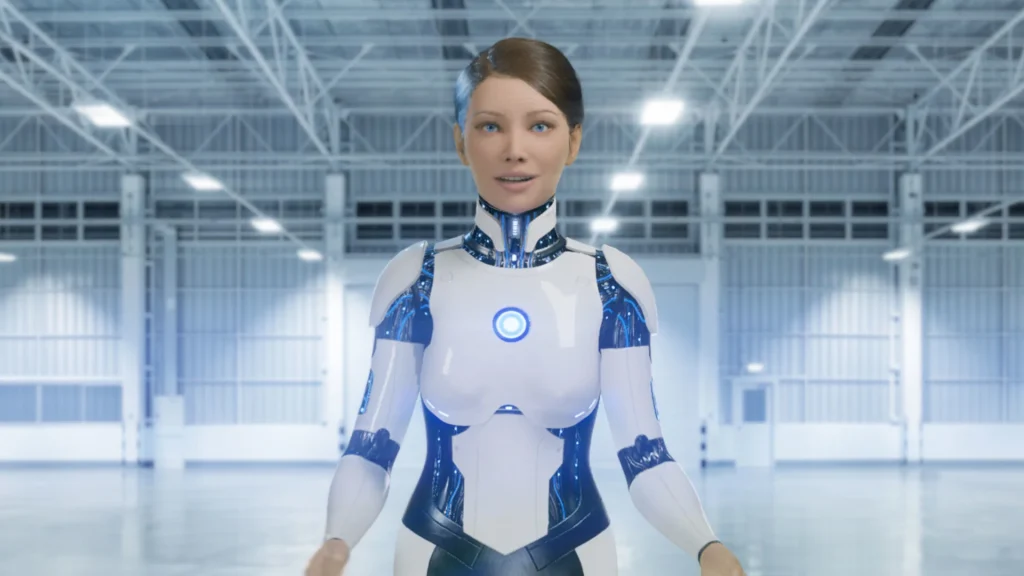
Behind every interaction with a hyperrealistic avatar lies a highly precise technological system that makes it possible. Getting a digital face to respond both with its own intelligence and in accordance with the user's attitude requires combining an increasingly diverse range of disciplines. These are the main technologies behind a photorealistic avatar:
Escaneo 3D
All realism begins with capturing reality. 3D scanning—using photogrammetry, depth sensors, or capture platforms with dozens of synchronized cameras—transforms a human face or body into a high-fidelity digital model, recording every contour, texture, and nuance of the skin with millimeter-level precision.
Real-time translation
Si un avatar va a representar a una marca global, no puede quedarse mudo al cruzar una frontera idiomática. La traducción en tiempo real, impulsada por modelos de procesamiento del lenguaje natural, permite que un avatar hiperrealista hable, escuche y converse en múltiples idiomas de forma fluida e instantánea, adaptando además la sincronización labial al nuevo idioma para que el realismo nunca se rompa.
Generative AI and Machine Learning Models
Generative AI and deep learning models are what give the avatar its own behavior: they learn from enormous volumes of data to generate natural speech, coherent facial expressions, spontaneous gestures, and real-time conversational responses. Thanks to artificial intelligence, an avatar no longer simply follows a fixed script but can improvise meaningfully, adjust its tone according to context, and behave in an increasingly human manner the more it interacts. It is the technology that transforms a static 3D model into a dynamic, autonomous, and scalable conversational partner.
Video Rendering
El renderizado es el proceso que convierte toda esa información, geometría, texturas, iluminación, movimiento, en la imagen final, y cuando hablamos de avatares videorealistas el listón está en alcanzar una calidad indistinguible de una grabación de vídeo real. Gracias a las técnicas de renderizado conseguimos el mayor realismo para los avatares.
Use Cases for Photorealistic Avatars in Various Industries
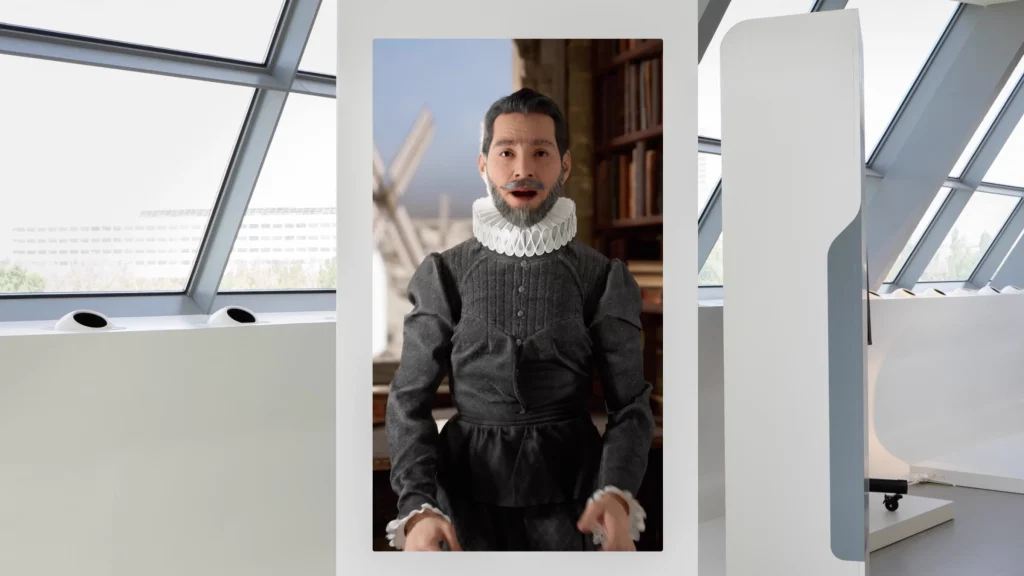
The true value of a hyperrealistic avatar is measured when it is applied to the real world of business. That is where the technology truly demonstrates its versatility. Below, we explore the scenarios in which photorealistic avatars are already transforming real-world industries.
Marketing and Brand Communication
In marketing, attention is the scarcest commodity, and a hyper-realistic avatar is a magnet for capturing it. It drives interactive and personalized campaigns that adapt the message in real time based on language, channel, or profile, creating immersive and disruptive experiences that cut through the noise. And every interaction collects key data to refine the strategy and improve ROI. The brand stops just talking at the user and starts having a conversation with them.
Corporate Training and Onboarding
Aquí un avatar hiperrealista democratiza el conocimiento: convierte manuales interminables en una conversación cercana y siempre disponible. El ejemplo perfecto es IRIA, el avatar inteligente que Imascono desarrolló para Iveco, entrenado con más de 100 documentos de diez departamentos y al servicio de más de 4.500 empleados. El dato revelador: el 90 % de sus conversaciones son consultas de la red de concesionarios. El equipo interno gestiona su entrenamiento mediante una plataforma de gestión propia, garantizando la mejora continua.
Atención al cliente y gestión comercial
A hyper-realistic avatar provides instant and empathetic responses, detects emotions, and adapts its tone; it's available 24/7 in multiple languages and across multiple channels without compromising brand consistency. But it goes even further: it acts as a sales agent that guides customers through the entire customer journey—from the initial welcome to purchase and payment—in an automated and personalized way. In this way, it revolutionizes the shopping experience both online and at physical retail locations.
In-person and virtual events
The future of events lies in the experience, and that's where photorealistic avatars shine. Personalized welcomes for each attendee, presenters or moderators who guide the event, and brand ambassadors who interact in real time. Thanks to artificial intelligence, they make it possible to create smoother, more efficient, and unforgettable events, scaling personalized attention to hundreds of attendees at once, in both physical and virtual settings. At Imascono We've been transforming the inteligencia artificial Through engaging experiences: avatars that represent brands, build teams, and interact with real people. If you can envision an avatar that lives up to your project's vision, our team is ready to help bring it to life. Contact us at and let's build a success story together.