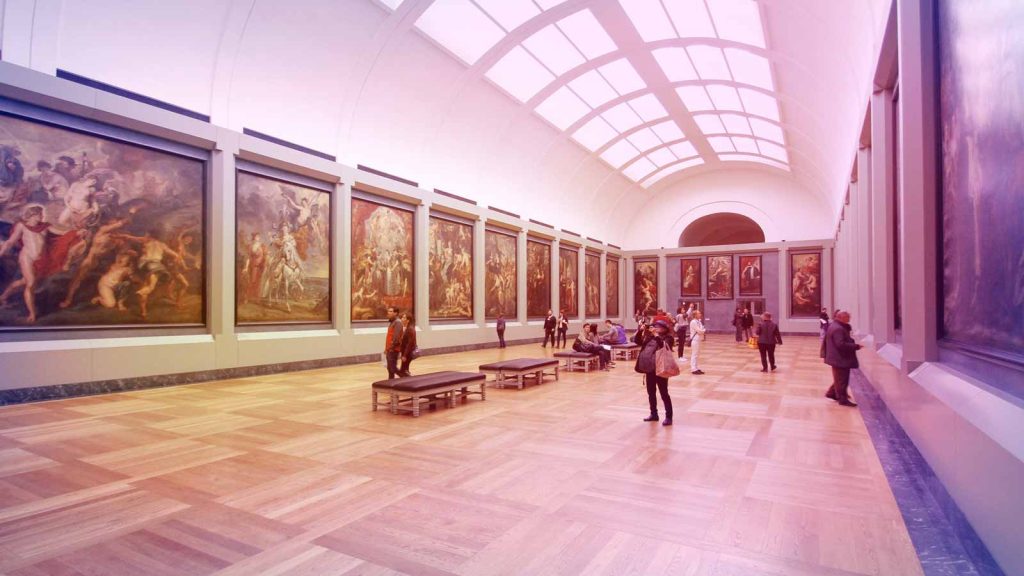
To preserve and share culture, history, science and art to the greatest possible number of people. This is, has been and will be the main objective of museums around the world. Now, these spaces for dissemination and exhibition have new technologies, such as Augmented Reality, for adapt museums to the new digital transformation. Thanks to these technologies, exhibitions, galleries, outdoor museums and showrooms are transformed, revolutionizing the way in which the users discover all the knowledge, culture and art that the museum keeps inside. Focusing on Augmented Reality applied to museums, this technology drives us to take the visit to the next level. Deepening the interaction of users with the works, in the didactic work of the exhibition rooms and also in the idea that visitors cease to be mere spectators for become active and motivated users to explore the museum in the most attractive, enjoyable and fun way possible.
¿Qué es la Realidad Aumentada?
Before learning about the current applications and advantages of incorporating the Augmented Reality in museums , First it is important to review what Augmented Reality is all about. This term is defined as technology that combines the real world with the digital world, superimposing virtual elements on reality itself. With Augmented Reality, the real and virtual environments intermingle, creating interactive experiences accessible from mobile devices. This is just one of the immersive solutions within the framework of the Extended Reality where, in addition to Augmented Reality, you can also find the Virtual Reality and Mixed Reality. You might think, what's the difference between augmented reality and virtual reality ? Well, the first seeks to superimpose digital elements showing the real world at the same time, while the objective of Virtual Reality is to immerse users in the real world. immersive and interactive environments totally artificial. On the other hand, Mixed Reality is the result of the combination of the two previous technologies into one, where users can interact with all these overlapping virtual elements to the physical world with great freedom.
Augmented Reality in museums
Once we know its definition, how is this technology applied in museums, art and culture? As we have previously mentioned, museums with Augmented Reality provide the visitor experience of new challenges and new sources of information. An inspiring visit where immersion and interaction are key elements.
Augmented Reality applications in museums
Here are some of the most important most spectacular applications of Augmented Reality in museums, exhibition halls and outdoor guided tours.
Overlay information
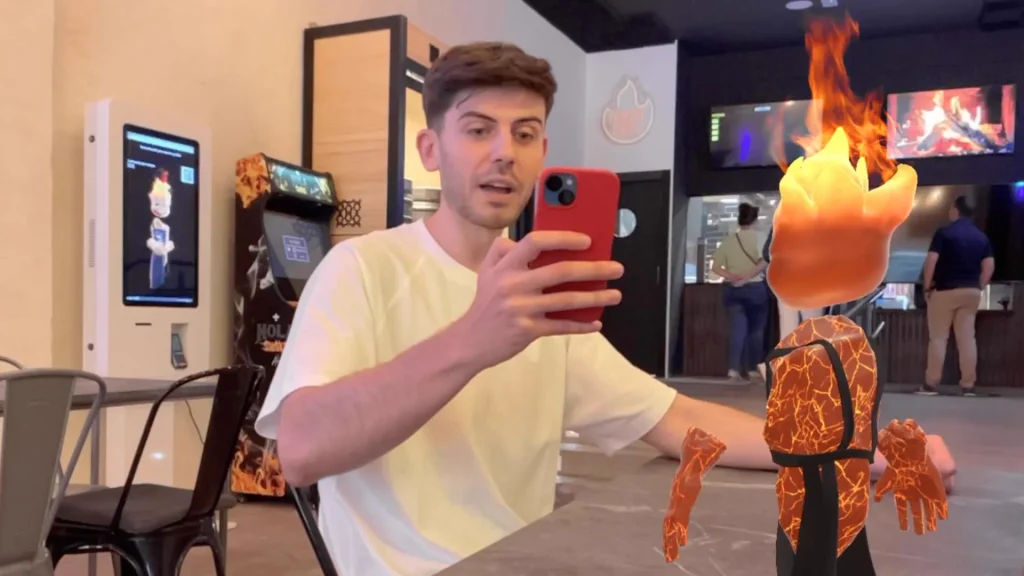
One of the most relevant applications of Augmented Reality in museums is its capacity for provide additional information to visitors while on the tour. Whether by pointing their cell phone at the brochure, the plaque, the guides or even the painting itself, users will be able to see information overlaid. In this way, the artist or museum can to offer additional perspectives to the works with formats that go beyond printed text or signage, with the possibility of introducing videos, audios, music or even 3D avatars. This Augmented Reality overlay information can even be incorporated into the museum websites The users are immersed in the exhibition until before the visit.
Educational visits
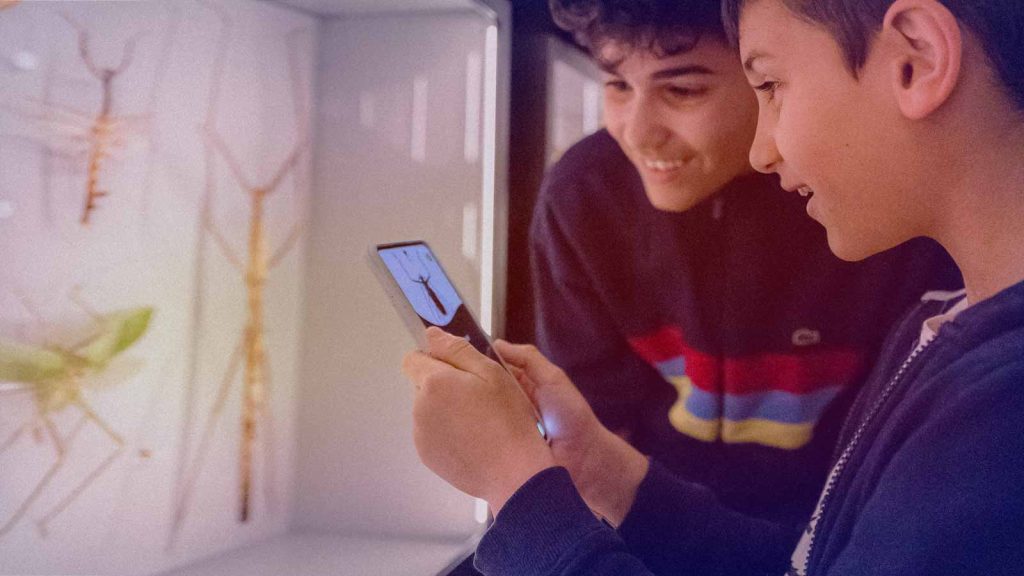
Another important aspect of the application of Augmented Reality in museums is the ability to developing interactive learning environments that transform the halls and galleries into large educational spaces. All this is done through educational games adapted to all ages with the objective of teaching visitors about history and culture. Being of great help to generate emotional connection, involvement and fun while discovering the museum.
Taking artistic creativity to the next level
With Augmented Reality, not only museums are transformed, the works themselves can also benefit. Now the artist can go beyond the limit of the picture taking his artistic expression to the next level. Making his works come to life, "come out" of the painting and envelop the visitor in a unique experience.
Customized content
Thanks to this new technology, museums, artists, and curators can offer customized content to the public that visits them. Providing an Augmented Reality experience, immersive and personalized for all ages. The visit can be personalized to the point of calling the visitor by name and answering all their questions instantly thanks to the integration of Artificial Intelligence tools . This personalization achieves two key goals: to make visitors feel that they have a better understanding of the enjoy the museum at their own pace and attract young audiences. by making the museum visit much more interactive and fun.
Recreaciones históricas
Augmented Reality is, without a doubt, a key technology for museums thanks to its ability to recreate historical moments and places . With this technology, the history comes alive around us . Through our cell phones, we can travel to the past of the area, bring to life the objects, artifacts and machinery of that time or see 3D reconstructions of how these sites were in ancient times. We encourage you to discover the historical past of Zaragoza thanks to our Connected Art project .
New interactive experiences
With Augmented Reality, visitors are no longer mere spectators, but rather part of the action. The rooms and exhibitions become large gamified spaces where to hide digital surprises, create escape rooms, gymkhanas, treasure hunts or give space in which visitors can manipulate virtual objects or create their own works. In short, what is achieved is develop dynamic and interactive experiences. Where even the characters come to life (as in the film Night at the Museum ) and let them explain the visit to us.
Advantages of museums with Augmented Reality
Having explained the main applications of Augmented Reality (AR) in museums, it is time to delve into the advantages it offers. Engagement, new audiences, accessibility... Here we review the main ones. advantages of Augmented Reality in museums.
- Interactividad y participación: la Realidad Aumentada fomenta una experiencia de usuario más activa y personalizada, al mejorar la comprensión y el compromiso de los visitantes. Invitándolos a formar parte de la visita y a participar en las nuevas dinámicas, cambiando para siempre la idea que se tiene de las visitas a los museos más monótonas y unidireccionales.
- Flexibilidad y actualización: la tecnología de la Realidad Aumentada permite mantener las salas y exposiciones actualizadas al momento. Facilitando la incorporación de nuevos contenidos y la adaptación a eventos temporalessin necesidad de reformar todo el espacio físico.
- Accesibilidad mejorada: a través de la Realidad Aumentada, los museos de todo el mundo pueden mejorar la experiencia de todos los visitantes, haciendo las exposiciones mucho más accesibles para personas con discapacidad.Proporcionando opciones como autodescripciones, subtítulos, traducciones… todo a través de los propios teléfonos móviles de los usuarios.
- Promoción y marketing: desde la página web a las Redes Sociales, pasando por la cartelería y el marketing de exteriores,la Realidad Aumentada permite llevar el museo y la exposición a cualquier parte del mundo. Con solo apuntar con el teléfono móvil, los usuarios y potenciales visitantes podrán sumergirse en el museo en Realidad Aumentada, generando mayor impacto y conexión. Promocionando las exhibiciones y atrayendo a públicos más amplios a través de campañas atractivas y creativas.
- Recopilación de datos y feedback: los museos pueden aprovechar la tecnología de la Realidad Aumentada para rastrear el comportamiento de todos los visitantes (conocer en qué zonas se paran más, en qué puntos interactúan, qué les ha llamado más la atención…). Informaciones de gran valor que mejoran la experiencia de futuras exhibiciones.
What is the future of Augmented Reality in museums?
Undoubtedly, Augmented Reality is a technology in continuous growth and expansion . And its application in museums, exhibitions, culture, art and tourism in general will only increase and improve. With constant technological advances, Augmented Reality will become more accessible, more immersive and much more personalized. Thanks to its interrelationship with the Artificial Intelligence and machine learning With Augmented Reality, Augmented Reality experiences will adapt, update and personalize in real time, all based on the interactions of museum visitors. Allowing them to engage with exhibits in a more natural and immersive way. On the other hand, with the integration of other immersive technologies, such as the Virtual Reality or Mixed Reality museums will exploit their full technological potential, becoming great laboratories for artistic creation and experimentation. Where visitors, art lovers, artists, scientists and AR developers will be able to work hand in hand to create immersive and interactive installations exploring different perspectives and going a step further in the immersion in the work. You may be interested in→ Virtual Reality in museums: How is it being applied? The future of Augmented Reality in museums promises an enriching, interactive and globally accessible cultural experience for art, history, science and culture lovers from around the world. At Imascono our team of engineers, designers and creatives has been working with us for many years. more than 12 years developing immersive experiences based on Augmented Reality. Do you need an Augmented Reality project for your museum, gallery or showroom? Contact with us and we will transform your museum with immersive, inspiring and interactive experiences!