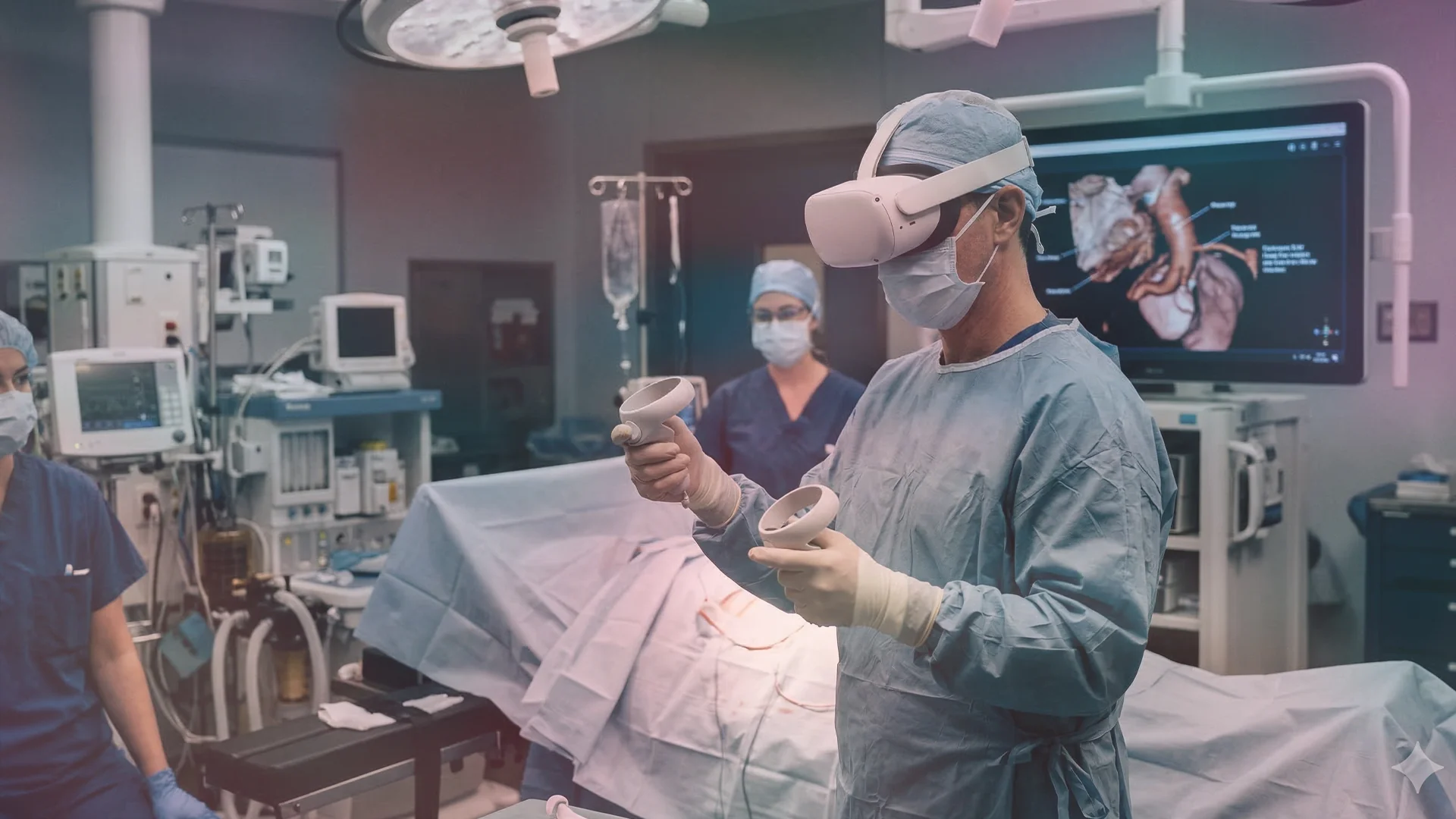
Today's surgery demands absolute precision, millisecond decisions and zero margin for error. However, traditional training systems continue to face major challenges such as steep learning curves, variability in training from center to center, and constant pressure to reduce complications in an environment where every failure has real consequences. In this context, the virtual reality in surgery no longer a futuristic promise, it is now a solution adopted by hospitals and training centers seeking to raise their clinical standards. The rv in surgery is redefining how surgical teams train, plan and refine procedures before entering the operating room. Thanks to immersive, measurable and highly realistic environments, practitioners can reduce errors, gain confidence and standardize technical skills in conditions that replicate real clinical practice. In this article we explore five concrete ways in which virtual reality is reducing errors and improving outcomes, marking a before and after in modern medicine, making it safer, more efficient and more aware.
Why virtual reality is becoming essential in modern surgery
Today's surgery demands high precision, but the traditional model of surgical training has clear limitations, with restricted time in the operating room, pressure on care, inherent risk to the patient during the learning curve, and significant variability in the training experience from hospital to hospital. This context makes evident the need for solutions that allow to practice more, better and without compromising safety. The virtual reality in surgery is emerging as the strategic response to these challenges. The virtual reality in medicine and surgery allows learning to be standardized through immersive, repeatable and measurable environments, where professionals can train complex procedures, deal with rare complications and hone skills before intervening on real patients. Thus, the virtual reality in surgical training does not replace clinical practice, but reduces the learning curve and raises the level of preparation and learning experience. If you want to go deeper, find out here how VR improves medical training: the ROI of virtual reality in medical training

Virtual reality in surgery training: reducing errors before entering the operating room
Antes de que el cirujano pise el quirófano, hoy gracias a la realidad virtual puede haber cometido, y corregido, decenas de errores en un entorno completamente seguro. La virtual reality in surgery training ha transformado la preparación quirúrgica en un entrenamiento práctico, inmersivo y sin riesgo para el paciente. Gracias a la vr in surgery training, los profesionales pueden repetir procedimientos complejos tantas veces como sea necesario y perfeccionar la toma de decisiones.
Enhances surgical skill and reduces procedural errors
The virtual reality in surgical training allows students and surgeons to practice complex procedures in realistic, risk-free simulations. Studies in laparoscopic surgery, such as cholecystectomy, have shown that those who train with VR make fewer technical errors and complete tasks in less time. Guided repetition and immediate feedback optimize accuracy, thus increasing attention retention and therefore knowledge retention.
Shortens the learning curve for complex procedures
The vr in surgery training accelerates skill acquisition by allowing intensive and structured practice. Instead of relying on the volume of real cases available, the practitioner can be confronted with multiple anatomical variations and levels of difficulty in a matter of hours. This repeated exposure strengthens muscle memory and decision making under pressure.
Provides a safe environment to practice pare, high-risk scenarios
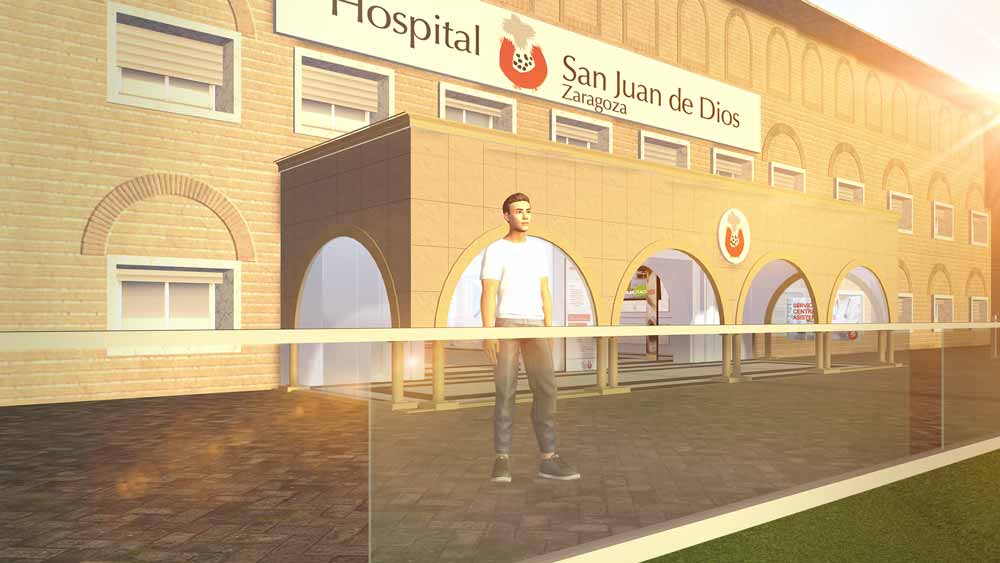
One of the greatest values of the Virtual reality training for surgical trainees is the possibility to rehearse rare critical situations, intraoperative complications, unexpected bleeding or complex anatomical variations, which can be recreated and repeated without endangering lives. This controlled environment allows refining motor skills and improving decision-making in high-pressure contexts. This virtual environment allows the user to be exposed to changing and unexpected environments, being able to expand and modify the training modules at any time, thus increasing the user's ability to react.
Improves teamwork and safety behaviors in the OR
La rv en cirugía a parte de potenciar estas habilidades individuales, también permite la seguridad total en el aprendizaje, a través de simulaciones inmersivas, los equipos entrenan comunicación, coordinación y protocolos de seguridad en entornos que replican el quirófano real. Se trabajan aspectos como la conciencia situacional, la gestión del estrés y la toma de decisiones compartida. Esta preparación reduce eventos adversos derivados de fallos de comunicación o descoordinación.
Supports preoperative planning and visualization
The integration of the Virtual reality training for surgical trainees with images and interactive infographics about organs or medical tests such as CT scans, etc. or resonance allows to create specific 3D models of each patient. The surgeon can explore the anatomy in depth, analyze complex spatial relationships and anticipate possible challenges before the incision, reducing improvisation. It also allows to explore machinery and facilities which will later be used by the healthcare professional, allowing to give an anticipated response to the patient.

How Imascono acts as a strategic technology partner for virtual reality solutions in healthcare
The transformation driven by the reality virtual surgery does not happen by chance, but through a solid technological strategy adapted to the real clinical environment. At Imascono we act as specialized technological partners, thanks to our own methodology that accompanies you throughout the process, designing solutions for virtual reality for surgery that not only impress visually, but respond to specific needs in the healthcare sector: error reduction, process standardization and continuous improvement of surgical performance. Our approach combines innovation, user and deep knowledge to create immersive experiences ready to be integrated into medical practice. Through customized, healthcare-ready VR solutions, surgical teams can train, rehearse and plan interventions in highly realistic virtual environments that replicate real clinical conditions. The result is clear: greater technical accuracy, safer decision-making and better coordination in the operating room.
Vaccines VR
Gracias a la realidad virtual, Vaccines se convierte en una herramienta clave para la formación sanitaria y la sensibilización en procesos clínicos complejos. A través de entornos inmersivos cuidadosamente diseñados, los profesionales pueden comprender protocolos médicos de forma experiencial y práctica. La simulación virtual mejora la retención del conocimiento y reduce la variabilidad en la aplicación de procedimientos, permitiendo probar a través del error.
Sania Sanitas
With Sania Sanitas, Imascono developed an innovative experience aimed at transforming the relationship between technology and digital health. The project integrates a virtual assistant in Sanitas hospitals, facilitating the understanding of medical services, self-management of appointments and care processes. This ability to translate complex clinical information into accessible immersive experiences reflects our know-how in healthcare technology solutions. At Imascono Health we help hospitals, universities and companies healthcare to integrate solutions for virtual reality in surgery and medicine adapted to your clinical and training objectives. You want to reduce errors, optimize surgical training and lead medical innovation, contact our team to design the future of health communication with you.