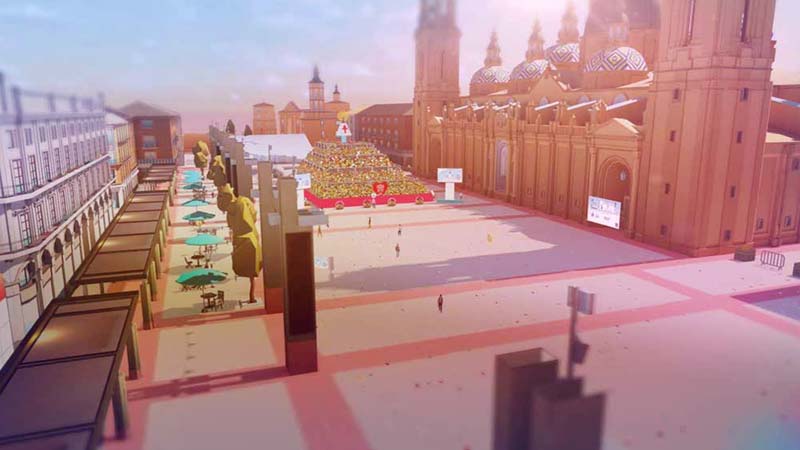
For centuries, museums around the world have had one thing in common: the goal of preserving and sharing culture, history, science and art with as many people as possible. Now, that goal can be taken one step further thanks to the incorporation of Virtual Reality in exhibitions and museums . Experiences that not only enrich the visit to the physical space, but also allow access to the best collections from around the world without leaving home.
Virtual Reality in museums: applications and examples
Before learning more about the applications and examples of how the Virtual Reality is currently being incorporated in museums, it is first important to review what does Virtual Reality technology consist of? . This is defined as the technology capable of immersing us in completely digital alternative worlds. 3D environments where our senses stop perceiving the real world and focus their attention only on the new virtual experience. It is also worth noting the importance of the Augmented Reality in museums although in this case we are going to focus on virtual reality let's get to it.
Virtual Reality applications in museums
Once we know its definition, how can this technology be applied to the culture the art and, especially, in the museums ? Generally speaking, we can say that the Virtual Reality applied to museums and exhibitions allows changing visitors' perspectives , exploring new ways to develop storytelling of the museum's galleries, exhibitions and tours. Offering new experiences to enjoy art, history and science, both in the museum itself and at home. Here are some of these applications.
Virtual visits to exhibitions
Undoubtedly, the great value of Virtual Reality is its ability to teleport us and take us to a different world. total immersion in new digital spaces The virtual recreations of the great museums of the world. Thanks to this, any user can visit and tour any museum or exhibition in the world just by using Virtual Reality glasses. Enjoying a private and/or self-guided tour with no time limit . Allowing not only to generate engagement and convince users to discover the museum in person, but also to give the possibility that people with reduced mobility or unable to travel to the museum, can enjoy the art of its exhibition. Thus, Virtual Reality applied to museums allows bringing culture closer to all people regardless of their geographical location or cognition. By making the exhibitions are much more accessible. In addition, thanks to this technology, visitors can continue to enjoy the exhibitions even though the physical collection has ended. Allowing the museum to preserve the exhibition as it was, in addition to providing the museum with more experiences and content beyond the limits of its physical space.
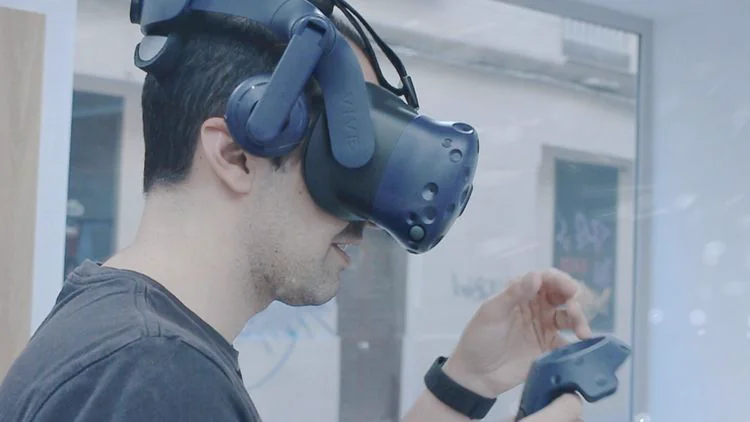
Experiencia de Realidad Virtual desarrollada para Ibercaja
Recreaciones históricas
The Virtual Reality allows museum curators to contextualizing objects and works, showing their true dimension or their appearance in the past or even recreating the cultural and social environment in which the artwork was created. Revolutionizing the way visitors relate to art and history.
Thus, a history museum could transport visitors to the past or a natural science museum could transform its exhibition rooms into real natural ecosystems to see the fauna and flora of the place. Allowing visitors to discover the museum's contents from a different perspective. new perspective and, above all, in first person . By recreating historical, cultural and artistic environments, visitors are immersed and enjoy them in great detail, living a much more enriching experience.
Interactive experiences with works of art
Virtual Reality allows visitors to feel as if they were stepping inside the play. Actively interacting with the exhibits by being able to explore the environment in 360 degrees, manipulating virtual objects, discovering the works from new perspectives, getting closer to see in great detail all the textures and brushstrokes and even obtaining additional information through interactive elements. This interactivity fosters greater engagement and participation. radically changing the idea of museums as places where one only observes and does not interact. A very important element that Virtual Reality incorporates into museums is the Gamification . Thus, museums and exhibitions can developing historical games, puzzles, escape rooms and creating blank rooms where visitors can create their own virtual works of art.
Immersive educational experiences
One of the most relevant applications of the Virtual Reality (VR) in museums is its ability to to create immersive educational experiences of high value to users. They can access additional personalized information, view interactive demonstrations and participate in educational activities that enhance their understanding and experience within the museum. Virtual Reality helps visitors to feel connected to the exhibition, to the artist and to the work. When it comes to education, Virtual Reality in museums is a great advantage for students all over the world, as they can enjoy and studying the most amazing pieces of world history with never-before-seen access and ease of use. You may be interested in our post→ Virtual Reality in education: features and benefits .
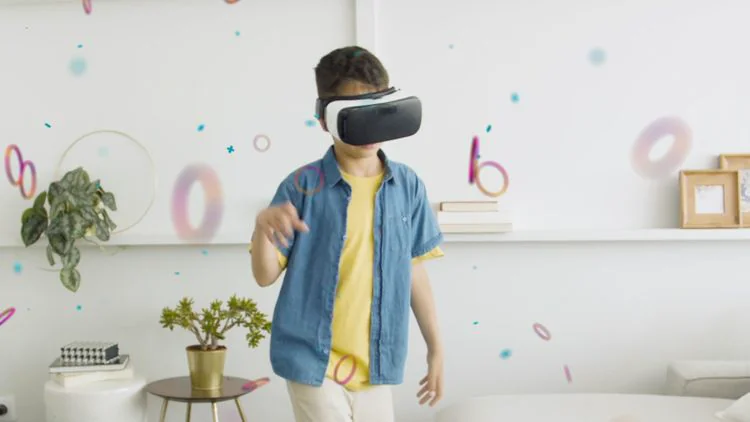
Proyecto de Realidad Virtual Kai XR desarrollado por Imascono en el ámbito de la educación
New virtual art
Artists themselves are experimenting with Virtual Reality to produce amazing new works. This technology offers them a new means of artistic expression designing original environments to create multisensory virtual experiences. Where not only new worlds are generated, but also visitors become active participants of the art installation, ceasing to be mere spectators.
On the other hand, Virtual Reality can play a very important role in the conservation and preservation of cultural heritage . By virtualizing objects and settings, a three-dimensional copy of every work and detail in the museum can be created. Making it more accessible to future generations by preserving its original image in a virtual version as a guide for future restorations.
Examples of Virtual Reality (VR) applications in museums
By developing original and novel Virtual Reality experiences, museums, galleries, and cultural events demonstrate their desire to innovate and reach a wider audience. A fact that also leads to increase the number of visitors . Although it is a technology that will gradually be incorporated into museums around the world, these are the pioneers that already have this type of technology today.
- Por ejemplo el Museo Nacional de Historia Natural de Washington y el Smithsonian American Art Museumcuentan entre sus actividades con tours virtuales por alguna de sus galerías más importantes. Ofreciendo escenas panorámicas y en tres dimensiones tanto de sus exhibiciones permanentes como de las temporales, con información adicional, vídeos y otros contenidos multimedia.
- Por otro lado, el British Museum ha desarrollado la App Boulevard para las gafas Oculus/Meta Quest, para vivir en Realidad Virtual el recorrido completo a sus galerías y poder disfrutar de una visita única, privada y pudiendo acercarse a todas las obras en exposición.
- Entre los ejemplos también encontramos The VR Museum of Fine Art, un museo que no es un museo real. En esta plataforma – llamada Vive – se coleccionan en tres dimensiones algunas de las obras de arte más famosas de toda la historia dentro de un espacio totalmente inmersivo y virtual.
- Todo con gran nivel de detalle y con la información necesaria para poder disfrutar de estas grandes obras de la humanidad reunidas en un mismo espacio. Otro museo de estas características es The Kremer Museum, es más una galería de coleccionismo virtual especializada en obras flamencas del Siglo de Oro que busca compartirlas con el mayor número de personas posibles.
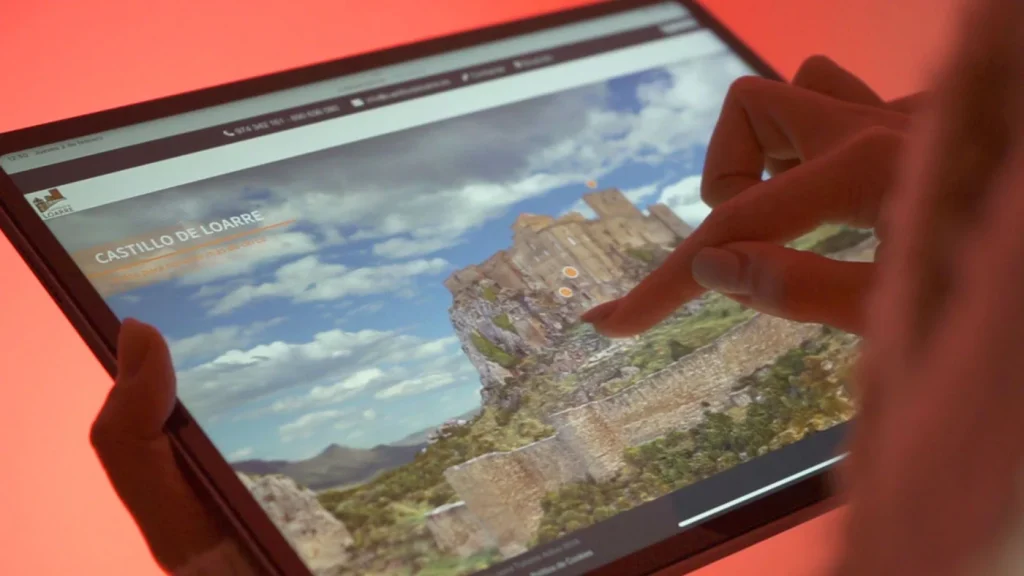
- En España encontramos el Castillo de Loarre como uno de los ejemplos más recientes en trasladarse al mundo virtual. Con la experiencia Loarre XR, el castillo románico da el salto a la Realidad Virtual y a la web 3D para acercar su patrimonio e historia de difícil acceso a todas las personas con limitaciones.
- A nivel europeo encontramos el proyecto de virtualización de la cultura europea Virtual For Youth Skills, donde diferentes museos de la Unión Europea (Museo Goya, Castillo Stara Lubovna, Comune di Volpedo) se han virtualizado para reunir en una misma plataforma 3D el acceso a toda su historia, obras y valor cultural, histórico y artístico.
What will the future of Virtual Reality in museums look like?
The Virtual Reality (VR) has demonstrated its ability to transform the visitor experience in museums, offering immersive, interactive, accessible and attractive experiences for all audiences. As we move into the future, it will become increasingly common to find this technology among art galleries and art rooms. One of the key directions in the evolution of Virtual Reality in museums is the continuous improvement of the technology, its level of detail and especially cost reduction . VR devices will become increasingly affordable and accessible, aiding in the adoption of this innovative technology. In addition, we expect a further development in the personalization and interactivity of VR experiences in museums. The same activity can be customized according to the individual preferences of the visitors, adapting the content to their interests, questions and concerns, thanks, above all, to the Virtual Reality and the Artificial Intelligence . On the other hand, the experience can also be developed in the following areas multi-user format adding the social part to the experience to share the activity in the same virtual space with several visitors at the same time. → Find out what the expectations of virtual reality are for the future The future of Virtual Reality in museums poses new and exciting challenges to expand art, culture, history and science through new immersive technologies. At Imascono our team of engineers, designers and creatives has been working with us for many years. more than 12 years developing immersive experiences through our Virtual Reality services Do you need a Virtual Reality project for your museum, gallery or showroom? Contact with us and we will take your museum into the new virtual universe!