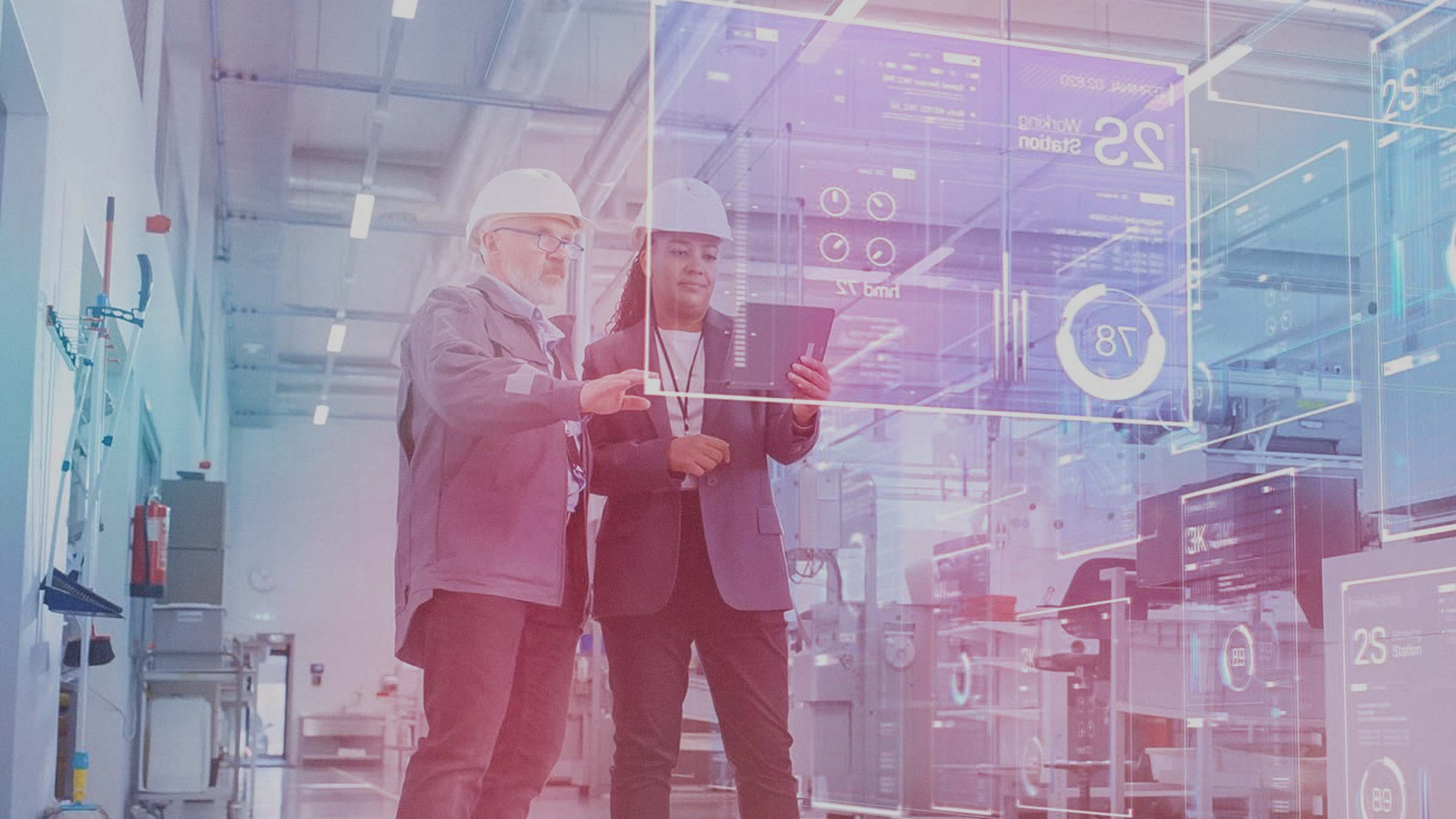
What is Industry 4.0. and what are its main characteristics?
From the steam engine to the invention of electricity or the advent of mass production and later electronics... Throughout history, the industrial sector has undergone various technological transformations. that have come to mark the great advances of mankind. We are currently in the midst of Fourth Industrial Revolution - Industry 4.0. where digital, intelligent and automated technology is revolutionizing our companies, factories and production lines. Cloud connectivity, Industrial Internet of Things (IIoT), and advanced AI and AI-enabled solutions are machine learning are radically transforming industrial operations. In this article we would like to analyze in detail the main characteristics of this Industry 4.0. and, above all, learn about its most important technologies. Ready?
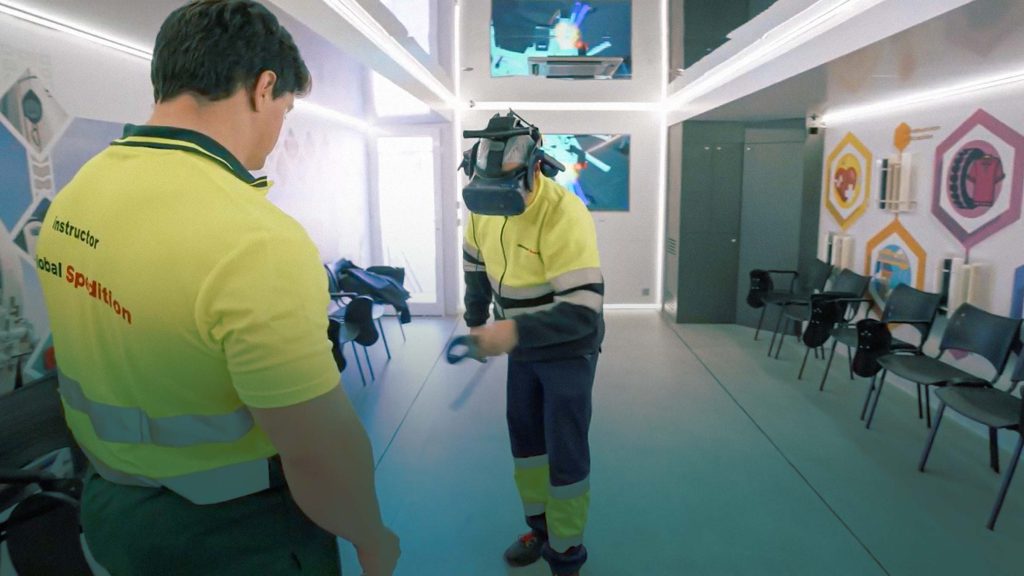
Virtual Training developed by Imascono for Global Spedition
Definition of Industry 4.0
You may be wondering what Industry 4.0, or the Fourth Industrial Revolution, is. integration of advanced digital technologies in manufacturing processes. It includes the use of Internet of Things (IoT), Artificial Intelligence (IA), the immersive technologies the robotics and the analysis of Big Data to create interconnected and automated production systems and optimized industrial/business management. This approach allows for a greater efficiency, customization and real-time analysis transforming factories into intelligent and adaptive environments. Before Industry 4.0. there were three other major Industrial Revolutions:
- The late 18th century saw the First Industrial Revolution, marked by the invention of the steam engine, which transformed production methods from manual labor to mechanization.
- In the Second Industrial Revolution, in the late 19th century, the driving force came from electricity and oil, introducing mass production and assembly lines, which significantly improved efficiency and production volume.
- The Third Industrial Revolution began in the mid-20th century with the arrival of electronics, computers, and the first robots, setting production on the path to automation.
You may be interested in → Business Innovation: Spatial Computing Applications in Extended Reality . Industry 4.0 is characterized by integrating digital technologies such as IoT, AI, and robotics in manufacturing systems. Creating intelligent and automated production networks that radically transform industrial production and management. Some are also already talking about the start of the Industry 5.0 a development marked by the active human participation to improve both the well-being of workers and the sustainability of production. This includes the development of collaborative robots (cobots) that work hand-in-hand with humans in manufacturing tasks and systems that not only optimize production, but also promote environmentally responsible practices. Industry 5.0 prioritizes collaboration between humans and machines, emphasizing the importance of the human touch in the creativity, customization and sustainability.
Applications and technologies in the industry
The incorporation of new technologies in the industrial sector represents a complete revolution in the control, training, error correction and decision making with 3D simulations and prototypes developed to the highest level of detail . Improving the efficiency of increasingly complex production processes. Thanks to this immersive technology and its marriage with the latest innovations in the Internet of Things (IoT) and Artificial Intelligence, the machines and operators are interconnected from simply operating the machine to being able to communicate with it. Let's take a look at some of the main Industry 4.0 technologies :
Virtual and Augmented Reality
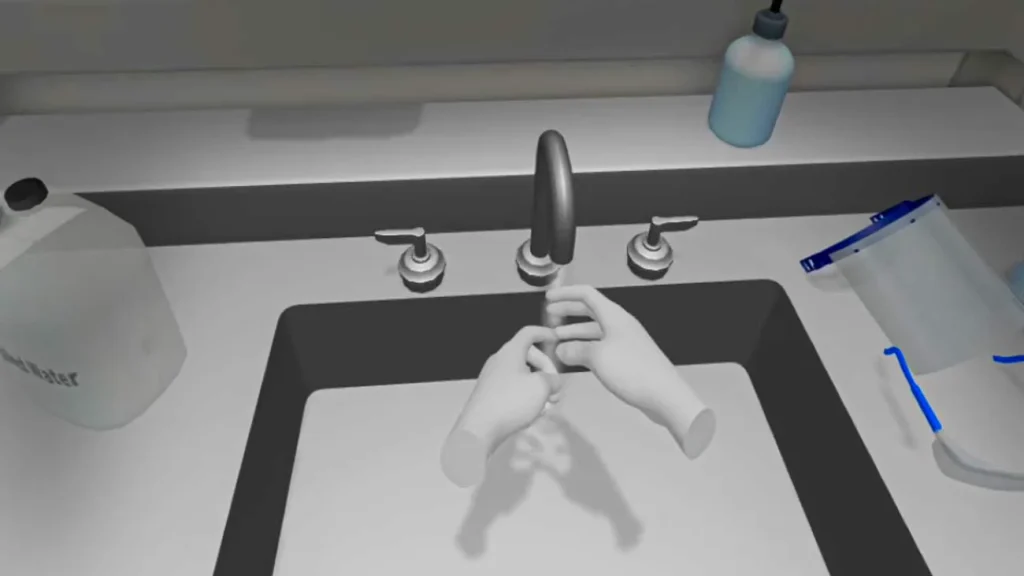
Both the Augmented Reality as Virtual Reality are two immersive technologies that are transforming the Industry 4.0 . By changing the way in which combines the physical and digital world in factories and production lines. On the one hand, the AR experiences The application of this technology to the industrial sector has great potential for the presentation of the three-dimensional models of parts and prototypes from all angles and in the exact place where their final version will be, reducing to the maximum the margin of error when assembling and using them. However, if there is an application of the Virtual reality that revolutionizes the industrial sector is the possibility of autonomous training. in complex and/or hazardous tasks through controlled 3D simulations The company's own machinery is used for this purpose, without the need to allocate extra resources such as trainers or the machinery itself. You can learn more about this technology in our post Virtual Reality: examples and applications .
Digital Twins
Digital twins in Industry 4.0 are interactive virtual representations of processes, products, or even entire production plants that simulate reality in a digital environment. This technology gives companies a global view of their entire production, letting them analyze data and monitor systems to prevent problems before they occur, optimize operations, and experiment with changes in a risk-free virtual environment. By using IoT sensors to collect real-time data, digital twins offer a detailed view of the performance, maintenance, and effectiveness of the machines on the factory floor, improving decision-making and operational efficiency. These Digital Twins can also become the information hub and meeting point for stakeholders, as in the case of the Shareholders' Meeting and virtual event held by Iberdrola in its own 3D virtual space.
If you are interested, you can discover more about its potential in Digital Twins through Extended Reality.
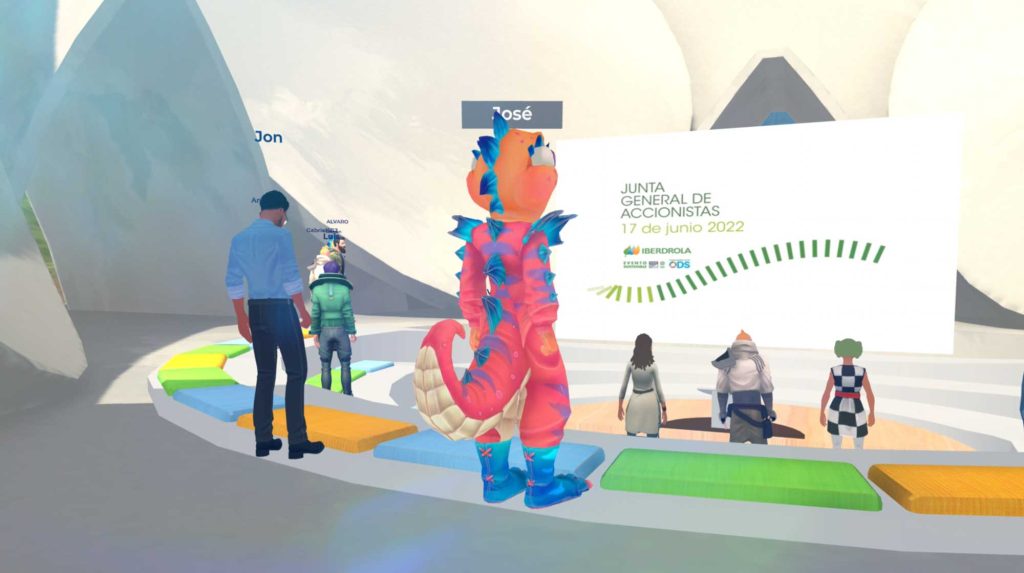
Virtual Event in the Metaverse developed by Imascono for Iberdrola
Cloud computing
The cloud computing It is an essential pillar of Industry 4.0, providing the Infrastructure necessary to support the integration and analysis of large-scale data. It facilitates the centralization of information, allowing remote and real-time access to the critical data stored on its servers, which optimizes collaboration and decision-making agility. With the ability to store and process huge amounts of data securely and efficiently, The cloud enables the implementation of advanced solutions of Generative Artificial Intelligence, Automation and IoT, thus enabling companies to increase their operational efficiency, reduce costs and improve innovation in their manufacturing processes.
Robotics
Electronics, computers, and the first mechanized robots entered the industrial sector during the Third Industrial Revolution. In Industry 4.0, robotics has grown even stronger, playing a crucial role in automating and optimizing production processes, along with their efficiency and precision. Advanced robots can perform complex, delicate tasks, adapting to changing environments and collaborating with humans in real time. The integration of autonomous and collaborative robots improves speed and production quality while reducing workplace risks. It also frees workers from repetitive tasks, allowing them to focus on more strategic and creative activities.
Big Data and Artificial Intelligence
In Industry 4.0, Big Data and Artificial Intelligence are fundamental to transforming industrial production through the collection and analysis of the massive volumes of data generated by the devices and sensors connected to the manufacturing ecosystem. These technologies enable advanced automation and real-time decision-making, optimizing operations from predictive maintenance to production customization. The potential of Artificial Intelligence in Industry 4.0 can go beyond production to focus on workers, becoming one more companion in their day-to-day work: enhancing their capabilities, answering their questions, and/or becoming the company's gateway to information and training, as in the case of IRIA, the AI avatar of the Iveco industrial group. If you want to learn more about AI we recommend → Challenges of artificial intelligence applied to business.
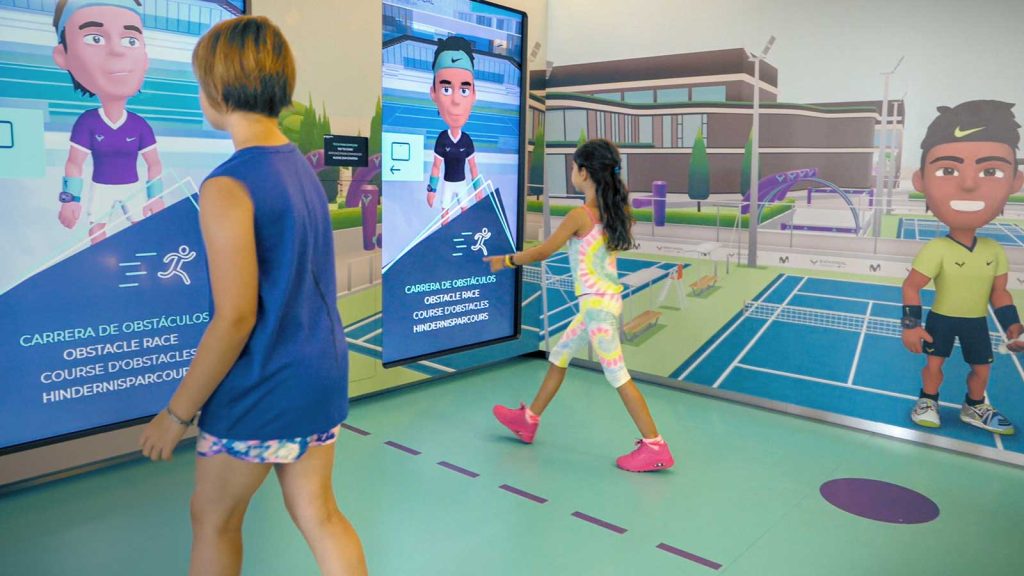
Phygital project developed for Rafa Nadal Museum by Imascono
Highlights of Industry 4.0
Industry 4.0. is characterized, mainly, by the creation of smart factories where physical and digital systems cooperate in an interconnected and autonomous manner. Interconnectivity, the digital transformation automation are some of the main characteristics of the implementation of these technologies in the industrial sector . Features which can be summarized as follows:
- Real-time response. Real-time responsiveness allows companies to monitor and manage operations instantly and effectively. Thanks to Big Data, IoT sensors and 3D simulations deliver a continuous flow of data that supports fast, accurate decisions, optimizing the performance of the production process.
- Decentralization. This refers to the ability of machines and computer systems to operate autonomously and make operational decisions without direct human intervention, working independently and flexibly while adapting in real time to the changes and needs of industrial processes.
- Increased productivity. By integrating different technologies, process automation and optimization drive a significant increase in productivity. These technologies enable faster manufacturing with fewer errors, maximizing asset performance and minimizing downtime. In addition, real-time data collection and analysis make it easier to drive continuous improvements and fine-tune production operations.
Industry 4.0. applications you should know about
Throughout the article we have been getting to know some of the examples and use cases of new technologies in Industry 4.0. Next, we would like to delve into the most relevant applications of this Fourth Revolution in the industrial sector.
3D Simulations
3D simulations in the industrial field cover a wide range of applications. From Training of workers in the use and prevention of occupational risks in safe environments, focusing on tacit knowledge, up to the possibility of understanding the operation of an entire company's plant, logistics, and machinery through 3D models and virtual simulations on a real scale. Among the solutions already developed in this field we find the entire line of Virtual Training. Customized virtual reality training programs launched by companies from different industrial sectors such as Professional training for Global Spedition workers or the presentation of the new industrial machinery of Boehringer Ingelheim.
Industrial Internet of Things: Industrial IoT
The Industrial Internet of Things (IIoT) goes a step beyond the IoT we know today, focusing specifically on the interaction between machines, devices and industrial systems. In Industry 4.0, this connectivity and machine-to-machine and human-to-machine communication The real-time, accurate and precise monitoring, predictive maintenance and optimization of processes is vital for industrial companies to scale and adapt in real time to market trends and needs.
Task management
Industry 4.0 transforms task management by automating processes and optimizing resource allocation through intelligent systems. Enabling the efficient coordination of tasks between machines and humans The system is designed to improve accuracy and reduce execution time. In addition to task management, we could also speak of the information management where large volumes of data from multiple sources can be collected, processed and analyzed in real time. Where not only do we obtain strategic insights The system also facilitates better coordination and communication between departments and levels of the organization through interfaces such as WebApps or even hyperrealistic AI avatars that humanize the interaction between users and data .
Industry 4.0. use cases at Imascono
From pharmaceuticals to logistics, automotive, agricultural machinery and the industrialization of livestock, there are many industrial sectors in which the Imascono use cases have been part of the leap to Industry 4.0. of large and medium-sized companies.
- Such as the virtualization and interactive 3D modeling of the various machines made by the Tenias group. Three-dimensional versions used to present and provide training on how their latest products work.
- Or, on the training side, together with Mondragón Formación Profesional, for which several immersive and semi-immersive interactive virtual experiences were developed to recreate simulations of how industrial machinery operates.
- Another Industry 4.0 success story is the Virtual Reality training designed for Ceva Velactis, the leading pharmaceutical company in the veterinary field, which provides training on and promotes the uses and benefits of its new products.
At Imascono we know firsthand how important it is for industrial companies to have the right latest technological advances to optimize and scale up production At the same time, having enough flexibility and customization capacity to adapt to market changes. Therefore, training, data collection and a correct interaction between machines and workers are key to advance in Industry 4.0. Our team of more than 30 engineers and designers has more than 12 years of experience in the development of projects of Artificial Intelligence , Virtual Reality and Virtual Spaces focused on business and industry. Do you need making the technological leap to Industry 4.0 ? ¡ Contact with us !