Skip to content
La Alhambra
Success story · Board of Trustees of the Alhambra and Generalife

La Alhambra

2.72M
Annual visitors to the monument
Case summary

End-to-end digital transformation of the World Heritage monumental complex

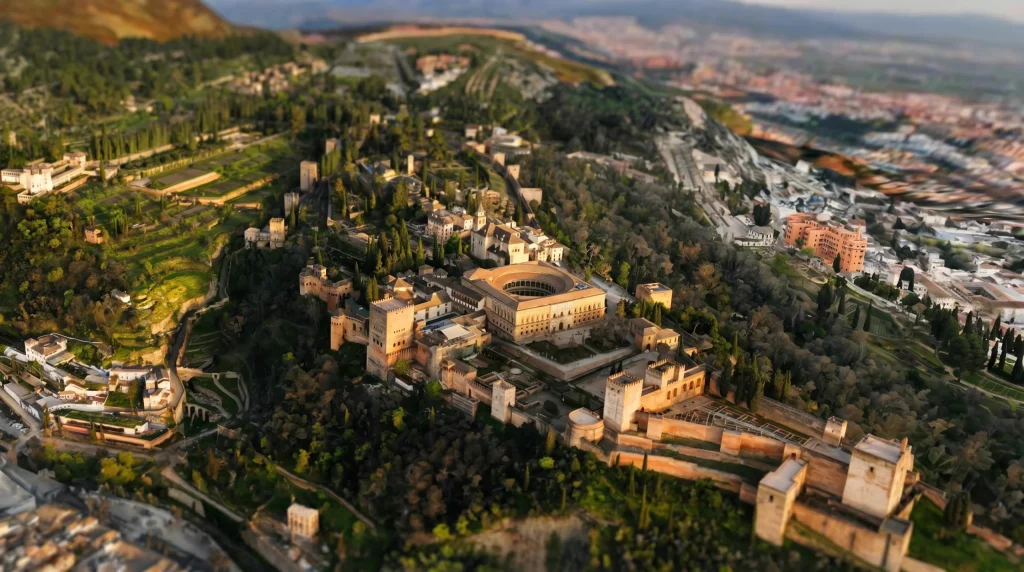
The Alhambra is one of the most visited monumental complexes in the world: 345 hectares of Nasrid heritage declared a World Heritage Site by UNESCO. Together with the Regional Government of Andalusia and the Andalusian Digital Agency, the monumental complex has driven an end-to-end digital transformation built on three coordinated technology layers: a Virtual Twin that precisely digitalises the site, a Virtual Space that extends the visit to the online environment and an Augmented Reality App that enriches the in-person experience. The combination also opens usually inaccessible areas —under restoration or closed to the public— to tourists, history enthusiasts and art experts from all over the world.

Client
Board of Trustees of the Alhambra and Generalife
Sector
Tourism
Service
Digital twin
La Alhambra
2.72 million
Annual visitors to the monument
345 hectares
Heritage fully digitalised
3 layers
Of technology operating in coordination
Facing a similar tourism challenge?
Every sector has unique challenges. Tell us yours.
01 The challenge

Scaling a thousand-year legacy into digital

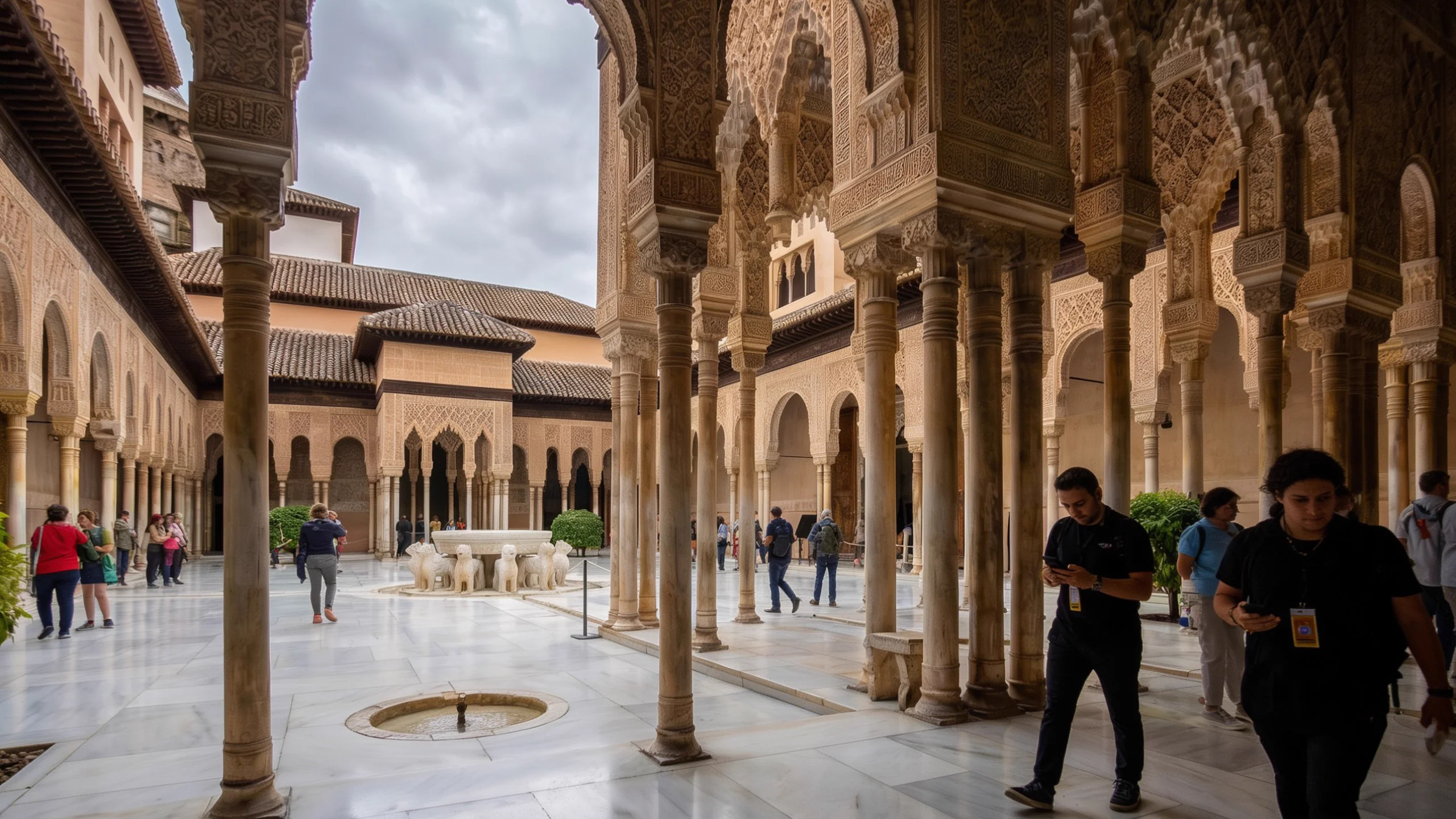
The Alhambra receives more than 2.7 million visitors every year across its 345 hectares and faces a challenge common to large cultural institutions: how to manage the operational complexity of a space of this magnitude, capture the data from every interaction and extend the visitor experience beyond the physical site. The challenge required going beyond the one-off visit to build a continuous, measurable, scalable model, capable of engaging the public before, during and after the visit, and open to profiles the in-person visit doesn't always reach —history enthusiasts, researchers and art experts from all over the world—. With one non-negotiable premise: that technology be at the service of the cultural narrative, never the other way round.
Scaling a thousand-year legacy into digital
02 The solution

An end-to-end digital ecosystem that enhances the visit

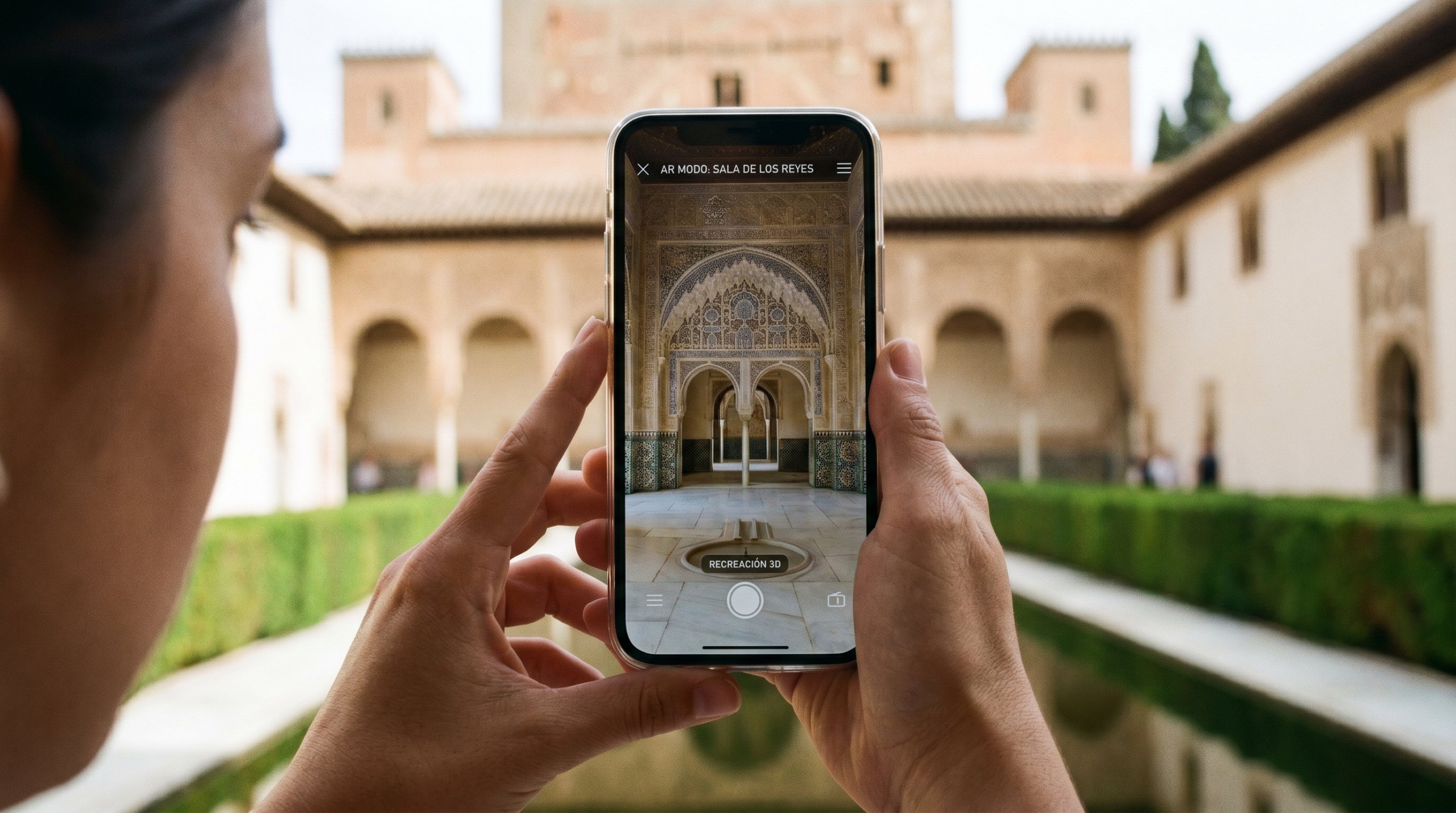
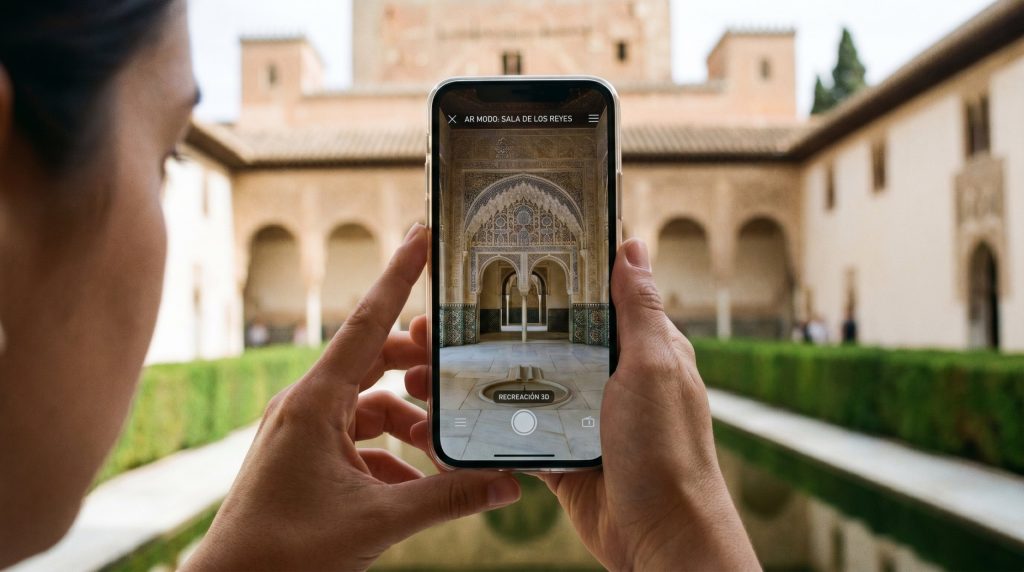
The solution is a 360º digital transformation strategy built on three coordinated technology layers. A Virtual Twin of the monumental complex that precisely digitalises the 345 hectares —including usually inaccessible areas, under restoration or closed to the public— and becomes the backbone of heritage management and data-driven decision-making. Connected to the site's sensors —occupancy per zone, air quality, noise and safety conditions—, the Virtual Twin also operates as a real-time control platform. On top of that backbone sit a Virtual Space that extends the monument to the online environment —giving access to tourists, history enthusiasts and art experts from all over the world— and an Augmented Reality App that enriches the in-person experience with narrative and contextual intelligence.

An end-to-end digital ecosystem that enhances the visit
Next step
We are digitalising one of the most important monuments in the world. Would you like us to digitalise your destination?
Key learnings

What this case teaches the sector.

01

The visit stops being a moment and becomes a continuous cycle.

In high-traffic cultural institutions, the real value isn't in optimising the in-person visit, but in extending it over time. A digital strategy with a Virtual Twin, a Virtual Space and an Augmented Reality App operating in coordination turns the visit into a three-stage cycle: before, during and after.

02

The Virtual Twin as the backbone of heritage management.

Precisely digitalising 345 hectares isn't just virtualisation: it's building the infrastructure on which real decisions are made. Connected to the site's sensors —occupancy, air quality, noise, safety—, the Virtual Twin becomes an operational control platform that makes it possible to anticipate, not just react.

03

Technology at the service of the narrative and of every audience.

In heritage, digital transformation demands a specific sensitivity: the technology that fails is the visible kind; the valuable kind disappears and lets the monument speak. The digital layers also open access to areas closed to the public and to profiles —researchers, art experts— the in-person visit doesn't reach.

04

Democratising access to universal heritage.

Not everyone can travel to Granada to see the Alhambra. The Virtual Space turns the monument into an asset accessible from anywhere in the world, allowing people with physical, economic or geographical limitations to have a first meaningful experience with the heritage.

Let's talk From challenge to product. Tell us yours.

You tell us the challenge; we tell you how we would make it real. We reply in under 24 hours with a first round of feedback. No strings attached.