Main characteristics of digital transformation in companies
The digital transformation in companies has become the inevitable path to remain competitive in an ever-changing market. Today, technology not only optimizes processes, redefines business models, transforms customer relationships and opens new growth opportunities, but the process of digitizing does not consist of adopting isolated tools, but of designing a solid strategy, aligned with business objectives and supported by technologies capable of generating real impact. In this article we explore what is digital transformation in companies? , We will discuss what are its main characteristics and what technologies are driving this change, from artificial intelligence and the strategic use of data to the new immersive digital environments. In addition, we discuss how to design a digital transformation plan effective, based on analysis, planning and continuous evolution. A clear and expert vision to understand how to turn technological innovation into a real competitive advantage and why having the support of a technology consultancy makes the difference between digitizing and truly transforming.
What is digital transformation in companies and why is it key?
The digital transformation in companies This is a profound change that affects the strategy, culture, processes and the way in which organizations create value. It involves rethinking the business model by relying on technologies such as the artificial intelligence, cloud, data or digital experiences. to be more agile, efficient and competitive. In other words, it is not just technology, it is vision, innovation and a new way of understanding business in an increasingly digital and changing environment. Today, digital transformation is key because the rules of the market have changed. Customers are more demanding, innovation cycles are shorter and competition no longer understands borders. Companies that are committed to a well-defined digital transformation plan not only optimize costs or processes, but also improve decision making, generate differential experiences and open the door to new growth opportunities. For this reason, having a clear strategy and the support of an expert technology consultancy has become a decisive factor. Below we explain the main characteristics, technologies and the process to begin this transformation.
Key characteristics of digital transformation
The digital transformation in companies does not respond to a single formula, but it does share a series of key characteristics that make the difference between a simple technological adoption and a real change with business impact. These characteristics act as strategic pillars that enable organizations to evolve, innovate and remain competitive.
Digital strategy aligned with business objectives
The transformation must start from a strategy aligned with business objectives , where technology acts as a real lever for growth and efficiency. Defining a clear roadmap allows prioritizing initiatives, optimizing investment and ensuring a tangible impact on results. In technology consulting, this strategic approach is key to turn challenges into effective digital solutions. In short, it is not a matter of innovating for the sake of innovating, but rather of apply the technologies that really add value to the company.
Intelligent use of data for decision making
Data has become one of the most valuable assets of organizations. One of the great characteristics of the digital transformation in companies is the ability to collect, analyze and convert information into actionable knowledge. Thanks to Big Data, advanced analytics or artificial intelligence, companies can anticipate trends, optimize processes and make evidence-based decisions, driving more agile and results-oriented performance.
Process automation and operational efficiency
Automation is one of the great accelerators of digital transformation. Digitizing and automating internal processes makes it possible to reduce errors, save time, and free teams from repetitive tasks so they can focus on higher-value activities. Technologies such as RPA and intelligent systems help improve operational efficiency, communication, and business scalability.
Scalability, flexibility and adaptation to change
In a constantly evolving environment, implementing technology makes it possible to design structures capable of growing, adapting and responding quickly to new market needs. Cloud-based solutions, modular architectures or scalable digital services facilitate continuous innovation and reduce reaction times. This ability to adapt becomes a key competitive advantage and reinforces the importance of a well-defined digital strategy and the support of experts to help anticipate change and turn it into an opportunity.
Key technologies driving digital transformation in enterprises
The digital transformation in companies would not be possible without a set of enabling technologies that act as the engine of change. These tools not only enable the modernization of operations and processes, but also open doors to new experiences, products and sustainable competitive advantages. Below, we take a closer look at some of the main technologies.
Artificial Intelligence and Machine Learning
Both AI and Machine Learning allow companies to automate complex tasks, personalize customer experiences, detect hidden patterns in large volumes of information, and optimize operations in real time. An innovative example is intelligent avatars, which can interact naturally with users for customer service, training, or internal processes, elevating the digital experience, accelerating decision-making, and turning data into intelligence.
Big Data and advanced analytics
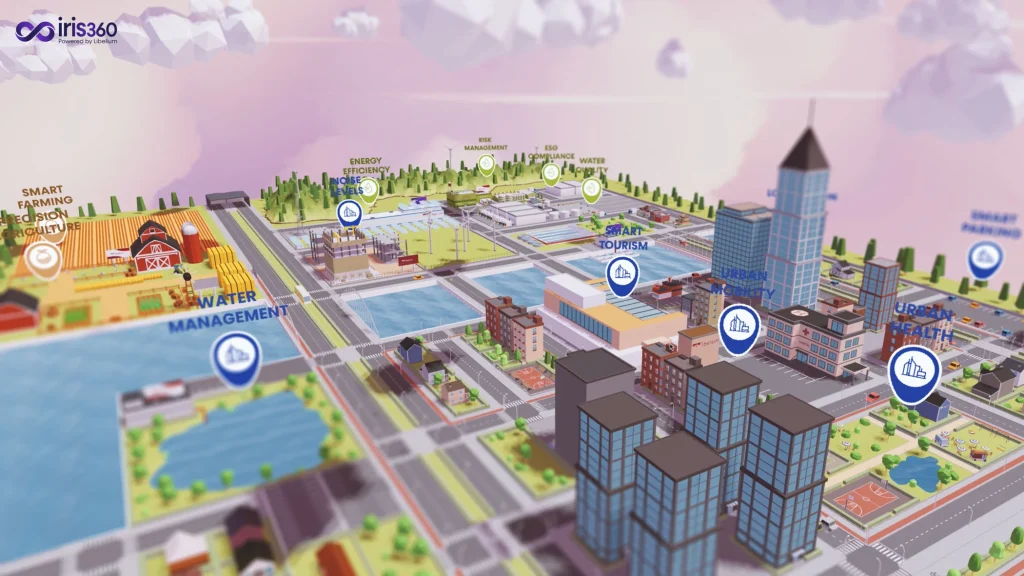
The explosion in the volume of data has placed the Big Data y la advanced analytics at the heart of digital transformation. It's not just about storing data, but analyzing, interpreting and representing it in a way that facilitates strategic decisions. Modern tools for Business Intelligence and analytics platforms enable real-time insights and visualization of complex trends. A striking example is the interactive data-driven infographics , The information is accessible and understandable at all levels of the organization, improving internal and external communication.
Extended Reality and new digital environments
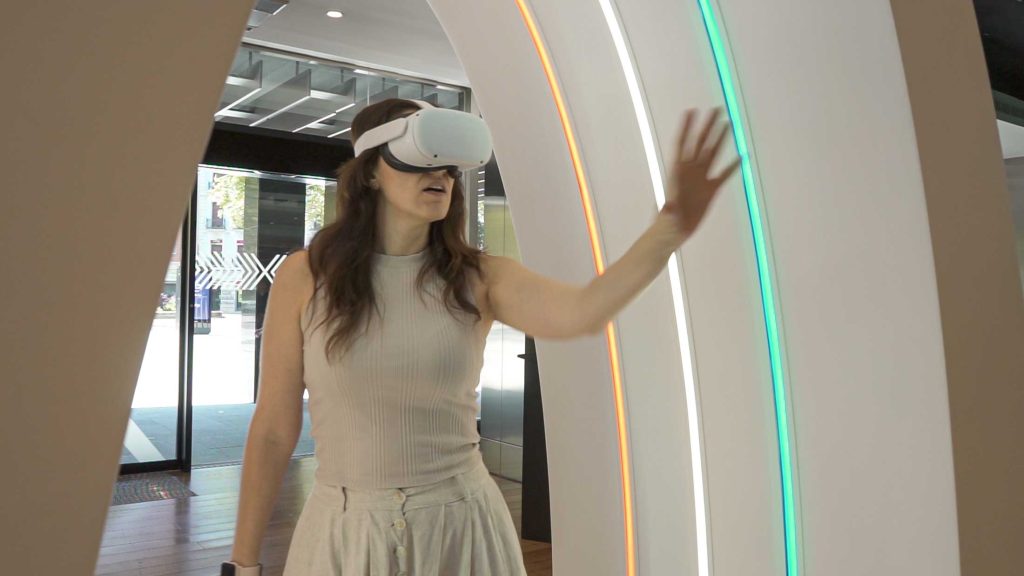
The technologies of Extended Reality , are redefining the way companies interact with their customers and teams. These tools enable immersive experiences, which offer realistic simulations to train employees in safe and controlled environments, reducing risks and accelerating learning. By integrating these digital environments, companies can innovate on training, marketing, product design and improving the customer experience , creating memorable experiences that reinforce brand image and service.
How to design a digital transformation plan for a company
Design a digital transformation plan for a company begins with a digital analysis and diagnosis that allows us to know the starting point, detect opportunities and align technology with the real needs of the business. Based on this analysis, a clear digital roadmap is defined, which prioritizes initiatives, establishes phases and sets specific objectives to move forward in an orderly, efficient manner and with measurable impact. Digital transformation is not a static process, but a continuous evolution. Therefore, the support of an expert technology consultancy is key to adapting the strategy, measuring results and incorporating new solutions as the business and the market evolve. Only in this way can technology become a vehicle for growth and a sustainable competitive advantage over time. If you want to know more about this section 🤪 Digital transformation diagnosis: what is analyzed. Do you want to know how to wear the digital transformation in your company to the next level? At Imascono we accompany you throughout the process, from the definition of the strategy to the implementation of innovative technological solutions with real impact on your business. Contact with us and discover how to turn technology into a competitive advantage that makes a difference.
Meet the 4 new trends in education
Education is one of the most important pillars of our society. And in this technological and digital world in which we live even more so. Knowing how to combine the basics of traditional learning with the new skills and abilities needed to develop in the digital era is essential. . So, in this article we are going to talk about how technology is enriching learning. From the integration of Artificial Intelligence and the experiences of Augmented Reality to the Gamification and the hybrid learning , These innovations offer more personalized, interactive and immersive educational experiences. Through examples such as Learning to undertake , KAI XR Platform and Chromville , we analyze how new technology tools are enhancing students' creativity, independence and skills , preparing them for the social and labor future.
Educational innovation: Technology for children
In the digital age, children are technological natives who learn best with interactive, adaptive and dynamic tools . Without neglecting the educational bases that allow the development of all the intelligences, thinking and creativity of children, we can develop educational experiences with new dynamics, strategies and technologies. A complete learning experience that makes it much more effective. You may be interested in → How Technology Boosts Child Development: Practical Solutions for Parents As discussed in more detail in this article - which we invite you to read carefully - The current educational scene is marked by the debate on the use of technology by children. Today everything is digital and children, the digital natives, are growing up in a world from which we cannot separate technology from educational content. However, parents, pediatricians, psychologists and teachers are increasingly aware of the impact that technology is having on children's development. Both positive and negative. The challenge is to find the perfect balance. Because when technology is used with purpose and supervision, integrated in a coherent, positive and controlled way into the learning content, it can enrich children's education. . Preparing them for a more connected, digital and opportunity-filled future. Take a look at our post: Advantages and disadvantages of Artificial Intelligence in education
Advantages of technology in children
The incorporation of technology in school classrooms brings multiple benefits that go beyond education as we know it. But also responsibilities on its controlled use, promoting the welfare and development of children. In a responsible way, the use of these tools not only improves learning, but also promotes autonomy and creativity . Among the main advantages are:
Personalized learning: For example, the incorporation of the Artificial intelligence, enhanced through the use of AI avatars, adapting content to the needs and rhythms of each child, ensuring a process of continuous individual progress. In addition to making the experience unforgettable, such as asking Miguel de Cervantes directly about his novels, as in the project Cervantes IA.
Motivation and commitment: Tools like the Gamification They turn learning into a fun and interactive experience, which makes learning much faster and with greater retention of content. Through challenges, badges, and rankings, the little ones feel more motivated in their learning, with the same mechanics as in video games, going through screens and levels as they complete the exercises correctly.
Digital readiness: It develops technology skills that are essential for students' academic and professional future, in which each user becomes familiar with technology and how it is used and works from childhood. Fostering skills such as creativity, development and solving today's problems. As in the case of KAI XR Create, where they not only learn about different ecosystems but also learn to design their own digital universes in 3D.
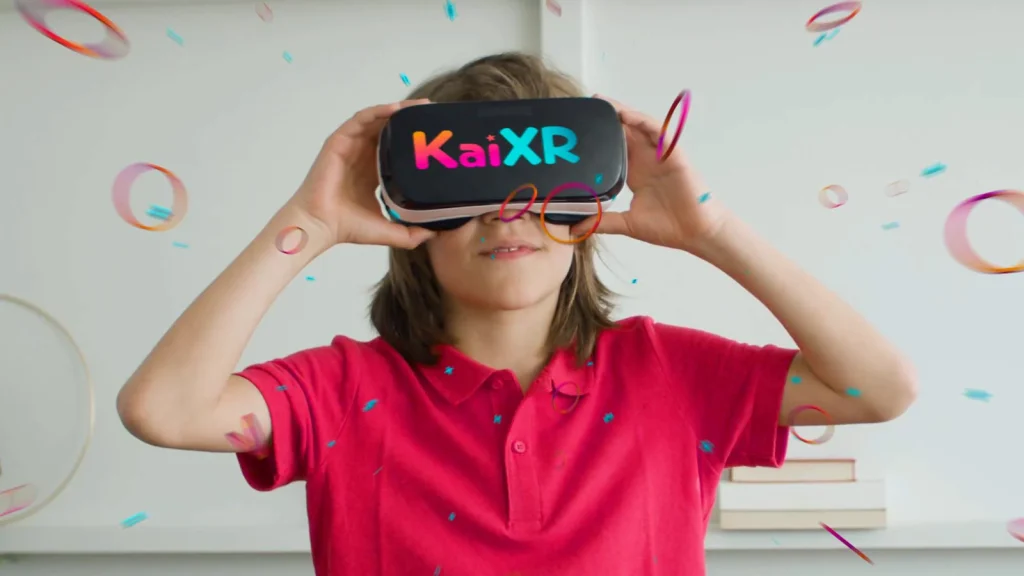
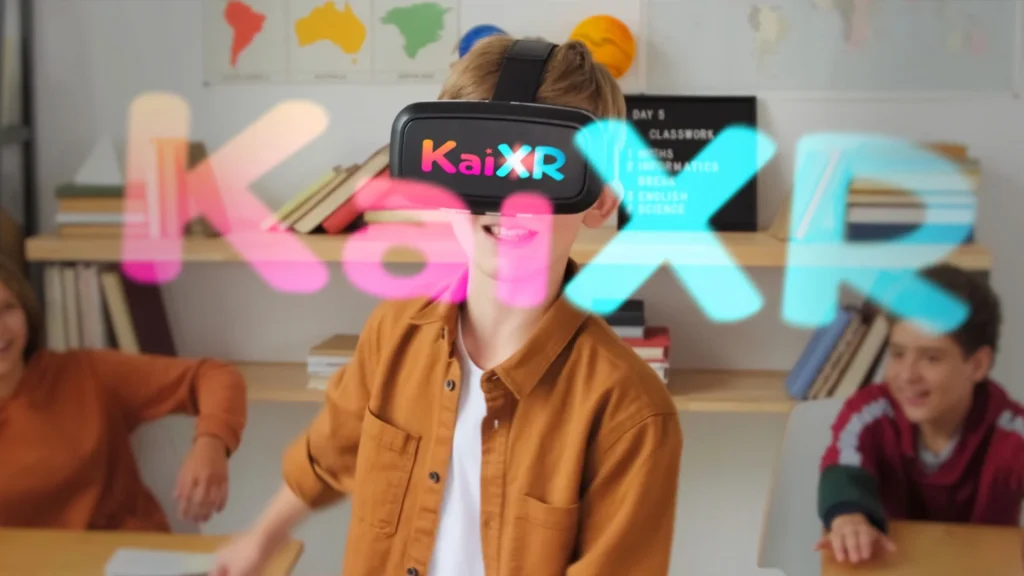
Global accessOnline resources eliminate geographical barriers, allowing you to learn from anywhere. To provide opportunities to access high-quality educational content, regardless of location or socio-economic context. Democratizing learning and offering new possibilities for students of all ages and levels. For example, in Educational platform from KAI XR, With these glasses, children can travel to Egypt, space or the seabed all at the same time. Virtual Reality.
Do you want to go a little deeper? We invite you to read the Technology trends and children
Keys to incorporating technology in children's education
Boosting creativity
The technology in education is a powerful tool to awaken creativity in children. From classrooms that transport to the past or to other ecosystems, the possibility of asking someone from the past about what it was like to live in their time or seeing in 3D what you could only imagine before with abstract thinking. All of these experiences allow students to explore their ideas and express themselves in an innovative way. The use of simulations and virtual environments fosters the use of experimentation without fear of error , while artificial intelligence offers customized challenges that stimulate the critical thinking y la creative problem solving . Thus, technology not only teaches, but inspires to create, imagine and transform the world.
Promoting independence
Educational technology allows children to take control of their own learning by providing them with interactive and customizable platforms that adapt to their pace. This fosters key skills such as self-management and accountability . In addition, tools such as guided tutorials and immediate feedback, via virtual avatars help children identify their strengths and areas for improvement, promoting a growth mindset. This autonomy not only improves their academic performance, but also prepares them to face future challenges with confidence and proactivity.
Improvement of learning skills
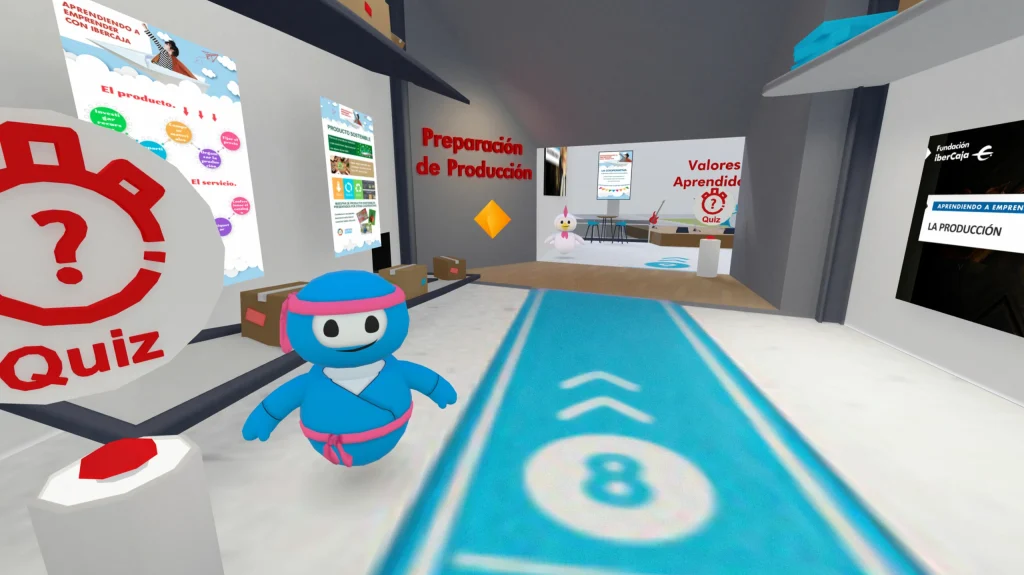
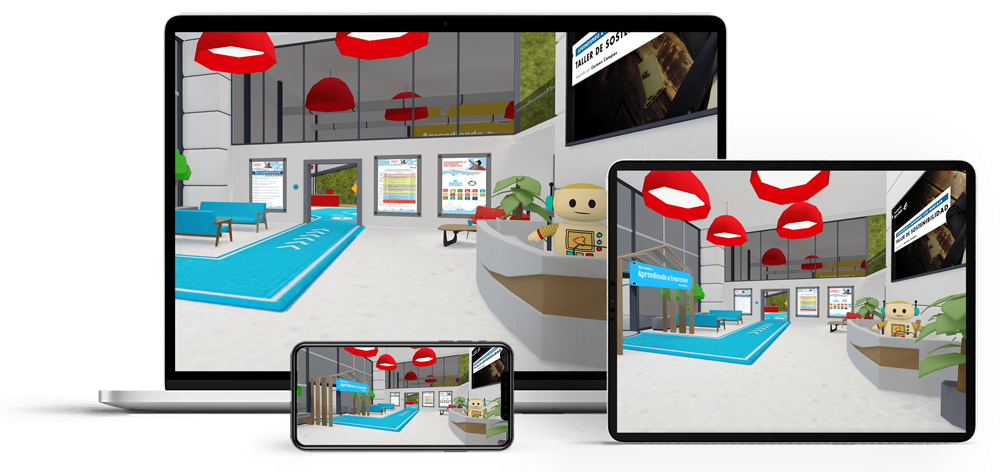
Technology enhances learning skills by providing innovative methods for assimilating knowledge. For example, tools such as the microlearning offer short and specific contents, ideal for keep the attention of students and improve retention of content. In addition, the interactive platforms adapt the lessons to the pace of each child, fostering their autonomy . Skills such as critical thinking, problem solving and collaboration are also developed through online activities, preparing students for the academic and professional challenges of the future. An example of this can be found in the training program Aprendiendo a Emprender, developed by Fundación Ibercaja. which has a virtual campus where each classroom can go at their own pace completing the steps to create their own children's cooperative.
4 technology trends in education
As we have seen throughout this article, technology is transforming the education system. The projects and success stories presented, although they may seem very different, have in common that they follow one of the four technological trends presented below.
The use of Artificial Intelligence: Chatbots and Virtual Avatars
The educational chatbots and the virtual avatars are transforming teaching with dynamic and personalized interactions. Tools such as V-E-G-A , The new AI training platform, an innovative platform for AI training and virtual assistant development, is designed to answer questions and guide students in real time. In this context V-E-G-A Tutor is a clear example, which seeks to democratize access to training in new technologies thanks to artificial intelligence. Also noteworthy is the Turrón project , with its focus on a virtual avatar for children. It has a Christmas storytelling feature that seeks to actively entertain the little ones during the vacations.
Gamification of learning
The Gamification is associated with greater commitment, motivation, attention and interest on the part of students, regardless of their level of education. Thanks to its challenge/reward system, there is an incentive to give the best of oneself. In addition, student autonomy is encouraged and, when concepts are more complicated, learning through trial/error, logic and deduction games helps to internalize new knowledge in a much more effective and entertaining way.
Virtual Reality and Augmented Reality Experiences
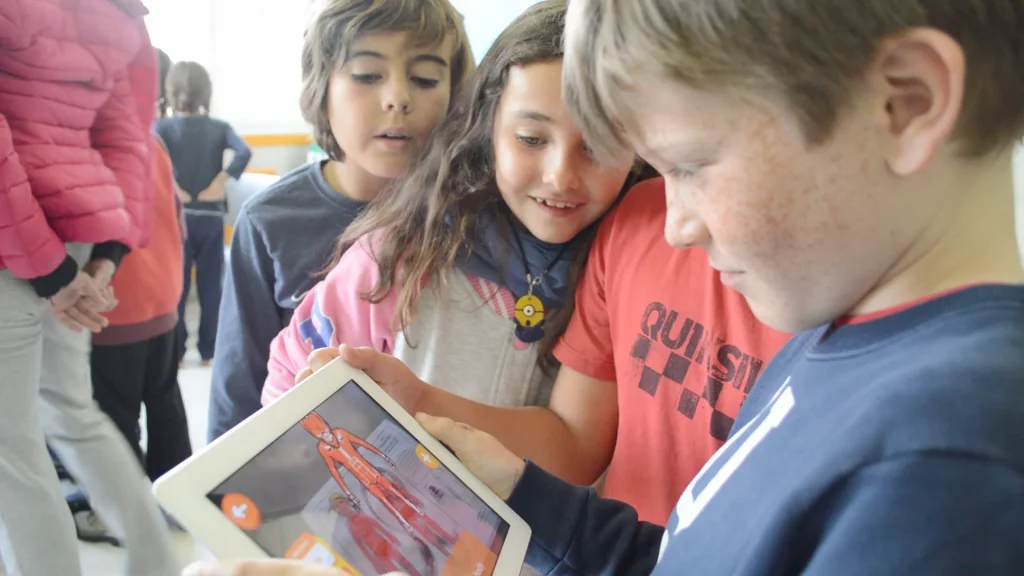
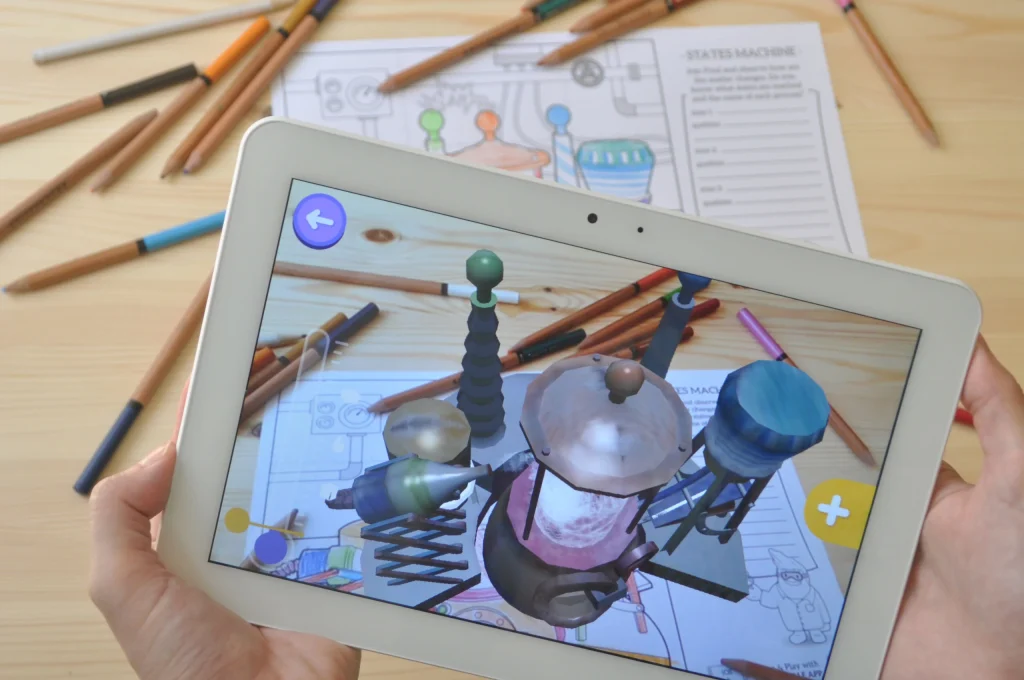
The Virtual Reality y la Augmented Reality are taking education to a whole new level, enabling immersive experiences that bring students into worlds, eras and concepts that are difficult to explore in a traditional classroom. An example of this innovation is the Chromville educational app , which uses Augmented Reality to bring to life the drawings painted by the children. Thus creating a highly interactive, visual learning environment. Not only does this approach make learning more engaging, but it also facilitates the understanding of complex concepts in a fun and accessible way. Do you want to know more about AR educational experiences? We invite you to read Features and benefits of Augmented Reality in education
Hybrid learning: linking virtual and physical
The hybrid learning merges face-to-face teaching with virtual environments, providing a more flexible and dynamic educational experience. An outstanding example is the Learning to undertake which we have discussed above. This program combines classroom training with training in the virtual space, allowing students to acquire practical knowledge while interacting on online platforms. This modality promotes collaboration, creativity and skill development. in an accessible environment, ready to face the challenges of the future.
Cases and practical projects on trends in education
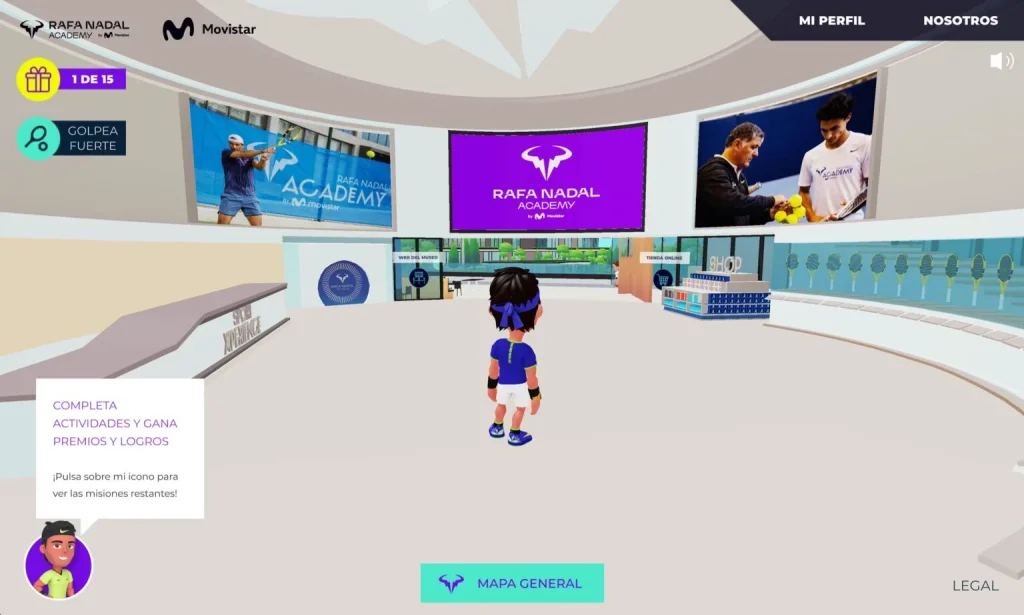
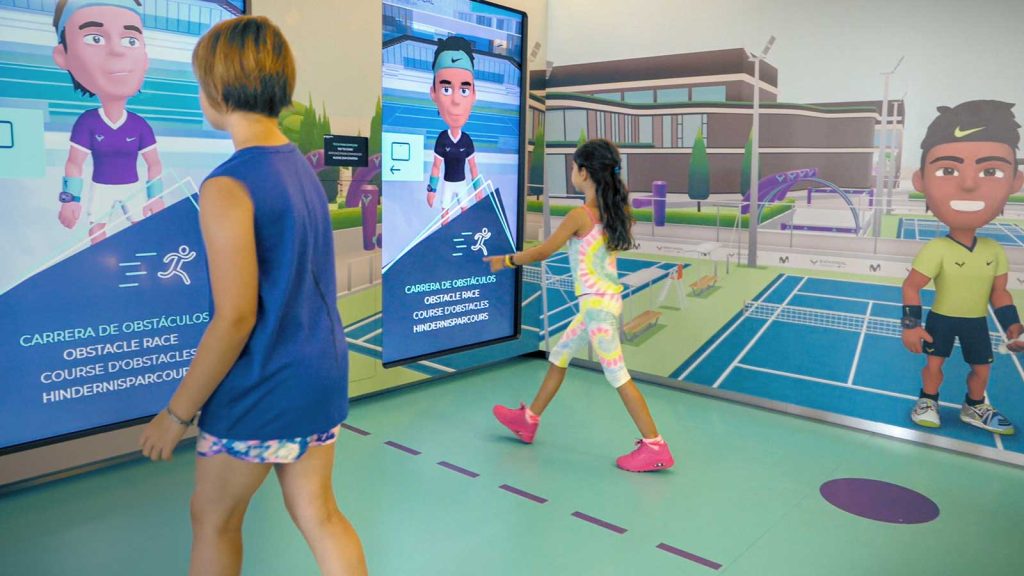
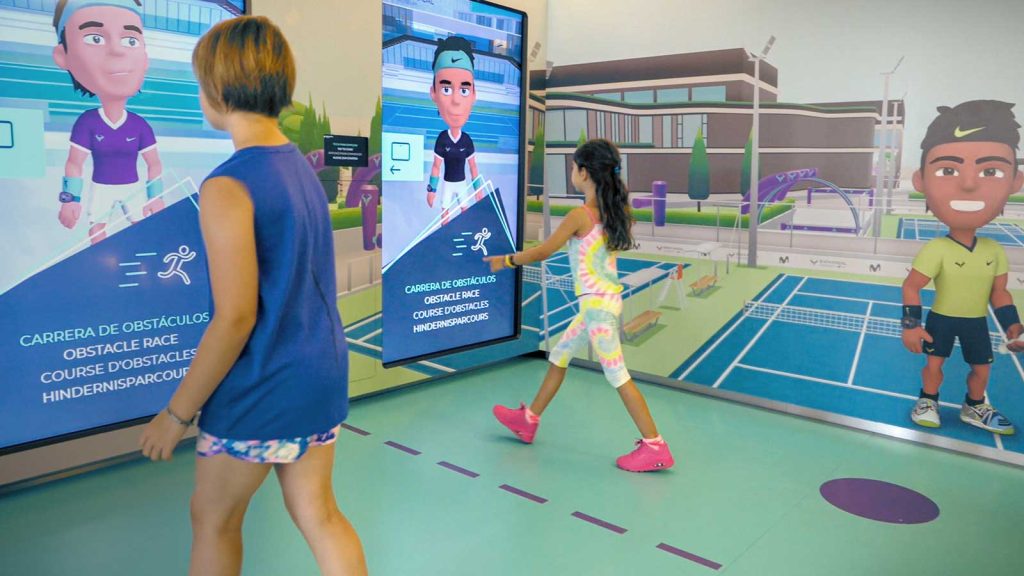
In addition to the innovative projects already mentioned, such as Kai XR Platform and Chromville, There are other fascinating examples developed by Imascono of how new technologies are being applied in education.In the field of mental health, especially in children and adolescents, there are technologies that are being used to conduct clinical tests in an environment designed for digital natives, a video game environment. This is the case of ApeTest, It is driven by the A.P.E. Foundation and the Institute of Health Research of Aragon (IIS Aragón).Another project to highlight is the complete virtualization of the entire Rafa Nadal Academy, where through its virtual environment, Students, parents and interested parties can virtually travel to Manacor (Mallorca, Spain) to tour its facilities and discover, alongside Rafa Nadal, Toni Nadal and the rest of the teaching staff, the entire methodology and values of the Tennis Academy.In short, each of these projects demonstrates how new technologies are improving an educational future more interactive, inclusive, and personalized. Always focusing on how technology is intended to enrich educational programs, not to replace more traditional learning.Do you have any questions or you would like to know more about how new technologies are transforming education? Don't hesitate to get involved Contact us. We will be delighted to helping you explore the best educational solutions for your institution.
How technology is redefining healthcare events
Healthcare events are undergoing a real transformation. They are no longer exhibition spaces but become platforms for knowledge, interaction, data and direct contact with healthcare professionals and users. . The combination of immersive experiences, virtual assistants and 360º operational management allows to attract more professionals, better qualify the interest and measure the real impact of the event from the booth to the post-event. Today the difference is not only in "what is told", but in "how it is lived". . Stands that integrate interactive points with Augmented reality The virtual classroom, screens that display technical-scientific content in an understandable way and AI avatars capable of answering questions in several languages enhance the experience and multiply the useful time of the human team. That thanks to this automation can focus on the highest value conversations. The result is more engagement, better message retention and an ongoing dialogue between industry, professionals and patients. In this article we will analyze inspiring success stories and key benefits to create events, congresses and medical conferences that not only surprise, but also connect with the strategic objectives of each brand. Educate with rigor, differentiate with high-value experiences and consolidate a clear positioning in innovation.
The technological revolution in healthcare events
The technological revolution in healthcare events is already a fact: congresses and professional meetings are evolving towards hybrid, interactive and immersive experiences that combine strategy, spatial design and real-time data. The adoption of 360º stands , interactive points (AR/VR/mixed AR/VR, virtual hostesses with AI, touch panels) and virtual fairs extends reach, improves engagement and enables measurement of which content generates the most interest to optimize subsequent follow-up. The result is a more effective experience for clinicians, decision makers and brands, with comprehensive coordination that reduces logistics costs and ensures end-to-end message consistency. You may be interested in → Main benefits and uses of Artificial Intelligence in health care This change is aligned with the major trends in the health sector : remote and personalized assistance , real-time monitoring , virtual cufflinks and 3D models to explain innovation clearly. In addition to virtualized trainings that accelerate the learning of the toilets through simulations and without risks, being able to test different techniques and trial/error tests. By integrating these layers into the event, a stand can be transformed into a education platform and closer relationship with customers. Experiences can be generated that attract all eyes, while capturing data from those who visit the stand in a gamified way. The following can be proposed virtual tours of the laboratories or see the machines in real size superimposed on the fair in a virtual way. And you can even have AI hostesses to personally attend to each attendee and capture data on frequently asked questions.
Technology innovations that are transforming healthcare events
The incorporation of digital technologies is changing the way health events are conceived, produced and measured: d the booth as a "stepping stone" to a live platform for engagement, training and data generation. With game dynamics, interactive contents, AI agents and immersive experiences, both in-person and virtual. Congresses gain depth, scale their reach and offer clear metrics to demonstrate impact and optimize post-event. These are the main technological innovations in healthcare events:
Gamification of the booth
The Gamification turns the visit into an active and measurable journey: challenges, point dynamics and rewards encourage exploration of key content increase dwell time and qualify interest in specific topics. Each user interaction leaves useful signals - what was consulted, how long, what materials were downloaded - that feed the CRM and allow to optimize the commercial and scientific follow-up after the congress.
Interaction with digital content
Interaction with digital content enhances understanding and recall of the clinical message: touch screens, 3D models and infographics of devices or anatomy provide an "insider's view" of complex mechanisms of action and procedures with progressive layers of information and clear language. This visual narrative enhances the technical explanation and commercial discourse. It enriches the conversations generated on the booth and helps sales teams, clinicians and decision makers draw practical conclusions in less time.
Immersive experiences that attract all eyes
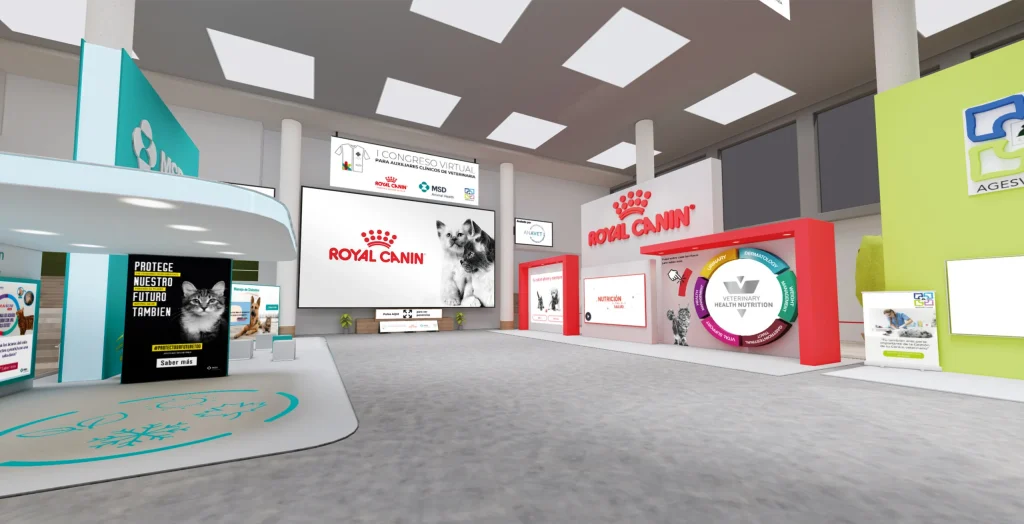
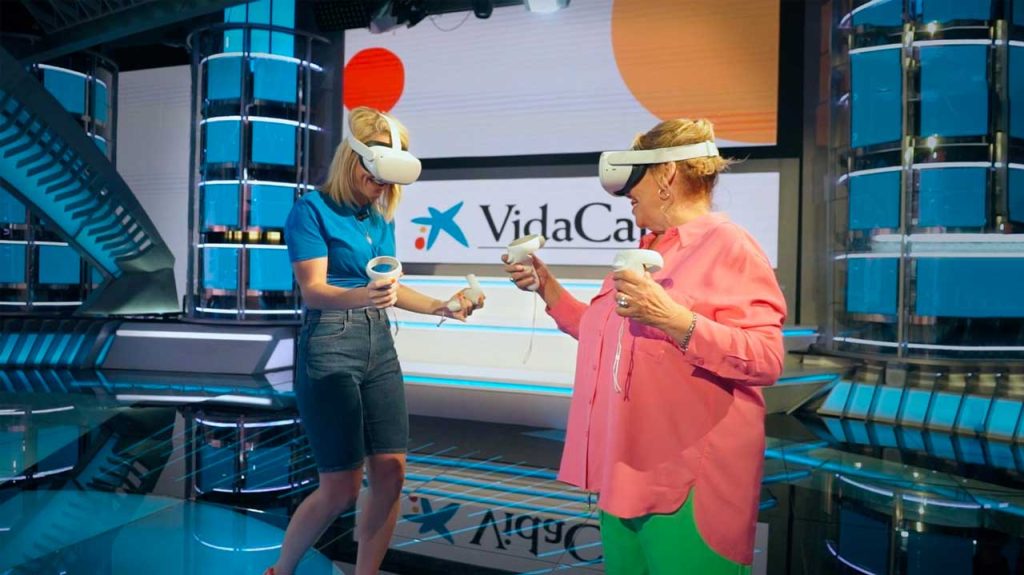
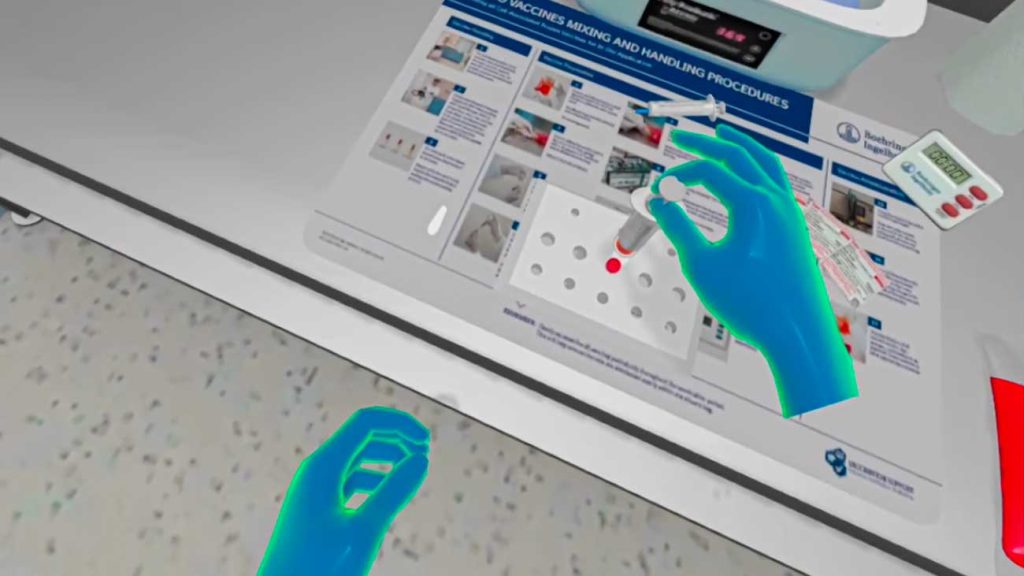
Immersive experiences broaden the scope and quality of learning both online and in person: in the virtual environment, as the Royal Canin Virtual Congress Events allow you to connect from anywhere. By combining live presentations with 3D spaces, enabling digital networking, and offering on-demand content with more value than a static webinar.In the physical space, VR and AR actions They enrich the stand beyond the signage, By allowing the visitor to immerse themselves in 100% personalized environments, simulate clinical scenarios and explore products in detail, to better explain the innovation and multiply its impact. An example of this can be found in the Virtual simulation of Vaccines where healthcare professionals are transferred to a virtual laboratory to present their latest medication.You can learn more about this topic in our post Virtual Reality and medicine: applications in the healthcare sector
AI agents for attendant care
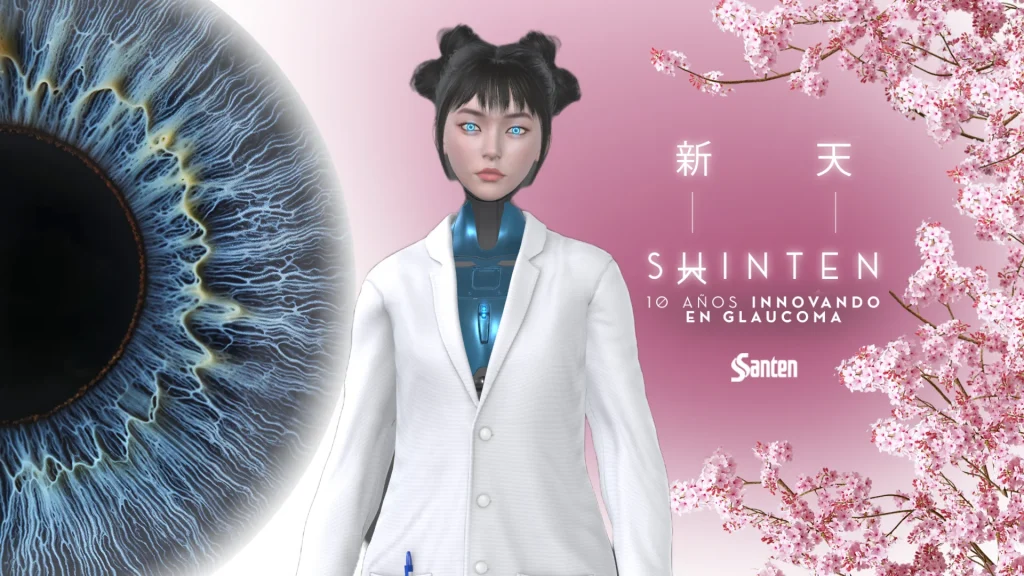
The face-to-face events now have a new star guest, the intelligent agents and AI avatars such as Shin become real speakers and presenters to energize conferences and congresses. A point of contact always available: they welcome, solve frequent doubts in several languages, guide through the contents and refer to experts when the conversation requires it. In Shin's case, she was trained with all the specific medical bibliography of the event, offering precise answers and helping the audience to go deeper into what was shown in the expert presentations.
Advantages for health event organizers
Organizing a health congress today goes far beyond logistics: requires designing experiences that inform, connect and deliver actionable data . Integrating technological innovation allows you to orchestrate the event from start to finish - from concept and booth design to real-time interaction and post-event - with a measurable approach. At Imascono Health we worked this complete cycle of the event with solutions that combine 360° management, XR experiences, AI avatars and virtual fairs, so that each edition yields more in reach, quality and return. Here are the main advantages of using technology in healthcare events:
Cost and resource optimization
The technology reduces unnecessary travel, assembly time and dependence on physical materials, while power hybrid and multiplatform formats that scale without blowing up the budget . For example, instead of allocating resources to the logistics of moving a machine from one event to another (with the opportunity cost of allocating a machine to that use instead of to production) you can invest in a virtual display of that machine The new, multi-language and interactive solution can be easily moved from one point to another in the sales people's briefcases. This allows organizers to invest in improving the experience and content, rather than in unnecessary operational expenses.
Real-time data analysis
Every interaction at the booth or in the virtual environment - attendance, dwell time, content viewed, downloads, and questions to the AI avatar - translates to clear metrics to decide on the spot and improve future editions . At Imascono Health we integrate this data into simple dashboards that can be exported to your CRM, to prioritize leads, adjust the speech and optimize the agenda of the commercial and medical team, as well as optimize future editions of the event.
Strengthening brand positioning
Incorporate interactive experiences, VR/AR and virtual assistants coherent with your identity raises the perception as a reference in innovation. From the booth architecture to the visual line and the scientific script, our solutions reinforce the brand story and make it memorable: the visitor understands the proposal better, participates more and remembers you after the congress, facilitating strategic alliances and building long-term loyalty.
Increased reach and accessibility
Health congresses are no longer limited to a physical space or geographic location. . The live broadcasting and the virtual environments allow professionals from all over the world participate The event will increase the attendance and diversity of the audience. This translates into greater visibility and virtual networking opportunities. A virtual format that goes beyond a simple webinar, but that can become a real virtual trade fairs such as the one organized by Royal Canin and HSD Health .
Success stories and examples at health congresses
Events that strategically integrate technology demonstrate better levels of attention, recall and lead generation. Throughout the post we have seen how companies like Santen or Royal Canin have prioritized the use of Artificial Intelligence and virtual worlds to innovate in their events. And, above all, to reach more visitors. Now, we want to show you a selection of real cases that illustrate this approach and its impact on the attendee experience and brand objectives.
Certest:
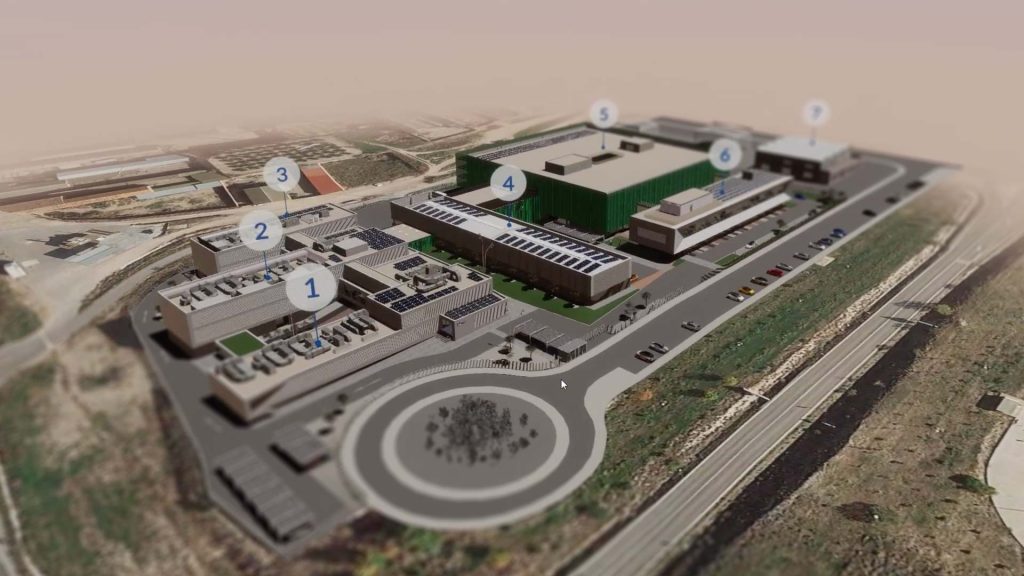
Certest, one of the fastest growing biotech companies in Europe, transformed its facilities with new buildings, production lines and research centers. In collaboration with Imascono , developed an interactive virtual twin of the entire headquarters, allowing users to explore the company from a mobile or tablet device . Not only does this solution highlight years of growth and innovation, but it also opens the door to virtual experiences in events guided tours without the need of physical displacements.
Vaccines:
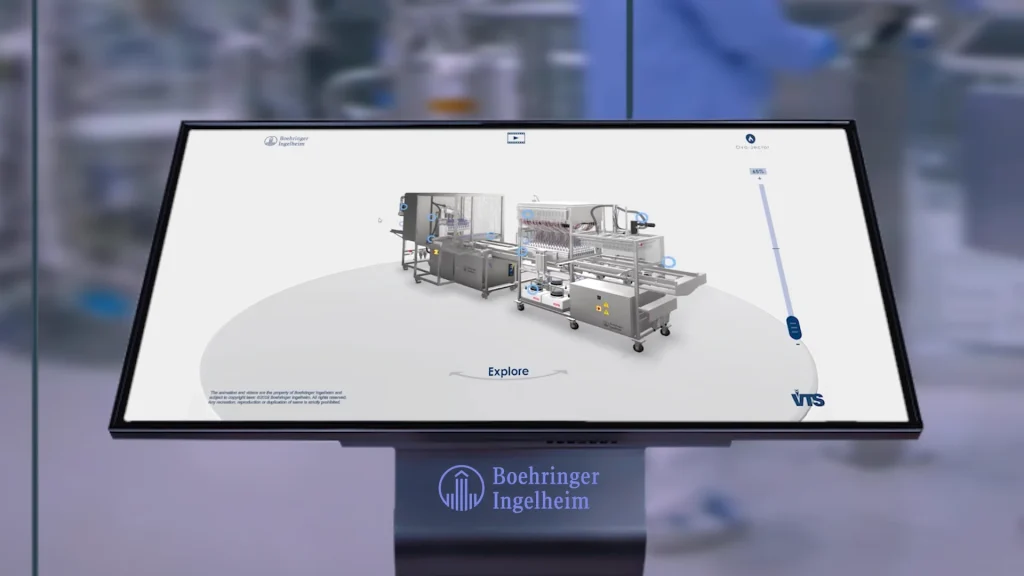
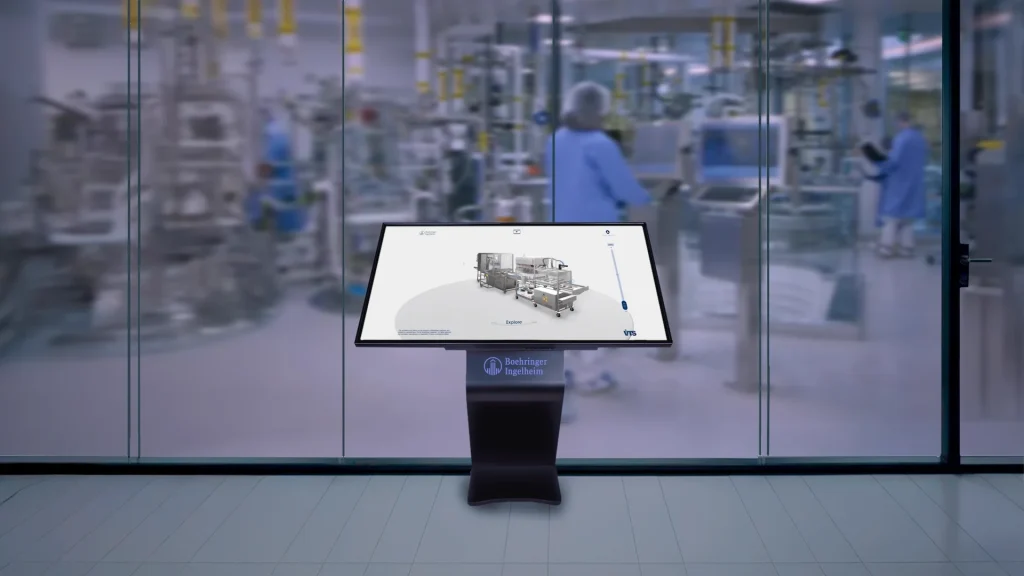
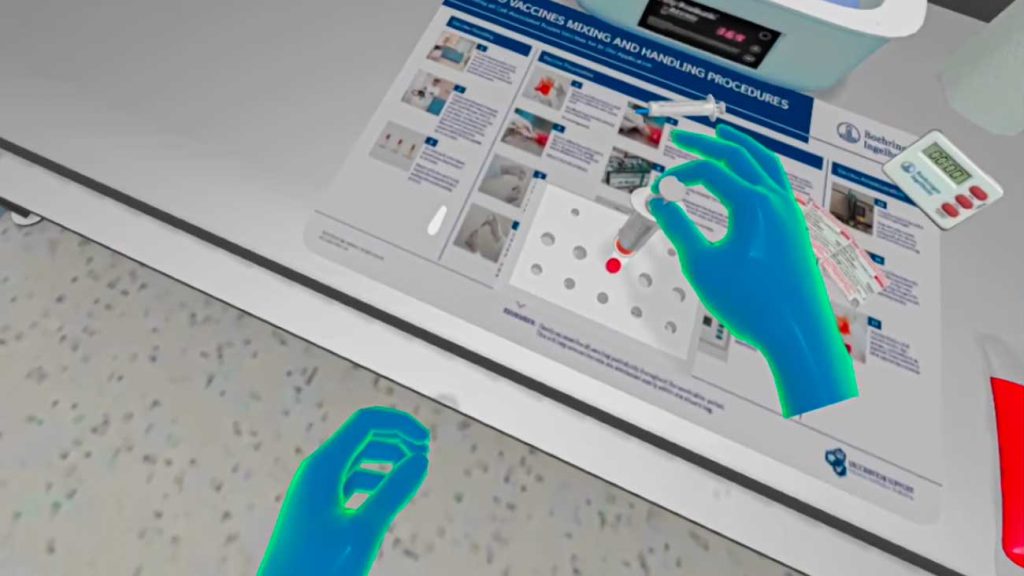
Boehringer Ingelheim needed to present its latest injectable drug in a comprehensive, distinctive way that prioritized understanding how to prepare it. The solution was to gamify learning through virtual reality, both for healthcare professionals and for the sales team, turning user manuals into interactive simulations that make every step a hands-on challenge. This technology makes it possible to replicate the experience at congresses, training sessions or demos, delivering powerful product presentations at events, allowing users to get to know the product and even use it virtually.
OVO Xtractor
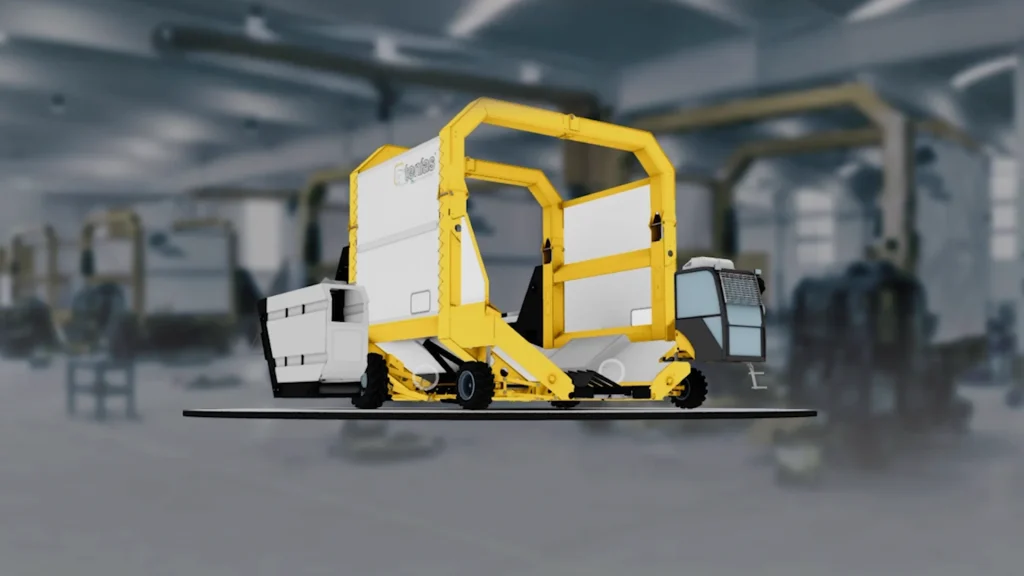
When veterinary innovation and new technologies come together, transformative solutions are born such as the OVO Xtractor Virtual Twin . The virtual twin of the poultry machine in the palm of your hand, ready to tour all the pharmaceutical industry trade shows. The Virtual Twin OVO Xtractor allows a detailed, interactive and realistic presentation of the machine, ensuring a full understanding of its benefits and operation. Do you want to take your congresses and health events to the next level? Visit Imascono we have a whole division focused on the health sector, Imascono Health The company has a team specialized in the healthcare industry to design and produce rigorous technological experiences at a medical and scientific level, but at the same time, to help capture the interest and engagement of users with different and disruptive proposals. Contact us at and discover how Imascono Health's technology can help you transform your next event.
Major technology trends in the automotive industry
In a sector as competitive and constantly evolving as the automotive industry, technological innovation is no longer an option, it is the way forward. Digital twins, virtual spaces, artificial intelligence o Augmented Reality applications are revolutionizing the way we conceive, design, sell and enjoy cars. This transformation affects not only the performance of the vehicle, but the entire experience surrounding it. from technical training to the point of sale, including customer loyalty. In this article we explore the main technological trends in the automotive sector What role do AI-based avatars play? How does an operator train in a virtual environment? What are the benefits of Augmented Reality for drivers? By means of concrete examples, such as the success story of Hispanosuiza We discover how the future of the automotive industry is already underway. Get ready for a journey to the heart of innovation, where creativity and technology come together to completely transform the automotive industry.
The impact of technology on today's automotive industry
The automotive industry is undergoing a true technological revolution, with advances that not only improve the user experience, but also completely transform the design, production and management processes. The incorporation of disruptive technologies such as Augmented Reality the Virtua Reality l and the intelligent assistants are redefining what it means to own a vehicle and how we interact with it . One of the most innovative uses of the Augmented Reality is the integration of real-time information directly on the vehicle's dashboard. Imagine a driver with access to details such as engine status, fuel levels or optimized routing directly on the windshield, without having to take his or her eyes off the road. This not only increases safety, but also enhances the driving experience, integrating useful and relevant information at a glance without distraction. On the other hand, Virtual and Mixed Reality are taking vehicle customization to the next level. Consumers can visualize and customize their cars in a virtual environment, choosing features such as interior design, trim or even entertainment systems, before the car is manufactured. This not only streamlines the design process, but also allows brands to offer a fully customized experience, increasing customer satisfaction.
The AI-based virtual assistants are also transforming the driving experience. These intelligent "co-pilots" can not only provide real-time information about the car's performance, but also about road conditions. They can alert to potential hazards, suggest alternative routes in real time, or even adjust the vehicle's behavior according to the driver's preferences. This technology enhances user safety and comfort, taking autonomous driving to a whole new level. For manufacturers, technology is optimizing production processes. The digitization of information enables more efficient factory management, from inventory control to internal logistics, all accessible in real time. In addition, the Virtual Reality training is being used to train operators in assembly processes, maintenance and occupational risk prevention, increasing safety and efficiency in production plants. These advances not only benefit the internal value chain, but also offer a tangible return in terms of time and costs by reducing human error and optimizing operational processes. An example of this is the case of Global Spedition a transportation company that developed its entire Occupational Risk Prevention course in a virtual format to enhance the immersion and learning experience.
Technological innovations already present in the sector
The automotive industry is already preparing for the future. New technologies are transforming the industry's present with tangible solutions that improve processes, experiences and results. From advanced simulation tools to customized virtual experiences, these innovations respond to the needs of the automotive industry. new trends in the automotive sector .
Virtual Spaces
The virtual spaces interactive are changing the way the product is presented and experienced. Digital showrooms, virtual factory tours and immersive environments allow users to explore models, interact with configurations and live brand experiences without leaving home. This trend responds to a change in consumer behavior, which is becoming more digital and less face-to-face. For brands, it represents a new way to connect with its hearings in a gamified, emotional and measurable way. Generating community in the digital world. The technology at the point of sale in the automotive sector is no longer limited to the physical dealership. Do you want to know more in detail how to generate online community? We invite you to read our post Digital membership: definition and main types
Gamification in automotive marketing
The Gamification has become an effective strategy to attract, retain and involve the customer in the brand's universe. Applied to automotive marketing, it allows the creation of different interactive experiences that turn the launch of a vehicle or a motor show into a memorable game. Increasing engagement and generating valuable data on user behavior. . A competitive advantage in an environment where the differentiation is to offer more than just a good product.
Digital twins for simulation and maintenance
The digital twins virtual replicas of vehicles, processes or facilities are redefining automotive development. Allow components to be simulated, tested and optimized in controlled, dynamic environments before moving on to the physical world. This reduces costs, shortens lead times and improves decision making. In addition, these virtual models make it possible to anticipate potential failures through real-time data, resulting in predictive maintenance strategies. Another use of these virtual recreations of vehicles is more focused on the sale and demonstration of the vehicle at fairs and commercial environments. As in the case of Grupo Tenías has transferred its agricultural vehicles to a 3D and virtual catalog. for a better understanding of its benefits and performance.
Virtual and immersive training
Technical training in the automotive sector has also entered a new era thanks to interactive virtual environments. The immersive training and professionals to work together in the train in realistic simulations without the need for access to vehicles reducing risks and facilitating learning. A clear example of this innovation is the Global Spedition that we have discussed above. Where workers learn to managing dangerous goods in a virtual environment The training is safe, secure and highly realistic. This type of training strengthens knowledge retention and improves operational efficiency.
Artificial Intelligence-based avatars
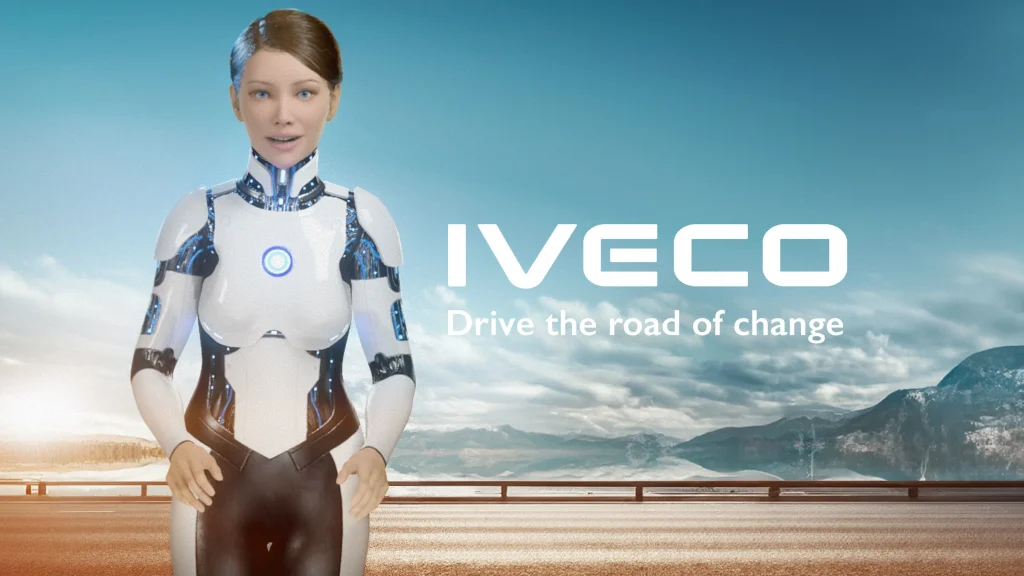
The intelligent avatars are establishing themselves as the new face of customer and employee care in the automotive sector. These conversational assistants, powered by AI, to resolve doubts, guide processes, provide technical assistance in real time or accompany the user in his or her experience. with the brand, both online and at the point of sale. The project Iria IVECO is a clear example. This virtual assistant accompanies you in the IVECO service center, offering real-time information, in a personalized way and providing access to training, technical support on Iveco's truck models and internal communication through a single voice, a revolution in corporate communication.
Leading automotive technology success story: Hispanosuiza
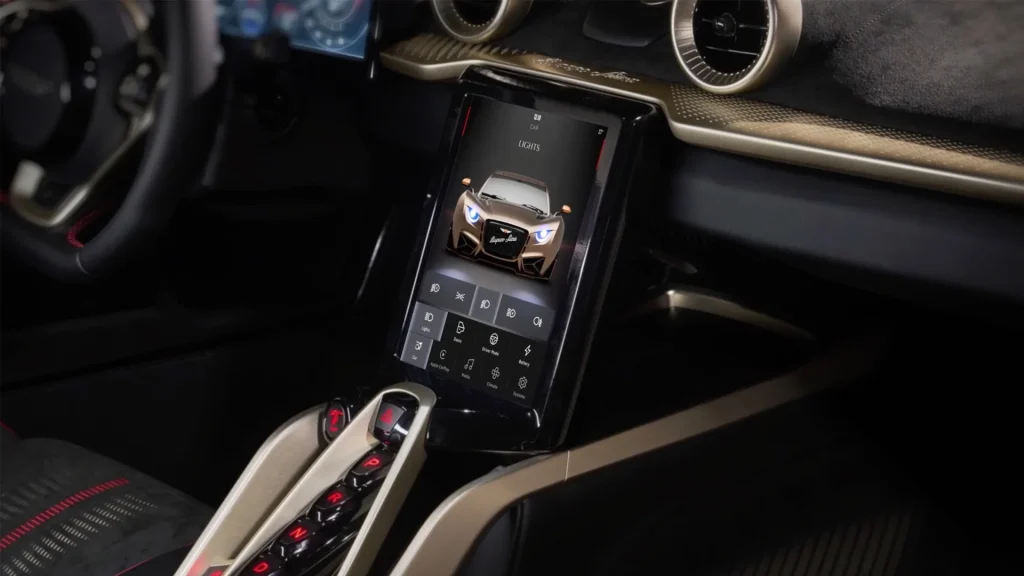
One of the most inspiring examples of how technological innovation is redefining the automotive sector is the project by HispanoSuiza . Through the digital experience, the brand has successfully translated its legacy of over 120 years of luxury and engineering into a digital environment. where the user not only knows the vehicle, but lives it. On this occasion from Imascono we focused on both the development of the enhanced infotainment system and the development of the mobile app, incorporating new customization options that would allow the driver to always be connected and enjoy a tailored 100% experience. Interested in further exploring how technology is transforming the automotive industry? If you want to learn more about innovation cases or discover new digital applications, contact our team We will be happy to share ideas, inspiration and knowledge.
Cruise technology: Innovation in entertainment and personalization of the voyage
Technology is redefining the way we experience travel, and cruising is no exception. As the tourism industry evolves, technological innovations are enabling cruise lines to offer increasingly personalized experiences tailored to each passenger's preferences. . From the moment passengers step on board until the end of their voyage, technology plays a key role in creating unique itineraries, enhancing comfort, efficiency, personalization and entertainment throughout the maritime journey. In this article we will explore how the latest innovations are revolutionizing the onboard experience with a focus on personalizing the journey. Get ready to explore the future of cruising!
Why is technology redefining the onboard experience?
Technology is taking the onboard cruise experience to a whole new level, transforming every aspect of the journey into something unique and tailored. With innovative solutions such as personalized mobile apps, interactive maps and intelligent management systems, passengers can easily access a wide range of services, activities and entertainment options, all from the palm of their hand. This allows travelers to design their own itinerary, adjust their preferences and make instant bookings, improving travel efficiency and convenience. In this context, the latest technologies, such as the AI avatars and the Virtual Reality solutions have the potential to redefine the cruise passenger experience. Virtual avatars can act as personalized onboard guides The company provides real-time information, activity recommendations based on different profiles, and even interacts with passengers to resolve doubts. In addition, immersive Virtual Reality experiences can transport passengers to virtual destinations during their voyage or offer innovative entertainment inside the ship. . These technologies not only enhance comfort and interaction, but elevate the onboard experience to levels never before seen, allowing each passenger to feel truly unique and cared for every moment of their journey. You may be interested in → The future of entertainment through Virtual Reality
Technology applications that are revolutionizing the cruise industry
The cruise industry is sailing into a future full of innovation thanks to the technology applications that enhance the onboard experience and transform it completely . From immersive entertainment to service personalization, including a renewed geo-positioning system and interactive maps that help travelers find their way around the ship's facilities and access all activities in real time. We tell you how these digital tools make the passenger the protagonist.
Extended Reality for Interactive Entertainment
Imagine immersing yourself in virtual worlds that, as you sail the ocean, create an immersive experience. phygital . Extended Reality, which combines Augmented Reality and Virtual Reality, is revolutionizing in-flight entertainment. From interactive games to virtual tours for exotic destinations, this technology offers unforgettable experiences that transform any moment into pure magic. . Cruises are now enjoyed with all the senses. You can learn more about the use of technology in entertainment in our post Technology trends in amusement parks: virtual reality
Interactive maps
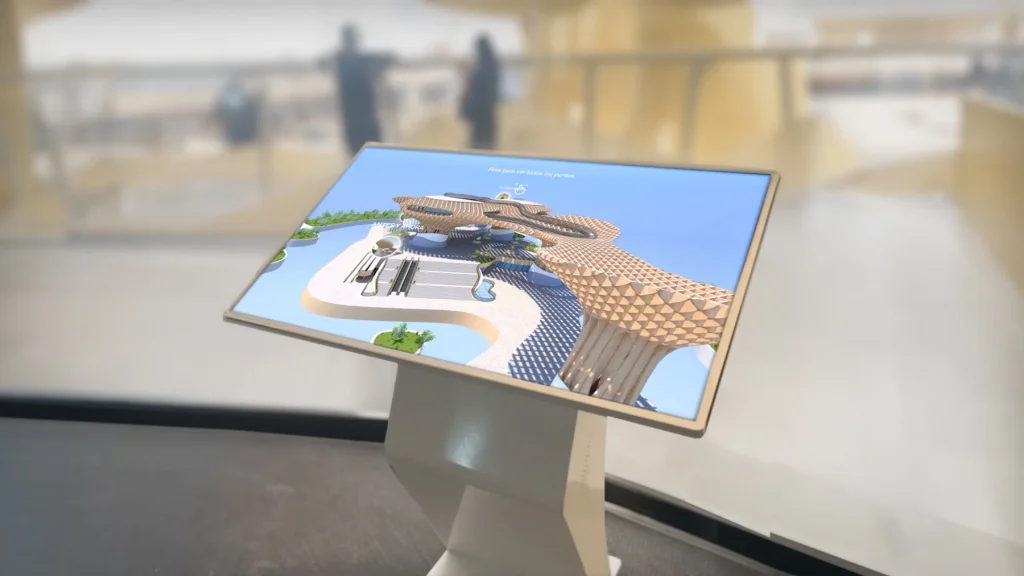
Saying goodbye to traditional maps is a reality thanks to virtual infographics that incorporate interactive onboard maps. These tools allow passengers to explore every corner of the ship and the destination with a simple touch. The new cruise ship, facilitating navigation and discovering options for activities, restaurants or events in real time. All through a 3D recreation of the cruise, accessible from the mobile or interactive totems scattered throughout the different areas that update the information in real time. As in the case of the interactive maps of the Setas de Sevilla monument where visitors can find different contents of interest about the emblematic viewpoint and other areas of the city.
IoT and wearables for a connected experience
Connected devices have become essential allies for a seamless and connected cruising experience. Thanks to the Internet of Things (IoT) Onboard, passengers can access their cabins without the need for physical keys, control the temperature of their rooms, receive personalized notifications and even pay with a simple gesture. This integration of technology makes the journey more comfortable, secure and memorable, optimizing the user experience on board. In addition, the smart bracelets and reward systems further enrich this experience. These wristbands store the passenger's profile, activity history and accumulated points, connecting with the ship's app to provide real-time tracking. Through the Gamification , l Passengers can earn points and achievements for completing challenges, exploring the ship and participating in activities, encouraging greater interaction and personalization. . This combination of IoT, gamification and connected devices turns the cruise into a unique, fun and fully personalized experience.
Artificial intelligence to personalize service
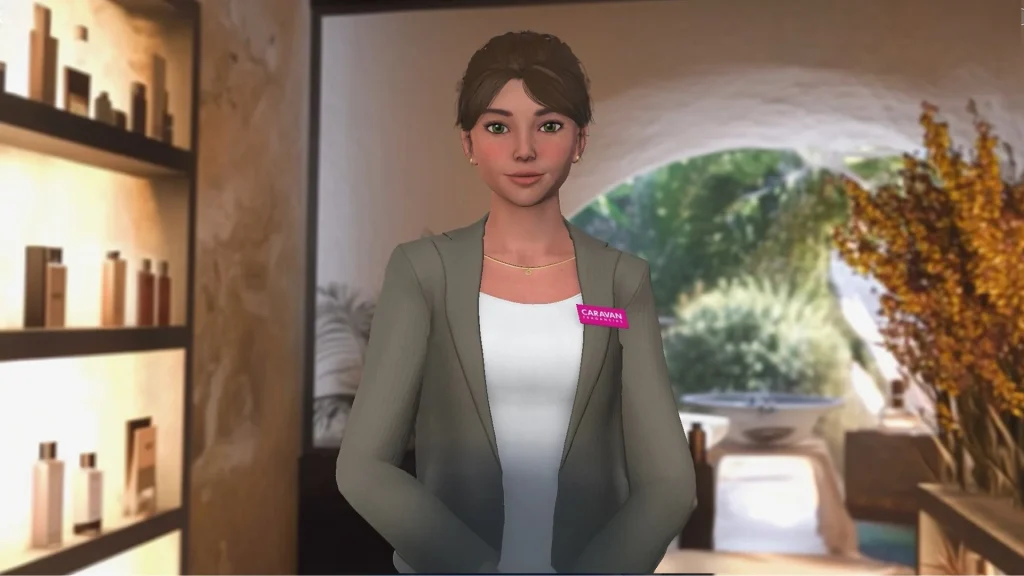
AI is changing the rules of the cruise game by offering personalized service. From activity recommendations based on your preferences to menus tailored to your tastes and intelligent alerts about your reservations, AI takes care of anticipating your needs . Thus, each experience feels tailor-made, enhancing satisfaction and creating unique moments on the high seas. An important point of this type of avatars V-E-G-G-A is its function multi-language The AI avatars, capable of serving users in a 100% personalized way, which increases satisfaction, agility in responding to any question and improves the overall experience in this type of international travel. These AI avatars can, in addition, adapt in terms of physical appearance, personality and sources of knowledge to any company, industry or situation. With use cases such as Turrón, the virtual mascot of La Torre Outlet o Fabiola Saphir, the personal shopper of Caravan Fragrances .
Benefits of technological innovation in cruise ships
The integration of technological applications on cruise ships not only represents a leap into the future, but also brings tangible benefits for all those involved in the maritime experience. Here are the main benefits:
Improved passenger experience
Technology puts the passenger in the center of the experience, offering personalized services and state-of-the-art entertainment. Thanks to innovations such as AI and interactive apps, every traveler can design his or her ideal itinerary The trip will be a smooth and hassle-free journey, enhancing the enjoyment on board and making it a unique and unforgettable adventure.
Operational optimization for the crew
Technological innovation also benefits the crew by streamlining processes and facilitating day-to-day management . Intelligent systems and digital platforms streamline internal communication, logistics and maintenance, allowing the team to focus on providing exceptional service. This technological support translates into more efficient operations and faster, more effective passenger service. If you want, you can find out more about automation in companies at How to implement automation in companies and maximize its impact
Greater control and traveler satisfaction
With advanced technological tools, such as customized AI agents for each user, interactive maps on the cell phone or smart bracelets, the traveler is in control about your experience. From managing reservations to receiving real-time alerts, technology provides transparency and autonomy, increasing overall satisfaction . This level of control generates confidence and peace of mind, making each cruise comfortable and personalized for each passenger.
Differentiation and customer loyalty
In an increasingly competitive market, technology is the best ally to differentiate a cruise line from the rest. . Technology trends attract new travelers and foster loyalty among those who already know the brand. In addition, technology, as we have seen throughout the article, drives service personalization, optimizes the work of crew members and helps create new and surprising sources of entertainment. In short, the innovation, differentiation and a commitment to putting the traveler at the center of the experience. becomes the factor that invites passengers to choose again and again the same cruise ship for their vacations.
We help you to apply these technologies
At Imascono We know that technological innovation is the key to transform the user experience and take your offer to another level. Our team of experts is ready to advise you and accompany you in the implementation of the latest technological applications that revolutionize the cruise industry. From solutions for Virtual Reality e Artificial Intelligence to intelligent management platforms. If you want your cruise to stand out for its innovation and customization, do not hesitate to contact us, together we will make every trip an unforgettable experience! Contact us at and discover how the technology can be your best ally to conquer your passengers.
5 outstanding technology trends in restaurants
In a world where innovation has become the new star ingredient, the restaurant industry is undergoing a true digital revolution . It is no longer enough to serve good food, it is now time to design experiences, excite the customer and make every visit memorable. In this article you will discover how digitalization is transforming the dining experience, from intelligent reservation management to virtual waiters with Artificial Intelligence. We will also talk about Augmented Reality and gamification through interactive corners. Data capture for decision making. Of teams that evolve. And also about the new trend in restaurants, where customers no longer want to just eat, but to experience something unique and be part of a great community. Is your restaurant ready to take the big leap? Open your eyes wide, because what follows may change the way you understand business forever.
The importance of new technologies in today's restaurants
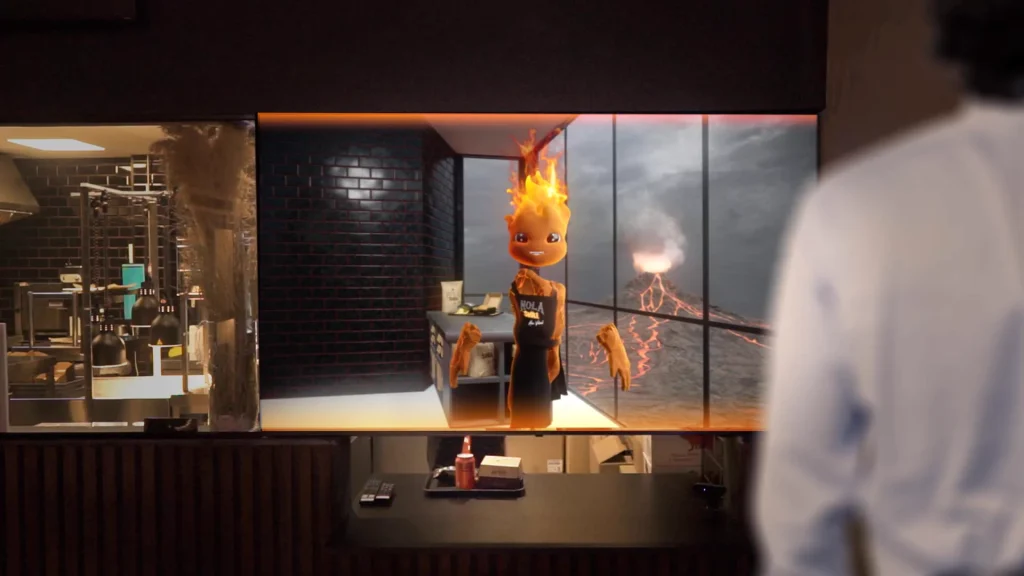
In the digital age, technology is no longer an extra: it is the engine that drives efficiency, innovation and customer experience in the foodservice industry. From automated ordering to immersive experiences With digital solutions, restaurants that bet on digital solutions optimize their operations and build loyalty like never before. Beyond streamlining processes, technology allows to connect with a new consumer looking for immediacy and personalization . In this hyper-connected present, innovation is not an option, it is the key to stand out and serve much more than food: unforgettable experiences. Today, customers gather in the restaurant for an unforgettable experience, becoming part of your community and your brand. To this end physical spaces are becoming more and more important. . Both to entertain and to surprise, to organize events and unforgettable experiences based on new technologies. Moments that you can only live if you go to the restaurant. An example of this can be found in the Nola Smoke restaurants where Smoky, the virtual chef not only recommends, he also collects the order and entertains the diners through his interactive showcase, his Kimchi! Game, where you have to score as many points as possible, and the first place in the ranking is a prize!
How technology affects restaurants
The digital revolution has arrived in the restaurant industry to transform how every dining experience is lived. Technology is redefining the relationship between customers, teams and strategic decisions, shaping day-to-day operations. of any modern restaurant.
Impact on customer experience
Technology elevates the dining experience, making every step faster, more personalized and surprising. From From digital menus to contactless payments and interactive experiences, the customer experiences a more seamless and memorable connection with the brand. If you are interested, you can learn more about the impact of the customer experience in our article Customer experience: how to improve it through extended reality .
New roles in the teams
Teams are evolving: they now combine traditional skills with digital competencies. New profiles are integrated, such as software managers or experience creators, which make the service more agile, coordinated and customer-centric.
New data analysis in decision making
Data is the new star ingredient. Thanks to analytics tools, restaurants can anticipate demand, optimize the menu and make strategic decisions based on real information, not assumptions. If you want to learn more about this topic, we invite you to read here about Restaurant Technology Trends
4 technology innovations in restaurants
Digital transformation does not only improve what already existed: creates new ways to surprise, connect and delight the customer. Below, we want to share with you four innovations that are revolutionizing the gastronomic sector and taking the experience beyond the gastronomic.
Digital reservation management
Forget the paper and the phone: reservations today are managed in the cloud, with intelligent platforms that allow the customer to choose time, table and even ambience preferences, all from their mobile. For the restaurant, this means total control in real time, fewer cancellations and better planning of the flow of diners.
Virtual waiters with Artificial Intelligence
Welcome to the era of intelligent service. With solutions such as V.E.G.A With the new generation of avatars and AI agents, restaurants can offer 24/7 customer service, answer questions instantly and personalize recommendations without losing the human touch. All this following the same branding of the brand, its essence, since these avatars can be customized in terms of appearance, personality and knowledge. These virtual assistants improve efficiency and reinforce brand identity, offering an innovative, accessible and technologically advanced image. Follow this link to learn more about our Artificial Intelligence service .
Augmented Reality Menus
What if you could see your dish in 3D before ordering it? With Augmented Reality menus and Virtual Reality glasses, diners can visualize each recipe. The new technology allows the user to explore the ingredients and be guided by an avatar-chef who accompanies them in this interactive experience. In addition to improving menu comprehension and reducing indecision, this technology turns the choice of dish into a visual spectacle that makes a difference from the first minute.
Immersive experiences with Virtual Reality
Imagine entering a restaurant and literally immersing yourself in the brand's universe. Thanks to Virtual Reality, this is now possible. The project VR GAME Foster's Hollywood This is demonstrated by the fact that a immersive mobile experience where customers could travel to the brand's haunted house for the Halloween campaign and live a terrifying adventure. This type of action generates an emotional engagement with the brand. positioning the restaurant as a space of entertainment, technology and flavor.
Is your restaurant ready to make the technological leap?
Innovation is no longer an option for restaurants, it is the new normal. In an increasingly competitive industry, restaurants that embrace digital transformation not only survive: they lead. Adopting technology does not mean losing the essence, but rather amplifying it, enhancing every detail of the experience and turning the everyday into the extraordinary. Is your restaurant ready to offer smart reservations, immersive experiences, AI-driven service or 3D menus? Then it's time to take the plunge and turn your space into a stage for innovation. At Imascono we carry the technological creativity to the heart of brands. If you provide the flavor, we provide the digital magic. Do you want to transform your restaurant with innovative technology and experiences that make a difference? Contact with us and let's design together the future of your brand.
Metaverse in medicine: applications and the future
The Metaverse or, as we call them in Imascono, the virtual spaces, are transforming medicine in ways that seemed unimaginable a few years ago. From the medical training with hyper-realistic simulations to the virtual medical consultation through AI avatars, This and other immersive technologies are revolutionizing the healthcare sector. Its main benefits include the cost reduction management and training, the global access to medical resources y la personalization of treatments for the patient creating a more efficient and accessible healthcare system. However, this progress is not without its challenges . In this article we explore how this technology is changing the landscape of medicine and what challenges and opportunities await us in the future .
Areas of application of the Metaverse in the health sector
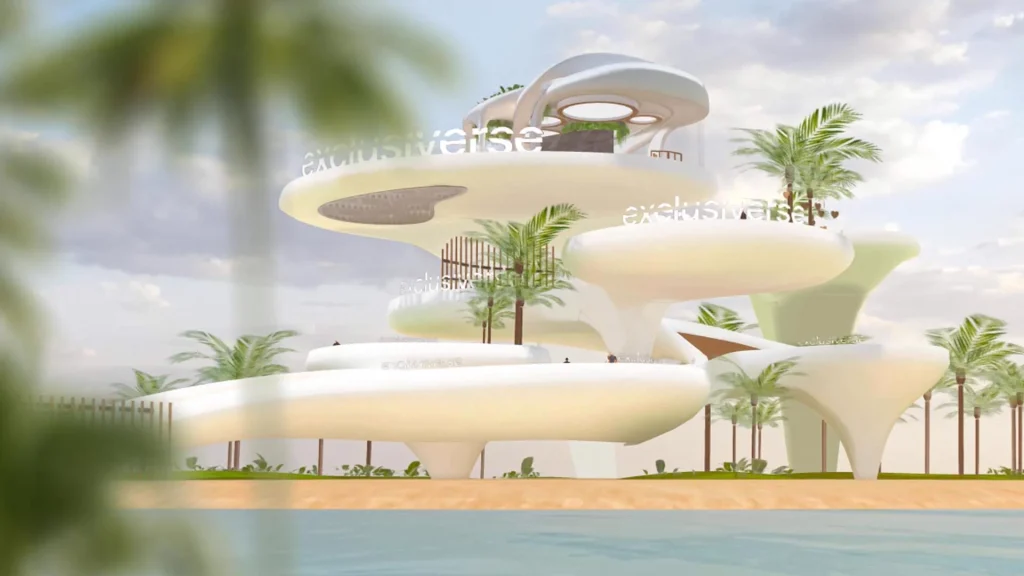
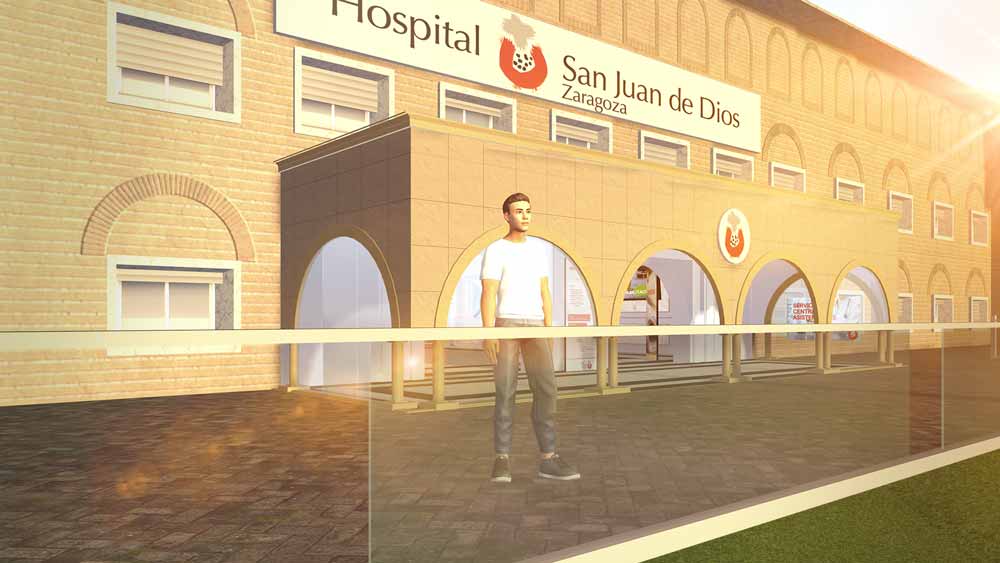
The virtual world, spearheaded by the immersive web technology of the Metaverse, is opening up a new range of possibilities in medicine and, in particular, in the training of healthcare professionals and in patient care. Thanks to virtual spaces, Healthcare professionals can now train, innovate and provide healthcare Beyond an app, a website, or a video call. In these Virtual Spaces Patients can access all the information and resources of the center from a virtual hospital or ambulatory center. In a much more intuitive and close way, as in the project of virtualization of their facilities developed by the San Juan de Dios Hospital. Next, we want to share with you the main areas of application of the Metaverse in the healthcare sector. Both in veterinary medicine and in human or dental medicine, and even in medical insurance. The Metaverse allows opening up new fields that were previously unimaginable.
Medical consultation in the Metaverse
The medical consultation in the Metaverse allows access to medical care from home, without long waits. Through secure and private virtual consultations professionals interact in real time with patients, eliminating geographic barriers and offering access to specialists, even in rural areas or developing countries. This technology is revolutionizing medical care, providing faster and quality access. In this sense, the Artificial Intelligence applied to the healthcare field takes on special relevance, especially in the first diagnosis, in the symptom consultation. Here, it helps the patient to determine which specialist to contact and at the same time, it makes a small report of the conversation held with the patient to speed up and facilitate the doctor's dealings with the patient in his subsequent visit. To learn more about AI in medicine we recommend you to visit our post Main benefits of the use of Artificial Intelligence in healthcare
Medical training
Medical training is one of the fundamental pillars of evolution in the healthcare sector, and the Metaverse is taking this process to a whole new level. Imagine performing surgery without physically being in an operating room, or studying human anatomy with a precision and detail never seen before. Thanks to immersive virtual environments and interactive infographics In this way, doctors and students have access to hyper-realistic simulations that allow them to practice procedures without any risk. In the Metaverse, future healthcare professionals can interact with 3D models of organs, perform virtual surgery or attend lectures and workshops from anywhere in the world. This not only optimizes learning time, but also makes training more accessible, regardless of geographic location or available resources. As an example, we would like to highlight the Virtual Training developed by Boehringer Ingelheim for the training of healthcare professionals in the handling of its latest vaccine. You may be interested in → Virtual Reality and medicine: applications in the healthcare sector
Development of medicines
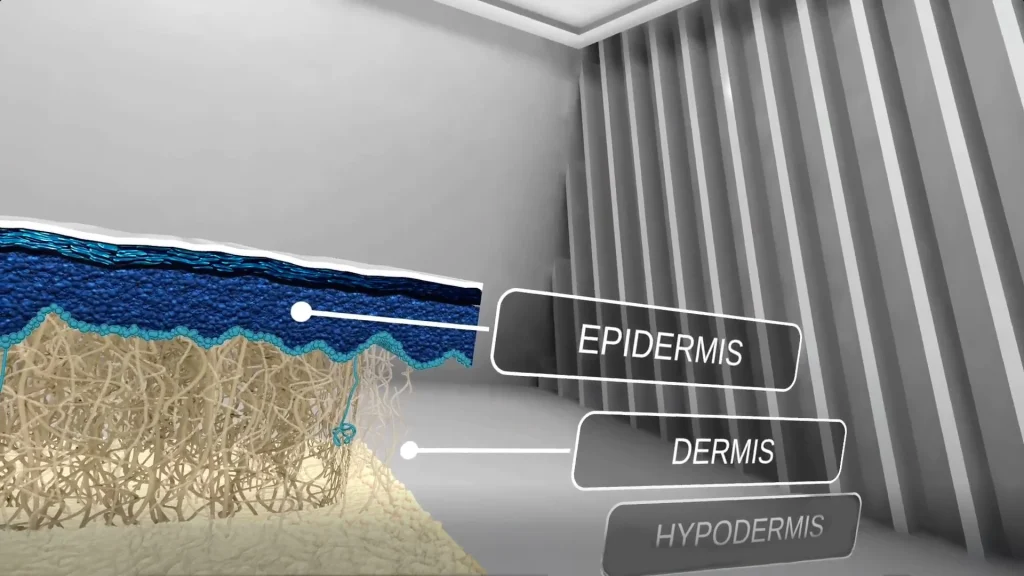
The drug development process has historically been long and costly. However, the Metaverse is changing the way these investigations are conducted . Using 3D simulations and models, researchers can more efficiently analyze how drugs interact through simulations of the human body. This reduces testing time and the need for costly early-stage clinical trials. This virtual environment also allows the creation of interactive laboratories where scientists can visualize the behavior of molecules and compounds in real time. The Metaverse opens doors to personalized treatments based on massive data analysis and predictive modeling . An example of this type of simulations can be found in the international company Merz Aesthetics The company specializes in aesthetic medicine and, through Virtual Reality, shows both patients and doctors the impact of their treatments in a simulated way.
Immersive diagnostics and therapies for patients
The Metaverse is marking a before and after in the field of health and medicine The new treatment opportunities for a variety of physical and psychological conditions. Through immersive virtual environments, patients can experience simulations that allow them to interact with controlled scenarios and therapeutic exercises, and even receive more accessible and personalized medical care . These experiences provide a safe and comfortable space for patients, facilitating rehabilitation, cognitive therapy and desensitization processes, without the need to travel. A clear example of this application is the Apetest project launched by the Aragon Health Research Institute focused on the early detection of eating disorders (ED) in adolescents. This pilot project combines gamified technology and accessibility with clinical questionnaires to identify early possible cases of ED. Facilitating interaction with children and adolescents in the detection of cases of juvenile mental health.
Benefits of the Metaverse in medicine
The Metaverse is revolutionizing the field of medicine, providing innovative solutions for diagnosis, treatment and medical education. Through interactive virtual environments and realistic simulations, healthcare professionals can improve the accuracy of their interventions, while patients access immersive therapies and rehabilitation in a more accessible and personalized way. In this section, we will explore how the Metaverse is transforming medicine and what concrete benefits it is bringing to patients and healthcare professionals.
Cost reduction
The Metaverse is helping to reduce costs in the healthcare sector, something that benefits both institutions and patients. By implementing immersive technologies, healthcare institutions are able to reduce expenses associated with training, at least in the first introductory topics where the important thing is to know each area of an operating room or the correct process of handling a drug. In addition, the Metaverse eliminates travel and logistical costs We have a strong commitment to the health system, both in terms of training and also in terms of patient care in the case of one-off consultations. All this contributes to a more sustainable and efficient healthcare system. We invite you to visit the post → Potential of Augmented Reality in Medicine
Global access to medical resources
One of the greatest benefits of virtual environments is their ability to democratize access to medical resources. Thanks to virtual platforms, anyone, no matter where they are located, can access specialized treatments, medical consultations and high-level training. . This is especially crucial in rural areas or countries with less medical infrastructure. One of the most noteworthy examples in this area is the case of the Royal Canin and MSD Animal Health Virtual Congress two of the largest veterinary product companies joined forces to offer more than 20 hours of virtual lectures with the country's leading veterinary experts.
Main challenges of the Metaverse in health and medicine
Despite its transformative promise, implementing the Metaverse in the medical field presents several challenges.
One of the most important is data privacy, since the digitization of medical information must meet strict security and cybersecurity standards to ensure the trust of patients and institutions.
The adaptation of healthcare professionals is also crucial, as it requires training in the use of new immersive technologies and in integrating these systems as allies in medical care and training.
In addition, there is a risk that technology gaps will worsen inequalities, especially in regions with limited access to digital infrastructure, which calls for strategic plans to ensure equitable adoption.
At Imascono we are specialized in the development of Virtual Spaces , virtual spaces and gamified environments focused on companies. User-empowered online worlds In addition, pre-sales are gamified and the mechanics of video games and the Metaverse are incorporated into the value proposition of the companies. Interested in learning more about virtual spaces and how to use them? Go to contact with us and our team of engineers and designers will be happy to answer all your questions.
Technology and cosmetics, the most relevant trends
Beauty is reinventing itself at an unstoppable speed thanks to technology. Today, technology in cosmetics is no longer just a question of formulas and textures: it is an essential part of the beauty industry. smart, personalized, innovation-packed experience that connects science, data and creativity to take care of you like never before . When talking about technology applied to makeup and cosmetics, we can focus on new formulas and advances in biotechnology. However, on this occasion we would like to focus this post on the area of retail technology in the customer experience in the form in which fashion and cosmetics brands are making use of technology when interacting with customers . From AI avatars who become your personal shoppers, to window displays and virtual testers that allow changes to be made in Augmented Reality. The future of beauty and cosmetics is already here. In this blog you will discover how technology is transforming the market with innovations that are already revolutionizing the point of sale, personalizing skin care and creating immersive experiences that captivate consumers. In addition, you will learn about real case studies of brands that, with the support of Imascono are applying these trends to conquer hearts and markets. Ready to explore the future of cosmetics? Read on and get ready to fall in love with technological beauty.
The impact of technology on today's cosmetic industry
New cosmetic technologies are revolutionizing today's beauty industry, transforming personal care into an intelligent and personalized experience. Today, thanks to technology and its applications, it is possible to analyze and understand the unique needs of our skin and hair to offer tailor-made treatments and products, as if we had a beauty expert in the palm of our hand. But innovation not only improves results, it also drives sustainability, with formulas and processes that respect the planet and use natural ingredients responsibly. Technological cosmetics is the perfect fusion of science, creativity and environmental commitment. The new line of products, leading the way to a more effective, conscious and exciting future of beauty. But the use of technology goes much further. At the customer experience level, the use of tools such as Artificial Intelligence and Augmented Reality allows customers to personalize the shopping experience . Trying different products and styles of makeup, hairstyles and dyes, enhancing creativity by going beyond the physical limits. At a training level, the use of Virtual Reality allows both users and professionals in the sector to know in detail each of the steps of the treatment and its impact on our body, as in the case of Merz Aesthetics Virtual Trainings the leading company in aesthetic medicine. You may be interested in → Virtual Reality and medicine: applications in the healthcare sector .
Cosmetic innovations already on the market
Technology is transforming the present of the cosmetics industry. Visionary brands are incorporating tools that enhance the shopping experience, boost personalization and create emotional connections with consumers. Below, we explore some of the most impactful innovations.
Interactive testers
Shop windows are no longer static. Today, thanks to motion sensors, Augmented Reality and facial recognition, the virtual storefronts become truly immersive experiences. When interacting with a customer, show personalized recommendations and even invite you to try a look in real time! A perfect fusion between physical retail and digital experience, which is immortalized in the phygital trend. You can learn more about this trend at Phygital as a new dimension in user experience
Personal Shopper
Imagine having a 24/7 beauty advisor who, based on your preferences or tastes, gives you personalized recommendations. That's the promise of AI agents acting as digital personal shoppers. These virtual assistants also offer customer service, personalized tutorials, and even daily routines. Integrated into web, e-commerce and QR codes, these avatars create a close, efficient and memorable shopping experience. Enhancing brand image from the shelf. In addition, these intelligent personal shoppers perform personalized recommendations of all the products in the brands' catalog. From the user who is looking for a specific cosmetic product to the user who needs basic advice, IA avatars as Fabiola adapts to all types of situations.
Augmented Reality at the point of sale
Trying a product online before you buy it is as easy as opening an AR app. . You can see how a lipstick, foundation or even a new hairstyle looks without physical contact. In addition to the use of Augmented Reality in the webapps In the case of brands, physical stores are also beginning to integrate smart mirrors to suggest the products that best suit their visitors. An immersive experience that redefines the concept of \"trying on\".
Skin diagnosis using Artificial Intelligence
Today's skincare apps no longer just show you products; they now scan your face, detect imperfections, analyze hydration levels, pores and dark spots, and recommend personalized routines.This AI-powered diagnosis uses machine learning and large dermatological databases to deliver accurate, up-to-date analyses.
Boosting the online community
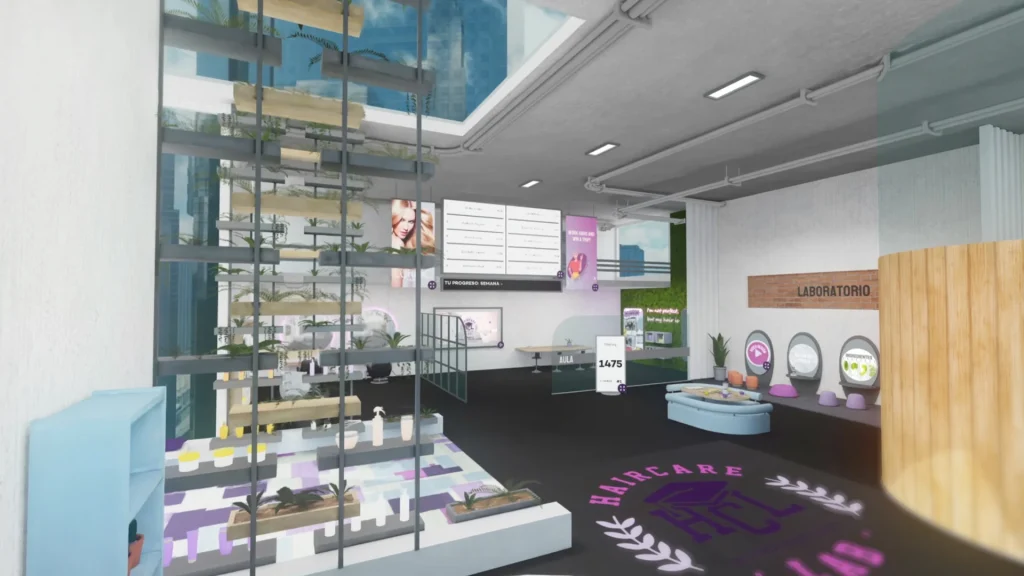
From storytelling to storyliving. From being mere spectators to being part of the action. The virtual spaces have revolutionized the way cosmetic brands connect with their users. creating gamified environments without physical or geographic boundaries. These spaces allow consumers to interact with products, participate in personalized experiences and become part of active online communities. By incorporating immersive technologies In this way, brands can generate deeper emotional connections, foster loyalty and offer unique experiences that are accessible to a global audience. An example of this can be found in L'Oreal Academy a virtual school where the brand teaches the correct use and all the benefits of its Skincare, Haircare and Makeup line.
The effect of technology on the cosmetics of the future
Technology is already transforming the way we discover, test and use beauty products, but what's to come promises to be even more revolutionary. The cosmetics of the future will be highly personalized, predictive and fully connected. Imagine an ecosystem where bioengineering and Artificial Intelligence work together to anticipate your skin's needs before they manifest themselves. From adaptive cosmetics that respond in real time to the weather, to AI-guided treatments that monitor your skin while you sleep. In retail, Artificial Intelligence is becoming key to personalizing the shopping experience. Virtual storefronts and smart mirrors allow customers to interact immersively with products by trying them out virtually and receiving personalized recommendations. In addition, physical stores are digitally transformed, changing and enriching the shopping experience. Creating immersive environments where technology enhances interaction, purchase decision making and customer loyalty. The future of beauty will not only improve our appearance, it will will transform the way we live and experience personal care.
Do you want to apply these technologies in your cosmetic brand? At Imascono we help you
At Imascono for more than thirteen years, we have been helping leading beauty brands to transforming your relationship with customers through technology . From immersive experiences to virtual assistants with AI. Throughout the article we have been discussing some of the most important use cases of technology in the cosmetics sector, let's see them now in more detail:
Saphir Fabiola: Together with Caravan Fragancias, we created Fabiola, an AI avatar that provides perfume advice at the point of sale through a simple QR code. She offers personalized recommendations, answers questions and shares news in an expert, approachable voice, improving the customer experience in the brand's physical store aisles.
L’Oréal Academy: We developed an innovative educational platform to train international influencers on skincare, combining virtual masterclasses and gamification. The program empowers content creators to share science-based, sustainable information with millions of followers.
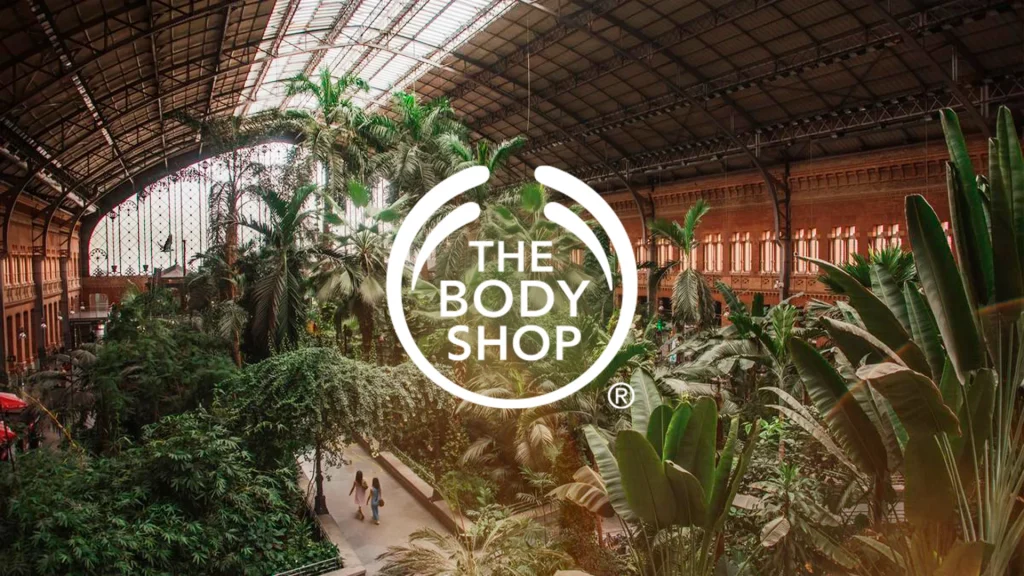
The Body Shop Kimchi!: We transformed Madrid's Atocha station with an augmented photo booth for The Body Shop's holiday campaign. Travelers enjoyed an interactive experience with 3D photos and surprise gifts, driving store visits and generating a major impact on audience and sales.
From Imascono we help cosmetic brands innovate with purpose and a lot of creativity. If you dream of transforming your brand through memorable technology experiences, we are ready to make it happen with you. Contact us at and find out how we can take your vision to the next level.
The role of retailtainment in the evolution of the in-store experience
We are living a revolution in the world of physical commerce; stores are no longer places to pass through, they have become living, sensory and unforgettable scenarios. Places where brands create community, connect with their audiences and bring their branding to life with unique experiences. In this new era, retailtainment is born, the explosive fusion of entertainment, emotion and technology that is completely transforming the shopping experience. In this article you will find out what exactly retailtainment is, and especially how from Imascono we are helping the different retail brands to reinvent their commercial spaces. All thanks to immersive technologies and gamified experiences. Throughout this post we will analyze different ideas, innovative cases and strategies that can help you turn your store into a magnet for attention and loyalty. Get ready to be inspired and take the next step towards a store that not only sells, but evolves!
What is retailtainment and how does it transform the shopping experience?
In a world where digital immediacy has redefined the rules of consumption, the simple act of shopping is no longer enough. Today, the brands that shine are those that manage to excite, connect and surprise. This is where retailtainment comes into the picture, the perfect fusion between industry (retail) and entertainment (entertainment), a strategy that turns every visit to the store into a memorable, immersive and viralizable experience. We invite you to read our post → How experiential marketing revolutionizes interaction with the public . The retailtainment transforms a retail space into a stage where the customer is the protagonist The customer interacts, plays, discovers and, in the end, buys without feeling that he or she is buying. Moving from the storytelling to storyliving From being mere spectators to being part of the action. From smart mirrors and virtual shop windows that come to life, to live events, gamified experiences and even personal shoppers equipped with Artificial Intelligence, everything is designed to arouse emotions and build loyalty through amazement. The result? A shopping experience that leaves a lasting impression which turns the consumer into a fan and the store into a destination in itself. Because when the customer has fun, he stays, connects with the brand values and ends up buying.
Ideas and real examples of innovative retailtainment for your store
The retailtainment has emerged as one of the most innovative and effective strategies to transform the in-store shopping experience. By integrating entertainment and technology, retailtainment creates an immersive experience that goes beyond the simple transaction, fostering interaction, emotion and customer loyalty. Over the years, at Imascono we have worked with major companies in the retail sector, such as Disney, El Corte Inglés, Loewe or L'Oreal with whom we have implemented some of the following retailtainment strategies, see the highlighted real retailtainment examples:
Gamification
Gamification introduces game mechanics in the shopping environment , encouraging customer participation, engagement and customer loyalty . This strategy transforms the shopping experience into a game, where customers can interact, compete and win rewards, making the experience more fun and memorable. A prime example is the Foster's Hollywood project which used gamification in its Halloween campaign. Customers, using their cell phones, were able to explore the restaurant transformed into a haunted house, searching for creatures and overcoming challenges. . This experience not only engaged customers in an entertaining activity, but also connected them emotionally with the brand. If you want to learn more about gamification, visit our post What is gamification: benefits and examples .
Touch screens
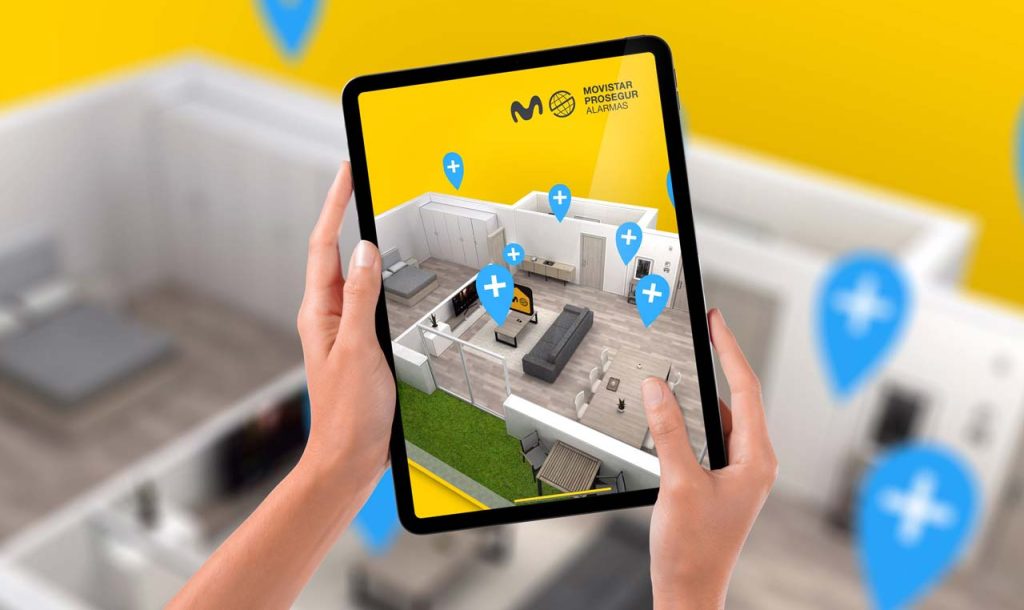
Touch screens create an interactive experience where customers can intuitively explore products and services. A great example of how touchscreens can be used in retail is the Movistar-Prosegur Alarms project which was part of a Augmented Reality (AR) app on a touch screen. Users could visualize a virtual home, interact with its elements and see how Movistar products worked in real time, enhancing the customer experience by giving them a more realistic view of how services would work in their own home. This type of display not only facilitates product browsing, but also allows the user to customize the experience offering a fluid and modern interaction for consumers.
Augmented Reality and Virtual Reality
Augmented Reality and Virtual Reality technologies are transforming retailtainment, providing immersive experiences that take customers beyond the simple purchase. The Body Shop carried out a Christmas action at the Atocha station, where they installed a interactive showcase and a photocall AR . Visitors could participate in product sweepstakes by taking a photo, interacting with the showcase and sharing their experience on social media. In an example of Virtual Reality, the Frozen Emotion campaign was designed to promote the Aramón ski resort ski passes. Customers had to cross a virtual suspension bridge in the Aragonese Pyrenees in order to "ski" in the VR experience, which was not only an innovative way to attract customers, but also engaged participants in an exciting and immersive activity. Take a look at our services→ Virtual Reality for companies and Augmented Reality for companies .
Immersive sensory experiences
The concept of immersive sensory experiences goes beyond visualization, involving all the senses to create a unique experience. One outstanding example of this type of experience is the Love Natural project, carried out in the Grancasa Shopping Center where the center was transformed into a virtual jungle filled with interactive animals. Customers experienced a phygital experience The new program, a fusion of the physical and digital worlds, not only allowed them to interact with the elements of the jungle, but also to enjoy a unique sensory experience as they wandered through the stores. This experience prompted the cross-selling It encouraged visitors to explore different stores within the mall, all while immersing themselves in an interactive experience that reinforced the emotional connection with the brand.
How retailtainment is adapting to new technologies
The retailtainment is evolving at the pace of new technologies, turning every store into an interactive environment where emotion and innovation go hand in hand. Tools such as Artificial Intelligence, Augmented and Virtual Reality, 5G or digital twins enable the design of personalized, immersive and connected experiences, transforming shopping into a memorable journey. The customer no longer just comes in to buy a product: he/she comes in to discover, play and experience something unique. In this context, companies like Imascono are leading the change by integrating these technologies into physical and digital spaces. From virtual showrooms to interactive filters and phygital spaces, this approach proves that the creative use of technology enhances the experience of purchase and creates emotional bonds long-lasting between brand and consumer . If you are interested, you can visit here the post on Branding Trends
The future of retailtainment: beyond in-store entertainment
Retailtainment is the natural evolution of retail in a world where attention is the most valuable resource. But its future goes beyond simple in-store entertainment. What is coming is a total fusion of brand, technology and emotion experiences that accompany the customer before, during and after the point of sale. The new retailtainment will be omni-channel, phygital and predictive . We will see physical stores that extend into the virtual world, storefronts that converse with the customer's cell phone, and experiences that start in social networks and culminate in sensory spaces. Brands will no longer compete to sell a product, but to offer moments and experiences that generate community, identity and loyalty. In this scenario, the creativity will be as important as technology . The brands that succeed will not be those that simply entertain, but those that inspire. Because the retailtainment of the future will not only surprise, it will invite you to dream. The future of retailtainment also involves the use of Artificial Intelligence at the service of the consumer.
Improve your store's retailtainment with immersive technology from Imascono
At Imascono we transform stores into living experiences. thanks to immersive technologies such as Augmented Reality, Virtual Reality and gamification. We create spaces where customers not only buy, but also get excited, interact and remember. From virtual showrooms to interactive installations, we design customized solutions that connect with the consumer through wonder and innovation. Whether in the physical, digital or phygital environment, we help brands to go one step further in their branding strategy. retailtainment . Because in a market where experience is everything, offering something unforgettable is not an advantage, it's a necessity. Do you want to take your store experience to the next level? At Imascono we help you to create immersive spaces that connect with your customers from emotion and innovation. Contact with us and let's design together the future of your brand.
What is digital branding and how to enhance it with immersive technologies?
In a world where brands compete daily for a place in the mind (and heart) of the digital consumer, it's no longer enough to stand out... you need to connect . The branding digital has evolved from being a simple visual showcase to an immersive experience that should excite, attract and inspire . Digital branding encompasses all the elements that define how a brand lives in the online environment: from its graphic identity to its tone of voice, including the user experience in digital channels and the consistency of its presence on multiple platforms. However, in an era dominated by immediacy and content saturation, standing out requires more than just moving the brand to the online world. It requires impact, differentiation and emotion. This is where immersive technologies such as Extended Reality or Artificial Intelligence come into play. These tools make it possible to create memorable, interactive and personalized brand experiences that not only communicate, but also build authentic bonds with the audience. At Imascono we call it: technology applied to branding .
What is digital branding and why is it essential for your brand?
The digital branding of a brand is much more than an attractive design; it is the personality and essence of your brand in the online world. It encompasses everything that defines your digital identity: from the design on social networks to the tone of your interactions, through the experience on your website, brand actions and even the look and feel of the virtual assistant AI y la how it relates to your audience . You can learn more about this topic at Technological Trends in Branding and Branding
Why is it essential?
Because in the digital age, brands no longer compete not only for attention, but also for emotional connection. . Today, having an online presence is not enough. Brands that do not work on their digital branding run the risk of being irrelevant or going unnoticed. Consumers are looking for authentic brands, with values and personality. Good digital branding not only highlights your identity, but it also increases confidence , generates memory and differentiate your value proposition against the competition. It is the bridge that transforms your company into a brand that consumers will remember. However, in this article we want to go beyond the most well-known digital branding actions such as social media, videos and websites. We want to delve deeper into the experiential marketing in the use of technology for moving from storytelling to storyliving, from being mere spectators to being part of the action . Branding actions that work for all types of industries, especially in the retail technology . Where creativity and emotional impact are combined with technological knowledge and innovation. Seeking to surprise and at the same time make marketing actions much more efficient, effective and with great impact generation. As the project developed by Disney and Ferran Adrià, Your Story in the Kitchen a virtual kitchen that accompanies the reading of the great Spanish chef's recipe book.
How to achieve digital branding with immersive technologies
Brands that aspire to stand out in the digital age can't just communicate: they must create memorable experiences. . Immersive technologies, such as the Virtual Reality the Artificial Intelligence or the gamified virtual environments enable brands to establish a deep emotional connection with their audiences, facilitating a lively, interactive and adaptable digital identity. Below, we explore four keys to activate an innovative and differential digital branding with these technologies.
Virtual customer experience: innovation in e-commerce
The customer experience no longer starts in the physical store, or even on the web: it starts at the virtual environment . Thanks to technologies such as Augmented Reality or 3D digital models, users can explore products, try them digitally and even experience personalized simulations before making a purchase. This integration transforms the traditional e-commerce into a immersive, emotional and decision-driven experience. which increases dwell time, trust and conversion. If you are interested in this topic, we invite you to read the following article 5 e-commerce trends for online success .
Avatars as brand ambassadors
Hyperrealistic avatars allow to humanize technology and generate new forms of brand-user interaction. They act as personalized assistants, personal shoppers or even as virtual ambassadors who reinforce brand values and accompany the user on his digital journey. . Examples include Nougat the virtual mascot of La Torre Outlet, Smoky, the virtual chef of the Nola Smoke o Clara, the Progreso's sustainability ambassador are some of the examples of the use of humanized Artificial Intelligence through avatars. At the branding level, they can also be developed as virtual influencers that work with storytelling and UGC (User Generated Content) strategies, or as a personal shoppers which, thanks to generative AI, can make personalized recommendations, such as the case of the virtual assistant of the Saphir Parfums Group that recommends the perfect perfume for each user.
Engagement in interactive spaces
Digital spaces are no longer static; they become living, interactive and connected environments. Virtual showrooms, smart maps or 3D experiences accessible from any device allow brands to present their products or services in an attractive, gamified way.In the physical world, these interactive spaces make it possible to turn corners, shop windows and fitting rooms into points of connection with the brand. Where brands no longer just communicate, but play and connect with customers. This interaction not only boosts engagement, but also provides valuable data on user behavior, enabling more strategic, results-oriented decision-making. One example of this is the augmented photocall for Thor Ragnarok developed at Kinépolis cinemas for the film's premiere.
Immersive brand experiences
Immersive branding makes the user the protagonist. Activations such as Virtual Reality simulations or AI-based conversational agents translate the brand narrative into tangible, memorable and shareable experiences. These tools not only have an impact, but also generate recall and virality, becoming key allies for any digital positioning and notoriety strategy. Some examples of this can be found in the brand experience. Frozen Emotion where through VR glasses users crossed a suspension bridge high in the Pyrenees. Or the immersive mobile game developed by Foster's Hollywood where diners had to hunt zombies while waiting for their orders during the Halloween season.
Outstanding examples of digital branding: Success stories
At Imascono we know that a good digital branding is not only designed, it is also lived. That's why we collaborate with visionary brands that are committed to fusing creativity, technology and experience to make their mark in the digital universe. Here are four success stories where digital branding comes to life:
Hispano Suiza
How do you translate more than a century of elegance, innovation and automotive spirit into the digital environment? With a revamped and improved infotainment system and a mobile app that incorporates new driver customization options enjoying a tailor-made 100% experience. A new technology system and in-car app focused on driver experience and well-being. 120 years of automotive history driven by technology.
L’Oréal Academy
L'Oréal is not only a leader in cosmetics, but also in digital innovation. With its L'Oréal Academy virtual we created a immersive training platform where influencers and beauty professionals access exclusive content, interact in personalized spaces and live the brand like never before. A shining example of how digital branding can also educate, connect and build loyalty.
Exclusive
When exclusivity, community and technology come together, something extraordinary is born: Exclusiverse. The world's No. 1 travelers' club, Exclusive Traveler Club, opens its virtual headquarters to bring its more than 85,000 members together in one place. A space for community and digital membership development where meetups and talks are organized and exclusive benefits are shared. Making the travel experience come alive before, during and after the trip.
Rafa Nadal Museum
Thanks to technology, the Rafa Nadal Museum is transformed into an interactive experience full of action, games and unforgettable family moments that invites visitors to the sports museum to become the real protagonists. A form of branding that celebrates Nadal's personal brand through emotion and technology.
Boost your digital branding with immersive technologies
Digital branding is evolving, and the brands that make the difference are those that dare to innovate, to take brand actions to new schemes and experiences. Immersive technologies such as Augmented Reality, Virtual Reality or 3D environments are transforming the way in which audiences connect with brands allowing them not only to see them, but to live them. These experiences generate a deeper emotional connection The new technologies, multiply interaction and position the brands as leading-edge referents. At Imascono we help turn your branding into a memorable experience, where your brand story is explored, felt and remembered. Do you want to take your brand to the next level and create experiences that really connect? At Imascono we are experts in fusing creativity, technology and emotion . Contact us at and let's start building together a digital branding that leaves a mark.
How Technology for Children Boosts Child Development: Practical Solutions for Parents
In the digital era, technology has become a fundamental tool for children's learning and development. . Technology offers great opportunities to enhance creativity, critical thinking and problem-solving skills, all while keeping children connected to the world around them. However, it is crucial that these tools are not overused or become a barrier to social relationships. For their impact to be positive, they must be monitored. In this blog post, we explore how technology can be a great ally for children's development when used in a conscious and balanced way We provide practical solutions for parents who are uncertain about whether technology is the best tool for their children's key skill development. The important thing is to find technology projects and tools that are truly designed to support children's learning and growth. These technologies must be created with the needs and well-being of young people in mind. and should be used in a balanced manner to foster an enriching educational experience. With the right guidance, technology can be an ally in developing new skills and preparing children for the challenges of the future. Whether in health, entertainment or education. In this article We will learn first-hand about the main technological projects for children.
How technology affects children: positive and negative impact
The debate on children's use of technology is currently raging. Today everything is inherently digital and young people, also known as digital natives, are growing up in a world where technology is the key piece of the puzzle. . However, parents, pediatricians, psychologists and teachers are increasingly aware of the impact technology is having on children's development. Both positive and negative. In addition, after a few years of implementing new digital tools in classrooms and educational systems, it is becoming clear that the use of these tools is becoming more and more important. impact has not been entirely positive Is this due to the technology as such or perhaps to its indiscriminate use, without clear guidance and supervision? In this section we want to delve into the positive and negative aspects of the use of technology by children. Where the conclusion is clear: technology has not come to replace traditional educational systems, but to enhance and enrich them with new activities. Success lies in the correct and supervised use of the technological experiences that children have, both in the classroom and at home. If you are interested, learn more here about the Technology trends for children
Abuse of technology in children: negative impact
The abuse of technology in children can have several negative effects, especially when it is not managed properly. In the educational environment, digital learning, while useful, can depersonalizing the interaction between students and teachers, reducing the emotional and social component of teaching . In addition, unequal access to educational devices and platforms can widening the digital divide leaving some children without the tools they need to take advantage of educational opportunities. Outside the school environment, constant exposure to screens can lead to social isolation Children may prefer to interact through devices rather than participate in group activities or outdoor play. Also, excessive use of technology can affect children's physical and mental health, contributing to problems such as sedentary lifestyles, sleep disturbance and digital anxiety. Especially if they are not taught to balance screen time with other activities.
Positive impact of technology on children
When used in a responsible and balanced way, technology has the potential to be a powerful tool in children's development. Regarding the technology in education allows the access to resources and interactive platforms that facilitate more personalized and engaging learning, stimulating creativity and critical thinking. Tools such as the Virtual Reality In addition, programming and educational games allow children to learn in a more immersive and fun way, enhancing their curiosity and understanding of complex concepts. In addition, technology facilitates global connectivity, allowing children to interact with other children from different cultures, learn languages and access information that expands their view of the world. . Outside of education, apps and platforms designed for entertainment can also offer educational experiences, helping children develop cognitive, social and emotional skills while playing. Bottom line, when technology is used with purpose and oversight, it can enrich children's lives, preparing them for a more connected and opportunity-filled future. . The challenge lies in finding the right balance . By integrating technology in a positive and controlled way, we can ensure that children enjoy its benefits while developing key skills for a digital future. At Imascono we are betting on a conscious and constructive technology a humanization of technology creating a healthy digital environment for the new generations.
How to introduce children to technology?
As we have seen in the previous section, children's use of technology is not the problem. The problem is the o bjective being pursued, whether these digital tools are adapted for them and if they have been developed with young people, their health and integrity in mind. With this in mind, how do we introduce children to the correct use of technology? This is one of the big questions of the digital era. At Imascono, we believe that this challenge is crucial to its development and must be addressed with a balanced approach that combine learning, play and active parental supervision.
A key strategy is to start gradually, providing access to age-appropriate educational apps and games. This not only sparks their curiosity, but also fosters essential skills such as problem-solving and creativity.
The active involvement of parents is also essential: selecting appropriate content and accompanying children in their digital activities to guide their experience and ensure their safety online.
Another important point is to promote a balance between the digital world and the real world, seeking to combine both spaces and helping children become aware of their differences and what each one brings them.
Encourage experimentation
The technology for children allows them to experience and learn through hands-on experience. . Encouraging the exploration of technological tools such as programming or the creation of digital content is essential to enable their learning and creative development in an effective and controlled manner. This experimentation thanks to technology can also reach other areas, such as the business and entrepreneurship as in the case of the Ibercaja Foundation Learning to undertake which has both a virtual campus and a fair of cooperatives from different schools that can be accessed online.
Supervise the use of technology
It is essential that parents supervise their children's use of technology, monitoring the applications and platforms they use. With tools such as virtual tutors for children, it is possible that The youngest children can interact with, for example, Artificial Intelligence, in a controlled environment designed for them. Where inappropriate content has been filtered out and where the digital experience is intended to be educational and close to them. An example of AI developed for children can be found at Nougat the avatar IA storyteller of La Torre Outlet .
Providing various options
To offer a variety of experiences is key to children's development. With technology, we can encourage interaction with different tools, seeking to promote fast and effective learning in an immersive and educational way. From interactive avatars to virtual environments, to more physical experiences in the real world. One example of this is the technological development for the Rafa Nadal Museum . Where the museum experience is transformed to to turn it into a sporting event for the whole family. Playing tennis, soccer, basketball... with Rafa Nadal himself. .
The benefits of technologically accompanied children
Technology for children, when used properly, offers numerous benefits that go beyond the educational realm, aiding in their cognitive, emotional and social development. Tools such as the Virtual Reality y la Augmented Reality provide immersive experiences that allow children to interact with their environment in new and stimulating ways. A clear example of how Virtual Reality can enhance learning and development is the project developed by KAI XR, an educational VR platform for children that allows them to to know first hand the Pyramids of Egypt the seabed and even space. On the other hand, the Augmented Reality integrates the digital with the physical environment, allowing children to interact with virtual objects and characters in the real world. As in the case of Lacasitos App where children can interact with different cartoons through its iconic tubes of chocolate dagrees. This combination of technology makes the learning to be more attractive It also fosters curiosity, problem solving and the development of essential technological skills for the future. With the right accompaniment, technology becomes a powerful tool for the integral growth of children.
Adapting Technology for Children: Practical Examples from Imascono
At Imascono, we understand that technology must be a tool that not only entertains, but that also educate, inspire and support development children's integral development. Since we launched the Chromville educational app in 2013, which at the time had more than 1 million downloads and a presence in more than 120 countries, children have always been part of the spirit and philosophy of Imascono's technology. . Together with Disney, Fundación Ibercaja and different public administrations, we have worked on the creation of innovative solutions that address diverse needs and contribute to meaningful learning . Here we would like to introduce you to some of them examples of how we adapt technology for the benefit of young people:
Chromville→ An educational Augmented Reality app in which the drawings colored by children come to life in 3D. Through its various themes (nature, technology, the human body, or space), children learn to develop their creativity and imagination.
Tu cuento en la cocina → Can you imagine cooking your favorite dish alongside Mickey Mouse, Tony Stark, or Elsa? You can do it with the Tu Cuento en la Cocina app, developed for Disney, Ferran Adriá, and Telefónica. All through a virtual kitchen where you can play as a family and create your own comic-style recipe book.
ApeTest → In the field of mental health, we highlight ApeTest, the project carried out by Fundación APE and the Aragon Health Research Institute. An interactive web app designed to detect cases of ADD among children and adolescents, adapting traditional clinical questionnaires to the virtual world.
These projects are just a few examples of how Imascono adapts the technology for the benefit of children, creating solutions that are not only innovative, but that also foster their integral development in an environment that is environment safe and controlled . Are you interested in learning more about how to implement new technologies in children's development ? Discover our digital product lines and get in touch with us. contact with us . Our team of engineers and designers will be happy to answer all your questions.
Humanizing technology as a current challenge: meaning and strategies
In an increasingly digitized world, technology has transformed every aspect of our lives, from the way we communicate to how we work, learn, entertain and socialize. However, this great digital transformation has also created a divide. Between generations, between technological capabilities, and between our selves in the face-to-face world and in the digital world. What's more, there are tools that, instead of facilitating, sometimes dehumanize interactions. In this context, humanizing technology has become a crucial challenge to ensure that technological developments respond to people's emotional, ethical and social needs, promoting more meaningful and accessible connections. Humanizing technology does not only imply making it more intuitive o easy to use but also to design with a human values-based approach: empathy, inclusion and wellbeing . In this article we will delve deeper into the meaning of humanizing technology, proposing key strategies to build a future where technological innovation is aligned with the human.
What it means to humanize technology
Humanizing technology involves designing and using technological tools that prioritize people in their conception, use and purpose. Training technological advances to adapt them to human needs, emotions and behaviors, with the aim of improving the experience and facilitating the interaction between people and machines . It's not just a matter of creating more user-friendly interfaces or more intuitive systems, but also of ensuring that these technologies respect and promote human values such as empathy, inclusion and equity. Ensuring that technology is not only functional, but also meaningful and accessible to all. In essence, humanizing technology is an effort to make machines fit people, not the other way around. This concept also encompasses ethical and responsible design of technological tools, ensuring that respect privacy , reduce inequalities and promote wellness . The humanization of technology recognizes that behind every digital interaction is a person with emotions, expectations and rights. The company seeks to minimize the negative impact that technological solutions can have in terms of emotional disconnection or exclusion. In doing so, it not only improves the user experience, but also fosters a more balanced relationship between people and the technologies around them. You may be interested in → Customer experience: how to improve it through extended reality .
Benefits of humanized technology
The benefits of humanized technology go beyond technical functionality: improve the user experience , strengthen emotional connections and promote inclusion . By humanizing technology, companies can achieve great advantages and opportunities, some of them are:
Improved user experience
Humanizing technology significantly improves user experience by focusing on the needs, behaviors and concerns of the people who are interacting with it. If these interactions are more natural and intuitive, technology can better adapt to their preferences, offering personalized experiences. Technologies such as Artificial Intelligence and its virtual avatars The use of the database and previous training allows anticipating the needs of the users.
New interactions
One of the most relevant benefits of the humanized technology is its ability to create new interactions between users and digital platforms. As technologies become more intuitive and adaptable to human needs, traditional forms of interaction, such as clicking buttons, programming code or typing commands, are transformed into more natural and human experiences. The incorporation of Artificial Intelligence (IA) and virtual assistants allows users to interact with systems through the use of spoken language The technology barrier is reduced, as if they were having an ordinary conversation with another human. This reduces the technological barrier produced by traditional interfaces.
Digital empathy
Digital empathy allows technological interactions to be closer, more comprehensive and sensitive to users' emotions and needs. Through the use of Artificial Intelligence (AI) and Natural Language Processing (NLP) In addition, technology platforms, especially chatbots and virtual assistants, can adapt their language and tone, responding appropriately. This ability to understand users' emotions and tailor responses accordingly enables brands to offer a more empathetic and attentive service, which improves the overall experience and the user confidence in particular.
Building confidence in technology solutions
By tailoring digital interactions to users' emotions and needs, platforms create a more transparent and trustworthy environment. This makes users feel comfortable relying on the technology not only to solve problems, but also to manage your data and make important decisions. The incorporation of ethical values and the protection of privacy strengthen the credibility of technological solutions, demonstrating a commitment to the well-being of users. Humanizing technology helps build the trust necessary for long-term customer relationships.
Key strategies to achieve the humanization of technology
In an increasingly digitized world, humanizing technology has become a necessity to improve the relationship between users and technology platforms. To achieve this, companies must adopt key strategies aimed at improving user satisfaction and thus build long-term trust and loyalty. Some of the key actions and approaches are as follows:
User-centered design
Putting the user at the center of the design is key to humanizing technology, creating accessible and intuitive experiences . Simple, customized interfaces facilitate use and improve interaction. In addition, technologies such as the Artificial Intelligence and data analysis make it possible to anticipate needs and offer customized solutions. Ultimately, this not only makes the technology more user-friendly, but it also strengthens the emotional bond with the brand increasing trust and loyalty.
AI with human focus
Thanks to verbal language and emotion processing, the AI achieves more natural interactions by adapt to the context and emotional state of the user . Thus, systems not only fulfill specific functions, but also incorporate personalization and empathy, offering more accurate and tailored responses to each individual. This human approach with AI technology not only enhances the user experience, but also reinforces trust and emotional connection.
Emerging technologies
Emerging technologies play a crucial role in the goal to humanize technology, since, as we have seen throughout the article, they enable create more natural, accessible and empathetic experiences for users. Among these technologies, the following stand out Augmented Reality the Virtual Reality the Artificial Intelligence and technology Blockchain . By integrating these innovations, brands can deliver immersive experiences that connect emotionally with users. This helps overcome the barrier between the digital and the human.
The future of humanizing technology through Imascono
Humanizing technology is a major challenge. At Imascono we believe that technology should be accessible, natural and exciting, breaking with the idea that it is something cold or distant. Our vision is based on the Applied Imagination, a methodology that transforms the way we interact and understand technology. With this philosophy in mind, we create experiences through our Virtual Reality services and Augmented Reality for companies that are not only creative and entertaining, but also connect emotionally with users. We place the human being at the center of all our projects, designing solutions that prioritize their emotions and needs . For us, it's not about innovation for the sake of it, but about developing technological advances with those who really matter in mind: people. This approach allows us to building a future where technology is more human, closer and meaningful . Want to learn more about our humanized vision of technology? Contact with us and we will be happy to talk about the present and future of this great challenge.