Virtual storefronts: how to capture and improve your customers' attention
According to the latest Accenture studies, 45% of consumers believe that their shopping experiences are boring. . The retail sector needs to change this data, it needs to surprise, innovate and leave a mark in the memory of users. To this end, new technological proposals are being born: enlarged photocalls virtual fitting rooms, interactive corners, intelligent personal shoppers... and even the trend of the virtual shop window, designed to revolutionize the way physical stores interact with customers. Thanks to immersive technology and the integration of Augmented Reality, the D.O.O.H trend and interactive digital displays, window displays are no longer just static showcases, but interactive experiences that capture attention even before the customer enters the store. These innovations not only enhance product visibility, but also create an emotional connection with consumers by inviting them to actively participate in the shopping experience. In this article, we'll explore how virtual storefronts can transform the way brands attract customers, boosting interaction and engagement right from the start. In addition, we will show you real cases of success created by Imascono where innovation and creativity have led brands such as The Body Shop and El Corte Inglés to conquer the market. phygital world Are you ready?
How can a virtual storefront benefit your store?
A virtual storefront can be a very powerful resource for transforming the shopping experience in your store by combining visual appeal with digital interactivity. This not only increases visibility of the brand and your products It also generates a memorable experience that fosters curiosity and the desire to learn more. If we look at its definition, a virtual showcase is a digital tool that modernizes traditional showcases by integrating technologies such as Augmented Reality and interactive displays . It allows customers to explore and experience products in a dynamic and immersive way, transforming the static showcase into a more engaging and modern shopping experience.
In addition, a virtual storefront optimizes the use of the physical space, providing a competitive advantage by allowing the store to connect with consumers in innovative ways, even outside of operating hours. Below, we will discuss the top three benefits of using virtual storefronts for brands:
Space optimization
A virtual showcase allows optimize the use of physical space in an efficient manner . By incorporating interactive technologies, such as digital screens and Augmented Reality advertising content In addition, storefronts can offer dynamic visual experiences without the need for a large physical display space. On the other hand, thanks to the interaction data collection In this way, it is possible to adapt content in real time, adjusting it to the customer's preferences and behaviors. This personalization capability allows brands to offer a unique and relevant experience, maximizing the impact of each display and ensuring that the showcase evolves according to consumer trends and specific campaigns.
Digital Out Of Home (D.O.O.H)
Virtual storefronts fit perfectly into the trend. Digital Out of Home (DOOH) which has gained great relevance in recent years. Through digital screens and interactive technologies, brands have the opportunity to reach consumers more effectively, even outside their physical stores. Virtual storefronts, being connected to the Internet, allow to offer segmented and dynamic messages, based on location, time of day and customer behavior. This omnichannel interaction between the physical and digital world is an innovative way to engage consumers in urban and retail environments maximizing brand visibility and increasing conversion. You can learn more about this trend in more detail in the → post. How extended reality is transforming DOOH advertising .
The user doesn't need any hardware
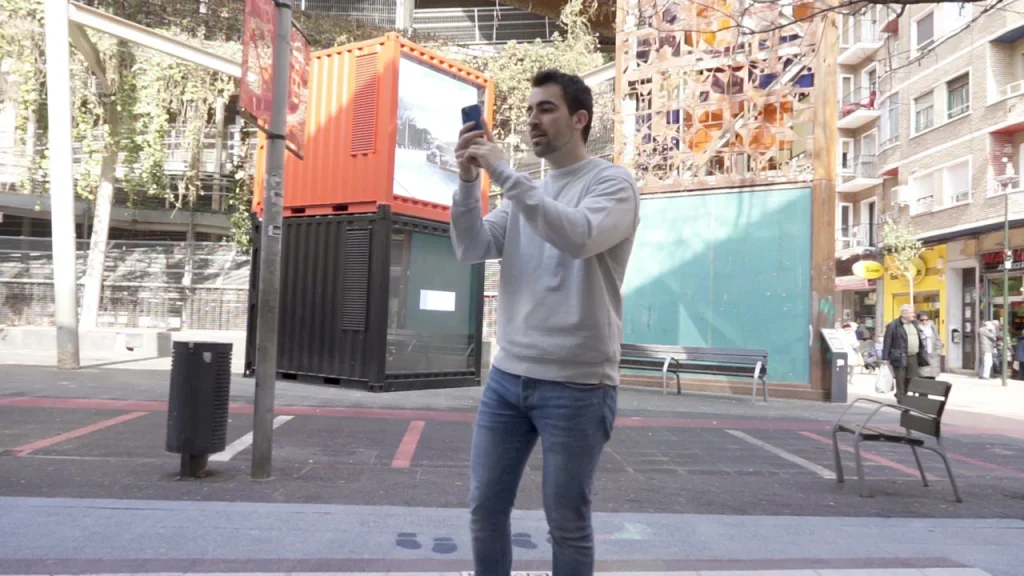
One of the main advantages of the virtual storefronts is that the user does not need additional hardware to interact with products. Unlike other technologies that require special devices such as Virtual Reality glasses or specific mobile applications, virtual storefronts allow consumers to engage simply by using their smartphones or by being near the storefront. This removes barriers to entry, making the experience more accessible to a wider range of users. By not relying on additional devices, the experience becomes more seamless and engaging, increasing the likelihood that customers will interact with content and make purchases.
Features of a virtual storefront that stands out to customers
Today more than ever, shop windows, and in particular, virtual shop windows, must be much more than attractive: they must be smart, functional and memorable . These showcases not only serve to display products, but also become points of connection between the brand and the customer, creating an immersive experience that reinforces branding and encourages immediate action. If you're wondering what a virtual storefront should look like to catch eyes and convert curious onlookers into loyal shoppers, the answer lies in three key ingredients: Creativity , engagement with the public and interactive experience . Let's discover them.
Creativity, branding and experiential marketing
A virtual showcase offers an excellent opportunity to creative branding and experiential marketing that connects emotionally with consumers. By integrating visual elements, augmented reality effects or interactivity, brands can tell immersive stories that reinforce their identity and values. By inviting the audience to from storytelling to storyliving . Virtual storefronts allow brands to go beyond simply displaying products, creating an interactive sensory experience that attracts customers and builds customer loyalty . Through unique experiences, window displays become an extension of the brand's value proposition, increasing recognition and emotional connection with consumers.
Engagement with all audiences
Virtual storefronts are a highly versatile tool, capable of attract attention, generate impact and attract all eyes, regardless of the audience or context. Thanks to their dynamic design and ability to adapt to different environments, they can be effective in a wide range of situations, from the launch of a product to the creation of a seasonal campaign, adapting the elements for Christmas, summer and other important dates. Not being limited by physical space, virtual storefronts can be placed anywhere in the store or public space, inside or outside or in the middle of the mall, capturing the attention of a diverse audience and creating a point of interaction for all customer profiles. In the following link you can learn more about the Retail and Leisure Technology .
Interactive experience
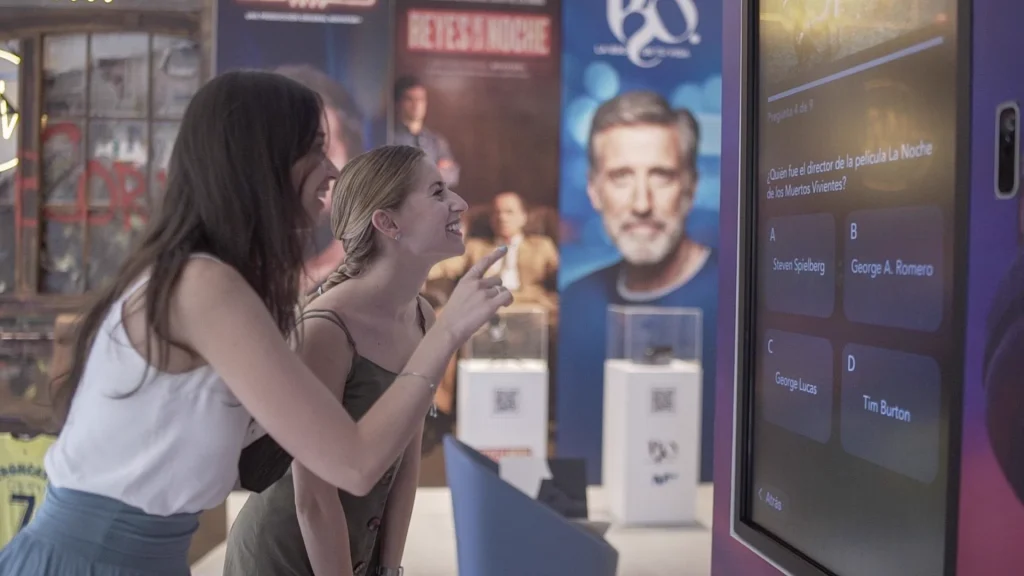
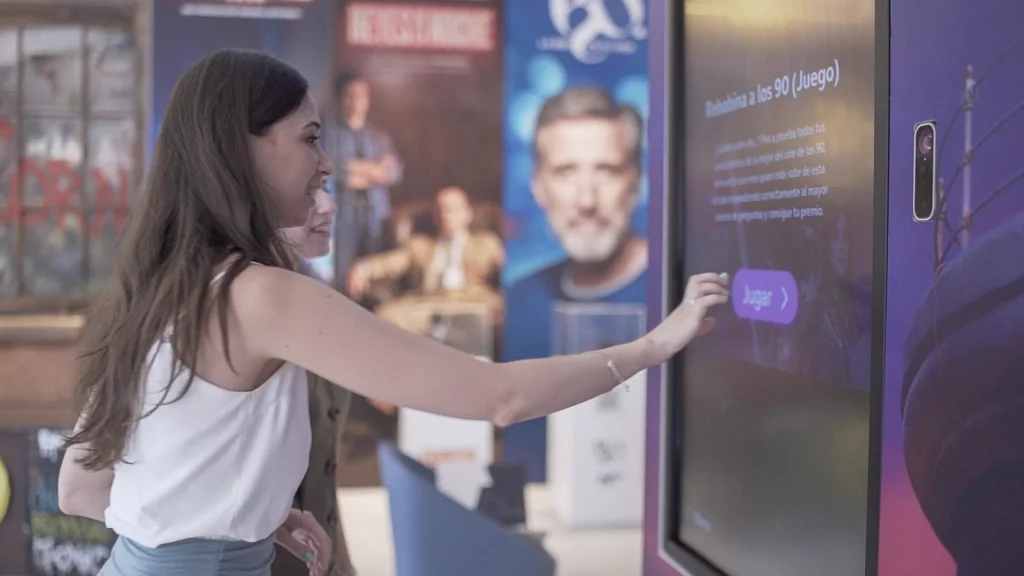
One of the most outstanding features of virtual storefronts is their ability to offer a interactive experience The new photocalls, turning them into an attractive point of contact for the customers. Whether through an augmented photocall, a virtual tester or an interactive game, consumers can actively engage with the products or the brand. This interactivity not only increases engagement, but also allows to generate databases valuable . For example, if customers have to leave their contact information to download a photo or participate in a ranking, the brand obtains useful information for future follow-ups and promotions. This gamified and personalized approach encourages participation and loyalty, creating a more direct relationship with consumers. You may be interested in → How experiential marketing revolutionizes interaction with the public .
Examples of virtual storefronts: Imascono success stories
To talk about virtual storefronts is to talk about innovation, but seeing them in action is what really inspires. At Imascono we have had the privilege of transform the way big brands connect with their customers, through digital experiences that combine creativity, technology and visual impact. These three success stories prove it:
Kimchi! Thor: a movie universe that you don't just see, you live it!
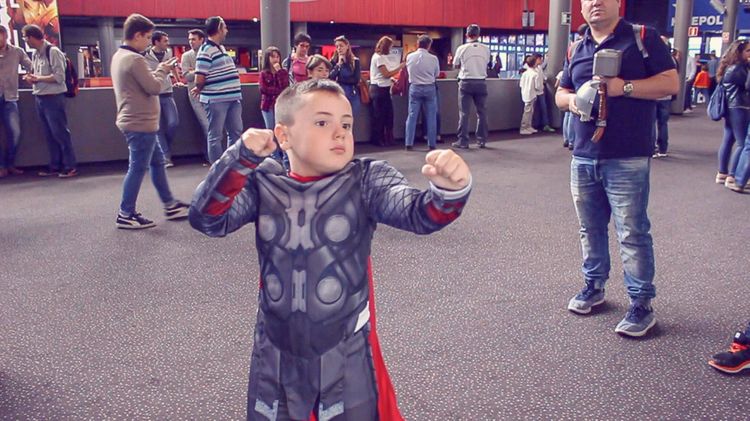
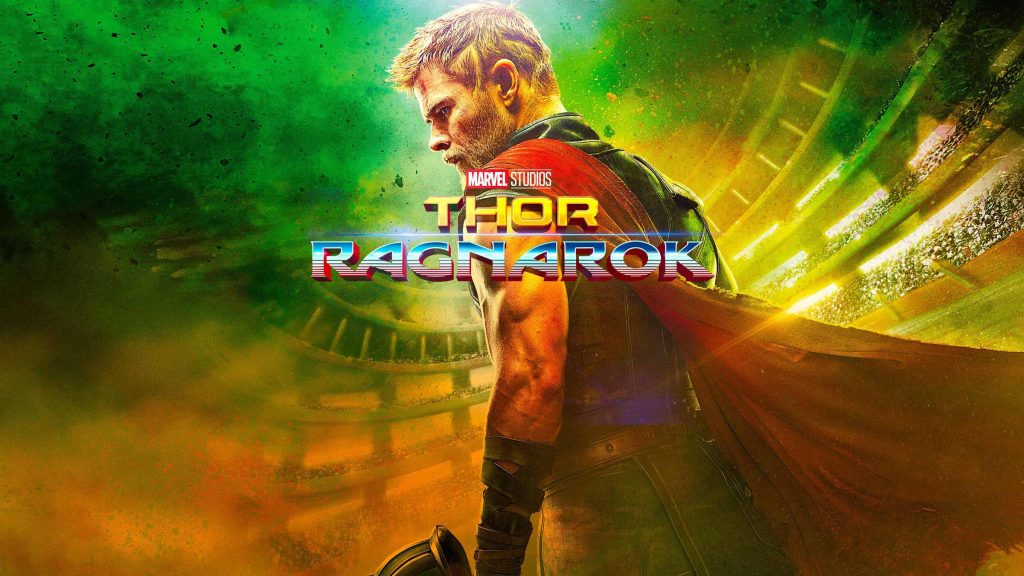
With Kimchi Thor we created a virtual showcase as powerful as its protagonist. Through interactive technology and AR effects, the user not only discovers the universe of the superhero Thor, but can enter into it. Achieving a gamified experience that engaged thousands of visitors and strengthened the branding in an incredible way.
The Body Shop Kimchi!: take home your souvenir with Christmas touches
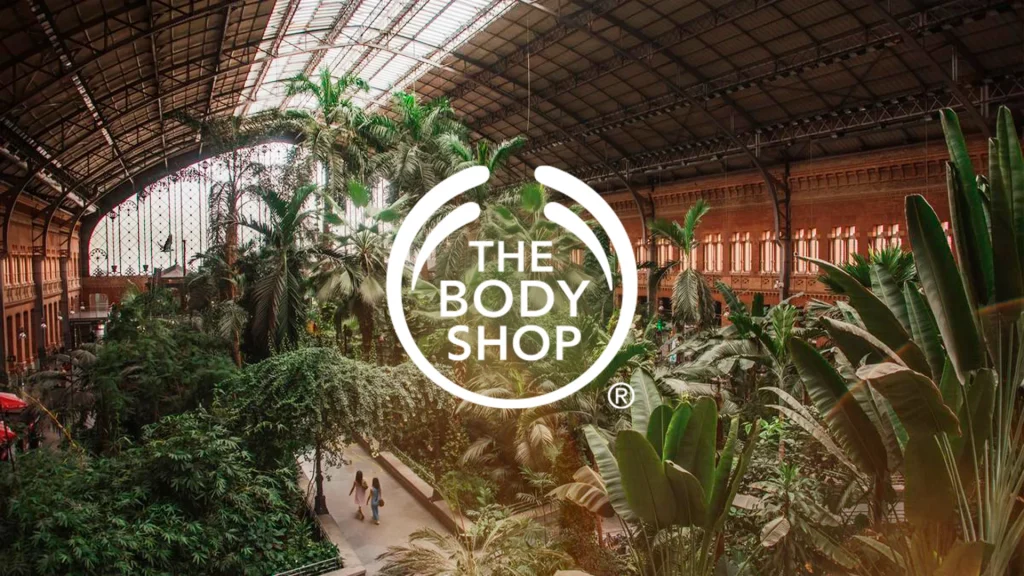
During the Christmas season, The Body Shop transformed the Atocha station in Madrid into an interactive stage that captured the attention of thousands of travelers. With an Augmented Reality photocall In this way, passersby were able to immerse themselves in a sensory experience that combined the essence of the brand with technology. This action fostered an emotional connection with the public, incentivizing sales through rewards such as offers or prizes with a fun touch.
Ibercaja Xplora: connect with your origins
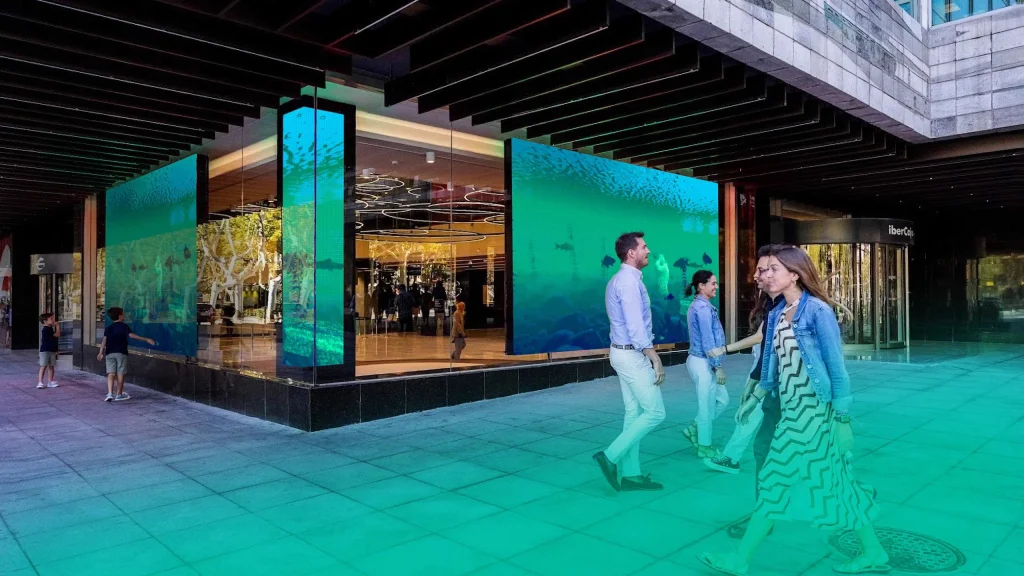
Ibercaja, as part of its commitment to connecting with the public at its headquarters, has designed the Espacio Xplora, which features a range of technology experiences developed by Imascono. One of them is the “Dive into the Ebro” virtual storefront, where every passerby walking past the iconic corner in downtown Zaragoza becomes part of the bank's experience. With this initiative, Ibercaja attracts close to 100,000 users a month, showing how technology can enrich the customer experience and strengthen the relationship with the community.Want to transform the way your customers discover your brand? At Imascono we are ready to design your next virtual storefront, combining creativity, technology and emotion. Contact us and let's talk about how we can take your phygital presence to the next level.
Immersive technology applied to trade marketing: activate your brand at the point of sale
In a world where attention lasts seconds and competition is just a click away, standing out at the point of sale is no longer an option: it's a necessity. The key? Betting on the immersive technology as a driver of experiences that not only catch the eye, but also generate emotions and purchase decisions. In this article you will discover how tools such as Augmented Reality photocalls, Artificial Intelligence avatars or AI virtual avatars are revolutionizing the trade marketing traditional and transforming any commercial space into a sensorial and personalized show. Real cases, courageous brands and groundbreaking strategies that show how to connect with the consumer in an authentic and memorable way. Get ready to immerse yourself in the future of retail, where every action becomes an experience and every experience becomes a sales opportunity.
Why is technology applied in trade marketing essential?
In a market saturated with stimuli, technology applied to trade marketing has become a key differentiating factor. It is no longer just a matter of having a presence at the point of sale, but of activate the brand through immersive experiences that connect with the consumer in an emotional and memorable way. Tools such as enlarged photocalls virtual storefronts or AI-enabled personal shoppers allow for the following transforming a simple linear into a a true sensory and immersive spectacle.
Trade Marketing: definition
Before talking about the impact of technology on trade marketing actions, it is necessary to review its definition. Trade marketing is a strategy that focuses on improving the relationship between brands and buyers to increase visibility and sales at the point of sale. Unlike traditional marketing, which is aimed directly at the end consumer, trade marketing focuses on influencing buyers, i.e. those who make purchasing decisions in different spaces, shopping malls and department stores. Its objective is to optimizing product presence, managing promotions and ensuring a seamless shopping experience to drive sales, maximizing results for all parties involved in the process. If you are interested, you can find out more about the Technology trends in shopping centers Thanks to technological solutions such as the Thor Ragnarok photocall in Kinépolis Cinemas or the The Body Shop interactive promotional action at Atocha Station, brands can capture attention, generate engagement and increase conversion right at the moment of truth: the purchase decision. The integration of technologies such as Augmented Reality, Artificial Intelligence, and data capture platforms, the trade marketing reaches new levels of interaction, connection and impact on shopper experience . In such a competitive environment, applying innovation at the point of sale is no longer just a trend, but an essential strategy to stand out from the competition, build customer loyalty and, most importantly, increase sales. Technology offers brands key tools to improve the quality of their products and services. marketing and the shopper experience The company's goal is to ensure greater visibility and facilitate faster and more efficient decision making in the purchasing process. From Imascono, we can help you through our artificial intelligence services and Augmented reality .
Main immersive technologies applied to your trade marketing actions
The evolution of the point of sale has given way to a new scenario and these tools not only improve the consumer experience, but also enable activate the brand in an innovative and emotionally impactful way . Here are some examples of how technological trade marketing is transforming physical spaces.
Augmented Reality Photocall
Promotional actions come to life through Augmented Reality. In its version Interactive photocall, This technology It turns any point of sale into a unique experience: the user is surrounded by 3D elements in real time and becomes the protagonist of the action. Where not only are all eyes drawn to them, but memorable brand memories and content ready to be shared are created. An example of this can be found in the project. Love Natural Kimchi! one marketing action carried out at the GranCasa Shopping Center In which to immerse yourself in the virtual jungle and take a photo as a souvenir with your favorite animals, you had to make a purchase in any of the stores inside.If you want to know more, visit our article Augmented reality in advertising with interactive content
AI Avatars as brand ambassadors
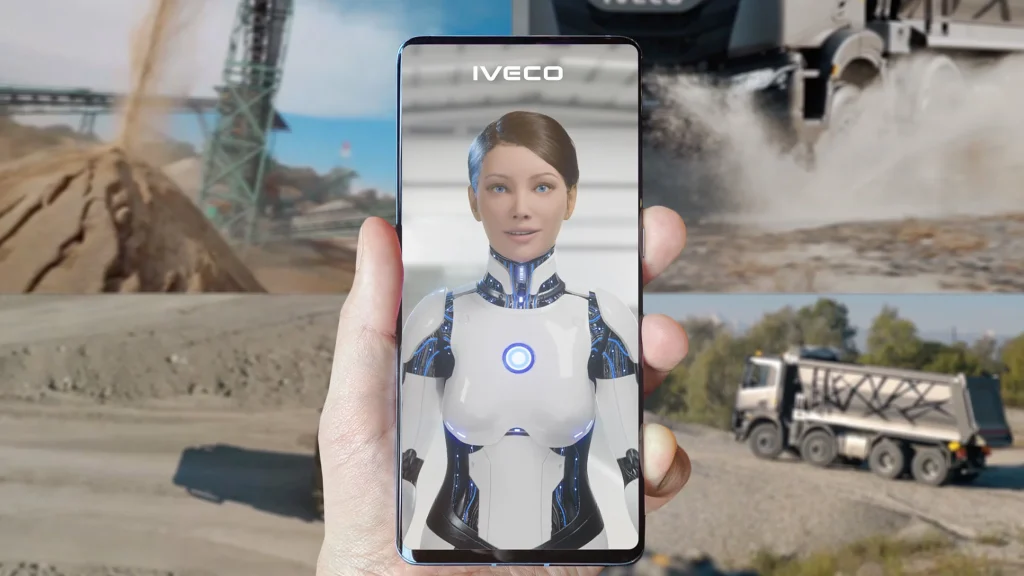
AI avatars are emerging as new brand ambassadors, transforming the way companies connect with consumers. Thanks to Artificial Intelligence, these intelligent agents go beyond being simple virtual assistants: become active allies of the brand. Its use ranges from hosts at events, to virtual influencers or personal shoppers at points of sale . Standing out as one of the most disruptive trends in trade marketing. Humanizing the customer experience in a close, accessible and coherent way with the brand values. These avatars, like Nougat, the virtual mascot developed by La Torre Outlet for the last Christmas campaign, allow maintaining a constant and personalized relationship with consumers by adapting to their behavior and offering answers and recommendations in real time. This reinforces the emotional connection and improves brand loyalty. Discover our intelligent avatar .
Immersive Virtual Reality experiences
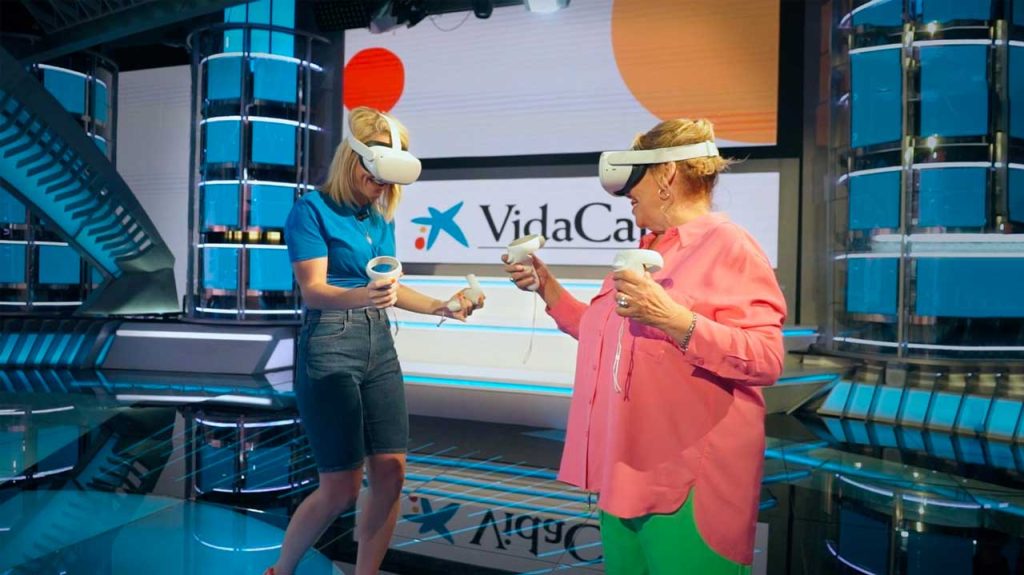
Immersive Virtual Reality experiences are revolutionizing the interaction between brands and customers at the point of sale, offering unique experiences that strengthen emotional bonding and loyalty . A prime example is the Frozen Emotion project developed in collaboration with Ibercaja and Aramon. In this experience, which combined adrenaline and technology, participants had to cross a virtual suspension bridge between two Pyrenean peaks to obtain a ski pass. The integration of physical elements, such as the bridge and the simulated skiing environment, with Virtual Reality, multiplied the emotions and delivered a memorable brand experience . This experiential marketing approach not only captured consumers' attention, but also strengthened their connection to the brand by associating it with positive emotions and unique adventures.
Outstanding benefits of applying immersive technologies in trade marketing
When a brand bets on immersive technologies such as intelligent avatars, actions DOOH The company is not only innovating, but it is also innovating: is reinventing the way we tell stories, connect emotionally and turn physical spaces into authentic experiential platforms. These tools not only activate the brand: they make it live in the consumer's mind. Do you want to find out how?
Increased customer customization
Imagine walking into a store and an AI avatar greets you by name, guides you according to your tastes and recommends just what you were looking for (even though you didn't know it yet!). The intelligent avatars personalize your experience, adapt to the behavior of each customer and create a unique, intimate and deeply connected experience with the brand. It's no longer about selling: it's about understanding and emotion. These avatars act as personal shoppers adapted to the needs of each client. They are the direct connection between the brand and the user, where the company can control the final messages that reach the customer, regardless of the language, geographic location and point of sale where this conversation is taking place.
Differentiation from the competition
In an ocean of brands competing for attention, an augmented photocall or a Virtual Reality experience in the middle of the mall does not go unnoticed. While other brands place static displays or outdated signage, you can immerse the consumer in a 3D scene where he is the protagonist. These interactive experiences generate awareness, position your brand and make a visit a memorable experience. In addition, they make each experience unique, unrepeatable.
Increased conversions
When planning trade marketing actions, it is known that the moment of truth happens in seconds. And when the consumer experiences an immersive experience, whether it's climbing a mountain in VR, visiting a virtual jungle to earn a reward or interacting with an AI avatar that triggers tailored promotions, the purchase decision becomes faster, safer and more emotional. These technologies build trust, remove barriers and turn engagement into action, thereby increasing sales. In addition, all of these actions can include an extra of Gamification where the user wants to be part of the experience, where the user generates better lead generation and conversion rates.
Improved user experience
Shopping is no longer just a necessity, it's an adventure. The enlarged photocalls turn the visit into a memory The result: a multi-sensory experience that transforms every step through the point of sale into something memorable. The result: a multi-sensory experience that transforms every step through the point of sale into something memorable. A journey that the consumer will want to repeat, as in the case of the Movistar Flagship Stores in Valencia . A unique space where visitors can connect with all their favorite series and programs of the channel.
How to integrate immersive technology into your trade marketing strategy?
Integrating immersive technologies into your trade marketing strategy is the most effective way to adapt to an increasingly demanding and digital buyer. . In a market where the user wants it everything and now These solutions offer just what you are looking for: personalization, entertainment and real connection. At Imascono We create this type of experiences for brands that want to go beyond in their trade marketing actions. We merge technological creativity and strategy to activate your brand at the point of sale with experiences that captivate, surprise and convert . Because today, the better marketing is not seen, it is lived. Ready to transform your point of sale into an unforgettable experience? Contact us at and take the next step towards the future through our technology solutions for retail .
What is a virtual space and how to use it
In a society where digitization, digitalization digital transformation and technological innovation is advancing by leaps and bounds, the virtual spaces are positioning themselves as a key tool for businesses that seek to innovate in the way they interact with their customers, employees, audiences and collaborators. These immersive digital environments go beyond the traditional web pages, allowing the interactive experience in 3D and through avatars, combining advanced technology with personalization. From virtual tours to training simulations to gamified sales experiences, virtual spaces are transforming business activities. In this post we will see what a virtual space is and how companies can take advantage of its potential . From optimizing sales processes to training and onboarding. If you are looking for ways to innovate within your organization, read on!
What is a virtual space?
The definition of a virtual space is an immersive digital environment created to simulate real or imaginary scenarios. where users can interact, explore and actively participate. At a business level, they are online spaces that go beyond static web pages, where only products and services are shown. In virtual spaces you can test and interact with them incorporating the essence of video games and gamification to the digital presence of companies. The virtual spaces can be on the web, through WebApps or three-dimensional mobile applications. They can also be developed under the Virtual Reality as the Las Vueltas que da la Vida virtual neighborhood . Or in Augmented Reality as the time travel in the city of Zaragoza prepared by Ibercaja Xplora. Virtual spaces include environments such as video games, the Metaverse, virtual collaborative work platforms and educational applications, and are used in areas such as education, entertainment, teamwork and advertising. Allowing interaction and content creation by users.
Main characteristics of a virtual space
Now that you know what a virtual space is, you should know that they have revolutionized the way people interact, learn, work and entertain themselves, opening up new possibilities for companies of all types. These features not only provide enriching experiences for users, but also offer businesses interesting tools for creating innovative brand experiences , improve collaboration and optimizing performance . The following are some of the main characteristics of the virtual spaces that are being developed. transforming the digital interaction and business landscape.
Constant interactivity
One of the most important characteristics of virtual spaces is their ability to allow constant interactivity between users and the environment. In these spaces, users are not mere observers, but active participants, making the experience dynamic and engaging. This interactivity is maximized through gamification, a technique that uses game mechanics in non-game environments to motivate behavior and participation. For example, companies can integrate gamification elements such as missions , challenges , points and rewards within a virtual space, making the user experience more entertaining and engaging, while fostering brand loyalty and engagement. This is a key feature for companies, as it not only captures users' attention, but also improves retention and promotes loyalty.
Space customization
Another significant advantage of virtual spaces is their ability to be used in a variety of ways. custom according to the needs and preferences of the users. This customization refers not only to the aesthetic appearance of environments, but also to the adaptation of content and interactions. Businesses can create virtual spaces that resonate with the specific interests of their customers or employees, allowing for a more relevant and satisfactory . For example, in a Virtual Reality (VR) or Augmented Reality (AR) environment, a brand can customize the layout of products, advertisements or the user interface according to the user's characteristics and behaviors, which increases the effectiveness of advertising and enhances the customer experience.
Dashboards and analytics
In virtual spaces, the integration of dashboards and analytics is a fundamental feature for monitoring performance and making informed decisions. Companies can collect real-time data on user behavior, interactions, preferences and overall performance within the virtual environment. This allows them to have a detailed view of how users interact with their content, products or services. What it provides valuable information to improve marketing strategies, optimize user experience and adjust business tactics. Analytics can also help identify trends, predict future behavior and measure return on investment (ROI) for promotional activities or virtual events, which is crucial for make data-driven decisions and improve profitability.
Outstanding benefits of a virtual space
Virtual spaces offer a variety of benefits, ranging from the improved user experience and reduced operating costs to the ability to customize the experience and access real-time analytics. These digital environments are transforming the way businesses interact with their audiences optimize their operations and foster innovation. As technology advances, virtual spaces will continue to play a key role in the future of the collaboration, marketing and business strategy.
Gamifying the pre-sale
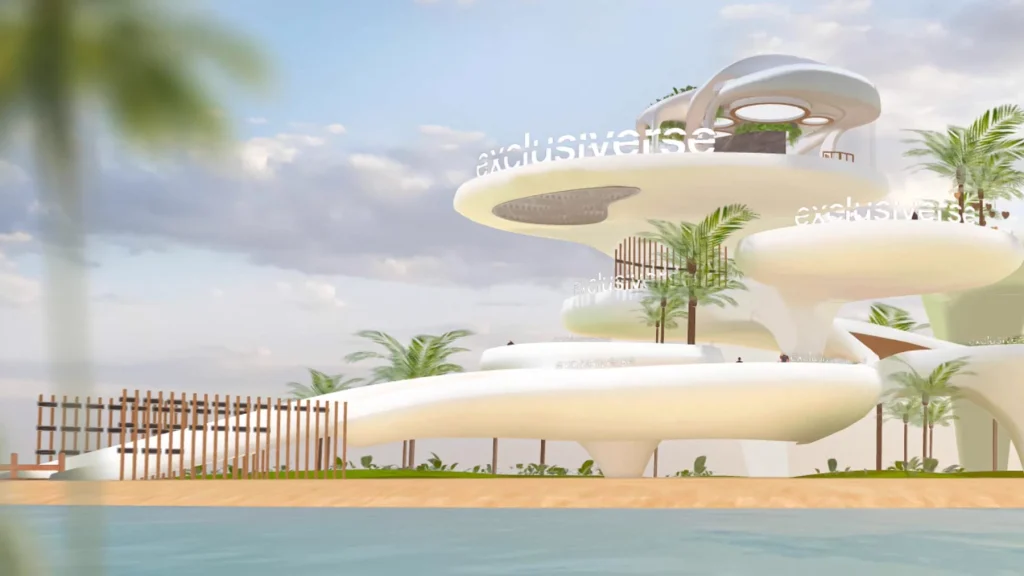
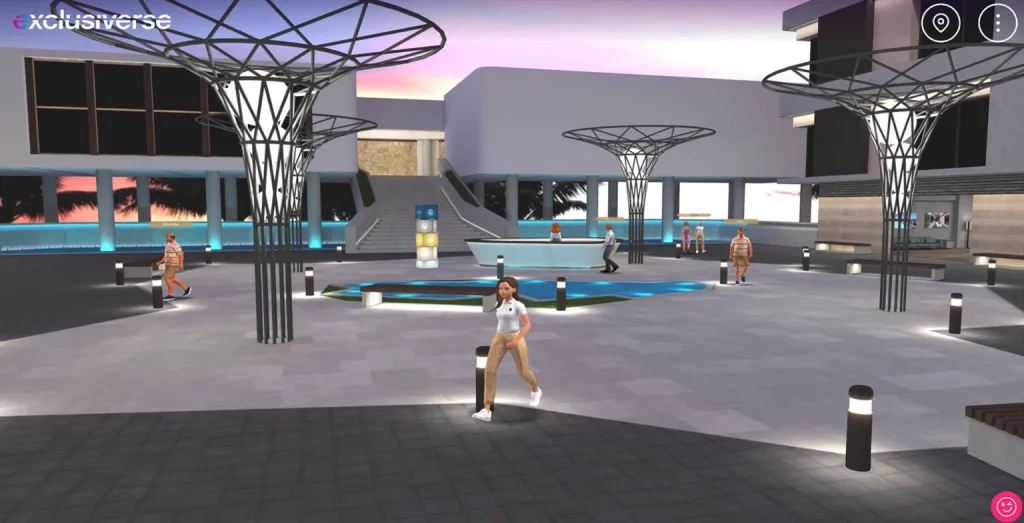
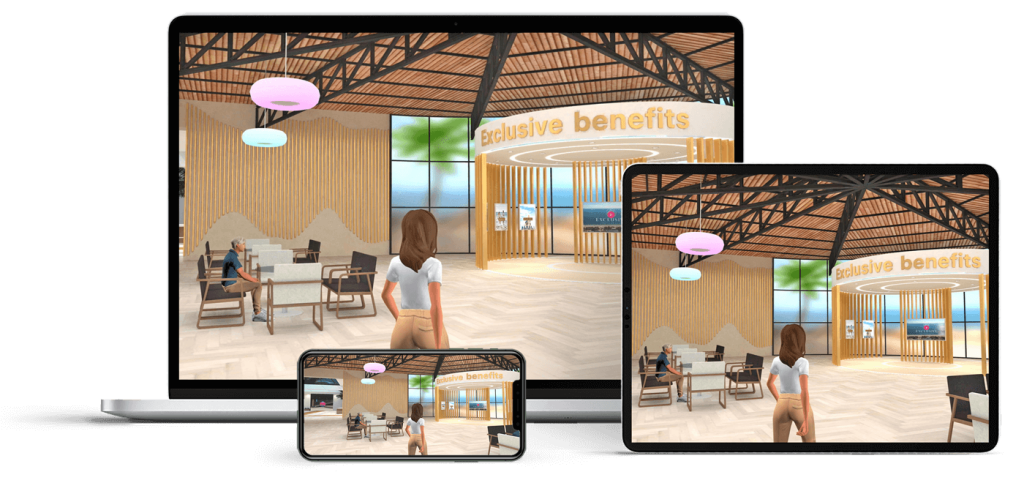
Gamification in the pre-sales stage is an effective strategy for boosting engagement, emotional connection, and loyalty among prospective customers before they make a purchase. Using game mechanics such as challenges, rewards, and missions can make the buying process more appealing and entertaining. One example is Exclusiverse, the virtual headquarters of the travel clubExclusive Traveler Club, where its more than 85,000 members have access to exclusive benefits, prizes, and challenges to make the most of their digital membership.
From storytelling to storyliving
Storytelling has been one of the most powerful marketing tools to connect emotionally with the public. However, we are now experiencing the arrival of the storyliving where the strategy goes one step further. Allowing the customer to live the story instead of just watching or listening to it. In this approach, users are not only observers, but active protagonists of the narrative. Within this trend from storytelling to storyliving, we find, for example, the campaign to approach the Rafa Nadal Academy by Movistar virtual, the 3D recreation of the facilities where through games, challenges and interactive points, users were invited to learn more about Rafa Nadal's academy.
Onboarding and interactive training
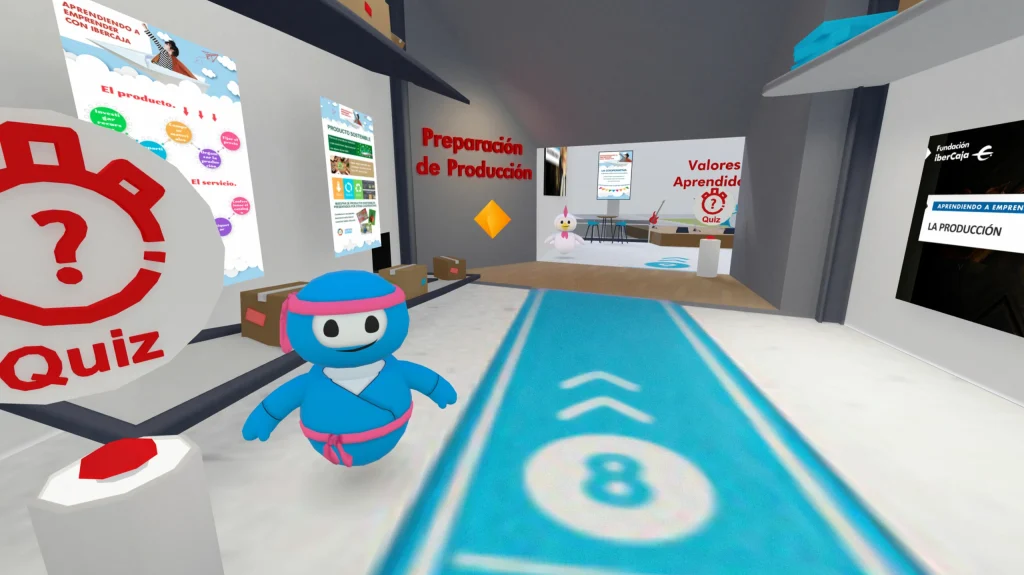
With virtual spaces, the onboarding process and employee or customer training are enriched. Traditional training methods are giving way to interactive experiences that allow users to learn in a more dynamic, engaging and effective way. In a single virtual platform, all of the employee-related processes and activities . Becoming a space for consultation, training and education, incorporating the continuous improvement of workers. Workers, end-users or children, as in the virtual space of Aprendiendo a Emprender developed by Ibercaja. A virtual training space where 5th and 6th grade students learn about entrepreneurship and business, following the gamified itinerary and achieving all the challenges.
Real-time remote collaboration
In the globalized and telework-centered work environment, the remote and real-time collaboration has become especially important. Digital platforms allow teams from different geographical locations to work together and even attend virtual events. Both at the training level and at the corporate level, as in the case of the Iberdrola Shareholders' Meeting held in its own virtual space . Inviting you to shareholders from all over the world to attend the meeting live. and could access all the reports and interactive content distributed throughout the space.
Examples of virtual spaces: outstanding projects
Virtual spaces are a essential tool for companies They are perfect for virtual tours, simulations and interactive product testing. Throughout this article we have seen what they consist of and their benefits. Now, we will see in detail their application in different sectors:
Projects of virtual spaces in education
Virtual spaces in education and training offer immersive, interactive environments that transform learning. From virtual classrooms and labs to gamified activities, these platforms make education more accessible and inclusive. With tools such as 3D simulations, they make complex concepts easier to grasp in a visual, dynamic way, improving knowledge retention and preparing students for real-world scenarios.One example of a virtual space developed by Imascono in this sector is Researchers' Night, which recreated the University of Zaragoza's conference hall to host a gathering of researchers and academics. Thanks to this technology, close to 3,000 people were able to connect at the same time.If you are interested in starting a project in the training sector, check out our education technology solutions.
Projects of virtual spaces in tourism
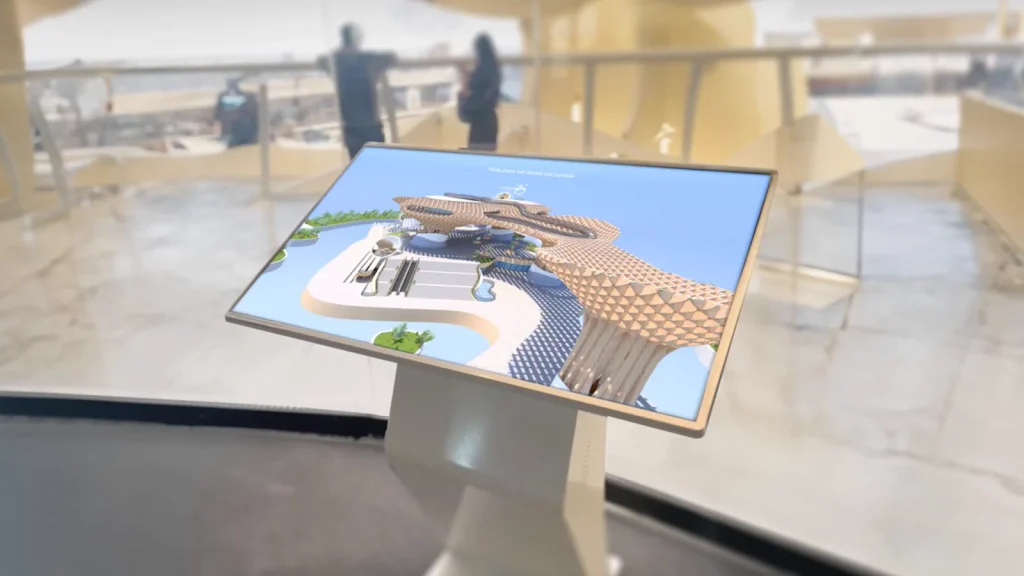
In the tourism sector, virtual spaces are transforming every stage of the journey: before, during and after. During planning, they allow gamify the booking process and offer simulations for tourists to try out experiences before making a choice. During the trip, these environments enhance interaction by providing virtual guides and immersive activities, and, after the return, the virtual spaces maintain the connection with the brand through online events and activities, strengthening loyalty and creating a more lasting relationship with travelers. Like the one achieved by Seville Mushrooms a spectacular digital reconstruction of one of Seville's great monuments . Thanks to its aerial view, visitors and web users can see all the architectural details, obtaining a greater context and interaction with the space. If you want to improve your company, you might be interested in our solutions for technology applied to tourism access and consult all your doubts.
Projects of virtual spaces in health
With respect to the application of technology in medicine The virtual spaces are transforming both patient care and medical education We offer innovative solutions at every stage of the process. These platforms allow patients to have quick access to information and educational content. At the same time, facilitate virtual consultations and immersive therapies incorporating gamification and motivation to achieve the different challenges. In addition, they are a key tool for medical training, as they enable the simulation of complex procedures in controlled environments. Or because they provide access to virtual trainings such as the one proposed by Royal Canin in the First Virtual Congress for Veterinary Clinical Assistants . A three-day meeting with more than 20 hours of presentations and access to the stands of the main companies in the sector.
Projects of virtual spaces in retail
In the retail sector, web-based virtual spaces are transforming the online shopping experience by offering interactive and immersive environments accessible from any device. These platforms enable users to discover products in virtual showrooms, customize your options and test items thanks to simulations web or Augmented Reality experiences. In addition, brands can gamify the buying process, organize exclusive events in these digital spaces and maintain a more direct connection with their customers. These virtual spaces combine innovation and accessibility, providing unique experiences that enhance interaction and reinforce consumer loyalty. An example of this can be found in the virtual showroom of Lekue an interactive house where users can see all the kitchen products to scale and in operation. Imascono is able to implement these innovations thanks, for example, to our augmented reality services . At Imascono we are specialized in the development of Virtual Spaces virtual spaces and gamified environments focused on companies. User-empowered online worlds In addition, pre-sales are gamified and video game mechanics are incorporated into the value proposition of the companies. Interested in learning more about virtual spaces and how to use them? Get in touch with us and our team of engineers and designers will be happy to answer all your questions.
Technology in shopping malls: Innovation that transforms the customer experience
The digital revolution has arrived at shopping malls to turn every visit into a unique experience. Technology is no longer a simple add-on, but the engine driving more dynamic, personalized and immersive spaces. From Augmented Reality and virtual avatars to Virtual Twins and phygital environments, innovation is redefining the way customers relate to their surroundings.But attracting visitors is not enough. The key is to surprise them and build loyalty with unforgettable experiences. Turning the mall's physical space into a meeting place with brands, beyond simply shopping. Solutions such as Artificial Intelligence, gamification and augmented photocalls create seamless shopping journeys, optimize spaces and generate unprecedented engagement.In this article, we'll discover how technology in shopping malls is revolutionizing the retail and leisure sector. We'll highlight the most impactful innovations and show how to implement them successfully with Imascono. If you want to take your retail space to the next level, keep reading.
The technology revolution in shopping malls of the future
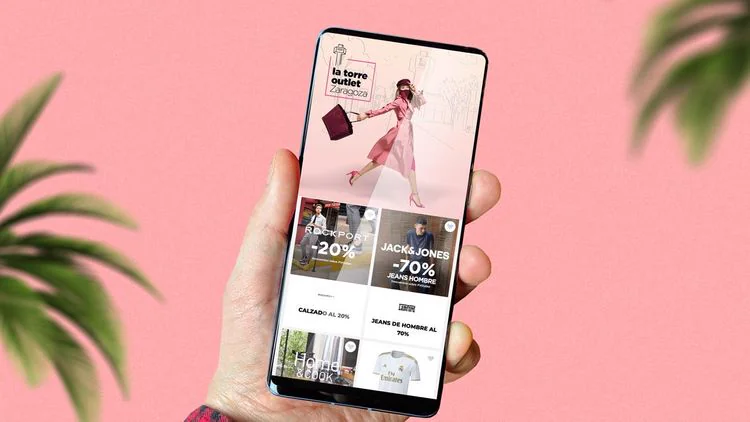
Shopping malls have evolved from simple shopping spaces to become social, digital and interactive environments. And in this paradigm shift, technology is playing a key role in transforming the customer/visitor experience. Interactive corners , customized webapps , Big Data , assistants equipped with Artificial Intelligence. The latest trends in innovation and technology allow us to give a twist to the most traditional shopping spaces. Seeking to create unique and immersive experiences. The retail brands want to return to having a physical presence with their customers The mall is a place to generate encounters, community, a real connection that goes beyond the digital world and social networks. In this trend, shopping malls become that point of physical interaction, with the facilities and technology best prepared to put these experiences into action. If you want to go into more detail, please see our page on Technology in Shopping Centers . A great example of the use of technology in shopping centers can be found at La Torre Outlet the most digitized shopping center in Spain. Thanks to the total technological integration, the center has a CMS, a content manager that connects the app, the web, the screens, the Augmented Reality experiences, the virtual twin of the center, the interactive totems and the internal management in the same program. Facilitating fluidity and flexibility in content updates and allowing visitors to enjoy a hybrid environment that combines the physical and the digital in a surprising way.
Outstanding technological innovations in shopping centers
Shopping malls have ceased to be simple shopping spaces and have become digital environments in which the technology redefines the customer experience . From immersive solutions to advanced Artificial Intelligence, innovation is shaping the future of shopping centers and the retail sector in general. Here are some of the main innovations.
Digital recreations to guide visitors
The way users navigate shopping malls is changing thanks to new interactive maps that innovate the traditional static "you are here" maps and floor plans. Thanks to the virtual twins , each visitor can personalize his or her visit The information about the center in real time is in the palm of your hand. Not only that, in these virtual spaces, shopping centers can carry out gymkhanas, gamifications and challenges with which to accumulate points and discounts, driving cross-selling and generating greater connection and loyalty.
Extended reality and phygital experiences
The Extended Reality is transforming shopping malls with interactive corners such as virtual showcases, digital fitting rooms and enlarged photocalls which allow customers to participate in games, challenges and sweepstakes. These phygital experiences, customizable according to mall brand campaigns, combine the physical and digital to offer a more immersive and engaging shopping experience. In addition, the virtual avatars and the interactive maps on totems act as personal shoppers and personalized assistants, guiding the customer and providing recommendations in real time, improving interaction and engagement in the mall.
People counting technology
Knowing how many people are in a shopping center and how they move within it is key to improving the experience and optimizing space management. Advanced systems for people counting with AI and smart sensors allow real-time traffic monitoring, identify areas of high concentration and improve the distribution of the flow of visitors. With this technology, marketing strategies can be adjusted, enhance safety and offer a more comfortable experience personalized to each client and modifiable in real time.
Personalization through Artificial Intelligence
Today, customers are looking for tailored experiences, and Artificial Intelligence is the key to delivering them. Shopping malls can analyze consumer behavior and anticipate consumer needs with personalized recommendations, exclusive promotions and virtual assistants to guide your purchase. Also the virtual avatars with AI act as digital personal shoppers, interacting with customers and providing real-time suggestions to make your visit more efficient and enjoyable . Such is the case of Turrón, the virtual mascot of La Torre Outlet, who accompanied users in their Christmas shopping.
Benefits of technology in shopping centers
Digitization is revolutionizing the customer experience It is also redefining the way shopping centers operate and generate value. From greater interaction to more efficient management. Technology has become the driving force behind the retail success of the future. In this section, we will explore how technology is benefiting both customers and shopping center operators by helping to creating more attractive, dynamic and profitable environments .
Greater Efficiency in Space Management
Virtual Twins and people-counting technologies are revolutionizing shopping mall management. With these tools, operators can analyze visitor flow, identify high-traffic areas and optimize the layout of stores and common areas. This not only improves the customer experience, but also maximizes the mall's profitability, ensuring that every square meter is used strategically.If you want to improve the efficiency of your space management, discover our virtual twin solutions.
Optimizing the Shopping Journey
Integrating Artificial Intelligence makes it possible to design more efficient and personalized shopping journeys. Through virtual assistants, digital signage and real-time notifications, customers can receive recommendations tailored to their preferences and needs.At the same time, digitalizing promotions makes it possible to optimize personalized routes for customers based on their interactions and purchases, improving the buying process and making the experience smoother and faster.
Increased customer interaction
An engaged customer is a loyal customer, and technology is the key to increasing interaction within the mall. Tools such as virtual avatars, interactive storefronts and virtual fitting rooms allow visitors to interact in a more direct and personalized way with brands and products. In addition, gamification and Augmented Reality experiences encourage greater participation, transforming the visit into a more entertaining and memorable experience. Making consumers spend more time in the space and connect emotionally with brands. Generating engagement and boosting organic reach thanks to viralization in social networks.
Greater Efficiency in Space Management
Virtual Twins and people-counting technologies are revolutionizing shopping mall management. With these tools, operators can analyze visitor flow, identify high-traffic areas and optimize the layout of stores and common areas. This not only improves the customer experience, but also maximizes the mall's profitability, ensuring that every square meter is used strategically.If you want to improve the efficiency of your space management, discover our virtual twin solutions.
Optimizing the Shopping Journey
Integrating Artificial Intelligence makes it possible to design more efficient and personalized shopping journeys. Through virtual assistants, digital signage and real-time notifications, customers can receive recommendations tailored to their preferences and needs.At the same time, digitalizing promotions makes it possible to optimize personalized routes for customers based on their interactions and purchases, improving the buying process and making the experience smoother and faster.
How to implement technology in shopping centers
Innovation is not just a trend, but a necessity for shopping centers seeking to differentiate themselves, offer unique experiences and attract new generations. The key is in integrate technology solutions that not only attract customers' attention, but transform their shopping journey into something memorable, interactive and fully personalized. On this path, from Imascono we help brands and shopping malls in the implementation of technology for the retail & leisure sector . With a creative and avant-garde vision, we develop digital experiences that drive customer interaction and enhance the value of the mall. The digital transformation in shopping centers is not the future, it's the present . And with our Artificial Intelligence services and of Augmented Reality This present translates into experiences that impact, surprise and build loyalty. Contact us today and let's take your mall to the next level together. The future of retail starts here!
Characteristics of a luxury hotel: immersive design and unique experiences
Luxury hotels are no longer simple vacation spots, but exclusive destinations where design and experiences play a fundamental role. The hotel luxury modern combines exclusivity, immersive design and personalized services powered by advanced technology. From smart rooms and virtual butlers with AI, to unique experiences such as virtual simulations, interactive tours in Augmented Reality, these hotels redefine hospitality. Personalized attention, high-level gastronomy, integral wellness and connection with the local culture ensure memorable and unique experiences. With innovation and detail, luxury hotels not only meet, but exceed expectations, setting a new standard of excellence and sophistication in every aspect of the stay. In this article, we will analyze the main characteristics of a luxury hotel where design and technology transform the guest experience.
What defines luxury hotels today?
If you're wondering what a luxury hotel is, Nowadays, luxury hotels are characterized by their focus on offer customized experiences, unique design, exceptional services and high-end facilities. They stand out for creating personalized and memorable experiences, incorporating cutting-edge technology, sustainable materials and offering high quality gastronomy. Combining innovation and tradition. In general, luxury hotels focus on guests, creating a customer experience with exclusive, authentic and unique services. With a design that not only seeks to be functional, but also to be impactful and emotionally appealing . The today's luxury hotels combine innovation and tradition integrating advanced technologies such as home automation and virtual assistants while maintaining the human touch and warmth in every interaction. Another defining feature of luxury hotels is their focus on sustainability and authenticity. Today's travelers increasingly value accommodations that respect the environment and reflect local culture. From using sustainable materials in design to offering experiences that connect with the destination's identity, these hotels strike a perfect balance between exclusivity, responsibility and sense of place, making a difference in a highly competitive market. If you are interested, find out in detail which are the most important technology trends in hotels
Key characteristics of a luxury hotel
A luxury hotel is distinguished by a series of characteristics that position it as a unique and exclusive experience . From immersive architectural design to personalized services and state-of-the-art technology, every detail is designed to exceed guests' expectations. Below, we will discover in detail the qualities that make these accommodations a reference in comfort, style and excellence.
Advanced technology integrated in every detail
In luxury hotels, advanced technology is not just an add-on, but a core element that enhances the guest experience in every aspect. When we talk about technology integrated into every detail, we are referring to the The combination of different tools and innovations combined together make the hotel experience unique, intuitive and personalized. From home automation systems that allow you to control lighting, temperature and curtains with a single touch, to stewards and/or virtual avatars that provide personalized recommendations and handle requests in real time. In addition, the integration of technology such as the contactless check-in and check-out The hotel's mobile device access to rooms and high-speed connectivity ensure a smooth and comfortable stay. Every technological detail is designed to combining innovation and functionality offering a sophisticated experience that meets the most demanding expectations. You may be interested in → 5 applications of Artificial Intelligence in hotels
Personalized services as the essence of luxury
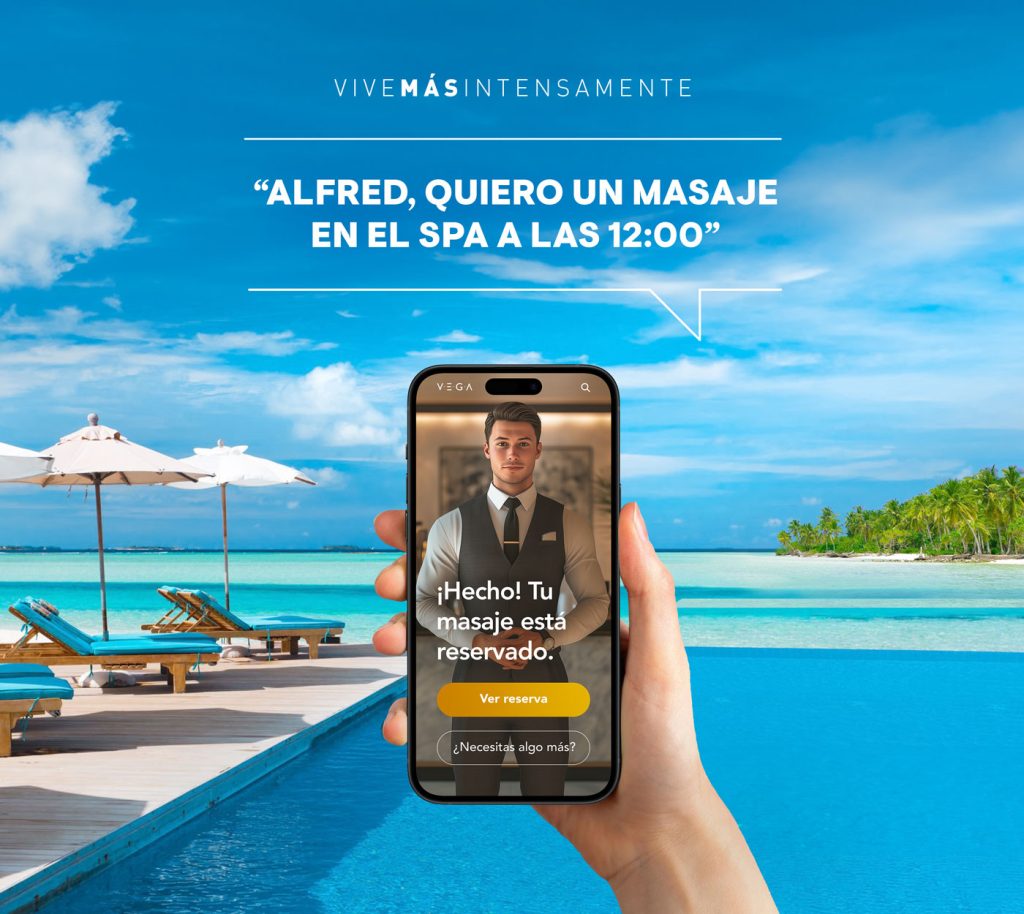
One of the main characteristics of a luxury hotel lies in its capacity for offer services that are uniquely tailored to each guest , and the incorporation of virtual butlers takes this personalization to the next level. These virtual assistants, available 24 hours a day, can automate processes, answer frequently asked questions, and hold conversations in any language. An example of a digital concierge can be found in Marta, the virtual assistant at the Hotel Torre del Marqués . In addition, they offer recommendations that are fully tailored to the customer's preferences. And they can even anticipate guest needs in real time, ensuring a smooth and memorable experience. Want to know more about AI avatars? See our page on Generative Avatars with Artificial Intelligence .
Exclusive experiences
Undoubtedly, one of the defining characteristics of a luxury hotel is its ability to offer unique experiences that transcend the hotel stay. These experiences are designed to surprise and emotionally connect with guests, from personalized activities to private events and exclusive services. Projects such as Exclusiverse, the virtual headquarters of the Exclusive Traveler Club The company's products and services exemplify how innovation can take this exclusivity to the next level. Through digital memberships hotels can maintain a constant connection with their customers before, during and after their stay. By offering access to unique benefits, differentiated experiences and services tailored to each guest. These memberships not only reinforce the sense of belonging by being part of an exclusive community, but also enhance loyalty and position luxury hotels as leaders in innovation and customer service.
Artificial Intelligence: cutting-edge technology in luxury hotels
If there is one technology that is redefining the hotel world, it is Artificial Intelligence. In the field of luxury hotels, as we have been seeing throughout the article, AI allows for tailor and personalize the hotel experience for each guest The reservation and the stay itself are also included in the price. The Artificial Intelligence is redefining luxury in the hospitality industry by offering advanced solutions that transform the guest experience and optimize internal operations . From AI avatars that handle requests in real time to systems that automatically adjust rooms based on individual preferences. In addition to enhancing the guest experience, the AI boosts operational efficiency in key areas such as reservations management, staff training, scheduling, and the operation of activities and services. By automating routine tasks, hotel teams can focus on providing a closer and more personalized service. With its ability to combine comfort and customization AI has become a must-have element in luxury hotels, ensuring exceptional stays where every interaction and detail is carefully designed to exceed expectations. Find out how the Hotels of the Future in our next article → Hotels of the future: hotel technology trends
A leading success story of Artificial Intelligence in hotels
In an environment where personalization and round-the-clock availability have become essential for luxury hotels, Hotel Torre del Marqués decided to take its commitment to innovation one step further. That is how its project was born: integrating a virtual assistant with a local soul, able to accompany guests at all times.
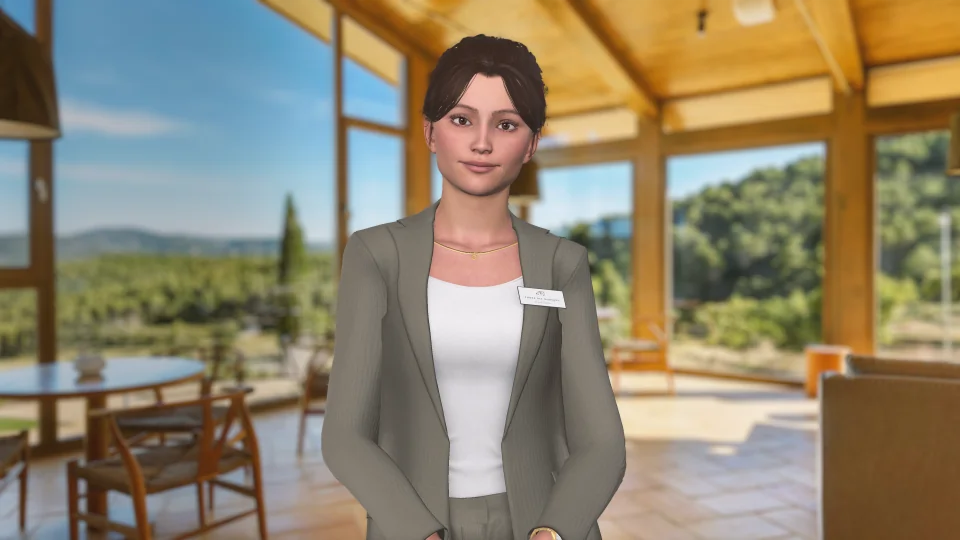
Marta | Torre del Marqués
Hotel Torre del Marqués, in the heart of the “Aragonese Tuscany,” has added Marta, a multilingual intelligent avatar that acts as a digital concierge available 24/7. This virtual assistant offers personalized information about services, gastronomy, wellness, and activities in the Matarraña region, accompanying guests throughout their stay without losing the hotel's essence of exclusivity. Thanks to its implementation, the five-star resort has improved operational efficiency, strengthened its customer service, and raised visitor satisfaction, positioning itself as a benchmark in rural tourism innovation. The project was made possible with the support of Spain's Secretary of State for Tourism through the SEGITUR grant.
Why are technological features key in luxury hotels?
Technology is essential in luxury hotels because it raises the standards of comfort, personalization, and efficiency that modern guests demand. Tools such as virtual check-ins, in-room smart home systems, and immersive augmented reality experiences allow guests to enjoy intuitive services tailored to their needs. By integrating innovation into every detail, hotels meet the expectations of a demanding traveler who values exclusivity and convenience. Technology also allows them to stand out in a highly competitive market, strengthening their brand image and establishing themselves as benchmarks in high-end hospitality.AtImascono, we specialize in developing technology experiences for all kinds of sectors, where luxury stands out in key industries such as fashion, restaurants, and, of course, the hotel sector.Through V·E·G·A, our virtual avatars, and our Artificial Intelligence services for businesses, at Imascono we can provide a solution for the automation and simultaneous personalization of guest service. They can adapt their messages in real time, converse with users in any language, and gather information on every conversation held.Interested in learning more about how to implement new technologies and AI in your hotel? Discover our technology services for tourism and get in touch with us; our team of engineers and designers will be happy to answer all your questions.
5 Retail news and trends you need to know about
The shopping experience is evolving, and so are consumers. That is why knowing the latest developments and trends in the retail sector is key for brands. As commerce becomes increasingly digital and consumers demand faster and more personalized shopping experiences, retailers must adapt to stay competitive and relevant. Technologies such as Artificial Intelligence the the rise of sustainability, the increasing concern for the human factor in manufacturing, and the among other trends, are transforming the way brands manufacture and market their products and, at the same time, connect with their customers. In today's article, we will analyze the main developments and trends in retail . And how technological innovation is impacting all these developments within the sector.
Retail transformation in the digital era
As we have already mentioned, the retail sector is constantly changing and is digital transformation. Today, we are living in a golden age of digital commerce The digitalization of the retail industry is also reaching the more traditional physical stores, reinventing the customer experience through phygital proposals. But in addition, this digitalization is also reaching the more traditional physical stores, reinventing the customer experience through phygital proposals. Consumers prefer purchasing processes that integrate several channels, looking for an integrated, seamless seamless, consistent and omnichannel user experience . In fact, recent studies indicate that the 75% of Spaniards make purchases via their cell phones, highlighting the importance of adjusting marketing strategies to reach consumers anytime, anywhere.
5 technology trends in Retail
Technology is redefining the way organizations interact with consumers. From the use of Artificial Intelligence for business in order to improve the customization to the implementation of Augmented Reality and Virtual Reality for the enriching the experience in physical and online stores These technological innovations allow retailers to surprise and anticipate the expectations of the modern customer. Today, knowing about and applying these trends is crucial for to offer an efficient, attractive and differentiated service in a highly competitive market.
Integration of new technologies
Artificial Intelligence, Augmented Reality, the concept phygital Big Data... are technologies that, individually, are transforming the retail world. However, if they are integrated with each other under the same strategy and objectives, the result is much greater. Both at the management level and at the level of data generation , engagement and real-time updates . An example of this can be found in La Torre Outlet the Spain's most digitized shopping center . Where the website, the mobile application, the interactive totems distributed throughout the facilities, the 30 m² screen and the 3D virtual recreation of the shopping center have been integrated into a single content manager.
Personalized customer service
The Artificial Intelligence is transforming the interaction between brand and customer, enabling a more human and personalized connection. With the help of AI and hyper-realistic avatars, brands can now put a face to their virtual assistant. Achieving a deeper connection and understanding with the customer, even on an emotional level. An example of this development is Cervantes IA in which the famous Miguel de Cervantes becomes a tourist guide of Castilla-La Mancha through his virtual avatar. All to interact with residents and tourists of Alcázar de San Juan, serving visitors, offering recommendations and interesting facts about the writer's life and work. Learn more about these V-E-G-A avatars at Artificial Intelligence Avatar: definition and main uses .
Immersive and interactive experiences
With the implementation of the latest developments and trends, the customer experience takes on new meaning by combining technology and creativity to captivate the customer. The Gamification and interaction play a key role, generating a significant emotional impact that reinforces branding and improves brand positioning. These experiences allow customize every interaction, offering relevant and memorable content in physical and online stores . By delivering accurate information and incentives at the right time, retailers not only respond to customer needs, but create a dynamic, immersive environment that transforms the shopping experience into something unique and highly engaging.
Blockchain-based authenticity
The blockchain technology is setting trends in the retail sector by guaranteeing the authenticity and traceability of products through innovative solutions such as NFTs. This has enabled the development of phygital capsule collections, where brands combine the physical and the digital to offer exclusive pieces, produced on demand. This approach not only generates a strong sense of exclusivity and belonging among consumers It also contributes to sustainability by avoiding excess inventory and reducing environmental impact. By integrating blockchain into their processes, retailers can reinforce customer confidence in the authenticity of their products and stand out in an increasingly demanding market.
Digital Out Of Home (D.O.O.H)
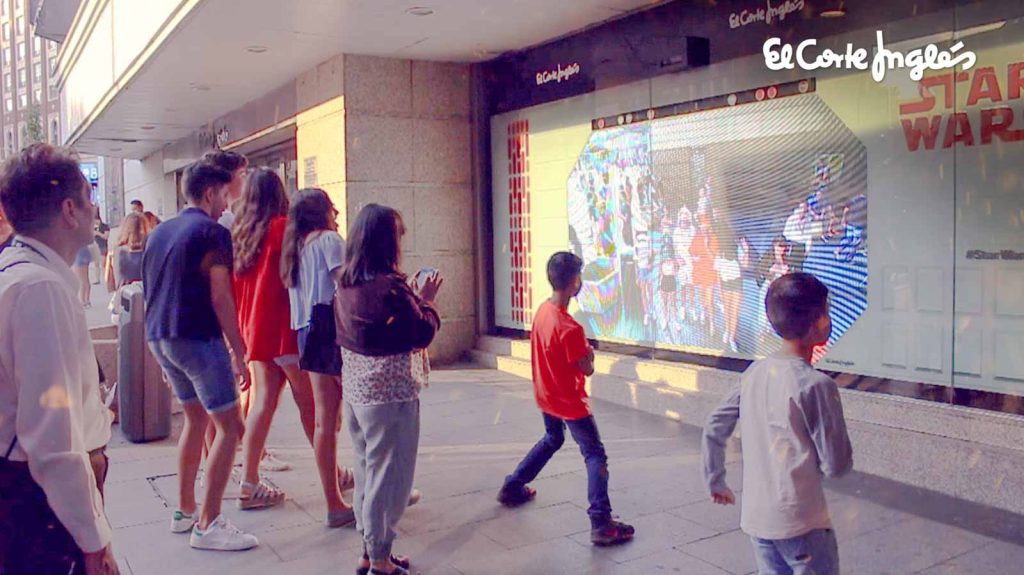
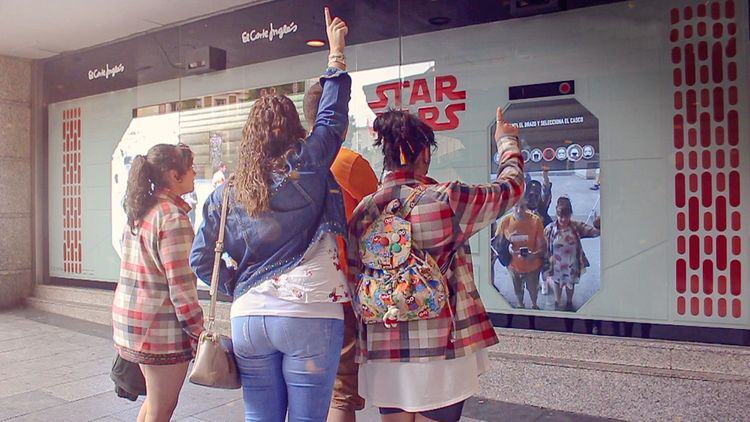
The Digital Out Of Home is revolutionizing the way brands connect with consumers. merging the physical and the digital in an immersive and interactive experience. This phygital concept brings the virtual universe to the real world through digital screens, animations, interactive showcases and gamified challenges. Everything to attract and surprise users. An example of this D.O.O.H. trend we find it in the award-winning project Kimchi! Star Wars developed by Disney, where users, passing in front of the Augmented Reality showcase, became characters of the science fiction saga. This type of initiative not only attracts all eyes, it also transform the physical space and outdoor advertising, creating an innovative and attractive point of connection.
How to adapt to the future of retail
The future of retailing looks like a dynamic environment where technology plays a key role in transforming the shopping experience. Adapting to this new landscape involves integrating digital solutions that not only optimize inventory management and payment processes, but also accompany the user throughout the purchasing journey. . From mobile applications which personalize recommendations until the Augmented Reality that allows you to visualize products in the home, the key is to create seamless and meaningful interactions. By prioritizing the customer experience through the use of intuitive technologies, retailers are able to fostering loyalty and improving satisfaction ensuring that the consumer feels supported and valued at every stage of their purchasing decision. If you would like to learn more about this topic, please visit our article Customer experience: how to improve it through Extended Reality
Get to know our technological projects in Retail
The technological and digital transformation that is taking place in the retail industry. was created with the aim of standing out from the competition, monitoring market trends, connecting emotionally with users and attracting and surprising them with unique proposals. Throughout the article we have seen different success stories that have stood out in the sector by following the latest developments and the most relevant technological trends. . Here are some other interesting retail projects carried out by Imascono:
Such as the Tu Cuento en la Cocina app, in which Ferran Adrià, the great Spanish chef, joins forces with Telefónica and Disney to bring to life a children's cookbook based on stories from Disney, Pixar, Star Wars and Marvel. A virtual kitchen packed with mini-games, gamified challenges and cooking tips.
Staying with the culinary theme, we find the virtual showroom of Lékué. A virtual recreation of a home where we can see all of the company's kitchen products in situ. Product demos, explainer videos and a wide variety of interactive content. A full-fledged e-commerce store in three dimensions.
One of the most interesting success stories in the retail and leisure sector is the Halloween activation developed by Foster’s Hollywood. An immersive, entertaining experience delivered through mobile phones, where the entrance to the restaurants became a horror movie set. One where a terrifying creature appeared on their screens without warning while they waited for their order to be prepared.
In the world of film and entertainment, we find the Kimchi! Thor Ragnarok project, an interactive photocall where Marvel fans became the stars of the movie before even seeing it. Becoming true Asgardians during the film's opening week at the Kinépolis movie theaters in Madrid.
One of the most significant retail activations in the tourism sector was the one developed by Ibercaja for its ski pass sales campaign during the ski season. The project, Frozen Emotion, invited users to cross a suspension bridge high up in the Pyrenees and then ski down virtually. A truly unique Virtual Reality experience.
At Imascono we know that retail is one of the industries with the highest growth forecast in terms of technology. The trends, innovations and technologies presented in this post will be presented in the next few days. invite us to be much more creative and not to put limits to our way of connecting with customers, of surprising them. We invite you to learn more about the technologies in the retail sector we work at Imascono. Our team will be happy to answer all your questions and needs. ¡ Contact with us !
How extended reality is transforming DOOH advertising
The world of marketing and advertising is changing. Not only because of the different trends, user profiles and new communication channels, but also because of the very introduction of technology and all the digital transformation that is taking place in the industry. If we focus on outdoor advertising, there is no doubt that one of the major current issues is the incorporation of the Digital Out Of Home (DOOH) in the most disruptive and creative advertising campaigns. A powerful tool for capture the attention of consumers both in public spaces and on Social Networks in its Fake Out Of Home version. Thanks to Extended Reality, physical and digital spaces are merging to offer advertising campaigns that surprise and inspire . From interactive storefronts to gamified experiences, brands now have the ability to connect with their audiences in a whole new way. In this article, we will explore how Extended Reality is transforming DOOH advertising The new advertising environment, driving creativity and opening new opportunities for brands in the advertising environment.
What is Digital Out Of Home (DOOH) advertising?
Digital Out of Home (DOOH) advertising is an evolution of traditional outdoor advertising that integrates digital screens and dynamic content in public spaces such as streets, transport stations, shopping centers and stadiums. Unlike static billboards, DOOH allows the display of messages and content in real time, adapted to the context, location or even the audience present, thanks to technologies such as automated programming, motion capture cameras and geolocation data. You might be interested in → Augmented reality in advertising with interactive content.This form of advertising It combines creativity, technology and analytics to maximize impact on consumers. DOOH not only captures the attention of passersby, but also offers brands a platform to create memorable experiences and connect emotionally with their audiences. Its ability to integrate with other technologies, such as Augmented Reality, is redefining the way brands interact with consumers in physical and digital environments.You can See Digital Out of Home Advertising in Action by getting to know the project closely Ibercaja Xplora And as its 32 m² interactive display generates more than 300,000 impacts among passersby.In addition to DOOH in outdoor advertising, new and creative ways of attracting users’ attention are emerging in the digital world as well. Fake Out Of Home (FOOH) is a creative strategy that simulates outdoor advertising (Out of Home) in digital environments. Through edited images or videos, brands recreate ads in nonexistent or modified public spaces, generating visual impact and virality. This approach combines the aesthetics of outdoor advertising with the flexibility and reach of the digital environment, ideal for innovative and highly engaging campaigns like the one developed by Ecoalf for its Black Friday campaign. Where a giant cart arrived at the most emblematic squares in Europe.
How Extended Reality is revolutionizing advertising DOOH
Extended Reality is transforming DOOH advertising by merge the physical world with immersive digital experiences. Technologies such as Augmented Reality and Virtual Reality allow campaigns to be more interactive, surprising and memorable. This innovative approach not only increases engagement, it also r edefines how brands connect with their audiences in public spaces . Here are the main key points:
Increased advertising impact
We are living in the age of digital interaction and, thanks to the phygital experiences, the Extended Reality and Digital Out Of Home, interaction also reaches outdoor advertising. Unlike static billboards and conventional digital displays, in these new advertising actions users interact with the content. This approach not only reinforces brand recall, but also transforms the passive spectator into an active participant increasing engagement. By combining innovation and creativity, these technologies position brands as leaders in an increasingly competitive advertising market. Whether in games, immersive experiences or gamified challenges, virtual testers or interactive storefronts, advertising content comes to life. Like the characters of the Augmented Reality campaign of Lacasitos which were hidden in the different tubes of the chocolate brand.
Content customization
Extended Reality is revolutionizing DOOH advertising by enabling a unprecedented content customization . Thanks to technologies such as Augmented Reality and Artificial Intelligence, ads can adapt in real time to context, location and even viewer characteristics. This creates highly relevant messages that connect emotionally with the audience, increasing engagement and campaign impact. Adapting advertising content to specific conditions such as the time of day, the weather or the type of audience in a given area. Being able to identify the profile of the audience that is interacting with an ad and personalize the message according to their behavior, interests and demographic characteristics.
Improved differentiation
In a world saturated with advertisements and advertising content, differentiate is more important than ever. DOOH advertising offers new avenues for differentiation by expanding the range of actions to connect with audiences that brands can hardly reach with traditional formats. By integrating technologies such as Augmented Reality and Virtual Reality, campaigns become unique and innovative experiences that stand out from the competition and what users are used to. These tools allow brands to create ads that leave a lasting impression on users, positioning them as pioneers in creativity and technology . As in the advertising action carried out by Disney for the premiere of one of the latest Star Wars movies. An interactive virtual showcase where passers-by became characters from the most famous movie franchise.
Physical space quality data
If there is one point where Digital Out Of Home advertising is a must for companies, brands and advertising agencies, it is in the area of data . What these phygital actions allow is to collect quality data about users and their interaction in physical spaces. Thanks to these technological experiences in physical spaces brands can know in real time the emotions they generate, the profiles that interact with their campaigns and how these influence the purchase decision process. This two-way interaction makes it possible to record valuable data on usage and customer experience, helping to optimize strategies and adapt them to the real needs of consumers. For example, digital displays equipped with cameras or sensors can measure the time consumers spend in front of a screen, detect their age or gender, and even collect information about their interactions with ads. Helping advertisers to better understand consumer behavior .
The user doesn't need any hardware
One of the key points that distinguishes Digital Out Of Home's immersive experiences from others, such as those developed with Virtual Reality services is that the user does not need additional hardware to enjoy immersive experiences. All you have to do is stand in front of an interactive screen to live a phygital experience that instantly combines the physical and digital worlds. In a matter of seconds, the user is immersed in the interaction, eliminating technological barriers and making campaigns more accessible and appealing . This approach democratizes access to XR experiences, increasing the reach and impact of advertising campaigns. As in the case of the action carried out by Marvel for the premiere of Thor Ragnarok at Kinépolis Cinemas. A AR photocall where the spectators were the protagonists enjoying the movie before even entering the theater.
The future of DOOH advertising
The future of DOOH advertising is marked by the integration of advanced technologies, such as the Extended Reality (XR), Artificial Intelligence (AI) and the Internet of Things (IoT). The new technologies will transform public spaces into smarter, more interactive and personalized environments. Digital displays will evolve into immersive experiences that not only display content, but also interact in real time with users, adapting to their specific preferences, behaviors and needs. This approach will make campaigns more relevant and effective, creating a stronger bond between brands and their audience. In addition, the Digital Out Of Home will connect even more with the physical environment through data collection and analysis. Sensors and IoT devices will record information on foot traffic, ad exposure time and direct interactions, providing valuable insights to optimize strategies in real time. In this scenario, DOOH advertising will not only be a means of communicating messages, but also a experience that will transform the way brands impact their consumers.
Examples of Digital Out Of Home (DOOH) advertising: Kimchi! projects.
Throughout the post we have been looking at different examples of interactive advertising and outdoor advertising that show everything the potential of Extended Reality to make communication, marketing and advertising campaigns much more interactive, creative and fun. Many of the campaigns analyzed here start with the technological product Kimchi! This type of project is based on phygital technology experiences with high engagement and creative impact that attract users in physical spaces. Whether interactive showcases, photocalls or games, they adapt to all types of users and situations. At Imascono, we know that the future of advertising lies in the creation of interactive and immersive experiences that users fall in love with and that generate a real emotional connection, and Digital Out Of Home (DOOH) is one of the key formats to achieve this. During more than 12 years we have worked on the development of Augmented Reality services both nationally and internationally, helping brands stand out through innovative and memorable campaigns. Our team accompanies you in every stage of the project, from conceptualization to final implementation, making sure that the solution meets your specific needs and objectives. If you are looking to revolutionize your marketing or advertising campaign with immersive experiences in a DOOH environment, contact us at .
Customer experience: how to improve it through Extended Reality
The customer experience has become a decisive factor for the success of any business in the digital age . Today's consumers are not only looking for quality products or services, but also for emotional connections and memorable experiences that reinforce their relationship with brands. In this context, Extended Reality (XR), which encompasses the Augmented Reality (AR), the Virtual Reality (VR) and the Mixed Reality (MR), together with the Artificial Intelligence are presented as powerful tools to transform the way brands interact with their audiences, offering immersive and personalized experiences. In this post we will analyze in depth the term customer experience and the changing trends among consumers . In addition, we will see how the retail industry is evolving and the role that Extended Reality, among other technologies, plays in changing customer interaction. Ready?
What is customer experience
The customer experience, or customer experience, is the set of perceptions, emotions and sensations that a customer has throughout their interaction with a brand, product or service. This includes every point of contact, from the first encounter with the brand through to after-sales, and covers both rational and emotional aspects . It includes aspects such as customer service, product or service quality, ease of use and the emotional bond that is created. Its main objective is to offer a memorable, personalized and consistent experience that fosters customer loyalty, satisfaction and commitment to the brand. The customer experience is one of the most important relevant in a company because it makes increase the value of companies and, consequently, sales and the number of consumers also increase.
5 keys to Extended Reality to stimulate the customer experience
Before learning how Extended Reality is impacting the enterprise customer experience, it is important to review what this technology is all about. The Extended Reality is a general term that encompasses all technologies that combine the physical and the virtual to offer immersive experiences . It is composed of the Virtual Reality (fully immersive digital environments), the Augmented Reality (digital elements on the reality itself) and the Mixed Reality (combines the real and the virtual in an interactive way). In relation to the customer experience of brands, the Extended Reality (XR) becomes an essential tool to create a better customer experience. memorable, immersive and personalized interactions with users. Here you have FIVE KEYS to use Extended Reality in customer experience :
Customization
The Extended Reality drives personalization in the customer experience by enabling experiences tailored to customers' individual preferences, personalities and needs. Providing them with unique experiences. With technologies such as Augmented Reality or the Spatial Computing customers can test products virtually or receive personalized recommendations based on real-time data. This not only improves customer satisfaction, but also strengthens the emotional bond and loyalty, highlighting the brand in an increasingly competitive market.
Improved customer support
The combination of Extended Reality and Artificial Intelligence is revolutionizing customer support by offering more immersive, personalized and efficient solutions. On the one hand, the Extended Reality enables visual and hands-on experiences such as guides and interactive infographics to resolve doubts or detailed instructions for complex products. On the other hand, the Artificial Intelligence improves immediacy and accuracy of assistance through intelligent chatbots The new technologies, hyper-realistic avatars and natural language processing, are capable of answering questions and solving problems in a way that is tailored to each customer. Together, these technologies not only optimize support, they create more human, memorable and satisfying interactions. If you are interested in this topic, you can continue to learn more about the use of Artificial Intelligence in customer service at Avatars with Artificial Intelligence: definition and main uses .
Interactivity
The incorporation of Extended Reality in the customer experience of the brands allows for go from the storytelling at storyliving significantly increasing the interaction of users with products and services. Thus, customers move from a passive to an active role. With tools such as Augmented Reality and Virtual Reality, users can interact directly with products, explore virtual environments or participate in gamified experiences, creating a deeper bond with the brand. These activities not only enrich engagement, but also improve brand perception and strengthen the relationship with the audience. Thus, it facilitates a bidirectional communication between the brand and the customer, allowing immediate feedback.
Increased confidence
Extended Reality enhances confidence in the customer experience by providing customers with a more transparent and tangible shopping experience with products or services . These immersive technologies allow you to visualize how an item will fit into your environment before you buy it through AR experiences, or offer simulations that allow you to explore features in detail. This reduces uncertainties and improves informed decision making . If an AI-based virtual shopping assistant is added to these actions, it is possible to solve their doubts about the product and service in real time and in a personalized way. This type of interaction reinforces authenticity and perceived quality, so brands can build a stronger relationship of trust with their customers.
Automation and efficiency
Today's consumer is looking for speed and personalization of the shopping experience, two points in which Artificial Intelligence applied to commerce and retail plays a key role. Its combination with Extended Reality makes the automation and customer experience efficiency, streamline processes and optimize resources. AI automates routine tasks such as initial customer service through chatbots and virtual assistants, providing fast and accurate responses. By integrating with Augmented Reality services or Virtual Reality, these technologies allow automated visual guides , interactive simulations and real-time solutions that resolve questions or problems autonomously. This approach reduces waiting times, improves operational efficiency and ensures a smoother and more satisfying customer experience. Learn about the latest in the digital world in our article Virtual Influencers as a trend in Social Networks .
Future of customer experience with Extended Reality
As the Extended Reality evolves, the The future of the customer experience promises to be more immersive, personalized and fluid than ever before. The immersive technologies we have seen throughout the post will provide customers with more tangible and dynamic ways to interact with products and services, completely transforming their relationship with brands. From the possibility of exploring hyper-realistic virtual brand environments and test products before you buy them, until you receive virtual assistance in real time, these technological experiences will enable companies to connect emotionally with consumers and tailor purchasing actions to their individual needs. In this scenario, the Artificial Intelligence (AI) will play a crucial role in leveraging the XR's capabilities to deliver smarter and more efficient experiences . Artificial Intelligence will analyze the behavior, preferences and needs of each user, personalizing each interaction. Integrated with Extended Reality, it will allow consumers to adjust and configure products interactively, ensuring more informed purchasing decisions. In addition, the AI will optimize customer support through advanced virtual assistants and avatars automatic analysis and personalized attention in real time. Reducing friction in the purchasing process and improving operational efficiency . This future, where technology and personalization combine, redefines the relationship between brands and customers, delivering more seamless, memorable and satisfying experiences than ever before.
Examples of customer experience improvement through Extended Reality
Throughout this article, we have explored in depth the different ways in which the Extended Reality impact and improve customer experience for brands . Below, we will see the most relevant success stories that have been implemented by different companies in different sectors. Here are 5 examples of customer experience improvement through Extended Reality:
Cervantes AI is a clear example of how Artificial Intelligence improves the customer experience as a step forward in tourism technology. This hyper-realistic avatar of Miguel de Cervantes transforms the visit to Alcázar de San Juan, replacing traditional guides with direct interaction with the celebrated writer. Tourists thus enjoy a unique, emotionally enriching experience in Castilla-La Mancha.
In the retail technology industry we find the example of La Torre Outlet, where the customer experience is digitally transformed by integrating a range of cutting-edge technologies. The app, the website, the virtual recreation, the Augmented Reality photo booths and the interactive screens spread across the entire mall are all managed from a single platform. A prime example of a customer experience revolution in a shopping mall. During the holiday season, the mall also has a very special mascot and AI assistant: Turrón, the friendly little fox who tells you stories, shares your wishes with Santa Claus and the Three Kings, and helps you find the perfect gift.
Also in retail, another standout is the Movistar Plus project in the Tiendas Emblemáticas flagship stores, where, through gamified experiences, customers could get up close to interactive content from their favorite series and shows such as “La Resistencia,” “Paraíso,” “BSO” and “Reyes de la Noche.”
This customer experience revolution is also reaching technology in the industrial sector. One example is Iris 360, Libelium's new virtual platform for showcasing its entire range of IoT products and services interactively. Through a 3D infographic, users explore a virtual city that illustrates how its IoT products work and the impact they have in a virtual smart city.
Finally, it is worth highlighting the Exclusiverse project by the Exclusive Traveler Club. Its new virtual headquarters transforms the customer experience for members. By bringing together digital memberships and the virtual space, users can explore travel offers, check exclusive benefits and take part in community activities and events.
As we have seen, the Extended Reality, Artificial Intelligence and technology in general, have a key role to play in the transformation of the customer experience of companies. Through these interactive experiences, it is possible to improve the interaction with customers, being much more creative, closer and personalized. At Imascono we are specialized in the development of Extended Reality products for companies. After more than thirteen years in business and a team of 30 engineers, we are capable of developing any kind of experience based on this set of immersive technologies through our virtual reality services and increased. Do you need to transform your customer experience? Contact with us and we will help you find the customer experience that best suits your brand and, above all, your users.
Immersive experiences through the Apple Vision Pro
Digital entertainment and leisure have moved from the storytelling to storyliving . From being mere spectators to being part of the action. Over the last few months we have seen how the Apple Vision Pro are impacting the business world. But what about at the entertainment level? In today's article, we will take a closer look at the latest news from the Apple Mixed Reality glasses the latest developments of the Spatial Computing and, above all, we will look at the most cutting-edge success stories from the world of entertainment. Cinema, television, sports and music are being transformed. All thanks to the new immersive proposals.
What are Apple Vision Pro?
The Apple Vision Pro are the glasses of Mixed Reality that go beyond Augmented Reality and Virtual Reality to interact with digital content in the real world. They work with the operating system visionOS and use cameras, sensors and high-resolution micro-OLED displays for superimposing virtual elements on the real world or immersing the user in fully digital environments . Interaction is done without remotes, through gestures, eye movements and voice commands, and its light and comfortable design includes an external battery with two hours of autonomy. They are designed for professional level use, focusing on the productivity in the training and in the communication . However, its graphic quality and immersion for the user positions it as one of the most interesting VR goggles for the entertainment industry. You may be interested in → What is Spatial Computing and its importance today?
What is Mixed Reality?
We can't talk about the Apple Vision Pro without mentioning one of the most important technologies behind its performance: the Mixed Reality . This is an immersive technology that seeks to combine in the same system the interaction of the Virtual Reality with the visual power of the Augmented Reality . That is to say, to unite the best of both technologies in one, to merge the real world with the virtual one. Where the user interaction is with both worlds at the same time. This technology uses advanced devices Apple Vision Pro, such as Apple Vision Pro, motion sensors and spatial mapping systems, for accurate, real-time interaction. Your applications cover different sectors such as education, entertainment, medicine and marketing, allowing for simulations, hands-on learning and immersive experiences that increase knowledge retention and creativity. Visit our post Mixed Reality: Definition, characteristics and examples to learn more about this technologyOn the other hand, we find the Spatial Computing or spatial computing. A concept of spatial informatics that refers to the advanced data processing that fuses the physical with the digital allowing a more natural interaction with them. All through gestures, eye movements and voice commands.
How Mixed Reality and Spatial Computing Revolutionize Digital Entertainment
The digital leisure has transformed the way in which people enjoy our free time We access culture and, above all, we interact socially. This type of leisure takes advantage of the capabilities of the internet and the new technologies to connect with the audience , customize the contents and offer new and surprising multimedia content . This has opened up new opportunities for entertainment companies and the corporate arena in general to connect more effectively with their users and customers. The Apple Vision Pro are driving this transformation by offering a new form of entertainment centered on the digital world and based on electronic devices. The video games Thanks to this hardware, they are increasingly immersive and realistic. The movies and series 100% audiovisual experience focuses on the user, his point of view and his immersion in the story. Assuming a increased emotional connection in the positive impact on the user and in the commitment to a new communication, sales and connection channel in the omnichannel strategy .
Different applications of the Apple Vision Pro
As we have been discussing throughout the post, Apple Vision Pro allows infinite immersive solutions that open new possibilities in the entertainment industry. Below, we would like to present some of the most relevant examples and success stories.
Sports
The sports entertainment can be transformed with Apple Vision Pro by delivering immersive and personalized experiences. For example, spectators could virtually attend a game from any angle, feeling like they are in the front row thanks to Mixed Reality. They could overlay real-time statistics, interactive replays and unique camera perspectives while watching the game. The NBA in collaboration with Apple, has created an experience that makes these last points possible, allowing users to experience the games live as if they were present at the stadium. On the other hand, Sense Arena NHL has developed 3D simulations designed to train ice hockey players, offering them the chance to practice key skills such as skating, passing and shooting.
Music
The Apple Vision Pro revolutionizes music with the immersive video clips and exclusive concerts in Mixed Reality. Users can feel inside the stages, interact with 3D effects and experience concerts from unique perspectives, either in the front row or face-to-face with the artists. Creating musical experiences never seen before. Experiences such as the video clip Open Hearts by The Weeknd . It was recorded with Apple Immersive Video, a 180-degree ultra-resolution multimedia format with Spatial Audio, which is part of the iPhone 16. In this immersive experience, users are immersed with the artist in a fascinating musical journey accompanied by a landscape inspired by the downtown Los Angeles skyline.
Cinema
With Apple Vision Pro, the fourth wall is broken and the viewer becomes a living part of the content. The cinema becomes immersive. It also offers interactive content, such as alternative endings or personalized perspectives. Taking storytelling to a new level. An example of this can be found in the collaboration between Red Bull and Apple with the new exclusive sports series for its Vision Pro device. In the "Boundless" In the Arctic, the user will be able to experience surfing in the cold waters of the Arctic, and the "Red Bull: Big Wave Surfing". the giant waves at Teahupo'o. On the other hand, we find the short film Submerged in which the protagonist finds himself inside a submarine during World War II. Or the documentary Wild Life where users are immersed to experience nature in a more intimate way. Allowing them to meet some of the most amazing and unique animals on the planet, along with the experts who know them best.
Immersive Imascono experiences in Apple Vision Pro
At Imascono we are experts in the development of immersive experiences through Mixed Reality. Since the arrival of the Apple Vision Pro and the rest of VR/MR glasses, we have seen how the real and virtual worlds are becoming more and more interconnected. This is a whole new era for entertainment. Among the proposals that we have already developed for the Apple Vision Pro we find the Aquarius Experience: Spatial Computing . A visit to the facilities that combines Mixed Reality with Artificial Intelligence. An innovative project in which, thanks to technologies such as the Apple Vision Pro visitors can immerse themselves in a unique immersive experience. This proposal allows visitors to explore a coral reef with ammonites from more than 200 million years ago, interact with a life-size elephant or go into the heart of an erupting volcano. If you would like to find out more about these or other of our experiences on the Apple Vision Pro our engineers and designers will be happy to answer all your questions and find out how we can adapt our products to your needs. Mixed Reality solutions to your company's specific needs. ¡ Contact with us and we will take your company into the new virtual universe!
5 Artificial Intelligence use cases you should know about
5 Artificial Intelligence use cases you should know about
Artificial Intelligence is one of the great technologies that have been are transforming all types of companies and sectors . Its great capacity for adaptation, its low learning curve for users and its integration with other technological advances such as the Metaverse, Augmented Reality, or the Spatial Computing make the AI an important point in the future of companies . In this article we would like to discuss with you the 5 most interesting use cases of Artificial Intelligence today that companies of all kinds have already implemented. All to boost agility and creativity within companies. And above all, to increase the capabilities of the workers, being the Artificial Intelligence services constant support for the team.
Importance of Artificial Intelligence in today's world
Before submitting the applications and use cases of Artificial Intelligence in enterprises It is important to analyze the context in which we find ourselves in relation to the business world and the use of Artificial Intelligence. Artificial Intelligence is an essential technological tool in today's world. In the short time that it has been in widespread use among companies, this technology has radically transformed various industries, increasing efficiency across the board . Its ability to analyze large volumes of data allows companies to make faster decisions, optimizing resources. In addition, the AI has changed the way we interact with technology The company's customer service is improved through virtual assistants and chatbots, which saves time and enhances the user experience. If you want to learn more about this topic, we invite you to visit Artificial Intelligence Avatar: definition and main uses .
5 Artificial Intelligence Use Cases
This technology has marked a before and after in the strategies and methodologies of all organizations. Whether at the marketing level or at the production level, Artificial Intelligence allows to revalue, accelerate and increase creativity in all action plans. Next, we will review the 5 most relevant use cases of Artificial Intelligence in companies:
1. Data analysis
Artificial Intelligence has radically changed the way data is analyzed. . It allows processing large volumes of information and extracting key information in a fast and efficient way. It is a perfect tool to identify behavioral patterns and any impact variables that go unnoticed with conventional methods. In addition, deep learning algorithms lead to predictions by analyzing historical data sets, leading to better decisions in real time. From the process automation to the elimination of repetitive and error-oriented tasks, the various types of Artificial Intelligence enables you to deliver products and services faster and with less margin for error. Intelligent graphics reduce data with intuitive representations to facilitate learning and understanding of information.
2. Multi-language
One of the main advantages that Artificial Intelligence offers is the ability to to perform automatic translations in real time, and even generate multi-language experiences that adapt to each user. An essential property in a globalized and automated world. AI models can be trained with data in different languages, allowing them to translate, interpret and respond in the desired language, thus facilitating interaction between people from diverse cultures and linguistic backgrounds . An example of this can be found in Cicerone's AI avatar, capable of managing a travel agency in more than 95 languages.
3. Personalization of contents
Artificial Intelligence plays an important role in personalizing the content offered to each company's audiences. A very useful tool for analyzing a company's a large number of these on users' tastes and buying behaviors. . This customization brings brands closer to their target audiences . Also reduces user saturation by offering them content more in line with their preferences. This favors the user satisfaction and pushes them to build deeper and longer relationships with companies or brands. that are to your liking. You may be interested in → Challenges of Artificial Intelligence applied to the enterprise .
4. Task automation
One of the great benefits that Artificial Intelligence offers is the possibility of automate repetitive tasks. Allowing employees to focus on more creative and strategic activities. Not only does this increase productivity, but it also enhances the job satisfaction The company's employees can devote more time to tasks that really require their knowledge and skills. In the business environment, automating processes such as data management, customer service and logistics has become commonplace. . The chatbots For example, they can handle frequent queries, freeing up human teams to solve more complex problems.
5. Virtual assistants
Undoubtedly, one of the main use cases of Artificial Intelligence in companies is the generation of virtual assistants or avatars for customer service, employee support and transparency in corporate communication. Offering a wide range of utilities that transform both personal and professional life . One of the most relevant current examples are the new line of virtual avatars called V-E-G-A where Artificial Intelligence becomes humanized by allowing users to speak, read and listen to them. These digital characters have great benefits, playing roles such as event assistant , tour guides , f nternal training in companies , customer service on the web , commercial agent o animated character to entertain children . The possibilities are endless.
Artificial Intelligence use cases at Imascono
Since 2019, at Imascono we have been developing a whole line of virtual avatars equipped with Artificial Intelligence. Thanks to the great advances experienced in relation to generative Artificial Intelligence, the V-E-G-A avatars have improved their capabilities of naturalization of conversations, their personalization and training. Humanizing Artificial Intelligence. Through these V-E-G-A avatars, Artificial Intelligence is impacting a multitude of sectors:
Artificial Intelligence in Tourism
The tourism sector is one of the first to adapt the latest trends and technologies for improve the user's travel experience . And at the same time, optimize resources for tourism companies, providing them with greater capacity for adaptation, data capture and creativity to improve engagement with travelers. In the latter area, the virtual tourist guide of Miguel de Cervantes . Through the avatar Cervantes IA In this way, users can ask the Spanish writer himself about his beloved Castilla-La Mancha. An Artificial Intelligence avatar that is deployed both in the Tourism Office of the City Council of Alcázar de San Juan as well as in the different emblematic points of the La Mancha route that pass through the city. You can learn more about this topic at Artificial Intelligence in tourism: characteristics and examples .
Artificial Intelligence in Retail and Entertainment
If there is a sector that benefits from the incorporation of virtual assistants, it is the retail and leisure sector. Thanks to these AI agents / avatars the customer service becomes more humanized in the digital world going a step beyond chatbots. With the Generative Artificial Intelligence the conversations become much more fluid and personalized. Where it is possible to record and analyze through dashboards all conversations held with the avatar, all anonymously. Allowing to have an overview of the brand perception, the most frequently asked questions and which products/services are the most demanded. An example of a use case of Artificial Intelligence in avatar format for the retail sector can be found at Smoky the avatar and virtual "chef" of Nola Smoke who greets, serves, picks up and delivers customer orders. In addition, it offers burger recommendations based on the customer's favorite ingredients and specific needs.
Artificial Intelligence in Industry
One of the sectors where Artificial Intelligence is having the greatest impact is in the industrial sector . At present, the industry is undergoing a change of revolution, of the Industry 4.0 (focused on automation) to Industry 5.0 (focused on workers' welfare), where AI plays a key role in both visions. Reducing costs and production times and at the same time, improving workplace quality . Becoming a support to increase workers' capabilities. An example of this is the virtual assistant developed by Iveco, IRIA the IA avatar. She is able to support, training and assistance to both employees and agents of the logistics, mechanical and transport line of the automotive company. Centralizing access to information, advice and updates from the company and facilitating its transparency. If you want, you can continue reading about the link between AI and the industrial sector in our post Artificial Intelligence Applications in Industry. Bottom line, AI is being implemented in a wide variety of areas and its expansion is shaping the current business world. . AI is the working tool of the present and the future; companies must put it into practice in order to face the great challenges we are experiencing. V-E-G-A avatars are a great resource for customization and adaptation to all kinds of situations. . Empathize with users and offer them the best experience and, in addition, it is of great help to save on costs, logistics and training and, finally, it has options to multi-language and multiplatform . For more information, do not hesitate to contact us at contact with Imascono . We will be happy to help you and answer any questions you may have about the incorporation of artificial intelligence in your company.
Benefits and characteristics of the metaverse in education
Benefits and characteristics of the metaverse in education
Technological innovation is part of 21st-century education. Among the different technologies that have emerged in recent years, the Metaverse and virtual spaces offer a wide range of benefits and features that can enrich the educational process, making it more accessible, interactive and personalized. As the technology evolves, its integration into education could have a profound and lasting impact. In recent months, Metaverse adoption has accelerated in many schools and universities, especially through virtual platforms that aim to keep learning going in situations where in-person attendance is not feasible. Becoming familiar with emerging technologies such as Virtual and Augmented Reality prepares students for a working future in an increasingly digitized world. They are also a new way to put what has been learned into practice and motivate students in a more engaging way. In today's article, we take a detailed look at the benefits and features of the Metaverse in education.
Impact of the Metaverse on education
Before learning about the impact of the Metaverse on education, it is important to review what this technology consists of. The Metaverse could be defined as a series of interconnected virtual worlds where users can interact with each other and with the digital environment in real time. The Metaverse and virtual spaces combine technologies such as web3, Augmented Reality and Artificial Intelligence to create immersive experiences that revolutionize the way users interact with technology and the new digital ecosystem. You may be interested in → Features and benefits of Augmented Reality in education You may ask yourself, what is the metaverse in education, well, in this sector it offers multiple advantages to make learning much more practical and immersive . Encouraging students to put their knowledge into practice through simulations and virtual training. In addition to encouraging Gamification of the lessons, applying the mechanics of video games to the evaluation systems. Offering, thanks to the union between the Metaverse and Artificial Intelligence the possibility of offer adaptive and personalized educational experiences . These are adjusted to the needs and rhythms of each student. One of the great examples of the application of the Metaverse to education is the virtual space of Aprendiendo a Emprender developed together with Ibercaja Foundation to bring the business world closer to schoolchildren in a gamified environment close to video games.
Benefits of the Metaverse in the educational sector
As we have seen in the previous section, the Metaverse in education offers great benefits to the different educational centers. From its use in The company has been involved in the development of the program at early ages, as well as in high schools, universities, training centers and internal training in companies. The Metaverse, broadly speaking, allows you to eliminating geographical barriers to education The aim is to offer a personalized experience, adapted to the needs of each student and to reduce costs, both in terms of physical training material and in the use of facilities such as laboratories, travel and/or operating rooms in healthcare training courses. The following are the main ones benefits of using the Metaverse in education:
1. Gamifying teaching
Gamification is the process of applying game design elements and techniques in non-game contexts. . It aims to increase people's motivation and participation in various activities by creating more engaging and dynamic experiences. This process is associated with a increased commitment , attention e interest by the students, regardless of their level of training. Thanks to its challenge/reward system, students are encouraged to give their best. With gamification, students internalize new knowledge in a more effective and entertaining way. As in the KAI XR Platform a Educational VR App where students can travel to the seabed, the pyramids of Egypt or NASA facilities, all in first person and through Virtual Reality glasses. If you want to learn more about this topic, we recommend you to visit→ Virtual Reality in education: features and benefits .
2. Simulations and training
Simulations in the Metaverse are revolutionizing the educational sector by offering immersive and highly interactive environments that enhance learning by doing . The trainings carried out on this type of virtual platforms allow us to go a step further in online training. By making the leap to virtual campuses and schools that allow students not only to attend virtual classes, but also to walk around the facilities and connect with other students. Students can be anywhere in the world, as physical barriers are eliminated. Through the Virtual Reality This immersion in the educational experience is multiplied. As in the health training developed by Boehringer Ingelheim where health care professionals could learn about the preparation of their new medicines thanks to the Virtual Laboratory Virtual Training . If you are interested visit our article about Virtual Reality and medicine: applications in the healthcare sector
3. Onboarding and interactive training
Internally, the Metaverse's virtual spaces allow all processes and activities related to employees to be grouped together in a single digital environment. Thus, the onboarding and internal training are automated and, at the same time, are tailored to the specific needs of the employees. Becoming platforms for consultation, training, development and connection with other employees. All through virtual events and other types of business activities developed in the Metaverse. One success story is the project L'Oreal University a training space developed by L'Oreal to bring together influencers, makeup artists and experts in the beauty industry at its virtual university to learn first-hand about their latest products and usage tips.
4. Adaptive and active learning
Thanks to the Metaverse and virtual spaces, students can be offered new platforms for interaction, both with the subject matter and with their peers. In conjunction with Artificial Intelligence applied to education, educational platforms can adjust in real time to the needs and preferences of each learner, creating interactive environments that encourage active participation . The Metaverse, combined with Artificial Intelligence. is not only transforming the way we teach and learn The company is also preparing students and professionals for an increasingly digital and collaborative world. An example of this can be found in IRIA, Iveco's AI-equipped avatar. A companion in the training and day-to-day life of the automotive company's employees. If you would like to learn more about the relationship between the Artificial Intelligence and the virtual avatars we recommend you to visit Artificial Intelligence Avatar: definition and main uses
Metaverse, the future of education
The Metaverse is marking the future of the education and training sector . These virtual spaces will continue to transform the way we learn and interact with learning resources. Combined with the latest innovations in Artificial Intelligence, these educational platforms will allow to develop more personalized, automated and updated experiences in real time . Following at all times the individual progress of students and proposing new gamified challenges. This synergy will not only enrich education, but will also revolutionize the way we interact with various technologies, creating a new way for us to interact with our students. unique opportunities for training and professional development.
Examples of the use of Metaverse in education
Throughout this article we have learned about some of the most disruptive and innovative projects that have already been launched in the educational field. We will now take a closer look at some of them examples of the use of the Metaverse in education. - Rafa Nadal Academy by Movistar . Get to know the facilities of the Rafa Nadal's Academy through his virtual twin . You can discover the values, history and different buildings of the complex while completing different challenges and mini-games. A project with a marketing and viralization objective that achieved a reach in Social Networks and media of 48 million people. - KAI XR Platform . Virtual Reality Application that invites children and not so children to discover the world of science, history, technology or the environment in a fun and immersive way. - Research Night virtual event . At the university level, the virtual event developed by the University of Zaragoza stands out. Through the virtual recreation of one of its most representative classrooms, the university brought together researchers from all over Europe in the same digital space. Overcoming physical barriers to unite the scientific and research community. - LOARRE XR . At the historical and cultural level, the Metaverse allows the recreation of monuments to increase their diffusion, access and knowledge. This is the case of the Loarre Castle a Romanesque castle with more than ten centuries of history that can now be visited from anywhere in the world thanks to its transfer to the virtual world. At Imascono through our metaverse services for companies , we believe that the Metaverse in education can help us to be much more agile in our way of learning and to naturalize our interaction with the digital world. To do this, we can make use of technology that goes through AI avatars, virtual spaces and Augmented Reality . Since the company's inception, more than fourteen years ago, at Imascono we have been an active part of technological innovations in the education sector. Both for the launch of the Chromville educational app that has reached more than 120 countries with a million downloads as in the incorporation of Artificial Intelligence in the training in new technologies in the project. V-E-G-A tutor . Need a Metaverse to take the next educational leap? Get in touch with us! Our team of engineers and designers will be happy to help you incorporate this state-of-the-art technology into your training and educational projects.
What is augmented reality? Key points
What is Augmented Reality? Main keys
In a world where connection and instantaneous information are key, the Augmented Reality provides a bridge between physical space and digital data The new technology, providing both companies and users with a more intuitive and effective way of interacting with technology. Augmented Reality (AR) is transforming the digital landscape with its ability to overlay information on top of the physical world in real time. This technology combines virtual elements with the real environment. Offering immersive and interactive experiences that go beyond the conventional . From enhancing the retail shopping experience to revolutionizing learning and training methods, AR is redefining everyday interactions and opening doors to endless possibilities across multiple industries. In this article, we will analyze in detail the key points of Augmented Reality Ready to learn more about its main applications in different sectors and the advantages it offers companies?
What is Augmented Reality
Augmented Reality is the technology that combines the real world with the digital world by superimposing virtual elements on the reality itself . Thanks to this immersive technology, the real and virtual environments intermingle, creating interactive experiences accessible from several devices at the same time: from cell phones and tablets to Augmented Reality glasses. Augmented Reality is just one of the immersive solutions within the framework of the Extended Reality . A series of technologies to which also belong the Virtual Reality y la Mixed Reality . Their origins and software are different, but their goal is similar: to eliminate the barriers between the real and the virtual. While Augmented Reality superimposes digital elements showing the real world at the same time, the Virtual Reality immerses users in fully artificial immersive environments . On the other hand, the Mixed Reality and specific technologies such as the Spatial Computing seek to go a step further in this interaction between the physical and the virtual. Introducing in a much more natural way, virtual elements in the real world and/or real elements in the virtual world. You may be interested in → Mixed Reality: Definition, characteristics and examples
How Augmented Reality works
This technology is undoubtedly one of the most widespread among companies today. But how does it work? Augmented Reality is based on the superimposing digital elements such as images, videos or data on the real world all through devices such as smartphones, tablets or specialized glasses. It uses cameras and sensors to capture the environment, processes the information and allows virtual objects to be located in real space. Either through visual markers such as QRs, through geolocation or holographic projections. In this way, Augmented Reality enriches the user's perception of the environment, allowing for interact with layers of digital information that appear integrated in their field of vision.
Applications and types of Augmented Reality for businesses
Augmented Reality provides companies with innovative tools for their digital transformation improving both the internal operations as well as interaction with customers . From marketing and sales to industrial production and professional trainings, AR experiences provide great benefits for companies. These are the main ones Augmented Reality applications in different sectors:
1. Applications in the education sector
The Augmented Reality in education offers the possibility of approach the real world from new perspectives The new system provides an environment full of information that adds value to the training activities. Instead of viewing simple images on the projectors, you can show three-dimensional models of outer space, geometric figures, parts of the body, historical moments or even the seabed, as if they were in the same classroom through Augmented Reality devices. Empowering the creativity, motivation and curiosity of children and not so young children. Encouraging these digital natives to continuous discovery and to wonder what's behind, demonstrating that play and technology are a great means for learning.
2. Applications in the business sector and Industry 4.0.
Now that you know what Augmented Reality is, it is very relevant to know that within the processes of industrial companies it represents a revolution in the control, training and efficiency of the increasingly complex production processes. . Thanks to this immersive technology and its marriage with the latest Internet of Things (IoT) innovations, machines and operators are interconnected, moving from simply operating the machine to being able to communicate with it. A fact that helps in routine inspection tasks, in remote assistance and in the possibility of showing operators interactive instructions and warnings on the machinery itself (notifications, hazards, etc). In addition, Augmented Reality also has a great potential for the presentation of three-dimensional models of parts and prototypes from all angles and in the exact place where your final version will be, reducing to the maximum the margin of error when assembling and using them. Read more about the impact of technology on the industrial sector, at What is Industry 4.0 and what are its main characteristics? .
3. Applications in the retail sector
With Augmented Reality, the retail shopping experience reaches new heights. levels of digitization through hybridization for the phygital experiences. Offering in the same physical space additional information on the products (availability, price, colors, reviews from other users, tutorials on their use and assembly and even the possibility of placing orders instantly) with the superimposition of digital elements visible through cell phones or Augmented Reality glasses. A series of innovations that optimize resources, reduce time and strengthen brand-customer relationships . A major breakthrough also for e-commerce, offering the possibility of virtually try on garments or integrate into our homes the products we are going to buy thanks to their 3D models visible through this immersive technology.
4. Applications of augmented reality in marketing and advertising
With the development of Augmented Reality-based campaigns, marketing, communication and advertising enter a new dimension. Making it possible not only to boost the value of digital marketing strategies, but also to link them with experiential marketing. Turning the most in-person, static actions into groundbreaking, fun experiences that grab attention and draw the target audience to the brand. Offering, for example, a second digital layer for outdoor advertising fully tailored to the user's interests. The use of this immersive technology also improves the most essential marketing campaign metrics, such as retention, dwell time and engagement, while increasing interaction and personalization through a more immersive development of the brand's storytelling. One of the latest marketing campaigns to base its advertising strategy on Augmented Reality comes from the well-known brand Lacasitos. Hidden inside its famous tubes were fun characters that came to life in the real world through its AR App for kids.
Augmented Reality Experience developed for Movistar by Imascono
5. Applications in the tourism sector
Undoubtedly one of the sectors that can benefit the most from the Augmented Reality specifically for the tourism, hospitality and cultural sector where the combination of this technology with geolocation systems and the increasingly efficient 5G connections offers the opportunity to to expand on-site information for tourists while touring any tourist area, whether indoors or outdoors. Thus, Augmented Reality has become an important virtual guide always accessible and up to date . Not only of the places that the tourist should know of the area, but also of the basic services such as pharmacies, ATMs or restaurants that are available. A more pleasant and didactic way of making the visits to museums or natural sites The user is shown details that would otherwise go unnoticed.
6. Applications in the entertainment sector
The new era of entertainment and digital leisure is not only about substituting virtual for face-to-face. It is also about completely revolutionize the actual experience . Thus, thanks to Augmented Reality, the user has more control and information about the show he is watching live. They can choose new angles from which to enjoy the event, see all kinds of additional information superimposed as notifications and even enjoy a much more immersive show by being able to add special effects and animated characters as if they were really there. A new range of entertainment possibilities for example, transforming the pedestrians of Plaza Callao into the protagonists of the Star Wars saga or to the moviegoers at Kinepolis Cinemas in new characters of Thor Ragnarok completely changing the on-site promotion of series and movies.
7. Applications in the healthcare sector
The new tools offered by Augmented Reality technologies represent a new challenge for the revolution in the healthcare sector . Thanks to AR experiences, healthcare professionals can access valuable information instantly, keeping their hands free to perform any technique. Not only that, the operating professional can be in contact with other professionals during the intervention, sending images and videos in real time while they can give indications, superimposing them on the real image. A training level, Augmented Reality allows to see in three dimensions models of the different parts of the body, facilitating its study and learning, providing additional information. A technology that also represents a new impetus for telecare and medical consultations based on Artificial Intelligence . Additional information is also available on antibiotic treatments and other medications, with interactive instructions that facilitate their correct use. Find out more about technology in the healthcare sector at Virtual Reality and medicine: applications in the healthcare sector .
Key advantages of Augmented Reality
Image from Arte Conectado, an Augmented Reality project with Avatars for Zaragoza City Council
Knowing the applications of Augmented Reality we see how it is revolutionizing the way we access and interact with the digital world, by superimposing information on the real world, increasing - never better said - our capabilities. Next, let's review the 4 most important advantages of incorporating Augmented Reality technology.
Accessible and multi-device:
To take advantage of the benefits of Augmented Reality in our daily lives, you simply need a smart device with a camera and network connection, such as a tablet, cell phone or AR glasses. In addition, this technology has an easy and simple implementation today thanks to its great accessibility from these different devices, many of them widely used by users.
Low cost and great potential for adaptation:
Among the Extended Reality technologies, Augmented Reality is by far the lowest cost, as it does not require devices with a high immersive capacity for its proper functioning. Moreover, by keeping users in the real world, they recognize the space, appreciate its familiarity and intuitively take advantage of all the digital elements that enrich reality.
Gamification and personalization:
The development of technological solutions based on Augmented Reality not only allows us to introduce elements of video games to the business, industrial and educational environment. In addition, thanks to Augmented Reality we can enrich our audiovisual experience, as well as communication, both between the machine-operator and between the company-customer, with the development of unique and customized experiences that encourage interaction and interest of users.
New communication channel:
Just as the Internet and the expansion of Social Networks did in their day, Augmented Reality is revolutionizing communication, marketing and the digital presence of both companies and users. Thus becoming a new way of interaction between both. With the difference that this superimposition of digital elements on the real world makes the company/user dialogue much more attractive, immersive and dynamic.
Augmented Reality examples you should know about
Augmented reality filter
In addition to the success stories of Lacasitos, Marvel and Star Wars that we have seen throughout the article, it is interesting to learn about others. examples of Augmented Reality usage that can help to see the transformative potential of this technology in different sectors.
A success story in bringing Augmented Reality into the classroom is Chromville, a creative learning app based on coloring pages whose characters come to life through screens and educational games.
Augmented Reality helps us go beyond history books to see the past, and even the future, with our own eyes. As in the Ibercaja Xplora AR experience. An interactive webApp that lets visitors travel to three different eras to discover the city's past and future.
When it comes to smart cities, one of the most recent examples of the use of Augmented Reality in cities is found in the Arte Conectado project by Paseos Comerciales de Zaragoza. Here, through urban art and AR experiences, residents and tourists can enjoy a stroll through the city's different neighborhoods with amazing graffiti that comes to life around them.
Discover our Augmented Reality service for businesses
As we have seen, the Augmented Reality is one of the key technologies at the present time, both at the customer experience In terms of professional training and in-house training, this technology transforms the interaction between users and machines. Facilitating access to information and content, creating new interactive experiences and opening the doors between the real world and the virtual world. At Imascono we are Augmented Reality experts since the company's inception in 2011. Since then, we have been leading the evolution of this technology, leveraging our know-how and experience in a multitude of sectors to digitally transform the business model and training of our clients. That is why we invite you to learn more about our Augmented Reality service for businesses . Our team of engineers and designers will be pleased to meet your objectives and needs. Would you like to develop an Augmented Reality project? ¡ Contact with us !