In the real estate sector Buyers need to tour dozens of properties before making a decision that will likely shape the next three decades of their lives. Sellers and developers need to reach the right buyer before the competition does. And agents, meanwhile, spend a disproportionate number of hours on viewings with no guarantee of success—which is why so many showings end with a «I'll think about it» that never materializes. This is where a change in the way real estate is displayed, sold and marketed comes into play: Virtual Reality real estate tours In this article, we'll cover everything you need to know about how the virtual reality It's redefining the real estate business—from its key competitive advantages to the formats that best suit each type of property, including what trend-setting agencies and developers are already doing. Welcome to the tour!
From scheduled visits to always-on property experiences
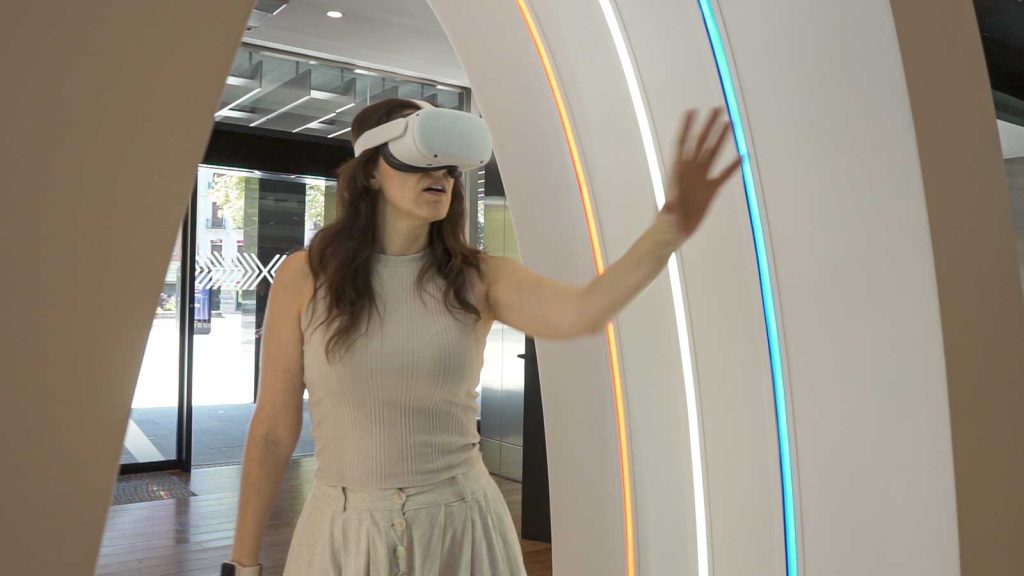
Imagine touring a house in Madrid from the sofa of an apartment in London, looking out onto the balcony and checking the light in the living room without moving or scheduling. That is, in essence, a virtual reality real estate tour: turning a rigid, time- and space-dependent process into an immersive experience, accessible and available 24/7. The technology digitally recreates any property, built or in the pipeline, with such fidelity that the user can explore it as if they were physically there, via VR viewers, web browser or mobile. And herein lies its greatest potential: virtual home tours not only eliminate the logistical friction of in-person visits, but revolutionize the marketing of off-plan housing. Selling what does not yet exist has always been a challenge, because renderings and floor plans force the buyer to imagine... and doubt, in real estate, is synonymous with a lost transaction. With a virtual reality real estate tour, this obstacle disappears: the client enters his future home before the first brick is laid.
Benefits of immersive technology in real estate
Although the most obvious advantage for the buyer is the time savings, the real estate 3d tour news have long been pointing to something more profound: a structural change in the profitability and efficiency of the real estate business. For promoters, agencies and developers, the benefits are tangible and measurable:
Higher-quality lead qualification. A buyer who requests an in-person visit after completing an immersive experience is not a cold inquiry: they're a hot lead. They have seen, they have felt, and they have decided to move forward. The technology has done the filtering for you.
Geographic reach without borders. A development in Valencia can be toured by an investor in Dubai. The virtual property tour removes distance as a sales barrier and exponentially multiplies the target market of every property.
Shorter sales cycles. Buyers who arrive at the in-person visit already familiar with the space are much closer to a “yes.” Offers come in sooner, with fewer conditions and a higher level of conviction.
Emotional connection from the first click. Spatial immersion creates a sense of belonging and presence that no photograph, however professional, can match. The buyer doesn't see a house: they mentally inhabit it.
Reduction of operating costs. Fewer unproductive physical visits means fewer sales hours spent on leads that won't convert. And for developers, shorter cycle times translate into lower financial costs associated with the stock.
VR real estate tour formats and applications by property type
There is no single way to conduct a real estate visit in virtual reality, just as there is no single type of property or a single buyer profile. The true potential of virtual reality lies in the ability to create a customized experience for each individual user.Technology applied to Real Estate It’s about knowing which format fits with which business objective; it’s not the same thing to qualify leads for a finished home, to sell a development that still has no foundations, or to show 4,000 m² of offices to an operations director who needs to decide on a corporate relocation. That’s why at Imascono we design each immersive experience to measure, adapting the technology, whether it’s navigable environments,Interactive virtual twins or Infographic, The type of property, the sales cycle, and the profile of the end user.If you want to go deeper: Interactive mockup: the standout tool for selling real estate projects.Below, we see the most strategic applications of the real estate visit in virtual reality according to each case.
Virtual house viewing before the physical visit
This is the most widespread format and, possibly, the one that offers the greatest immediate ROI. It consists of digitizing a home that has already been built so that the potential buyer can tour it in detail from any device before considering stepping foot in the door. The virtual tour of properties works here as an intelligent filter, it discards the curious, prepares the interested parties and turns the face-to-face visit into a quasi-closing encounter. An excellent example of the power of this technology can be found in the project Lékué Virtual: , where we designed an interactive 3D house that allows you to explore different themed rooms, interact with the products and live the experience as if you were inside the house. Translated to residential, this same approach allows the buyer to «live» the house before buying it.
Off-Plan Homes and New-Build Developments
This is where virtual reality real estate tours stop being a «nice-to-have» and become a critical sales tool. Marketing off-plan homes has always required customers to take a leap of faith: imagining square meters based on a blueprint and inferring natural light, orientations, and finishes from static renderings. Virtual reality eliminates that barrier; the buyer steps into the future home, walks through each room, experiences the finishes, and understands the dimensions of the space on a real-world scale. For developers, this means starting to sell months before a model unit is ready, shortening marketing timelines, and connecting emotionally with the client from the earliest stages of the project.
Commercial real estate and corporate relocation
The tertiary sector poses very different challenges than the residential sector: a steering committee does not decide on a corporate relocation by taking photos, but by evaluating entire floors, layout, access, capacity and technical areas. Here, the virtual reality real estate tour brings immense strategic value, allowing offices, logistics warehouses or entire corporate centers to be presented to multiple stakeholders simultaneously, without coordinating travel. In addition, interactive virtual twins take on a special role, as they make it possible to superimpose operational information on the space (consumption, capacity, alternative layouts), turning the visit into a quantitative decision-making tool. An operation that used to take weeks is now resolved in a single session.
Virtual tours in the real estate sector: what are agencies and developers doing now?
News about 3D property tours confirms a clear trend: leading real estate agencies and developers are no longer competing solely on location or price, but on the digital experience. Major developers are integrating immersive tours into their websites to attract international investment; premium real estate agencies are incorporating virtual reality headsets into their offices; and build-to-rent projects are using virtual recreations for presales even before obtaining permits. The question is no longer whether to incorporate virtual home tours, but how to do so in a way that delivers measurable results. And that's where having a specialized technology partner makes the difference between having just another tour on your website… or a true competitive advantage.
Boost your sales with Imascono's solutions
At Imascono we do not create «virtual tours». We create immersive experiences designed to sell . For more than a decade we have been designing customized technological solutions for companies that understand that differentiation is no longer built with arguments, but with experiences. We combine Virtual Reality , digital twins , Artificial Intelligence and interactive infographics to transform the way your customers discover, explore and decide on a property. Our team of technologists, 3D artists, digital consultants and engineers work side by side with you to understand your real estate product, your sales cycle and your end customer, designing a solution for virtual reality real estate tour that not only impresses, but also converts. Because technology, without strategy, is just a showcase; with the right consulting, it becomes a business lever. If your goal is to shorten sales cycles, better qualify your leads, reach international markets without opening an office, sell off-plan with higher conversion rates or stand out against a competition that keeps showing photos... it's time to take the next step. We help you design the immersive experience that your real estate product deserves, with the guarantee of a team that has already developed projects for leading brands. Let's talk and let's turn together every square meter of your portfolio into a real sales opportunity.
5 ways VR in surgery is reducing errors and improving outcomes
Today's surgery demands absolute precision, millisecond decisions and zero margin for error. However, traditional training systems continue to face major challenges such as steep learning curves, variability in training from center to center, and constant pressure to reduce complications in an environment where every failure has real consequences. In this context, the virtual reality in surgery no longer a futuristic promise, it is now a solution adopted by hospitals and training centers seeking to raise their clinical standards. The rv in surgery is redefining how surgical teams train, plan and refine procedures before entering the operating room. Thanks to immersive, measurable and highly realistic environments, practitioners can reduce errors, gain confidence and standardize technical skills in conditions that replicate real clinical practice. In this article we explore five concrete ways in which virtual reality is reducing errors and improving outcomes, marking a before and after in modern medicine, making it safer, more efficient and more aware.
Why virtual reality is becoming essential in modern surgery
Today's surgery demands high precision, but the traditional model of surgical training has clear limitations, with restricted time in the operating room, pressure on care, inherent risk to the patient during the learning curve, and significant variability in the training experience from hospital to hospital. This context makes evident the need for solutions that allow to practice more, better and without compromising safety. The virtual reality in surgery is emerging as the strategic response to these challenges. The virtual reality in medicine and surgery allows learning to be standardized through immersive, repeatable and measurable environments, where professionals can train complex procedures, deal with rare complications and hone skills before intervening on real patients. Thus, the virtual reality in surgical training does not replace clinical practice, but reduces the learning curve and raises the level of preparation and learning experience. If you want to go deeper, find out here how VR improves medical training: the ROI of virtual reality in medical training
Virtual reality in surgery training: reducing errors before entering the operating room
Before a surgeon ever sets foot in the operating room, thanks to virtual reality they may already have made, and corrected, dozens of mistakes in a completely safe environment. Virtual reality in surgery training has transformed surgical preparation into hands-on, immersive training with no risk to the patient. Thanks to VR in surgery training, professionals can repeat complex procedures as many times as necessary and refine their decision-making.
Enhances surgical skill and reduces procedural errors
The virtual reality in surgical training allows students and surgeons to practice complex procedures in realistic, risk-free simulations. Studies in laparoscopic surgery, such as cholecystectomy, have shown that those who train with VR make fewer technical errors and complete tasks in less time. Guided repetition and immediate feedback optimize accuracy, thus increasing attention retention and therefore knowledge retention.
Shortens the learning curve for complex procedures
The vr in surgery training accelerates skill acquisition by allowing intensive and structured practice. Instead of relying on the volume of real cases available, the practitioner can be confronted with multiple anatomical variations and levels of difficulty in a matter of hours. This repeated exposure strengthens muscle memory and decision making under pressure.
Provides a safe environment to practice pare, high-risk scenarios
One of the greatest values of the Virtual reality training for surgical trainees is the possibility to rehearse rare critical situations, intraoperative complications, unexpected bleeding or complex anatomical variations, which can be recreated and repeated without endangering lives. This controlled environment allows refining motor skills and improving decision-making in high-pressure contexts. This virtual environment allows the user to be exposed to changing and unexpected environments, being able to expand and modify the training modules at any time, thus increasing the user's ability to react.
Improves teamwork and safety behaviors in the OR
Beyond strengthening these individual skills, VR in surgery also enables completely safe learning: through immersive simulations, teams train communication, coordination and safety protocols in environments that replicate the real operating room. Aspects such as situational awareness, stress management and shared decision-making are worked on. This preparation reduces adverse events caused by communication failures or lack of coordination.
Supports preoperative planning and visualization
The integration of the Virtual reality training for surgical trainees with images and interactive infographics about organs or medical tests such as CT scans, etc. or resonance allows to create specific 3D models of each patient. The surgeon can explore the anatomy in depth, analyze complex spatial relationships and anticipate possible challenges before the incision, reducing improvisation. It also allows to explore machinery and facilities which will later be used by the healthcare professional, allowing to give an anticipated response to the patient.
How Imascono acts as a strategic technology partner for virtual reality solutions in healthcare
The transformation driven by the reality virtual surgery does not happen by chance, but through a solid technological strategy adapted to the real clinical environment. At Imascono we act as specialized technological partners, thanks to our own methodology that accompanies you throughout the process, designing solutions for virtual reality for surgery that not only impress visually, but respond to specific needs in the healthcare sector: error reduction, process standardization and continuous improvement of surgical performance. Our approach combines innovation, user and deep knowledge to create immersive experiences ready to be integrated into medical practice. Through customized, healthcare-ready VR solutions, surgical teams can train, rehearse and plan interventions in highly realistic virtual environments that replicate real clinical conditions. The result is clear: greater technical accuracy, safer decision-making and better coordination in the operating room.
Vaccines VR
Thanks to virtual reality, Vaccines becomes a key tool for healthcare training and awareness of complex clinical processes. Through carefully designed immersive environments, professionals can understand medical protocols in an experiential, hands-on way. Virtual simulation improves knowledge retention and reduces variability in the application of procedures, allowing for trial and error.
Sania Sanitas
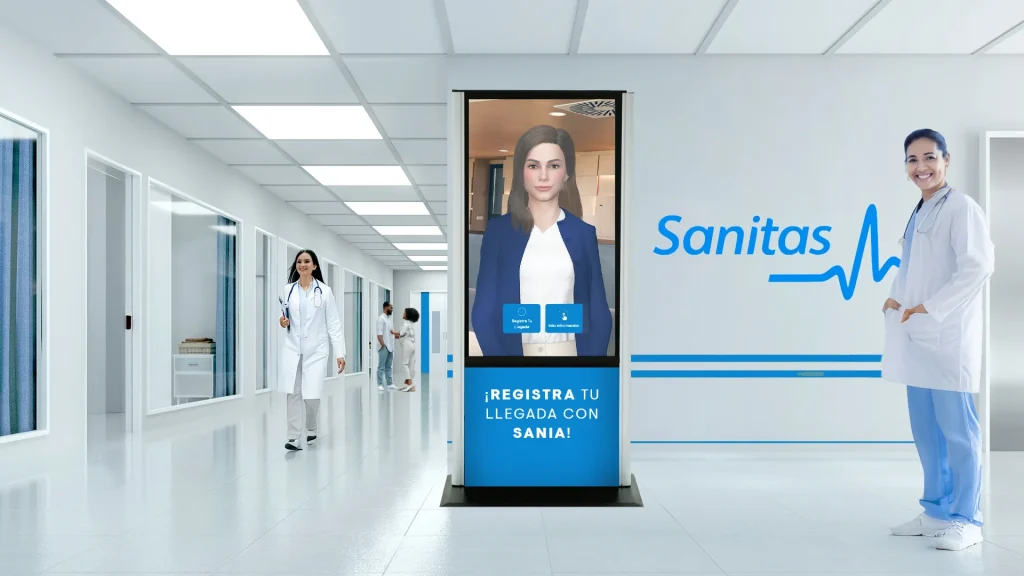
With Sania Sanitas, Imascono developed an innovative experience aimed at transforming the relationship between technology and digital health. The project integrates a virtual assistant in Sanitas hospitals, making it easier to understand medical services, self-manage appointments and navigate care processes. This ability to turn complex clinical information into accessible immersive experiences reflects our know-how in technology solutions for healthcare.At Imascono Health we help hospitals, universities and healthcare companies integrate virtual reality in surgery solutions tailored to their clinical and training goals. If you want to reduce errors, optimize surgical training and lead medical innovation, contact our team to design the future of healthcare communication with you.
Virtual reality for pain without drugs
Pain management continues to be one of the greatest challenges in hospital settings. Traditionally, the response has been focused on pharmacological treatments that, although effective, involve dependence, potential side effects and risks associated with opioid use, as well as offering limited personalization. In a healthcare system that is moving towards more humane and patient-centered models, there is a need for complementary solutions that improve both clinical outcomes and the care experience. In this scenario, vr for pain management is positioned as an innovative, non-pharmacological alternative that is already being used in hospitals to modulate pain perception, reduce anxiety and optimize recovery. The convergence between virtual reality and pain management demonstrates that immersive technology not only transforms how we treat pain, but how we experience it. The virtual reality and pain management current trends and future directions are now a real possibility.
Why VR is becoming a valuable tool for pain management in hospitals
VR for pain management is consolidating as a tool to be taken into account in hospitals because it acts directly on how the brain processes pain. Through immersive environments, virtual reality works as a powerful cognitive distraction mechanism that redirects the patient's attention and reduces the perceived intensity of pain. But its impact goes beyond this; the technology also modulates the neurological and emotional response, decreasing activity in brain areas associated with pain and reducing the anxiety and stress that amplify the painful experience. This intersection between virtual reality and pain management is already being applied in real clinical settings. In acute pain during hospital procedures, in chronic pain treatment through structured immersive programs, and in pre- and post-operative care to improve recovery, reduce stress and pain care. Hospital adoption demonstrates that this is not a passing trend, but a non-pharmacological solution based on user care. If you want to know more about technology applications in the healthcare sector 🤪 Virtual Reality and Medicine
Improve pain management with Imascono personalized virtual reality solutions
The implementation of virtual reality for pain treatment in hospital settings not only generates clinical impact, but also measurable operational benefits. From reducing perceived pain care to optimizing resources, virtual reality is establishing itself as a solution to transform healthcare.
Reduction of perceived pain and anxiety
Several clinical studies have shown that the virtual reality and pain management can significantly decrease the perception of pain during medical procedures and prolonged treatments. Thanks to its immersive capability, VR acts as a cognitive and emotional modulator, also reducing anticipatory anxiety. This is especially relevant in pediatric, oncological or repetitive surgery patients.
Improved patient experience
In a context where patient experience is a strategic indicator of quality of care, the integration of virtual reality solutions and pain treatment is a competitive differential. The sense of control, reduction of stress and humanization of the hospital environment improve the overall perception of the healthcare service. The aim is to transform the hospital experience into a friendlier, more innovative and patient-centered.
Scalable use in different departments
One of the greatest operational values of this technology is its scalability , VR can be implemented in emergency rooms, burn units, oncology, pediatrics, rehabilitation or surgical areas without the need for complex infrastructures. With adaptable content and increasingly accessible devices, the model is replicable and sustainable at the hospital level.
Improve pain management with customized solutions from Imascono
At Imascono Health we believe that innovation is not a fad, but rather a essential strategy for transforming healthcare . That's why we design customized technological projects that elevate the patient experience, here are our best VR for pain management success stories that have made a difference:
Bayer Kimchi!
Bayer Kimchi! is an interactive experience developed for Bayer that combines gamification and immersive technologies in the healthcare environment. The project uses augmented reality to generate an engaging, participatory and emotionally positive experience. Its design demonstrates the potential of immersion to capture attention and disconnect the user from negative stimuli.
San Juan de Dios Hospital
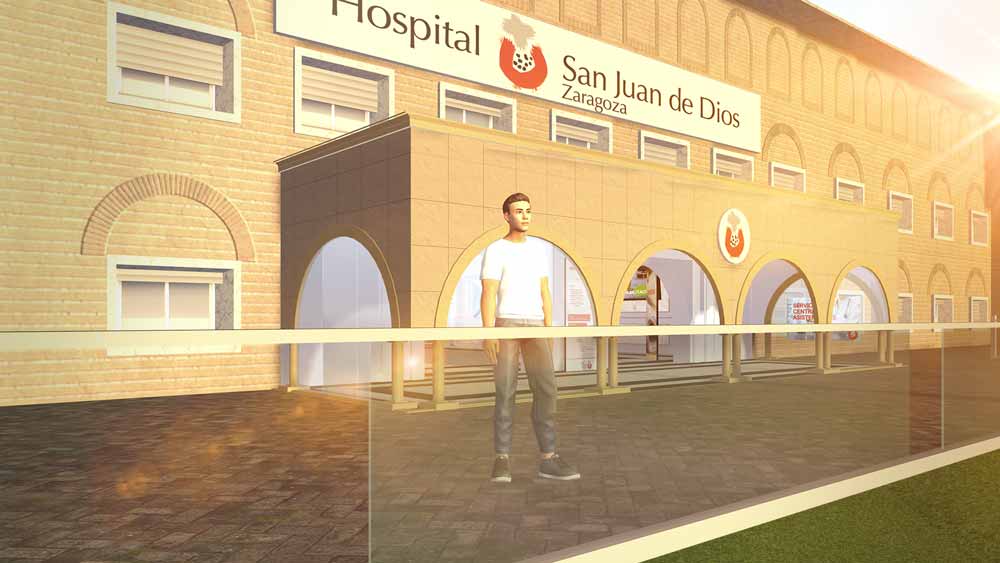
We transformed the hospital reception area with a 3D virtual hospital which allows you to tour the facilities, access service information and participate in consultations and streaming events from a gamified environment. This solution not only modernizes interaction with the center, but also strengthens the emotional connection with patients and their families, aligning technology and humanity in every step of the care process.
Apetest
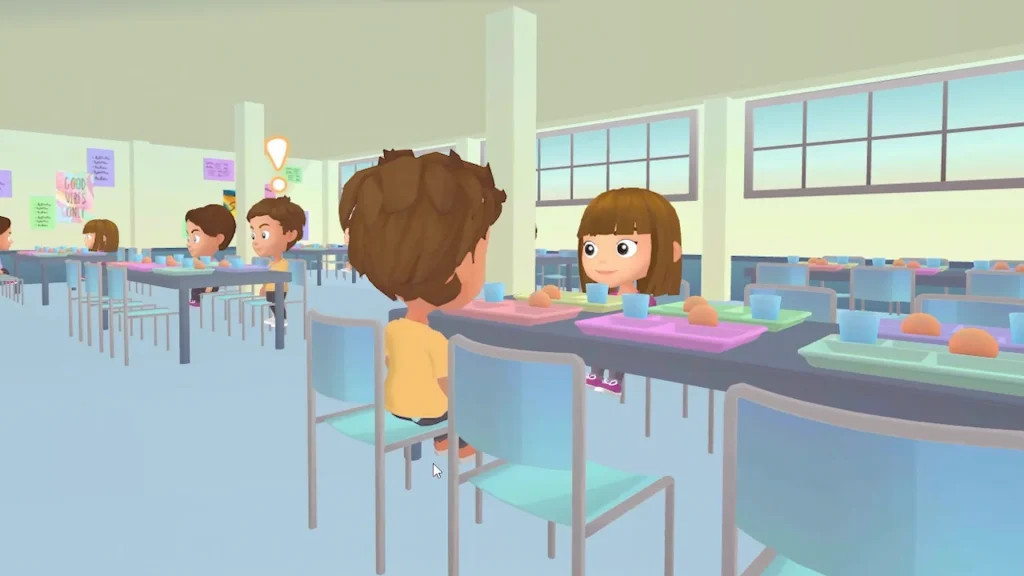
Apetest is an interactive digital application oriented to the evaluation and prevention of eating disorders through the use of virtual environments and gamified dynamics . The project uses immersive experiences to facilitate user interaction and improve adherence to clinical processes, demonstrating how technology can influence the emotional and cognitive perception of the patient, generating distraction and less anxiety. At Imascono Health we help hospitals to implement solutions such as virtual reality for pain treatment strategically and securely. If you want to transform the patient experience and optimize your care model with virtual reality, Contact with us , we are ready to accompany you.
Virtual reality safety training: a smarter way to train for workplace health and safety
Workplace safety can no longer rely solely on manuals, presentations or theoretical training. In increasingly complex and demanding work environments, companies need to prepare their teams for real situations, under pressure and with real risks. This is where virtual reality in safety training is making a difference, transforming learning into an immersive experience where the trainees can learn in real situations, under pressure and with real risks. The professionals can practice, make mistakes and improve in environments that are totally secure. Thanks to virtual reality for security training, organizations can simulating fires, emergencies, industrial hazards or critical procedures with a level of realism impossible to achieve with traditional methods. This approach improves understanding of protocols, enhances memory, decision making and preparedness for real incidents. In this article we explore how virtual reality is revolutionizing health and safety training, why more and more companies are adopting these solutions and how these technologies are redefining the future of occupational risk prevention.
Why traditional safety training is no longer enough in high-risk environments
For years, the training in occupational risk prevention has been based on theoretical classes, manuals or training videos. However, in high-risk environments such as construction, industry or energy, these methods are becoming less and less effective. Traditional training often relies on passive learning , where professionals receive information but do not experience real situations, which limits their ability to react when faced with incidents in the work environment. In addition, many critical situations, such as fires, machinery failures or industrial emergencies, cannot be recreated in real life for safety or cost reasons. This causes workers to know the protocols in theory, but have not practiced how to act under pressure , The risk of human error and its possible consequences for individuals and organizations is increased. In this context, the virtual reality safety training is presented as a more effective alternative. Thanks to the virtual reality for security training , In this way, companies can recreate dangerous scenarios in immersive and controlled environments, allowing teams to train decision making and gain practical experience before facing real situations.
Virtual reality improves safety training for real-world scenarios
The evolution of immersive technologies is transforming the way organizations prepare their teams for occupational hazards. Here's how the virtual reality safety training allows going beyond theory and transferring learning to simulated environments.
Virtual reality fire safety training and emergency response simulations
The virtual reality allows to recreate fires, evacuations or emergency situations without exposing workers to real risks. In these immersive environments, users can practice hazard identification, fire extinguisher use or evacuation protocols. In addition, the simulation reproduces the pressure and context of a real emergency, which improves reaction capacity. This methodology facilitates repeating scenarios as many times as necessary to reinforce learning.
Virtual reality health and safety training for industrial and corporate environments
The virtual reality health and safety training allows workers to be trained in critical procedures within complex industrial or corporate environments. From the safe handling of machinery to the detection of workplace hazards, users can interact with the environment and learn by doing. The VR for safety training facilitates a better understanding of the risks associated with each task. This improves prevention and fosters a culture of safety in organizations.
Safety training virtual reality for high-risk sectors
Sectors such as construction, energy or heavy industry require highly specialized training. Workers can practice critical procedures, identify risks and learn how to react to incidents before they occur. These types of enhanced virtual reality safety training solutions improve team preparedness and reduce the likelihood of accidents, offering a scalable and efficient way to train large workforces across multiple locations.
The measurable impact of virtual reality in safety performance and retention
Virtual reality safety training is having a significant impact on the way workers learn and retain prevention protocols. Through immersive experiences, professionals don't just receive information; they learn by doing, which fosters behavioral learning and the development of muscle memory. This allows safety procedures to be internalized more naturally and effectively. In addition, virtual reality in safety training makes it possible to practice complex or dangerous situations in a completely safe environment.Another major strength of virtual reality health and safety training is its ability to measure and analyze user performance. These solutions make it possible to collect data on decision-making, reaction times and protocol compliance during each simulation. With this information, companies can optimize their training programs and detect areas for improvement within their teams.
Imascono can help you with virtual reality solutions
At Imascono we understand that the virtual reality safety training must go far beyond technology. That's why we design immersive, people-centered experiences where usability, storytelling and interaction become the core of learning. Our team combines technological creativity, 3D design and software development to create virtual environments where workers can experience real risk situations, practice critical decisions and acquire skills in a natural and effective way. This methodology based on learning by doing turns training into a memorable experience with a real impact on team behavior. In addition, we develop customized scenarios aligned with each company's protocols and regulations , The training is designed to ensure that each simulation faithfully reproduces the processes, risks and procedures of the work environment. In these trainings, users can learn by making mistakes , explore different decisions and repeat processes with no real consequences.
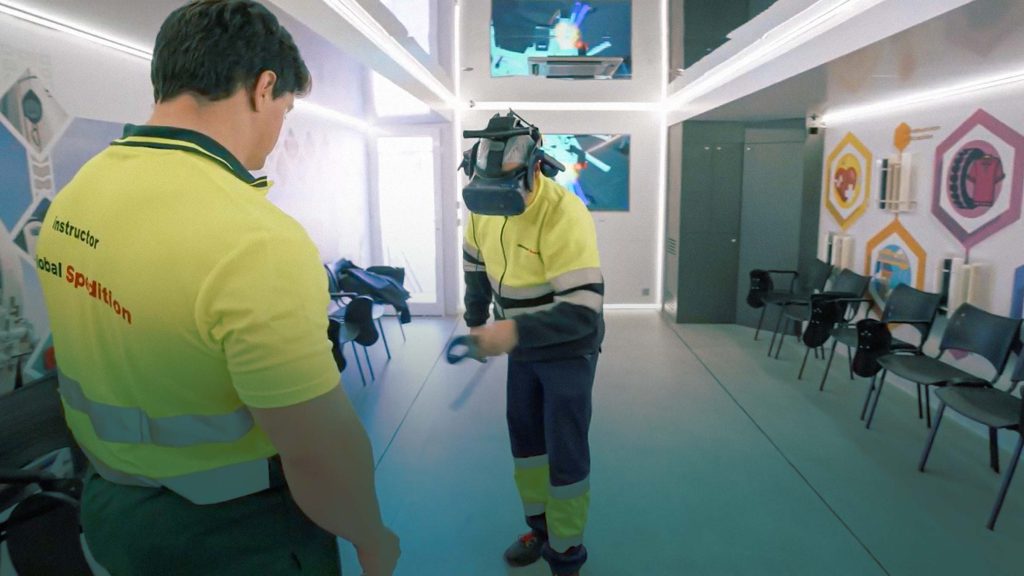
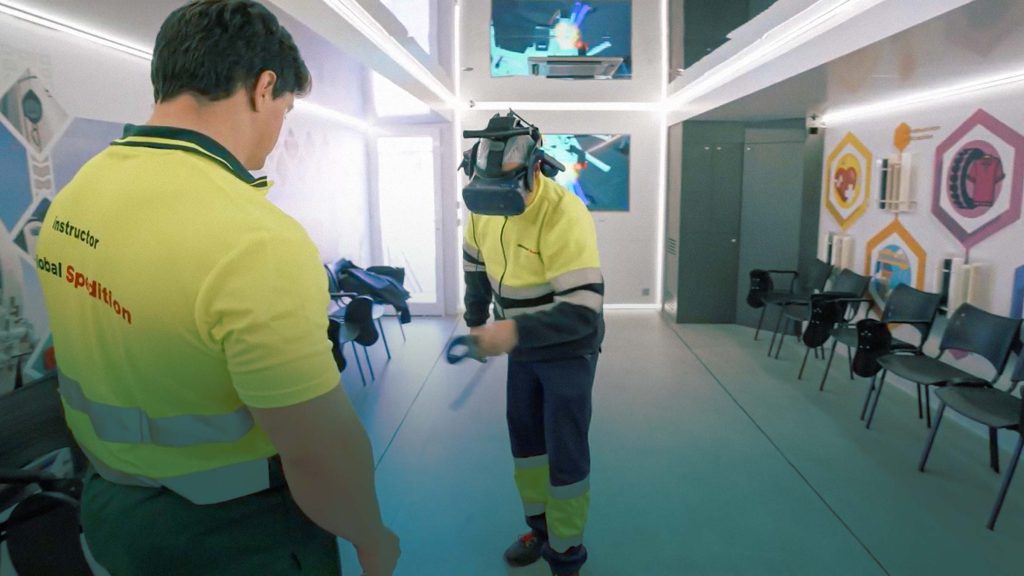
Global Spedition
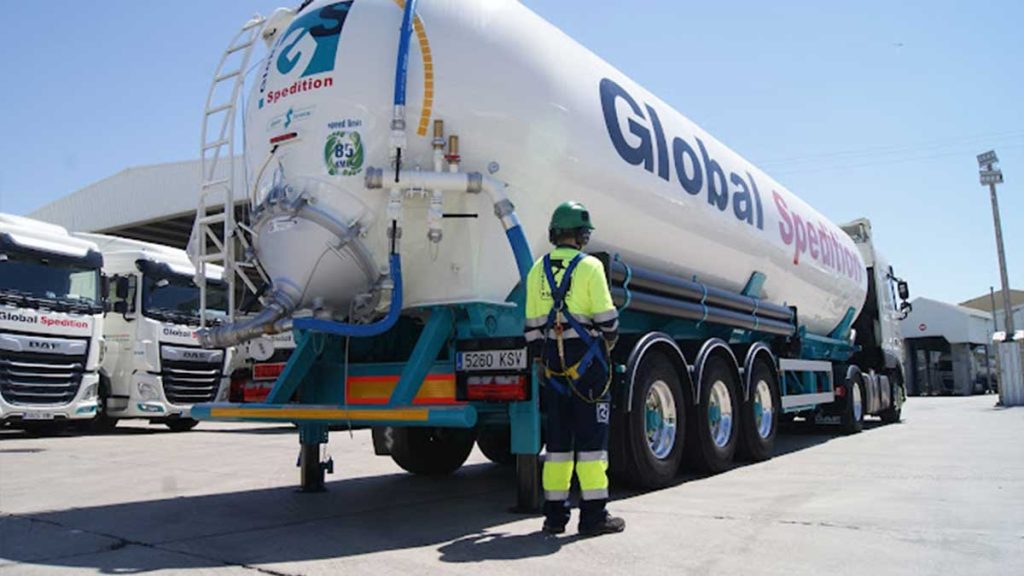
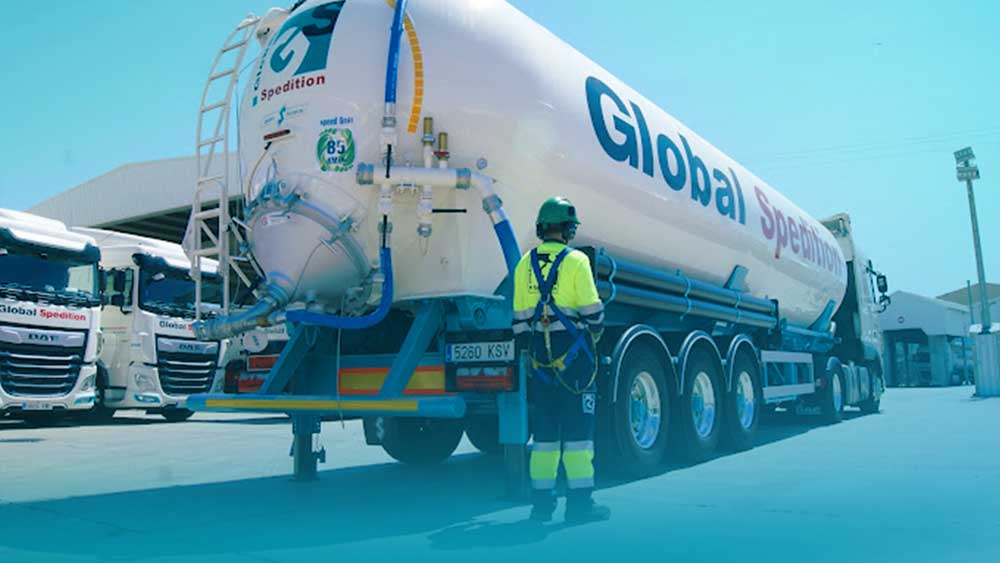
In order to improve occupational risk prevention, we have developed a virtual reality training experience that simulates the processes loading and unloading of trucks. This solution made it possible to transform manuals and traditional presentations into a immersive and gamified training , where workers practice safety protocols in a virtual environment, reducing the average training time, while learning the procedures in a safe environment. If you want to discover how virtual reality can transform your teams' preparation, at Imascono we design immersive solutions tailored to each organization to improve decision making in risk environments. Contact our team and takes training to the next level.
Simulation and virtual reality in the industrial sector: Use cases
In an increasingly dynamic and competitive industrial world, simulation and virtual reality have become essential allies in revolutionizing the way companies design, train, operate and communicate. . In this blog you will discover how immersive technologies are transforming key sectors, raising efficiency, safety and innovation to unprecedented levels. Through real case studies and pioneering projects from Imascono , you will learn how industry leaders such as IVECO, Tenías Group, Certest and Global Spedition are leveraging virtual simulators, digital twins and virtual reality training to drive their processes and position themselves as leaders in their markets. Get ready to explore the industrial future, where the virtual becomes the engine of real success. .
Transforming the industrial sector with immersive technologies
The industrial sector is undergoing an unprecedented transformation thanks to the adoption of immersive technologies such as virtual reality, simulation and artificial intelligence. These tools allow create realistic digital environments to train employees, simulate critical processes or design products more efficiently and safely . This is a key evolution within the Industry 4.0 concept, which seeks greater flexibility, sustainability and operational precision. The industrial simulators and digital twins facilitate remote collaboration and decision making, connecting global teams in intelligent virtual spaces. This breakthrough positions companies within the Industry 4.0 , where digitalization and sustainability combine to improve competitiveness. Adopting these immersive technologies is no longer an option, but a necessity to innovate, reduce errors and lead in an industrial market. You can learn more about the Industry 4.0 and its main characteristics in our blog post: https://imascono.com/que-es-industria-4-0/
Key applications of simulation and virtual reality in industrial environments
The advent of virtual simulators and extended reality is revolutionizing many areas of the industrial sector. From specialized training to predictive maintenance, these technologies are helping to optimize processes, minimize risks and accelerate innovation. Below, we explore the most impactful applications.
Immersive technical training for operators and technicians
Training operators and technicians with immersive virtual simulators is much more than a simple training, it is a realistic and safe experience that allows you to practice complex tasks without real risks . With virtual environments that replicate machinery and industrial scenarios, technical training becomes more effective, intuitive and scalable. Operators can deal with emergency or critical maintenance situations, gaining confidence and skill without stopping production.
Simulation of processes and work environments
Industrial simulators allow recreate production lines, logistic flows and work environments to test and optimize each step before implementing it in reality. This virtual testing capability reduces prototyping costs and eliminates common errors in the design phase, accelerating innovation and improving operational efficiency . Companies in sectors such as automotive, energy and manufacturing are already betting on digital twins and virtual simulators to maximize results.
Predictive maintenance and assistance
Thanks to the virtual reality and artificial intelligence , maintenance tasks can anticipate potential failures by means of industrial simulators that identify hazards and guide repairs . In addition, remote assistance in 3D virtual environments connects expert technicians and operators in real time, facilitating the resolution of complex incidents without the need for travel.
Customer feedback
Immersive technologies have changed the dialogue with customers and industry partners. Collaborative virtual spaces allow to present prototypes, perform product tests and collect feedback in real time, optimizing design and adapting solutions to specific needs. . This digital interaction opens up new avenues for open innovation and customization of industrial offerings.
Avatars for process and corporate culture training
The virtual avatars with AI help to manage and integrate the operational and corporate communication to workers in a fast and efficient manner, solving doubts about industrial processes as well as about the company's own culture. , all in real time, both offline and online, generating a lasting impact and improving staff engagement .
Strategic benefits of adopting these technologies in industry
The incorporation of virtual simulators and immersive technologies in the industry not only represents a operational improvement , but a real competitive advantage . These tools transform traditional processes into digital experiences that drive productivity, safety and innovation. Improved security: Thanks to industrial simulators, companies can train their personnel in safe and controlled environments, minimizing accidents and reducing risks in critical tasks. Immersive training makes it possible to practice emergency situations without endangering anyone. Resource optimization: Simulating processes and environments before implementation avoids costly errors, reduces downtime and maximizes the efficient use of materials and machinery. Increasing savings and process agility. Improved knowledge transfer: Virtual simulators facilitate hands-on, immersive training that improves knowledge retention and assimilation. Operators are better prepared, which is reflected in more accurate and efficient execution. Collaboration and global connectivity: Immersive solutions allow geographically dispersed teams to connect in shared virtual spaces, enhancing cooperation, joint decision-making and open innovation. Strengthening of the brand image: Implementing this type of technology positions the company as an innovative benchmark committed to technological excellence and labor responsibility, reflecting values aligned with sustainability by minimizing the use of physical resources. This combination of innovation and commitment strengthens the trust of customers and employees, enhancing the brand's reputation.
Main technological applications in industry
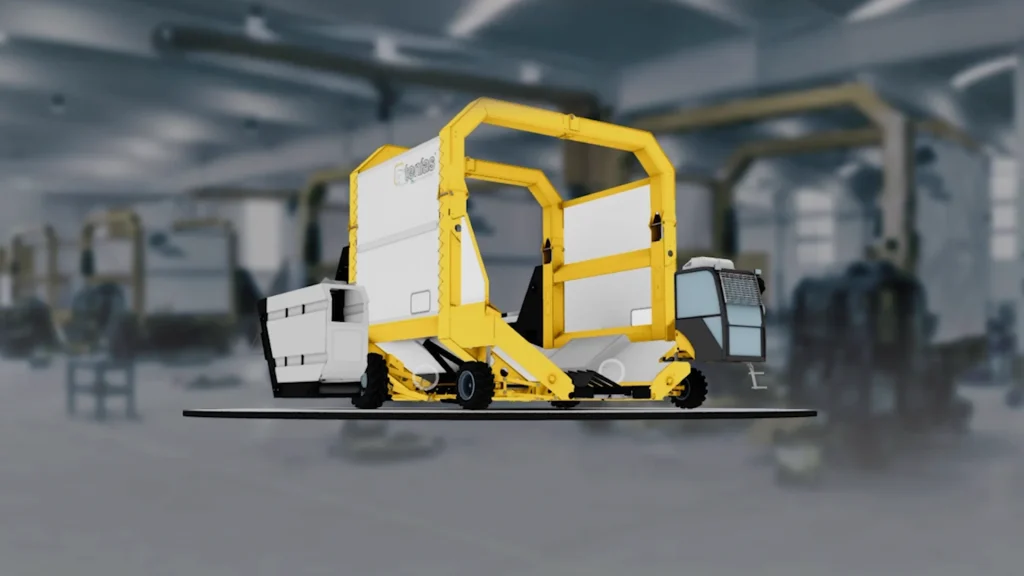
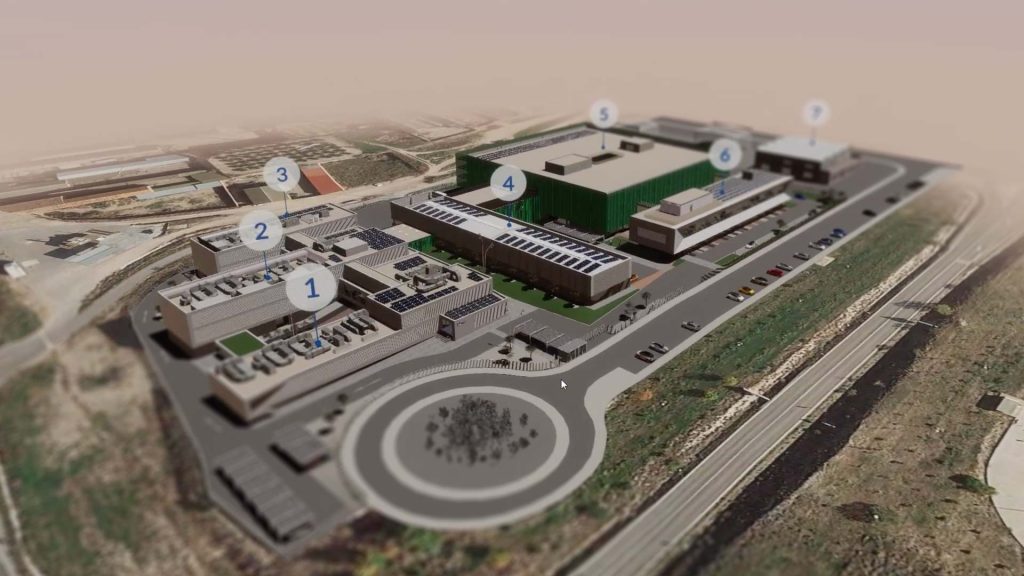
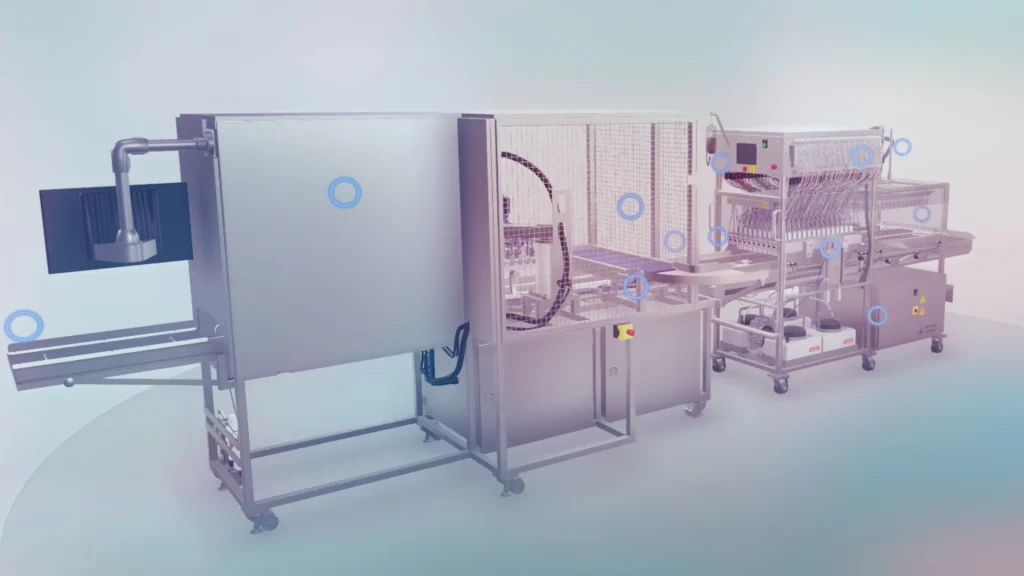
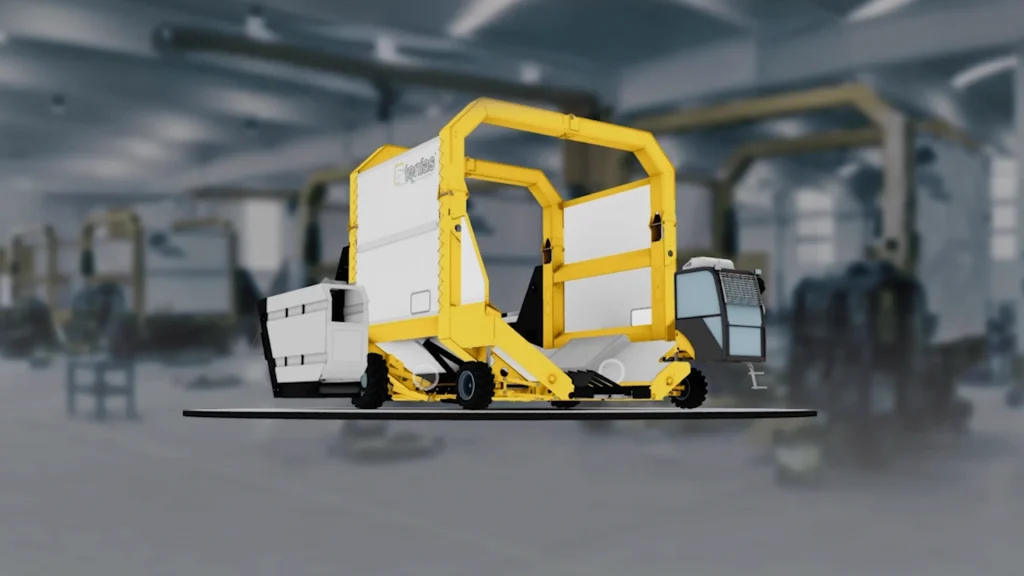
These technologies are demonstrating a real and measurable impact on industry, as evidenced by the following projects developed for industry leaders. These initiatives reflect how their applications have redefined different processes within industrial companies. IRIA IVECO: IVECO, a leader in commercial vehicles, was looking for improving training and internal communication for its thousands of employees. Together with Imascono , created IRIA, a avatar with artificial intelligence that centralizes access to training and consultations . IRIA provides fast and autonomous responses, enhancing the user experience. The internal team monitors its use to continuously optimize the platform. This project demonstrates the power of AI to transform industrial knowledge management. TENIAS GROUP: Grupo Tenías, a leader in agricultural machinery, needed an innovative way to showcase its products without relying on physical transportation. Imascono developed a Virtual Twin with interactive 3D design that allows 360º demos of your machines. This solution facilitates understanding and enhances the experience commercial. In addition, reduces logistical costs and accelerates sales . Thus, Grupo Tenías takes a digital leap in its commercial strategy. CERTEST: Certest, a biotechnology company in expansion, sought to showcase its new facilities globally . Imascono developed an interactive virtual twin that replicates in detail its buildings and production lines. The virtual tour is accessible from cell phones and tablets , The twin is updated in real time by means of a real-time twin display. In addition, the twin is updated in real time through a Custom CMS . Thus, Certest connect with customers and partners in an innovative and efficient way. GLOBAL SPEDITION: Global Spedition, with extensive experience in hazardous materials transportation, needed to improve the safety training of its employees. Imascono created immersive virtual reality training, converting traditional manuals into gamified experiences . This solution allowed a faster and more effective learning in safe environments . The employees appreciated the training as useful and entertaining. Thus, Global Spedition reinforces its protocols with innovation and efficiency. Want to bring simulation and virtual reality to your industry? At Imascono we have the experience and technology to transform your processes and enhance your innovation. Contact with us and find out how we can help you make it happen.
How prototyping in VR is shaping the future of design
In a world where innovation is moving faster than ever, design processes could not be left behind. Prototyping in vr has arrived to revolutionize the way we conceive, test and refine products, moving from static sketches to immersive virtual experiences that can be explored, adjusted and validated in real time. This new way of prototyping not only reduces costs and speeds up times, but also opens the door to more collaborative, creative and effective experiences. From sectors such as education the health the logistics or the entertainment , companies around the world are already discovering how virtual reality transforms every stage of design. Discover with us in this blog how to implement immersive solutions to make the leap into the future.
The rise of virtual reality prototyping
The VR prototyping have revolutionized product design, allowing ideas to materialize quickly without the need for costly physical models. This technology accelerates iteration, reduces risks and allows experimentation with materials and functionalities in a totally safe and controlled environment, optimizing resources and making decisions based on tangible experiences. In addition, VR facilitates global collaboration: designers, engineers and stakeholders can interact simultaneously within the same virtual prototype, improving creativity, decision making and ensuring that the final product meets expectations from the first version. In short, prototypes in VR is not only transforming design processes, it is redefining the future of innovation.
Why virtual reality prototype models are changing design thinking
Contemporary design is no longer limited to paper sketches or physical models that consume time and resources. Virtual prototypes and are redefining how teams think about, create and validate products. Virtual reality allows experimentation with ideas from their earliest stages, promoting a more intuitive and user experience-centric approach. Thus, design thinking is enriched: it becomes more agile, visual and collaborative, aligning creativity and technological efficiency as never before.
How do virtual reality prototypes transform design processes?
VR prototyping revolutionizes every stage of design, offering advantages that seemed impossible before:
Faster iterations and lower costs: Design iterations happen in a matter of hours, eliminating the need to build multiple physical prototypes and significantly cutting expenses.
Immersive testing and real-time feedback: Designers can experience the product in a virtual environment, spotting issues and fine-tuning details on the fly, which leads to more accurate and effective decisions.
Collaboration across teams and locations: Professionals from different disciplines and places can meet inside the same virtual prototype, sharing ideas, reviews, and improvements in real time, with no geographic barriers.
Adopting VR Protoyping into your workflow
Bringing VR prototyping into the daily work of design teams is not just a trend; it is a strategic step toward innovation and efficiency. Integrating virtual prototypes into your processes helps optimize resources, speed up the validation of ideas, and raise the quality of projects from the very start. But, like any transformation, it requires following these guidelines:
Choosing the right VR platforms
Choosing the right platform is key to success. From immersive training software to multi-user collaborative environments, there are multiple options on the market. The challenge lies in selecting the ones that best suit your industry needs, existing design flows and the level of scalability you are looking for. With a strategic approach, VR prototyping becomes a catalyst that integrates creativity and technology.
Developing skills and partnering with experts
Adopting this methodology goes beyond technology: it requires skilled talent and a network of expert allies. The learning curve can be shortened by collaborating with specialized partners who bring experience in the implementation and customization of virtual environments. At Imascono , We not only develop customized solutions, but also accompany teams in their transformation, ensuring that each step is aligned with the company's strategic objectives.
Measuring ROI and continuous improvement
The true value of prototyping in vr is measured in results: reduced physical prototyping costs, accelerated time-to-market, increased customer-perceived quality, and improved collaboration and learning across teams. With clear metrics and continuous improvement processes, organizations can ensure that investment in virtual reality translates into tangible impact. With the creativity and expertise of Imascono, each virtual prototype is an investment in the future of each company.
Which businesses can benefit from the rise of VR in prototyping?
VR prototyping is not exclusive to one sector; its flexibility and ability to transform processes make it a cross-cutting tool that impacts industries as diverse as education, logistics, healthcare or entertainment. Any organization seeking to innovate, optimize resources and offer differential experiences can take advantage of its potential and accelerate its digital transformation. At Imascono We have already helped companies in different sectors to take this leap into the future:
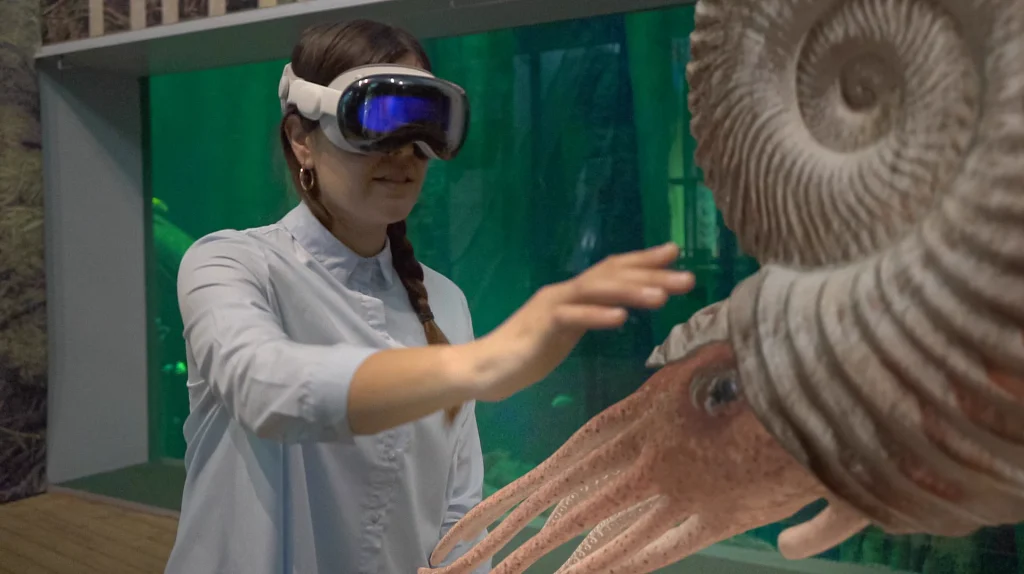
Spatial Computing Aquarium: A project that took the user experience to a whole new level, combining virtual reality and immersive interaction to create a fascinating educational environment. Together with the Zaragoza Aquarium, we developed this pilot project for a tour of the facilities, giving visitors the chance to do everything from talking live with their own personalized guide and seeing a 3D recreation of a coral reef with ammonites from more than 200 million years ago, to touching a life-size elephant or traveling to the center of an erupting volcano, enriching the entire visit.
Global Spedition: Through a virtual training platform, we turned traditional manuals and PowerPoint decks into immersive, gamified training. The best part of this project was the employees' reactions. Used to more conventional occupational health and safety training, they saw this experience as a useful, fun, and fast way to learn response and safety protocols. As a result, we optimized the team training processes, with an immediate impact on productivity.
Kai XR Platform: In the educational field, we developed a solution that democratizes access to immersive content for students, turning learning into an active and memorable experience. The result is an accessible, sophisticated, and intuitive VR web application accessible from web browsers, both on computers and mobile devices, as well as from the actual virtual reality glasses. Already more than half a million children are enjoying the educational experiences!
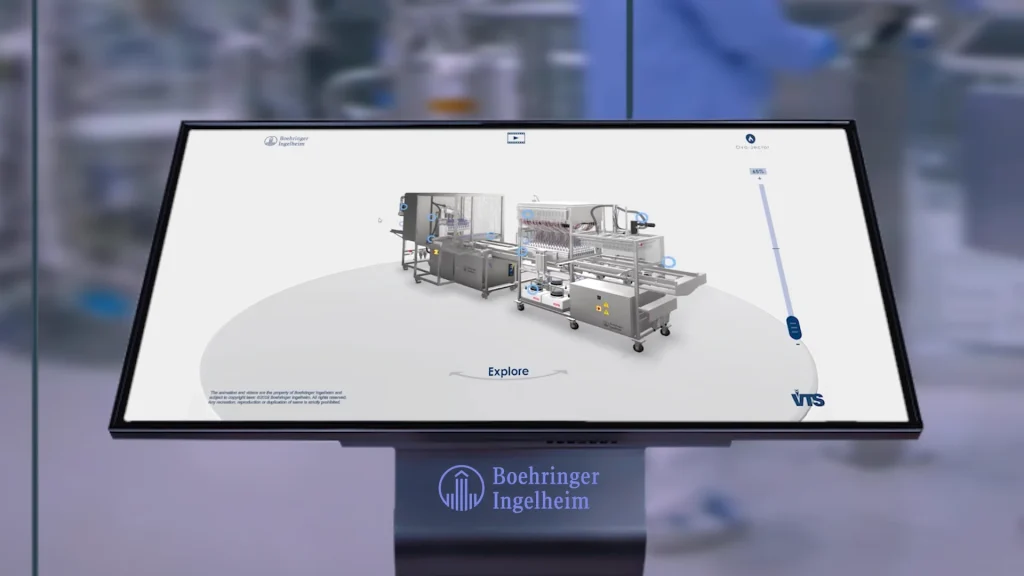
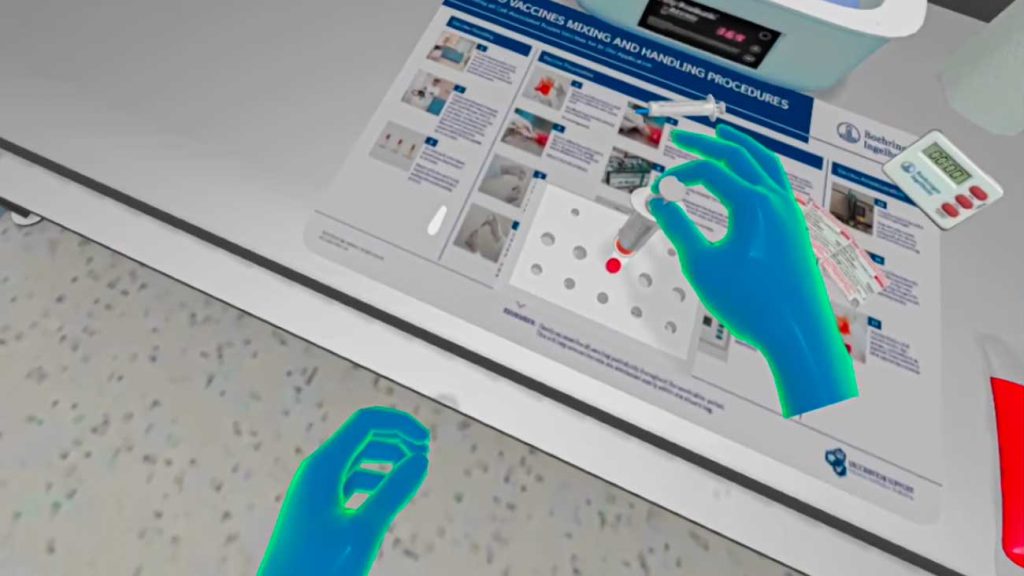
Vaccines: In the healthcare sector, we created an immersive training experience on vaccines for Boehringer Ingelheim, making complex processes easier to understand in a more visual, interactive, and effective way. A clear example of the value VR brings to highly specialized industries. This allows Boehringer to deliver training in different parts of the world at the same time, in the language the laboratory specifies, while saving on travel costs and on materials used exclusively for training.
Enhance your design prototypes with Imascono's virtual reality solutions for businesses.
In a world where innovation makes all the difference, the VR training has become one of the most powerful tools for transforming ideas into tangible realities. At Imascono we do not only develop virtual prototypes s We help companies to imagine their design processes, optimize resources and offer unique experiences to customers and training teams. Our experience positions us as the ideal partner to integrate virtual reality solutions that bring real value to your business. From conceptualization to implementation, we work with you to create virtual environments that enhance creativity, accelerate time-to-market and improve decision making. Because each prototype is much more than a model, it is the foundation on which the future of your company is built. If you want to learn more about virtual training, get in contact with us and discover how VR solutions from Imascono can take your design and prototyping to the next level. Find out more about how: step-by-step integration of virtual reality in your company
AI personal shopper: Trends that are transforming retailing
Imagine a world where your personal shopper never sleeps, knows your tastes in detail and accompanies you on every device, from your mobile to the physical store, offering recommendations that seem tailor-made. That world is already a reality thanks to the inteligencia artificial , The company is revolutionizing retail and transforming the way we shop, discover products and live memorable experiences. In this blog we invite you to explore how AI is redefining the future of personal shopper: from personalized styling and virtual fitting to intelligent avatars that guide your shopping and optimize logistics. Plus, you'll learn about real-life success stories, such as Fabiola de Saphir Parfums , La Torre Outlet Nougat and the interactive campaign of The Body Shop , The results show that technology not only enhances the experience, but also drives sales, engagement and loyalty. Are you ready to find out?
What role does AI play in personal shoppers?
Artificial intelligence has completely redefined the role of the personal shopper, transforming him or her from a human in-store advisor to a digital assistant capable of delivering personalized experiences. Thanks to data analytics, machine learning and customer adaptability , AI understands the tastes, habits and context of each user, recommending products with a precision impossible for a human. This not only improves the shopping experience, but also boosts loyalty, increases average cart value and turns every interaction into an opportunity to surprise the customer. Moreover, AI does not replace the traditional advisor, but enhances it by automating tasks, anticipating needs and optimizing retail operational management. However, this advance brings with it great responsibilities: ensuring ethics, transparency and privacy in the use of data will be key to consolidating consumer trust. In short, AI is positioned as the engine driving the future of the personal shopper , combining technological innovation, efficiency and a more human customer experience than ever before.
Key roles redefining the future of the personal shopper
The evolution of the AI-driven personal shopper is not only redefining the customer experience, but also the key functions that make it possible. Here are the five functions that are shaping the future of retail.
Personalized styling
AI is taking the concept of styling to a new level. It seeks to understand each consumer in depth: their morphology, preferences, lifestyle and even their mood. AI algorithms analyze millions of pieces of data to build a dynamic "style profile" that evolves with every interaction. Thus, the The digital personal shopper becomes a unique advisor, able to offer a precise and unique recommendation for each user.
Visual search and product discovery
Visual search is one of the most powerful trends in retail today. Driven by computer vision and machine learning, it removes language barriers and transforms inspiration into action. For the user, it means effortless product discovery, and for brands, a golden opportunity to increase conversion and drive inspiration at the digital point of sale.
Virtual fitting rooms
Thanks to the augmented reality and AI, the physical testers are no longer essential. Virtual fittings allow customers to "see themselves" in different garments or accessories in real time, adapted to their silhouette and environment. This technology improves the shopping experience, reduces returns and strengthens online consumer confidence . The future of the fitting room is on mobile, where technical precision is combined with an immersive and fun experience.
Conversational trading through AI avatars
Conversational commerce has taken a qualitative leap forward with the arrival of AI-powered avatars. These virtual assistants don't just answer questions; they guide, recommend and accompany customers throughout their purchasing journey in a natural, empathetic way. At Imascono, we see these avatars as the perfect union of storytelling and technology. A new channel to humanize e-commerce, drive engagement and create experiences customers will remember through this new form of customer service.
Logistics forecasting and optimization
The new personal shopper doesn't stop at recommending a product; AI does too. ensures that the item is in stock, delivered on time and in the perfect size . Through predictive analytics and demand modeling, intelligent solutions anticipate trends, optimize inventories and reduce logistics waste. By providing the supply chain with a more agile, sustainable and aligned service with the expectations of the modern consumer. AI thus becomes the silent engine that connects personalization with efficiency.
Benefits of implementing AI in retail through personal shoppers
Artificial intelligence applied to retailing through personal shoppers is transforming the shopping experience into a much more personalized, efficient and emotional interaction . Thanks to data analytics and machine learning, brands can now offer accurate recommendations, anticipate customer needs, and anticipate customer needs and optimize internal processes, from inventory to after-sales service. The result: more satisfied customers, greater customer loyalty and an increase in the average value of each purchase. In addition, AI avatar-driven personal shoppers are multidevice , This allows for a seamless and consistent experience between mobile, desktop, physical stores or even augmented reality environments. These virtual advisors accompany the user at any time and any place , creating an omnichannel connection that combines human proximity with technological innovation. Thus, retail is evolving towards a smarter, more sustainable and consumer-centric model.
Success stories of Artificial Intelligence in retailing
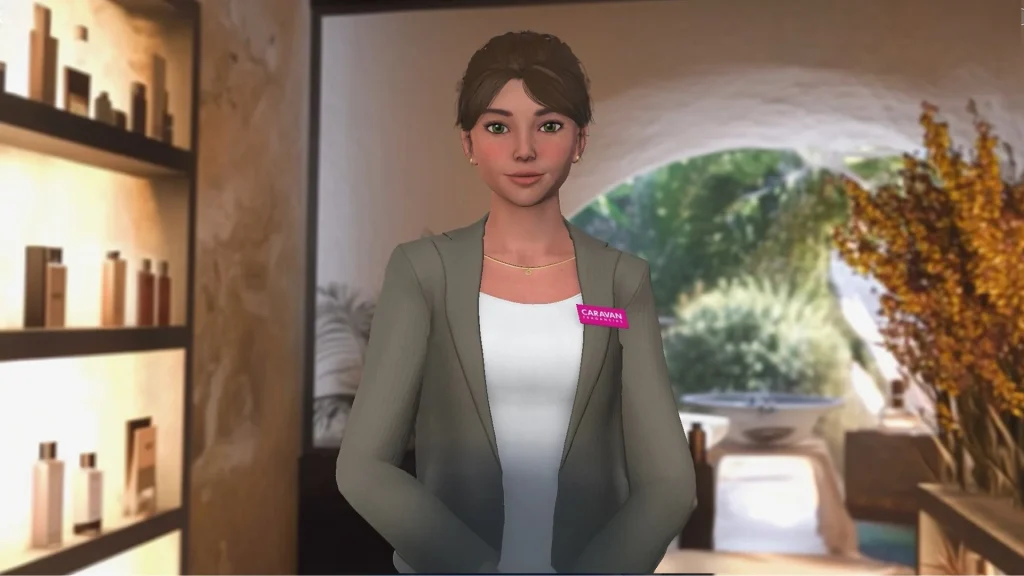
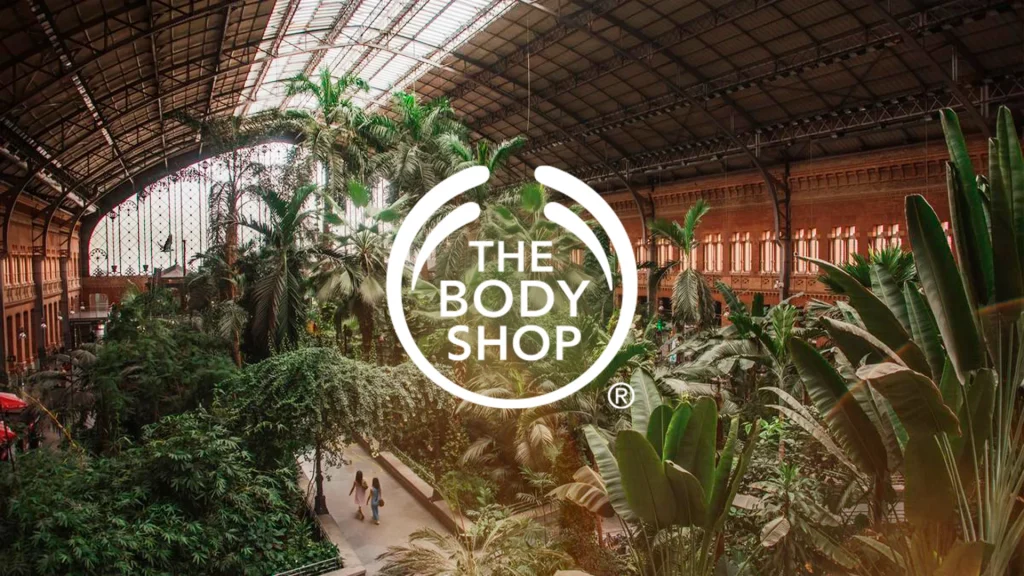
The following success stories show how AI applied to retail is transforming the shopping experience, from avatars that advise customers to immersive in-store experiences. Below, we review three projects that exemplify this transformation.Fabiola SaphirIn this project, developed together with Caravan Fragancias, the brand took a qualitative leap in its customer experience by implementing an intelligent avatar named Fabiola. This solution was integrated into physical points of sale via QR codes, in addition to its online presence, with the aim of offering personalized recommendations in real time from among more than 125 fragrance references. This avatar has enabled every user to receive personalized advice both in store and on mobile. TurrónLa Torre Outlet in Zaragoza trusted Imascono to transform its Christmas shopping experience through Turrón, a charming AI-powered virtual avatar that acts as a shopping assistant: it suggests personalized gifts, tells Christmas stories, and lets users create and share their letter to Santa Claus and the Three Wise Men.In its first weekend, it registered 500 users, with an average conversation length of 4 minutes and up to 90 conversations triggered per day. The body shopIn this initiative, The Body Shop and Imascono deployed an interactive augmented reality photocall at Atocha station (Madrid) during the Christmas campaign. Travelers took photos in front of the screen, 3D brand elements appeared, and they could then redeem surprise gifts in store.The campaign achieved significant results: 5,000 people took part thanks to the photocall giveaway, and the average purchase ticket rose by 20%. This activation shows how AI and immersive technology can transform the point of sale.Want to take your business to the next level with an AI-powered personal shopper? At Imascono, we help you design and implement innovative solutions that combine technology, creativity and customer experience. Contact us and find out how.
What does 6DoF mean in VR? Understanding the 6 degrees of motion
Imagine being able to move, interact and explore a virtual world in complete freedom as if it were real. This is the 6DoF ( six degrees of motion ), the most advanced technology in VR that transforms video games, simulators, professional training, medicine and tourism into experiences. fully immersive and realistic . Although its adoption still faces challenges due to cost and complexity, Imascono makes 6DoF accessible through customized solutions such as training sessions Virtual Trainings and the gamified experiences of Virtual Reality allowing companies and users to experience virtual reality in a simple, effective and surprising way. In this blog article, we will guide you step-by-step to discover what 6DoF is, how it enhances VR, its applications in different sectors and how you can experience it today . Get ready to enter virtual reality as you have never experienced it before.
What is 6DoF (Six Degrees of Freedom)?
The term 6DoF ( Six Degrees of Freedom ) defines the six degrees of freedom of movement that allow the user to move in a virtual environment just like in the real world. It includes both rotations (turning the head, looking up/down, leaning) as translations (moving forward, backward, moving laterally or approaching an object). Unlike 3DoF, with the six degrees of motion the user not only observes, actively participates in the experience, achieving a realistic and transformative immersion. At Imascono we define it as the immersive VR master key with applications ranging from entertainment to business training. This freedom of movement is what we seek to develop in each of the virtualized trainings that we generate for companies in the industrial and health fields through the Virtual Trainings . Simulations for the training and testing of processes, machinery and work procedures in which the user drives the direction of the experience. Perfect for high-risk training where tacit knowledge and learning-by-doing play a key role in learning.
How 6DoF enhances VR Experiences?
The real meaning of 6DoF is how it transforms the way we move and interact in virtual reality. Thanks to the six degrees of motion users are no longer limited to observing, but can also walking, approaching, dodging or manipulating objects as if they were in the real world, making interactions much more intuitive and natural. This freedom of movement translates into a unprecedented immersion and realism . The brain interprets virtual stimuli as responding coherently to each physical action, blurring the boundary between digital and real. The result: memorable experiences that generate authentic emotions and a level of presence impossible with more basic technologies such as 3DoF. In addition, the 6DoF is already a reality thanks to the compatibility with the main VR devices on the market . This evolution of hardware allows companies and creators to take advantage of the full potential of the Immersive VR designing innovative solutions that combine movement, realism and emotional connection. You may be interested in → Virtual Reality: Examples and applications As an example of a use case we can talk about the project of KAI XR Platform . KAI XR is a U.S. company that uses the virtual reality y la freedom of movement 6DoF (Six Degrees of Freedom) to transform education into an immersive, interactive and meaningful experience. Through its platform, children can move and explore virtual environments with total freedom, learning in a hands-on and participatory way. This approach empowers understanding and retention of knowledge it encourages curiosity and creative thinking, and turns learning into a stimulating and collaborative adventure.
Benefits and applications of 6DoF in VR
The 6DoF , o six degrees of motion is not just a technical term, it is the key that opens up a world of possibilities for richer, more interactive and memorable virtual experiences. Its benefits go far beyond entertainment, impacting multiple sectors where immersion and precision are essential.
Games and immersive experiences
In video games and entertainment experiences, the 6DoF takes immersion to the next level . Players can explore virtual worlds with total freedom, interact with objects, avoid obstacles and actively participate in the narrative. The difference with less advanced systems is abysmal: you no longer look, you live the story .
Simulators and design
At simulators and industrial design the six degrees of motion allow scenarios and prototypes to be recreated with millimetric accuracy. Engineers, architects or designers can move inside a 3D model, evaluate ergonomics, detect problems and optimize processes without having to physically build the product.
Professional training
The 6DoF is an invaluable resource for professional training from machine operations to training in complex environments. Freedom of movement ensures that users learn by doing developing skills with safety, efficiency and fidelity to reality.
Medical procedures
At medicine the 6DoF revolutionizes the way we train and practice surgical procedures . Professionals can simulate surgeries with total precision, practice complex movements and reduce risks, improving both preparation and confidence in real environments, allowing error in learning and saving costs and healthcare material. An example of this can be found in the Boehringer Ingelheim virtual laboratory where healthcare professionals could practice handling and preparing the pharma's latest liquid medicines. You can learn more about the use of VR technology in healthcare in the article: Virtual Reality and Medicine .
Tourism experiences
Even tourism benefits from the 6DoF. Travelers can explore destinations, museums or monuments in 3D. As if they were there, walking freely, observing details and enjoying personalized experiences that inspire wanderlust and emotional connection with the place. Can you imagine crossing a suspension bridge between two mountain peaks? Skiing without leaving the city? In the Frozen Emotion VR project was able to bring the snow and skiing of the Pyrenees to virtual reality. Using the full potential of the 6DoF by complementing it with a physical bridge, taking the adrenaline of the users to the maximum!
The current reality of 6DoF in VR
Today, the 6DoF represents the pinnacle of VR technology . With its six degrees of motion offers fully immersive experiences where the user can move, interact and explore virtual environments like never before. The sense of presence is total, and the creative and professional possibilities are virtually limitless. However, this cutting-edge technology is still has not been generalized . The main challenge is that the devices and software necessary for 6DoF involve higher costs and technical requirements than the most basic VR systems. This limits their adoption, especially for companies looking to implement immersive experiences without compromising their budget. At Imascono We understand these barriers and turn them into opportunities. We offer customized services tailored to each company and its specific needs from experience design to the complete integration of the necessary hardware and software. What we know Spaceship Projects customized projects. In this way, implementing 6DoF is no longer an unaffordable luxury, but a solution. realistic, scalable and strategic capable of generating real impact in any sector.
Experience 6DoF VR easily thanks to Virtual Training by Imascono
With Virtual Training, experiencing 6DoF in VR has never been easier or more accessible. . Our Virtual Reality product combines the latest software to deliver fully immersive experiences, tailored to each user and each company. From professional simulations to entertainment environments, Virtual Trainings allows you to move, interact and explore with total freedom, realizing the full potential of the six degrees of motion . At Imascono we know that each project is unique. That's why these virtualized simulations and training adapt to your needs, facilitating the implementation of 6DoF without technical complications or large investments. We want your team and your customers enjoy the highest quality VR experiences in a simple and effective way. . Want to find out more? Contact with us today and let us guide you in the creation of fully immersive and customized virtual experiences.
Virtual Reality in Industry: Main uses, benefits and outstanding examples
The digital transformation is advancing by leaps and bounds, and the Virtual Reality has become a key tool for companies seeking to improve the quality of their products and services. innovate, optimize processes and improve safety in their operations. From industrial process simulation to advanced training and remote maintenance, VR is redefining the way companies work, reducing costs and maximizing efficiency. In this article, we will explore the main Virtual Reality applications in the industry its key benefits and success stories developed by Imascono . Find out how companies in a variety of industries are already using this technology to train their employees. more effectively. Minimizing risks and accelerating your innovation processes. Are you ready to take the leap and revolutionize your training process? Read on and find out.
Impact of Virtual Reality on the industry
The Virtual Reality technology has ceased to be just an entertainment technology and has become a transformative tool in the industry. From manufacturing to vocational training, Virtual Reality (VR) is redefining the way companies design, operate and train their teams. . Companies that have adopted the experience of Virtual Reality not only have they optimized their processes, but they have also reduced costs, improved safety and enhanced efficiency . Allowing to simulate real work environments with an impressive level of accuracy, offering immersive experiences that increase productivity and innovation. In addition, these VR experiences help to deepen training and prevention in occupational hazards, by developing simulations of risky environments where professionals can practice and train; as in the case of the Global Spedition Virtual Training . In sectors such as automotive the construction the health and logistics, Virtual Reality is driving an unprecedented digital revolution and generating a direct impact on their competitiveness. The result? Fewer mistakes, greater safety and more effective learning. If you are interested, here you can find out more about the benefits of VR training in factories
Main applications of Virtual Reality in the industry
The Virtual Reality has opened up a world of possibilities in the industrial sector, transforming processes, optimizing operations and raising efficiency to unprecedented levels. Below, we explore the most impactful applications of this technology that is revolutionizing the industry.
Simulations in industrial processes
Factories and production plants are integrating Virtual Reality to simulate complete industrial processes prior to actual implementation. The benefit? Reduction of errors, time optimization and less waste of materials, especially in the early stages of training . Thanks to Virtual Reality, factory engineers, for example, can visualize and test assembly lines, detect faults before they occur and improve efficiency without stopping production. You can continue reading about the training and simulations at Simulation learning positions itself as a key model in high-risk environments
Training and education
Training in industrial environments often involves risks and high costs. Especially if there is a clear opportunity cost (if I dedicate machine hours to training and not to production). Virtual Reality allows you to train employees in a safe environment, without endangering their integrity or the machinery. . In addition to giving them more time for trial and error (they can do the virtual training as many times as they need) without having to use the real machine or product, at least in the early stages of training. The result: a faster learning, reduced accidents and improved retention of knowledge. Learn about all the benefits of this type of training → Virtual Training: virtualized training and simulations
Remote equipment maintenance
Thanks to the Virtual Reality technicians can receive real-time assistance from anywhere in the world for troubleshooting in industrial machinery and equipment. This minimizes downtime, reduces costs and allows a quick response to critical breakdowns. Using Virtual Reality to guide operators in maintenance without the need to send experts to the site, optimizing time and resources.
Product design
Virtual Reality has revolutionized product development by enabling the creation of fully interactive virtual prototypes. Companies can visualize and modify designs in a 3D environment before physically manufacturing a single component, saving time and money unnecessary iterations. This is also an advantage at the customer level, since it allows them to customize their products and, above all, to be able to see them virtually before they are finished. This helps to better understand their utilities and advantages, as well as facilitating a greater connection. An example of this can be found in the Boehringer Ingelheim's virtual proposal for the commercialization of your oviparous machine OVO Xtractor . That in addition to having a version interactive infographic had his experience in Virtual Reality.
Key benefits of Virtual Reality in the industry
Investing in Virtual Reality in the industrial sector is not just a commitment to innovation, is a strategy to improve efficiency, reduce costs and increase safety in industrial environments. . Next, we explore the three key benefits that make VR an indispensable tool in the industry.
Improved safety
The industry is full of dangerous environments where a mistake can be costly. Virtual Trainings allow workers to be trained in hazardous conditions without exposing them to real hazards.
Emergency simulation: Training for critical situations with no physical risk to staff.
Occupational health and safety: Better preparation to operate machinery or react to unexpected events. Taking OHS training to new levels of immersion and realism.
Controlled environments: The ability to rehearse procedures or new action plans in virtual simulations before applying them in the real world.
These virtual training can be applied to all types of sectors, but, in their commitment to safety, they are most important in the industrial sectors. From automotive to manufacturing, including construction and foodstuffs.
Process and time optimization
In the industry, time is money Virtual Reality helps to optimize it like no other technology. How? Enabling rapid design iterations and streamlining decision making.
Accelerated prototyping: Test and tweak designs without having to physically manufacture each version. Designs can also be customized in real time within the immersive experience, which also helps you pay attention to every detail.
Faster training: Employees learn in immersive environments, cutting training time by eliminating all outside stimuli. Your senses of sight, hearing and touch (if haptic gloves and suits are included) are focused on the VR simulation itself.
Cost reduction
Implementing new processes, training employees or designing products from the ground up can be costly and risky . With the Virtual Reality companies can test, train and experiment in virtual environments before investing in physical resources.
Fewer errors: Thanks to simulations fed by the entire database generated by IoT sensors, it is possible to have a virtual twin with which to identify, or learn to identify, failures before they happen in reality.
Less wasted material: When it comes to training industrial professionals, teaching them through VR experiences helps reduce the consumption of physical resources, whether machinery or the manufactured products themselves, during the early stages of learning. Studies show that people learn 4 times faster through VR training (PwC).
Less travel: Access remote training and support with no travel expenses, no trainer costs and no translators for different languages.
A success story in this regard is the Vaccines virtual training process developed by the international pharmaceutical company Boehringer Ingelheim . Through its virtual laboratory, healthcare workers from all over the world could learn the preparation process of its latest liquid medicine in more than 7 languages and as many times as they needed thanks to its VR training.
Examples of Virtual Reality in the industry highlighted by Imascono
At Imascono we have positioned ourselves as one of the technology companies with the longest active years working on VR experiences in the industrial sector . Together with companies such as Siemens, Moeve, Certest, Boehringer Ingelheim, IVECO, CEVA, Iberdrola or Telefónica, we have developed innovative projects that transform the training, safety and operational efficiency of their teams. Below are some of the most emblematic cases: 💉 Vaccines Boehringer Ingelheim: Revolutionizing Pharmaceutical Training Boehringer Ingelheim, one of the world's leading pharmaceutical companies, collaborated with Imascono to develop a program of Virtual Reality training The aim is to instruct healthcare professionals in the process of preparing their new injectable product. This immersive experience allows users to familiarize themselves with each step of the procedure, ensuring thorough understanding and accurate execution with no associated risks. The The result is more effective, safe and efficient training. The product can be used in real environments. 🛡️ Global Spedition: Elevating Occupational Risk Prevention The logistics company Global Spedition took occupational risk prevention to the next level through an experience of Virtual Reality developed by Imascono . This immersive solution immerses employees into realistic scenarios where they can identify and manage potential hazards without exposing yourself to real risks . By practicing in a controlled environment, workers acquire skills critical to workplace safety, significantly reducing the incidence of accidents and promoting a safety culture proactive within the organization. 🐄 Ceva Velactis: Innovation in Veterinary Training CEVA, leader in the veterinary pharmaceutical industry partnered with Imascono to create a immersive simulation highlighting the uses and benefits of Velactis, your new product . This experience of Virtual Reality enables veterinary professionals to interact with a wide range of virtual environment that replicates real clinical situations . Facilitating a thorough understanding of product application and benefits. The resulting training is more dynamic and effective, improving knowledge retention and ensuring optimal application. At Imascono , we create immersive experiences that transform the industry, optimizing processes, improving safety and taking training to a new level. If you are ready to innovate and differentiate yourself with customized VR solutions, contact us today and we will help you as much as possible.
Applications of Artificial Intelligence in industry
The Artificial Intelligence is transforming the industrial landscape, revolutionizing the way companies operate and address current and future challenges. It redefines processes, optimizes resources, automates tasks and opens new frontiers of innovation. AI has become an essential tool for industry. In Industry 4.0, Big Data and Artificial Intelligence are essential for transforming productivity, for automation The system can be used for predictive maintenance and even for product customization on the production line itself. One of the most promising and versatile applications also involves the development of avatars and virtual agents to go beyond production and focus on the workers. Thus, AI can become a companion in your day-to-day life The virtual agents are also being integrated into physical environments, such as factories through robots, further expanding their impact. As technology advances, these virtual agents are also being integrated into physical environments, such as factories through robots, further expanding their impact. In this article, we will discover how AI is being applied in the industrial sector highlighting different use cases that are redefining the future of the industry.
The role of Artificial Intelligence in Industry 4.0.
The Artificial intelligence It is the key engine of the Industry, By transforming companies with solutions that optimize processes, analyze data in real time, and anticipate problems. Their ability to learn and adapt enables them to create smart factories and agile supply chains, offering a competitive advantage in an increasingly dynamic world.In addition, AI is paving the way for Industry 5.0, where Synergy between humans and machines improves the quality of life and fosters more productive collaboration. A clear example is cobots, collaborative robots that reduce the physical and mental workload of workers, promoting a safer and more efficient work environment.If you want to learn more about Industry 4.0, visit our article → What is Industry 4.0 and what are its main characteristics.
Applications of Artificial Intelligence applied to the industry
The industry is experiencing a significant transformation through the adoption of AI which offers innovative solutions to improve efficiency and optimize processes. From automating tasks to making decisions based on predictive analytics, Artificial Intelligence is changing the way businesses operate in key sectors such as manufacturing, logistics and customer service. The applications of AI in the industrial sector are countless, with direct benefits in efficiency, productivity and process optimization. Some examples are:
Predictive maintenance
The Artificial Intelligence-based maintenance in industry revolutionizes the way companies manage their equipment and machinery. . Thanks to real-time data analysis, AI can predict failures, enabling proactive intervention. This reduces downtime and optimizes asset lifecycles, generating significant savings in repair costs and avoiding unplanned shutdowns. The result is a more efficient, cost-effective and reliable operation The plant is equipped with a high capacity equipment, where each piece of equipment works at its maximum capacity, guaranteeing operational efficiency in the production lines.
Quality control
AI is redefining quality control in industry, ensuring defect-free products with accuracy impossible for the human eye to achieve. Using advanced machine learning and machine vision algorithms AI systems inspect and analyze each unit produced, detecting even the smallest defects with speed and accuracy. This allows companies to to improve consistency, reduce waste and raise quality standards The company's products and services have been designed to meet the needs of customers in increasingly demanding markets.
Worker assistance
Artificial Intelligence does not replace the worker, it empowers them. From systems that offer data-driven recommendations to virtual assistants that guide through complex tasks, Artificial Intelligence becomes a essential ally in the day-to-day work of employees. In addition, technologies such as the AI-driven Augmented Reality improve training and safety, creating a more productive and enriching work environment. In addition, the AI eliminates language barriers, facilitates accessibility for people with disabilities and offers hands-on training through advanced simulations. These innovations transform the work environment, making it more inclusive, safe and collaborative. .
Main benefits of Artificial Intelligence for the industry
The Artificial Intelligence for industry not only offers numerous advantages, but has become indispensable in the optimization of the production process of companies, contributing to their growth and success. Automate tasks, optimize resources, predict patterns or even perform predictive maintenance. are some of the benefits of using AI in the industrial world. Ultimately, seeking to increase efficiency at every stage of production. Let's take a closer look:
Improved productivity
Artificial Intelligence takes industrial maintenance to the next level, transforming a reactive approach into a predictive one . Thanks to advanced algorithms that analyze machine status in real time, AI anticipates failures before they occur, enabling proactive interventions. This reduces downtime, optimizes the use of resources and ensures that each piece of equipment operates at its maximum efficiency . The result: more profitable, reliable and efficient operations.
Increased process quality
The quality of industrial processes has reached new standards of excellence . AI systems identify errors and optimize variables in real time, ensuring consistent and accurate results. For example, machine vision and deep learning algorithms enable immediate defect detection, reducing waste and increasing customer satisfaction. Each process is refined, which ensures that companies can to meet the highest standards and remain competitive in a demanding and fast-paced market.
Factory management and monitoring
If we now focus on the internal management of factories, Artificial Intelligence provides advanced tools to monitor and control production in real time. Thanks to AI, companies can anticipate problems before they affect production, optimizing operational efficiency. This supervision facilitates faster decisions, reduces downtime and improves the quality of the final product. Driving factories towards continuous innovation and staying competitive in a demanding market.
Integration of technologies
Artificial Intelligence acts as the brain that integrates other key technologies in the industry The Internet of Things (IoT), Big Data systems and advanced monitoring tools. This interconnection enables rapid access to critical data, facilitating a response to market demands. AI connects IoT systems, control panels and Big Data, offering a comprehensive view of industrial processes. This technological synergy not only improves operational efficiency, but also empowers organizations to make strategic decisions based on accurate information.
Example of Artificial Intelligence in Industry: Meet IRIA
IRIA is a clear example of how Artificial Intelligence is transforming the industrial sector. In this case, the area of communication and training in industrial companies. Developed for Iveco, this intelligent avatar facilitates access to information and training for the company's employees, allowing quick and autonomous consultations on various topics related to the company's products and services. Through an interactive platform, IRIA offers a customized experience for each user managing more than 4,500 employees and dealers. Providing real-time support and improving operational efficiency. Promoting greater transparency and access to information within the company. This AI avatar also helps in the continuous training by analyzing the use of content and detecting new areas of learning. The implementation of IRIA demonstrates how Artificial Intelligence, when applied strategically, can transform the way large companies manage their internal processes and improve interaction with their employees and stakeholders.
Discover our Artificial Intelligence service for businesses
Artificial intelligence has become a key pillar for companies, and with technologies such as V.E.G.A We are transforming essential areas such as customer service and employee assistance. Our solution optimizes processes, improving efficiency and delivering personalized experiences. to customers. In addition, with this Artificial Intelligence service we help automate repetitive tasks, reducing human workload and improving real-time support, leading to a more productive work environment focused on employee well-being. Are you interested in learning more about virtual avatars ( V.E.G.A) and how to implement them in the industrial world? Get in touch with us and our team of engineers and designers will be happy to answer all your questions.
5 outstanding technology trends in restaurants
In a world where innovation has become the new star ingredient, the restaurant industry is undergoing a true digital revolution . It is no longer enough to serve good food, it is now time to design experiences, excite the customer and make every visit memorable. In this article you will discover how digitalization is transforming the dining experience, from intelligent reservation management to virtual waiters with Artificial Intelligence. We will also talk about Augmented Reality and gamification through interactive corners. Data capture for decision making. Of teams that evolve. And also about the new trend in restaurants, where customers no longer want to just eat, but to experience something unique and be part of a great community. Is your restaurant ready to take the big leap? Open your eyes wide, because what follows may change the way you understand business forever.
The importance of new technologies in today's restaurants
In the digital age, technology is no longer an extra: it is the engine that drives efficiency, innovation and customer experience in the foodservice industry. From automated ordering to immersive experiences With digital solutions, restaurants that bet on digital solutions optimize their operations and build loyalty like never before. Beyond streamlining processes, technology allows to connect with a new consumer looking for immediacy and personalization . In this hyper-connected present, innovation is not an option, it is the key to stand out and serve much more than food: unforgettable experiences. Today, customers gather in the restaurant for an unforgettable experience, becoming part of your community and your brand. To this end physical spaces are becoming more and more important. . Both to entertain and to surprise, to organize events and unforgettable experiences based on new technologies. Moments that you can only live if you go to the restaurant. An example of this can be found in the Nola Smoke restaurants where Smoky, the virtual chef not only recommends, he also collects the order and entertains the diners through his interactive showcase, his Kimchi! Game, where you have to score as many points as possible, and the first place in the ranking is a prize!
How technology affects restaurants
The digital revolution has arrived in the restaurant industry to transform how every dining experience is lived. Technology is redefining the relationship between customers, teams and strategic decisions, shaping day-to-day operations. of any modern restaurant.
Impact on customer experience
Technology elevates the dining experience, making every step faster, more personalized and surprising. From From digital menus to contactless payments and interactive experiences, the customer experiences a more seamless and memorable connection with the brand. If you are interested, you can learn more about the impact of the customer experience in our article Customer experience: how to improve it through extended reality .
New roles in the teams
Teams are evolving: they now combine traditional skills with digital competencies. New profiles are integrated, such as software managers or experience creators, which make the service more agile, coordinated and customer-centric.
New data analysis in decision making
Data is the new star ingredient. Thanks to analytics tools, restaurants can anticipate demand, optimize the menu and make strategic decisions based on real information, not assumptions. If you want to learn more about this topic, we invite you to read here about Restaurant Technology Trends
4 technology innovations in restaurants
Digital transformation does not only improve what already existed: creates new ways to surprise, connect and delight the customer. Below, we want to share with you four innovations that are revolutionizing the gastronomic sector and taking the experience beyond the gastronomic.
Digital reservation management
Forget the paper and the phone: reservations today are managed in the cloud, with intelligent platforms that allow the customer to choose time, table and even ambience preferences, all from their mobile. For the restaurant, this means total control in real time, fewer cancellations and better planning of the flow of diners.
Virtual waiters with Artificial Intelligence
Welcome to the era of intelligent service. With solutions such as V.E.G.A With the new generation of avatars and AI agents, restaurants can offer 24/7 customer service, answer questions instantly and personalize recommendations without losing the human touch. All this following the same branding of the brand, its essence, since these avatars can be customized in terms of appearance, personality and knowledge. These virtual assistants improve efficiency and reinforce brand identity, offering an innovative, accessible and technologically advanced image. Follow this link to learn more about our Artificial Intelligence service .
Augmented Reality Menus
What if you could see your dish in 3D before ordering it? With Augmented Reality menus and Virtual Reality glasses, diners can visualize each recipe. The new technology allows the user to explore the ingredients and be guided by an avatar-chef who accompanies them in this interactive experience. In addition to improving menu comprehension and reducing indecision, this technology turns the choice of dish into a visual spectacle that makes a difference from the first minute.
Immersive experiences with Virtual Reality
Imagine entering a restaurant and literally immersing yourself in the brand's universe. Thanks to Virtual Reality, this is now possible. The project VR GAME Foster's Hollywood This is demonstrated by the fact that a immersive mobile experience where customers could travel to the brand's haunted house for the Halloween campaign and live a terrifying adventure. This type of action generates an emotional engagement with the brand. positioning the restaurant as a space of entertainment, technology and flavor.
Is your restaurant ready to make the technological leap?
Innovation is no longer an option for restaurants, it is the new normal. In an increasingly competitive industry, restaurants that embrace digital transformation not only survive: they lead. Adopting technology does not mean losing the essence, but rather amplifying it, enhancing every detail of the experience and turning the everyday into the extraordinary. Is your restaurant ready to offer smart reservations, immersive experiences, AI-driven service or 3D menus? Then it's time to take the plunge and turn your space into a stage for innovation. At Imascono we carry the technological creativity to the heart of brands. If you provide the flavor, we provide the digital magic. Do you want to transform your restaurant with innovative technology and experiences that make a difference? Contact with us and let's design together the future of your brand.
Education 4.0: learning the technological future
Welcome to the era of Education 4.0, professional education and training in Industry 4.0. technology and innovation transform learning into an immersive, interactive and personalized experience. We are living in an era of major changes in the industrial sector . The inclusion of robots and Artificial Intelligence, IoT systems, automation of certain processes, has led us to be in a continuous process of adaptation and learning. In this context, throughout this article we want to delve deeper into the training model proposed by the new technologies applied to industry . From simulations and virtual training to personalized assistants for each employee, leveraging the latest innovations in generative AI. Ready to explore how technology is redefining professional training?
4.0. concept in education
This educational model combines innovation, technology and personalization to prepare professionals for a hyper-connected and constantly changing industrial and business world. Industry 4.0 in education seeks to align teaching-learning processes. with market demands, the latest technologies and new security protocols. The objective of Education 4.0. in the industrial field is to that workers can develop their capabilities more effectively and efficiently . Reducing training times, achieving better learning results and, above all, improving the confidence and capabilities of each of them. Inciding in a personalized way in each training process. An example of this can be found in the Virtual Trainings , virtualized trainings adaptable to all types of industrial sectors, where all types of processes and situations are recreated in Virtual Reality. From the process of elaboration of a new drug in the pharmaceutical industry as in the case of Boehringer Ingelheim Vaccines or VR training in occupational risk prevention developed by Global Spedition
Outstanding characteristics of education 4.0.
Professional education and training 4.0 seeks to improving the development of workers' skills in the industrial environment through the use of emerging technologies and innovative methodologies . Below, we will discover the main features that make this approach an essential pillar for the growth and adaptation of professionals in the digital era.
Active, gamified learning
The active and gamified learning in industrial training 4.0 aims to involve workers directly in the training process, using digital tools and collaborative approaches. The Gamification plays a fundamental role, transforming the training into an interactive and motivating experience. At incorporating game elements, such as challenges, rewards and levels In this way, workers stay engaged and motivated, improving their ability to learn and retain information more effectively. An example of this can be found in the Virtual Training developed by CEVA in which a farm is recreated in Virtual Reality with different gamified challenges, explanatory videos and quizzes to advance in the retention of knowledge about the benefits of its latest Velactis product.
Increased creativity
Creativity is key in industrial 4.0 training, as workers must be able to adapt to a dynamic environment and find innovative solutions to complex problems. With the use of technologies such as Virtual Reality, Artificial Intelligence and the virtual twins In addition, employees can participate in 100% training activities adapted to the development of their skills, both technical and soft skills. This methodology not only improves comprehension, but also stimulates creativity by allowing them to interact with content related to their work area such as engineering, resource management or technical troubleshooting.
Continuous feedback
One of the cornerstones of professional training 4.0 is the continuous feedback . Artificial Intelligence and IoT sensors enable the collection and analysis of data on the performance of each worker during training. Thanks to this data collection, the mployees receive immediate feedback on their progress, which allows them to constantly improve . This instant feedback approach improves knowledge retention with the support of technology to advance your professional development, such as interactive infographics of machinery and processes, which allow you to to have a large-scale view of the different aspects and processes to be taken into account . An example of this can be found in the virtualization of agricultural machinery from Tenías Group, that helps to get to know each of its components more closely.
Personalized attention
One of the strengths of 4.0 training is personalized attention and adjusting to the learning pace of each worker. Thanks to access to information in the cloud and the use of intelligent agents, Each worker has his own assistant who accompanies him in all his tasks. Offering advice, information and statistical data that enrich the work of workers. A case of success can be found in Iveco . Through IRIA, your virtual avatar The automotive manufacturing company brings together in one place all training, catalogs and frequently asked questions. To support its employees internally as well as its dealers, customers and drivers externally. If you want to learn more about the use of AI in this sector, visit our article Applications of artificial intelligence in industry. .
Virtual Training as an application in education 4.0.
The Virtual Training has established itself as one of the most prominent applications in Education 4.0. transforming traditional learning into an immersive, hands-on experience. Thanks to virtual simulations and 3D environments, students and professionals can interact with processes and tools safely and without the risks associated with learning in real environments. This methodology not only improves the understanding of complex concepts, but it also allows practicing skills in controlled scenarios which reinforces users' confidence and competence. In addition, by incorporating gamification elements, such as challenges and missions, Virtual Training motivates students to actively participate, making learning more dynamic and engaging. Virtual Training applications extend to multiple sectors, from industry to health. For example, we find the case of virtual training for veterinarians developed by Boehringer Ingelheim and USDA Agricultural Research Service. A 3D simulation of the poultry industry's farms in which all the safety and sanitary protocols to be followed by veterinary professionals are recreated. .
Examples of the use of education 4.0. at Imascono
Imascono is positioned as a benchmark in the implementation of Education 4.0 by combining creativity, technology and interactive learning in industrial environments. These projects apply immersive technologies to transform professional training into unforgettable experiences for workers. Throughout this article, we have seen some of the most relevant examples, highlighting the training courses developed by Boehringer Ingelheim one of the world's leading pharmaceutical companies, or the innovative projects carried out by Iveco and Global Spedition . After more than thirteen years working for major national and international industrial companies, our team of engineers is capable of develop any type of Virtual Reality training, adapting to the specific learning needs of each company. . Contact with us and find out how we can help you bring your training VR simulations to life.