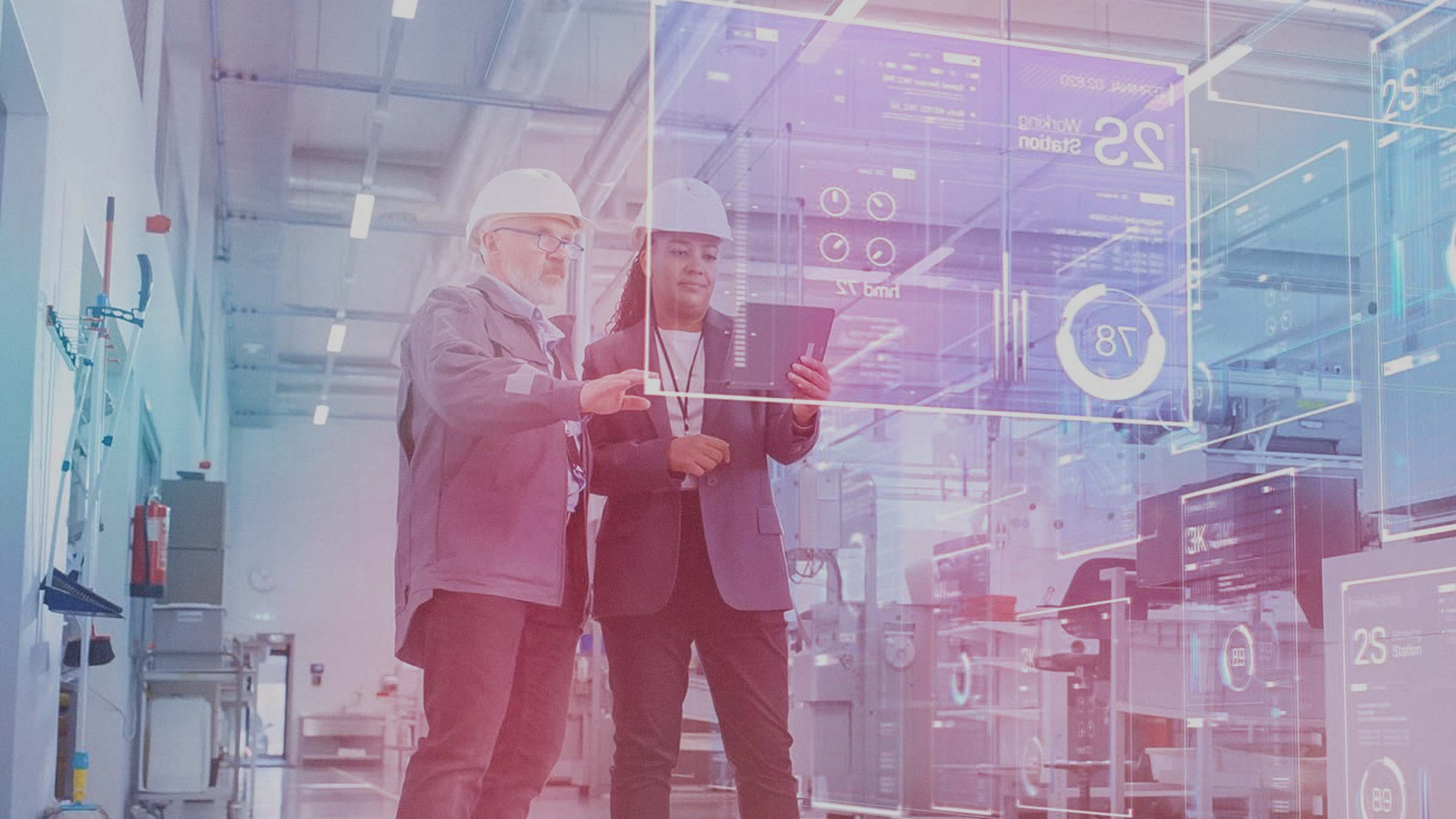
What is Industry 4.0. and what are its main characteristics?
From the steam engine to the invention of electricity or the advent of mass production and later electronics... Throughout history, the industrial sector has undergone various technological transformations. that have come to mark the great advances of mankind. We are currently in the midst of Fourth Industrial Revolution - Industry 4.0. where digital, intelligent and automated technology is revolutionizing our companies, factories and production lines. Cloud connectivity, Industrial Internet of Things (IIoT), and advanced AI and AI-enabled solutions are machine learning are radically transforming industrial operations. In this article we would like to analyze in detail the main characteristics of this Industry 4.0. and, above all, learn about its most important technologies. Ready?
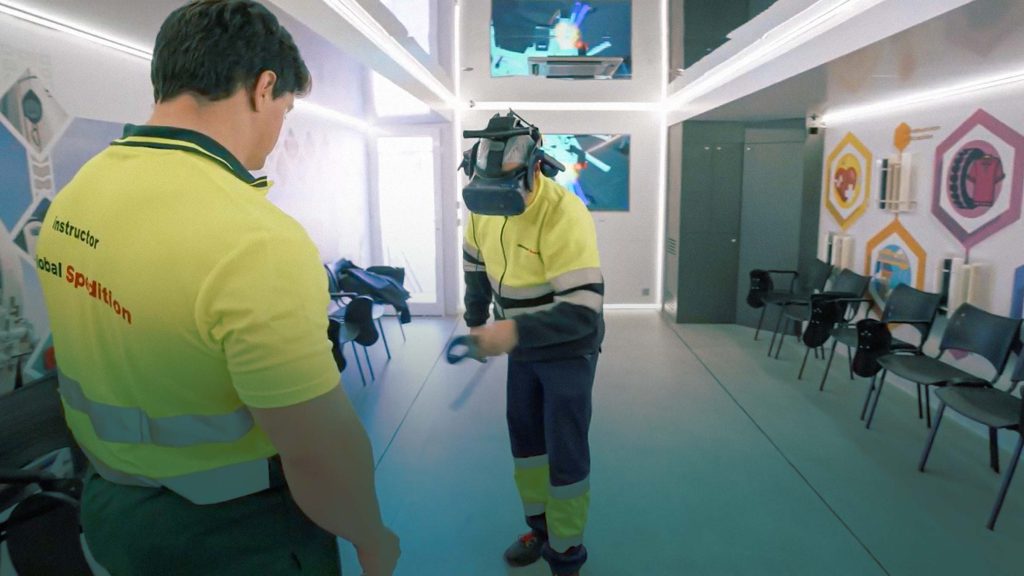
Virtual Training desarrollado para Global Spedition por Imascono
Definition of Industry 4.0
You may be wondering what Industry 4.0, or the Fourth Industrial Revolution, is. integration of advanced digital technologies in manufacturing processes. It includes the use of Internet of Things (IoT), Artificial Intelligence (IA), the immersive technologies the robotics and the analysis of Big Data to create interconnected and automated production systems and optimized industrial/business management. This approach allows for a greater efficiency, customization and real-time analysis transforming factories into intelligent and adaptive environments. Before Industry 4.0. there were three other major Industrial Revolutions:
- A finales del siglo XVIII se vivió la Primera Revolución Industrial marcada por la invención de la máquina de vapor. Transformando los métodos de producción de obra manual a la mecanización.
- En la Segunda Revolución Industrial, a finales del siglo XIX, el impulso vino de la electricidad y el petróleo, introduciendo la producción en masa y las líneas de ensamblaje. Lo que mejoró significativamente la eficiencia y el volumen de producción.
- La Tercera Revolución Industrial empezó a mediados del siglo XX con la llegada de la electrónica, los ordenadores y de los primeros robots, iniciando el camino de la automatización de la producción.
You may be interested in → Business Innovation: Spatial Computing Applications in Extended Reality . Industry 4.0 is characterized by integrating digital technologies such as IoT, AI, and robotics in manufacturing systems. Creating intelligent and automated production networks that radically transform industrial production and management. Some are also already talking about the start of the Industry 5.0 a development marked by the active human participation to improve both the well-being of workers and the sustainability of production. This includes the development of collaborative robots (cobots) that work hand-in-hand with humans in manufacturing tasks and systems that not only optimize production, but also promote environmentally responsible practices. Industry 5.0 prioritizes collaboration between humans and machines, emphasizing the importance of the human touch in the creativity, customization and sustainability.
Industry 4.0 applications and technologies
The incorporation of new technologies in the industrial sector represents a complete revolution in the control, training, error correction and decision making with 3D simulations and prototypes developed to the highest level of detail . Improving the efficiency of increasingly complex production processes. Thanks to this immersive technology and its marriage with the latest innovations in the Internet of Things (IoT) and Artificial Intelligence, the machines and operators are interconnected from simply operating the machine to being able to communicate with it. Let's take a look at some of the main Industry 4.0 technologies :
Realidad Virtual y Aumentada
Both the Augmented Reality as Virtual Reality are two immersive technologies that are transforming the Industry 4.0 . By changing the way in which combines the physical and digital world in factories and production lines. On the one hand, the AR experiences The application of this technology to the industrial sector has great potential for the presentation of the three-dimensional models of parts and prototypes from all angles and in the exact place where their final version will be, reducing to the maximum the margin of error when assembling and using them. However, if there is an application of the Virtual reality that revolutionizes the industrial sector is the possibility of autonomous training. in complex and/or hazardous tasks through controlled 3D simulations The company's own machinery is used for this purpose, without the need to allocate extra resources such as trainers or the machinery itself. You can learn more about this technology in our post Virtual Reality: examples and applications .
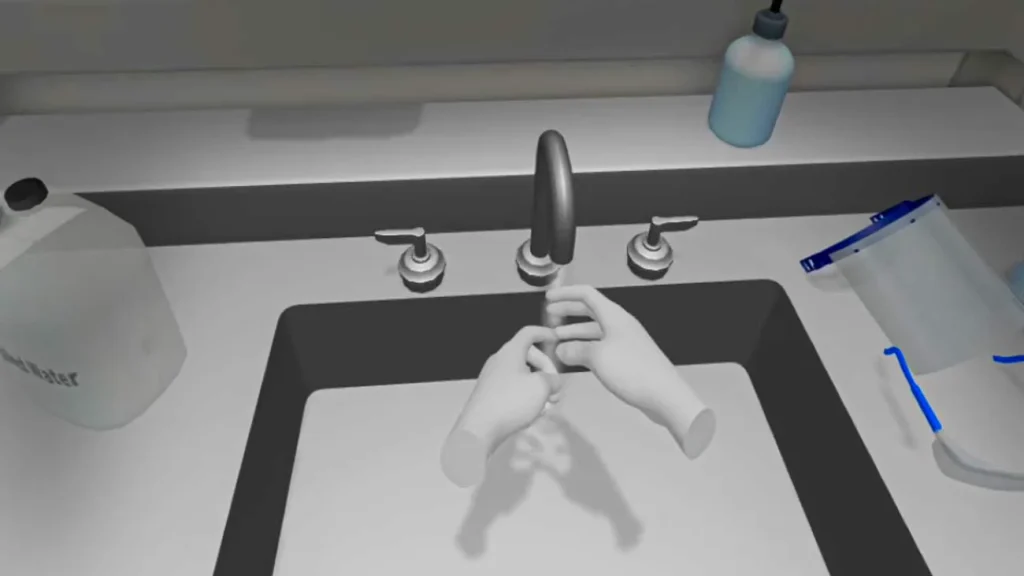
Experiencia de aprendizaje en Realidad Virtual para Boehringer Ingelheim
Digital Twins
Los gemelos digitales en la Industria 4.0. son representaciones virtuales e interactivas de procesos, productos o incluso plantas enteras de producción que simulan la realidad en un entorno digital. Esta tecnología permite a las empresas tener una visión global de toda la producción, analizar datos y monitorizar sistemas para prevenir problemas antes de que ocurran, optimizar operaciones y experimentar con cambios en un entorno virtual sin riesgos. Al utilizar sensores IoT para recoger datos en tiempo real, los gemelos digitales ofrecen una visión detallada del rendimiento, el mantenimiento y la eficacia de las máquinas en la planta de fabricación, mejorando así la toma de decisiones y la eficiencia operativa. Unos Gemelos Digitales que también pueden convertirse en el punto de información y de reunión entre los stakeholders, como en el caso de la Junta de Accionistas y evento virtual de Iberdrola desarrollado en su propio espacio virtual 3D.
Si te interesa puedes descubrir más sobre su potencial en Digital Twins through Extended Reality.
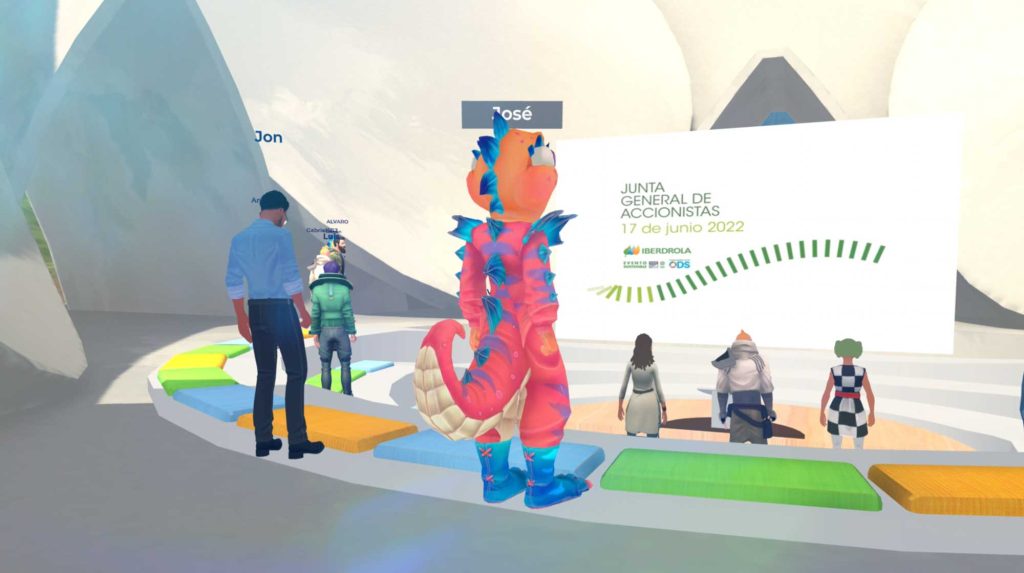
Evento Virtual en el Metaverso desarrollado por Imascono para Iberdrola
Computación en la nube
El cloud computing es un pilar esencial de la Industria 4.0, proporcionando la infraestructura necesaria para soportar la integración y el análisis de datos a gran escala. Facilita la centralización de información, permitiendo un acceso remoto y en tiempo real a los datos críticos almacenados en sus servidores, lo que optimiza la colaboración y la agilidad en la toma de decisiones. Con la capacidad de almacenar y procesar enormes cantidades de datos de forma segura y eficiente, la nube posibilita la implementación de soluciones avanzadas de Generative Artificial Intelligence, automatización y IoT, permitiendo así a las empresas aumentar su eficiencia operativa, reducir costes y mejorar la innovación en sus procesos de fabricación.
Robótica
La electrónica, los ordenadores y los primeros robots mecanizados se introdujeron en el sector industrial durante la tercera Revolución Industrial. En la Industria 4.0. la robótica se ha visto reforzada, jugando un papel crucial en la automatización y optimización de los procesos de producción, su eficiencia y precisión. Los robots avanzados pueden realizar tareas complejas y delicadas, adaptándose a entornos cambiantes y colaborando con humanos en tiempo real. La integración de robots autónomos y colaborativos mejora la velocidad, la calidad de la producción y reduce los riesgos laborales. Además, libera a los trabajadores de tareas repetitivas, permitiéndoles enfocarse en actividades más estratégicas y creativas.
Big Data e Inteligencia Artificial
En la Industria 4.0, el Big Data y la Inteligencia Artificial son fundamentales para transformar la producción industrial a través de la recopilación y análisis de grandes volúmenes de datos generados por los dispositivos y sensores conectados al ecosistema de fabricación. Estas tecnologías permiten la automatización avanzada y la toma de decisiones en tiempo real. Optimizando operaciones desde el mantenimiento predictivo hasta la personalización de la producción. El potencial de la Inteligencia Artificial en la industria 4.0. puede ir más allá de la producción para enfocarse en los trabajadores. Convirtiéndose en una compañera más en su día a día: potenciando sus capacidades, resolviendo sus dudas y/o convirtiéndose en el portal de acceso a la información y formación de la empresa, como en el caso de IRIA, el avatar IA del grupo industrial Iveco. Si quieres profundizar más sobre la IA te recomendamos → Desafíos de la inteligencia artificial aplicada a la empresa.
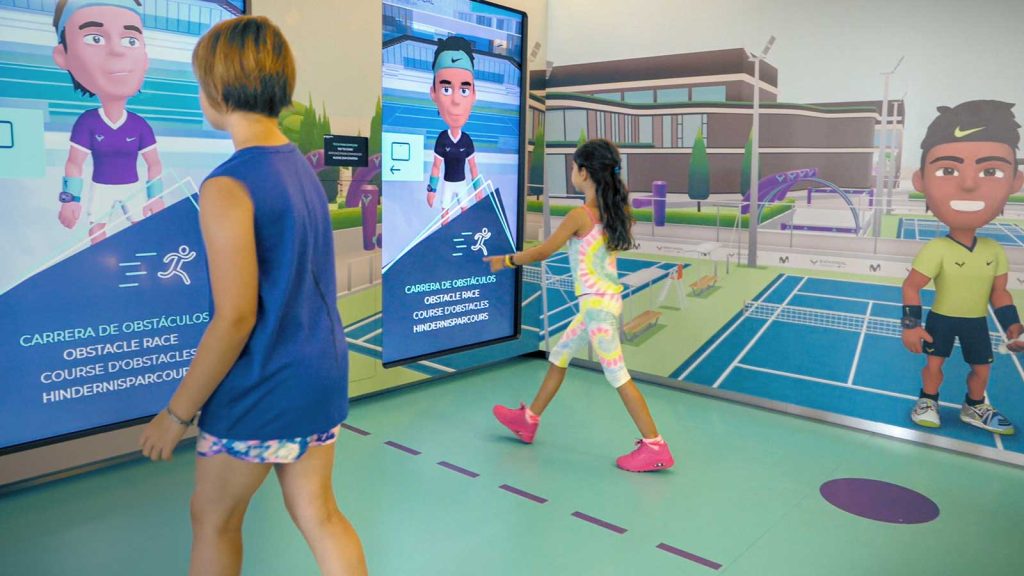
Phygital project developed for Rafa Nadal Museum by Imascono
Highlights of Industry 4.0
Industry 4.0. is characterized, mainly, by the creation of smart factories where physical and digital systems cooperate in an interconnected and autonomous manner. Interconnectivity, the digital transformation automation are some of the main characteristics of the implementation of these technologies in the industrial sector . Features which can be summarized as follows:
- Respuesta en tiempo real. La capacidad de respuesta en tiempo real permite a las empresas monitorear y gestionar operaciones de manera instantánea y eficaz. Gracias al Big Data, los sensores IoT, las simulaciones 3D suponen un flujo continuo de datos que facilitan decisiones rápidas y precisas, optimizando el rendimiento del proceso productivo.
- Descentralización. Esta característica se refiere a la capacidad de las máquinas y sistemas informáticos de tener autonomía en su funcionamiento y en la toma de decisiones operativas sin intervención humana directa. Operando de forma independiente y flexible, adaptándose a los cambios y necesidades en tiempo real de los procesos industriales.
- Aumento de la productividad. Al integrar diferentes tecnologías, la automatización y optimización de los procesos impulsa un significativo aumento de la productividad. Estas tecnologías permiten una fabricación más rápida y con menos errores, maximizando el rendimiento de los activos y minimizando los tiempos de inactividad. Además, la recopilación y análisis de datos en tiempo real facilitan mejoras continuas y ajustes precisos en las operaciones de producción.
Industry 4.0. applications you should know about
Throughout the article we have been getting to know some of the examples and use cases of new technologies in Industry 4.0. Next, we would like to delve into the most relevant applications of this Fourth Revolution in the industrial sector.
3D Simulations
3D simulations in the industrial field cover a wide range of applications. From the employee training in the use and prevention of occupational hazards in safe environments, focused on tacit knowledge, to the possibility of knowing how the entire plant, logistics and machinery of a company work through 3D models and virtual simulations to full scale. Among the solutions already developed in this area we find the entire line of Virtual Training . Customized trainings in Virtual Reality implemented by companies from different industrial sectors such as the professional training of Global Spedition's employees or the presentation of the new industrial machinery of Boehringer Ingelheim .
Industrial Internet of Things: Industrial IoT
The Industrial Internet of Things (IIoT) goes a step beyond the IoT we know today, focusing specifically on the interaction between machines, devices and industrial systems. In Industry 4.0, this connectivity and machine-to-machine and human-to-machine communication The real-time, accurate and precise monitoring, predictive maintenance and optimization of processes is vital for industrial companies to scale and adapt in real time to market trends and needs.
Task management
Industry 4.0 transforms task management by automating processes and optimizing resource allocation through intelligent systems. Enabling the efficient coordination of tasks between machines and humans The system is designed to improve accuracy and reduce execution time. In addition to task management, we could also speak of the information management where large volumes of data from multiple sources can be collected, processed and analyzed in real time. Where not only do we obtain strategic insights The system also facilitates better coordination and communication between departments and levels of the organization through interfaces such as WebApps or even hyperrealistic AI avatars that humanize the interaction between users and data .
Industry 4.0. use cases at Imascono
From pharmaceuticals to logistics, automotive, agricultural machinery and the industrialization of livestock, there are many industrial sectors in which the Imascono use cases have been part of the leap to Industry 4.0. of large and medium-sized companies.
- Como la virtualización y modelado 3D interactivo de las diferentes máquinas del grupo Tenias. Versiones tridimensionales para la presentación y formación sobre el funcionamiento de sus últimos productos.
- O a nivel formativo junto a Mondragón Formación Profesional donde se han desarrollado diferentes experiencias interactivas virtuales inmersivas y semi-inmersivas para recrear simulaciones del funcionamiento de maquinaria industrial.
- Otro caso de éxito en la Industria 4.0. también lo encontramos en la formación en Realidad Virtual diseñada para Ceva Velactis, la principal empresa farmacéutica en el ámbito veterinario, donde se forma y promociona los usos y ventajas de sus nuevos productos.
At Imascono we know firsthand how important it is for industrial companies to have the right latest technological advances to optimize and scale up production At the same time, having enough flexibility and customization capacity to adapt to market changes. Therefore, training, data collection and a correct interaction between machines and workers are key to advance in Industry 4.0. Our team of more than 30 engineers and designers has more than 12 years of experience in the development of projects of Artificial Intelligence , Virtual Reality and Virtual Spaces focused on business and industry. Do you need making the technological leap to Industry 4.0 ? ¡ Contact with us !