
What is a WebApp or Web Application?
Do you know what a webapp is and how it differs from a native app and a static web? A WebApp is an interactive application that runs on web The software is available for all types of browsers and devices, regardless of the operating system they use. The Web Applications represent the evolution of the more static web pages, bringing together in a single space, the interface and interaction of desktop applications with the agility, the active involvement between users and the cloud storage offered by Internet services. Users have online access to all kinds of interactive content that they themselves choose, change and customize. WebApps allow us, for example, write documents directly online, edit photos without having to install any software or save our entire database in the cloud. .
What is the difference between a WebApp, an App, and a static page?
Understanding the differences between these three will allow us to have a much clearer concept of a WebApp, in order to assertively evaluate the need to implement this technology.
Differences between WebApps and native Apps
The Web Apps do not require any application to be downloaded and installed. to access them. They are accessed through the web browser. Native Apps, on the other hand, require downloading and installation from the respective app stores in order to be used (Google Play Store or App Store). On the other hand, native Apps have full access to the features (such as camera, GPS, etc.) allowing a richer and more personalized experience while Web Apps have limited access to the device's functionalities. The Web Apps are automatically updated every time the user accesses them over the Internet, ensuring that they are always using the latest version. Native Apps require manual updates through the app store. In addition, some native Apps may offer functionalities or be available offline after their initial download, while those that are not may be available offline. Web Apps always require internet connection . Finally, native Apps use the device's internal memory to store data, consuming space. The Web Apps use cloud storage services Therefore, they do not consume space on the devices.
Differences between Web Apps and static pages
However, how does a WebApp differ from a static website? A Web App is interactive and allows users to interact with it, it is dynamics The system can change its content and behavior according to user interaction or in real time. more complex functionalities and uses most advanced technologies . On the contrary, a static web page is simply a fixed representation of information that does not allow direct interaction with users, with static content that does not change without manual intervention, they are simpler and faster to develop, since they do not have complex functionalities and use simpler technologies.
Known examples of Web Apps
Some of the best examples of well-known Web Apps are the following:
- WhatsApp: WhatsApp is one of the best and most popular examples of web apps. Although WhatsApp is most often used as a native mobile app, the web version of WhatsApp lets users access their conversations and send messages through their web browser. The WhatsApp Web App provides an experience similar to that of the mobile app, allowing users to access and use WhatsApp services flexibly from multiple devices or when they don't have access to their mobile phone.
- Spotify: Spotify is another standout example of a Web App that offers music streaming services. The platform lets users access a vast library of songs, albums and playlists through their web browser. While Spotify is also available as a native app for mobile devices, the web version of Spotify is popular.
The Spotify Web App is also synchronized with the native applications of the same accounts. Users can access their playlists, saved songs and preferences from any device, offering a seamless and complete experience.
Advantages of Web Applications
We can summarize the advantages of web applications in the following points:
1. Improves interaction and personalization
The WebApps allow to build from scratch the digital world of companies by putting in the user experience center . A fact that allows the customization of both the interface, aesthetics and contents of the web application and the interaction of each user adapted to their tastes and needs. An interaction that is also benefited thanks to the fact that in the Web Applications there are several people who can work simultaneously in them.
2. Multi-device
A WebApp reaches all users, regardless of your operating system and device because it adapts to the dimensions and requirements of all platforms. So access does not depend on a single device and the contents are available simply through the URL.
3. Facilitates dissemination and viralization
One of the advantages of these types of applications is that they base their access and dissemination through the Internet and web browsers most used by the users themselves. A fact that greatly increases the positioning, metrics and brand visibility among the more traditional search engines. In addition, the development of such applications is not subject to the policies, authorizations and limitations of any application download service.
4. Low cost
By requiring a unique development for any device regardless of its software/hardware, costs are reduced . It is not necessary to allocate time and resources of the development team for programming the same application for each operating system. In addition, page updates are more feasible for team members less familiar with web programming.
5. No prior download is required
Web applications work at full performance without the need for the user to personally update the application and without the need for take up memory space of the devices. All files and updates are processed within the website and stored in the cloud . The user, for his part, has access to all these contents simply through his Internet connection. A practical and agile system, which also allows for the continuous updating and greater control of the application by the company.

Uses of Web Applications
1. Application in the business sector
Web Applications focused on the most business-oriented sectors adapt to all the needs of management and communication both internal and external to the companies. These applications provide access to a proprietary interface from any device and web browser. A fact that facilitates collaboration and information exchange between departments, by being able to work together in the different projects directly online and instantly displaying all updates. Externally, WebApps give all users access to a wide range of content that, regardless of their devices, is instantly adapted to their needs as they interact with the elements .
2. Application in the commerce sector
The development of more agile, intuitive and customized web applications offers the opportunity to develop the entire interface of a web application. e-commerce or virtual store from scratch, putting the user at the center. Thus, WebApps radically change the first impression in the great global showcase: the Internet. With the possibility of creating more secure and personalized payment methods in accordance with the principles of the brand and the development of a proprietary content manager that allows continuous updating in an agile and simple way. Web Applications also adapt to the needs of interaction and dynamism of face-to-face sales. Offering additional information about the products (availability, price, colors, ratings from other users) with direct access and overlapping information instantly through a web page. As in the case of WebApp developed together with Movistar and Prosegur Alarma s where users can see the different security devices in action through an interactive web-based home. All without the need to download any mobile application.
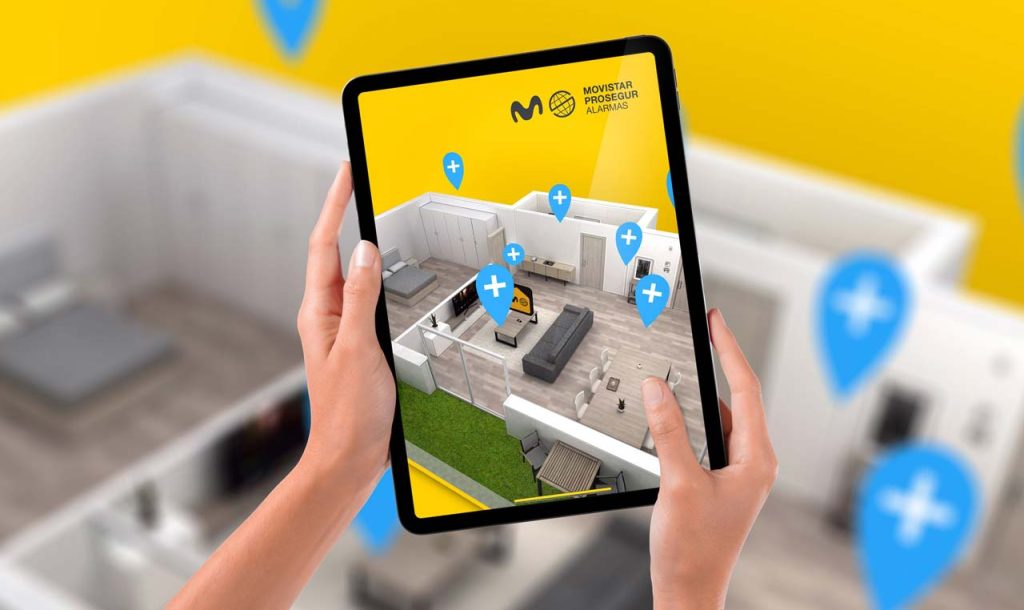
Mixed Reality Web App developed for Movistar Prosegur Alarmas
3. Marketing and advertising applications
Nowadays, it is difficult for the average user to download a mobile application to their devices unless these apps offer long-term content and benefits. That is why, in order to campaigns and specific viralization actions the WebApps are more attractive to both brands and users. Thanks to its easy access The high diffusion capacity and personalized interaction of users in marketing campaigns makes user participation in marketing campaigns more effective. fast and direct . Accessing from the same WebApp to more detailed information, having direct access to purchase, participate in forums or even enter exclusive access areas.

4. Applications in the educational sector
Without a doubt, one of the great applications offered by bringing WebApps into the education system is quick access to content from any device. An advantage that is further complemented by how easily these platforms let multiple users work simultaneously on them. This streamlines collaboration between students and teachers, regardless of the device and geographic location from which they access the web application.
In addition, WebApps adapt to the needs of educational institutions, from the interface itself to the different actions within the application (course access, file uploads, supplementary content).
5. Application in the entertainment sector
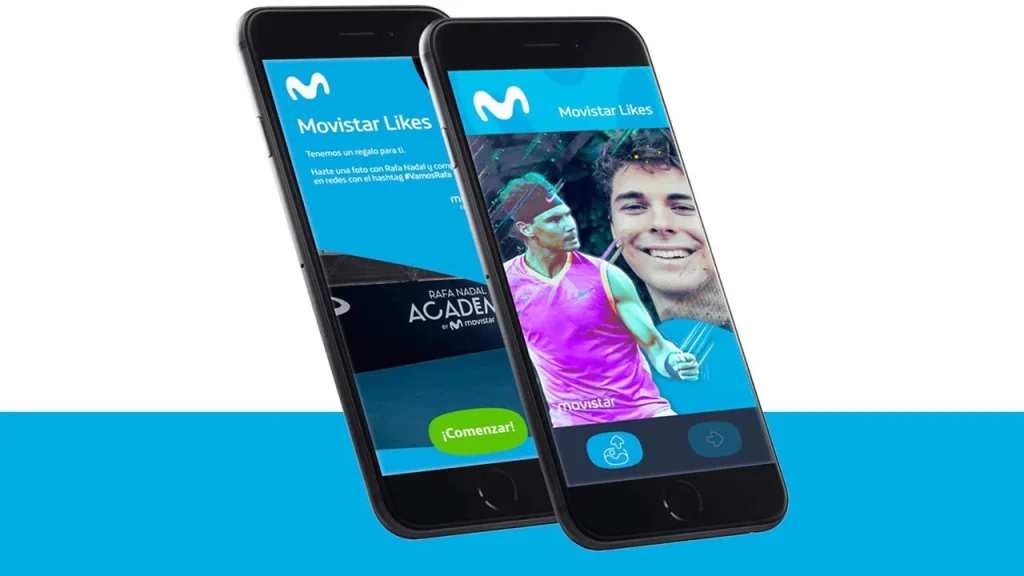
Among the applications in the entertainment sectors is the development of web applications customized for the promotion and communication of events in the cultural, sports and media spheres, which let users be part of the viral action without any intermediate steps or downloading any software. An intuitive, easy-to-share solution like the WebApp created together with Telefónica to cheer on Rafa Nadal at one of the latest editions of Roland Garros. A quick, simple and effective action that became a trending topic on Twitter at the time, collecting more than 18,000 photos.

6. Application in the banking sector
WebApps offer the banking industry the possibility of creating interactive and customized web platforms for each user and specific needs. The banking company controls all the upgrades, permissions and cybersecurity systems from the general server. A great advantage over downloadable applications whose updates and upgrades depend on each individual user.

How do you know if your company needs a WebApp?
Determining whether your company needs a WebApp depends on several factors specific to your business and the goals you want to achieve. Here are a few considerations that can help you evaluate whether a WebApp is right for your business :
- A WebApp may be the right fit if you work in sales since you will reach a wider market, offer your customers a smoother, more personalized experience, and be able to track your performance.
- A web application is also an excellent solution if you need to improve your company's processes since it will let you automate repetitive tasks, facilitate communication and collaboration in your business, and help you manage information.
Web applications are a valuable tool when you need to launch a new service or product because it allows you to anticipate and promote it to your customers and provides you with feedback before its official launch so you can make improvements or adjustments, offering data on the interest generated.
We develop the WebApp that you need
At Imascono our team of experts in internet application development is ready to help you create a web application that perfectly suits your needs. We accompany you throughout the entire process, from conceptualization to final implementation. We focus on understanding your specific objectives and requirements to offer you an efficient and high quality solution. No matter the size of your company or the complexity of your project, we are ready to meet the challenge. Our technical team has extensive experience in modern web technologies and the latest market trends. Don't waste any more time looking for a generic solution that doesn't fit your needs. Contact us at today and find out how we can develop the Webapp perfect to drive the growth and success of your business.