Social Networks have become the main communication channel for many companies. A way to reach the end user, to have direct conversations with them and to connect emotionally with the product and the brand. In this equation, the influencer marketing plays a key role by incorporating inspirational profiles into these conversations, which the profiles trust and consider when following recommendations or seeking inspiration. However, in the last few years, a new type of new type of influencers, the virtual influencers, who are becoming more and more important in this sector of marketing and advertising. . Many companies wonder how to create a virtual influencer and what steps to follow to take advantage of this new trend, since they offer a number of advantages for brands, which we will analyze in detail throughout this post.
What are virtual influencers?
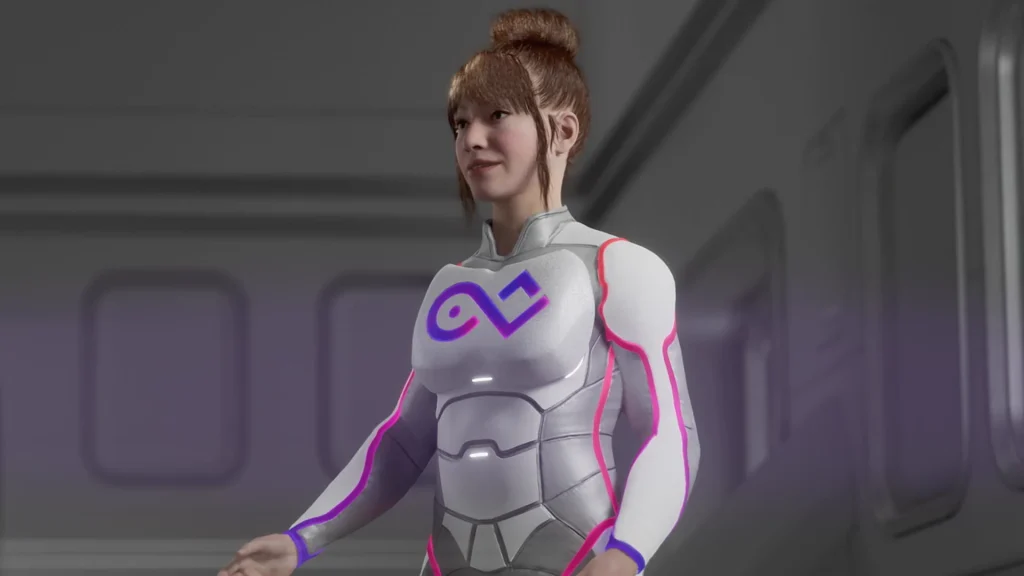
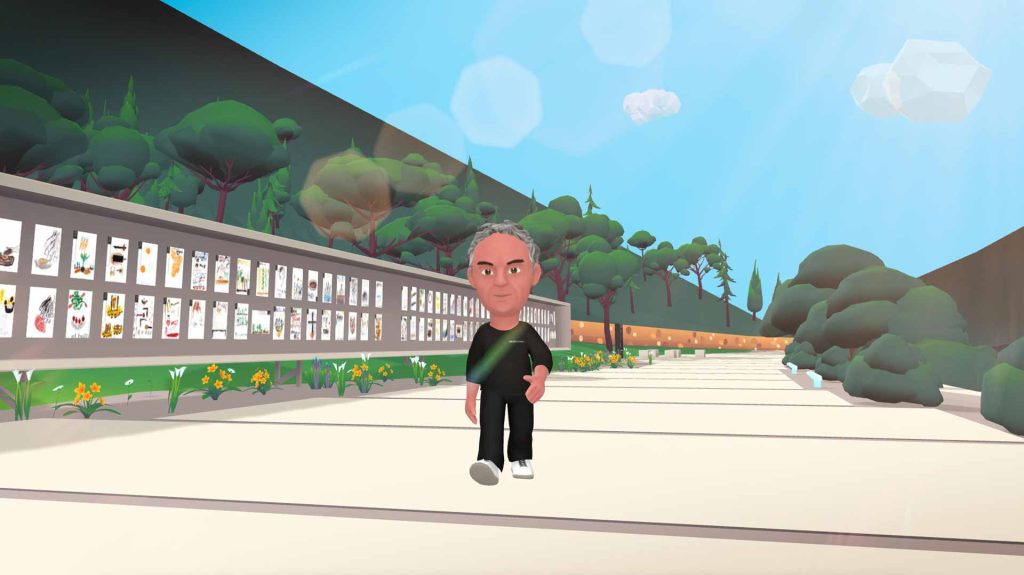
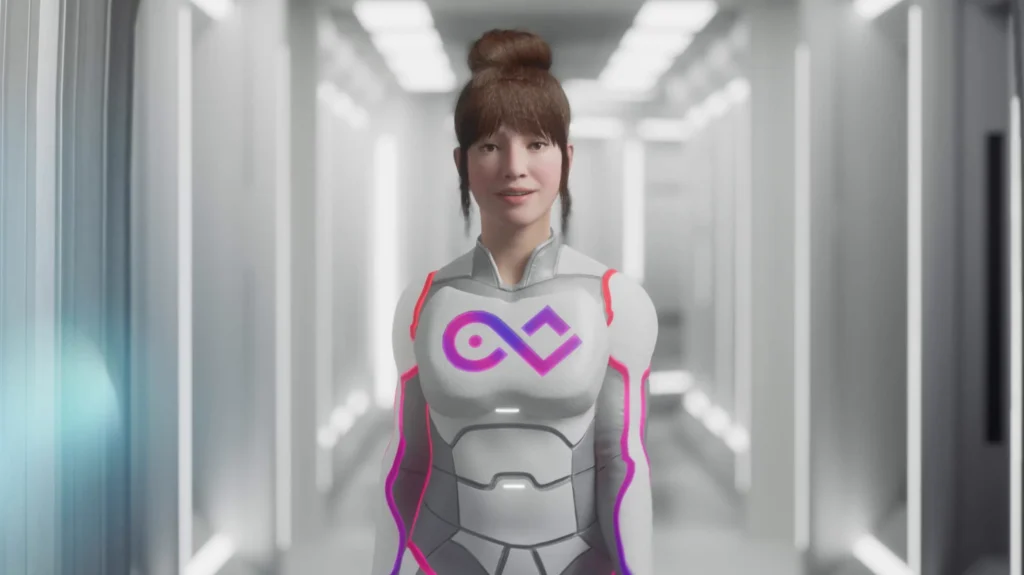
Before analyzing the differences between the two types of influencers, it is important to review what an influencer is. virtual influencer. Virtual influencers are digital characters created through advanced technology such as Artificial Intelligence and 3D animation, which are gaining popularity by starring in advertising campaigns, collaborating with major brands and generating content that attracts millions of followers. All thanks to their novelty and adaptability. Even though they are not real people, virtual influencers connect emotionally with their audiences and are transforming the way we consume content and understand digital marketing. . You may be interested in our Artificial Intelligence service for companies . These virtual influencers can fulfill the same functions as human influencers, and at the same time, to have more autonomy and dedication to both the brands he works for and his niche audience. These, in addition, reach real audiences beyond Social Networks, such as metaverses and video game platforms. Connecting brands with new digital audiences. . You may be interested in → What is a virtual avatar and what are its characteristics? . These virtual influencers are, in short, virtual avatars not only their appearance, but also the development of a personality, tastes and defined style that helps to connect with specific niche audiences. But these can go a step further if they are connected with the latest advances in Artificial Intelligence. Thus, these influencers not only remain in photographs and/or videos, but they can have direct conversations with users We can respond in real time and participate in more communication formats, such as product presentations, events, television, radio, among others.
The origin of the phenomenon of virtual influencers
Virtual influencers are a phenomenon that has been born as an evolution of social media profiles and the explosion of the virtual avatar phenomenon in digital contexts. They are one more medium, apart from the more traditional influencer profiles, so that companies and brands take advantage of new technologies and new communication channels to connect with their audiences. . As the creation of virtual reality characters took shape, these avatars became increasingly realistic in appearance, accompanied by the ability to interact with people in the physical world. Shortly after the advent of Social Media, brands and marketing and advertising agencies began to explore the idea of discovering how to create a virtual influencer. that could function as influencer profiles. Real people who were just starting to make their mark working on campaigns for numerous brands and who already had millions of impressions and followers at the time. You can learn more about the impact of technology on marketing and advertising by reading our post Marketing in the Metaverse: main strategies. The first known virtual influencer was Lil Miquela whose Instagram profile was created in 2016. The success and notoriety he achieved proved that the phenomenon of virtual influencers could connect emotionally with the public and attract the interest of brands and advertisers. From that moment on, new virtual influencers with their own appearances and personalities began to emerge.
Benefits of having a virtual influencer
As has been discussed throughout this article, virtual influencers offer companies an opportunity to alternative to hiring influencers where brands can count on the following benefits:
24/7 availability
In traditional influencer marketing, brands compete with other companies not only for the attention of users, but also for the attention of the influencer's own profile. A virtual avatar created and managed by the brand itself is fully available to the brand and complementary companies. . Creating a storytelling and content of high value for both users and the companies behind the profile. In addition, as they are digital characters, they can be worked with at any time. any time of the day, any day of the week . They are available to companies, entities and firms when needed. Virtual avatars such as the V-E-G-A line are accessible from mobile devices, computers and Extended Reality experiences.
Rapid adaptation
One of the main benefits offered by virtual influencers is the immediacy and the rapid updating of their messages, their aesthetics and their personality. This allows them to keep up to date with what is happening on the Internet, on social networks and in the company itself. These virtual influencers, if they are based on the technology behind the virtual avatars equipped with Artificial Intelligence allows them to have a quick training and control of the information sources. Being really easy to adapt messages and publish content .
Cost reduction
In recent years, influencers' services have become significantly more expensive. The performance of influencer marketing is known worldwide. and these profiles are fully aware of the amount of power they have in their hands with respect to brands and their fees. Having a customized, brand-owned virtual influencer helps reduce costs on this side, while offering a similar service. Their combination with both styles of influencers allows brands to have a greater adaptability and control of your marketing and communication strategies in the digital world.
Represents brand values
The virtual influencer solves one of the main problems that exist with influencer marketing. The people behind these profiles often don't share or are not aligned to the 100% with brand values . This is in addition to the possible contradictory messages or reputational crises that may be generated. Brands no longer need to worry about it, as these digital personas are totally customizable . At the same time, unlike real influencers, they are completely controllable characters for brands, which reduces unforeseen events and eliminates unexpected behavior. We recommend you to visit our post → Digital leisure as a new form of entertainment .
Influencer marketing, beyond Social Networks
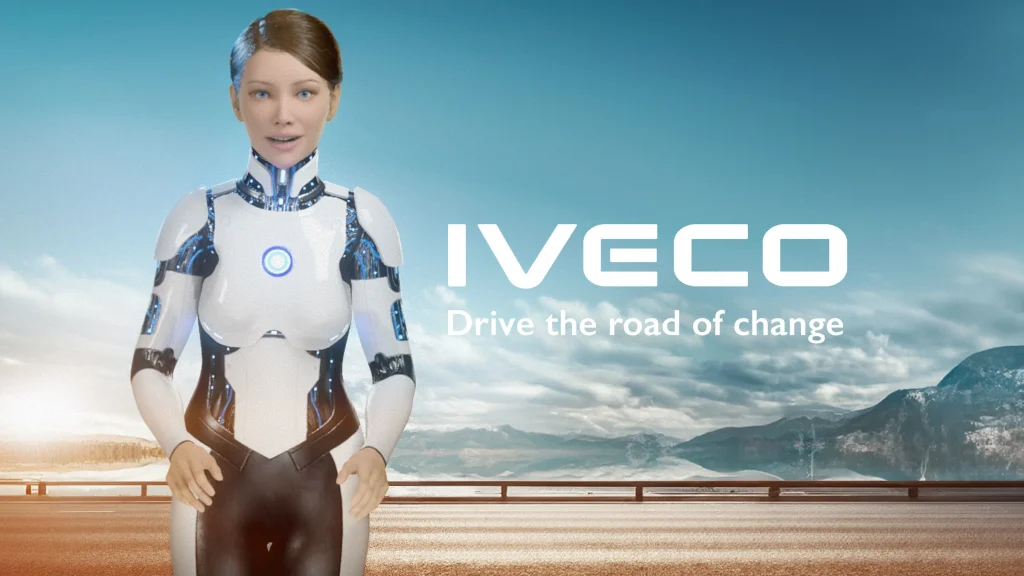
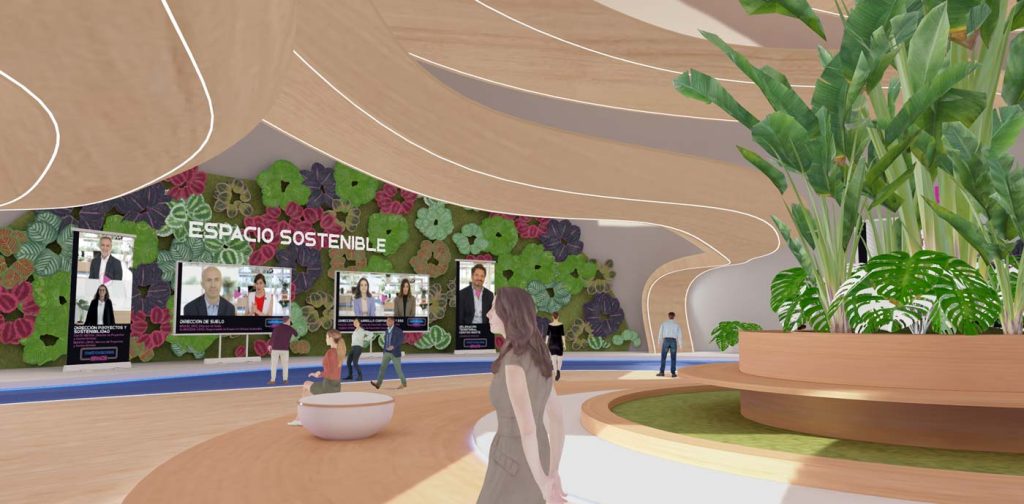
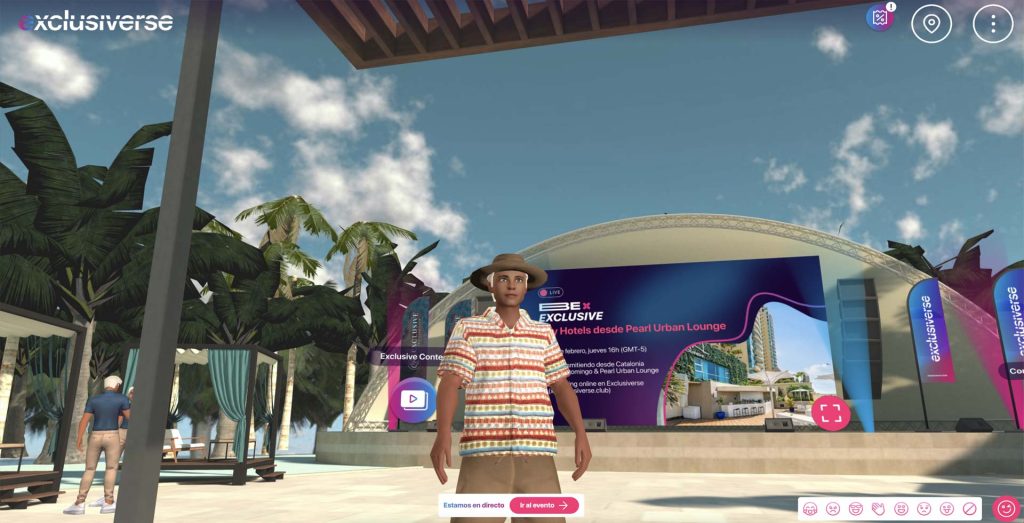
The The presence of virtual influencers is not limited to social networks, there are many more possibilities. when it comes to launching them in the different communication channels of the digital world. Beyond social networks, these influencers and virtual avatars can have their own space to connect with users, all thanks to the 3D animation and its integration with the Generative Artificial Intelligence . An example of this can be found in the V-E-G-A virtual avatars, digital characters equipped with generative AI that humanize brands and customer service in the virtual ecosystem. These customizable AI avatars can connect with users beyond a Social Networking profile. They can be placed on physical totems in the brand's stores or establishments . They can be used in the personalization, in customer service and your experience both physically and on the web. You can be at tourist information points or actively participate in product presentations. You can even act as a company representative in the virtual world. And that's not all, the alternatives are countless. If you are interested, learn about our services of Generative Avatars with Artificial Intelligence The avatars V-E-G-G-A have the ability to hold close conversations and always be available to the audience. In this aspect, they can give talks or conferences and lead trainings. It is a digital persona capable of humanizing the essence and values of the brand in an innovative way, offering an attractive experience for the customer. At Imascono we have developed virtual avatars such as Smoky, the virtual chef of Nola Smoke who receives and attends to customers and also makes personalized recommendations, collects and delivers orders. O IRIA Iveco, which centralizes internal communication and customized training for the automotive group's employees. Not forgetting the AI avatar of Miguel de Cervantes, which becomes the best virtual guide to get to know Castilla-La Mancha through the stories that the writer himself tells to the visitors of Alcázar de San Juan.
AI Avatars: The Future of Virtual Influencers
Influencer marketing is, without a doubt, one of the main sectors in the world of advertising at present . Its growth both in terms of budget and audience impact opens up new opportunities for brands to further explore how to reach and communicate with digital audiences. In this exploration of new ways of communication, the virtual influencers have a bright future already have examples and success stories that demonstrate that what the audience is looking for are stories, values and high-value content . Three keys that virtual influencers can offer. In this vision of the future of virtual influencers, we must not forget about the introduction of generative Artificial Intelligence as a way to give autonomy and personality to these influencers. Emerging the possibility that these digital characters go beyond the profiles on social networks to have a direct interaction with users, both in the physical environment through customer service totems and digitally, being a support in e-commerce and brand websites. At Imascono we are developing a whole line of virtual avatars equipped with Artificial Intelligence called V-E-G-A. AI avatars that represent a leap forward in the world of virtual influencers. Giving them personality, voice and adaptive training to humanize the essence and values of the brands. . Interested in learning more about the use of these AI avatars in the world of virtual influencers? Get in touch with us and our team of engineers and designers will be happy to answer all your questions about Artificial Intelligence and virtual avatars. .
5 Artificial Intelligence use cases you should know about
5 Artificial Intelligence use cases you should know about
Artificial Intelligence is one of the great technologies that have been are transforming all types of companies and sectors . Its great capacity for adaptation, its low learning curve for users and its integration with other technological advances such as the Metaverse, Augmented Reality, or the Spatial Computing make the AI an important point in the future of companies . In this article we would like to discuss with you the 5 most interesting use cases of Artificial Intelligence today that companies of all kinds have already implemented. All to boost agility and creativity within companies. And above all, to increase the capabilities of the workers, being the Artificial Intelligence services constant support for the team.
Importance of Artificial Intelligence in today's world
Before submitting the applications and use cases of Artificial Intelligence in enterprises It is important to analyze the context in which we find ourselves in relation to the business world and the use of Artificial Intelligence. Artificial Intelligence is an essential technological tool in today's world. In the short time that it has been in widespread use among companies, this technology has radically transformed various industries, increasing efficiency across the board . Its ability to analyze large volumes of data allows companies to make faster decisions, optimizing resources. In addition, the AI has changed the way we interact with technology The company's customer service is improved through virtual assistants and chatbots, which saves time and enhances the user experience. If you want to learn more about this topic, we invite you to visit Artificial Intelligence Avatar: definition and main uses .
5 Artificial Intelligence Use Cases
This technology has marked a before and after in the strategies and methodologies of all organizations. Whether at the marketing level or at the production level, Artificial Intelligence allows to revalue, accelerate and increase creativity in all action plans. Next, we will review the 5 most relevant use cases of Artificial Intelligence in companies:
1. Data analysis
Artificial Intelligence has radically changed the way data is analyzed. . It allows processing large volumes of information and extracting key information in a fast and efficient way. It is a perfect tool to identify behavioral patterns and any impact variables that go unnoticed with conventional methods. In addition, deep learning algorithms lead to predictions by analyzing historical data sets, leading to better decisions in real time. From the process automation to the elimination of repetitive and error-oriented tasks, the various types of Artificial Intelligence enables you to deliver products and services faster and with less margin for error. Intelligent graphics reduce data with intuitive representations to facilitate learning and understanding of information.
2. Multi-language
One of the main advantages that Artificial Intelligence offers is the ability to to perform automatic translations in real time, and even generate multi-language experiences that adapt to each user. An essential property in a globalized and automated world. AI models can be trained with data in different languages, allowing them to translate, interpret and respond in the desired language, thus facilitating interaction between people from diverse cultures and linguistic backgrounds . An example of this can be found in Cicerone's AI avatar, capable of managing a travel agency in more than 95 languages.
3. Personalization of contents
Artificial Intelligence plays an important role in personalizing the content offered to each company's audiences. A very useful tool for analyzing a company's a large number of these on users' tastes and buying behaviors. . This customization brings brands closer to their target audiences . Also reduces user saturation by offering them content more in line with their preferences. This favors the user satisfaction and pushes them to build deeper and longer relationships with companies or brands. that are to your liking. You may be interested in → Challenges of Artificial Intelligence applied to the enterprise .
4. Task automation
One of the great benefits that Artificial Intelligence offers is the possibility of automate repetitive tasks. Allowing employees to focus on more creative and strategic activities. Not only does this increase productivity, but it also enhances the job satisfaction The company's employees can devote more time to tasks that really require their knowledge and skills. In the business environment, automating processes such as data management, customer service and logistics has become commonplace. . The chatbots For example, they can handle frequent queries, freeing up human teams to solve more complex problems.
5. Virtual assistants
Undoubtedly, one of the main use cases of Artificial Intelligence in companies is the generation of virtual assistants or avatars for customer service, employee support and transparency in corporate communication. Offering a wide range of utilities that transform both personal and professional life . One of the most relevant current examples are the new line of virtual avatars called V-E-G-A where Artificial Intelligence becomes humanized by allowing users to speak, read and listen to them. These digital characters have great benefits, playing roles such as event assistant , tour guides , f nternal training in companies , customer service on the web , commercial agent o animated character to entertain children . The possibilities are endless.
Artificial Intelligence use cases at Imascono
Since 2019, at Imascono we have been developing a whole line of virtual avatars equipped with Artificial Intelligence. Thanks to the great advances experienced in relation to generative Artificial Intelligence, the V-E-G-A avatars have improved their capabilities of naturalization of conversations, their personalization and training. Humanizing Artificial Intelligence. Through these V-E-G-A avatars, Artificial Intelligence is impacting a multitude of sectors:
Artificial Intelligence in Tourism
The tourism sector is one of the first to adapt the latest trends and technologies for improve the user's travel experience . And at the same time, optimize resources for tourism companies, providing them with greater capacity for adaptation, data capture and creativity to improve engagement with travelers. In the latter area, the virtual tourist guide of Miguel de Cervantes . Through the avatar Cervantes IA In this way, users can ask the Spanish writer himself about his beloved Castilla-La Mancha. An Artificial Intelligence avatar that is deployed both in the Tourism Office of the City Council of Alcázar de San Juan as well as in the different emblematic points of the La Mancha route that pass through the city. You can learn more about this topic at Artificial Intelligence in tourism: characteristics and examples .
Artificial Intelligence in Retail and Entertainment
If there is a sector that benefits from the incorporation of virtual assistants, it is the retail and leisure sector. Thanks to these AI agents / avatars the customer service becomes more humanized in the digital world going a step beyond chatbots. With the Generative Artificial Intelligence the conversations become much more fluid and personalized. Where it is possible to record and analyze through dashboards all conversations held with the avatar, all anonymously. Allowing to have an overview of the brand perception, the most frequently asked questions and which products/services are the most demanded. An example of a use case of Artificial Intelligence in avatar format for the retail sector can be found at Smoky the avatar and virtual "chef" of Nola Smoke who greets, serves, picks up and delivers customer orders. In addition, it offers burger recommendations based on the customer's favorite ingredients and specific needs.
Artificial Intelligence in Industry
One of the sectors where Artificial Intelligence is having the greatest impact is in the industrial sector . At present, the industry is undergoing a change of revolution, of the Industry 4.0 (focused on automation) to Industry 5.0 (focused on workers' welfare), where AI plays a key role in both visions. Reducing costs and production times and at the same time, improving workplace quality . Becoming a support to increase workers' capabilities. An example of this is the virtual assistant developed by Iveco, IRIA the IA avatar. She is able to support, training and assistance to both employees and agents of the logistics, mechanical and transport line of the automotive company. Centralizing access to information, advice and updates from the company and facilitating its transparency. If you want, you can continue reading about the link between AI and the industrial sector in our post Artificial Intelligence Applications in Industry. Bottom line, AI is being implemented in a wide variety of areas and its expansion is shaping the current business world. . AI is the working tool of the present and the future; companies must put it into practice in order to face the great challenges we are experiencing. V-E-G-A avatars are a great resource for customization and adaptation to all kinds of situations. . Empathize with users and offer them the best experience and, in addition, it is of great help to save on costs, logistics and training and, finally, it has options to multi-language and multiplatform . For more information, do not hesitate to contact us at contact with Imascono . We will be happy to help you and answer any questions you may have about the incorporation of artificial intelligence in your company.
Benefits and characteristics of the metaverse in education
Benefits and characteristics of the metaverse in education
Technological innovation is part of 21st-century education. Among the different technologies that have emerged in recent years, the Metaverse and virtual spaces offer a wide range of benefits and features that can enrich the educational process, making it more accessible, interactive and personalized. As the technology evolves, its integration into education could have a profound and lasting impact. In recent months, Metaverse adoption has accelerated in many schools and universities, especially through virtual platforms that aim to keep learning going in situations where in-person attendance is not feasible. Becoming familiar with emerging technologies such as Virtual and Augmented Reality prepares students for a working future in an increasingly digitized world. They are also a new way to put what has been learned into practice and motivate students in a more engaging way. In today's article, we take a detailed look at the benefits and features of the Metaverse in education.
Impact of the Metaverse on education
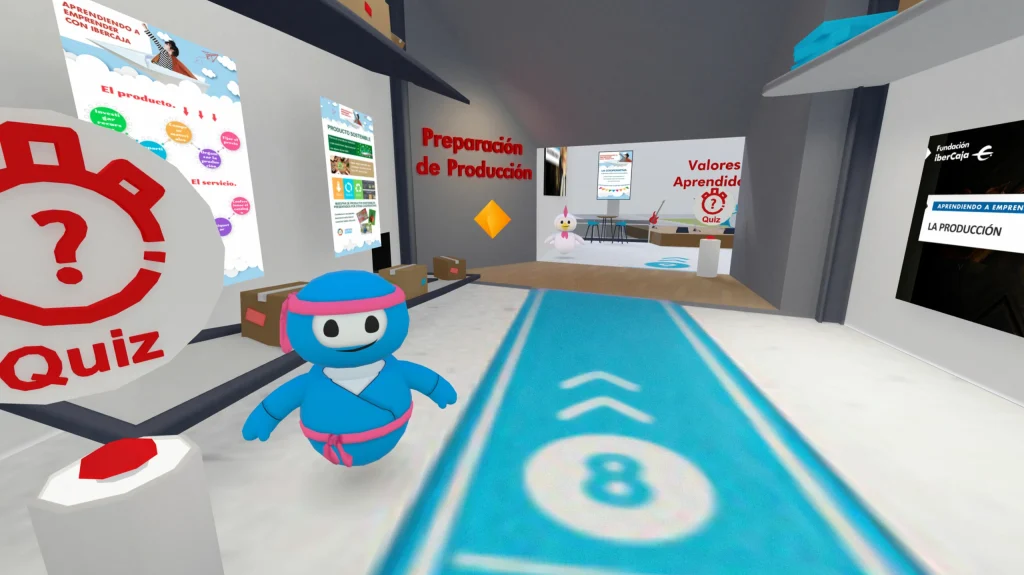
Before learning about the impact of the Metaverse on education, it is important to review what this technology consists of. The Metaverse could be defined as a series of interconnected virtual worlds where users can interact with each other and with the digital environment in real time. The Metaverse and virtual spaces combine technologies such as web3, Augmented Reality and Artificial Intelligence to create immersive experiences that revolutionize the way users interact with technology and the new digital ecosystem. You may be interested in → Features and benefits of Augmented Reality in education You may ask yourself, what is the metaverse in education, well, in this sector it offers multiple advantages to make learning much more practical and immersive . Encouraging students to put their knowledge into practice through simulations and virtual training. In addition to encouraging Gamification of the lessons, applying the mechanics of video games to the evaluation systems. Offering, thanks to the union between the Metaverse and Artificial Intelligence the possibility of offer adaptive and personalized educational experiences . These are adjusted to the needs and rhythms of each student. One of the great examples of the application of the Metaverse to education is the virtual space of Aprendiendo a Emprender developed together with Ibercaja Foundation to bring the business world closer to schoolchildren in a gamified environment close to video games.
Benefits of the Metaverse in the educational sector
As we have seen in the previous section, the Metaverse in education offers great benefits to the different educational centers. From its use in The company has been involved in the development of the program at early ages, as well as in high schools, universities, training centers and internal training in companies. The Metaverse, broadly speaking, allows you to eliminating geographical barriers to education The aim is to offer a personalized experience, adapted to the needs of each student and to reduce costs, both in terms of physical training material and in the use of facilities such as laboratories, travel and/or operating rooms in healthcare training courses. The following are the main ones benefits of using the Metaverse in education:
1. Gamifying teaching
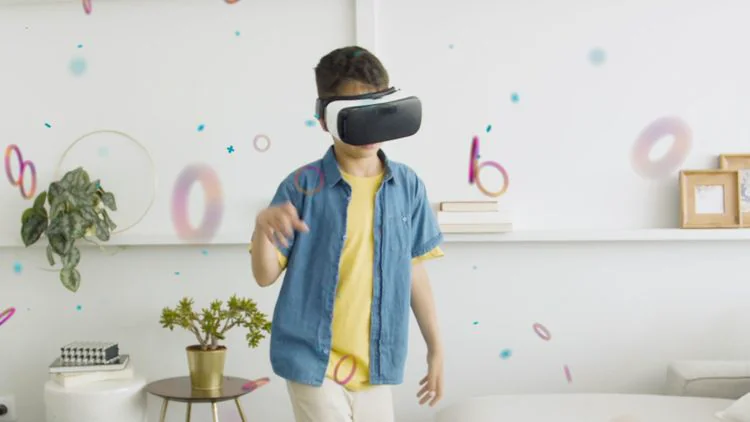
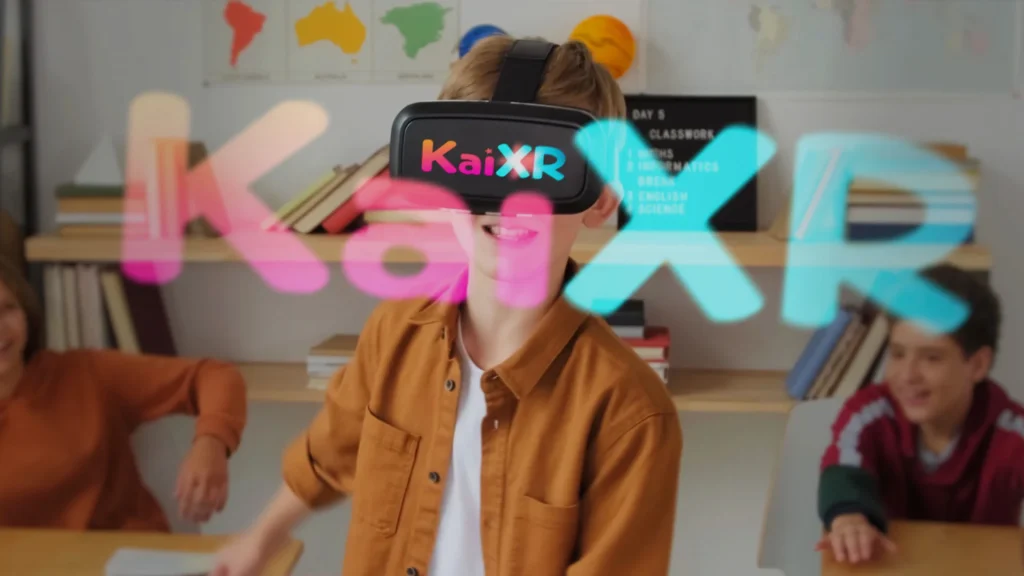
Gamification is the process of applying game design elements and techniques in non-game contexts. . It aims to increase people's motivation and participation in various activities by creating more engaging and dynamic experiences. This process is associated with a increased commitment , attention e interest by the students, regardless of their level of training. Thanks to its challenge/reward system, students are encouraged to give their best. With gamification, students internalize new knowledge in a more effective and entertaining way. As in the KAI XR Platform a Educational VR App where students can travel to the seabed, the pyramids of Egypt or NASA facilities, all in first person and through Virtual Reality glasses. If you want to learn more about this topic, we recommend you to visit→ Virtual Reality in education: features and benefits .
2. Simulations and training
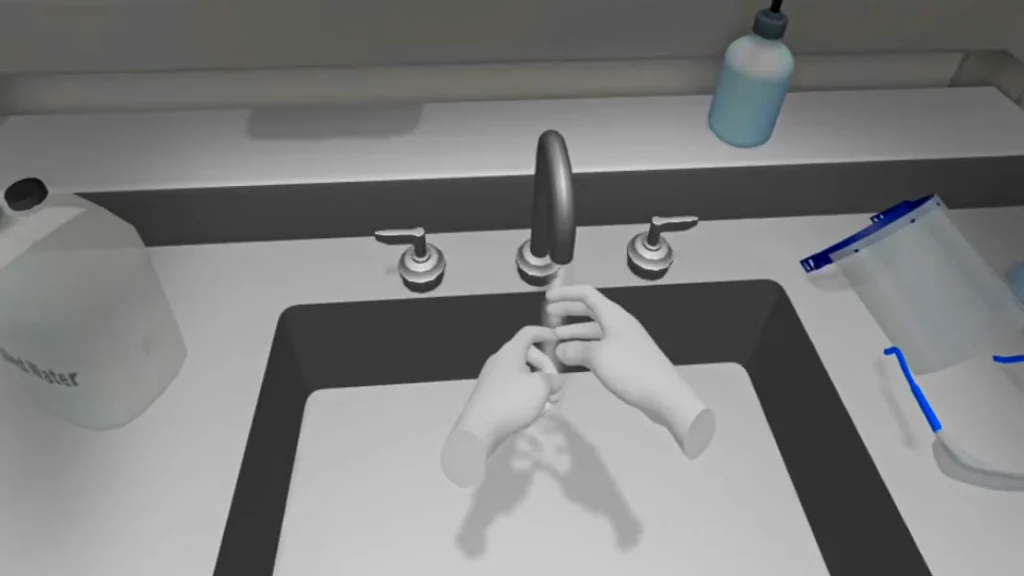
Simulations in the Metaverse are revolutionizing the educational sector by offering immersive and highly interactive environments that enhance learning by doing . The trainings carried out on this type of virtual platforms allow us to go a step further in online training. By making the leap to virtual campuses and schools that allow students not only to attend virtual classes, but also to walk around the facilities and connect with other students. Students can be anywhere in the world, as physical barriers are eliminated. Through the Virtual Reality This immersion in the educational experience is multiplied. As in the health training developed by Boehringer Ingelheim where health care professionals could learn about the preparation of their new medicines thanks to the Virtual Laboratory Virtual Training . If you are interested visit our article about Virtual Reality and medicine: applications in the healthcare sector
3. Onboarding and interactive training
Internally, the Metaverse's virtual spaces allow all processes and activities related to employees to be grouped together in a single digital environment. Thus, the onboarding and internal training are automated and, at the same time, are tailored to the specific needs of the employees. Becoming platforms for consultation, training, development and connection with other employees. All through virtual events and other types of business activities developed in the Metaverse. One success story is the project L'Oreal University a training space developed by L'Oreal to bring together influencers, makeup artists and experts in the beauty industry at its virtual university to learn first-hand about their latest products and usage tips.
4. Adaptive and active learning
Thanks to the Metaverse and virtual spaces, students can be offered new platforms for interaction, both with the subject matter and with their peers. In conjunction with Artificial Intelligence applied to education, educational platforms can adjust in real time to the needs and preferences of each learner, creating interactive environments that encourage active participation . The Metaverse, combined with Artificial Intelligence. is not only transforming the way we teach and learn The company is also preparing students and professionals for an increasingly digital and collaborative world. An example of this can be found in IRIA, Iveco's AI-equipped avatar. A companion in the training and day-to-day life of the automotive company's employees. If you would like to learn more about the relationship between the Artificial Intelligence and the virtual avatars we recommend you to visit Artificial Intelligence Avatar: definition and main uses
Metaverse, the future of education
The Metaverse is marking the future of the education and training sector . These virtual spaces will continue to transform the way we learn and interact with learning resources. Combined with the latest innovations in Artificial Intelligence, these educational platforms will allow to develop more personalized, automated and updated experiences in real time . Following at all times the individual progress of students and proposing new gamified challenges. This synergy will not only enrich education, but will also revolutionize the way we interact with various technologies, creating a new way for us to interact with our students. unique opportunities for training and professional development.
Examples of the use of Metaverse in education
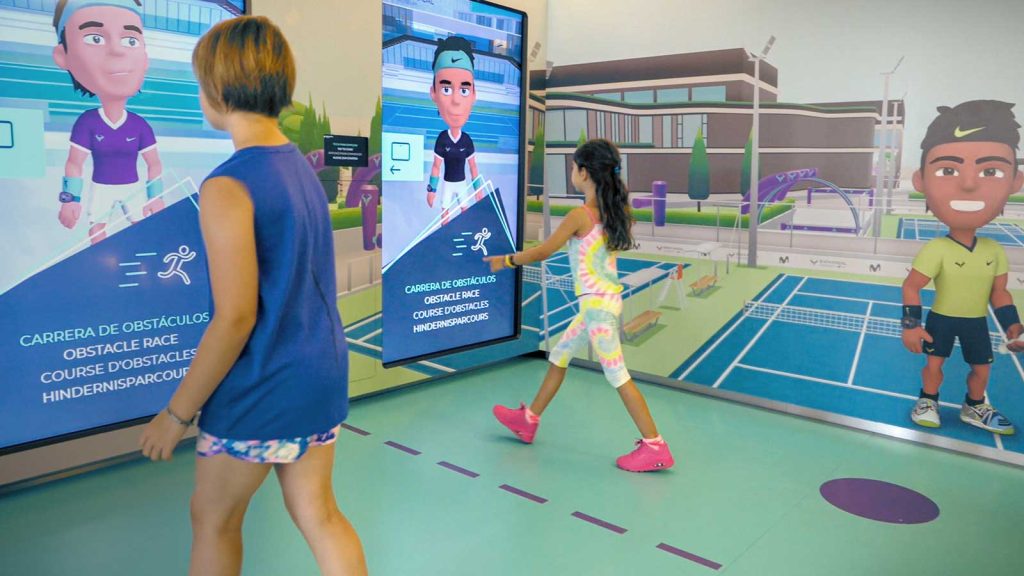
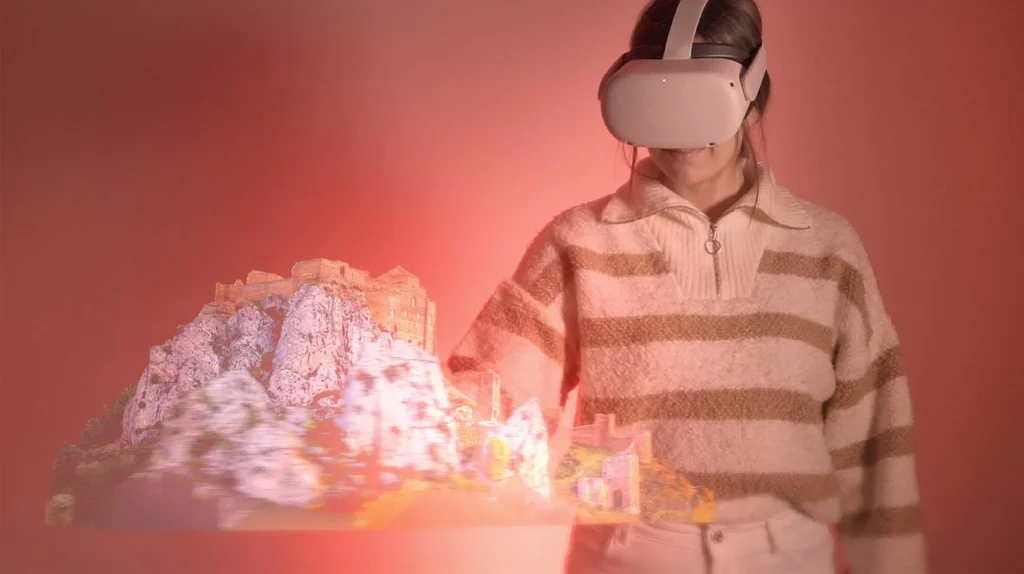
Throughout this article we have learned about some of the most disruptive and innovative projects that have already been launched in the educational field. We will now take a closer look at some of them examples of the use of the Metaverse in education. - Rafa Nadal Academy by Movistar . Get to know the facilities of the Rafa Nadal's Academy through his virtual twin . You can discover the values, history and different buildings of the complex while completing different challenges and mini-games. A project with a marketing and viralization objective that achieved a reach in Social Networks and media of 48 million people. - KAI XR Platform . Virtual Reality Application that invites children and not so children to discover the world of science, history, technology or the environment in a fun and immersive way. - Research Night virtual event . At the university level, the virtual event developed by the University of Zaragoza stands out. Through the virtual recreation of one of its most representative classrooms, the university brought together researchers from all over Europe in the same digital space. Overcoming physical barriers to unite the scientific and research community. - LOARRE XR . At the historical and cultural level, the Metaverse allows the recreation of monuments to increase their diffusion, access and knowledge. This is the case of the Loarre Castle a Romanesque castle with more than ten centuries of history that can now be visited from anywhere in the world thanks to its transfer to the virtual world. At Imascono through our metaverse services for companies , we believe that the Metaverse in education can help us to be much more agile in our way of learning and to naturalize our interaction with the digital world. To do this, we can make use of technology that goes through AI avatars, virtual spaces and Augmented Reality . Since the company's inception, more than fourteen years ago, at Imascono we have been an active part of technological innovations in the education sector. Both for the launch of the Chromville educational app that has reached more than 120 countries with a million downloads as in the incorporation of Artificial Intelligence in the training in new technologies in the project. V-E-G-A tutor . Need a Metaverse to take the next educational leap? Get in touch with us! Our team of engineers and designers will be happy to help you incorporate this state-of-the-art technology into your training and educational projects.
What is augmented reality? Key points
What is Augmented Reality? Main keys
In a world where connection and instantaneous information are key, the Augmented Reality provides a bridge between physical space and digital data The new technology, providing both companies and users with a more intuitive and effective way of interacting with technology. Augmented Reality (AR) is transforming the digital landscape with its ability to overlay information on top of the physical world in real time. This technology combines virtual elements with the real environment. Offering immersive and interactive experiences that go beyond the conventional . From enhancing the retail shopping experience to revolutionizing learning and training methods, AR is redefining everyday interactions and opening doors to endless possibilities across multiple industries. In this article, we will analyze in detail the key points of Augmented Reality Ready to learn more about its main applications in different sectors and the advantages it offers companies?
What is Augmented Reality
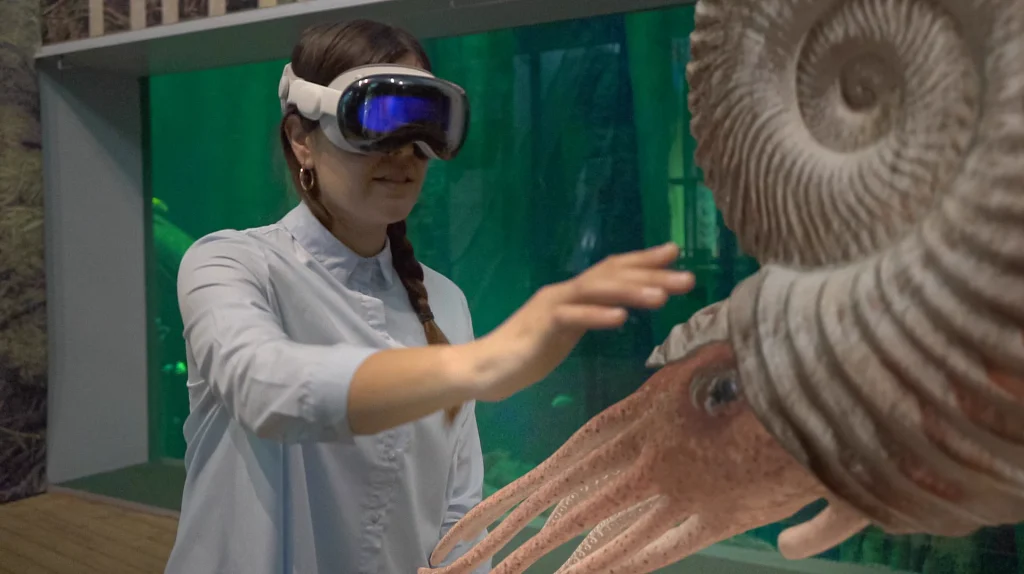
Augmented Reality is the technology that combines the real world with the digital world by superimposing virtual elements on the reality itself . Thanks to this immersive technology, the real and virtual environments intermingle, creating interactive experiences accessible from several devices at the same time: from cell phones and tablets to Augmented Reality glasses. Augmented Reality is just one of the immersive solutions within the framework of the Extended Reality . A series of technologies to which also belong the Virtual Reality y la Mixed Reality . Their origins and software are different, but their goal is similar: to eliminate the barriers between the real and the virtual. While Augmented Reality superimposes digital elements showing the real world at the same time, the Virtual Reality immerses users in fully artificial immersive environments . On the other hand, the Mixed Reality and specific technologies such as the Spatial Computing seek to go a step further in this interaction between the physical and the virtual. Introducing in a much more natural way, virtual elements in the real world and/or real elements in the virtual world. You may be interested in → Mixed Reality: Definition, characteristics and examples
How Augmented Reality works
This technology is undoubtedly one of the most widespread among companies today. But how does it work? Augmented Reality is based on the superimposing digital elements such as images, videos or data on the real world all through devices such as smartphones, tablets or specialized glasses. It uses cameras and sensors to capture the environment, processes the information and allows virtual objects to be located in real space. Either through visual markers such as QRs, through geolocation or holographic projections. In this way, Augmented Reality enriches the user's perception of the environment, allowing for interact with layers of digital information that appear integrated in their field of vision.
Applications and types of Augmented Reality for businesses
Augmented Reality provides companies with innovative tools for their digital transformation improving both the internal operations as well as interaction with customers . From marketing and sales to industrial production and professional trainings, AR experiences provide great benefits for companies. These are the main ones Augmented Reality applications in different sectors:
1. Applications in the education sector
The Augmented Reality in education offers the possibility of approach the real world from new perspectives The new system provides an environment full of information that adds value to the training activities. Instead of viewing simple images on the projectors, you can show three-dimensional models of outer space, geometric figures, parts of the body, historical moments or even the seabed, as if they were in the same classroom through Augmented Reality devices. Empowering the creativity, motivation and curiosity of children and not so young children. Encouraging these digital natives to continuous discovery and to wonder what's behind, demonstrating that play and technology are a great means for learning.
2. Applications in the business sector and Industry 4.0.
Now that you know what Augmented Reality is, it is very relevant to know that within the processes of industrial companies it represents a revolution in the control, training and efficiency of the increasingly complex production processes. . Thanks to this immersive technology and its marriage with the latest Internet of Things (IoT) innovations, machines and operators are interconnected, moving from simply operating the machine to being able to communicate with it. A fact that helps in routine inspection tasks, in remote assistance and in the possibility of showing operators interactive instructions and warnings on the machinery itself (notifications, hazards, etc). In addition, Augmented Reality also has a great potential for the presentation of three-dimensional models of parts and prototypes from all angles and in the exact place where your final version will be, reducing to the maximum the margin of error when assembling and using them. Read more about the impact of technology on the industrial sector, at What is Industry 4.0 and what are its main characteristics? .
3. Applications in the retail sector
With Augmented Reality, the retail shopping experience reaches new heights. levels of digitization through hybridization for the phygital experiences. Offering in the same physical space additional information on the products (availability, price, colors, reviews from other users, tutorials on their use and assembly and even the possibility of placing orders instantly) with the superimposition of digital elements visible through cell phones or Augmented Reality glasses. A series of innovations that optimize resources, reduce time and strengthen brand-customer relationships . A major breakthrough also for e-commerce, offering the possibility of virtually try on garments or integrate into our homes the products we are going to buy thanks to their 3D models visible through this immersive technology.
4. Applications of augmented reality in marketing and advertising
With the development of Augmented Reality-based campaigns, marketing, communication and advertising enter a new dimension. Making it possible not only to boost the value of digital marketing strategies, but also to link them with experiential marketing. Turning the most in-person, static actions into groundbreaking, fun experiences that grab attention and draw the target audience to the brand. Offering, for example, a second digital layer for outdoor advertising fully tailored to the user's interests. The use of this immersive technology also improves the most essential marketing campaign metrics, such as retention, dwell time and engagement, while increasing interaction and personalization through a more immersive development of the brand's storytelling. One of the latest marketing campaigns to base its advertising strategy on Augmented Reality comes from the well-known brand Lacasitos. Hidden inside its famous tubes were fun characters that came to life in the real world through its AR App for kids.
Augmented Reality Experience developed for Movistar by Imascono
5. Applications in the tourism sector
Undoubtedly one of the sectors that can benefit the most from the Augmented Reality specifically for the tourism, hospitality and cultural sector where the combination of this technology with geolocation systems and the increasingly efficient 5G connections offers the opportunity to to expand on-site information for tourists while touring any tourist area, whether indoors or outdoors. Thus, Augmented Reality has become an important virtual guide always accessible and up to date . Not only of the places that the tourist should know of the area, but also of the basic services such as pharmacies, ATMs or restaurants that are available. A more pleasant and didactic way of making the visits to museums or natural sites The user is shown details that would otherwise go unnoticed.
6. Applications in the entertainment sector
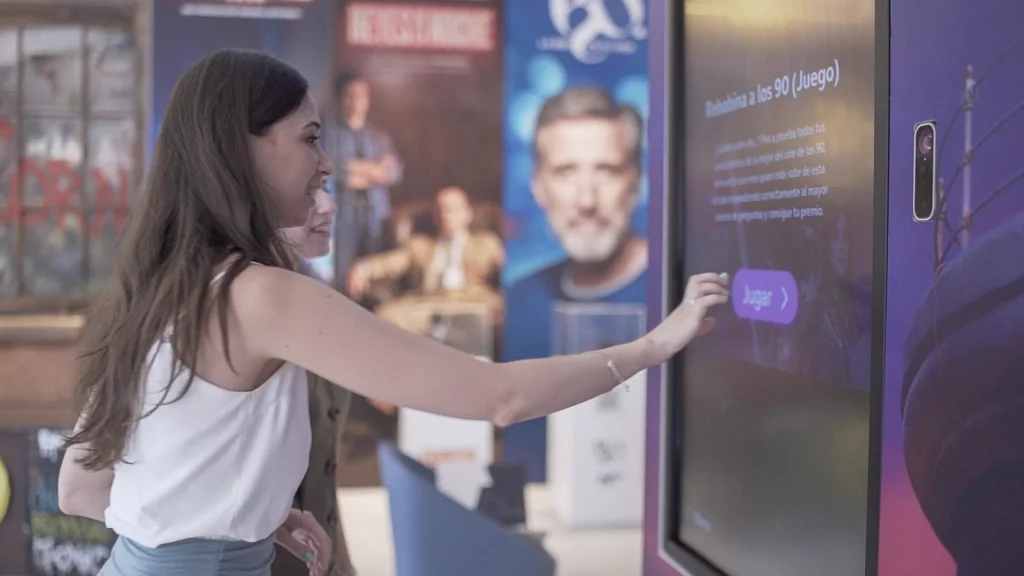
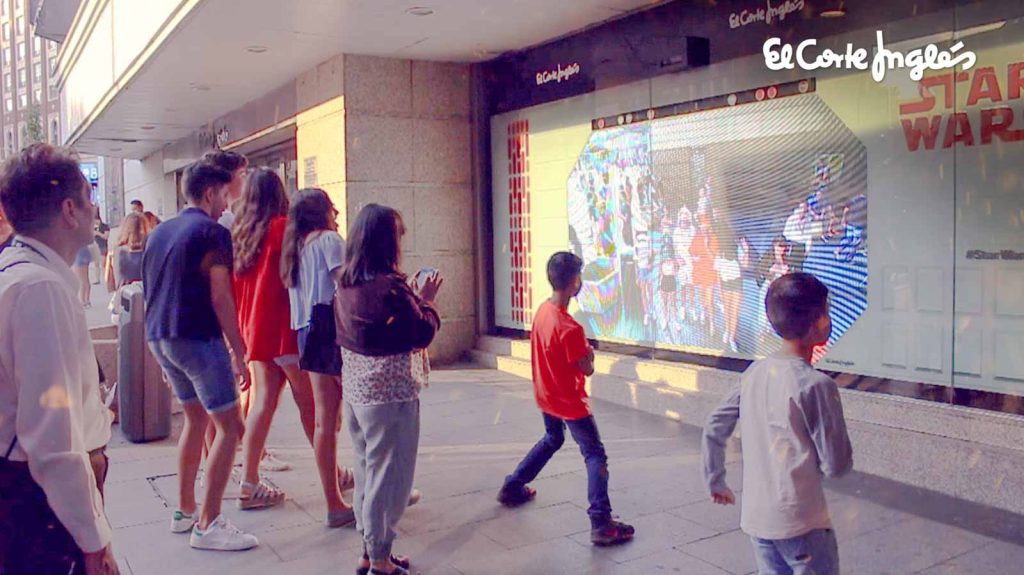
The new era of entertainment and digital leisure is not only about substituting virtual for face-to-face. It is also about completely revolutionize the actual experience . Thus, thanks to Augmented Reality, the user has more control and information about the show he is watching live. They can choose new angles from which to enjoy the event, see all kinds of additional information superimposed as notifications and even enjoy a much more immersive show by being able to add special effects and animated characters as if they were really there. A new range of entertainment possibilities for example, transforming the pedestrians of Plaza Callao into the protagonists of the Star Wars saga or to the moviegoers at Kinepolis Cinemas in new characters of Thor Ragnarok completely changing the on-site promotion of series and movies.
7. Applications in the healthcare sector
The new tools offered by Augmented Reality technologies represent a new challenge for the revolution in the healthcare sector . Thanks to AR experiences, healthcare professionals can access valuable information instantly, keeping their hands free to perform any technique. Not only that, the operating professional can be in contact with other professionals during the intervention, sending images and videos in real time while they can give indications, superimposing them on the real image. A training level, Augmented Reality allows to see in three dimensions models of the different parts of the body, facilitating its study and learning, providing additional information. A technology that also represents a new impetus for telecare and medical consultations based on Artificial Intelligence . Additional information is also available on antibiotic treatments and other medications, with interactive instructions that facilitate their correct use. Find out more about technology in the healthcare sector at Virtual Reality and medicine: applications in the healthcare sector .
Key advantages of Augmented Reality
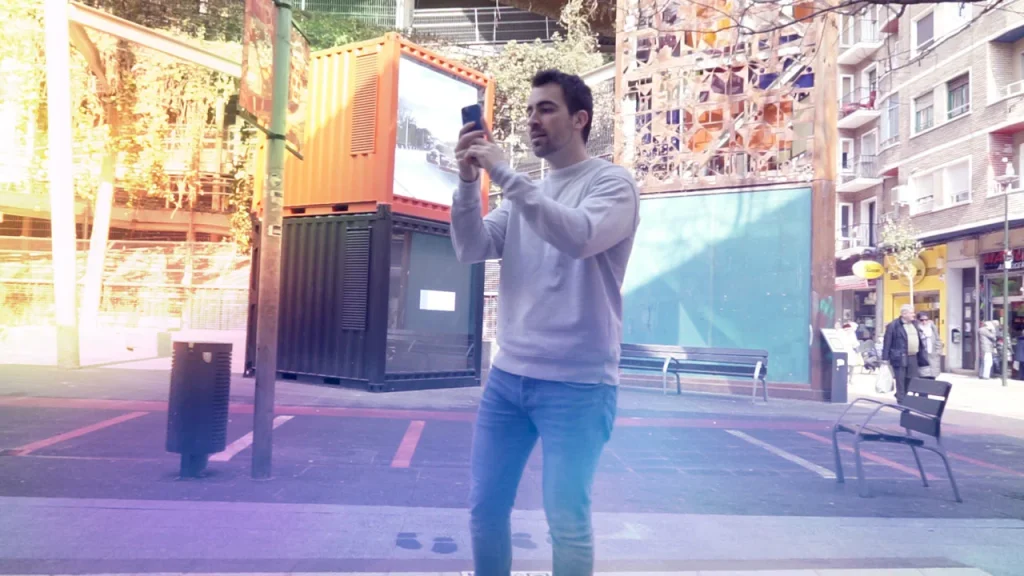
Image from Arte Conectado, an Augmented Reality project with Avatars for Zaragoza City Council
Knowing the applications of Augmented Reality we see how it is revolutionizing the way we access and interact with the digital world, by superimposing information on the real world, increasing - never better said - our capabilities. Next, let's review the 4 most important advantages of incorporating Augmented Reality technology.
Accessible and multi-device:
To take advantage of the benefits of Augmented Reality in our daily lives, you simply need a smart device with a camera and network connection, such as a tablet, cell phone or AR glasses. In addition, this technology has an easy and simple implementation today thanks to its great accessibility from these different devices, many of them widely used by users.
Low cost and great potential for adaptation:
Among the Extended Reality technologies, Augmented Reality is by far the lowest cost, as it does not require devices with a high immersive capacity for its proper functioning. Moreover, by keeping users in the real world, they recognize the space, appreciate its familiarity and intuitively take advantage of all the digital elements that enrich reality.
Gamification and personalization:
The development of technological solutions based on Augmented Reality not only allows us to introduce elements of video games to the business, industrial and educational environment. In addition, thanks to Augmented Reality we can enrich our audiovisual experience, as well as communication, both between the machine-operator and between the company-customer, with the development of unique and customized experiences that encourage interaction and interest of users.
New communication channel:
Just as the Internet and the expansion of Social Networks did in their day, Augmented Reality is revolutionizing communication, marketing and the digital presence of both companies and users. Thus becoming a new way of interaction between both. With the difference that this superimposition of digital elements on the real world makes the company/user dialogue much more attractive, immersive and dynamic.
Augmented Reality examples you should know about
Augmented reality filter
In addition to the success stories of Lacasitos, Marvel and Star Wars that we have seen throughout the article, it is interesting to learn about others. examples of Augmented Reality usage that can help to see the transformative potential of this technology in different sectors.
A success story in bringing Augmented Reality into the classroom is Chromville, a creative learning app based on coloring pages whose characters come to life through screens and educational games.
Augmented Reality helps us go beyond history books to see the past, and even the future, with our own eyes. As in the Ibercaja Xplora AR experience. An interactive webApp that lets visitors travel to three different eras to discover the city's past and future.
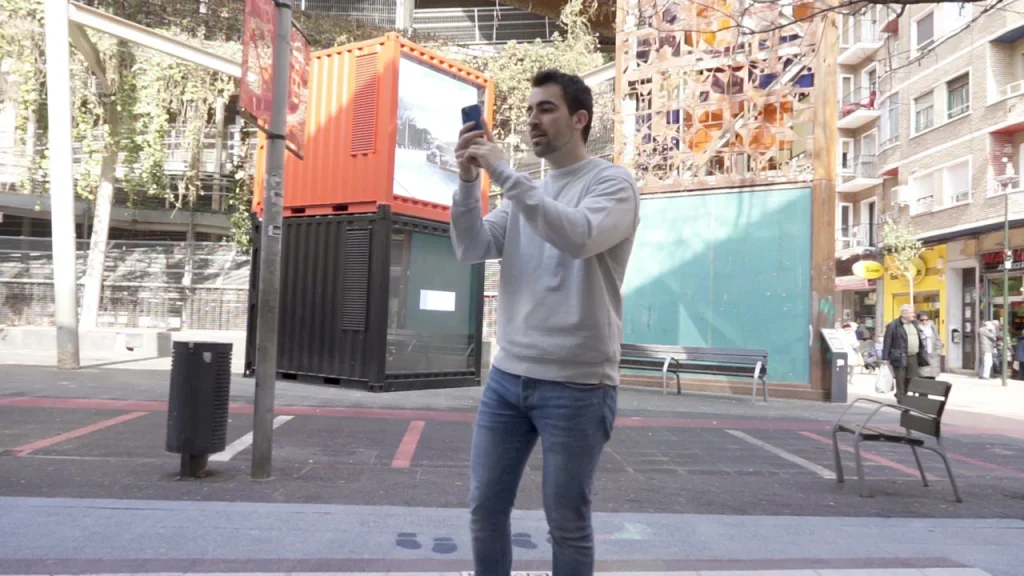
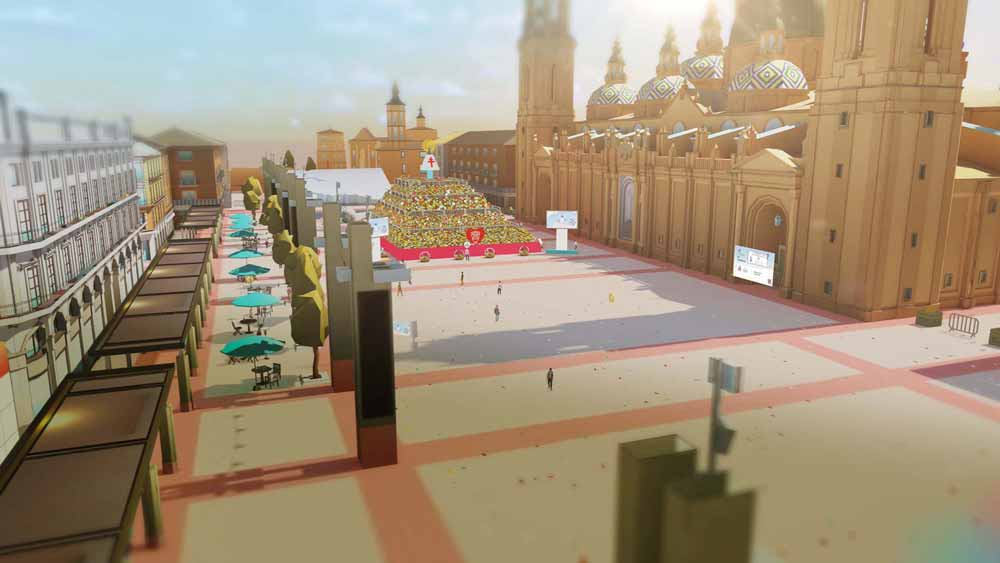
When it comes to smart cities, one of the most recent examples of the use of Augmented Reality in cities is found in the Arte Conectado project by Paseos Comerciales de Zaragoza. Here, through urban art and AR experiences, residents and tourists can enjoy a stroll through the city's different neighborhoods with amazing graffiti that comes to life around them.
Discover our Augmented Reality service for businesses
As we have seen, the Augmented Reality is one of the key technologies at the present time, both at the customer experience In terms of professional training and in-house training, this technology transforms the interaction between users and machines. Facilitating access to information and content, creating new interactive experiences and opening the doors between the real world and the virtual world. At Imascono we are Augmented Reality experts since the company's inception in 2011. Since then, we have been leading the evolution of this technology, leveraging our know-how and experience in a multitude of sectors to digitally transform the business model and training of our clients. That is why we invite you to learn more about our Augmented Reality service for businesses . Our team of engineers and designers will be pleased to meet your objectives and needs. Would you like to develop an Augmented Reality project? ¡ Contact with us !
What is Industry 4.0. and what are its main characteristics?
What is Industry 4.0. and what are its main characteristics?
From the steam engine to the invention of electricity or the advent of mass production and later electronics... Throughout history, the industrial sector has undergone various technological transformations. that have come to mark the great advances of mankind. We are currently in the midst of Fourth Industrial Revolution - Industry 4.0. where digital, intelligent and automated technology is revolutionizing our companies, factories and production lines. Cloud connectivity, Industrial Internet of Things (IIoT), and advanced AI and AI-enabled solutions are machine learning are radically transforming industrial operations. In this article we would like to analyze in detail the main characteristics of this Industry 4.0. and, above all, learn about its most important technologies. Ready?
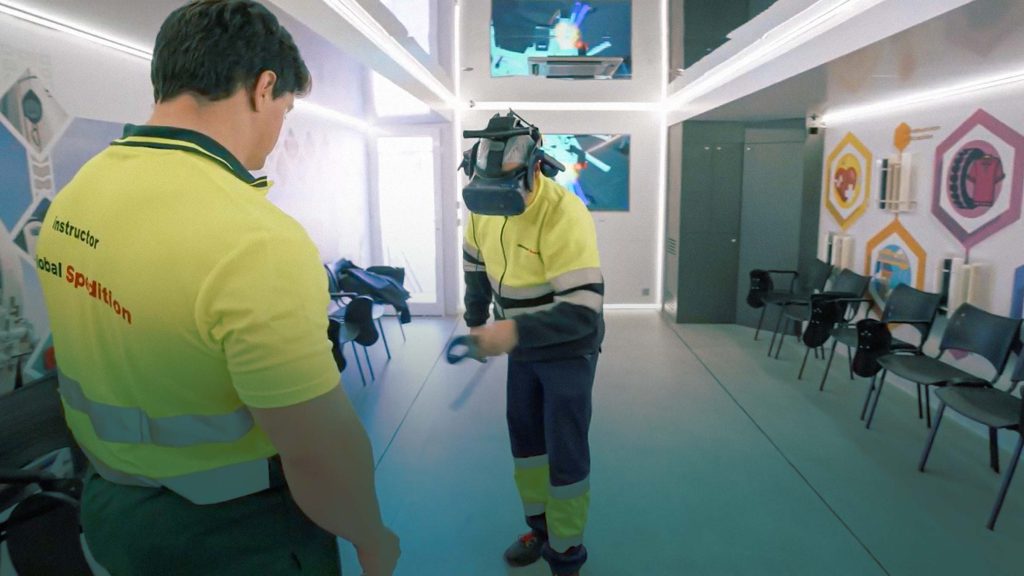
Virtual Training developed by Imascono for Global Spedition
Definition of Industry 4.0
You may be wondering what Industry 4.0, or the Fourth Industrial Revolution, is. integration of advanced digital technologies in manufacturing processes. It includes the use of Internet of Things (IoT), Artificial Intelligence (IA), the immersive technologies the robotics and the analysis of Big Data to create interconnected and automated production systems and optimized industrial/business management. This approach allows for a greater efficiency, customization and real-time analysis transforming factories into intelligent and adaptive environments. Before Industry 4.0. there were three other major Industrial Revolutions:
The late 18th century saw the First Industrial Revolution, marked by the invention of the steam engine, which transformed production methods from manual labor to mechanization.
In the Second Industrial Revolution, in the late 19th century, the driving force came from electricity and oil, introducing mass production and assembly lines, which significantly improved efficiency and production volume.
The Third Industrial Revolution began in the mid-20th century with the arrival of electronics, computers, and the first robots, setting production on the path to automation.
You may be interested in → Business Innovation: Spatial Computing Applications in Extended Reality . Industry 4.0 is characterized by integrating digital technologies such as IoT, AI, and robotics in manufacturing systems. Creating intelligent and automated production networks that radically transform industrial production and management. Some are also already talking about the start of the Industry 5.0 a development marked by the active human participation to improve both the well-being of workers and the sustainability of production. This includes the development of collaborative robots (cobots) that work hand-in-hand with humans in manufacturing tasks and systems that not only optimize production, but also promote environmentally responsible practices. Industry 5.0 prioritizes collaboration between humans and machines, emphasizing the importance of the human touch in the creativity, customization and sustainability.
Applications and technologies in the industry
The incorporation of new technologies in the industrial sector represents a complete revolution in the control, training, error correction and decision making with 3D simulations and prototypes developed to the highest level of detail . Improving the efficiency of increasingly complex production processes. Thanks to this immersive technology and its marriage with the latest innovations in the Internet of Things (IoT) and Artificial Intelligence, the machines and operators are interconnected from simply operating the machine to being able to communicate with it. Let's take a look at some of the main Industry 4.0 technologies :
Virtual and Augmented Reality
Both the Augmented Reality as Virtual Reality are two immersive technologies that are transforming the Industry 4.0 . By changing the way in which combines the physical and digital world in factories and production lines. On the one hand, the AR experiences The application of this technology to the industrial sector has great potential for the presentation of the three-dimensional models of parts and prototypes from all angles and in the exact place where their final version will be, reducing to the maximum the margin of error when assembling and using them. However, if there is an application of the Virtual reality that revolutionizes the industrial sector is the possibility of autonomous training. in complex and/or hazardous tasks through controlled 3D simulations The company's own machinery is used for this purpose, without the need to allocate extra resources such as trainers or the machinery itself. You can learn more about this technology in our post Virtual Reality: examples and applications .
Digital Twins
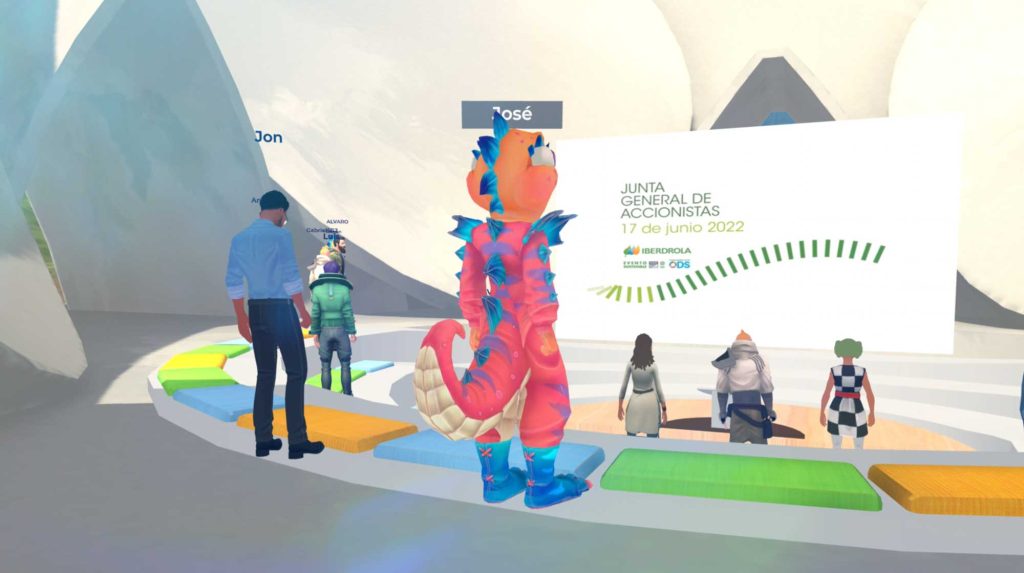
Digital twins in Industry 4.0 are interactive virtual representations of processes, products, or even entire production plants that simulate reality in a digital environment. This technology gives companies a global view of their entire production, letting them analyze data and monitor systems to prevent problems before they occur, optimize operations, and experiment with changes in a risk-free virtual environment. By using IoT sensors to collect real-time data, digital twins offer a detailed view of the performance, maintenance, and effectiveness of the machines on the factory floor, improving decision-making and operational efficiency. These Digital Twins can also become the information hub and meeting point for stakeholders, as in the case of the Shareholders' Meeting and virtual event held by Iberdrola in its own 3D virtual space.
Virtual Event in the Metaverse developed by Imascono for Iberdrola
Cloud computing
The cloud computing It is an essential pillar of Industry 4.0, providing the Infrastructure necessary to support the integration and analysis of large-scale data. It facilitates the centralization of information, allowing remote and real-time access to the critical data stored on its servers, which optimizes collaboration and decision-making agility.
With the ability to store and process huge amounts of data securely and efficiently, The cloud enables the implementation of advanced solutions of Generative Artificial Intelligence, Automation and IoT, thus enabling companies to increase their operational efficiency, reduce costs and improve innovation in their manufacturing processes.
Robotics
Electronics, computers, and the first mechanized robots entered the industrial sector during the Third Industrial Revolution. In Industry 4.0, robotics has grown even stronger, playing a crucial role in automating and optimizing production processes, along with their efficiency and precision. Advanced robots can perform complex, delicate tasks, adapting to changing environments and collaborating with humans in real time. The integration of autonomous and collaborative robots improves speed and production quality while reducing workplace risks. It also frees workers from repetitive tasks, allowing them to focus on more strategic and creative activities.
Big Data and Artificial Intelligence
In Industry 4.0, Big Data and Artificial Intelligence are fundamental to transforming industrial production through the collection and analysis of the massive volumes of data generated by the devices and sensors connected to the manufacturing ecosystem. These technologies enable advanced automation and real-time decision-making, optimizing operations from predictive maintenance to production customization. The potential of Artificial Intelligence in Industry 4.0 can go beyond production to focus on workers, becoming one more companion in their day-to-day work: enhancing their capabilities, answering their questions, and/or becoming the company's gateway to information and training, as in the case of IRIA, the AI avatar of the Iveco industrial group. If you want to learn more about AI we recommend → Challenges of artificial intelligence applied to business.
Phygital project developed for Rafa Nadal Museum by Imascono
Highlights of Industry 4.0
Industry 4.0. is characterized, mainly, by the creation of smart factories where physical and digital systems cooperate in an interconnected and autonomous manner. Interconnectivity, the digital transformation automation are some of the main characteristics of the implementation of these technologies in the industrial sector . Features which can be summarized as follows:
Real-time response. Real-time responsiveness allows companies to monitor and manage operations instantly and effectively. Thanks to Big Data, IoT sensors and 3D simulations deliver a continuous flow of data that supports fast, accurate decisions, optimizing the performance of the production process.
Decentralization. This refers to the ability of machines and computer systems to operate autonomously and make operational decisions without direct human intervention, working independently and flexibly while adapting in real time to the changes and needs of industrial processes.
Increased productivity. By integrating different technologies, process automation and optimization drive a significant increase in productivity. These technologies enable faster manufacturing with fewer errors, maximizing asset performance and minimizing downtime. In addition, real-time data collection and analysis make it easier to drive continuous improvements and fine-tune production operations.
Industry 4.0. applications you should know about
Throughout the article we have been getting to know some of the examples and use cases of new technologies in Industry 4.0. Next, we would like to delve into the most relevant applications of this Fourth Revolution in the industrial sector.
3D Simulations
3D simulations in the industrial field cover a wide range of applications. From Training of workers in the use and prevention of occupational risks in safe environments, focusing on tacit knowledge, up to the possibility of understanding the operation of an entire company's plant, logistics, and machinery through 3D models and virtual simulations on a real scale. Among the solutions already developed in this field we find the entire line of Virtual Training. Customized virtual reality training programs launched by companies from different industrial sectors such as Professional training for Global Spedition workers or the presentation of the new industrial machinery of Boehringer Ingelheim.
Industrial Internet of Things: Industrial IoT
The Industrial Internet of Things (IIoT) goes a step beyond the IoT we know today, focusing specifically on the interaction between machines, devices and industrial systems. In Industry 4.0, this connectivity and machine-to-machine and human-to-machine communication The real-time, accurate and precise monitoring, predictive maintenance and optimization of processes is vital for industrial companies to scale and adapt in real time to market trends and needs.
Task management
Industry 4.0 transforms task management by automating processes and optimizing resource allocation through intelligent systems. Enabling the efficient coordination of tasks between machines and humans The system is designed to improve accuracy and reduce execution time. In addition to task management, we could also speak of the information management where large volumes of data from multiple sources can be collected, processed and analyzed in real time. Where not only do we obtain strategic insights The system also facilitates better coordination and communication between departments and levels of the organization through interfaces such as WebApps or even hyperrealistic AI avatars that humanize the interaction between users and data .
Industry 4.0. use cases at Imascono
From pharmaceuticals to logistics, automotive, agricultural machinery and the industrialization of livestock, there are many industrial sectors in which the Imascono use cases have been part of the leap to Industry 4.0. of large and medium-sized companies.
Such as the virtualization and interactive 3D modeling of the various machines made by the Tenias group. Three-dimensional versions used to present and provide training on how their latest products work.
Another Industry 4.0 success story is the Virtual Reality training designed for Ceva Velactis, the leading pharmaceutical company in the veterinary field, which provides training on and promotes the uses and benefits of its new products.
At Imascono we know firsthand how important it is for industrial companies to have the right latest technological advances to optimize and scale up production At the same time, having enough flexibility and customization capacity to adapt to market changes. Therefore, training, data collection and a correct interaction between machines and workers are key to advance in Industry 4.0. Our team of more than 30 engineers and designers has more than 12 years of experience in the development of projects of Artificial Intelligence , Virtual Reality and Virtual Spaces focused on business and industry. Do you need making the technological leap to Industry 4.0 ? ¡ Contact with us !
Advantages and disadvantages of Artificial Intelligence in education
If there is one technology that is revolutionizing the present and future of education, this is Artificial Intelligence (AI). . Radically changing our learning schemes, developing new proposals and methodologies. Both at school, university and professional training levels. From personalizing the educational experience to automating repetitive tasks or fostering new immersive proposals, Artificial Intelligence applied to education proposes a series of advantages and opportunities for our educational systems The learning experience of the students will be as effective and inspiring as possible. In this post we are going to analyze in detail the implications of introducing the Artificial Intelligence in training and educational programs, as well as how it is complemented by the other technologies that are digitally transforming the way we learn .
Kai XR Platform Virtual Reality project developed by Imascono for the education sector
Artificial Intelligence Revolution in Education
When we talk about Artificial Intelligence we refer to the set of technologies, processes and algorithms that allow machines to think/act like human beings. By adapting to different situations and performing tasks that normally require human intelligence. These algorithms are feedback and self-learning through data training . A combination of machine learning models, Big Data and strategies that perform tasks such as pattern recognition or even decision making. Artificial Intelligence in education represents a revolution, since it fundamentally transforms how education is delivered and received. . By automating administrative tasks and personalizing learning, AI frees educators from repetitive and bureaucratic burdens. Tools such as intelligent tutors or AI-enabled training simulations enrich the learning experience. Making it more accessible, personalized, attractive and effective. The content is adapted to the individual needs of each student. If you are interested, you can learn more about AI in →I Generative Artificial Intelligence: definition and main applications .
Advantages of AI in education
The way students learn is changing, as is the way we communicate, interact with the world around us, and interact with technology. The Augmented Reality the Virtual Reality or the phygital experiences focused on the educational field propose new ways of deepening knowledge and training itineraries. By integrating technologies such as Artificial Intelligence into education, we create highly adaptive and personalized learning environments that respond to the individual needs of each student, preparing them for the challenges of tomorrow. These are the three main advantages of applying AI in the classroom :
Immediate feedback
AI systems and algorithms can quickly evaluate students' responses, which is an advantage for both students and teachers to have a immediate feedback on their learning progress. This allows students to understand and correct their mistakes in real time, facilitating more efficient and effective learning. And for teachers, to be able to have a more detailed control of their students' progress. A learning method that is reinforced if implemented with the most gamified learning techniques. Game mechanics , challenges that take student motivation to the next level. You may be interested in → What is gamification: benefits and examples
Virtual Space developed by Imascono for Ibercaja's Aprendiendo a Emprender project
Personalized learning
Linked to the above, another of the advantages that Artificial Intelligence offers in the educational field is the customization . The respond to the individual needs of each student . Not only when posing questions and challenges adapted to their level of knowledge, but also so that teachers can analyze the progress of students with a personalized approach.
By relying on AI, teachers can see each student's strengths and areas for improvement and come up with new, adapted learning strategies. Each student is different and the Artificial Intelligence in the classroom allows everyone to understand and advance in their training at their own pace and with the teaching method that works best for them.
Phygital project developed for Rafa Nadal Museum by Imascono
Increasing digital competencies
The integration of Artificial Intelligence in education not only enriches subject specific learning, but also prepares students for the digital future by enhancing their digital competencies . By regularly interacting with AI-based platforms, students become familiar with advanced technologies that are critical to the present and future of business.
This constant contact helps to develop essential skills, such as the ability to technological problem solving, critical thinking in digital environments and the ability to work effectively with data and automated tools. A success story of the AI applied to education that meets these three characteristics can be found in V-E-G-A, the hyper-realistic virtual avatar which tutors new technologies thanks to its Artificial Intelligence engine and its training in this specific area. V-E-G-A adapts to the user's level of technological knowledge and answers all their questions about the latest innovations and technological advances.
Disadvantages of Artificial Intelligence in the educational environment
The integration of Artificial Intelligence in the educational field has only been around for a short time, so at present it has some disadvantages that need to be taken into account and improved for the prosperous future that lies ahead for AI in education.
1. Reduction of human interaction
This is undoubtedly one of the main concerns presented by AI and, in general, the digital transformation that education is undergoing. Direct contact between students and teachers is crucial for emotional and social development, so we must foster an empathetic and responsive learning environment, where the most humanized technology helps us connect, not distance us.
2. Great investment
Today, implementing AI systems in teaching methods requires a significant investment in technology and training. It is important not only to acquire the hardware, but also the technological know-how to effectively use these new educational tools and get the most out of them.
3. Data privacy and security
Undoubtedly, data cybersecurity is one of the key issues when talking about Artificial Intelligence. AI-based systems collect and process large amounts of personal information, which makes it essential to implement robust measures to protect this data against unauthorized access and security breaches.
Applications of Artificial Intelligence in Education
After learning about the advantages and disadvantages of implementing the different types of Artificial Intelligence in educational projects, it is time to take a more in-depth look at the applications that this technology offers us in the field of training. The AI is revolutionizing the education sector Personalizing learning methods, providing more interactive and adaptive environments and offering new key tools for today's world. These are the three main applications of AI in education :
1. Exploratory learning environments
Immersive learning environments are not a novelty, but their enrichment with AI systems to make them more autonomous and open, achieving that they are adapt in real time to all student actions. In these exploratory learning environments students take control of the simulation and it adapts as the situation progresses. Enabling students to learn from your mistakes in a 3D environment that does not affect the real world, helping them to train in complicated tasks, in trying different paths and above all, allowing them to be creative, autonomous and looking for new routes to reach the final result. Simulated environments such as the Virtual Trainings in the industrial and healthcare fields, such as Boehringer Ingelheim's Virtual Reality training or the Global Spedition . Learn more about this technology applied to the health sector at Virtual Reality and medicine: applications in the healthcare sector .
2. Language learning
AI is radically changing the way students learn languages. Using the speech recognition and natural language processing AI systems can help students improve their pronunciation, grammar and vocabulary more efficiently. These systems offer instant and personalized feedback, allowing students to see their mistakes and progress in real time. In addition, AI can simulate conversations with native speakers of any language providing immersive language practice without leaving the classroom.
3. Intelligent tutoring
Undoubtedly, one of the main advantages offered by the application of AI in education is that it is an accessible tool for users, regardless of the time, date, place or difficulty of the question, Artificial Intelligence is always available to continue learning. Thus, the figure of intelligent tutors grows in the educational field . These AI systems attend to all student queries They launch new challenges, offer additional explanations and resources, and evaluate learner performance. Identifying strengths and areas for improvement, adjusting learning materials for each learner. Tutors that can be customized through virtual avatars equipped with Artificial Intelligence as in the case of the avatar IA of Miguel de Cervantes Who better than the Spanish writer himself to explain the impact that Don Quixote has had on world literature?
Artificial Intelligence projects in education: AI avatars by Imascono
either through 3D simulations, customized didactic materials or even hyper-realistic avatars of our great figures of world history, Artificial Intelligence projects for students are already a reality. And they are going to be key players in the future of education. At Imascono we believe that the introduction of Artificial Intelligence in education has to help us to be much more agile in our way of learning, to be more aware of the different rhythms of each student and to naturalize our interaction with the digital world. A humanization of technology that goes through AI avatars hyperrealistic tutors that through voice, chat and text facilitate interaction with students. Would you like to learn more about our Artificial Intelligence projects in the educational field ? Contact with us and our engineering team will be happy to answer all your questions.
Features and benefits of Augmented Reality in education
Features and benefits of Augmented Reality in education
The possibility of approaching the real world from new perspectives, of combining the physical and virtual worlds, of creating an environment full of information that adds value to educational activities. This is what the incorporation of Augmented Reality experiences in education . Instead of viewing simple images on the projectors, you can show three-dimensional models of outer space, geometric figures, parts of the body, historical moments or even the seabed, as if they were in the same classroom through Augmented Reality devices. Enhancing creativity, motivation and curiosity of children and not-so-children. Encouraging these digital natives to continuous discovery and to wonder what lies behind. Demonstrating that play and technology are great tools for learning. In this article we will know in detail the benefits, characteristics and the most important examples of Augmented Reality in education.
Importance of Augmented Reality in the educational context
Before delving into the digital transformation that the introduction of the Augmented Reality in education In order to understand what this technology is all about, it is essential to know what it is all about. Augmented Reality is one of the three technologies that form part of the Extended Reality This idea of uniting the physical world with the virtual world. The Augmented Reality combines the real world with the digital world by superimposing virtual elements on the reality itself . Thanks to this immersive technology, the real and virtual environments intermingle, creating interactive experiences accessible from various devices at the same time: from cell phones and tablets to Augmented Reality glasses. While AR experiences superimpose digital elements showing the real world at the same time, Virtual Reality, on the other hand, immerses users in totally artificial immersive and interactive environments. You can learn more about this other revolutionary technology in our publication: Virtual Reality in education: features and benefits . In the field of education, Augmented Reality makes the learning process a highly dynamic and interactive experience. By overlaying digital information on the real world, AR transforms classrooms into spaces where theoretical concepts become visual and tactile experiences. In addition, AR technology offers personalization of learning The content is adapted to the needs and rhythms of each student, resulting in a more inclusive and effective educational environment.
Key features of Augmented Reality in learning
We are currently witnessing how technological advances have been transforming curriculums and teaching methodologies to all ages. From toddlers to job trainings, the different modules, courses and learning models have been changing with the introduction of the Virtual Reality of Artificial Intelligence or the Spatial Computing . The Augmented Reality in training is distinguished by a series of fundamental characteristics that make it the basis for creating richer, gamified and immersive educational experiences.
Immersive experiences
Augmented Reality and other immersive technologies allow the strategy to be followed learning by doing that is, to work on the tacit knowledge and interactive learning with students. Everything to go beyond textbooks, pictures and videos, to go beyond textbooks, pictures and videos to complement them with immersive experiences where the student is part of the action. and proactively advances in their learning. A more practical experience that allows, from the classroom itself, to travel to the past, to space, to understand the most abstract concepts of mathematics and physics... everything through three-dimensional models superimposed on reality. Or even through educational experiences in Virtual Reality such as in the case of KAI XR, a VR platform where students can learn about history, the animal world and even NASA through Virtual Reality goggles.
Kai XR Virtual Reality project developed by Imascono in the field of education
Real-time interaction
Real-time interaction is one of the most valuable features of Augmented Reality in education, as it transforms the way students relate to learning material. This functionality allows learners to interact with virtual objects and environments overlaid on the real world, offering a instant response to your actions . Coupled with Artificial Intelligence, this real-time interaction can even be carried over to languages, with the simultaneous translation of conversations. Or to physics tests, where the superimposed 3D model changes in real time at the same time that we change the parameters. All with the idea of creating spaces for trial and error, to generate simulations and to make learning more dynamic and experimental. Take a look at our Artificial Intelligence services for companies .
Personalized learning
New technologies such as Augmented Reality allow us to adapting the educational experience to the particular needs of each student . Personalizing the subjects and the pace of learning. Converting abstract concepts into interactive visual representations, facilitating student understanding. In addition, Augmented Reality allows learners to explore different topics and information at their own pace, fostering a autonomous and personal learning . This personalization not only enhances motivation and engagement It also ensures that each student is able to reach his or her full potential. You may be interested in → Augmented Reality and Artificial Intelligence Interactions .
Benefits of Augmented Reality in education
Augmented Reality is redefining the frontiers of learning in education, offering multiple benefits that transform both teaching and learning. student experience . By overlaying digital elements on top of the real world, this immersive technology facilitates more interactive and immersive educational experiences than the real world. attract the attention and stimulate the curiosity of the students. The following is a more detailed analysis of the three main benefits of Augmented Reality in education:
1. Academic motivation
Immersive technologies such as Augmented Reality enrich the educational experience by adding another layer of interaction and gamification to learning . By integrating visual and tactile elements into the classroom, Augmented Reality not only engages students' interest, but also invites them to explore and learn. Turning lessons into educational adventures The program is based on an active and participatory approach, traveling back in time to historical moments or transforming the classroom into the seabed.
2. Improves accessibility
Augmented Reality offers significant improvements in accessibility within education, especially beneficial for students with disabilities or special learning needs. By providing alternative and interactive methods for visualizing and manipulating information With this technology, this technology can be adapted to a variety of learning styles and physical abilities, allowing all students to participate more fully in the educational process. An example of this improvement in accessibility can be found in the project LOARRE XR, an Extended Reality platform in which the virtualized the visit to the Loarre Castle, a Romanesque castle of difficult access and with more than ten centuries of history.
3. Facilitates the understanding of abstract concepts
Undoubtedly, one of the most important benefits of the implementation of Augmented Reality in the educational system is its ability to improve understanding of the students. Allowing visualization of abstract or complex concepts in three dimensions, making it easier for students to understand and retain the information. All through memorable and interactive AR experiences where you can see a visual representation of parables, the human body, a historical event or mathematical concepts.
Augmented Reality projects in education by Imascono
Undoubtedly, technology plays a key role in the present and future of education . Throughout the article we have seen some examples, but here we want to show you three of the most relevant projects of Augmented Reality in educational experiences:
An unprecedented success story in bringing Augmented Reality into the classroom is Chromville, a creative learning app based on coloring pages whose characters come to life through screens and educational games.
Augmented Reality makes it possible to change the way children currently interact with technology. Instead of being mere passive spectators, AR educational experiences turn them into the true protagonists of the action. As in the Lacasitos App project, where children create their own world of fun alongside the different characters.
Augmented Reality helps us go beyond history books to see the past, and even the future, with our own eyes. As in the Ibercaja Xplora AR experience. An interactive webApp that lets visitors travel to three different eras to discover the past and future of the city of Zaragoza.
Without a doubt, if there is one thing these projects have in common, it is that the technology, fun and immersive learning play a very important role in education. At Imascono We are aware of this and therefore we accompany our clients throughout the entire process of creating this type of educational experience. From conceptualization to implementation, through our Augmented Reality services for companies our team of engineers and designers work to adapt Augmented Reality technology to the needs of our customers. specific needs of each educational program and learning method . Do you need to develop a Augmented Reality focused on education ? ¡ Get in touch with us !
4 Benefits of using Extended Reality and Big Data in tourism
4 Benefits of using Extended Reality and Big Data in tourism
The era of data has also reached the tourism sector. Thanks to the Big Data and to the advanced analytics Tourism companies are currently undergoing a profound and strategic transformation in the way they offer and optimize their tourism services. We are at an exciting time for the tourism industry . Now, more than ever, companies can learn more about travelers' tastes, needs and behaviors. Detecting trends, drawing conclusions in an agile way and defining much more personalized action plans. Everything for maximizing traveler experience and optimizing operational efficiency sector. For this digital transformation of tourism companies, it is necessary that the Big Data tool be accompanied by complementary technologies, such as artificial intelligence services , Extended Reality and Spatial Computing to make your integration as optimal as possible. In today's article we will analyze the main benefits of using Big Data in tourism. In addition, we will see how it is not only important to analyze the data, but also to know how to get it, where interactive experiences and Extended Reality Gamification play a key role in connecting with users.
Augmented Reality gamification project carried out for the Zaragoza City Council by Imascono.
Transformation of the tourism sector through Big Data
Big Data in tourism is a major revolution. It is transforming radically change how companies understand and interact with their customers. Advanced data and dashboards present an opportunity for tourism companies to analyze huge data sets. From online bookings and user reviews to social media interactions and travel and flight trends. Everything to get a complete and real-time view of travelers' behavior and preferences. This valuable information enables unprecedented personalization of services, optimization of supply and better demand management. Big Data also facilitates the trend forecasting and rapid adaptation to market changes, resulting in more informed decisions and more effective tourism marketing strategies. This interaction with the user is greatly benefited by the incorporation of new interactive and immersive travel experiences . Experiences that invite users to actively participate and connect with the tourism company. Turning Extended Reality into a key technology to interact with users in an effective, original and non-intrusive way. Surprising technological experiences such as diving among the fish, petting elephants or teleporting to an erupting volcano, as in the latest experience from Spatial Computing developed by Imascono in the tourism field.
4 surprising benefits: Big Data and Extended Reality in tourism.
The union of Big Data and interactive Extended Reality experiences allows for the creation of a new interaction between brands and users where new and interesting volumes of data are generated that help to optimize and personalize the strategies of engagement in the tourism field. New ways of interacting with travelers, which can be summarized as follows 4 main benefits of Big Data in tourism, powered by XR experiences:
Increasing new business opportunities in tourism
Both the development of interactive XR experiences for users and the collection of a large volume of high-value data. Both actions enable tourism companies to open up new business opportunities by focusing on the customer experience. Seeking new ways to connect with travelers, understand users and personalize travel offers and experiences. An example of these new business opportunities can be found in the following areas Exclusiverse the virtual space of the Exclusive Traveler Club which opens its memberships to the digital world. Through its virtual headquarters, the traveler's club offers a much more direct communication; it creates a community space between partners from all over the world and also collects all the behavioral information of users. Thus, it knows which areas are most visited, which memberships are the most consulted and the countries of origin of all virtual visitors, among other data.
Metaverse with digital memberships with Blockchain and NFT technology developed for Exclusive Traveller Club by Imascono
Improved decision-making
When working with data, it is not only important to know how to identify and filter the best sources. It is also vital to know how to turn that data into relevant information, that information into high-value knowledge, and that knowledge into decisions that help the company advance its business. . Thus, the Big Data enables tourism companies to analyze large volumes in depth of consumer and market data, identifying key trends and preferences that inform your strategic decisions. A improved decision making also for the tourists themselves as is the case, for example, with the interactive project of Cervantes IA . A hyperrealistic virtual avatar of Miguel de Cervantes trained with different sources and data, which serves as a tour guide to accompany visitors to Alcazar de San Juan (Castilla La Mancha). With this example of big data in tourism, through the avatar equipped with Artificial Intelligence tourists receive Cervantes' own recommendations and advice . Forever changing its interaction with the culture and tourist spot of the area. You may be interested in → Artificial Intelligence in tourism: characteristics and examples .
Virtual Avatar with Generative Artificial Intelligence developed by Imascono
Increased customer satisfaction
Now more than ever, the customer satisfaction plays a key role in tourism . Recommendations, opinions and travel trends determine whether a destination is attractive or not, in addition to the activities and tourist experiences it offers. In pursuit of this objective, Big Data applied to tourism allows us to keep track of the more personalized and deeper control of travelers' needs and behaviors, analyzing at both the macro and micro levels. All based on data that can come from the web, from social networks or from the interactive Extended Reality experiences . Where, through gamified challenges, interactive games or AR Apps In this way, users share their tastes and preferences with attractive, unobtrusive actions where the real protagonists are the travelers. As in the Rafa Nadal Museum in Manacor, where the different phygital experiences They represent a new and attractive point of contact with visitors, who interact with the brand and share their data and opinions while having fun and participating in different rankings and sweepstakes.
Phygital project developed for Rafa Nadal Museum by Imascono
Personalization of the user experience
As we are seeing in this article, Big Data and Extended Reality are two powerful tools for collecting user information and managing all that data. If, in addition, we incorporate the latest in Artificial Intelligence, we can take advantage of all that knowledge to personalize the tourist experience in real time . By adjusting offers, communications and interfaces precisely and taking into account the individual needs and wishes of each customer. Among the projects already underway that unite Big Data , Artificial Intelligence and creative XR experiences like Cicerone . The AI robot of iUrban which is also a travel agent and can customize tourist offers and proposals in more than 95 languages. You can to learn more about this topic at Smart destinations, what are they and what are their characteristics? .
Challenges and opportunities of Big Data for tourism
The introduction of Big Data in the tourism industry poses a number of challenges and opportunities for companies in the industry. Focusing the business on customer\/traveler data is a challenge at a global level. methodology and business organization, since requires a great ability to collect and analyze large volumes of data, preferences and behaviors in real time. Being, in addition, able to provide optimal responses, with the design of customized offers, anticipating market trends and optimizing resources. In addition, Big Data facilitates the identification of new market niches and expansion opportunities This can translate into strategic growth for tourism companies that know how to take advantage of this information. On the other hand, the management and analysis of large datasets requires significant investments in technology and specialized talent This can be a barrier for small and medium-sized companies in the sector. The privacy and data security The data and customer data also represent a major challenge for tourism companies in terms of data governance, storage and access to the personal information that is stored. It is therefore important to always count on technological partners that help tourism companies to work with and store these user data.
Discover our value proposition of analytics and dashboards in the XR experiences.
and, above all, to obtain this information from the most reliable sources. The most complete and with the greatest impact for the company. In this regard, the Extended Reality experiences applied to the tourism sector offer an attractive and fun way to interact with the brand. Sharing information about the tastes, interests and particularities of each consumer that would otherwise not be possible. At Imascono In this regard, we are committed to incorporating Smart Data to our XR experience developments. Transforming user interactions into advanced analytics dashboards, with heat maps, phygital interaction points, detailed provenance analysis... All for convert large volumes of data into organized, processed and refined information that is directly applicable and valuable to business decision-making processes. Do you want to go one step further in the introducing Big Data into your business ? Contact our team and we will help you incorporate dashboards and analytics into all your customer interactions.
Metaverse and NFTs: present and future relevance
Metaverse and NFTs: present and future relevance
In a world increasingly influenced by technological advances and major innovations in the digital world, two technologies have attracted global attention: Metaverse and NFTs (non-fungible tokens). Both technology trends are transforming all types of industries, from fashion and luxury to banking and finance. Knowing in detail its technological relevance is very important in order to continue betting on the digital transformation of our companies . Both the Metaverse and the NFTs are redefining value and ownership in the digital economy, are revolutionizing our interaction in virtual worlds and are generating new business opportunities that were unthinkable until now. In this article we will delve deeper into their definitions and complementary technologies, we will see in detail some of their We will discuss the most important use cases and analyze their benefits and future prospects.
Virtual Reality phygital project made for Ibercaja Explora by Imascono
General concepts of the Metaverse and NFTs
Before discussing the use cases, advantages and business opportunities of both technologies, it is important to have an in-depth knowledge of their definitions and Metaverse-related technologies and NFTs, including Blockchain and Web3, among others.
1. Definition of the Metaverse
The Metaverse It is defined as a A virtual universe composed of multiple linked three-dimensional digital worlds. A universe where humans interact socially and economically through virtual avatars, NFTs, cryptocurrencies and blockchain technology.
The Metaverse is the The next generation of the Internet, In which we can enjoy an immersive, three-dimensional and multisensory experience thanks to the combination of different devices and technologies. Such as Virtual Reality, Augmented Reality and the latest in Web3 technology and Digital Twins.
At Imascono we have Specialized Augmented Reality services, Virtual Reality and Mixed Reality.
2. Definition of NFT
An NFT, or non-fungible token, is a type of digital asset that represents ownership or proof of authenticity of a unique item . Certified through Blockchain technology. Unlike cryptocurrencies such as Bitcoin or Ethereum, which are fungible (i.e., they are divisible and exchangeable for another of equal value), each NFT is unique, like a work of art. NFTs can be linked to specific digital objects such as works of art, music, videos, video game items, and more, providing a unalterable record of ownership and provenance. This traceability and authenticity capability makes NFTs a powerful tool for the digitization and marketing of digital and physical goods in various industries, including art and entertainment.
3. Definition of Web3
Web3 is defined as the next iteration of the Internet that seeks to decentralize the data structure. and allow users to have greater control over their own information. It is based on the idea of using the Blockchain to create an internet where applications and services do not depend on centralized intermediaries. Instead of having large companies controlling the information and data, Web3 puts ownership and control of data in the hands of users through decentralized networks. This vision of the web incorporates cryptocurrencies, smart contracts, and decentralized applications (dApps) operating on blockchain networks. Not to be confused with the term Web 3.0, which refers to the evolution of the Internet in general. . Moving from Web 1.0. of hyperlinks and Web 2.0. of two-way interaction and Social Networks, to a new era of Internet that is more intelligent, autonomous and based on natural language processing.
4. Blockchain definition
Blockchain, or blockchain, is a revolutionary coding technology that allows for decentralized tracking of all digital movements and transactions . This makes it a particularly useful technology for systems that require high security and transparency . Like cryptocurrencies, the smart contracts or identity management in the digital world. Due to its decentralized nature, the Blockchain technology eliminates the need for intermediaries in many processes potentially reducing costs and increasing efficiency. It is undoubtedly one of the technologies that is revolutionizing banking and the digital economy. You can continue to learn more about this new digital economic ecosystem at Banking and Metaverse: Use cases and the future .
The importance of NFTs for accessing the Metaverse
The future of the Metaverse monetization, to become the definitive space for the socioeconomic exchange in the digital world . For this purpose, cryptocurrencies, Blockchain technology and especially NFTs have a key role in the structure and functioning of the Metaverse . Offering a unique and secure way to represent the ownership and authenticity of digital and physical assets within these virtual worlds. In the Metaverse, NFTs can represent a variety of elements, ranging from virtual real estate, concert tickets and digital artwork to avatar identities and exclusive fashion items. This ability to directly link the ownership of assets with their digital representation offers users total control over your acquisitions facilitating a transparent and secure digital marketplace. You may be interested in → The Influence of Artificial Intelligence in the Metaverse . For example, in the fashion and retail sector, NFTs allow the creation of new business models with collections phygital (proposals for the real and virtual world) or garments/products created exclusively for the Metaverse as NFTs (digital objects) for our avatars. Or in the digital entertainment industry where the association of NFTs to concert tickets and other experiences allows both the audience and the promoter to be assured that the tickets are verified and are authentic . A successful case of the union between the NFTs and the Metaverse can be found in the virtual museum of the great Spanish chef Ferran Adrià . Web3, virtual avatars, NFTs... creativity and innovation from el bulli foundation makes the leap to the virtual world . After exhibiting in New York, Cleveland, Madrid and Buenos Aires, Ferran Adrià turns his works of art on culinary evolution in 114 NFTs that can be viewed and acquired directly through its own virtual museum.
Benefits of NFTs in the Metaverse
In the new virtual universe of the Metaverse and the digital twins NFTs are much more than just digital assets, they are becoming key elements in transforming the way we interact, trade and express ourselves on the Internet. virtual spaces offering authenticity, exclusivity and security to users. By exploring the benefits of NFTs in the Metaverse We discover how they not only power the digital economy, but also elevate user experiences, creating extraordinary opportunities for innovation and engagement. In the following, we will analyze the 3 main benefits of the union between NFTs and Metaverso :
Marketing tool
The integration of the NFTs and the digital assets in the Metaverse also has an impact on the marketing strategies for brands and companies . Not only to position the company at the forefront of technology and business innovation also for the promotion and sale of your products in virtual showrooms . In this way, companies can create and distribute unique digital products that capture attention and foster a unique sense of ownership and belonging among consumers. This is not only increases engagement by allowing users to interact with the brand in innovative and memorable ways, but also transforms products and experiences into marketing opportunities. As in the case of Metrovacesa Space, a unique space in the real estate Metaverse to access information about the brand, the company's activities and the online pre-reservation of homes through the new digital economy.
Metaverse developed for Metrovacesa by Imascono
Improved functionality in the Metaverse
The incorporation of NFTs into the Metaverse plays a key role in the improved functionality and overall experience of the user in these digital spaces. NFTs allow for deeper and more functional integration of digital assets, such as interactive tools, accessories for avatars with artificial intelligence The Metaverse's environment is enriched by art and real estate.
This integration facilitates not only the ownership, but also the personalization and digital exchange of these assets in a transparent and secure market. A new way of interacting in the virtual world that has gradually been introduced and brought closer to citizens. As in the Zaragoza City Council's virtual Flower Offering project, where the public institution promoted knowledge about NFTs by introducing them into the mechanics of the game within the virtual space. In addition, the NFTs were associated with different prizes such as concert tickets, exclusive experiences and gift baskets. This was a real pioneering action by a public administration to bring citizens closer to the importance and value of NFTs and digital assets.
Metaverse with NFTs of the city of Zaragoza developed for Zaragoza City Hall by Imascono
Identity and security in the virtual world
As we have seen throughout the post, the great advantage offered by the introduction of NFTs in the Metaverse has to do with the security and transparency they offer in interactions within the virtual world . A fact that, in addition, is a benefit to redefine and deepen the digital identity of users in the Metaverse.
NFTs allow users to have complete and exclusive control over their digital identities and assets, ensuring that only they can access and transfer their property. One example is Exclusiverse, the great pioneering virtual space in the tourism sector, where its more than 85,000 members can extend their digital memberships into the Metaverse thanks to the connection of each of their memberships with blockchain technology and NFTs. This allows them to purchase exclusive travel products and experiences and new benefits for their memberships, and to secure the payment and recording of all their interactions with the Traveler club. If you would like to learn more about this success story in bringing NFTs and the Metaverse together, you can visit our post Digital Membership: definition and main benefits.
The future of Web3: Blockchain, NFTs and the Metaverse
The Metaverse, as a space for socioeconomic interaction, is in full construction and evolution. Little by little, we are seeing how the most pioneering companies and brands are evolving towards this new concept of digital economy. Just as e-commerce revolutionized the business world, so are spaces in the Metaverse. The future of Web3 is shaping up to be a digital revolution based on the three technologies discussed throughout this article - Blockchain, NFTs and Metaverse - promising an era of more decentralized, secure and personalized online interaction, through avatars as a new key piece in our digital identity and the wallets virtual wallets that will protect all our assets. At Imascono we are aware that the future of companies depends on the Metaverse and the adoption of the technologies that shape it. For this reason, we have a whole area specialized in the development of experiences for the corporate Metaverse called Business To Metaverse . Thanks to our team of 30 engineers and designers With our own work methodology and the experience of more than 12 years of activity in the area of Metaverse and immersive technologies, we have accompanied companies such as Telefónica, Iberdrola, Rafa Nadal Academy, elbullifoundation or Metrovacesa in their leap to this new virtual ecosystem. Do you need a project in the Metaverse? Contact with us and together we will explore all the opportunities that the Blockchain technology of NFTs offers us in the business world.
How to work in the Metaverse with your company: characteristics and steps
In recent years, we have seen how the digital world has become increasingly important in our society, and also in our businesses. The Internet has become the showcase The company is the connection point and main source of income for a large number of companies, and its importance is growing every day. Companies are immersed in an accelerated process of digital transformation to adapt our business models to the new digital ecosystem. But companies are not the only ones evolving, the Internet itself is evolving. This is how the concept of the 3D Internet or Metaverse was born, where our digital presence will be increasingly more complex and complex. more immersive , more customized and more humanized. In this article we would like to delve into how companies can work in the Metaverse How to get the most out of this new virtual space to revolutionize your digital presence. In addition to the most demanded profiles and the benefits that the Metaverse offers to companies.
Showroom type Metaverse developed for Lekue by Imascono
Potential of the Metaverse in the present and future
Metaverse Internet, 3D Internet, Extended Reality, Spatial Computing... are different terms that refer to the same concept: the idea of extending reality, making the interaction between the human being and the Internet more interactive. real world and the virtual world is more natural, more humanized. Going a step beyond static websites, social media profiles and links and hyperlinks. Being able to superimpose digital elements on the reality itself or teleporting us to immersive virtual spaces where interaction is no longer through a mouse or keyboard, we ourselves are the ones who move through the digital world. The Metaverse, as a unique virtual universe of multiple linked three-dimensional digital worlds, is under construction. Little by little, brands have been developing their Metaverse experiences in their own immersive 3D spaces, accessible from today's most democratized devices, cell phones and computers. In the future, it is expected that this interaction within the Metaverse will take place through the new devices of Extended Reality The company's latest generation of VR glasses, Mixed Reality headsets and new Spatial Computing devices. In addition to the futuristic haptic suits and even the possible XR contact lenses that are already starting to have patents registered. If you are interested in learning more about this topic, please visit What is the future of the Metaverse?
Main advantages of working in the Metaverse
As we have seen, the Metaverse is positioned as the the next generation of the Internet the 3D Internet in which we can enjoy an immersive, three-dimensional and multisensory experience thanks to the combination of different devices and technologies. Bringing your company into the Metaverse ecosystem features múltiples ventajas . Both internally and externally, the virtual spaces in the corporate Metaverse offer:
Closer interaction with users
This new virtual universe is a unique opportunity to humanize our interaction with users in the digital world. Creating closer, more intuitive connections that go beyond hyperlinks and social media profiles. In the Metaverse we have our own avatar our own world, where users are freer to discover our brand. Virtual spaces where we can also organize trainings, events and product presentations open to everyone. You may be interested in → What is a virtual avatar .
New markets and lines of business
One of the most important advantages the Metaverse offers is the development of its own global market, where new socioeconomic exchanges are expected to emerge in the coming years, along with new digital and tech jobs like the ones we will look at below. This new digital ecosystem will also have room for 100% ‘metaverse-native’ companies and for more traditional lines of business through their digital metamorphosis. New markets such as the one driven by Exclusive Traveler Club through Exclusiverse, a web-based virtual space where the world's #1 travel club brings together its more than 80,000 members in a Metaverse that fosters community, loyalty and new memberships based on NFT technology.
Improved productivity and training
The irruption of the Metaverse and its complementary technologies (Spatial Computing, Augmented Reality, Virtual Reality) in business activities revolutionizes two key aspects of any industrial\/business company: the productivity y la worker training . Through 3D simulations, companies are able to anticipate results and save costs thanks to testing in the virtual universe. Being able to make modifications to the strategy and assembly line through 3D models. In addition, these controlled virtual spaces promote the active participation of professionals in the training process. All thanks to the Gamification and the development of challenges and rankings.
Fostering creativity and innovation
The corporate Metaverse brings with it a new digital revolution The new technology is affecting all companies, regardless of their size, just as the development of web pages and the emergence of social networks did in their day. This new digital ecosystem represents a creative and innovative challenge for all sectors. Where, in addition to adapting current business models to the new virtual channel, companies have the opportunity to generate new value propositions, with new strategies, new lines of business. Exploring new possibilities.
Most demanded professional profiles
All this leap into the Metaverse requires the appropriate team of people. In addition to carrying out this digital transformation accompanied by professionals specialized in designing and developing these interactive products for companies, it is important that the company itself has a series of professional profiles. People who can provide continuity in content and updates to this new space and communication channel for organizations. Below, we present you the 5 most in-demand professional profiles in the corporate Metaverse:
1. Designers and developers
These new virtual spaces need professionals who design the user experience and interface and develop the 3D elements and programming. behind all interactions. Technical professionals that can be internal or external teams, who know how to transfer the essence and objectives of the company to the new digital worlds.
2. Data Scientists
One of the most important characteristics of the Metaverse is the number of interactions and actions generated in these virtual spaces. For this reason, companies must have data professionals in their teams who know how to to collect all these analytics , analyze them and find patterns and trends in behavior. Proper data analysis provides companies with a deep knowledge and understanding of their users.
3. Digital marketing
The Metaverse becomes a new channel of communication and interaction with users\/customers Therefore, it must have digital marketing professionals who take advantage of all the new opportunities offered by this virtual ecosystem. These marketers need to be technologically savvy and knowledgeable about the latest developments in the field. creative technologies , Extended Reality and Marketing 5.0 .
4. Cybersecurity experts
This leap of companies to the virtualization of their services requires that there are cybersecurity experts supervising all actions that are carried out. A cybersecurity specialist is a professional who is dedicated to protecting computer systems, networks and data from attack, damage or unauthorized access. These virtual spaces will be meeting points, points of sale and information exchange between many users, so that all interactions must be based on the following security measures adequate.
5. Chief Metaverse Officer
At the management level, we find the position of Chief Metaverse Officer The person responsible for the development and maintenance of a company's online presence in the Metaverse. A person with a deep knowledge of video games and the Web3 ecosystem, who in addition to the technical aspects, get to know the creative side of the market The company's community and actions in the virtual universe.
Work in the Metaverse with your company
At Imascono we know that the present and future of companies goes through the Metaverse. That is why we have a whole area specialized in the development of experiences for the business Metaverse called Business To Metaverse. Through our work methodology and the experience of more than 12 years of activity in the Extended Reality ecosystem, Spatial Computing and Artificial Intelligence we have accompanied companies such as Iberdrola , DKV o Metrovacesa in its leap into this new virtual ecosystem. If you want to know how to start working in the Metaverse and you need a team to accompany you in this technological leap, get in touch with us and we will solve all your doubts.
Phygital as a new dimension in user experience
Phygital as a new dimension in user experience
The physical and digital worlds have never been more interconnected. Now, the offline and online merge, in a single new user experience strategy known as phygital. Its importance is vital for all sectors, especially in marketing, entertainment and retail, where the bet for putting the customer at the center , generate emotional connection , engagement and loyalty, comes to life, both in physical spaces and in the virtual universe. In this article we will take a closer look at this trend, to know the most representative phygital projects in different sectors and discover its full transformative potential and innovative in the business world . Undoubtedly, we are witnessing the birth of a new dimension in the Customer Experience .
Spatial Computing Project by Imascono
What is phygital?
Before knowing the benefits and main success stories of the implementation of the phygital strategy in companies, it is important to review what this trend consists of. It refers to the union of the physical and digital worlds by merging the two words physical and digital. The phygital projects seek to incorporating digital functionalities into the physical user experience a process that integrates both worlds to:
Creating a convenient, self-service, hybrid shopping experience.
Surprising users with innovative, fun, and engaging concepts that change the way people see stores and physical spaces.
To endow with technology to the physical spaces of companies. Taking a step in the Digital transformation and in the interaction with the users.
The phygital trend is the natural path for businesses looking to adapt to the new behaviors and consumer demands, focusing on the omnichannel strategy. Where the attendance , immediacy and proximity of face-to-face actions is combined with the latest advances in the digital world in terms of personalization, Gamification and measurement through dashboards. All this so that the essence of the brand reaches users in a totally innovative, entertaining and fun way.
Main elements of the phygital experience
The union between the digital world and the real world can unfold in many ways, but the goal is clear: consumers want to to keep the best of the traditional physical stores and the new proposals of the digital channels. The combination of both proposals is the phygital experience The final strategy depends on the type of user of each company, but in general, it has the following main elements:
Extended reality
Extended Reality is the great union of all immersive technologies in which the real and digital worlds complement each other. Through the Augmented Reality and Virtual Reality companies can go beyond the physical boundaries, offering unique experiences to users/customers that connect them emotionally with the essence of the brand. Thanks to the most innovative proposals of the DOOH marketing ( digital out of home ), such as Ecoalf's campaign, or AR games such as the mobile experience of Lacasitos . Inside its famous tubes were hidden funny characters that came to life in the real world through its App.
Digital displays
The digital displays have become a fundamental piece in the implementation of showrooms, pop-ups, stores and innovative and technological physical spaces. However, beyond the hardware, the phygital trend also focuses on content . In the development of experiences, animations, special effects, gamified challenges and photocalls, users are immersed in a completely new and virtual world that is created around them. Innovative actions with great emotional impact, as in the interactive showcase developed in partnership with Disney and El Corte Inglés to promote one of the latest films in the Star Wars saga. Where fans, when passing in front of the glass, are automatically transformed into characters of the story.
Gamification
The Augmented Reality The creativity and fun of these interactive experiences have a place even in the most businesslike environments, thanks to the use of the gamification as a way to connect with users/customers . A different way to present the company's image and generate a positive memory that translates into notoriety, positioning and future commercial sales. You can learn more about it thanks to our post: Augmented Reality in advertising with interactive content .
3 benefits of the phygital experience
The phygital trend is a real breakthrough for companies towards the digital transformation of their business models and value proposals . Benefits that can be summarized as follows:
1. Increased reach and return on investment
Phygital experiences provide companies with a unique opportunity to reach out to much larger audience . By integrating both online and offline channels into a single shopping experience, you can increases number of interactions and customer engagement . They are the ones who actively personalize their experience with the brand, tailoring it to their needs, which fosters both connection with the company and satisfaction. This personalization when it comes to connecting with the brand and the commitment to phygital technological experiences can be seen in the Movistar Plus Flagship Stores where, for the first time, users can enjoy their favorite series and programs, such as La Resistencia, Paraíso or Reyes de la noche, in person.
2. Implementation of omnichannel strategies
The incorporation of the phygital trend represents the definitive step of the omnichannel strategy, where the digital world definitively reaches the physical space. AR showcases, virtual fitting rooms that recommend complete looks, consultation and shopping totems throughout the physical store. And even, discounts scattered throughout the space to catch through the webapp o Interactive photocalls that gamify the user's visit. A new innovative customer journey that transforms stores and even large shopping malls as in La Torre Outlet the Spain's most digitized shopping center that combines the latest cutting-edge technologies into a single strategy and customer experience.
3. Boost the connection with the brand
Phygital experiences seek to increase participation and emotional connection of customers with the brand. It boosts user engagement and interaction, making their spaces more attractive, merging the online and offline strategies of companies thanks to technology. A goal that goes beyond the retail sector, even reaching the banking sector. As in the case of Ibercaja which has opted for the remodeling and digital transformation of its headquarters. With a new Xplora Space that changes the perception of your company, proposes new activities and, thanks to technology, connects users with the products, services and new brand image. You may be interested in → Virtual fitting rooms as a trend in the retail sector
The future of phygital in user experience
The future of the phygital trend in the business world promises to continue to evolve towards an even deeper integration between online and offline channels. Where the evolution of technology will also play a key role. The further development of technologies such as Augmented Reality, the Spatial Computing y la Artificial Intelligence will further enrich these hybrid experiences: The future of phygital is, in turn, marking the future of large industries:
Phygital in retail: these projects break down the barriers between the virtual world and the real world, in the retail sector too. They turn brick-and-mortar stores into meeting points where people come to have fun and be surprised. A unique approach that draws people in, gets users involved in the promotional activation, and boosts brand recall as well as the sales that follow.
Phygital in advertising: if there is one sector where innovation, creativity, and fun are key to connecting with the audience, it is advertising. Here, phygital experiences make a positive impact on in-person audiences in a way that is effective, original, and unobtrusive, while also bringing the analytics and metrics of digital marketing into the process.
Phygital in tourism: phygital experiences can go beyond promotional activations to gamify all kinds of spaces, including cultural venues such as museums, monuments, and other tourist attractions. In these experiences, the audience takes the lead and dives into a 3D world created especially for them, interacting with every element and taking home a souvenir photo at the end. Visitors can step into and become part of a painting, travel virtually to different cities and countries, and even have their picture taken alongside Rafa Nadal as the perfect finale to their visit to his spectacular Rafa Nadal Museum in Manacor.
Imascono phygital projects
The phygital trend is more present than ever in the strategies of our companies. The physical world is becoming richer, thanks to technology, and is proposing new and surprising innovative proposals The new website, with animations, special effects and interactive content, attracts all eyes and connects with users. In the following, in addition to the examples that have been shared in the previous sections, we will focus on the following examples most important phygital success stories.
On the occasion of the premiere of the film Thor: Ragnarok, Marvel and Disney They sought to develop a Phygital experience that would allow the storytelling of the film to be taken beyond the screens. The result was a Interactive Augmented Reality photo booth, At the event, where in addition to feeling like the god of thunder, all the spectators took away a printed photo as a souvenir.
Phygital experiences have also reached the hospitality and restaurant sector, with Smoky by Nola Smoke as the standout success story. Through virtual avatars, Artificial Intelligence, holograms, and Augmented Reality, the entire space is digitized, from the entrance to order pickup. All to offer burger lovers a unique, distinctive, and fun experience.
An example of a phygital project in the public sector can be found in the commitment to immersive, interactive experiences on the streets of Zaragoza. With Arte Conectado, part of the Paseos Comerciales smart city project, the city's streets come to life through Augmented Reality, showcasing the history, culture, and art of Zaragoza's different neighborhoods thanks to technology.
The virtual universe is becoming more and more present in our daily lives, and the digital transformation of companies marks the present and future of the business world. Disney, Telefónica, Star Wars, Marvel, Ecoalf, Lacasitos... there are many brands that rely on Imascono to transform the engagement , emotional connection and customer experience that they propose in their commercial actions. With more than 12 years of experience in the development of amazing phygital projects, our team of engineers and designers will be happy to help you take the next big step in the digitization of your company. Do you need a phygital project ? ¡ Contact with us and we will solve all your doubts!