Travel to the most paradisiacal places while touring tourism fairs such as FITUR, take visitors to your stand on a virtual tour of your facilities hundreds of kilometers away or let visitors try out a new car model in VR at the automotive fair. Virtual Reality focused on events and the MICE sector (Meetings, Incentives, Conventions and Exhibitions/Events) is all about a revolution in attracting and surprising with differential and customized activities . In this article we will review the 6 main benefits of the implementation of the Virtual Reality at events, trade fairs and congresses . Where face-to-face events continue to set the pace of the sector, but whose digitization and hybridization with the virtual world is becoming more and more important to innovate and surprise attendees.
¿Qué es la Realidad Virtual?
Before delving into its benefits, it is important to know what this technology consists of. Virtual Reality is defined as the technology capable of immersing us into fully digital alternative worlds where we, the users, are the ones who decide where to focus our attention. It is about 3D environments where the experience is lived in the first person and where our senses cease to perceive the real world thanks to the total immersion . Through Virtual Reality glasses/helmets (HMD or Head-Mounted Display) and its accessories. The various controllers, gloves, headsets and haptic suits not only allow us to see, hear and feel these new experiences. The virtual universe is a virtual world that offers us great freedom of movement to enjoy. In connection with the world of events, the Virtual Reality proposes to transform both online and in-person events. with the implementation of new immersive experiences that seek to make possible what was previously unthinkable. Virtual Reality allows the development of customized experiences and unique, attracting new audiences, obtaining interaction and participation data, connecting the online and offline event through hybridization and facilitating product experimentation and presentation.
Main benefits of Virtual Reality for events
The integration of Virtual Reality in the events allows to improve the brand awareness and engagement increase the public participation giving them a more active role, create gamified experiences and obtain valuable behavioral data from attendees. The following is a review of the 6 main advantages of implementing Virtual Reality (VR) in events.
1. Gamification of events
The Gamification is the technological trend that takes entertainment and fun beyond video games, reaching the business world and the world of events. Generating a new way of interacting with and motivating users/visitors The program is designed to increase participation and make the spectators the true protagonists of the event. With the gamification in events fun and challenging experiences for the participants. Games and activities in VR that attract attendees to our booth and / or increase the time spent and involvement in virtual events. With this technological trend, it is possible to develop activities that can range from originate VR simulations to test products and/or machines create virtual gymkhanas to present the service, trip or product to visitors to the stand or develop real Virtual Reality tours to immerse visitors in other worlds and landscapes, such as the Virtual Reality tunnel developed for the Aragon stand at the international tourism fair FITUR.
2. Unique and personalized immersive experiences
In Virtual Reality experiences, users have an opportunity to greater control of its actions The interactions, contents and final result of the activity are different for each one of them. If you add to this the tools of Generative Artificial Intelligence The VR experience is personalized to the highest level of detail depending on the behavior of each visitor. In addition, Virtual Reality experiences offer an opportunity for great flexibility and versatility in events by being able to go beyond physical limitations. Creating true virtual worlds and spaces that explore the essence of the brand or product presented.
3. Experiential marketing
With the incorporation of Virtual Reality and the rest of the technologies of the Extended Reality in the product presentations , showrooms and event marketing strategies, new ways of reaching visitors and target audiences emerge. Virtual Reality in events allows users to be immersed in interactive experiences that revalue brand positioning with more creative, immersive and innovative proposals. Among the applications are the celebration of virtual events, showrooms in three-dimensional spaces, virtual tours, transporting attendees to new worlds that convey the essence of the brand, or product presentations gamified. Within the gamified product presentations, some examples stand out such as the simulations where customers drive the latest car model (even before it has been manufactured) or enjoy a virtual skiing experience as in the campaign "The virtual skiing experience". Frozen Emotion . A project developed by Ibercaja for the presentation of the season of the great winter sport of the Aragonese Pyrenees.
4. Hybrid events
Undoubtedly, Virtual Reality is a revolution in the organization of online events. Giving virtual attendees the opportunity to experience the meeting as close and immersive as possible. Going beyond live streamings to create a 360º virtual event where it is the user himself who decides which route he wants to take and where to focus his attention. It also provides more options for people who cannot travel to the country or city to attend in person, improving the scope of the event. What if you combine the digitization of face-to-face events with the new opportunities offered by virtual events? The result is the hybrid events The Virtual Reality glasses, face-to-face meetings where through Virtual Reality goggles and even Mixed Reality attendees can receive presentations from people in other parts of the world as if they were there.
5. Better performance metrics
If there is one element that only events held in Virtual Reality can offer compared to in-person events, it's the greater control over audience actions and reactions. In this type of event it is possible to record all movements, interactions and dwell times, places of origin, age, preferences of the audience. Thanks to the access to a large number of data on attendee behavior that could not be analyzed in person.
6. Bajo coste
One of the great advantages of organizing events in Virtual Reality is the possibility of meeting and interacting with hundreds of people from all over the world. without having to pay for travel or booking large auditoriums. This fact reduces costs and allows you to focus most of your resources on what matters most: the quality of the event experience.
Virtual events in the Metaverse
Our way of interacting, socializing and sharing experiences has moved in recent years to the digital universe. Without physical limitations and facilitating the participation of all attendees: that's what the Virtual Events in the Metaverse . A Virtual Event is a massive online meeting organized within a custom-designed space, in which users have the freedom to move around the stand, fair or virtual world through their own personal own personalized avatars . New innovations that have a common goal: humanize these new online experiences. All so that attendees can interact with the rest of the participants and enjoy the different interactive points. In this type of event, professionals not only attend the meeting virtually, but they also can actively participate through voice and chat interact with the avatars of the other attendees, study all the 3D models shared at the meeting and consult all the complementary material in the same space. You may be interested in→ What is the Metaverse: Everything you should know about it .
Examples of events with Virtual Reality
In the world of events, all kinds of meetings can be organized: private events, corporate events, virtual events, events within trade fairs and congresses, entertainment events such as concerts, sports matches, product presentation events... With the Virtual Reality and the Metaverse the possibilities multiply. In order to clearly see the possibilities and opportunities offered by the incorporation of these immersive technologies in this sector, we have prepared a list of examples of events with Virtual Reality.
The digital universe also hosted the first Iberdrola Shareholders' Meeting in the virtual world, a corporate event of great importance where shareholders could log in with their credentials to a private space designed to gamify the experience, touring Iberdrola's 3D space and discovering all its latest news.
Another great example of implementing these technologies in event development is the presentation of the virtual Rafa Nadal Academy. A massive event in the virtual world in which 100 journalists from around the globe had exclusive access through their own avatar to discover the Metaverse of the sports center.
When it comes to entertainment events, one project worth highlighting is the presentation of the series Las Vueltas que da la vida in Virtual Reality, where attendees could tour the same virtual sets where the series was filmed, the first shoot in the Metaverse in Spain, which brought Carmina Barrios and Henar Álvarez into the 3D virtual world.
Virtual Reality (VR) development for events
After more than 12 years in business, in Imascono we have specialized in the ideation, creation and development of all types of projects based on Virtual Reality with great examples in the world of events. In all of them we provide support both in the consulting part as well as in their installation, training and dissemination. We accompany you throughout the entire process, from conceptualization to final implementation. We focus on understanding your specific objectives and requirements in order to offer you a Virtual Reality solution efficient and high quality for your next event. Our technical team of engineers and designers has a wide range of experience in the field. extensive experience in the development of Virtual Reality options and its latest innovations. Contact with us and discover how we can develop the Virtual Reality and 3D simulation experience you need for your events, stands and product presentations.
What is a virtual avatar and what are its characteristics?
The digital world has marked a before and after in how people, and even companies, represent their identity and interact with the rest of the users. Through nicknames, photographs, illustrations, chatbots and 3D avatars, our identity is strengthened in the digital world . Going beyond being just a digital extension of the users, to become, nowadays, the projection of our identity, our aspirations, our essence and ideals. It is the avatars that allow us to humanizing our interactions in the virtual world . In this article we will review what is a virtual avatar and how it is transforming interactions on the Internet, in video games, on the Metaverse and Virtual Reality. In addition, we will explain how, through the union of the 3D avatars with the Generative Artificial Intelligence, is transforming the digital identity not only of individuals, but also of companies. With humanized representations that are created and customized taking into account the personality, essence, values and sales pitch of each company.
What is a virtual avatar?
Before we delve into the virtual avatars of Artificial Intelligence, it is important to review the definition of what is an avatar and how it has gradually become essential to our interactions in the digital world. At the present time, our digital presence has the same relevance as our physical presence and in many cases, even more weight. The relevance of virtual avatars lies in their ability to humanize interactions in the virtual world. With the main purpose of provide a visual identity to users with which to interact, communicate and navigate in the virtual world with a defined and personalized presence. These, in addition, go beyond the nickname or user profiles, by adding the nonverbal language in the interactions with the rest of the users. Giving us the possibility to express ourselves through gestures and emotions.
Types of avatars on the Internet
At present, there are different types of avatars on the Internet.
On one hand, there are video game virtual avatars, whose features, skills, and actions are defined for use exclusively within a specific game.
Por otro lado, encontramos los avatares virtuales del Metaverso, de experiencias de Extended reality y plataformas virtuales en web. Estos se diferencian de los anteriores en que son el medio para socializar e interactuar, para representar nuestra identidad, valores e intereses. No son un instrumento para movernos por el videojuego, son la representación virtual de nuestra marca personal.
Now, we are witnessing the arrival of a new type of virtual avatar: Artificial Intelligence virtual avatars. Thanks to generative AI, it is the avatar itself that interacts with other users. An ideal solution, especially for companies, which humanize their brand through AI avatars.
You may be interested in→ Generative Avatars with Artificial Intelligence
Benefits of virtual avatars on digital identity
As mentioned above, digital identity is becoming increasingly important in our interaction with other people. . In many cases, our digital presence is almost the only thing they know about us. This is why virtual avatars are becoming more and more widespread, especially in the new digital era of the Metaverse, video games and 3D virtual spaces. In the following, we will analyze the main benefits of virtual avatars in digital identity.
Facilitates social interaction
Avatars are not merely static images, they are humanize the digital experience by facilitating social interaction with other users. The choice of an avatar facilitates the instant recognition especially if it has been customized and its image has been taken care of to the maximum detail. Providing our personal seal.
Represents and self-defines people
Nowadays communication often occurs without face-to-face interaction. Where the avatar acts as our letter of introduction. Through this three dimensional representation, an individual can communicate, at first glance, aspects of their personality, interests, hobbies and ideals. One of the main benefits of the virtual avatar is its capacity for self-definition reflecting how each individual wishes to be perceived by the digital community. Where they can also experience and explore aspects of their personality that would not be possible in physical reality.
Humanize brands
Not only individuals can have virtual avatars, but companies also find great benefits in generating a virtual avatar. humanized virtual representation of your brand . This avatar can represent the main values of the brand The avatars have a personality in line with the company's branding and, most importantly, interact with users/customers in a much closer and natural way. These avatars also function as virtual assistants, guides that accompany users in a new revolution of customer service in the digital world.
Virtual Avatars in Virtual Reality and in the Metaverse
With the arrival of new experiences in the Virtual Reality and in the Metaverse, new ways of deepening our presence and interaction in the digital world are also appearing. Where virtual avatars are becoming more and more important.
Importance of virtual avatars in Virtual Reality
Virtual avatars in the Virtual Reality (VR) allow the experience to be much more immersive and three-dimensional You can interact with other users in first person, as if they were really next to you. In this case, the customization is much more advanced and with greater interactivity with all users and other virtual elements. But what really makes the experience different from the rest of the Virtual Reality with virtual avatars is the sensory response that it generates in the users themselves. We are the ones who decide where to focus our attention and where to walk with our virtual avatar. Where on a sensory level, the The boundary between the real and the virtual is blurred. An experience that undoubtedly exemplifies the potential of virtual avatars in Virtual Reality is the world of The Twists and Turns of Life . A virtual neighborhood where avatars can socialize, play different mini-games and discover the different 3D spaces together with other users.
Characteristics of the virtual avatar in the Metaverse
In relation to the new virtual worlds in the Metaverse, avatars represent a leap in terms of immersion and interaction. Not only do they allow users to customize their presence in these worlds, but they can also do so with the latest developments in hyperrealism. In the metaverse, it is already possible to generate a avatar 100% in our own image and likeness with the latest photogrammetry techniques. As in the case of Metrovacesa's Metaverse and the transfer to the virtual world of its CEO through a hyperreal virtual avatar. The incorporation of avatars in the Metaverse spaces also allows, collect a large amount of data on user interaction and behavior. These avatars leave a trail of interactions, clicks and add-on selections that allow brands to study users, personalize content and generate customer-centric experiences.
How to create a virtual avatar
The creation of a virtual avatar depends directly on the platform, core technology, experience and intended use. If you want to create a virtual avatar on a third-party platform If you want to customize the software, all the customization will depend on the options offered by that platform. The creation of a virtual avatar l in a Virtual Reality or Metaverse space of its own allows to go further, developing 3D elements, complements and different physical aspects so that the avatars have the maximum customization chosen by the brand. Finally, in the case of the virtual avatars with Artificial Intelligence This personalization goes beyond its physical appearance. Equally important is their training in content, personality development and the generation of gestures and emotions that actually allow the AI avatar to interact on its own with users. If you are interested, learn more about our artificial intelligence service .
V-E-G-A: Imascono's AI virtual avatar
Virtual avatars with Artificial Intelligence are already a reality. V-E-G-A ( Virtual Enterprise Generative Avatar ) is the new generation of hyper-realistic virtual avatars with generative Artificial Intelligence. Virtual avatars that allow to enrich the quality of interactions thanks to the humanization of Artificial Intelligence . At Imascono we have a team of professionals specialized in Artificial Intelligence that can help you incorporate AI breakthroughs into your company. With virtual avatars like V-E-G-A, user interaction and customer experience are transformed by offering personalized attention and information. Do you need a virtual avatar ? ¡ Contact us at !
Augmented Reality in advertising with interactive content
In the constant search for innovation in the world of marketing and advertising, the Augmented Reality (AR) emerges as a powerful tool to revolutionize the interaction with users/customers. Every day, more and more brands are betting on the experiential marketing and the creation of more immersive, interactive and differential campaigns. Nowadays, Augmented Reality is a key technology for this type of experience because of the great impact and also for its versatility. AR actions can be performed on mobile devices such as AR filters, such as our Adobe Max project where we created an Augmented Reality filter on Instagram and Facebook. The following can also be carried out interactive gymkhanas around the city or also on a large scale in outdoor advertising (D.O.O.H, digital out of home) or in the physical store itself with photocalls, shop windows and interactive fitting rooms. In this article we will focus on the main advertising Augmented Reality experiences that brands in all types of sectors can implement. Redefining the digital and in-person strategy of marketing campaigns, as well as the user experience.
What is Augmented Reality?
Before delving into the experiences of Augmented Reality in the advertising world, its advantages and most significant examples, it is important to review what Augmented Reality is all about. This concept is defined as technology that combines the real world with the digital world, superimposing virtual elements on reality itself. With the Augmented Reality real and virtual environments intermingle, creating interactive experiences accessible from mobile devices and phygital installations. Augmented Reality enhances user perception and experience, becoming an integral component in advertising and marketing.
Objectives of an Augmented Reality advertising campaign
If there is an area where the innovation the creativity y la fun are key factors to connect with the audience , is in marketing and advertising promotion campaigns. In these areas, games, 3D animations, photocalls and interactive showcases have a positive impact on the public in an original and fun way. At the same time, they revolutionize the brand image and capturing the attention of all users . In addition to its scalability as promotional objectives are achieved, this type of Augmented Reality-based advertising offers brands the ability to analysis and measurement capabilities both in digital and in-person marketing strategies. Obtaining relevant data such as dwell time, visitors' contact email and the number of impacts per hour and day. In the following, we will review in detail the main objectives that seeks to achieve an advertising campaign with Augmented Reality (AR).
Increase company engagement
AR experiences, more than any text or image ad, generate greater emotional impact on the user . Making the interaction between the brand and the users last in time. This means the generation of a more intense memory of the brand and advertising action and more powerful responses from consumers.
Reinforce brand positioning
Augmented Reality allows you to take your brand storytelling to the next level, making your actions more effective and more relevant. immersive and interactive where the user becomes an active part of the story. This reinforces the brand positioning by emotionally engaging users and generating more creative and differential experiences compared to the competition.
Improve conversion rate
The experiences of Augmented Reality applied to the advertising world achieve increase the conversion rate of campaigns . The user's time of permanence is multiplied, as well as the power of purchase decision. Linked to this is the incorporation of new data capture strategies in more traditional advertising formats, such as billboards, television or shop windows.
Benefits of Augmented Reality in Advertising
There are a large number of benefits of implementing augmented reality in advertising . Here are the 4 most relevant ones.
1. Gran impacto emocional
Undoubtedly, the great advantage of interactive shop windows and the rest of the advertising actions in Augmented Reality is the strong positive emotional impact that it generates among users, regardless of their age. Using gamification as a way to connect with the public, making them part of the immersive experience focused on the essence of the brand, generating a great memory and emotional bond. One of the best examples of this is the AR experiences of The 'Route of the Flowers' of the Pilar Festivities where through 7 experiences users could learn about the curiosities, history and monuments of Zaragoza through the statues that came to life in Augmented Reality.
2. Measuring results in face-to-face marketing
With this type of promotional actions it is now possible to measuring the impact of face-to-face marketing . Interactive experiences can be adapted to all kinds of measurement strategies. From collecting contact emails from participants in AR games to the number of photos taken by photocalls and impacts per hour and day of these digital showcases. Completely revolutionizing the analysis of campaigns more experiential marketing. An example of this type of action can be found at the shopping center La Torre Outlet which has several interactive Augmented Reality totems through which users can make their own photographs and participate in raffles.
3. Adaptable to all types of promotional actions
Participant rankings, gamified challenges, AR games on mobile devices, immersive photocalls, interactive showcases... Augmented Reality experiences can be adapted to all kinds of initiatives and objectives. All this in order to make the advertising action a branded event, where the user is the real protagonist. A customization of the technology that covers all points, from the external aesthetics and interface to the complementary functionalities. Creating AR games such as those developed for the Zaragoza City Council in the Connected Art initiative.
4. New ways to stand out
These immersive technologies make it possible to innovate and go beyond current marketing campaigns, fostering the brand creativity and also its differentiation with the competition. All thanks to the design and development of customized spaces and unique gamified experiences that reflect the essence of the products and the company. Thus converting your innovation in one of the key points of branding and brand positioning. A great example is the Movistar project Emblematic Stores where we created AR filters developed for the promotion of the series and programs of Movistar + in its stores.
Examples of Augmented Reality in advertising: Kimchi!
A Kimchi! or Interactive Showcase is a phygital experience that utilizes the Augmented Reality to bring the virtual universe into the physical world. Through animations, special effects, gamified challenges and photocalls, users are immersed in a completely new and virtual world that is generated around them. All for revolutionizing physical presence and the brands' promotional actions attracting all eyes. These large-scale Augmented Reality experiences are one of the most innovative trends of the DOOH marketing (digital out of home) where the presence, immediacy and proximity of face-to-face actions are combined with the latest advances in the digital world in terms of personalization, interaction and dashboards. Thanks to these experiences, the essence of the brand reaches users in a totally groundbreaking, entertaining and fun way.
Augmented Reality applications in advertising by sector
Augmented Reality in advertising is present in different sectors The following are some of the most important ones.
Entertainment
Undoubtedly, these Augmented Reality experiences make the great dream of every viewer come true: to immerse ourselves in the world of science fiction to become the real protagonists, taking storytelling beyond the screen. We find innovative actions with a great emotional impact, as in the interactive showcase developed together with Disney and El Corte Inglés to promote one of the latest films of the Star Wars saga . Where fans, passing in front of the glass, are automatically transformed into characters of the story. Learn more about this project→ Kimchi! Star Wars
Retail
Augmented Reality in large dimensions can achieve up to transforming the shopping experience of an entire shopping center through technology. For example, by transporting the public to new 3D worlds, such as the interactive savanna that the Grancasa shopping center launched a major experiential marketing campaign. Thanks to immersive technologies and a scenography of more than 100 m², visitors enjoyed a great family adventure. A unique proposal that motivates the call effect by involving users in the promotional action.
Empresarial
Augmented Reality, the creativity and fun of these interactive experiences have a place even in the corporate environment, thanks to the use of gamification as a way to connect with users/customers. This is a different way of presenting the company's image and generate a positive memory which translates into notoriety, positioning and future commercial sales. These interactive Augmented Reality Kimchi!s open up a new world of promotional possibilities at a business level, such as in the case of Ibercaja . Thanks to the interactive Augmented Reality experience installed outside their headquarters, users can interact with the brand in a totally differential way. Knowing its values and essence immersing in the Ebro, "the river that unites us".
Tourism and Culture
Augmented Reality advertising experiences span all types of industries, including the tourism and cultural sector . Where these interactive spaces, with challenges and photocalls, manage to immerse the public in new environments that encourage participation and let the imagination fly. For example, teleporting to other places through immersive technology, discovering new cultures using different AR games or even taking a great souvenir of the place, even before visiting it in person through tests and challenges. As a project, we highlight the stand of Aragon at the International Fair of the Tourism FITUR where, thanks to a Augmented Reality photocall visitors created their own comic of the Aragonese route, visiting through this interactive showcase the different tourist areas of the territory. You may be interested in→ Augmented Reality applications in tourism
Augmented Reality projects in advertising campaigns with Imascono
At Imascono we know that the future of advertising is through the creation of interactive and immersive experiences that users fall in love with and that generate a real emotional connection. This is why Augmented Reality is positioned as one of the main technologies to be developed at an advertising level. Our team has been more than 12 years developing Augmented Reality experiences both nationally and internationally. With our methodology we accompany you throughout the process, from conceptualization to final implementation. We focus on understanding your specific objectives and requirements in order to provide you with the best possible solution. efficient and high quality solution. Do you need an Augmented Reality experience for your marketing and advertising campaign? Contact with us and we will transform your campaign with immersive, inspiring and interactive experiences!
The influence of Artificial Intelligence on the Metaverse
According to Accenture Technology Vision's latest report, the three most important major trends of the new technological reality in which we live are: the cloud, the Metaverse and Artificial Intelligence. These three technologies are setting the pace of technological innovation and whose convergence will be a before and after in the sector. In today's article we focus on the last two: Metaverse e Artificial Intelligence . Both are disruptive technologies that have made headlines and changed the parameters of the business world. However, the best is yet to come. Artificial Intelligence is beginning to influence content and developments in the Metaverse and the combination of both advances will revolutionize the virtual world as we know it.
Introduction to Artificial Intelligence and the Metaverse
Before learning about how these complementary technologies are transforming the current and future technology ecosystem, it is time to review what they consist of exactly the Artificial Intelligence and the Metaverse.
What is Artificial Intelligence?
Artificial Intelligence is understood as the capacity of machines to perform tasks that normally require human intelligence . Tasks such as learning, decision making and pattern recognition. They are a combination of algorithms that seek to act and/or think like human beings. Its applications in the business world have great potential to speed up and deepen data analysis and content personalization. At present, the Generative Artificial Intelligence (Gen AI) has proven to be a great ally also in the area of creativity, with the generation of images and texts of great detail, from a simple text command, known as prompt.
What is the metaverse?
The Metaverse is defined as a virtual universe composed of multiple linked three-dimensional digital worlds . A universe where humans interact socially and economically through avatars, NFTs and cryptocurrencies. The Metaverse is the next generation of the Internet. in which we can enjoy an immersive, three-dimensional and multi-sensory experience thanks to the combination of different devices and technologies such as Virtual Reality, Augmented Reality and the latest in web technology3. It is a allegory of the real world, but without physical limitations. . An extended reality with only one creative limit: our imagination. Both innovations are revolutionizing the way we interact with technology. Transforming the way we we work, learn and create .
Metaverse and Artificial Intelligence as complementary technologies
We know the advantages that these technologies provide separately, but what if they work together? The combination of Artificial Intelligence and the Metaverse, the XR world, allows for the development of a interconnection and interaction deeper between different systems, machines, devices and people. Transforming human-machine communication and user experience. Enriching immersive experiences with a higher level of realism and personalization. The Metaverse and Artificial Intelligence are complementary technologies where the influence of Artificial Intelligence allows the development of new interaction environments in the Metaverse that are much more realistic, personalized and adapted in real time to both the company and the user who is living the immersive experience.
AI applications in the Metaverse
Going into more detail on the Artificial Intelligence (AI) applications in the Metaverse These can be divided into: applications in the creation and development of the virtual spaces of the Metaverse, and, on the other hand, in the interactions and experiences that the user can live in these spaces.
Creation of more realistic avatars
Artificial Intelligence is the key to create more realistic and autonomous virtual characters in the Metaverse. These AI-powered avatars learn from the environment, from the other elements in the space and above all from the user interactions . Allowing to adapt to their behaviors, generating more personalized, entertaining and interactive experiences.
Generation of virtual spaces in real time
In addition to allowing the development of more realistic and detailed spaces, the AI allows the Metaverse itself to automatically learn from the user to create a personalized 100% experience. Generating content recommendations and even changes in the design of the space and user experience based on interests, preferences and behaviors. Even the most experienced users can produce content in the Metaverse. With Artificial Intelligence applied to 3D art, the users themselves will be able to generate the content (props, complements, garments...), making the experience much more interactive and profound for the user, creating spaces where they can explore their creativity and imagination.
Análisis de datos
All the changes and adaptations in real time are thanks to the Artificial Intelligence's ability to capture all the data The company is able to analyze them in their entirety and make decisions in real time. These functionalities are based on the user behaviors and preferences by interacting with the entire virtual space. Undoubtedly, the user feedback provided by the Metaverse experiences goes beyond the choice of one add-on or another. The avatarization y la Artificial Intelligence allow to study the human behavior of users. Obtaining insights about their preferences, how they move through the content and live the proposed experiences.
AI and Metaverse by sector
Having analyzed the most generalized applications of Artificial Intelligence in the Metaverse, it is now time to delve into the applications that the combination of both technologies offer to each sector in particular .
Health sector applications
The influence of the Artificial Intelligence in the Metaverse with a focus on healthcare offers the possibility to create systems, simulations and models in Augmented Reality and Virtual Reality more and more efficient, intelligent and adaptive. The models can be modified in real time by simply launching the proposal via voice or text. This allows the sanitarians to be able to observe all possible variables and develop predictive models . Where data visualization takes place in the Metaverse, i.e. in an interactive, immersive and attractive 3D space. You may be interested in→ Virtual Reality and medicine
Industrial applications
Continuing with the idea of predictive models and modification of models in real time, the application of the Artificial Intelligence in the industrial Metaverse allows you to create web/AR/VR simulations much more realistic and with a high level of detail. For example, you can generate 3D models and virtual spaces of the entire plant, logistics and machinery at full scale. Simulations that not only allow monitor and evaluate possible changes and strategies They also have the option to train workers in much more open training. Where, thanks to Artificial Intelligence, the range of action-reaction opens up to new possible situations beyond the pre-established ones. Producing simulations closer to reality.
Marketing and advertising applications
Artificial Intelligence combined with the Metaverse and its technologies of Extended Reality allow the creation of personalized advertising. Based on the analysis of user data, their interests and preferences, the spaces on the Metaverse are transformed in real time . Adapting content, advertisements and 3D spaces to the user. At the advertising level, marketing actions are becoming much more effective . A "perfect match" in which the marketing and advertising enter a new dimension .
Applications in the educational sector
In the education of future generations, the Metaverse combined with Artificial Intelligence not only allows for the development of more immersive e interactive . It also recreates environments and even virtual campuses that, in an active and personalized way, feed the curiosity and involvement of students. Spaces where the students are always accompanied by Artificial Intelligence, which acts as training support / tutor . Answering doubts at both academic and space level, evaluating their results in real time and proposing new challenges adapted to their specific training needs.
Company applications
The combination of Artificial Intelligence and the Metaverse can transform the way companies interact with customers and markets . This combination provides a personalized customer service showing the information that the customer is really looking for. In these spaces, all the NPC avatars (non-playable) act as virtual assistants able to answer all the users' doubts thanks to the combination of the information of the space with the generative Artificial Intelligence. Read our post about the advantages of the Metaverse in companies .
Risks of implementing AI in the Metaverse
The main risks of implementing Artificial Intelligence in the Metaverse are determined by the user privacy . Since virtual spaces collect a great deal of information about users' behaviors. However, as with any application, web or WebApp The current Metaverse experiences are integrated into the General Data Protection Regulation. RGPD in the European Union. On the other hand, another risk of implementing AI in the Metaverse is with regard to the creativity and originality when generating content within these spaces, and even the development of the experiences in the Metaverse itself. That is why the presence of the human being will always be necessary The company's creativity and criteria, in order to complement and enrich what is proposed by generative Artificial Intelligence.
Development of Artificial Intelligence in the Metaverse
At Imascono we know that the future of the Metaverse lies in the integration of Artificial Intelligence. both in their own development and in the content and experiences they offer to users. For this reason, we have a team of 30 engineers and developers specializing in Metaverse and Artificial Intelligence that can help you make the leap to these technological breakthroughs. Do you need a project that combines Artificial Intelligence with the Metaverse? Contact us at !
Augmented Reality and Artificial Intelligence Interactions
Undoubtedly, if there is a combination of technologies that will set the trends for the next few years, it is the combination of the Artificial Intelligence y la Augmented Reality . Both are disruptive technologies that are leading the way in the major changes in user experience and interaction . In this article we will explore how Augmented Reality (AR) and Artificial Intelligence (AI) are intertwining, creating an exciting future for interaction. man-machine. Before learning about how these complementary technologies are transforming the current and future technology ecosystem, it is time to review what they consist of exactly Artificial Intelligence and Augmented Reality.
What is Augmented Reality?
The Augmented Reality (AR), is the technology that combines the real world with the digital world. superimposing virtual elements on reality itself. Thanks to this immersive technology, the real and virtual environments are intermingled, creating interactive experiences accessible from several devices at the same time: from cell phones and tablets to Augmented Reality glasses. Augmented Reality broadens our perception of the environment, enriching reality with digital content.
What is Artificial Intelligence?
Artificial Intelligence is understood as the capacity of machines to perform tasks that normally require human intelligence . Tasks such as learning, decision making and pattern recognition. These are a combination of algorithms and machine learning models that seek to act and/or think like human beings. Its applications in the business world have great potential to speed up and deepen data analysis and content personalization.
Main advantages of Augmented Reality and Artificial Intelligence integration
The union of Artificial Intelligence and Augmented Reality represents a revolution in user experience. Definitively changing the human-machine interaction. By not only being able to superimpose digital elements reality, but being able to interact with them and modify them in real time. Opening up a new range of possibilities for the personalization of experiences at the creative, industrial, business and educational levels. The following is an analysis of the main advantages of the combination of Augmented Reality (AR) and Artificial Intelligence (AI).
Mejora de la productividad
The synergy between Artificial Intelligence and Augmented Reality has led to increased productivity, especially in the business and industrial environment. The combination of these technologies within the processes of industrial companies represents a revolution in the control the training y la efficiency of increasingly complex production processes. When combined with sensors and the latest innovations of the Internet of Things (IoT), the machines and operators are interconnected . Going from simply operating the machine to being able to communicate with it. You can also change parameters, ask the AI for recommendations and see the results of the improvements in real time and on the machine itself (notifications, hazards, data).
New creative possibilities
Augmented Reality reaches its full potential when combined with Artificial Intelligence. Thanks to the union of both technologies AR experiences can encompass many more interactive experiences. Interactive maps, overlaying information about restaurants and monuments, real-time translations, immersive outdoor advertising... all visible through mobile devices or future Mixed Reality glasses.
Increased data generation
Artificial Intelligence enables the Augmented Reality experience to become much more personalized and, above all, that the user can interact in a much more intuitive way with all content. Interactions that also offer a large amount of data that allow not only to adapt the overlapping content in real time, but also to collect valuable information about the user behaviors and preferences.
Applications of Artificial Intelligence in Augmented Reality
Beyond the productivity improvements and boost in creativity of Augmented Reality experiences, the Artificial Intelligence applied to AR development enables new options both technically and in terms of user experience. The following are some of the main applications.
Improved spatial analysis, tracking and object recognition
The Artificial Intelligence (AI) plays a very important role in the accurate real-time identification and tracking of the objects, both real and virtual, that we can see in Augmented Reality experiences. Thus, AI allows to improve the ability of Augmented Reality to interact and overlay virtual content accurately in the real environment. In addition to being able to study and predict the movements and change of parameters necessary to make the overlay is much more realistic and natural.
Real-time content creation
Artificial Intelligence is capable of generate virtual content in an automated way superimposing 3D models, animations and visual effects on reality that can be changed with just a single click. voice request . All thanks to the incorporation of the Natural Language Processing (NLP) through which Artificial Intelligence interprets the user's spoken or written language. Offering a more natural, intuitive and contextualized interaction. In addition to offering the user the opportunity to adapt the Augmented Reality experience to their own interests.
Traducción automática
One of the most useful applications of the marriage between Augmented Reality and Artificial Intelligence is the ability to translate and interpret texts or speech in real time. Where through mobile devices and/or Augmented Reality glasses, the user is able to be able to view the translations and subtitles in real time or even listen to the translation . Going a step beyond current automatic translations.
Personalizing the experience
All these applications can be summed up in a single one: the personalization of experiences Augmented Reality thanks to the implementation of Artificial Intelligence tools. AI collects and segments the user preferences and behaviors to tailor the Augmented Reality experience to individual needs and preferences. This includes everything from customization of the information displayed in the AR experience, up to content in training courses, interactive games and outdoor advertising with Augmented Reality technology.
Virtual Reality and Artificial Intelligence
In addition to Augmented Reality, there is another Extended Reality technology that also benefits from the implementation of Artificial Intelligence in its developments. This is the Virtual Reality (VR) . The combination of Virtual Reality and Artificial Intelligence empowers the ability to create much more immersive, interactive and personalized experiences. Where all game/experience parameters change in real time by attending to the user's movements and behaviors, opening up a much wider range of possibilities. This makes it possible to create Virtual Reality training courses ( Virtual Training ) more adapted and dynamic, more open and entertaining games and much more realistic and customized simulations at the highest level of detail. You may also be interested in→ Augmented Reality vs. Virtual Reality .
Augmented Reality and AI projects with Imascono
The projects of Augmented Reality and Artificial Intelligence will play an increasingly important role in the development of human-machine interaction. At Imascono We address this shift in user experience by providing technical expertise, affordable solutions, support and training, and a creative approach to user experience design. AR experiences with the latest innovations in Artificial Intelligence. Our experts will be happy to answer all your questions and discuss how we can adapt our Augmented Reality and Artificial Intelligence solutions to the specific needs of your project. Contact with us and we will take your project to infinity and beyond!
What is Gamification: benefits and examples
The Gamification is the great technological trend that takes entertainment and fun beyond video games, even reaching the business world. Creating a new way to interact and motivate users/customers, changing the rules (of the game) in all sectors. In this article we will review the great examples and benefits of gamification for the business world and other important sectors such as health and education.
Gamification Concept
Before knowing what are the applications and advantages of incorporating Gamification to our day to day in the company, let's see what it consists of. Gamification is the term that unifies all the techniques and uses of the mechanics of video games in actions and sectors, until now, alien to this playful world. By transferring the challenges and rewards more entertaining to business management, education, promotional campaigns and professional training, among others. Everything to turn the most routine tasks and the most conventional marketing actions into interactive challenges.
Gamification in companies
Gamification in the business world is more than the generalized idea of turning work into a game. Gamification is to develop the entire management, training e interaction with users/customers in the most attractive and effective way possible. Turning routine tasks into challenges to be completed, motivating both employees and customers or students with different types of rewards. Next, let's take a look at how Gamification is applied and its most characteristic examples in sectors such as education, marketing or industry 4.0.
Gamification in education
Gamification is effective at any age, but children and teenagers are undoubtedly the greatest beneficiaries of gamification. game application in the educational system . Gamification is associated with a greater commitment, motivation, attention e interest by students, regardless of their level of education. Thanks to its challenge/reward system, it provides incentives to give the best of oneself. In addition, student autonomy is encouraged and, when concepts are more complicated, learning through trial and error, logic and deduction games helps to internalize new knowledge in a much more effective and entertaining way. For example, Fundación Ibercaja's training program stands out, where schoolchildren aged 10 and 11 learn everything they need to set up their own school cooperative. Thanks to this gamification, the students develop their learning about business and entrepreneurship through the interactive challenges in the virtual campus from Learning to undertake. You may also be interested in→ Kai XR Platform our project, together with Kai, of virtual reality for students and children.
Gamification in marketing and advertising
Currently, digital environments, and in particular, video games, are experiencing exponential growth. Therefore, brands must take a step forward and move our products, services, companies and marketing and advertising campaigns to this new digital environment. new ecosystem from entertainment . Brands, by creating their own video games and digital gymkhanas, achieve capture the attention create a new loyalty channel and increase participation of the users. Through these challenges and rewards, campaigns become much more interactive, improving in turn the two-way communication with the public, obtaining high quality information thanks to the interactive points and the internal analysis of the responses. One of the latest major marketing campaigns based on the Gamification found in the virtual facilities of the Rafa Nadal Academy by Movistar. Where users from all over the world discover the academy through Rafa Nadal's own avatar and thanks to the different challenges spread throughout the virtual space. With which they can get great rewards in discounts and sweepstakes. You may be interested in→ Webapp Rafa Nadal
WebApp created to cheer on Rafa Nadal at Roland Garros
Gamification in Industry 4.0.
Gamification is not only designed for children and teenagers. In companies, especially in industrial companies, Gamification techniques are revolutionizing the way of working with children and teenagers. new, more dynamic and effective methodologies.
Gamification of the workplace improves productivity, favors the implementation of new strategies and The new system reduces training times and optimizes tasks in which there are normally no incentives for improvement. An example of Gamification in the industrial world can be found in the program of Virtual Training developed together with the transportation company Global Expedition . A Virtual Reality video game for the training of your employees through your own immersive 3D space.
Gamification in tourism
Tradition, folklore and culture are not at odds with new technologies. With the gamification of museums, monuments, places of tourist interest and even entire cities, the following can be achieved create new experiences that put the visitor at the center of the action. It is enhanced from the promotion of tourist sites with video games and immersive presentations of the destination, to cultural activities in the same trip thanks to the gymkhanas and interactive escape rooms with challenges throughout the city. It is about immersive tours in which to catch prizes and collect discounts from local businesses through the latest technological advances such as Augmented Reality and geolocation. Everything to turn the tourist experience into a great adventure. Undoubtedly, one of the biggest bets for the cultural gamification is headed by the virtual recreation of the Plaza del Pilar in Zaragoza on the big day of the festivities. Where the traditional Offering of Flowers to the Virgin of Pilar is gamified, transferring its great cultural value to the virtual world, thanks to a web space accessible from any place and device.
Metaverse of the city of Zaragoza recreating in 3D the experience of the traditional Offering of Flowers
Gamification in retail
An increasing number of companies in the retail sector are using gamification to create entertaining experiences that attract your physical and virtual stores to both current and potential customers.
All this with a clear objective in mind: to build loyalty, excite and generate engagement . Digital Gymkhanas to find hidden offers, create an online game in which virtual coins are accumulated, or even fill the city's commercial areas with Augmented Reality art, as in the Paseos Comerciales project. Where the union of urban art with new technologies generates new and fun experiences on the streets, attracting new customers and energizing the face-to-face shopping experience. For example, our project connected art where the streets of Zaragoza came to life through augmented reality.
5 Advantages of gamification in companies
Gamification has the following objectives target inspire deeper and more committed relationships The company's marketing strategy is based on the use of the company's own branding, both in the classroom with students and with employees, in training programs and in marketing actions between users and brands. Successful and sustainable gamification can turn customers into fans, turn work into fun or make learning much more enjoyable and entertaining. The potential is enormous and so are the advantages. Here are the 5 main benefits of incorporating Gamification to our companies.
1. Boosts productivity and task optimization
Within the companies themselves, gamification manages to transform the methodology of all processes. By optimizing the most routine tasks through incentives . These not only motivate to overcome the different phases of development, but also provide a greater autonomy and self-evaluation employees themselves can measure the achievement of their objectives.
2. Motivates loyalty and engagement
In today's world, it is not only important to attract attention amidst so much audiovisual stimuli. It is also crucial to offer the audience a experience that really makes them value contribution them emocione and that it is the trigger to create much stronger relationships of trust and loyalty. Public-brand relations in which the play, entertainment and fun play a decisive role.
3. Feedback and analytics
With this type of initiative radically changes the way we measure promotional actions of the brands. Gamification game systems attract attention, encourage participation and provide brands with instant feedback that is personalized to the measurement objectives of each experience. Facilitating the bidirectional communication with the public, in a way that entertained and unobtrusive .
4. Viralization of brand actions
Undoubtedly, video games are one of the most attractive and participative forms of entertainment that immerse users in the world of entertainment. new digital world . If these games are also adapted to the storytelling and the essence of a company, the brand action not only manages to reach the target audience in a more entertaining way, but also to make it more attractive. viralization is achieved more organically . The users themselves are the ones who challenge their friends and followers to overcome the game's challenges.
5. Promotes creativity and communication
Gamification can be an effective tool to promote the development of creativity and communication in educational and business environments by increasing motivation, promoting collaboration, providing immediate feedback and creating a fun and participatory environment that encourages the exchange of ideas among the entire team. This can stimulate their creativity by getting them to more involved in the tasks to look for new ways to solve challenges and get carried away in an environment of play, trial-and-error and exploration.
Gamification projects with Imascono
In the midst of the digital transformation era, companies must rethink our strategies and methodologies to bring new techniques such as Gamification closer to our day to day in the company. To do so, it is necessary to stop, understand this new mechanics and analyze in which phases of our business model we can include Gamification to exploit all its advantages to the maximum. At Imascono we have a team specialized in technology consulting that can help you shape your ideas. In addition, we have been working for more than 12 years with companies, schools and institutions from all fields and sectors as part of its digital metamorphosis strategy with the implementation of their Gamification models and projects. Our engineers and designers will be happy to answer all of your questions and discuss how we can adapt our Gamification solutions Do you need a Gamification project to meet your company's specific needs? Contact us at !
Virtual Reality in education: features and benefits
La educación en el siglo XXI resulta impensable sin la tecnología. Los nuevos métodos de aprendizaje, las plataformas educativas online, los contenidos multimedia, las clases en remoto, los dispositivos móviles conectados a Internet… han llegado a las aulas para quedarse.
No obstante, la tecnología sigue avanzando y con ella llegan nuevas experiencias educativas que revolucionan todo lo que conocíamos hasta ahora en el mundo educativo. Entre ellas destaca la Virtual Reality, la gran tendencia tecnológica que supone todo un avance en la inmersión de los alumnos en la materia, en la retención de los nuevos conocimientos y sobre todo, en la conexión de los alumnos a nivel cognitivo y emocional.
En este artículo vamos a explorar cómo la Realidad Virtual está revolucionando la educación. Analizaremos su importancia, repasaremos sus aplicaciones y beneficios y veremos cómo será el futuro de esta tecnología en el sector educativo.
¿Qué es la Realidad Virtual?
Before delving into the applications and examples of how Virtual Reality is being incorporated into the educational system, it is first important to review what exactly Virtual Reality technology consists of. Virtual Reality is the technology capable of to immerse ourselves in fully digital alternative worlds where we, the users, are the ones who decide where to focus our attention. They are 3D environments in which our senses stop perceiving the real world thanks to the total immersion through Virtual Reality glasses. With its ability to immerse us in virtual environments, Virtual Reality allows us to explore remote places, travel to the past and into the future, interact with three-dimensional objects and live experiences that until now we could only imagine. A whole new universe of possibilities that transforms our way of knowing the world and our way of learning. Where motivation, attention, concentration and capacity to learn are living the experiences in first person enhance the acquisition of new knowledge. Get to know our virtual reality services for companies .
Virtual Reality and Education: Complementary Worlds
It is a fact that traditional teaching methods based on reading and memorization of data have lost ground to new educational strategies that involve watching and listening to multimedia content. However, today's learners are the generation of video games, gamification, action, and s he education system must adapt to the new times. Technology and education need not be on opposite sides. They can work together, with the same goal. This is how new educational resources begin to emerge, immersive and interactive learning environments that seek to attract new generations, complementing traditional teaching methods to make the educational experience as complete as possible.
Main applications of Virtual Reality in the educational sector
With the entry of the Virtual Reality in educational programs The new technology changes forever the way children and students learn about the world. With this technology they can visit any country, discover marine wildlife, travel to the past, the future or other planets, all without leaving the classroom. The following are the most important applications of the Virtual Reality in education:
Gamification
It has been proven that being an active part of our learning process is much more effective than simply being passive receivers of information. The advantage of the incorporation of Virtual Reality is precisely this, the be an active part of the educational experience. This technology offers the feeling of total immersion in learning The main objective is the introduction of gamification, that is, the introduction of game dynamics, both collaborative and competitive, to generate greater motivation, recall and fun.
Immersive virtual classrooms
With Virtual Reality, the educational experience will beyond the four walls of the classroom . Thanks to this technology it is possible to visit the pyramids of Egypt in history classes. Stroll through the Louvre in art. Travel to the seabed in biology or explore the surface of the moon in science. Transforms the more theoretical into experiential teaching methods The students will be able to explore, at their own pace, all of these virtual spaces three-dimensional first-person shooters. Virtual Reality is also a very useful resource for consolidating the quality hybrid education . There are already higher education institutions that have a virtual campus identical to that of their physical facilities. Also digital twins with libraries, laboratories, auditoriums... that can be developed both in Virtual Reality glasses and in web 3D. The goal is for remote students to be able to tour the facilities and interacting with teachers, peers and administrative staff as if they were physically there.
Simulaciones
Virtual Reality applied to education allows us to learn without risk in the classroom. educational simulations where tacit knowledge is fostered and trial-and-error exercises for the development of all kinds of skills. The teaching of technical skills (hard skills) as well as social and transversal skills (soft skills) is carried out in the following ways interactive environments designed to the maximum detail . All to encourage student involvement. From performing open-heart surgery to flying an airplane... Simulations are an important part of the unique tool for the training of professionals and university students from worlds such as healthcare, industry and aeronautics.
Benefits and importance of Virtual Reality in the classroom
Virtual Reality (VR) means that, more than ever before, we are putting into practice the learning by doing (learning by doing), turning the way we are used to learning upside down. The immersion technology offers opens up a new range of educational experiences that facilitate knowledge retention and increase student interest. Let's take a look at all the benefits that Virtual Reality offers to education:
Increased depth of knowledge
One of the main challenges for teachers is to achieve that students not only learn, but also internalize concepts as abstract as mathematics, physics or geometry. With Virtual Reality everything changes. This immersive technology makes it possible to bring the subjects closer to the to facilitate understanding and the memory of them. Allowing, for example, to observe how the trajectory of a parabola changes when some variable of the equation is modified. In addition, Virtual Reality also fosters greater attention on the part of the students. Being immersed in what we learn, with all our senses, motivation and attention grows exponentially.
Faster learning
Virtual Reality accelerates the learning process for students . Allowing, at the same time, each student to work autonomously. All thanks to the challenges, rankings and self-evaluations, where the student is aware of their processes, which encourages the search for improvement and motivation. In addition, Virtual Reality experiences, being interactive, provide an interactive large amount of data on student performance . Data that can be used to generate reports and assess students' skills and abilities.
Greater inclusion
Virtual Reality applied to education is also a unique tool for instill values . The immersion generated by this technology allows us to have other types of first-person perceptions. In addition, Virtual Reality allows persons with any type of disability or physical limitation can participate in the educational experience just like their peers. Traveling anywhere in the world and touring historical sites at their own pace. As in the experience LOARRE XR a European social initiative that seeks to bring people with limited mobility closer to the history and beauty of the medieval castle of Loarre difficult to access.
Shining example of Virtual Reality in Education
There are several precedents in the use of Virtual Reality in the educational field, in which the following have been demonstrated motivational effects and improvements in student achievement . According to the latest studies of the Open University In a lesson taught in Virtual Reality, the retention of knowledge is multiplied by four times, and the learning period is halved . Distractions from other stimuli disappear and in turn, more cognitive, sensory and emotional circuits are stimulated at the same time. A tangible example of the possibilities of technology in education can be found in the U.S. project Kai XR . A Virtual Reality platform where children can live immersive experiences in the different worlds of the platform: science, nature, travel, technology, sports... The latest in educational innovation.
What is the future of Virtual Reality in Education?
Although the implementation of this technology in the educational system is very recent, its positive effects on learning have already been proven. It is only a matter of time before Virtual Reality becomes established in all schools and universities as an educational tool. part of the resources available to teachers. Virtual Reality is a powerful source of knowledge and learning environment. It is expected that in the future, educational experiences based on this technology will be more and more accessible, realistic and customized. Thanks to its complementarity with other technologies, such as the Artificial Intelligence and the Internet of Things (IoT) As a result, classrooms will become increasingly digitized and interconnected, with access to much more information in real time. The future of Virtual Reality in education raises new and exciting challenges to take the educational experience to the next level. At Imascono our team of engineers, designers and creatives has been working with us for many years. more than 12 years developing immersive experiences based on Virtual Reality. . Do you want to integrate Virtual Reality into your educational resources? Contact with us and we will help you to virtualize your classes and subjects!
Steps to integrate Virtual Reality in companies
If there is a technology that is trending in the business world, it is Virtual Reality. A priori, everything that encompasses this technology is unconsciously related to the leisure and entertainment industry. However, the Virtual Reality has many other applications . Sectors such as Industry 4.0, education, health, tourism, architecture... already have high value projects developed with this immersive technology. In this article we will look at the importance of Virtual Reality in the business environment The latest proposals offered by this technology and the future that is opening up before our eyes. Virtual Reality allows us to have no limits, taking us to the the experience, creativity and differentiation Let's see how!
Importance of Virtual Reality in the business environment
Virtual Reality is the technology that allows us to be transported to the fully digital alternative worlds where we, the users, are the ones in control. Our senses stop perceiving the real world and all our attention is focused on this 3D environment. Virtual Reality glasses and their accessories (controllers, gloves, headsets and haptic suits) not only allow us to see, hear and feel these new digital experiences, but also offer us a new way to experience the world of virtual reality. great freedom of movement to enjoy the virtual universe. Thanks to its ability to immerse us in virtual environments, Virtual Reality enables us to explore remote places We can travel to the past and the future, interact with three-dimensional objects and live experiences that until now we could only imagine in science fiction. If we look at the forecasts, it is expected that for 2026, 1 in 4 people globally will spend one hour a day in Virtual Reality Is your company prepared for this paradigm shift? You may be interested in→ What is the future of Virtual Reality?
Advantages of adopting Virtual Reality in companies
It's time to dig deeper into everything this technology brings to the business ecosystem and to consider how to adapt your company's strategies to the use of this new technological tool. To help you do so, here are the main advantages of adopting Virtual Reality in business.
Assistance in employee training
If there is one application of Virtual Reality that revolutionizes the business ecosystem and in particular the industrial sector, it is the possibility of autonomous training in complex and/or dangerous tasks. through controlled 3D simulations . Before performing them in a real situation and without the need to allocate extra resources such as trainers or the machinery itself for this purpose. In more entrepreneurial environments, the possibility of creating virtual spaces from scratch offers new perspectives for Human Resources departments, by being able to develop immersive experiences and gamified solutions that analyze the knowledge and skills of workers and candidates. Another advantage is the ability of these technologies to eliminating barriers between digital and real, reducing the need for physical presence in offices. Among the solutions already developed in this area we find the entire line of Virtual Training . Customized training in Virtual Reality implemented by companies from different industrial sectors such as the professional training of Global Spedition's employees or the presentation of Boehringer Ingelheim's new industrial machinery.
Boosting experiential marketing
With the incorporation of Virtual Reality and the rest of the technologies of the Extended Reality in the marketing strategies and product experience, new ways of reaching consumers and target audiences are emerging. These technological solutions immerse users/customers in new interactive experiences, enhancing brand positioning and brand awareness. user loyalty . Creating more creative, immersive, unique and innovative campaigns. Among the applications are the celebration of virtual events, showrooms in three-dimensional spaces or product presentations gamified. With simulations where customers drive the latest model of car (even before it has been manufactured) or enjoy a virtual skiing experience as in the campaign Frozen Emotion developed by Ibercaja for the presentation of the season of the great winter sport of the Aragonese Pyrenees.
Increased productivity and automation
The incorporation of Virtual Reality in companies represents a revolution in the control, training, error correction and decision making. Thanks to simulators, 3D prototypes, digital twins and the latest Internet of Things (IoT) innovations the ultimate human-machine communication The ability to generate performance reports, identify areas for improvement, train professionals and perform remote monitoring is a reality. Being able to generate performance reports, identify areas for improvement, train professionals and perform remote controls. All through Virtual Reality glasses.
New customers and business models
If the advent of websites revolutionized the business world with the advent of online business models, the next big technological leap virtual experiences are the main protagonists. With advances in Virtual Reality comes a new era of e-commerce where static web pages are transformed into true immersive shopping experiences. A new economic ecosystem that will allow brands to reach new customers (there will no longer be geographic limitations) and to generate new business models Whether for physical products/services, phygital (both physical and virtual world) or even only for the virtual world. The fashion industry is one of the first and most influential drivers of this trend.
4 steps to implement Virtual Reality in companies
Now that we have seen the specific advantages of Virtual Reality for companies, it is time to go over the 4 steps necessary to implement this technology in our company. To this end, the most important thing to remember is that technology is not an end in itself, but rather a means to achieve specific objectives we want to achieve. Let's see the steps to follow:
1. Identify the objectives to be achieved
The first step in any technological innovation strategy is to set the objectives to be achieved . For this, the most important thing is to know the technology, the tool and analyze how it can help the company to overcome its needs. As we have seen, these needs can be internal (employee training, onboarding new employees...) or external (events, experiential marketing campaigns, product testing...). Virtual Reality cannot be thought of as a general technology. integrate into the company with a clear and concrete goal and objective.
2. Designing the experience and adapting the technology to your company.
Once we know the objective we want to achieve with this tool, the time comes to design the Virtual Reality experience. In this step, it is once again vital to adapt the entire development to the company's philosophy and image. The Virtual Reality needs to be integrated into the mission, vision It has to be part of the answer to the big question asked by companies: "why do we do what we do? Virtual Reality, like any other technology, cannot remain in a generalist use, following the market trend without deepening its contributions to the company. It is a a tool of great value and potential and companies need to be able to take full advantage of its benefits.
3. Going a step further: training and dissemination
In addition to the previous step, once the Virtual Reality experience has been developed, it cannot simply be implemented. To properly integrate this technology in the company, it has to be done a extra effort in training and dissemination of experience both internally and externally. Employees need to know how to take advantage of the tool, and customers, the community and the company's stakeholders need to know how to use it. reason for the implementation of Virtual Reality The solution? Communicate all the advantages and benefits we have seen in this article and those identified in the first steps of integrating Virtual Reality in the company.
4. Testing and follow-up
One of the most important steps for the correct integration of Virtual Reality in companies is the realization of all types of user tests with all types of profiles. These QA testing ( Quality Assurance ) are the basis for "ensuring the quality" of the experience, that there are no errors and that Virtual Reality meets users' expectations. Moreover, the incorporation of Virtual Reality into the company's activities cannot remain an isolated action. The company must to follow up on the experience to know the feedback The company will then make the necessary modifications and share with the audience how its integration is progressing beyond the initial launch. Taking all these aspects into account, Virtual Reality will mark a new era in the before and after in the company's digital metamorphosis . The integration of this innovative technology will be aligned with the company's overall strategy, being at the center of the strategy in the future. Whether it is the search for productivity, innovating training models or positioning the company in this new economic and business ecosystem.
The promising future of Virtual Reality in enterprises
As mentioned above, in 2026, 1 in 4 people globally will spend one hour a day in Virtual Reality This fact summarizes the potential of this technology for companies in all types of sectors. Users are increasingly looking for experiences differential, customized and entertaining . Regardless of the sector or the type of company, the global trend is towards the Gamification a concept that seeks to introduce the dynamics of video games both in training and in the shopping experience. And this is where Virtual Reality has a lot to offer. In the near future, it is expected that all major technology companies will have their own Virtual Reality device and companies must be prepared to offer our products, services and high-value content for this new technological ecosystem. At Imascono Every day, we work to address the challenges of Virtual Reality in the business ecosystem by providing technical expertise, affordable solutions and support. All with a creative approach to designing immersive experiences. Our goal is to help companies to overcoming barriers and taking full advantage of the benefits of Virtual Reality in its operations, processes, marketing campaigns and training. Our engineers and designers will be happy to answer all your questions and find out how we can adapt our Virtual Reality solutions to your company's specific needs. Contact with us and we will take your company into the new virtual universe!
Digital twins through Extended Reality
We are currently immersed in a new industrial revolution. The first revolutions were brought about by the railroad and the steam engine, the fourth (and fifth) industrial revolution comes with the digitization and automation of industrial plants. One of the essential elements in this process is the Digital Cufflinks The software is capable of simulating and analyzing industrial processes, allowing digital copies of all elements, processes, production lines, machinery... everything to be more efficient, have more control and be able to make more accurate decisions.
What are Digital Twins?
The Digital Twin o digital twin is an exact replica of a product, a service or an industrial plant with the same features or functionalities of the original. This digital copy allows us to interact with it, perform tests, modifications, see results... it allows us to understand and predict the performance characteristics of their physical equivalent without taking the risks involved in making these changes in the real world. The Digital Twin is used throughout the entire product life cycle for simulate, predict and optimize both the product and the production system before investing in prototypes and physical assets. The Digital Twin goes from the most basic version of replication (a digitized map or a 3D plan) to versions where thousands of intelligent objects interact with the information in real time, making predictions about the behavior of the physical industrial plant. All this is thanks to the automation and digitization processes of Industry 4.0, to Artificial Intelligence and Big Data in data processing and machine learning and to the Internet of Things (IoT) in the interaction with the machinery. Also to the Extended Reality (AR/VR) in the visualization of the final Digital Twin thanks to 3D virtual environments (Virtual Reality) and the superimposition of digital elements on the machinery itself (Augmented Reality).
Types and examples of Digital Twins
The digital twin o Digital Twin has multiple applications, especially at the industrial level. In general, there are three types of Digital Twins: production, product and performance. To these three could be added the Digital Twins, which are focused on training, the Virtual Trainings and even those focused on the promotion of the industrial company, that is to say, digital twins prepared specifically for display at trade fairs, customers and 3D catalogs.
Digital Production Cufflinks
A Digital Twin applied in the industrial production can help to validate the efficiency of manufacturing processes before even starting them up. In these simulations, the following can be set all parameters The system is designed for all types of production lines, from heights and travels, to speeds and types of machines to be incorporated into the production line. Allowing all kinds of new ideas and innovations to be tested, ensuring their feasibility before changes are made on the actual production floor. In addition, once the industrial plant is activated, the placement of sensors makes it possible to real-time performance data collection . Everything to create the most efficient process possible. The Digital Twin of the plant not only accounts for machinery, but also human teams, supplier delivery times... using all the data from the Digital Twin, companies can avoid equipment downtime and even predict when preventive maintenance tasks will be necessary. This accurate information flow allows faster manufacturing operations more efficient and more reliable.
Digital Product Cufflinks
Digital Twins go one step beyond 3D prototyping of products or new production lines, with the digital twins not only do these new ideas materialize, but they also become validates your performance virtually with simulations and all kinds of tests. It enables us to analyze the performance of products under various conditions and to perform adjustments in the virtual world to ensure that your physical version meets all requirements and optimal parameters. In addition, the Digital Twin product is also a unique promotion and sales tool We have a wide range of services, both in meetings with clients and product presentations at large events. Showing the product in different situations, supporting the sales force with your messages and value propositions, as in the Digital Twin of the Telefónica's booth for the Mobile World Congress where, in addition to virtualizing the new products presented at the fair, a digital replica of the stand itself was also developed.
Digital Performance Cufflinks
Machinery, IoT products (with Internet of Things technology) and smart industrial plants generate a massive amount of data about their utilization and efficiency; the digital twins focused on performance seek to capture all of this data for their analysis and subsequent use in decision making. With this data and Digital Twins, companies can obtain information for efficiency improvements in the production system The company's business model is based on the use of the latest technology, the capture and analysis of operational data, and even the generation of new business opportunities.
Digital Training Cufflinks
To the first three types of Digital Cufflinks we can add one more, the Digital Twin dedicated to the training of professionals. Where thanks to new immersive technologies (AR/VR), these Digital Twins give the possibility to train autonomously in complex and/or dangerous tasks through controlled 3D simulations. All this is done before performing them in a real situation and without the need to allocate extra resources such as trainers or the machinery itself for this purpose. This is a real challenge for the revolution in the industrial sector The company can save time and money, train more workers and, above all, ensure that everyone receives the same accurate and quality training, as it is not altered by external factors. Among the solutions already developed in this area are the entire Virtual Training line. Customized training in Virtual Reality companies in different industrial sectors such as the professional training of workers in the manufacturing industry and the Global Spedition o the training of healthcare professionals in the preparation of the latest liquid medicine of Boehringer Ingelheim . In addition to Virtual Trainings, examples of Digital Twins that have already been implemented include initiatives such as the one developed in the city of Singapore. Virtual Singapore is a digital twin The city is an exact copy of the Malaysian city in which tests and analyses can be carried out to see what impact some urban policies would have before they are implemented. At the European level, we find the Destination Earth (DestinE) an ambitious digital twin of planet Earth that aims to be able to predict how the climate will evolve, when weather events will occur and the impact that human actions such as deforestation will have on the planet. The project is still in the development phase and the Digital Twin is expected to be completed by 2030.
The big role of Digital Twins thanks to Extended Reality
The incorporation of the Digital Twins into the industrial world is revolutionizing data collection The simulation of possible situations and the flexibility and continuous adaptation of the production lines. However, this large real-time database was missing one last key element to make the data available in real time. digital twins the great revelation of Industry 4.0, its visual representation . Accessibility, naturalness and interaction between the machine and the operators, between data and human beings, is the great contribution offered by the incorporation of Extended Reality to the equation. But, ¿ what is Extended Reality ? This is the term that encompasses the immersive technologies of the Augmented Reality, Virtual Reality and Mixed Reality The "immersive realities" concept, referring to all the innovative solutions that combine the characteristics of these immersive realities. From immersing users in virtual environments The new technologies can be used to create a completely digital world (Virtual Reality), to superimpose 3D digital elements on the real world (Augmented Reality), and to generate the ultimate interaction between the real and digital worlds (Mixed Reality). Three possibilities that, in Industry 4.0, change forever all the traditional processes and workflows of companies. You may be interested in→ Differences between Augmented Reality and Virtual Reality
Benefits of Digital Twins in Extended Reality
Putting this technology into practice means an improvement in the efficiency, management, competitiveness and productivity of industrial plants and the most cutting-edge companies in Industry 4.0. And even more so if the Digital Twins materialize through Extended Reality The technologies such as Virtual Reality (VR) or Augmented Reality (AR) help to visualize all the data and to approach all the information in a humanized and gamified way. Thus, Digital Twins are implemented in our day-to-day life with the following benefits for companies:
A new human-machine communication channel. Digital Twins based on the immersive technologies of Extended Reality open up a new way for machines and people to communicate and interact, moving from simply operating the machine to being able to communicate with it precisely and in real time. Whether through VR headsets or Augmented Reality devices, workers will be able to access information, tutorials, notifications and videos, and even remotely manage several machines at the same time.
Predictive maintenance. Los Gemelos Virtuales permiten conocer en tiempo real el estado de una máquina o de la planta industrial y realizar análisis exhaustivos y precisos de todos los parámetros y situaciones posibles que pueden afectarles. Además, permite predecir posibles incidentes, ahorrando tiempo y dinero en la toma de decisiones.
Access to real-time information. Digital Twins supported by Extended Reality make it possible to access sensor data and machinery status remotely, either through a Virtual Reality simulator or from a mobile device on site, by overlaying 3D elements on the machine with Augmented Reality.
A boost for the human team.Digital twins are a real support for professionals, serving as a hugely helpful tool for plant operators, who can tell whether a machine needs maintenance just by looking at it, thanks to real-time data and a guided system for its use and operation.
The future of Digital Twins
The future of the industry is Digital Twins, of this there is no doubt. But what is the future of this technology? It is expected that the Digital Twins will continue to work and innovate on the human-machine interaction to make it much more natural and real. In addition, with the definitive incorporation of the Artificial Intelligence in companies and the latest 3D rendering and development systems, it is only a matter of time before more organizations incorporate Digital Twins into their production lines. Why? The technology will be much more accessible and the time and effort to digitize and virtualize industrial plants will be much less. At Imascono we have been working for more than 12 years with industrial companies of all fields and sizes. Being part of their digital metamorphosis strategy with the implementation of their Digital Twins. Our goal is to help companies to overcome barriers and take full advantage of the benefits of Extended Reality and Digital Twins in its operations and industrial processes. Our engineers and designers will be happy to answer all of your questions and discuss how we can adapt our Digital Twin solutions to your company's specific needs. Contact with us and we will help you make the leap to the next level of Industry 4.0!
Virtual Reality and medicine: applications in the healthcare sector
Immersive technologies such as Virtual Reality or Virtual Reality Augmented Reality have marked a before and after in video games, marketing, advertising and even tourism. And in medicine? The Use of Virtual Reality in the healthcare sector , is advancing by leaps and bounds, because, despite what you might think at first, the applications of these immersive technologies go far beyond the world of entertainment. In this article we will review the main applications of the Virtual Reality in the field of medicine and healthand their benefits and the future of these technological innovations in the healthcare sector.
What is Virtual Reality, and how can it be used in medicine?
Before delving into the applications and uses of how Virtual Reality is being incorporated into the healthcare sector, it is first important to review what exactly Virtual Reality consists of. Virtual Reality technology. This is defined as the technology capable of immersing us in completely digital alternative worlds. 3D environments where our senses stop perceiving the real world and focus their attention only on the new virtual experience. You may be interested in our post about what is the future of Virtual Reality? This new "reality" in the health care field has opened up new opportunities for new opportunities in diagnosis, treatment and medical training.
Applications of Virtual Reality in Medicine
The use of Virtual Reality in medicine is advancing at an increasingly rapid pace. Many therapies and training courses are already incorporating this technology. immersive technology in their healthcare experiences. These applications of virtual reality in medicine demonstrate how immersive technologies are already improving healthcare practice. Entertainment and gamification are combined with the precision, training, expertise and specific treatments required for improve patient recovery. These are some of the Virtual Reality applications that are already being implemented:
Training for physicians
Virtual Reality is a valuable tool for learning, perfecting and acquiring new skills. especially in the healthcare field. This technology allows simulate realistic situations in which to practice and improve doctors' skills without putting patients' health at risk. An experience in which there is no need to allocate extra resources such as medicines, surgical or sanitary materials, since all this initial trial and error training is carried out in virtual 100% environments. Formations such as the one developed by Boehringer Ingelheim in which, within a virtual lab In this way, healthcare workers can immerse themselves in the process of preparing their latest intravenous medication, thus practicing its correct use without wasting training material.
Treatment of phobias
The gradual exposure method is one of the most widely used therapies to overcome phobias, however, it is also one of the methods that generates the most rejection due to the intensity that it means for patients to be exposed live to their phobias. In this case, the Virtual Reality appears as an intermediate step The situations are experienced in a very similar way to reality, but in controlled environments. In addition, this technology makes it possible to generate scenarios that would otherwise be complex, costly or impossible to generate within the traditional healthcare environment.
Rehabilitation processes
Another area of work with patients in which Virtual Reality plays a key role is in the rehabilitation processes where the Gamification turns the repetitive movements of each treatment into real games in which points and rankings provide extra motivation for all patients, regardless of age. In this type of activity, it is important to keep in mind that the benefits of gamification are only effective if they are accompanied by the teaching habits, routines, resources and helpful behaviors for patients.
Simulations and surgery operations with Virtual Reality
In a sector where training and real experience are two key factors for the good performance of the job, Virtual Reality offers the healthcare world a unique space to be able to realize simulations of operations and other critical situations in safe and controlled environments. In addition, recreations are used that do not affect the real world and in which it is not necessary to use real patients. This is a unique opportunity not only to train future healthcare professionals, but also to planning and perfecting surgical processes, testing different courses of action.
Awareness projects
An application of Virtual Reality in medicine that perhaps not many people take into account is its use in awareness-raising projects . This immersive technology allows us to change "reality" by putting ourselves in other people's shoes who may suffer from a disease or disability. Through simulations and interactive games it is possible to bring our awareness messages closer to the general public. It has been proven that Virtual Reality generates higher levels of engagement and emotional connection.
Benefits of Virtual Reality in medicine
The benefits of virtual reality in the medical field include medical training, research, patient care, and operational efficiency in healthcare settings. Virtual Reality offers multiple advantages in health and medicine, both for patients and healthcare professionals. We will now analyze the main benefits of the incorporation of immersive Virtual Reality (VR) technology in medicine:
Cost and risk reduction
If there is one thing that all the applications described in the previous section have in common, it is that Virtual Reality turns out to be a non-invasive method that benefits both the healthcare professional and the patients. In addition to being non-invasive, the Virtual Reality is also a cost-effective medium After the initial outlay, the experience can be repeated as many times as necessary without affecting quality, and can be upgraded and customized whenever necessary.
Improvement in medical education
To have better prepared health professionals is a benefit not only for medicine but also for society in general. Training in exceptional situations, participating in the largest number of virtual simulations of clinical cases, practicing with guided surgeries... a series of activities that help students and healthcare professionals to to put their knowledge into practice experience and above all to have the necessary confidence and security to face the real world.
Boosting health research
Virtual Reality makes it possible to create virtual spaces from scratch in which to conduct tests, experimenting with new techniques, protocols and treatments without posing a risk in the real world. A trial-and-error environment that allows researchers to take their projects into virtual "practice", becoming a necessary intermediate step from theory to the real world.
Improved patient experience
Virtual Reality offers a new form of entertainment The new technology is a great advantage in healthcare centers, as it can transport patients to other virtual worlds, places that can even be personalized according to the age and treatment of the patients, all to make their hospital stay and the hours of treatment more bearable. In addition, through simulations and virtual twins, patients and family members can adapting and training in different situations they will face when they leave the hospital.
Future of Virtual Reality in the healthcare sector
Technology and medicine have never been more interrelated. Although the mass adoption of Virtual Reality in medicine faces challenges such as costs or adaptation, this immersive technology continues to advance, posing a revolution in medical care and a total change in the way we approach health. In the future, it is expected that the virtualization of the health sector go one step further. As real-time connectivity, the quality of 3D lenses and graphics, and the user experience improve, so will the number of consultations and even virtual surgeries. Wouldn't it be wonderful if the best surgeon could operate anywhere in the world from his office? In any case, the future of Virtual Reality in the healthcare sector The main objective is the personalization and development of increasingly realistic virtual environments, where you can be trained and carry out the treatments looking for the best results.
Virtual Reality projects with Imascono
The Virtual Reality projects will play an increasingly important role in medicine and the healthcare sector, revolutionizing the way in which healthcare professionals train, research and carry out their treatments. At Imascono we know that Virtual Reality experiences in healthcare are being and will be a revolution for the sector. Our team has been more than 12 years developing experiences of Virtual Reality in the healthcare field both nationally and internationally. With our methodology we accompany you throughout the process, from conceptualization to final implementation. We focus on understanding your specific objectives and requirements in order to provide you with the best possible solution. efficient and high quality solution. Do you need a Virtual Reality project? ¡ Contact us at !
Augmented Reality in Museums: Applications and Advantages
To preserve and share culture, history, science and art to the greatest possible number of people. This is, has been and will be the main objective of museums around the world. Now, these spaces for dissemination and exhibition have new technologies, such as Augmented Reality, for adapt museums to the new digital transformation. Thanks to these technologies, exhibitions, galleries, outdoor museums and showrooms are transformed, revolutionizing the way in which the users discover all the knowledge, culture and art that the museum keeps inside. Focusing on Augmented Reality applied to museums, this technology drives us to take the visit to the next level. Deepening the interaction of users with the works, in the didactic work of the exhibition rooms and also in the idea that visitors cease to be mere spectators for become active and motivated users to explore the museum in the most attractive, enjoyable and fun way possible.
What is Augmented Reality?
Before learning about the current applications and advantages of incorporating the Augmented Reality in museums , First it is important to review what Augmented Reality is all about. This term is defined as technology that combines the real world with the digital world, superimposing virtual elements on reality itself. With Augmented Reality, the real and virtual environments intermingle, creating interactive experiences accessible from mobile devices. This is just one of the immersive solutions within the framework of the Extended Reality where, in addition to Augmented Reality, you can also find the Virtual Reality and Mixed Reality. You might think, what's the difference between augmented reality and virtual reality ? Well, the first seeks to superimpose digital elements showing the real world at the same time, while the objective of Virtual Reality is to immerse users in the real world. immersive and interactive environments totally artificial. On the other hand, Mixed Reality is the result of the combination of the two previous technologies into one, where users can interact with all these overlapping virtual elements to the physical world with great freedom.
Augmented Reality in museums
Once we know its definition, how is this technology applied in museums, art and culture? As we have previously mentioned, museums with Augmented Reality provide the visitor experience of new challenges and new sources of information. An inspiring visit where immersion and interaction are key elements.
Augmented Reality applications in museums
Here are some of the most important most spectacular applications of Augmented Reality in museums, exhibition halls and outdoor guided tours.
Overlay information
One of the most relevant applications of Augmented Reality in museums is its capacity for provide additional information to visitors while on the tour. Whether by pointing their cell phone at the brochure, the plaque, the guides or even the painting itself, users will be able to see information overlaid. In this way, the artist or museum can to offer additional perspectives to the works with formats that go beyond printed text or signage, with the possibility of introducing videos, audios, music or even 3D avatars. This Augmented Reality overlay information can even be incorporated into the museum websites The users are immersed in the exhibition until before the visit.
Educational visits
Another important aspect of the application of Augmented Reality in museums is the ability to developing interactive learning environments that transform the halls and galleries into large educational spaces. All this is done through educational games adapted to all ages with the objective of teaching visitors about history and culture. Being of great help to generate emotional connection, involvement and fun while discovering the museum.
Taking artistic creativity to the next level
With Augmented Reality, not only museums are transformed, the works themselves can also benefit. Now the artist can go beyond the limit of the picture taking his artistic expression to the next level. Making his works come to life, "come out" of the painting and envelop the visitor in a unique experience.
Customized content
Thanks to this new technology, museums, artists, and curators can offer customized content to the public that visits them. Providing an Augmented Reality experience, immersive and personalized for all ages. The visit can be personalized to the point of calling the visitor by name and answering all their questions instantly thanks to the integration of Artificial Intelligence tools . This personalization achieves two key goals: to make visitors feel that they have a better understanding of the enjoy the museum at their own pace and attract young audiences. by making the museum visit much more interactive and fun.
Recreaciones históricas
Augmented Reality is, without a doubt, a key technology for museums thanks to its ability to recreate historical moments and places . With this technology, the history comes alive around us . Through our cell phones, we can travel to the past of the area, bring to life the objects, artifacts and machinery of that time or see 3D reconstructions of how these sites were in ancient times. We encourage you to discover the historical past of Zaragoza thanks to our Connected Art project .
New interactive experiences
With Augmented Reality, visitors are no longer mere spectators, but rather part of the action. The rooms and exhibitions become large gamified spaces where to hide digital surprises, create escape rooms, gymkhanas, treasure hunts or give space in which visitors can manipulate virtual objects or create their own works. In short, what is achieved is develop dynamic and interactive experiences. Where even the characters come to life (as in the film Night at the Museum ) and let them explain the visit to us.
Advantages of museums with Augmented Reality
Having explained the main applications of Augmented Reality (AR) in museums, it is time to delve into the advantages it offers. Engagement, new audiences, accessibility... Here we review the main ones. advantages of Augmented Reality in museums.
Interactivity and participation: Augmented Reality encourages a more active, personalized user experience by improving visitors' understanding and engagement. Inviting them to become part of the visit and take part in new dynamics, forever changing the idea of museum visits as monotonous and one-directional.
Flexibility and updates: Augmented Reality technology makes it possible to keep rooms and exhibitions up to date at all times. Making it easy to add new content and adapt to temporary events without having to renovate the entire physical space.
Improved accessibility: through Augmented Reality, museums around the world can improve the experience for all visitors, making exhibitions far more accessible to people with disabilities. Providing options such as audio descriptions, subtitles, translations… all through users' own mobile phones.
Promotion and marketing: from the website to social media, including signage and outdoor marketing, Augmented Reality makes it possible to take the museum and the exhibition anywhere in the world. Simply by pointing their mobile phone, users and potential visitors can immerse themselves in the museum in Augmented Reality, generating greater impact and connection. Promoting exhibitions and attracting wider audiences through attractive, creative campaigns.
Data collection and feedback: museums can leverage Augmented Reality technology to track the behavior of all visitors (learning which areas they linger in most, where they interact, what caught their attention the most…). Highly valuable insights that improve the experience of future exhibitions.
What is the future of Augmented Reality in museums?
Undoubtedly, Augmented Reality is a technology in continuous growth and expansion . And its application in museums, exhibitions, culture, art and tourism in general will only increase and improve. With constant technological advances, Augmented Reality will become more accessible, more immersive and much more personalized. Thanks to its interrelationship with the Artificial Intelligence and machine learning With Augmented Reality, Augmented Reality experiences will adapt, update and personalize in real time, all based on the interactions of museum visitors. Allowing them to engage with exhibits in a more natural and immersive way. On the other hand, with the integration of other immersive technologies, such as the Virtual Reality or Mixed Reality museums will exploit their full technological potential, becoming great laboratories for artistic creation and experimentation. Where visitors, art lovers, artists, scientists and AR developers will be able to work hand in hand to create immersive and interactive installations exploring different perspectives and going a step further in the immersion in the work. You may be interested in→ Virtual Reality in museums: How is it being applied? The future of Augmented Reality in museums promises an enriching, interactive and globally accessible cultural experience for art, history, science and culture lovers from around the world. At Imascono our team of engineers, designers and creatives has been working with us for many years. more than 12 years developing immersive experiences based on Augmented Reality. Do you need an Augmented Reality project for your museum, gallery or showroom? Contact with us and we will transform your museum with immersive, inspiring and interactive experiences!
Augmented Reality applications in tourism
Augmented Reality in Tourism
If there is a sector where live unique experiences is the basis of the business, this is the tourism sector . And thanks to the Augmented Reality, these experiences can be much more immersive and special. From recreating historical events and life in the past to being able to have real-time translations in any language, Augmented Reality emerges as a useful and innovative tool to transform tourism. Before getting to know its applications and the projects that are currently being implemented, let's review what Augmented Reality is all about. This is defined as technology that combines the real world with the digital world, superimposing virtual elements on reality itself. Thanks to this immersive technology, the real and virtual environment intermingle creating interactive experiences accessible from various mobile devices. You may be interested in→ How does Augmented Reality (AR) differ from Virtual Reality (VR)? Specifically, in the tourism sector, Augmented Reality (AR) makes it possible to take the tourism experience to the next level. Adding multiple layers of information to the spaces of cultural interest so that the visitor gets a more complete and in-depth view of the place. From animations and recreations to photographs, videos, notifications, informative texts and virtual maps. It also allows for, provide customized content and services adapted to the tastes and needs of each tourist.
Benefits of Augmented Reality in tourism
The benefits and advantages of using Augmented Reality to tourism experiences are many, both for the user and for the professionals of the sector themselves. Among the main advantages of the union of tourism with Augmented Reality, the following stand out:
Improved user experience, since users receive more information instantly and in situ at the tourist site itself, all without having to look for it in different sources. Revealing details that would otherwise go unnoticed.
Generally speaking, Augmented Reality is one of the most accessible and affordable immersive technologies, compared with experiences developed in Virtual Reality. Moreover, Augmented Reality projects can now be enjoyed through smartphones and tablets, devices that are widespread among users.
Augmented Reality represents a major step forward for cities in their transformation into smart cities, providing a platform that is accessible to all citizens and tourists to obtain up-to-date information about the city: its history, its restaurants, tourist attractions and also information about basic services such as pharmacies or ATMs available to them.
It is an attractive and novel technology, so integrating it into tourism experiences succeeds in attracting new audiences.
Augmented Reality and Tourism: applications and examples
Augmented Reality has multiple applications within the tourism sector, such as, recreate historical events, turning cities into big cities immersive gymkhanas The fact is that by simply pointing our mobile devices or wearing Augmented Reality glasses, we will receive the information we need instantly, in a very simple way. easy and interactive way. The following are some of the most important most popular applications:
Recreating the past
Recreate the past. Augmented Reality allows us to travel back in time, going back decades or centuries to observe, through a mobile device, what the city's great monuments were like in their day . It gives us the option to see with our own eyes how the streets were, the inhabitants, the buildings, the customs... going a step further in the immersion of tourists in the history and culture of the area. We highlight our project Connected Art with which the streets of Zaragoza came to life through Augmented Reality.
Gamification
Undoubtedly, one of the greatest contributions of this technology to the tourism sector is the gamification bonus that offers to the experiences . Whether on a tour of the city, the mountains, the museum or even a theme park, Augmented Reality allows you to transform the space into a large game board. Where the little ones, and not so little ones, can complete different games and challenges, earn points, discover the didactic part in a fun and entertaining way and above all enjoy their tourist trip in a totally different way. Among the proposals that we are already seeing today is the Commercial Walks project in the city of Zaragoza, where through urban art coupled with Augmented Reality, residents and tourists can enjoy walking through the different neighborhoods of the city with surprising graffiti that come to life around it.
Interactive elements in hotels
Augmented Reality can also be applied in hotel chains or resorts. Thanks to it, guests can have updated and instant information, touring both the facilities and their own rooms. In addition, this information can be customized, according to the tourist's interests, contracted services and age. All to improve and personalize the overall experience.
Future technological experiences for tourism
An important factor in Augmented Reality (AR) is its linkage with other leading-edge technologies that are currently being developed and implemented. In the tourism sector, these technologies are known as Turistech . A recent term used to talk about the application of these new technologies in tourism industry experiences.
1. Big Data
Big Data helps to collect and analyze large amounts of data and customer information in real time, enabling tourism companies to customize both your messages and activities depending on demand and target audience. A great advantage when it comes to planning future strategies that, in conjunction with Augmented Reality, allows companies in the sector to display the information within the segmented and personalized tourism experiences where geolocation plays a very important role. All through notifications and announcements that are superimposed over the real elements that tourists are pointing their cell phones at.
2. Internet of things
The term Internet of Things (IoT) refers to everyday physical devices that have been equipped with Internet connectivity This makes them able to send and receive data, and thus control or monitor devices remotely and perform actions automatically. All this translates into a more automation, more customization and a better customer experience. In the tourism sector The Internet of Things makes it possible to optimize the physical condition of hotel facilities and rooms, reducing energy costs and better managing resources. Thanks to this technology, all employees can see from a single platform which rooms are occupied, which need to replenish products or, in airports, can control from a single system the monitoring of luggage between flights, being able to send notifications to users about their status. All thanks to the high-capacity sensors.
3. Virtual Assistants - Artificial Intelligence
Within the customization of services In the hospitality industry, virtual assistants are one of the most in-demand technologies. These assistants allow be available to tourists at all times The virtual assistants are your point of reference for queries, requests and alerts. These virtual assistants can also be connected with the Artificial Intelligence The interactions are provided with higher quality and updated information, adapting the tone and language to the user. With a much more personalized and interactive conversation. Attached to the Augmented Reality virtual assistants can be equipped with a much more humanized appearance The mobile device allows the assistant to be part of the action, making the interaction with them much closer and more natural.
4. Recognition technology
The recognition technologies include all devices and innovations that enable facial recognition, fingerprint recognition, retinal scans and other biometric identifiers. Its use in tourism is not yet widespread; however, there are already some hotels that allow the use of this technology. check-in or access to rooms through these technologies.
5. Blockchain
One of the technologies that is making a strong entrance into the tourism industry is the technology Blockchain or "block recording". This innovation in encryption allows every transaction is recorded The information is stored in a secure environment, adding blocks to the previous information, where they cannot be altered, since they are all connected to guarantee security, transparency in your transactions and also the non-loss of data. These three points are very important for tourism, since this is a sector where the most important personal data of travelers are often exchanged between flight companies and hotels without the user really being aware of it. In addition, this technology makes it possible to luggage tracking The company's solutions can also be used to identify customers with Blockchain-based boarding-passes, make secure and traceable payments and even foster loyalty by enabling the distribution of tokens or other digital assets in a secure manner.
6. 5G
Undoubtedly, the great technology that will enable all this exchange of information and all the immersive experiences at tourist sites is 5G connectivity. Thanks to its faster upload and download speeds, wider coverage and more stable connections, the Augmented Reality and the rest of the technologies presented will be able to be carried out without suffering outages or loss of connection. This allows tourists to enjoy the immersive experience without worrying about their connectivity.
We custom develop the Augmented Reality experience you need.
At Imascono we know that the future of the tourism sector depends on the creation of interactive and immersive experiences that users fall in love with and that generate a real emotional connection. This is why Augmented Reality is positioned as one of the main technologies to be developed at the tourism level. Our team has been more than 12 years developing Augmented Reality experiences both nationally and internationally. With our methodology we accompany you throughout the process, from conceptualization to final implementation. We focus on understanding your specific objectives and requirements in order to provide you with the best possible solution. efficient and high quality solution. Don't waste any more time looking for a generic solution that doesn't fit your needs. Contact us at today and find out how we can develop the project for you. Augmented Reality perfect for your tourism experience.
We've detected you might be speaking a different language. Do you want to change to:
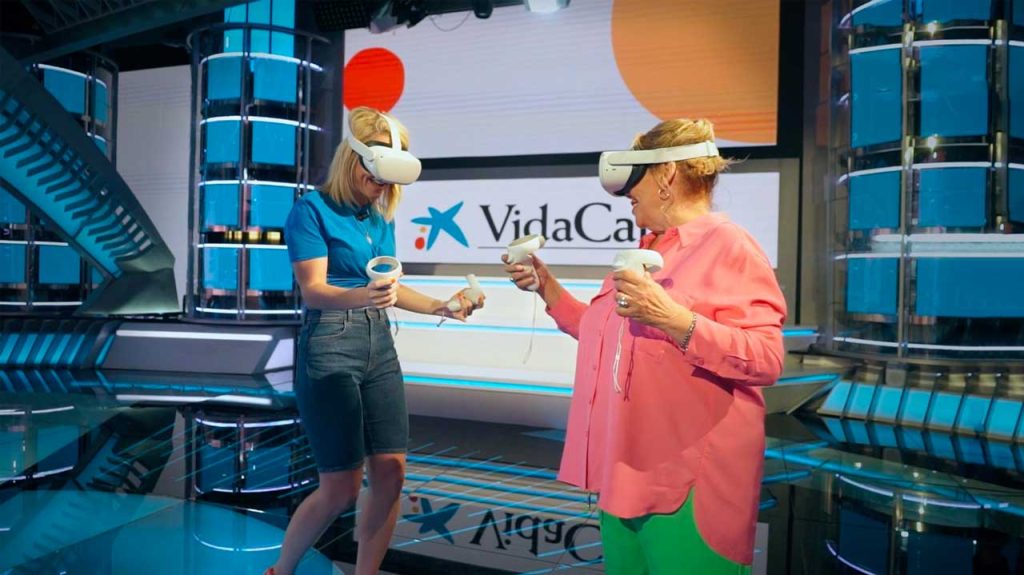
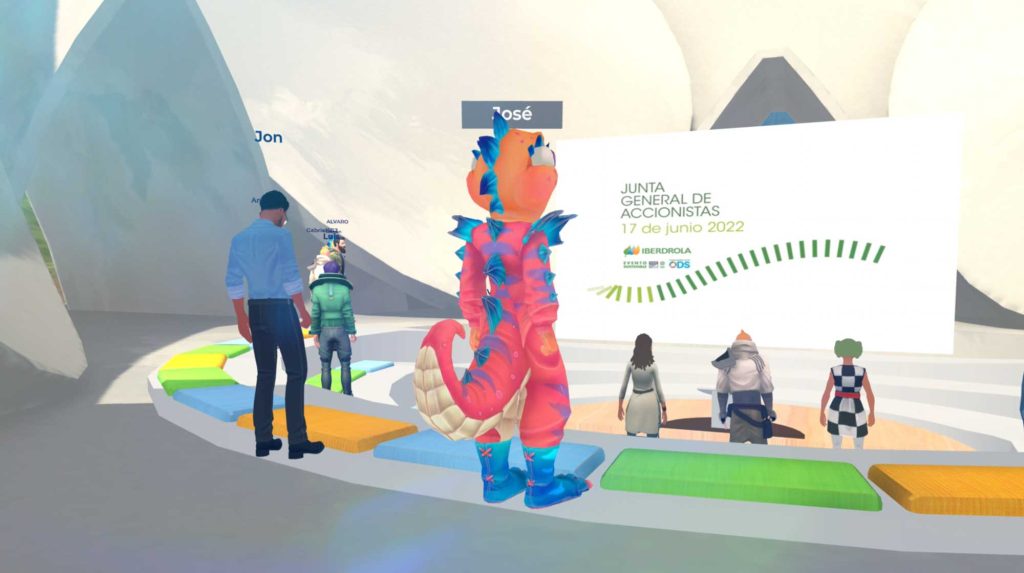
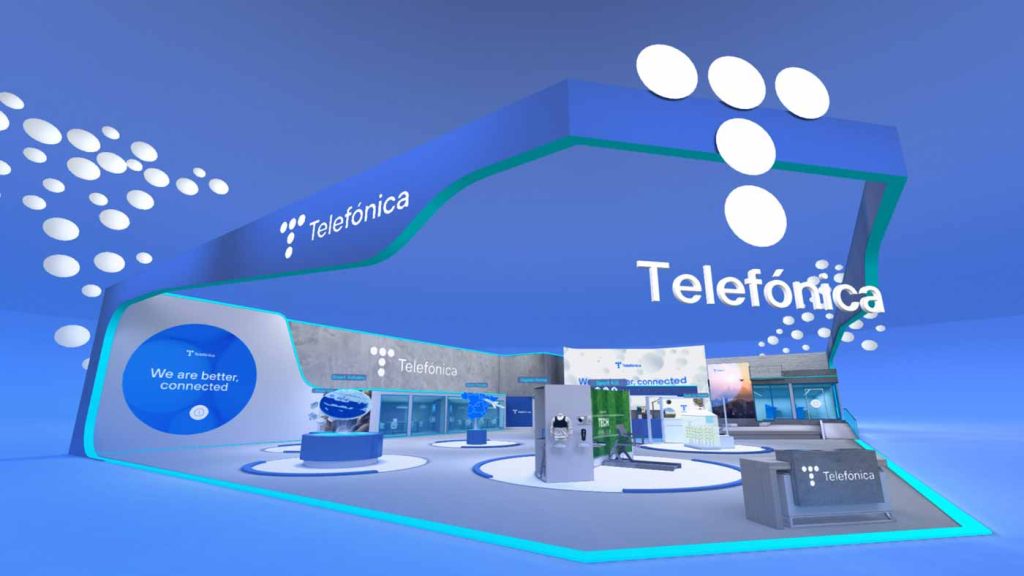
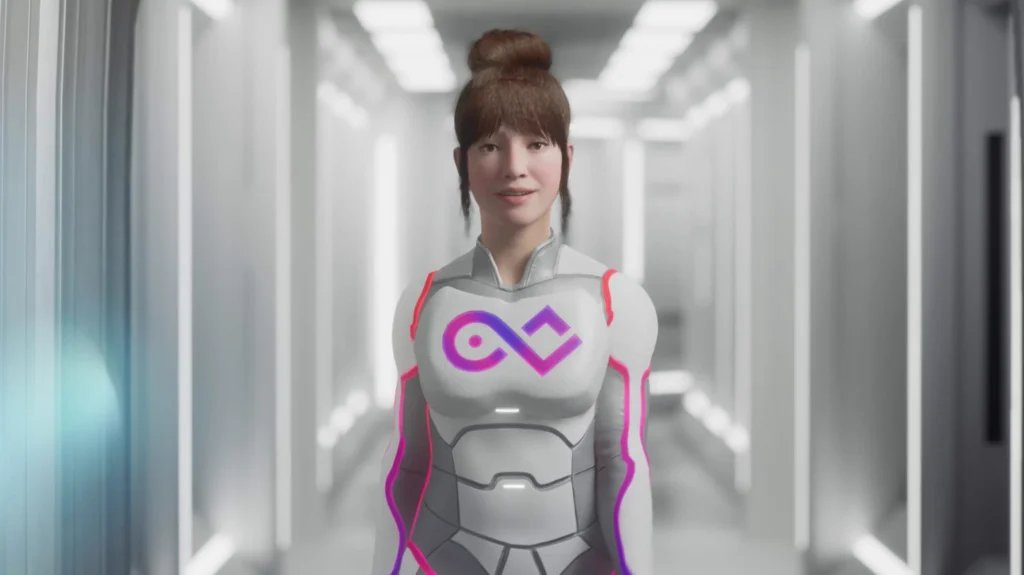
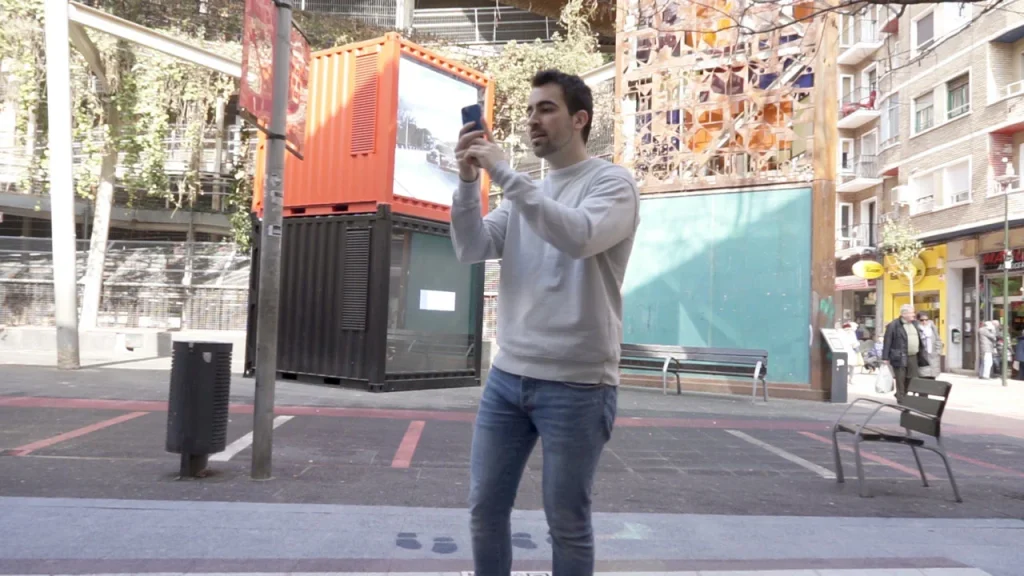
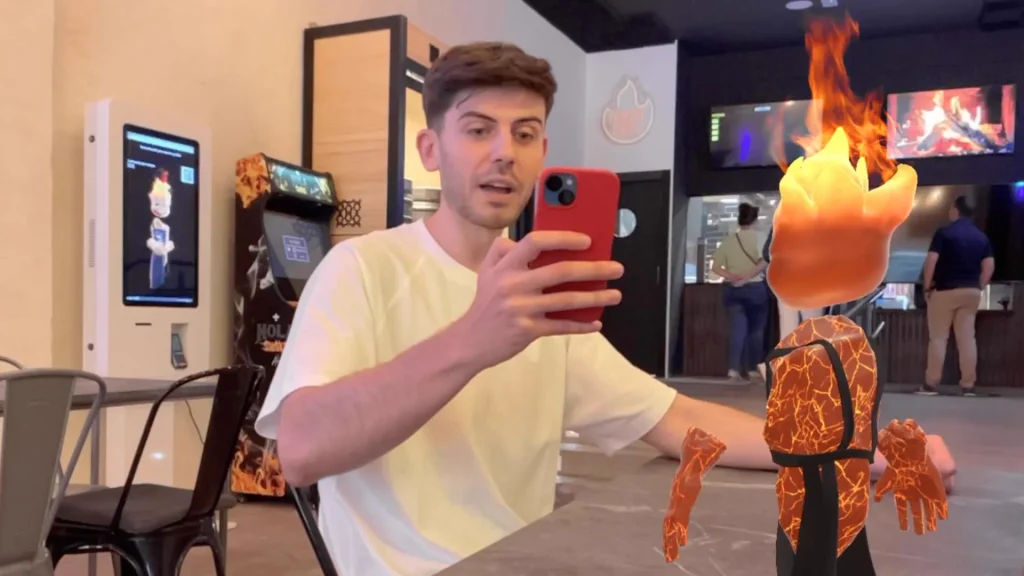
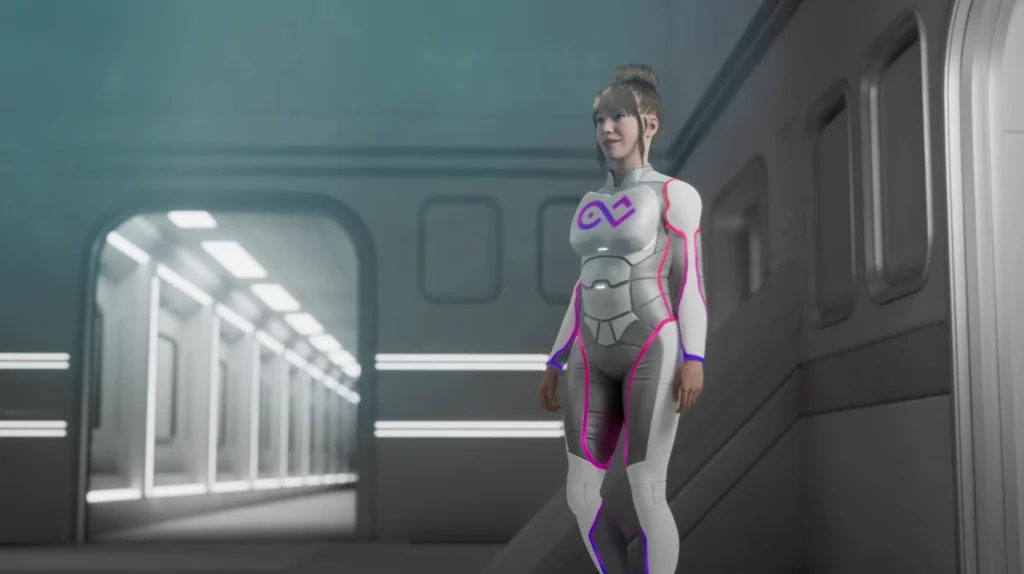

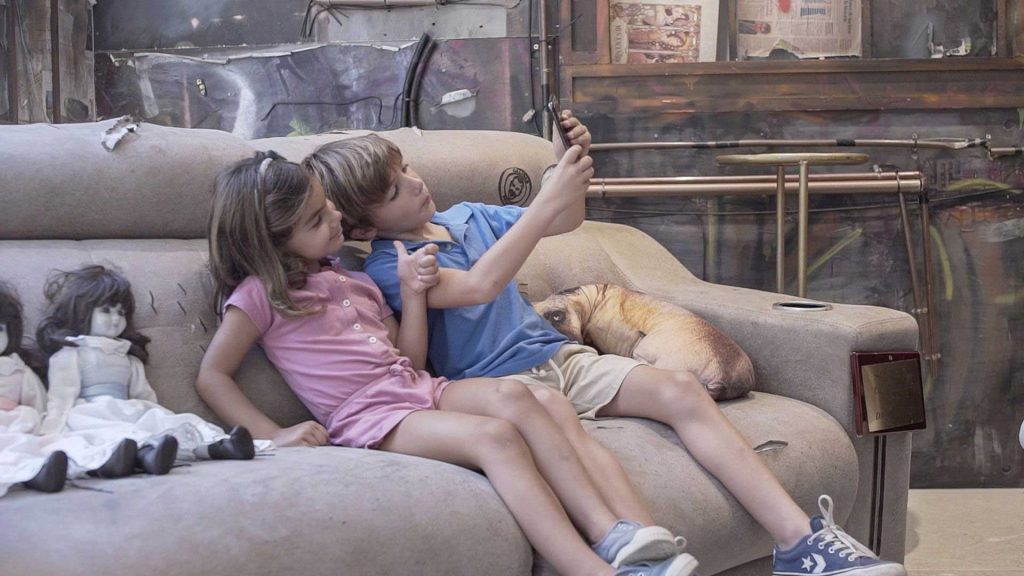
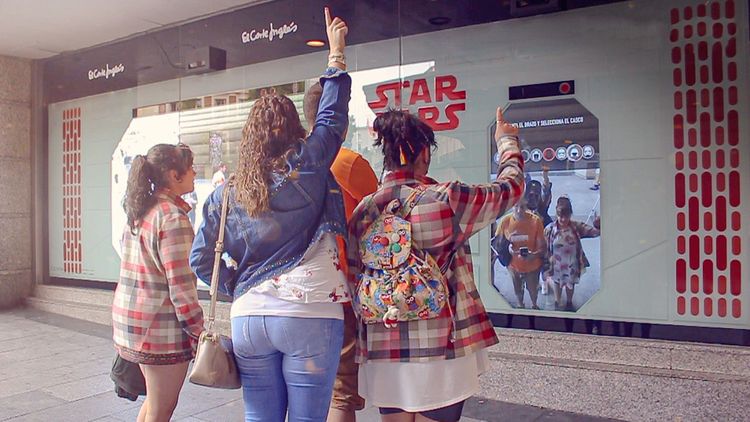
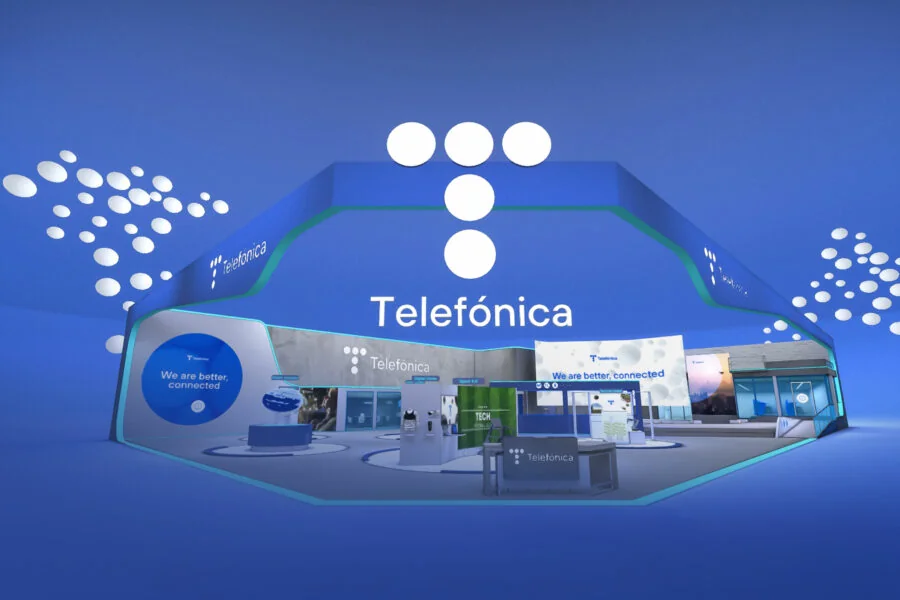


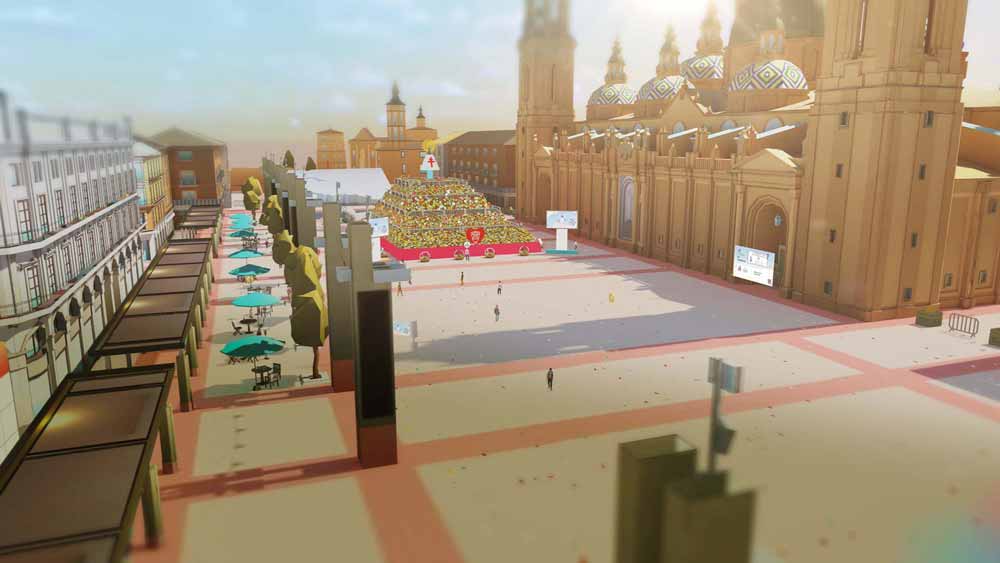
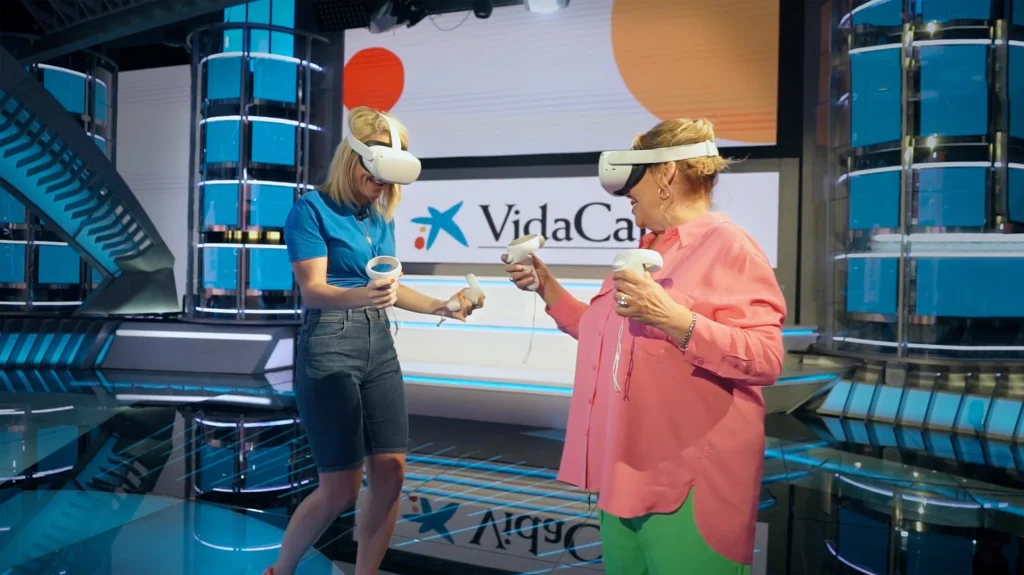
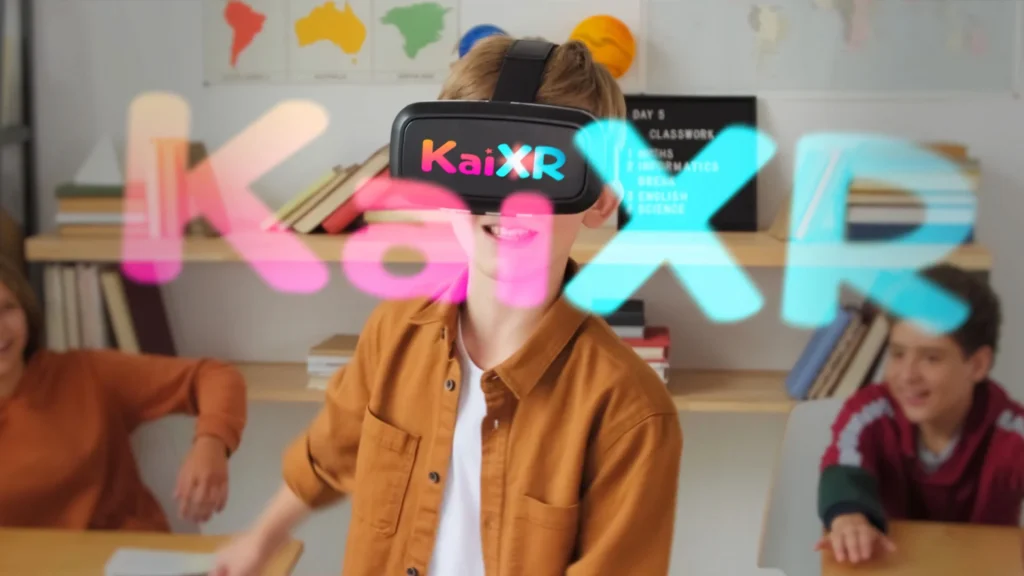
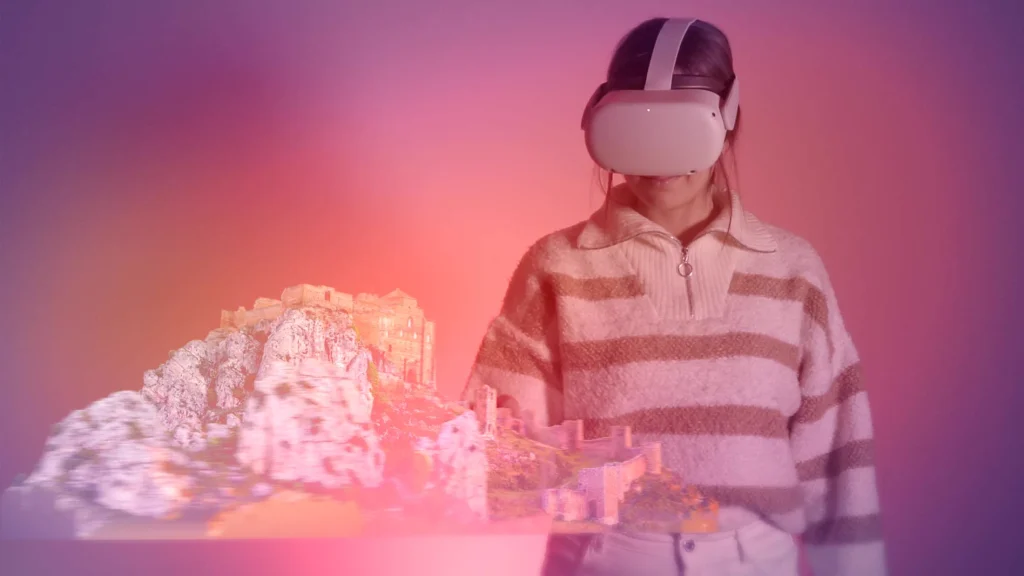
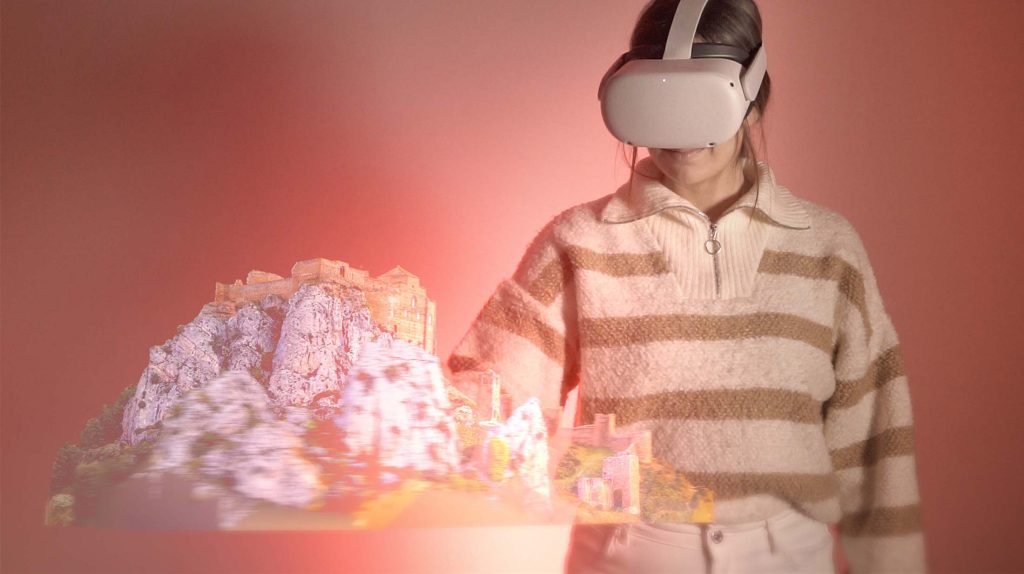
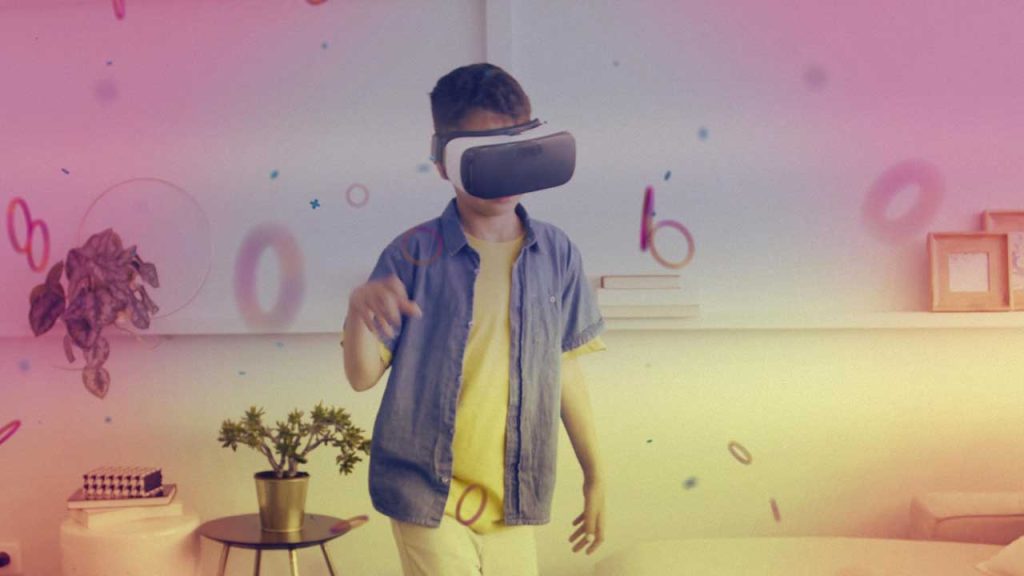
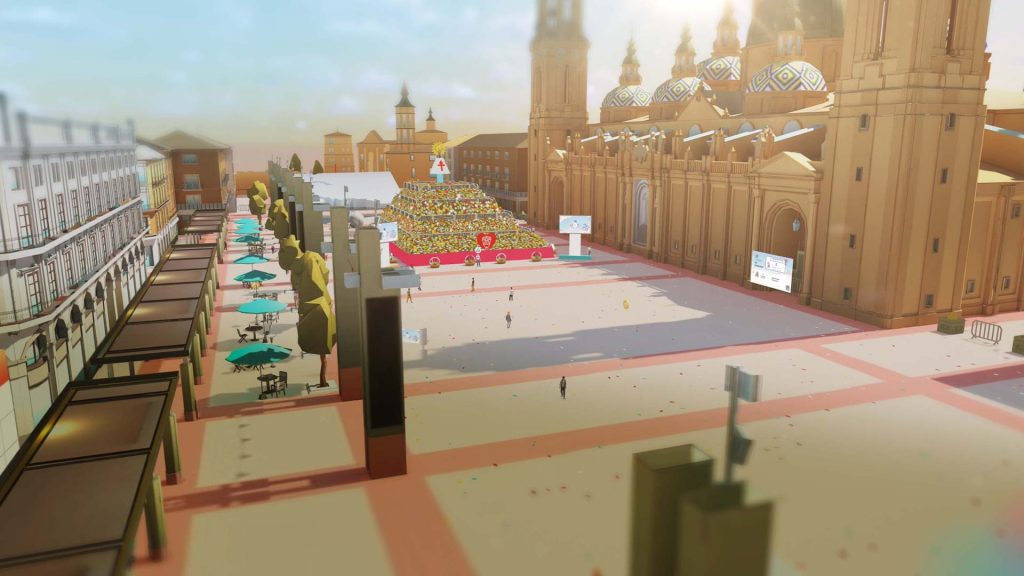
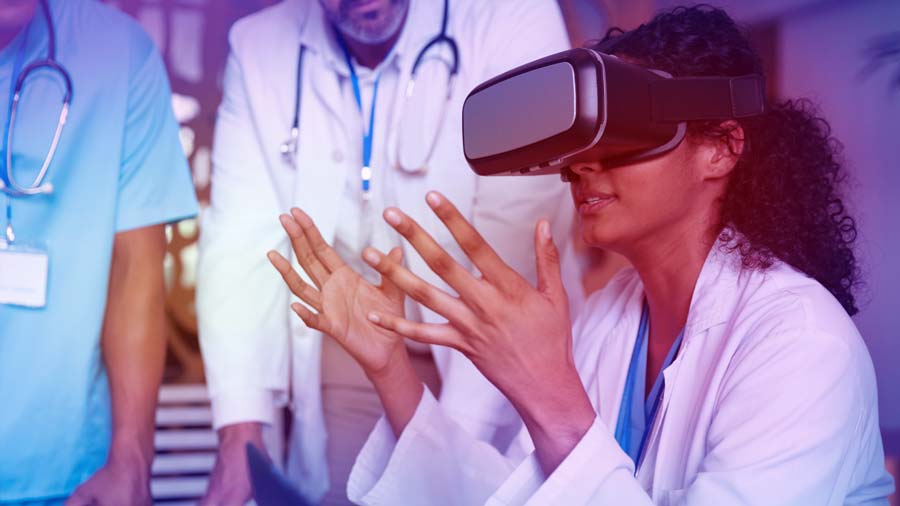
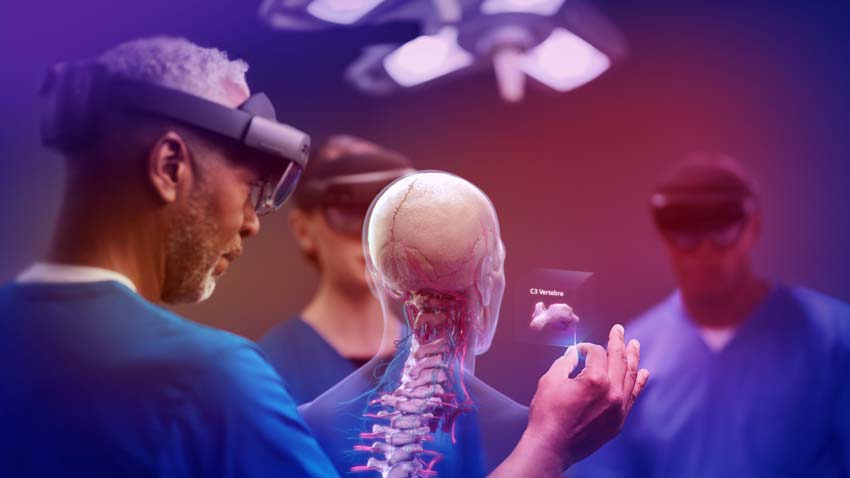
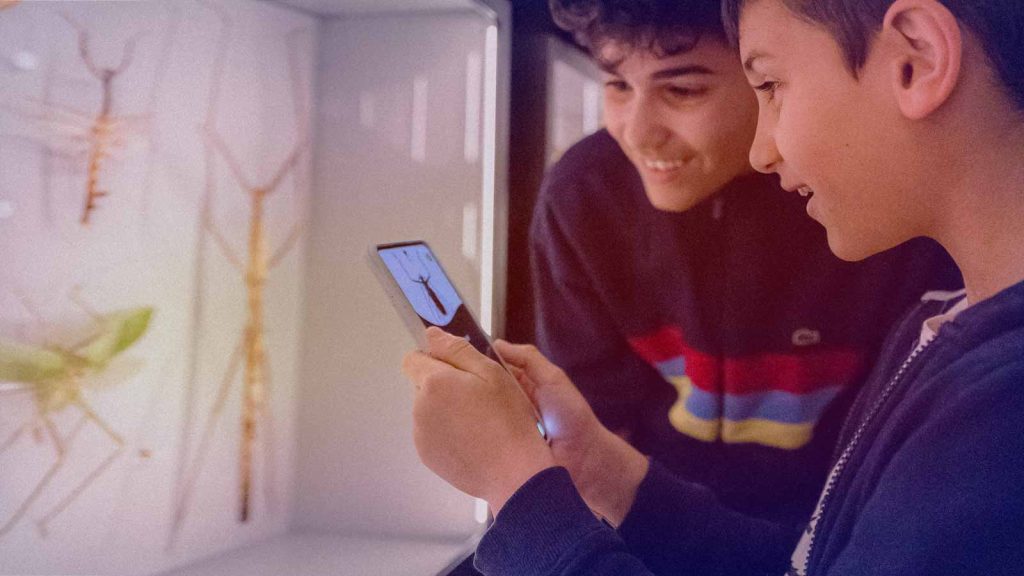
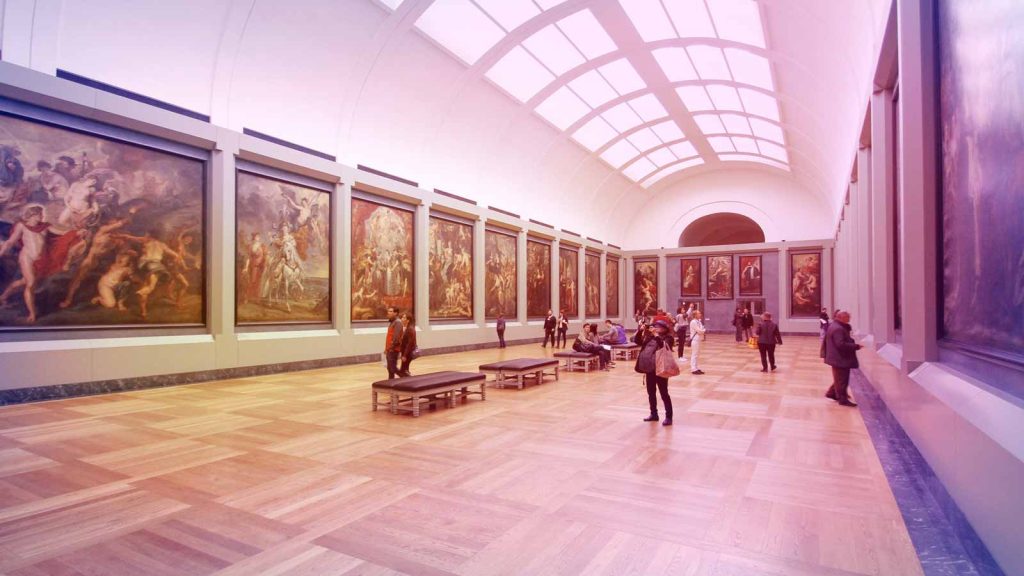
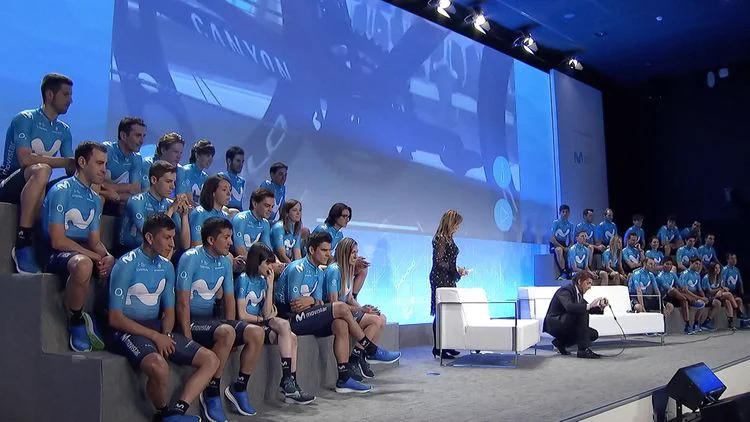
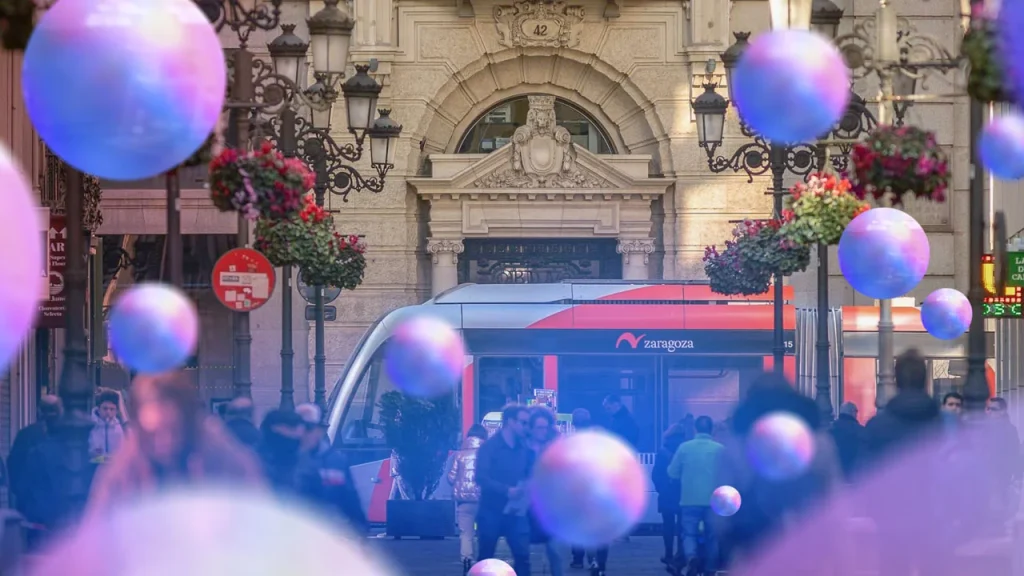
 Spanish
  English